
Publications from the Animal Welfare Centres of Excellence
Quick Start: Overview of Topics
Click on the relevant icon





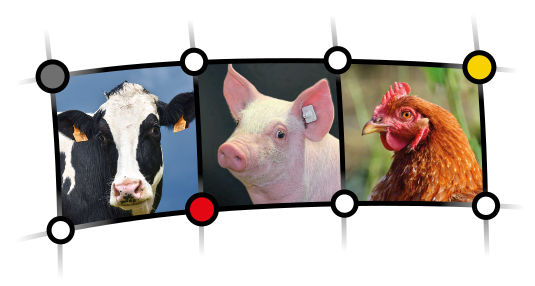
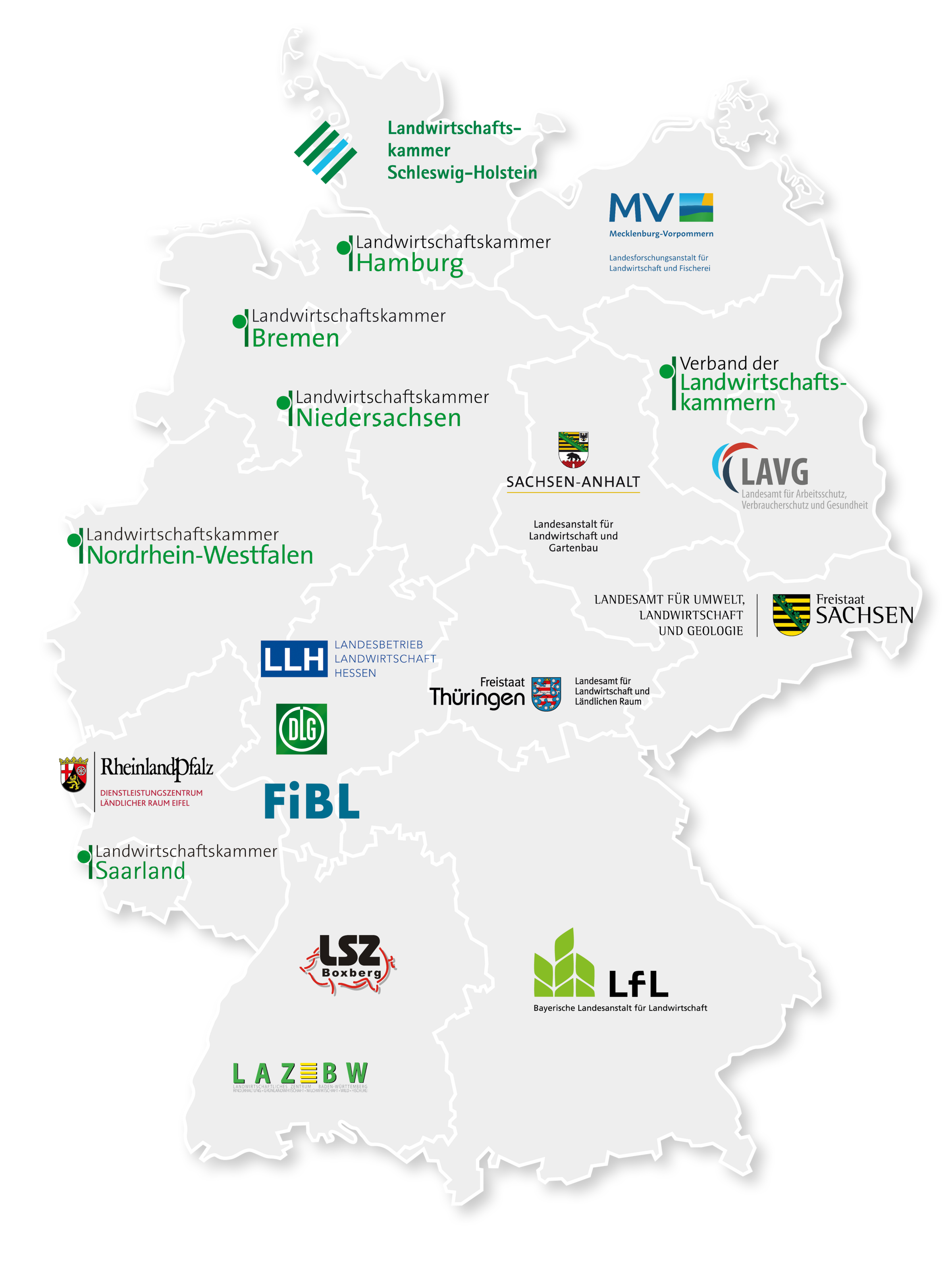
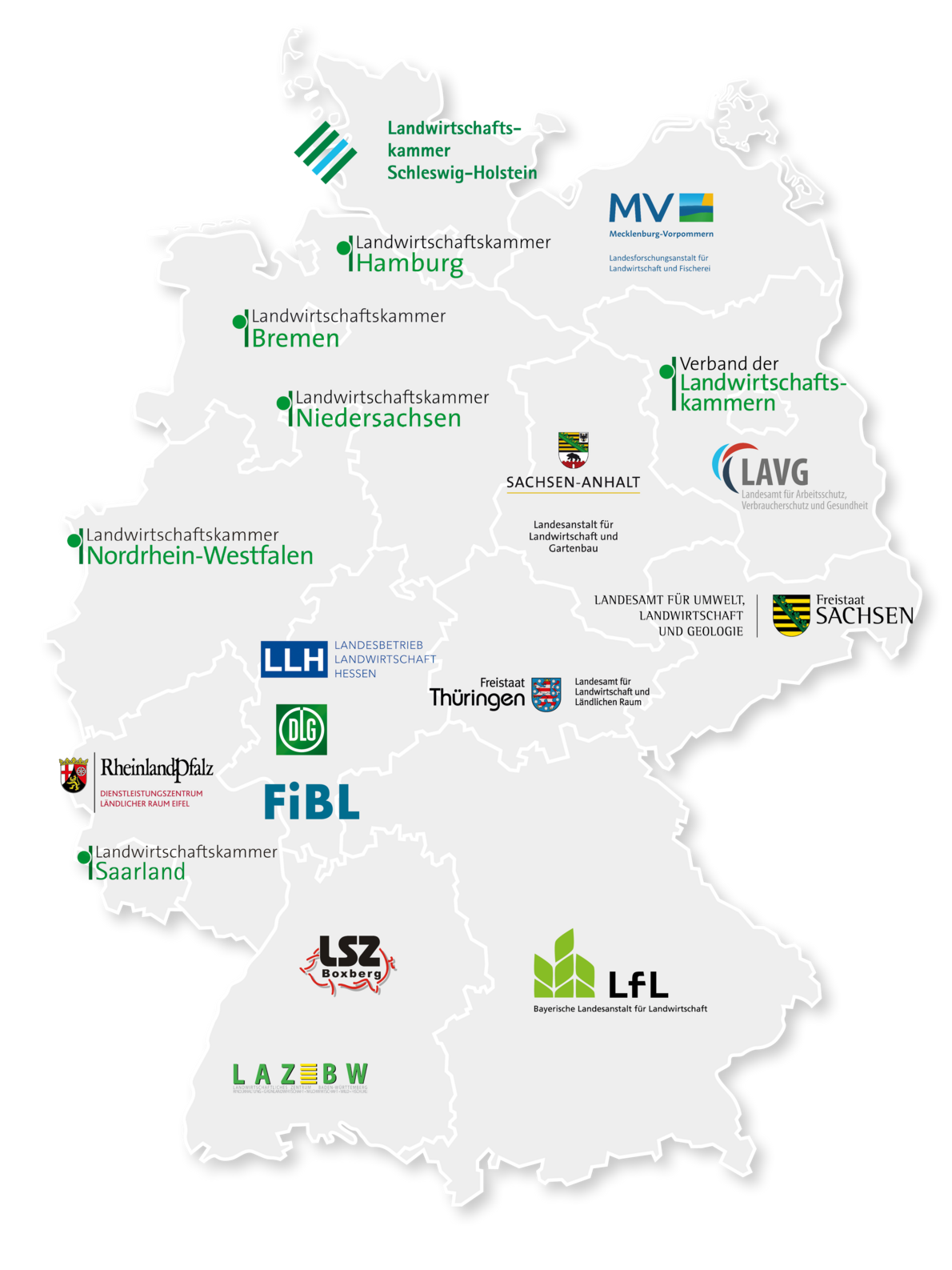
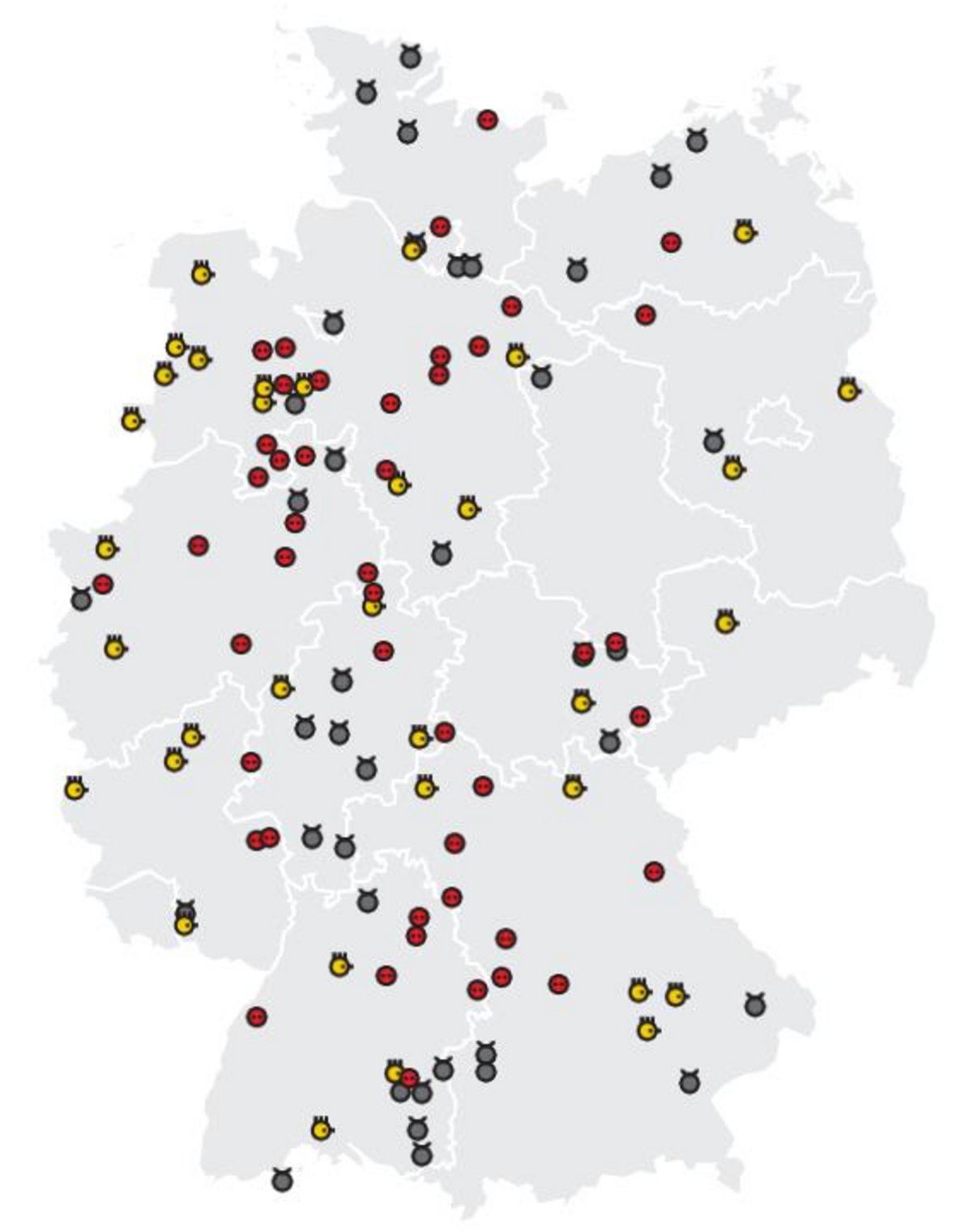
The nationwide Fokus Tierwohl network was established to provide long-term support to livestock farmers in Germany and to help them prioritise animal welfare, environmental protection, production quality and market orientation. The joint project aims to improve the transfer of knowledge into practice in order to make pig, poultry and cattle farms in Germany fit for the future in terms of animal-welfare-friendly, environmentally sound and sustainable livestock farming.
Please note that the English versions of the content on this website have been translated automatically using the DeepL translation tool.
While every effort has been made to ensure accurate and understandable translations, discrepancies or inaccuracies may occur. The German version of the content is legally binding and should be referred to in case of doubt.
News from the Animal Welfare Network and the industry
How has animal breeding changed over the past few decades – and what contribution can it make to animal health and welfare? The ‘Animal Breeding Success Story’ project presents information on the objectives, developments and achievements of German livestock breeding in an accessible way. The focus is on clear communication that reaches consumers whilst also providing scope for more in-depth information.
For many animal owners, this is a difficult and deeply emotional issue: how do I deal with sick and injured animals in the right way? When should I isolate an animal, when should I call in the vet, and when must I put an animal out of its misery?
Making the right decision at the right time is of immense importance for a sick or injured animal, as the aim is to prevent significant or prolonged pain and suffering. The guide produced by the Fokus Tierwohl network aims to support animal owners and carers in their decision-making.
Tail-tip necrosis and inflammatory changes at the tip of the tail can occur in dairy cows and beef cattle. These changes range from calluses and minor skin lesions to tissue necrosis. As the initial signs are often concealed by the hair on the tail tuft, tail tip necrosis can easily go undetected within a herd. A poster produced by the Fokus Tierwohl network clearly summarises the current state of knowledge regarding the aetiology, detection, emergency measures and prevention of tail tip necrosis in dairy cows.
Extensive grazing with cattle and horses is an important measure for the maintenance and conservation of valuable nature conservation areas. Well-planned grazing management is required to ensure that grazing meets both the requirements of nature and species conservation and the needs of the animals. The ‘Guidelines for the animal-friendly year-round grazing of cattle and horses on nature conservation areas’ demonstrate how animal-friendly year-round grazing of cattle and horses can be implemented on nature conservation areas.
In organic farming, grazing is mandatory for cattle: the provisions and interpretation of the EU Organic Regulation require farmers to ensure that even calves have access to pasture. During the first four months of life, access to pasture may be restricted for a limited period for developmental and physiological reasons. Nevertheless, many farms face practical challenges, such as a lack of pasture land near the barn or a lack of experience with grazing calves. The guide ‘Calf Grazing in Dairy Farming’ provides practical guidance on what matters and, using twelve real-life examples, illustrates how grazing can be successfully implemented early in the animals’ lives through farm-specific solutions.
Successful laying hen management begins with proper rearing. The e-learning module ‘Fundamentals of Pullet and Laying Hen Rearing’ provides the basic knowledge required for the animal-friendly, healthy and productive development of pullets. The content is presented in an easy-to-understand manner and is closely aligned with the requirements of agricultural practice.
This free online resource is aimed at anyone involved in the rearing of young hens or wishing to expand their knowledge in this area. This includes practising poultry farmers, trainees, students, advisers and other interested parties from the poultry sector.
Please note: e-learning available in german language only!

Webinar: Selektives Trockenstellen
Selektives Trockenstellen,
Eutergesundheit
5. Okt. 2026 19:30 - 21:30,
Online
Die Zeit des Trockenstellens ist in der Milchviehhaltung eine wichtige Phase, in der sich das Euter regenerieren kann. Sie bildet die Grundlage für einen gesunden Start in die neue Laktation. Einen großen…
Workshop Abkalbung und Geburtshilfe
Abkalbung,
Geburtshilfe
6. Okt. 2026 09:00 - 15:30,
Traunstein
Das Netzwerk Fokus Tierwohl veranstaltet in Zusammenarbeit mit dem AELF Holzkirchen am 06.10.2026 einen Workshop zur Abkalbung und Geburtshilfe in Traunstein..Dr. Kristina Lipp-Radisic stellt den Ablauf…
LEIDER AUSGEBUCHT! Tiergesundheit im Mutterkuhbetrieb - Vorbeugen, Erkennen, Han…
Mutterkuhhaltung,
Tierschutzindikatoren,
Tierbeobachtung,
Tierbeurteilung,
Parasitenmanagement,
Tiergesundheit
6. Okt. 2026 09:00 - 16:00,
Lehr- und Versuchsanstalt für Tierzucht und Tierhaltung (LVAT) e.V., Neue Ch 6, 14550 Groß Kreutz (Havel)
Der Workshop konzentriert sich auf die zentralen Gesundheitsfaktoren in der Mutterkuhhaltung und deren…

AUSGEBUCHT! Umgang mit kranken und verletzten Schweinen
Umgang mit kranken und verletzten Tieren,
Tierwohl,
Tierwohlgerechtes Handeln,
Fangen und Verladen,
Erkrankungen
5. Okt. 2026 08:00 - 12:00,
Tornitz
Der frühzeitige Umgang mit kranken Schweinen ist von entscheidender Bedeutung für das Tierwohl und den Behandlungserfolg. Im Rahmen der Veranstaltung werden die wesentlichen Grundlagen zur Erkennung,…
Aktuelles aus dem Versuchswesen Tier der LWK Niedersachsen
Parasitenmanagement,
Fütterung,
Ammonikaemissionen,
Milchviehfütterung,
Projektvorstellung,
Masthähnchen,
Dies ist eine externe Veranstaltung ausserhalb des Netzwerk Fokus Tierwohl
8. Okt. 2026 09:30 - 18:30,
Versuchsstation für Schweinezucht und -haltung Hermann-Ehlers-Straße 15 26160 Bad Zwischenahn-Wehnen
Die Tierhaltung befindet sich in einem kontinuierlichen Wandel. Ob die Technik von morgen auch praxistauglich…
Nottöten und Umgang mit kranken und verletzten Schweinen
Nottötung,
Umgang mit kranken und verletzten Tieren
15. Okt. 2026 09:00 - 15:30,
Triesdorf
Nach dem Tierschutzgesetz ist jeder, der Tiere hält, dazu verpflichtet, Schmerzen, Leiden und Schäden unabhängig der Ursache an einem Tier zu vermeiden. Wenn ein Tier erkrankt oder verletzt ist, stellt…

Aktuelles aus dem Versuchswesen Tier der LWK Niedersachsen
Parasitenmanagement,
Fütterung,
Ammonikaemissionen,
Milchviehfütterung,
Projektvorstellung,
Masthähnchen,
Dies ist eine externe Veranstaltung ausserhalb des Netzwerk Fokus Tierwohl
8. Okt. 2026 09:30 - 18:30,
Versuchsstation für Schweinezucht und -haltung Hermann-Ehlers-Straße 15 26160 Bad Zwischenahn-Wehnen
Die Tierhaltung befindet sich in einem kontinuierlichen Wandel. Ob die Technik von morgen auch praxistauglich…
Calciumversorgung - Was braucht mein Huhn?
Legehennenfütterung
8. Okt. 2026 19:00 - 21:00,
Online
Für eine bedarfsgerechte Legehennenfütterung spielt die Versorgung mit Calcium eine entscheidende Rolle. Die rund 90 bis 95 % Kalk (Calciumcarbonat), aus denen die Schale von Hühnereiern besteht, deckt die…
„Menschenwohl = Tierwohl – Wege aus Überlastung und Krise in der Landwirtschaft…
Tierwohl,
Mensch-Tier Beziehung,
Menschenwohl,
Überlastung
20. Okt. 2026 19:00 - 21:00,
Online
Hoher Arbeitsdruck, wirtschaftliche Herausforderungen und emotionale Belastungen prägen den Alltag vieler landwirtschaftlicher Betriebe. In unserer Online-Veranstaltung beleuchten wir Wege aus der…
