
- Anne-Claire Berentsen, LAVES Lower Saxony
- Reinhard Brunner, Impulsbetrieb Tierwohl
- Karl Harleß, Impulsbetrieb Tierwohl
- Dr. Haiko Hofmann, German Cattle and Pig Association
- Mirjam Lechner
- Dr. Eckhard Meyer, Saxon State Office for Environment, Agriculture and Geology
- Dr. Sandra Ripke, LAVES Lower Saxony
- Dr. Karl-Heinz Tölle, Interest Group of Pig Farmers Germany e.V.
- Dr. Astrid van Asten, Chamber of Agriculture North Rhine-Westphalia
- Dr. Maren Gerlach, Chamber of Agriculture of North Rhine-Westphalia
- Ulrich Hartmann, Chamber of Agriculture of North Rhine-Westphalia
- Marie Lüke, Chamber of Agriculture of North Rhine-Westphalia
Introduction
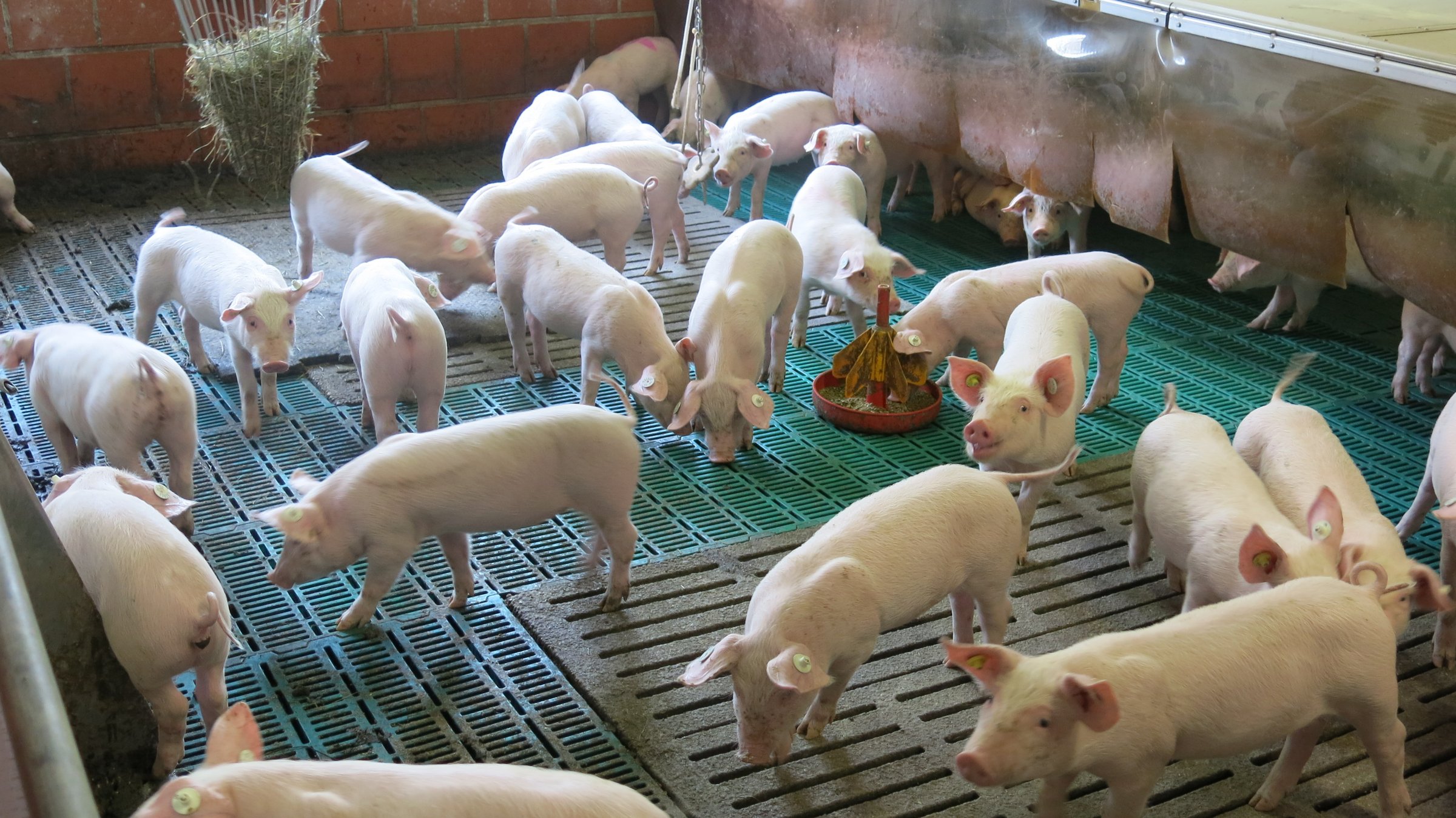
Tail biting is a widespread problem in pig farming that can have significant animal welfare and economic consequences. Analysing and eliminating the causes can be very challenging.
Tail biting is a multifactorial event that is not limited to conventional pig farming, but can also occur in extensive farming methods, in organic farming and in free-range farming. A variety of husbandry, feeding and management factors, as well as animal health, can have an influence on the occurrence.
The Fokus Tierwohl network has drawn up an emergency plan based on existing practical guidelines, advisor recommendations and practical experience, which offers support in the event of an outbreak of tail biting.
In 6 training modules, you will receive an in-depth overview of the causes, distraction measures, treatment of bitten pigs and early warning signs that indicate a future tail biting incident.
The aim of the modules is to deepen your understanding of the animals' needs and provide you with concrete tools to improve the welfare of your pigs and at the same time increase production reliability.
Further information material from the federal states
Checklist for the avoidance of behavioural disorders (tail biting)
Practical handbook on not docking
Guide to reducing the risk of tail biting in pigs
Reducing the risk of tail biting and cannibalism
Guidelines for farm vets, advisors and farmers on keeping undocked pigs