

Inventory
Create the conditions
Always take a marking pen or spray with you when you go into the barn! This way you are always ready to mark biting pigs! With the spray, you have a greater range and can reach some of the escaping animals in the pen. To mark from the centre aisle, use an extension for the marking pen (home-made).
- If possible, first observe the animals unnoticed (e.g. from the aisle) so as not to distract the pigs and only then enter the compartment or pens.
- When observing the animals, take into account both the resting phases (to assess the lying behaviour of the pigs) and the activity phases (e.g. during feeding).
- Due to the greater activity of the pigs in the afternoon and early evening hours, biting incidents are more frequent here.
- Allow sufficient time for animal observation and carry it out separately from other activities.
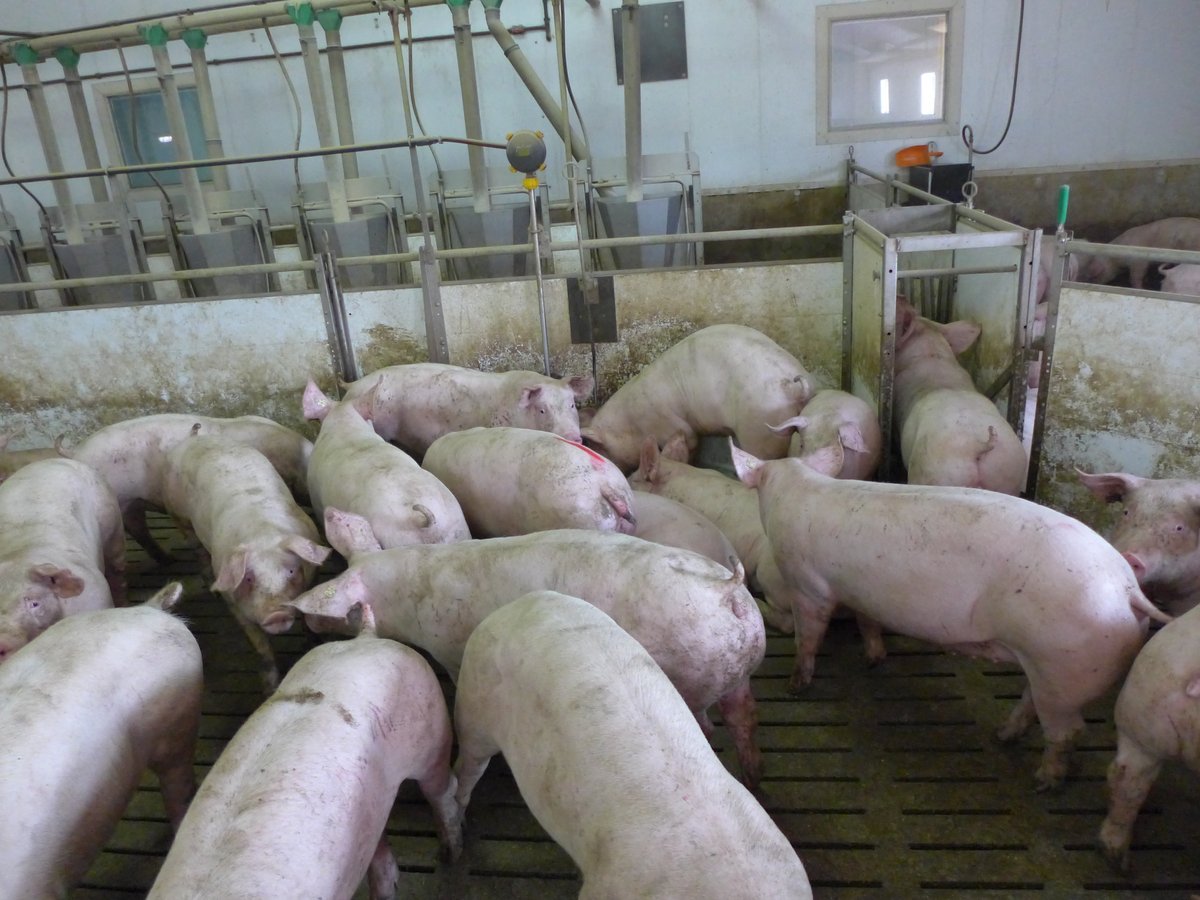
Especially in large groups, animal observation must be combined with a walk through the bay. It is helpful to take food with you to attract the animals.

Establish an information system
A well-organised information system is essential, especially if there are several employees working in the barn. A pen card can help to keep an overview. This should contain all relevant information on each animal, such as health status, behavioural abnormalities and measures taken. This makes daily work easier and provides a better overview and control. This simplifies communication with several animal carers and enables a quick response to any abnormalities.
In addition to the pen cards, there is also a traffic light system with green, yellow and red laminated cards. This makes it immediately clear where close observation is required (yellow) and where, for example, treatment needs to be continued (red).
Recognising tail-biting animals
Biting pigs can be identified by various signs:
- Blood on the snout disc is often a strong indication of biting activity.
- Animals that start tail biting often have a developmental deficit (longer coat), are lighter than average and are more often female than average.
The biting pigs usually lack something and/or have a health problem (fever). A simple cause may be reduced access to resources (feed, water, resting places, etc.). The first thing that is noticeable is their restless behaviour. The biting pigs often wag their tails themselves or pinch them. These pigs often run around searching.
If the biting pig is not found immediately, the animal observation must be continued at a later time. It is important to allow sufficient time and, if necessary, to monitor animal activity at other times of the day than usual.
Once the biting pig has been recognised, it must be separated immediately to prevent further damage.