
- Dirk Albers, Lower Saxony Chamber of Agriculture
- Anna-Lena Ahring, North Rhine-Westphalia Chamber of Agriculture
- Josef Assheuer, North Rhine-Westphalia Chamber of Agriculture
- Dr. Ariane Boldt, State Research Institute for Agriculture and Fisheries Mecklenburg-Western Pomerania
- Dr. Carola Bühler, Hamburg Chamber of Agriculture
- Bernd Lührmann, Lower Saxony Chamber of Agriculture
- Ulrike Drews, State Office for Rural Development, Agriculture and Land Consolidation Brandenburg
- Thomas Engelhard, State Institute for Agriculture and Horticulture Saxony-Anhalt
- Dr. Jakob Groenewold †, North Rhine-Westphalia Chamber of Agriculture
- Jana Harms, State Research Institute for Agriculture and Fisheries Mecklenburg-Western Pomerania
- Dr. Wilfried Hartmann, Board of Trustees for Technology and Construction in Agriculture
- Dr. Peter Heimberg, North Rhine-Westphalia Chamber of Agriculture
- Jochim Rohweder, Chamber of Agriculture of Schleswig-Holstein
- Jörn Menning, State Institute for Agriculture and Horticulture Saxony-Anhalt
- Dieter Mirbach †, German Agricultural Society
- Beate Möntenich, Rhineland-Palatinate Chamber of Agriculture
- Andreas Pelzer, North Rhine-Westphalia Chamber of Agriculture
- Prof. Dr. Klaus Reiter, Bavarian State Institute for Agriculture
- Olaf Tober, State Research Institute for Agriculture and Fisheries Mecklenburg-Western Pomerania
- Jochen Simon, Bavarian State Institute for Agriculture
- Heinrich Schulte, Rhineland-Palatinate Chamber of Agriculture
- Dr. Ilka Steinhöfel, Saxony State Office for Environment, Agriculture and Geology
- Dr. Anna Rauen, Board of Trustees for Technology and Construction in Agriculture
- Andreas Pelzer, North Rhine-Westphalia Chamber of Agriculture
- Anna-Lena Ahring, North Rhine-Westphalia Chamber of Agriculture
Under the motto "Aspects and visions of future-oriented dairy farming", the cattle working group – consisting of 18 members – explored the question of how dairy farming systems can be made even more sustainable, animal-friendly and climate-friendly while remaining competitive. The barn models designed showcase ideas and visions that focus on various aspects: animal welfare economics, ecology and focus on. In addition, specific recommendations for structural and technical design variants and visions for the design of the various functional areas are listed and evaluated. The focused assessments in terms of economics, environmental impact and animal welfare are the result of discussions within the working group and highlight the conflicting objectives.
To the brochure "Overall farm management concept for cattle – dairy cows"

The animal welfare barn shown here primarily takes into account aspects relating to animal welfare. This visionary barn therefore focuses on the animals and disregards construction costs and environmental impacts.
Key aspects:
- Group size max. 60 animals
- No corners
- Free lying area with underfloor extraction to reduce ammonia pollution
- Movement area through specification of feeding areas depending on performance
- Group formation independent of lactation stage and performance

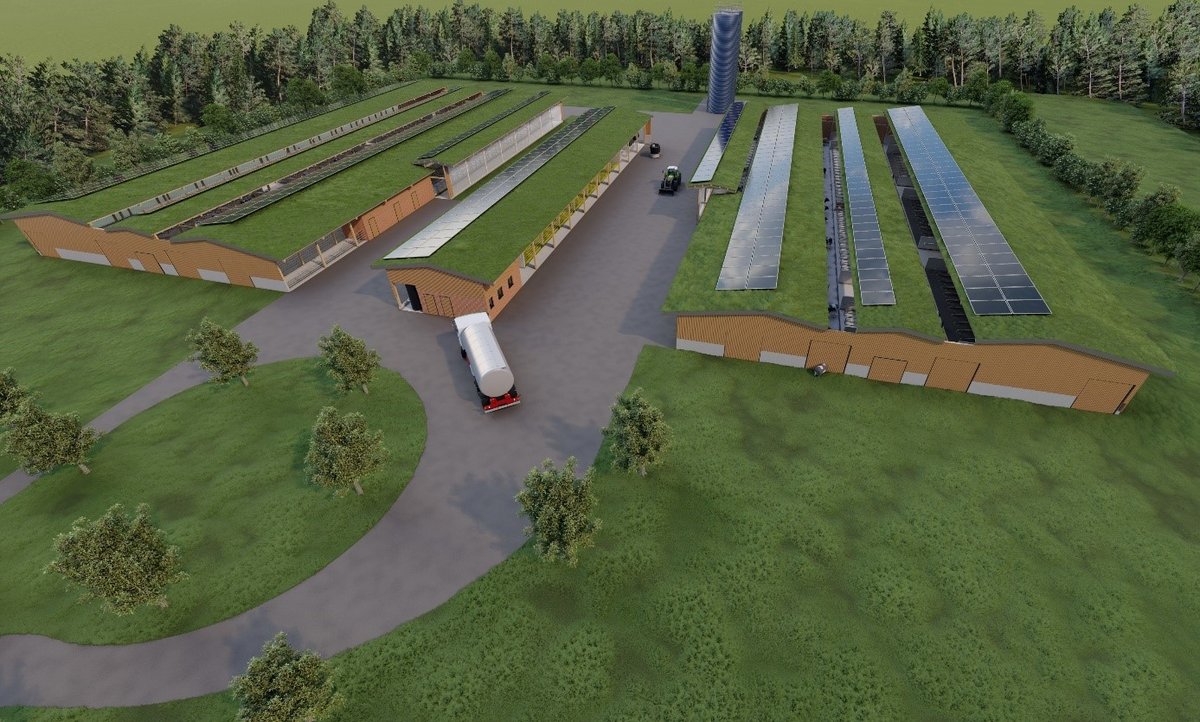
The eco-friendly barn shown here primarily takes environmental aspects into account. This visionary barn therefore focuses on ecology and disregards construction costs and animal welfare.
Key aspects:
- Reduction of sealed surface area
- Reduction of emissions
- Conservation of resources in the areas of water, energy and construction.
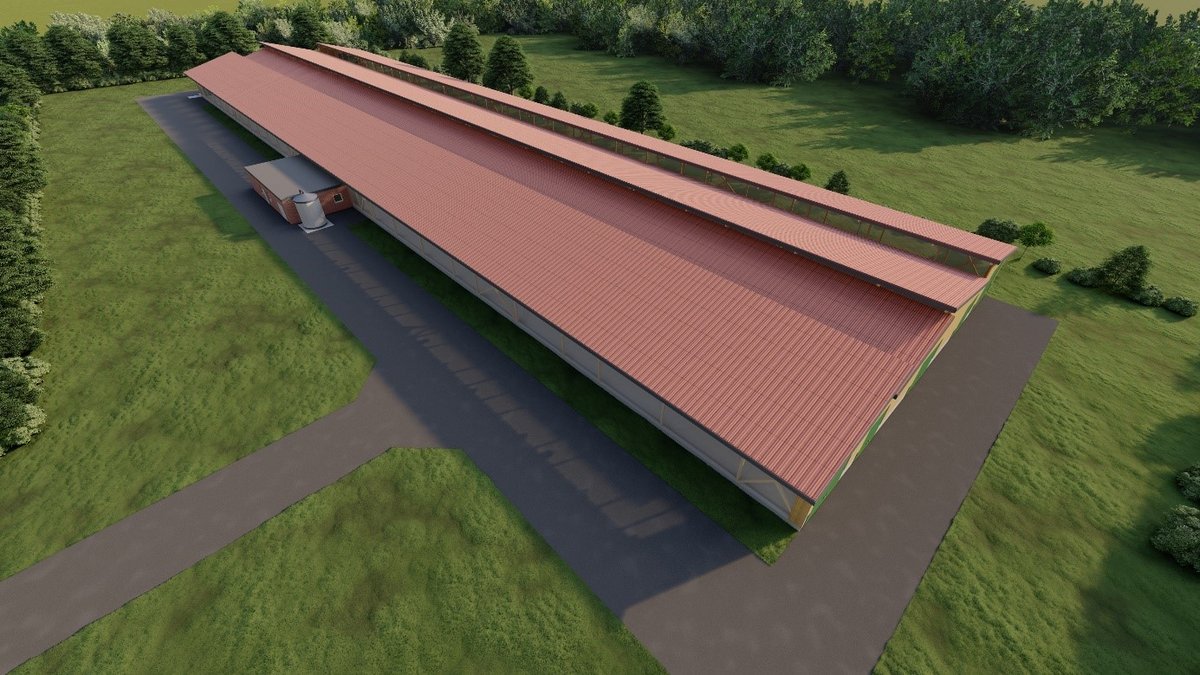
The economical barn shown here primarily takes economic aspects into account. This visionary barn therefore focuses on economics and disregards animal welfare and environmental impacts.
Key aspects:
- Animal-friendly housing
- Partial automation and mechanisation
- Building costs
- Economical arrangement of work areas