
Immediate measure distraction
After separating the biting animals, the administration of (additional) distracting activity material is the first measure when it comes to containing an acute tail biting incident. These measures create a window of opportunity to isolate animals, treat them and find and eliminate the causes. Surveys of practitioners have shown that the suitability of the various materials varies:
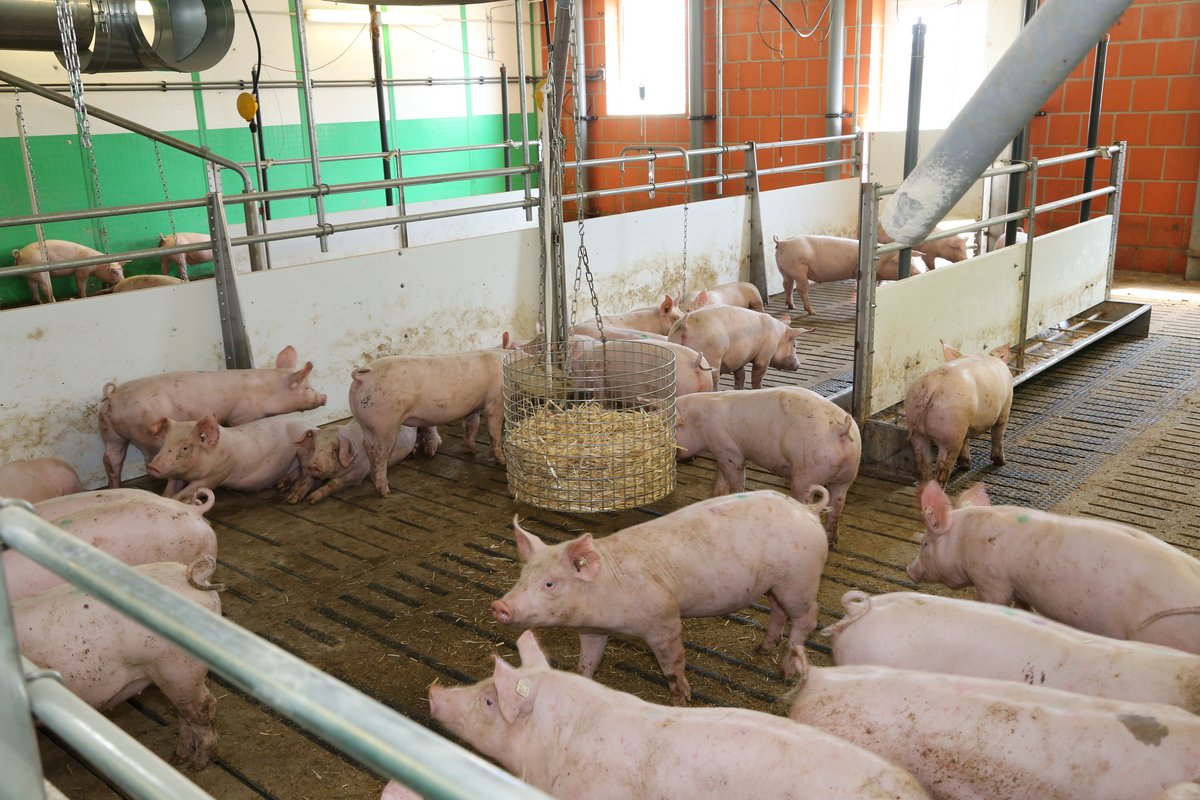

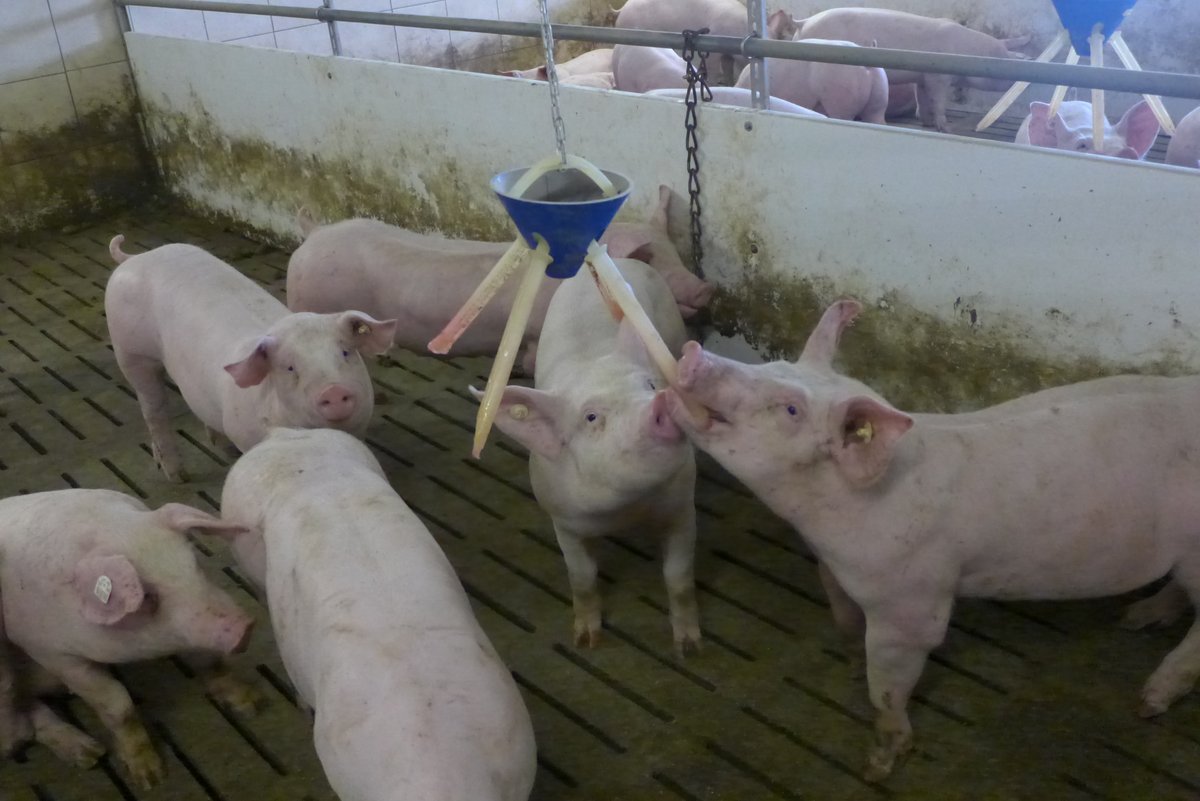
The way in which the material is given also plays a role: giving it close to the ground and making it accessible from all sides comes closest to the pig's natural rooting behaviour and offers as many animals as possible access to the resource at the same time. The material should be able to be rummaged through in a natural posture without having to stretch its head over.
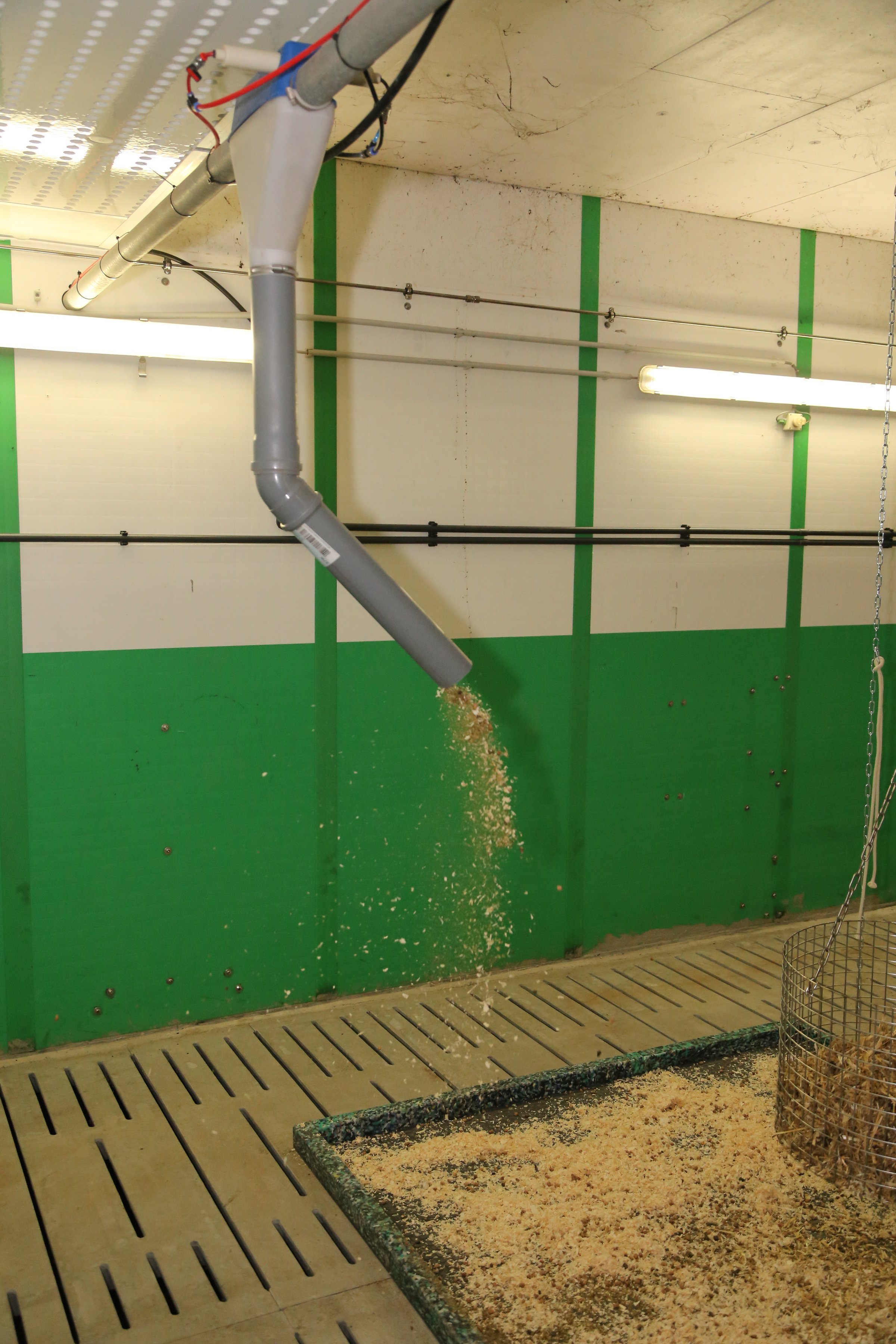


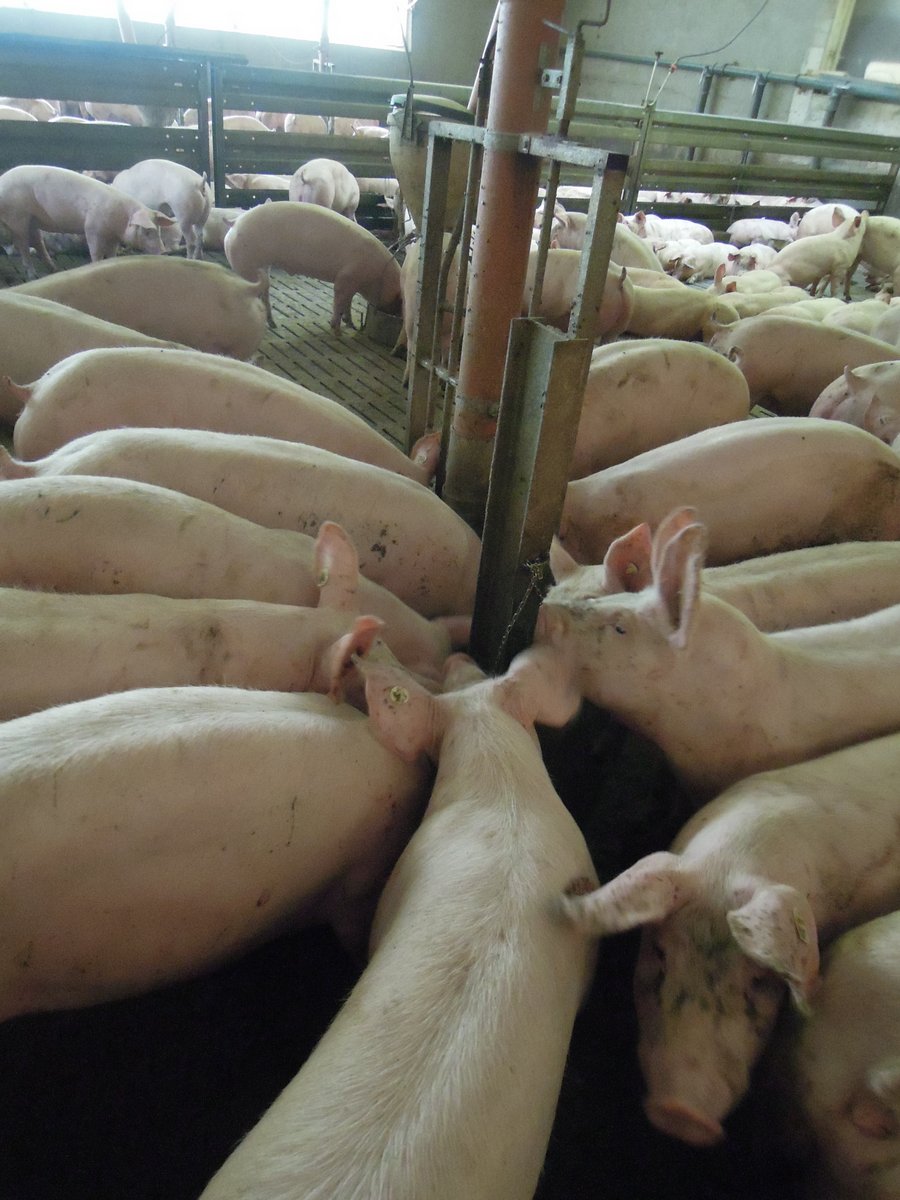
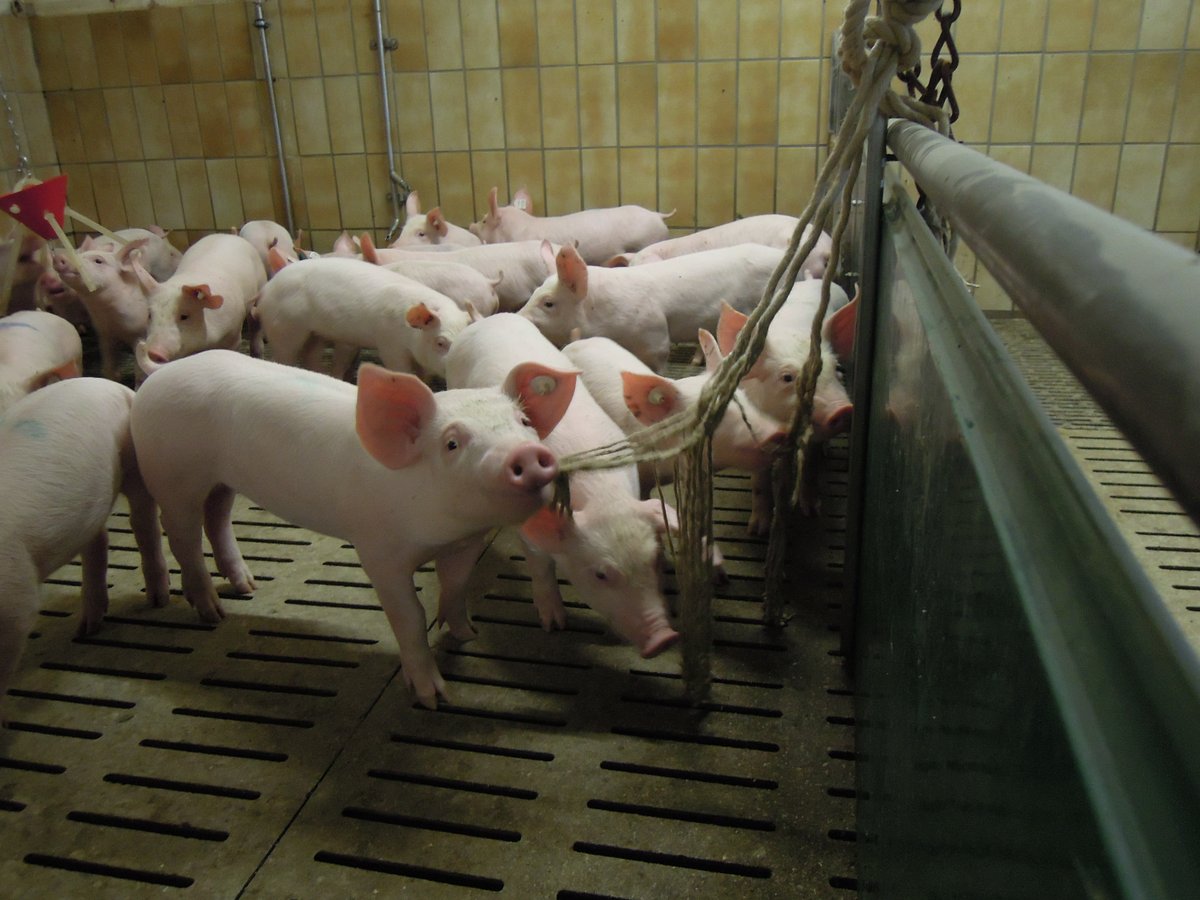
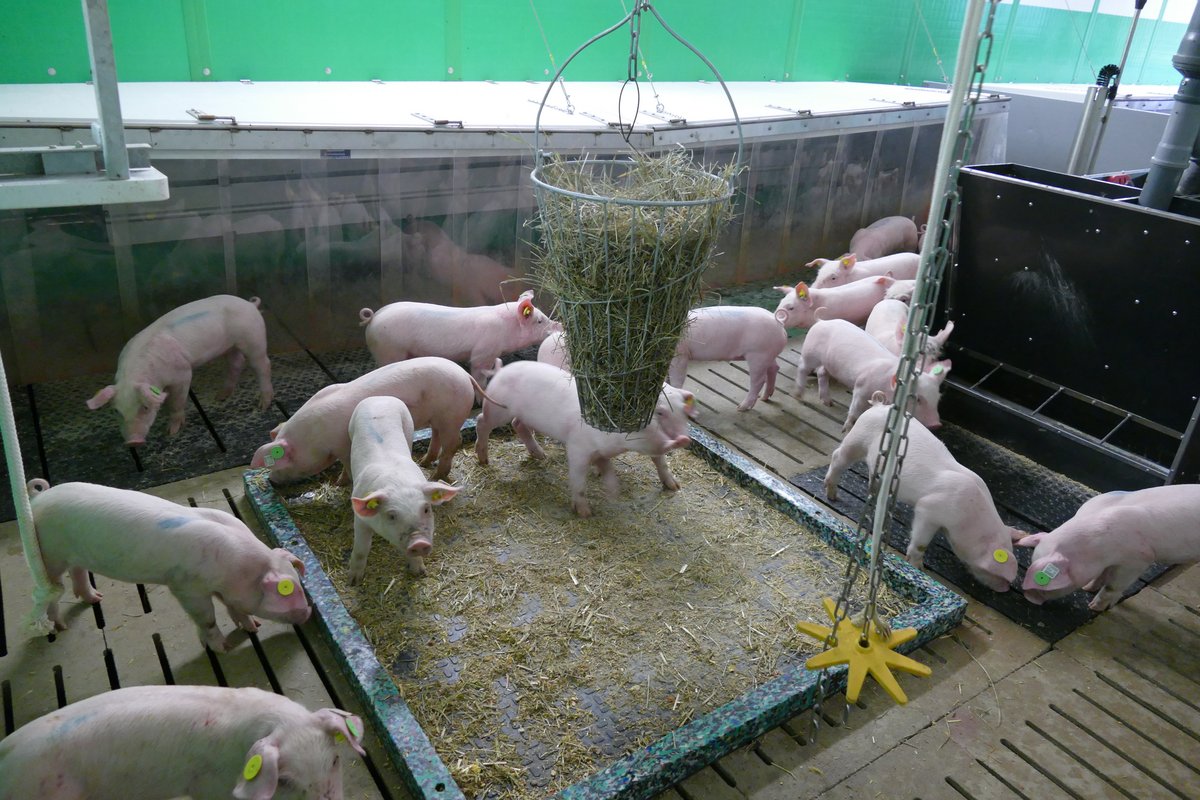
Individual pigs may develop behavioural problems as a result of not being able to express their natural activity levels adequately. This leads to important characteristics for the enrichment materials provided:
- Attractiveness and novelty value
- Good quality (feed containing mycotoxins can exacerbate the problem!)
- Sufficient quantity
- Provided during peak activity times (late morning and afternoon).
If different materials (e.g. rooting toys, additional roughage) are offered simultaneously and separately, this can help to identify the need for and lack of a component as the cause of tail biting. This allows for more targeted countermeasures!
In particular, the most frequently used materials should be available for a sufficiently long period of time (permanently, if necessary) so that each pig can meet its individual needs.
To make work easier, converted feeders or hay racks with drip trays can be used, for example (see Fig. 5).
The use of litter powders (e.g. made from rock flour) helps to reduce the smell of blood and thus curb the spread of tail biting. They also absorb moisture and inhibit germs on surfaces, reducing the risk of wound infection.
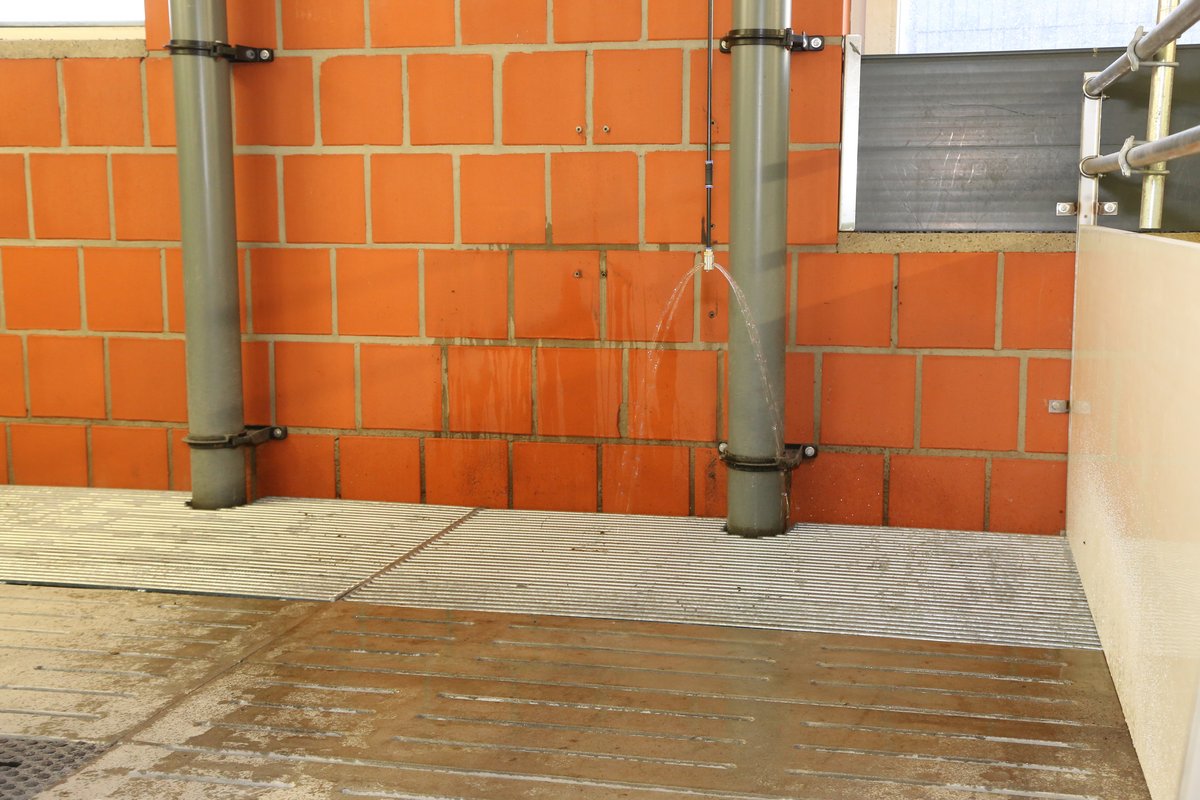
Additional cooling options (pig showers) or outdoor runs also provide distraction. Moving pigs from an affected pen to another pen can also help to distract the animals due to new smells, new pen neighbours and a change of environment. However, this should never be done across age groups.