

Focus on Pig Health – Managing large litters of piglets
A report by the ‘Suckling Pig Losses’ working group of the Fokus Tierwohl network
- Philipp Franz, farmer, Agrarprodukte Bernsgrün-Hohndorf eG (pioneer farm for animal welfare)
- Dr. Daniel Gieseke, University of Kassel
- Prof. Isabel Hennig-Pauka, Foundation of the University of Veterinary Medicine Hannover
- Dr. Heiko Janssen, Lower Saxony Chamber of Agriculture
- Katja Menzer, Saxon State Office for the Environment, Agriculture and Geology
- Wilhelm Schulte-Remmert, farmer (Animal Welfare Pilot Farm)
- Dr. Sabine Schütze, North Rhine-Westphalia Chamber of Agriculture
- Laura Schönberg, North Rhine-Westphalia Chamber of Agriculture
Introduction
In recent years, the reproductive performance of sows has improved steadily. As a result of genetic progress, improvements in insemination management and a more tailored approach to caring for sows during gestation, the number of live-born piglets in particular has risen sharply. However, this is followed by the challenge of managing large litters. For example, in North Rhine-Westphalia, the average number of live-born piglets per litter across farms has risen from 13.0 in the 2011/2012 financial year to 15.4 in the 2021/2022 financial year.1
Key points to note are:
- Individual birth weights are becoming lower and lower, whilst variations within a litter are increasing.
- The management of sows and piglets is becoming more demanding.
- The number of live-born piglets sometimes exceeds the number of teats available to feed all the piglets.
- The amount of colostrum produced is independent of litter size, varies greatly between sows and can only be influenced to a limited extent by breeding, hormonal or feeding measures.
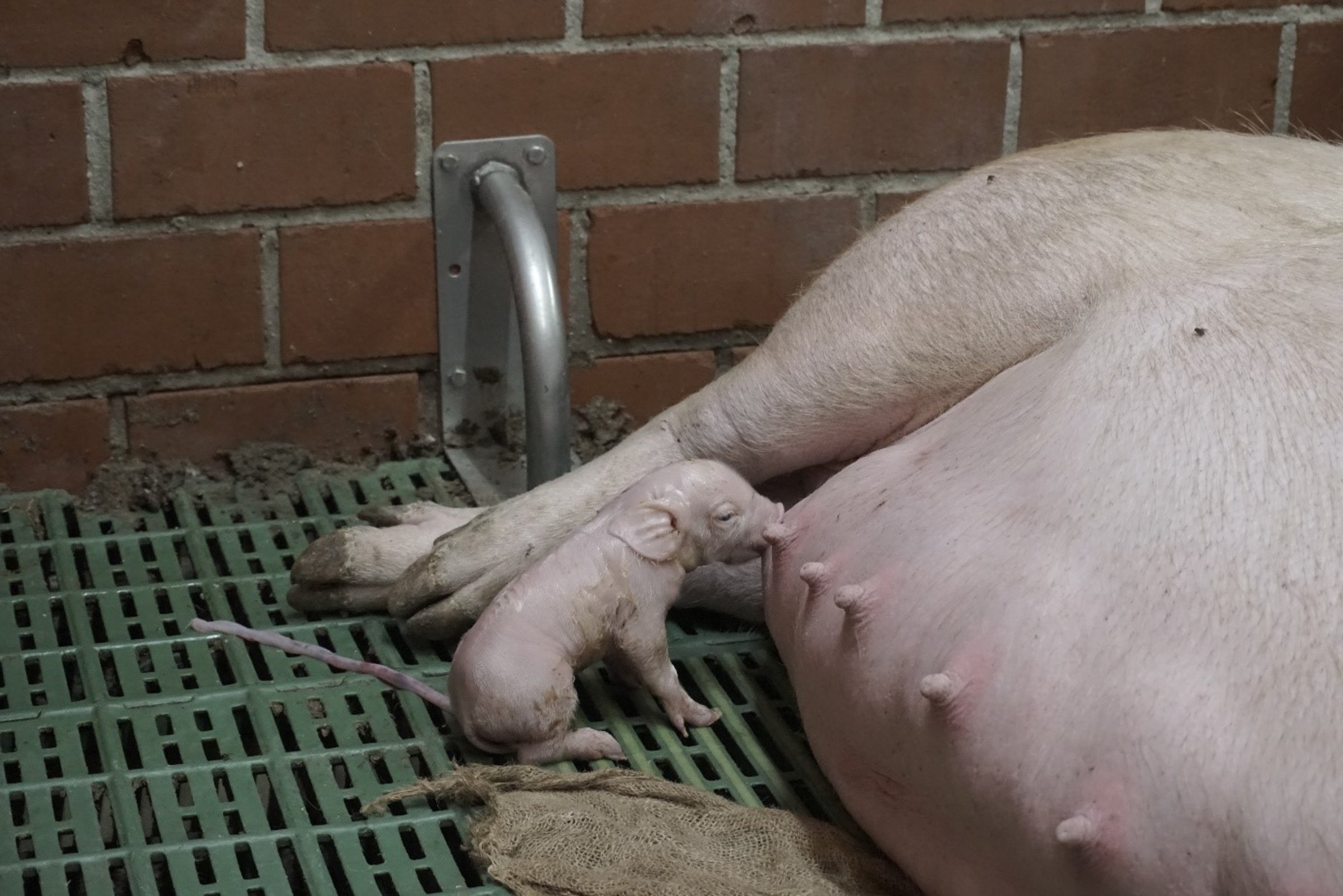
colostrum supply
Colostrum is a vital source of energy, so every piglet must consume colostrum as soon as possible after birth (Fig. 1). According to scientific studies, 200 g of colostrum per piglet is the absolute minimum. It is better to provide at least 250 g of colostrum per piglet within the first 24 hours.2 Close monitoring of the birth is essential to keep track of which piglets have taken in colostrum and which have not. A piglet should have reached a teat within 20 minutes of birth. It is vital to prevent the piglets from becoming chilled. Thermoregulation (e.g. through muscle shivering) consumes a lot of energy, meaning that the energy taken in with the colostrum is lost immediately. Smaller, lighter piglets have a lower capacity for thermoregulation compared to larger piglets and therefore suffer greater heat loss. A warm piglet nest is therefore essential.
How can colostrum intake be supported?
During farrowing, the atmosphere in the barn should be calm so that the sows can give birth without stress and present their teats to the piglets. Piglets wandering around the sow or in the pen should be placed at the teats. Drying the piglets and placing them at the teats immediately after birth reduces the time to first milk intake and can therefore be a crucial factor in optimising the survival of newborns in large litters.3 Hypothermic piglets must first be warmed up. To do this, the piglets are usually placed under a heat lamp. Other ways to warm up weak piglets include rubbing them with a warm cloth or giving them a bath in body-temperature (39.5 °C) water. When warming piglets in water, there are a few things to bear in mind: for example, the piglets must be stabilised with a ‘swim vest’ to prevent them from drowning. If the piglets remain in the water for too long, it cools down and then has a negative effect. It is also important that the piglets are dried thoroughly afterwards.
Another management measure to ensure that every single piglet can consume colostrum is ‘split suckling’. In this method, the first-born piglets are briefly confined to the piglet pen after consuming colostrum, so that the subsequent piglets can drink colostrum without significant competition. It should be noted that only strong piglets with full bellies are kept away for 1.5 to 2 hours. Once the other piglets have suckled, the ‘big ones’ are allowed back to the teats. This procedure can be repeated two or three times on the first day of life. However, a prerequisite is that the births take place as quickly as possible.
Weak piglets usually cannot reach the teats under their own steam and need assistance to obtain vital energy. If necessary, colostrum can be expressed and administered orally to the piglet (e.g. using a disposable syringe without a needle). Another option for an energy boost in weakened piglets is the administration of glucose, either orally or 10 ml of a 5% glucose solution intra-abdominally. In addition, there are commercially available products designed to serve as energy sources or even as colostrum substitutes, intended to boost the piglet’s vitality so that it can obtain colostrum from the sow itself. These are usually a combination of various ingredients (e.g. immunoglobulins, fat, vitamins). However, there are few scientific studies on their efficacy. In a study by Meyer et al.4, five commercially available preparations were tested for their effect on suckling piglets within the first 24 hours of life. No product was able to increase daily weight gains compared to the control group, and with the exception of one product, the test groups tended to show higher mortality rates rather than, as expected, lower rates than the control groups. The authors attribute these results to the very early administration of these highly concentrated products, which may have disrupted colostrum intake, and/or to the fact that the administration doses of approximately 2 ml per piglet recommended by the manufacturers represent a considerable volume for newborn piglets to digest and metabolise. In another study by Muns et al.5, the effect of an energy supplement and a colostrum substitute containing bovine immunoglobulins (IgG) on the survival rate of newborn piglets, the levels of immunoglobulin G and insulin-like growth factor 1 (IGF-I), as well as body weight, was investigated. The results suggested that, within 12 hours of birth, two oral doses of the supplements had a positive effect on the survival of the piglets and improved their IGF-I or IgG levels during the suckling phase. However, weight gain and litter growth up to weaning were not affected.
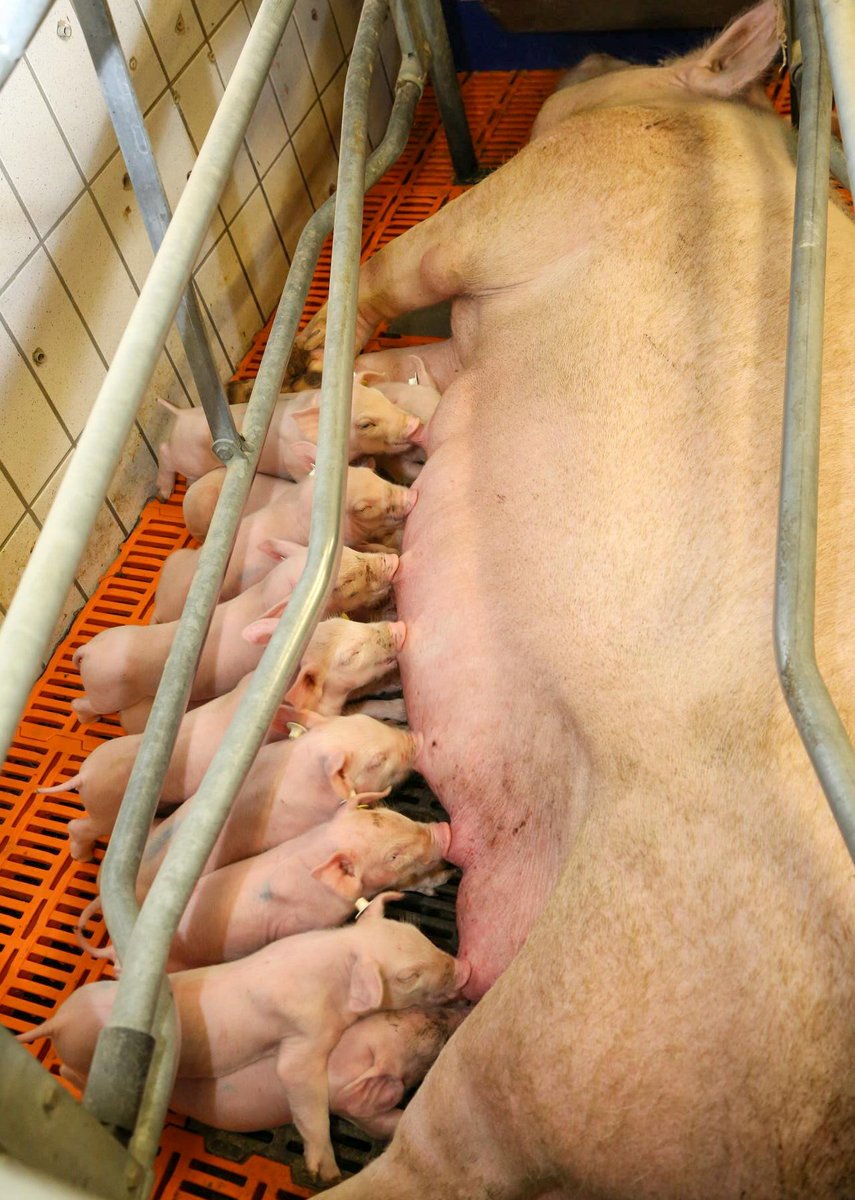
Throw compensation
Litter balancing refers to the practice of distributing individual piglets from very large litters to other sows within a farrowing group that have fewer piglets. The aim is to prevent suckling piglet losses due to starvation and to achieve consistent litter weights. At the same time, the sow’s biological potential is taken into account by matching the number of piglets to the number of teats (Fig. 2) and milk yield.
In practice, there are various strategies for litter balancing. It should be borne in mind that there are farm-specific differences in which measures work best.
3.1.1 Preparation
Before moving the sow, her maternal traits must be assessed. These include the number of functional teats, the presentation of the udder, a suitable distance between the teats, the size of the teats and, of course, the sow’s temperament. It is worth documenting these aspects in advance. Information from previous farrowings, such as the course of birth, milk yield and behaviour, can be noted on the sow’s record card. Information on whether the sow has previously acted as a foster sow and how the rearing of the piglets went should also be recorded. This allows potential foster sows to be selected in advance within a farrowing group. This approach is also beneficial when different people are assigned to the farrowing dates. The pre-selection then allows foster sows to be chosen more quickly and ensures that not too much time is wasted, particularly in large farrowing groups. A practical recommendation is also to ‘train litter balancing’ with new staff members.
3.1.2 The right time – ensuring colostrum intake
Each piglet should first feed on colostrum from its own mother. This means that litter balancing should be carried out no earlier than 12 hours after the birth of the last piglet.6 However, one should not wait too long either. If piglets are moved within the first 24 hours, there is no interruption to suckling.7 After about three days, a stable suckling order has established itself, so that piglets can then only be moved to teats that become available (e.g. if a piglet has been crushed).8, 9 Otherwise, this can lead to missed suckling times and stress for the piglets due to fighting for position.
3.1.3 Relocation strategies
In practice, various weaning strategies are employed. On the one hand, it is recommended to wean only the largest or strongest piglets from a litter, as it is assumed that they will be able to hold their own in a new litter and cope better with the stress.
However, the transfer of the smallest piglets is also practised. Here, the recommendation is that small piglets should be placed with a sow that has other small piglets. The reasoning behind this is that the piglets have a better chance of asserting themselves against piglets of similar weight in the new litter. Another recommendation for transferring the smallest piglets is to place them with a gilts, for example, one with smaller teats or a smaller litter.
However, there is conflicting information in the literature regarding both methods – relocating the largest or the smallest piglets – as to whether this is beneficial or detrimental to the piglets.10
In North America, continuous litter balancing is practised throughout the entire suckling period. The piglets are repeatedly sorted by size/weight, with older piglets also being moved back to younger litters. The advantage of this method is said to be the achievement of uniform weaning weights. However, several studies report the adverse effects of this method on growth, growth performance and mortality rates, 11, 12 so it is not recommended.
Regardless of whether the largest or the smallest piglets are moved, each piglet should, where possible, be given its own teat. Only in isolated cases is it not necessary for every piglet to have its own functional teat. The prerequisite for this is that the sow is in good health and has sufficient milk production. However, the literature describes that piglets without a fixed teat position grow more slowly than those with a fixed teat position.6
First-litter sows should take on as many piglets as there are teats on the udder in order to maximise stimulation of the mammary gland and thus milk yield in the next lactation. However, it should also be noted that the amount of colostrum in gilts is, by nature, somewhat lower than in older sows.13 By comparison, sows in their second and third litters produce more colostrum than first-litter sows or sows with four or more litters.
In addition to ‘swapping’ individual piglets, there is the strategy of transferring entire litters, e.g. if a sow dies during or after farrowing.
As a general rule: as much as necessary, but as little as possible! Because every swap increases the risk of spreading germs.
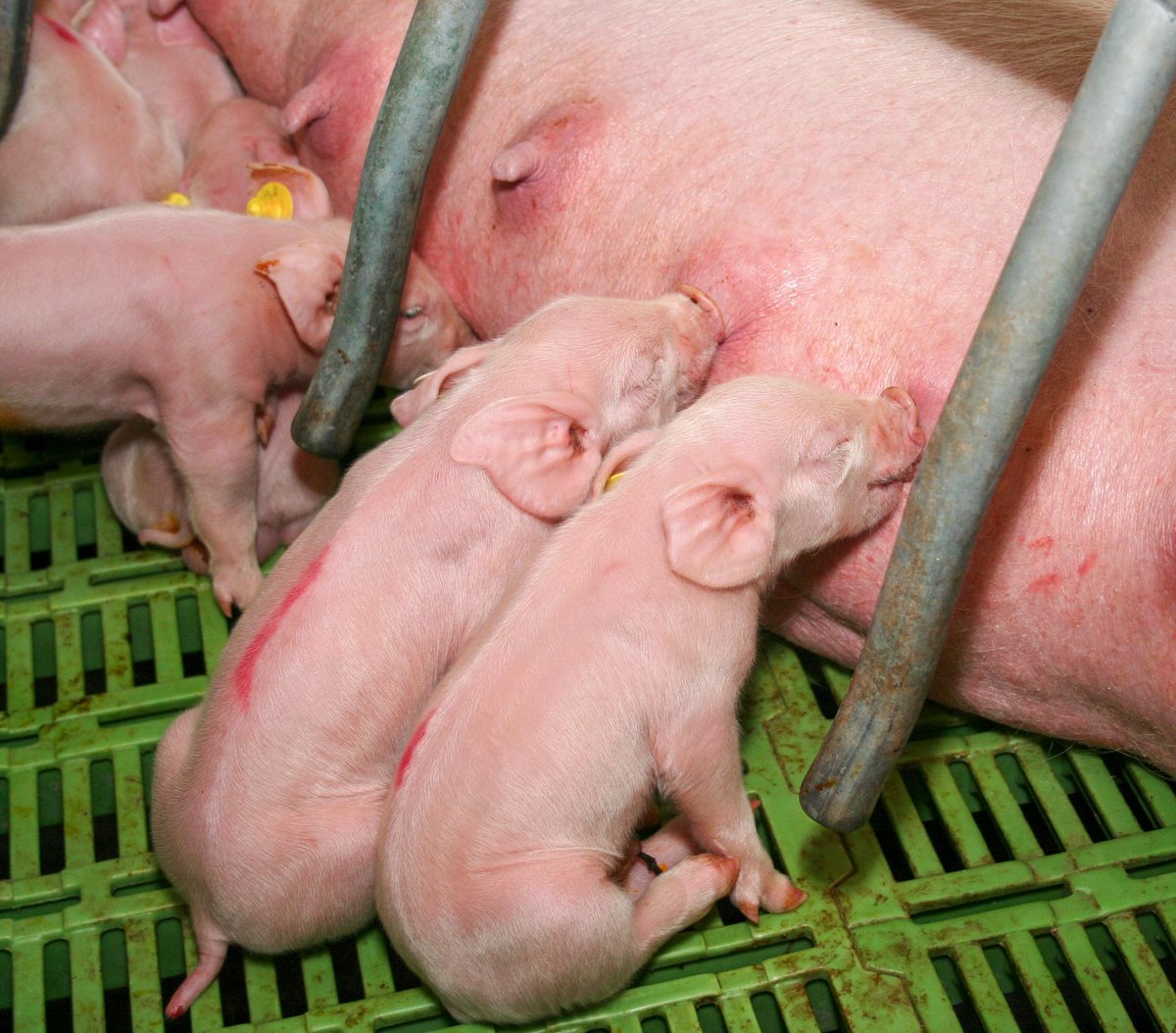
3.1.4 Making use of suckling behaviour
If piglets are born overnight, they are often already eight hours old or more by the time the livestock handler starts work. In such cases, one can make use of their suckling behaviour by prioritising the transfer of piglets that do not have a fixed teat. If you are not entirely sure when selecting piglets, mark the piglets in question with a specific colour and observe them again at a later time (Fig. 3). Even after weaning, the piglets must still be kept under close observation to ensure success.14 However, if a small piglet in a large litter has a stable suckling position, it makes sense to leave it with its siblings.
3.1.5 Split suckling in the first litters of the farrowing group
If there are too many piglets per sow but no sows are (yet) available for litter balancing, one can, for example, in a litter of 17 to 18 piglets, confine the seven to nine largest piglets in the farrowing pen for about two hours on several occasions, whilst leaving the smaller piglets with their mother to bridge the gap. After several such intervals, the smaller piglets will also have had enough milk and will be more ‘confident’ compared to their littermates.12, 14
3.2 The other side of the coin
However, alongside the many advantages of litter equalisation, there is also one major drawback: hygiene. Moving the piglets can also spread pathogens. In the worst-case scenario, this can lead to an infection spreading throughout the entire farrowing group. Nor should the potential stress on the piglets and sows be underestimated.
Whilst smaller piglets in particular benefit from litter equalisation, studies show that it is not necessarily advantageous for heavier piglets. These lose the advantage they have over lighter piglets in a mixed-weight litter, as they now have to compete with piglets of ‘equal strength’.15, 16 Furthermore, heavier piglets place greater demands on the lactating sow.
Some studies have also identified a link between litter equalisation and ear injuries17 or tail injuries/tail biting after weaning.18, 19 A further study by Calderón Díaz et al.20 also found that litter equalisation influences pericarditis at the slaughterhouse. Another study classified frequent litter equalisation as a risk factor for the occurrence of PMWS (Post-Weaning Multisystemic Wasting Syndrome), the most common clinical condition resulting from a PCV2 (Porcine Circovirus 2) infection.21

4.1 The role of supplementary feeding
Depending on when supplementary feeding of suckling piglets begins, it serves a different purpose. Early supplementary feeding of milk or milk replacer is primarily intended to keep very young piglets alive, for example, if the sow’s milk yield is insufficient or if small, weak piglets have less chance of securing a teat. Later supplementary feeding with prestarter, on the other hand, is intended to prepare the piglets for the upcoming change in diet at weaning and thus reduce the drop in weight gain following weaning.
The best feed for suckling piglets is sow’s milk. However, high numbers of piglets born per sow and litter require careful consideration of providing piglets with additional nutrients at an early stage. That said, this should not be started too early. All piglets should first consume colostrum, as the important protective substances cannot be artificially replaced.
It usually becomes clear within the first two to three days after birth whether piglets should be supplementary-fed. On farms with many live-born piglets, supplementary milk feeding is already standard practice.
It should be borne in mind that supplementary feeding may also result in overfeeding of strong piglets. In a study by Rohe and Hessel22, no benefits in terms of weight gain were observed in piglets with low birth weights following the use of milk cups (Fig. 4). From a birth weight of over 1.5 kg, the piglets benefited from the additional feed provided by the milk cups. The authors concluded that, contrary to expectations, it is not the lighter piglets that benefit from the cups, but the large, heavy ones.
4.2 Methods of supplementary feeding
From the first days of life up to the pre-starter phase, which begins around the third week of life, only liquid milk replacer should be used for piglet feeding.23 After this, both liquid and dry feed mixtures can be provided. The composition of the supplementary feed must be tailored to the enzyme capacity of the piglet’s gut and therefore varies with the piglets’ age. In the first few days of life, the production of enzymes for digesting lactose predominates. The endogenous production of enzymes for other nutrients such as carbohydrates (e.g. starch), fats and proteins is very low at first and develops only slowly with increasing age. This also depends on the food available to the suckling piglet. Supplementary feeding of piglets, particularly from the 3rd or 4th week of life, therefore also serves as so-called ‘enzyme training’. A transition from milk powder to prestarter that is as gentle as possible can be achieved by blending the feed. In most cases, however, prestarter is offered as an additional option so that the piglet can choose. Further information can be found in the new DLG leaflets on piglet supplementary feeding.
DLG leaflet 485 "Stationary supplementary feeding systems for suckling piglets – Part 1"
DLG Fact Sheet 486 “Stationary supplementary feeding systems for suckling piglets – Part 2”
Regardless of whether supplementary feeding is carried out using mobile supplementary troughs or a permanently installed system (e.g. a cup system), by hand or automatically (Figs. 5–10), freshness and good hygiene are essential. Fresh and clean water must always be used when mixing milk replacers or feed mash. Otherwise, the high temperatures in the farrowing pen will very quickly lead to massive bacterial growth and spoilage of the milk or supplementary feed! Fly infestation can also increase dramatically if milk or mash is left standing for long periods.
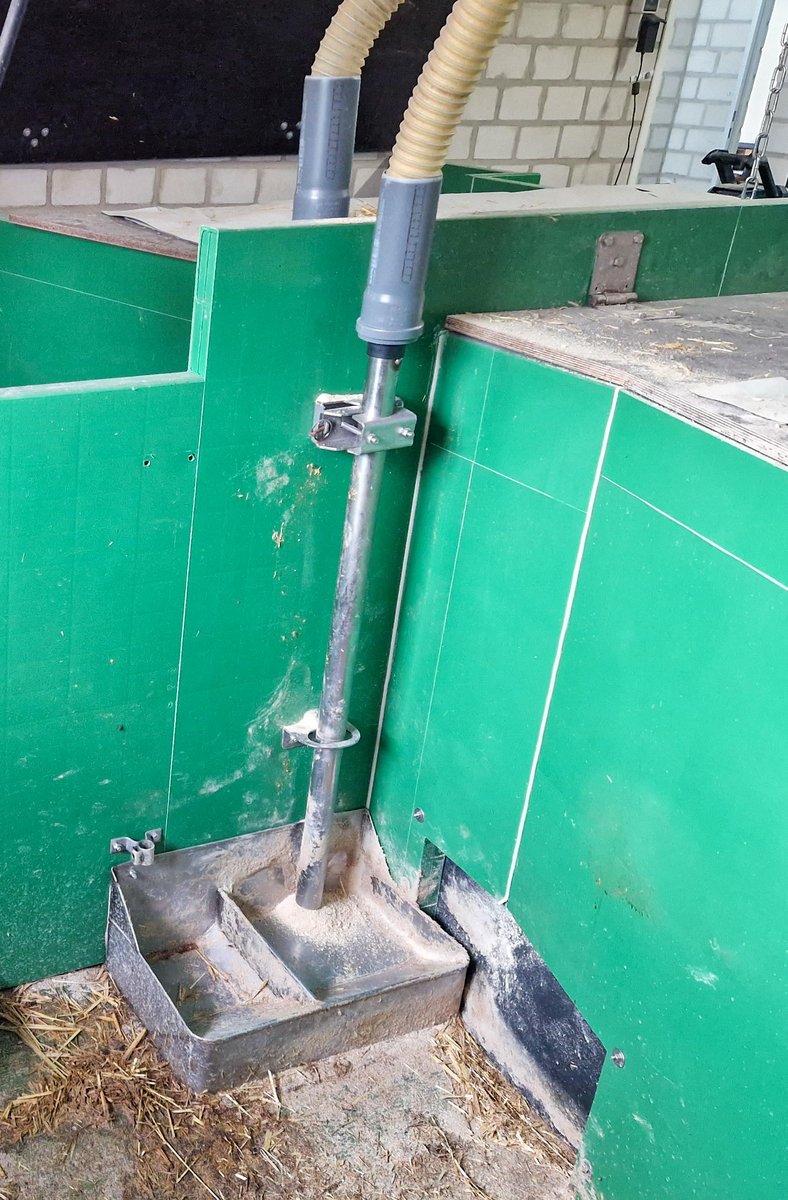

(Kopie 6)
Another method of supplementary feeding involves the sow and piglets eating together from a trough or off the floor (Figs. 11 & 12). In this case, no special feed for suckling piglets is used, and the piglet eats the sow’s feed along with her. As a rule, they do not consume large quantities; the benefit for the piglet lies more in the fact that it learns to eat from its mother and its digestive tract is gradually prepared for solid feed.
Generally, one advantage of supplementary feeding with the sow’s own litter is that the reduced movement of piglets between litters and to foster sows reduces the horizontal and vertical transmission of diseases.
4.3 Economic aspects
In addition to animal welfare considerations, the economic viability of supplementary feeding must not be overlooked. A key economic indicator for piglet production is the number of weaned piglets, which is determined by the sow’s high fertility and the reduction in suckling piglet losses up to weaning. The extent to which a supplementary feeding system is profitable depends on several operational factors as well as the cost basis used for the calculation. It is therefore not possible to make a general statement regarding the number of weaned piglets required for supplementary feeding to be economically viable. If simple supplementary feed troughs that are filled by hand are used, the investment costs are manageable, and running costs consist mainly of the milk replacer itself. However, the additional time required for manual supplementary feeding should not be underestimated. Mixing the milk replacer by hand and feeding, at best, small quantities several times a day takes a lot of time.
Full automation reduces the workload, but this comes at a price. The investment costs for the troughs, sensors, pipes and valves alone quickly amount to more than €160 per farrowing pen. Added to this are the costs for the mixing and distribution technology. Semi-automatic systems are slightly less expensive, with their technology limited to a timer-controlled pump and a bucket as a dosing container. A feeding system is available for around €650 including VAT.24 Rohe and H22essel concluded from their trial that automatic milk and prestarter supplementary feeding only breaks even if at least 0.65 more piglets per litter are weaned.
wet nurses
In the case of highly fertile sows, the average number of teats is regularly lower than the number of piglets born alive. This means that there are usually more piglets than the sows can nurse. Rearing these ‘surplus’ piglets is a challenge that must be addressed from both an animal welfare and an economic perspective. To this end, the concept of ‘foster rearing’ is used, meaning that piglets are not reared by their own mothers.
The use of foster sows serves several purposes:
- Reducing weight loss in sows caused by excessive suckling,
- Reducing suckling piglet losses and thus increasing the number of piglets reared/sold per sow per year,
- Increasing the lifetime productivity of sows,
- improving the growth prospects of small piglets.
The quality of the piglets sold can also improve (better balance in weight and age).25
5.1 Natural wet nurses
Natural foster sows are sows whose own piglets have already been weaned. They may therefore already be in their fourth or fifth week of lactation, meaning that the composition of their milk is no longer optimal for piglets in their first week of life. Young piglets may develop a deficiency in certain nutrients. Furthermore, the very high-fat milk can quickly cause diarrhoea. It is therefore essential that piglets consume colostrum before weaning so that they can absorb maternal antibodies and other important nutrients for a good start in life.
Even though piglets are not suckled by their own mother when reared by a foster sow, they can still be raised in a natural environment. Feeding on sow’s milk from a teat is the most natural behaviour. Other systems and the use of special piglet milk replacers always represent a compromise. As a further advantage alongside maternal care, foster piglets have the opportunity to learn behaviours such as drinking water from a bowl-type drinker from the sow.
Not only intensive litter balancing but also the transfer of piglets to foster sows can have a detrimental effect on animal health. Mixing piglets from different litters facilitates the spread of pathogens. Furthermore, the resulting stress has a negative impact on the immune system, making piglets more susceptible to disease.
However, piglets usually benefit from the use of a foster sow. Nevertheless, from the sow’s perspective, there are also disadvantages to consider. Even though the larger and stronger newborn piglets are generally placed with the foster sow, there is a clear discrepancy between the milk intake of the added piglets and the sow’s milk yield. The resulting milk pressure is painful for the sow and can lead to the new piglets not being accepted or even to the sow ceasing milk production entirely. Treatment with painkillers is therefore frequently administered.26 Furthermore, there is a risk that the sow will be over-milked, leading to problems with rebreeding. The piglets’ live weight gain and the sows’ limited feed intake capacity often result in an energy deficit in the sows. To obtain additional energy for milk production, body tissue is therefore mobilised – accompanied by a loss of live weight in the sow.27 In addition to regular monitoring of the foster sow’s body condition, the udder and teats should also be inspected, as the prolonged suckling period places considerable strain on the udder and teats.
5.1.1 Suitability as a foster sow
Sows that have previously reared large litters of uniform piglets are suitable as foster sows. The key to such high rearing performance is, above all, a good udder.
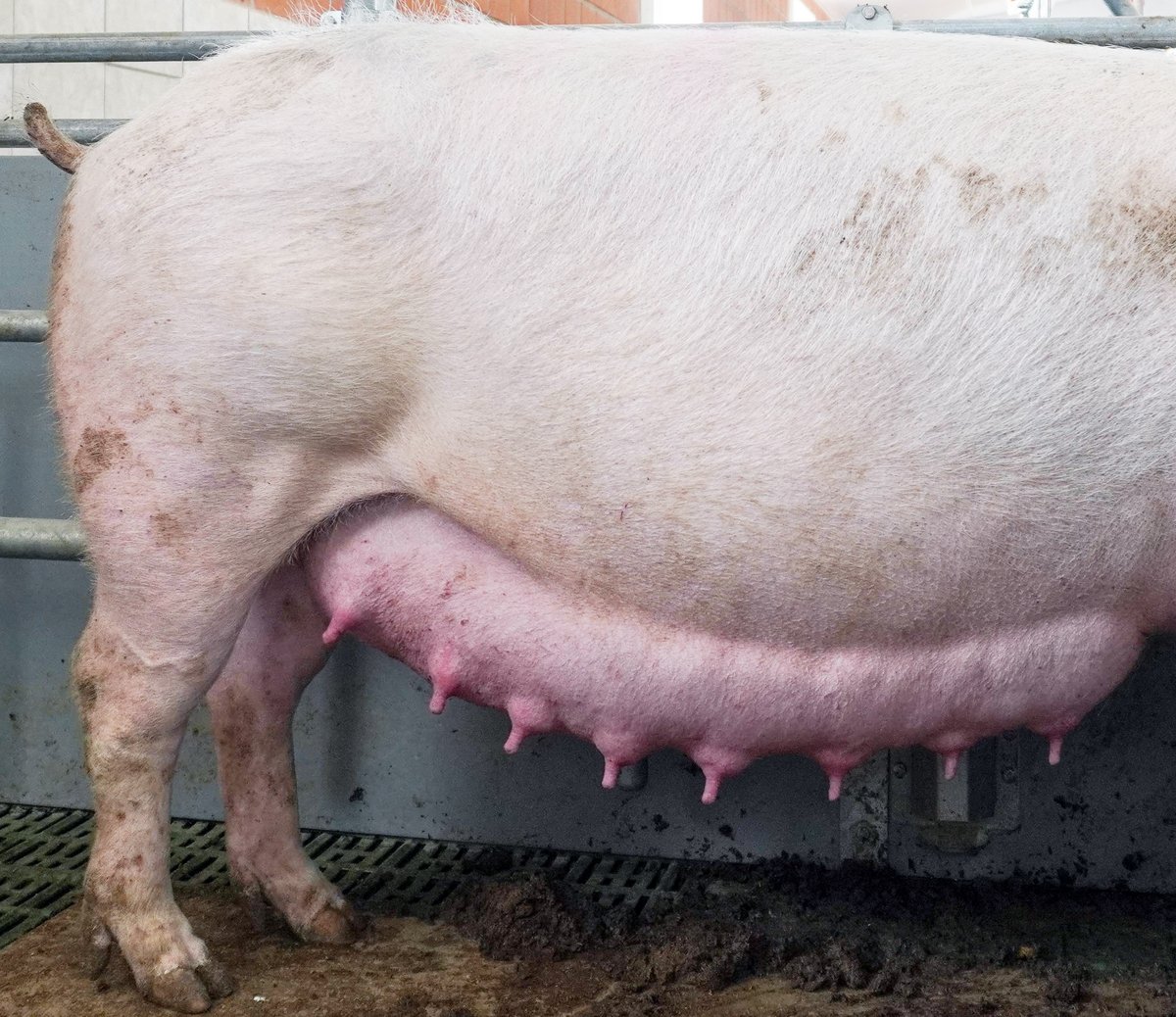
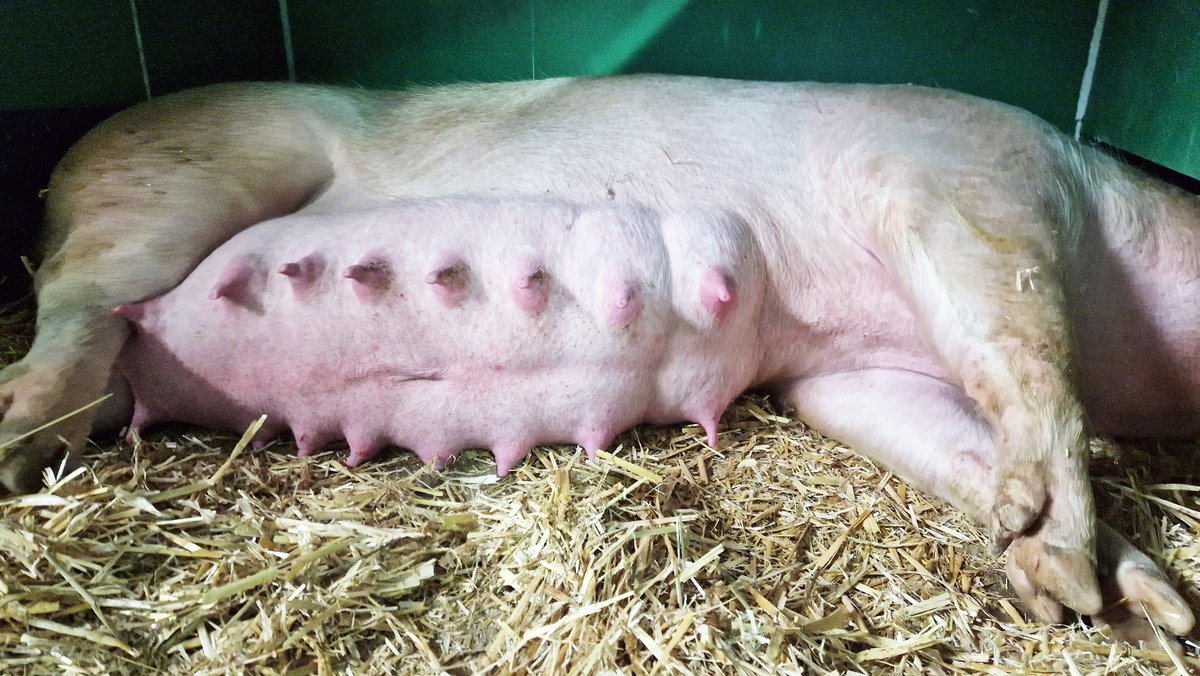
A good udder (Figs. 13 & 14) includes:
- the number of functional teats: 16 is better than 14
- the size of the teats: piglets find it easiest to cope with small, slightly longer teats
- a distance between the two teats that is not too great: this facilitates good teat presentation and easy access
- firm tissue
These characteristics are usually found in sows with a low number of litters to date. Furthermore, maternal traits such as a calm demeanour towards unfamiliar piglets are important. Good foster sows are also characterised by a good appetite, which helps to minimise the risk of emaciation.
With regard to weight loss, sows with a flat milk production curve are particularly advantageous, whereas sows with a steep lactation curve tend to lose weight because they burn through a relatively large amount of body reserves. Sows that maintain their body weight over several weeks and months whilst producing moderate milk yields, and thus become pregnant again following a long lactation period, are therefore suitable as foster sows.28
5.1.2 Action to be taken if there is no lead sow
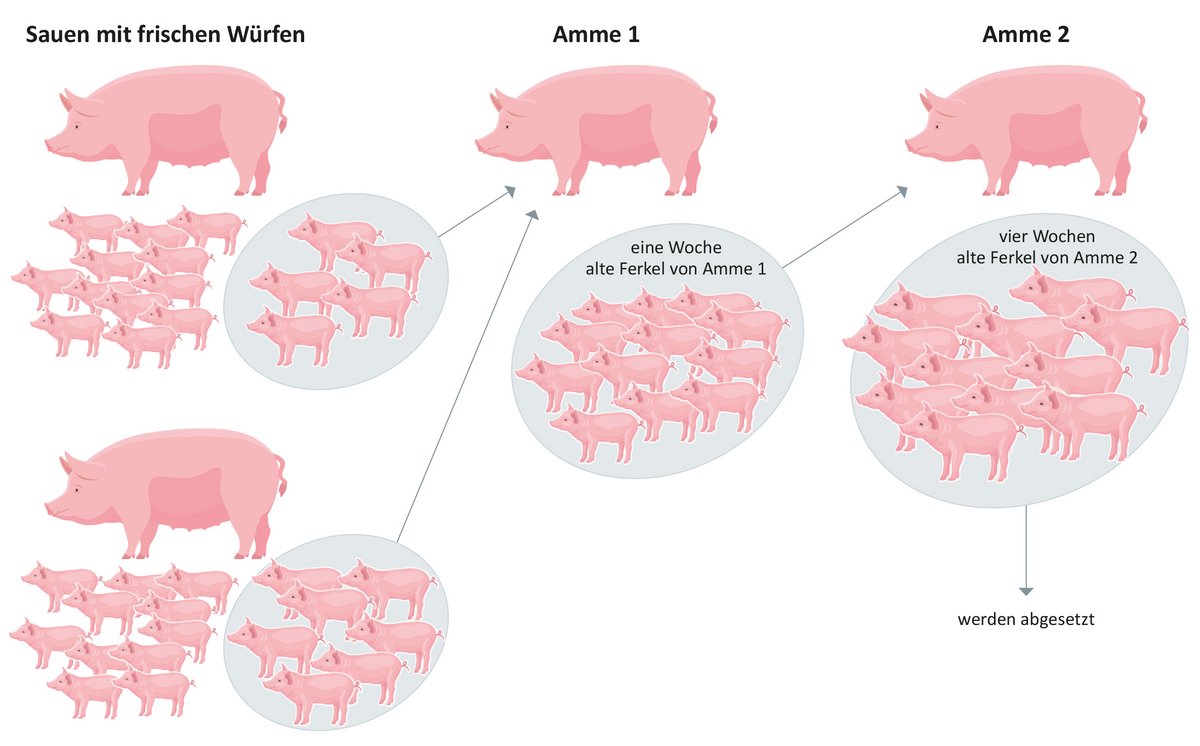
If there is a surplus of piglets, if sows have insufficient milk, or if a sow dies and no foster sow is available, a two-stage foster system, as is common in Denmark, can be used.29 In this system, the largest newborn piglets are reared by sows that have good milk production and have farrowed about a week earlier. The one-week-old litter is reared by sows that are currently being weaned (Fig. 15). A weekly cycle is therefore a prerequisite for this system.
However, it must not be forgotten that the lactation period for the foster sows is significantly extended. Therefore, the condition and milk yield of the foster sows should be checked regularly to ensure they are not overburdened.
5.1.3 Monitoring the sows’ acceptance of the piglets from other litters
Leave one or two of the sow’s own smallest piglets with her for up to 24 hours to help the new litter settle in. The presence of her own piglets is intended to have a calming effect on the sow, making it easier for the new piglets to bond with their foster mother.
A practical recommendation for cases where individual piglets rather than whole litters are to be transferred is to confine the two new piglets with the existing piglets in the farrowing pen for one hour. Beforehand, they can be rubbed against the foster sow’s vulva to help them adapt to her scent as quickly as possible.14
Staggered replacement is another way of positively influencing the acceptance of the new piglets. For this, the first half of the old litter is swapped for the new litter in the morning, and the second half in the evening.9 An oxytocin injection is also said to stimulate bonding with the new litter. However, the use of this hormone should always be discussed with the vet to avoid unnecessary hormone administration.
5.1.4 Getting used to the bay
Foster sows must first become accustomed to the pen before they are given other sows’ piglets. Ideally, the sow should remain in the pen where she raised her own piglets. However, this means that the pens cannot be operated on a first-in, first-out basis.
For all-in/all-out pen allocation, a separate pen for foster sows can be set up, which, unlike standard pens, is usually occupied continuously. The sows serve as foster sows for as long as their milk production is sufficient. However, the foster sow should have the new piglets for approximately 8 to 24 hours before being moved to a new pen. New pens with unfamiliar odours due to cleaning and disinfection, combined with new piglets, can overwhelm even the most docile foster sows.14
5.1.6 Economic aspects
The advantage of using natural foster sows is that there are no capital costs for equipment and the piglets are suckled by sows. However, additional farrowing pens are required. Ideally, a separate pen or pens should be set aside specifically for the foster sows. This can sometimes be difficult to implement on existing farms and can only be achieved by reducing the herd size.
If a new building is planned, additional farrowing pens for foster sows must be included in the plans. From a business perspective, farrowing pens are among the most expensive spaces, so this must also be considered a cost factor. Furthermore, the foster sows are initially unavailable for rebreeding, which increases the average inter-litter interval on the farm.
5.2 Artificial/technical wet nurses
In addition to the ‘traditional’ formation of natural foster groups – that is, sows whose own piglets have usually been weaned – there are also various ‘artificial’ or ‘technical’ foster sows available on the market.
The use of artificial foster sows involves completely motherless rearing, i.e. the piglets are weaned at just a few days old (usually on the 2nd day of life) and reared in separate pens or crates equipped with an automatic feeding system. Although this ensures the piglets are supplied with essential nutrients, they lack natural contact with the sow, and mother-to-child learning is not possible. This can sometimes have negative consequences for the piglets’ behaviour later in life.
Technical feeding systems are available for different types of feed (piglet milk, prestarter with a high milk powder content or without milk powder) and for different forms of administration (liquid, slurry, cold, warm). The technology must meet the piglets’ requirements: frequent feeding of small, uniform quantities, simultaneous feeding of all piglets, and impeccable hygiene. However, the requirements of the feed must also be met: ensuring specific temperature ranges, liquid/porridge-like consistency, and swelling times.

Bibliography
- 1 North Rhine-Westphalia Chamber of Agriculture, Department 51 – Business Management, Construction, Energy and Employee Advice (2023): Sector analysis of piglet production in North Rhine-Westphalia, 2021/2022 marketing year.
- 2 Quesnel, H., Farmer, C. & Devillers, N. (2012): Colostrum intake: Influence on piglet performance and factors of variation. Livestock Science, 146(2-3), 105-114.
- 3 Vasdal, G., Østensen, I., Melišová, M., Bozděchová, B., Illmann, G. & Andersen, I. L. (2011): Management routines at the time of farrowing—effects on teat success and postnatal piglet mortality from loose-housed sows. Livestock Science, 136(2-3), 225-231.
- 4 Meyer, E., Thamm, C., Bergel, B. & Jahn, I. (2012): Management of high performance in piglet production and pig fattening. https://www.landwirtschaft.sachsen.de/management-hoher-leistungen-in-ferkelerzeugung-und-schweinemast-11713.html
- 5 Muns, R., Nuntapaitoon, M. & Tummaruk, P. (2017): Effect of oral supplementation with different energy boosters in newborn piglets on pre-weaning mortality, growth and serological levels of IGF-I and IgG. Journal of Animal Science, 95(1), 353–360.
- 6 Müller, K. & Sonntag, S. (2012): Management of large litters. DLG Fact Sheet 370. https://www.dlg.org/fileadmin/downloads/landwirtschaft/themen/publikationen/merkblaetter/dlg-merkblatt_370.pdf
- 7 Muns, R., Silva, C., Manteca, X. & Gasa, J. (2014): Effect of cross-fostering and oral supplementation with colostrum on the performance of newborn piglets. Journal of Animal Science, 92, 1193–1199.
- 8 De Vos, M., Che, L., Huygelen, V., Willemen, S., Michiels, J., Van Cruchten, S. & Van Ginneken, C. (2014): Nutritional interventions to prevent and rear low-birthweight piglets. Journal of Animal Physiology and Animal Nutrition, 98(4), 609–619.
- 9 Früh, B. (2015): Avoiding oversized litters and piglet losses. FiBL Fact Sheet, Research Institute of Organic Agriculture, Order No. 1695, Swiss edition.
- 10 Alexopoulos, J. G., Lines, D. S., Hallett, S. & Plush, K. J. (2018): A review of success factors for piglet fostering in lactation. Animals, 8(3), 38.
- 11 Robert, S. & Martineau, G. P. (2001): Effects of repeated cross-fosterings on preweaning behaviour and growth performance of piglets and on maternal behaviour of sows. Journal of Animal Science, 79(1), 88–93.
- 12 Wattanaphansak, S., Luengyosluechakul, S., Larriestra, A. & Deen, J. (2002): The impact of cross-fostering on swine production. Thai J. Vet. Med, 32 (Suppl), 101.
- 13 Devillers, N., Farmer, C., Le Dividich, J. & Prunier, A. (2007): Variability of colostrum yield and colostrum intake in pigs. Animal, 1(7), 1033-1041.
- 14 Wiedmann, R. (2012): Healthy piglets from healthy sows – Principles for optimal litter balancing, article series ‘Healthy piglets from healthy sows’ (Part 1), LSZ Boxberg Information Service; https://lsz.landwirtschaft-bw.de/pb/site/pbs-bw-mlr/get/documents_E-268493503/MLR.LEL/PB5Documents/lsz/pdf/v/vitale%20Ferkel%20von%20gesunden%20Sauen%20Teil%201.pdf?attachment=true
- 15 Huting, A. M. S., Almond, K., Wellock, I. & Kyriazakis, I. (2017): What is good for small piglets might not be good for big piglets: The consequences of cross-fostering and creep feed provision on performance to slaughter. Journal of Animal Science, 95(11), 4926-4944.
- 16 Vande Pol, K. D., Bautista, R. O., Harper, H., Shull, C. M., Brown, C. B. & Ellis, M. (2021): Effect of rearing cross-fostered piglets in litters of either uniform or mixed birth weights on preweaning growth and mortality. Translational Animal Science, 5(1), txab030.
- 17 Calderón Díaz, J. A., García Manzanilla, E., Diana, A. & Boyle, L. A. (2018): Cross-fostering implications for pig mortality, welfare and performance. Frontiers in Veterinary Science, 5, 123.
- 18 Moinard, C., Mendl, M., Nicol, C.J. & Green, L.E. (2003): A case-control study of on-farm risk factors for tail biting in pigs. Applied Animal Behaviour Science, 81, 333–335.
- 19 Hakansson, F. & Houe, H. (2020): Risk factors associated with tail damage in conventional non-docked pigs throughout the lactation and rearing period. Preventive Veterinary Medicine, 184, 105160.
- 20 Calderón Díaz, J. A., Boyle, L. A., Diana, A., Leonard, F. C., Moriarty, J. P., McElroy, M. C., McGettrick, S., Kelliher, D. & Manzanilla, E. G. (2017): Early life indicators predict mortality, illness, reduced welfare and carcass characteristics in finisher pigs. Preventive Veterinary Medicine, 146, 94–102.
- 21 Rose, N., Larour, G., Le Diguerher, G., Eveno, E., Jolly, J. P., Blanchard, P., Oger, A., Le Dimna, M., Jestin, A. & Madec, F. (2003): Risk factors for porcine post-weaning multisystemic wasting syndrome (PMWS) in 149 French farrow-to-finish herds. Preventive Veterinary Medicine, 61(3), 209–225.
- 22 Rohe, A. & Hessel, E. (2016): Economic evaluation of automatic milk and prestarter supplementary feeding for suckling piglets. Landtechnik 71, pp. 118–130.
- 23 Ziron, M., Ziron, C., Weber, M., Holling, D., Jostmeier, J. & Häuser, S. (2023): Mobile supplementary feeding systems for suckling piglets. DLG Fact Sheet 486. https://www.dlg.org/de/landwirtschaft/themen/tierhaltung/schwein/dlg-merkblatt-486
- 24 Burfeind and Werning (2019): Milk bar: weaning 20 piglets per sow, SUS 6/2019, pp. 40–41. https://www.susonline.de/archiv/fuetterung/milchbar-20-ferkel-pro-sau-absetzen-11925488.html
- 25 Janssen, H. (n.d.): Help with large litters – farrowing sows, https://www.lwk-niedersachsen.de/lwk/news/11180_Hilfe_bei_vielen_Ferkeln-Ferkelammen
- 26 Berentsen, A. C. (2022): Highly fertile sows – management and animal welfare implications, In: 13th Lower Saxony Animal Welfare Symposium, Conference Proceedings Lower Saxony Ministry of Food, Agriculture and Consumer Protection & Lower Saxony State Office for Consumer Protection and Food Safety. 133–141.
- 27 Roth, F. X. (2014): Pig feeding. In: Stangl, G. I.; Schwarz, F. J.; Roth, F. X.; Südekum, K. H.; Eder, K. (eds.): Kirchgeßner Animal Nutrition. A Guide for Study, Consultancy and Practice. 14th ed., Frankfurt am Main, DLG-Verlag, pp. 243–254.
- 28 Pflanz, W. & Wiedmann, R. (2012): Healthy piglets from healthy sows – Reducing suckling piglet losses with natural foster sows – Article series ‘Healthy piglets from healthy sows’ (Part 2): file:///D:/TEMP/vitale%20Ferkel%20von%20gesunden%20Sauen%20Teil%202.pdf
- 29 Niggemeyer, H. (2016): Danes score with foster sows, SUS 01/2016, pp. 26–28.