
- Uwe Beißwenger, Baden-Württemberg State Control Association
- Lambert Grosse, VzF GmbH
- Ulrich Kühnlein, Baden-Württemberg Cattle Fattening Advisory Service
- Martin Mayr, AELF Töging am Inn
- Stefan Müller, KälberKontorSüd GmbH
- Lower Saxony State Office for Consumer Protection and Food Safety
- Dr. Georg Teepker, Lower Saxony Chamber of Agriculture
- Klaus Zimmerer, AELF Nördlingen-Wertingen
- Lukas Trzebiatowski, Department of Veterinary Medicine, JLU Giessen
- Caroline Leubner, Landesbetrieb Landwirtschaft Hessen
The opportunity for animals to engage in comfort behaviours leads to improved animal welfare. Cattle have a natural need to rub and scratch themselves. This behaviour serves to groom their coats and is also beneficial when they experience itching. Animal owners should enable their animals to engage in such natural behaviours. This can also bring more calm to the animal groups. However, a special feature of bull fattening compared to dairy cattle farming is the great strength that bulls can exert and the special requirements this places on the robustness of the elements used. The position of the installation in the barn is also of particular importance, as comfort behaviour should not compete with other behaviours such as feeding, water intake and resting. Installation too close to the feeding or drinking areas can also lead to contamination of the feed and water. It therefore makes sense to install the scratching facilities between the feeding and lying areas, e.g. on the pen partition. In addition, there must be no danger or risk of injury to the animals. The scratching facility can contribute to the transmission of skin diseases (e.g. through parasites or fungi). To reduce this risk, regular cleaning or replacement of the scratching facility is recommended. In addition, ectoparasites and fungal infections should be controlled. Here is a brief overview of the various scratching and rubbing facilities for fattening bulls.
All animals kept in groups (in free-range pens, outdoor runs or exercise pens) must be provided with a functional scratching facility (e.g. a scratching brush) that is suitable for the species, at least one per group or pen, so that each animal can use a scratching facility. No scratching facility is required on pasture. Scratching facilities must be available in a ratio of at least 1:60 animals and be freely accessible. The scratching facility must be mounted vertically. It must be sufficiently long (at least 90 cm) and wide (at least 30 cm) and allow species-typical scratching (on the sides of the body) throughout the entire fattening period. The scratching facility must have an uneven surface profile. The scratching facility must not pose a risk of injury. If a scratching facility is no longer functional, it must be replaced as soon as it is safe to do so (e.g. after the animals ready for slaughter have been removed from the barn). The date of failure and replacement/repair must be documented.
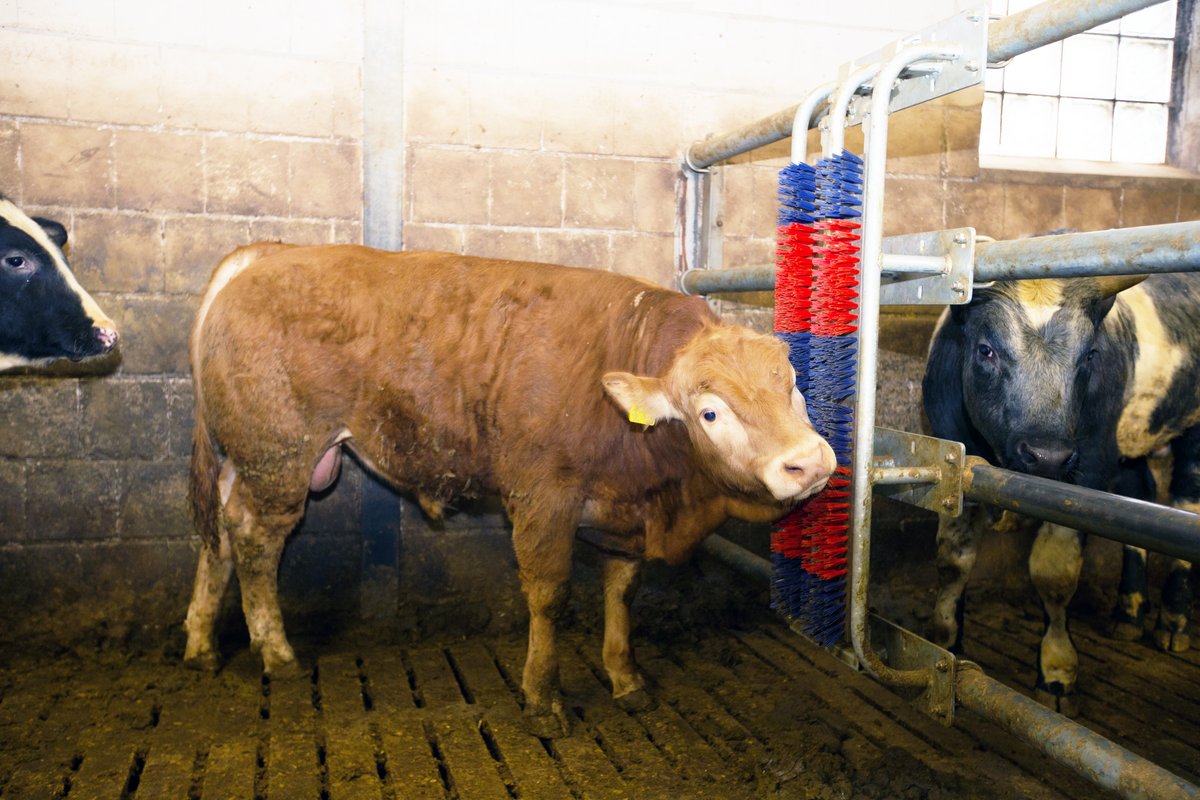
scrubbing brushes
Scrubbing brushes are easy to install and are generally well accepted by the animals. Brushes specifically designed for fattening bulls are available in shops. Brushes that are not specifically designed for use with fattening bulls are often not very robust and can show high wear and tear.

corrugated sheets
Chequered plates are characterised by their high robustness. Compared to other systems, chequered plates are less popular because they offer a less structured surface.
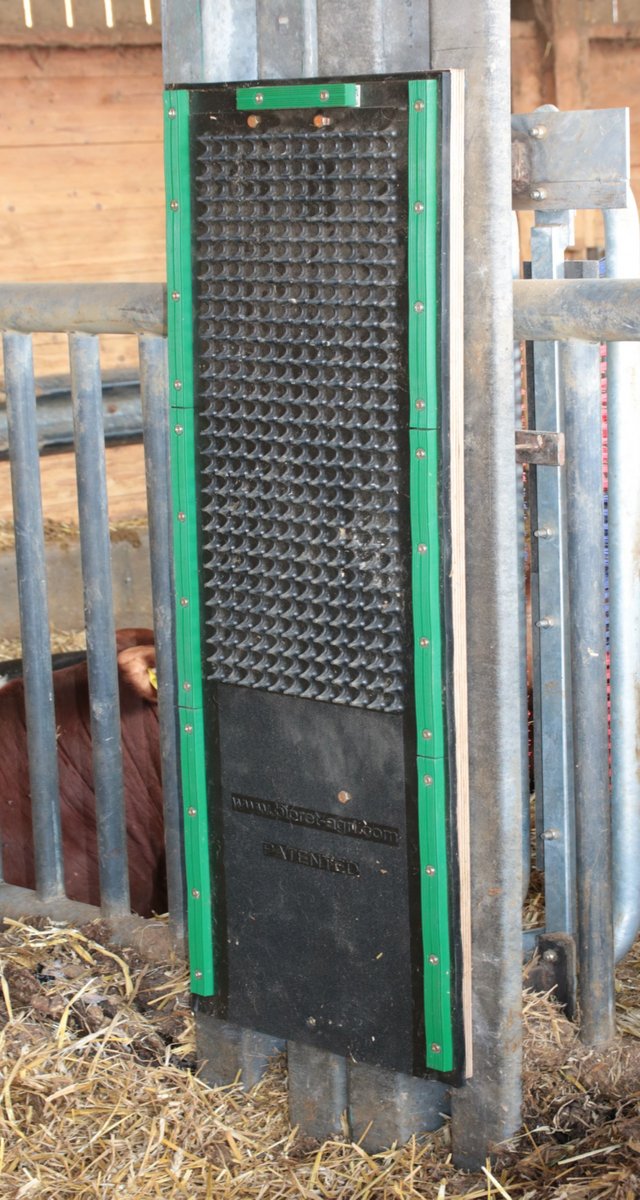
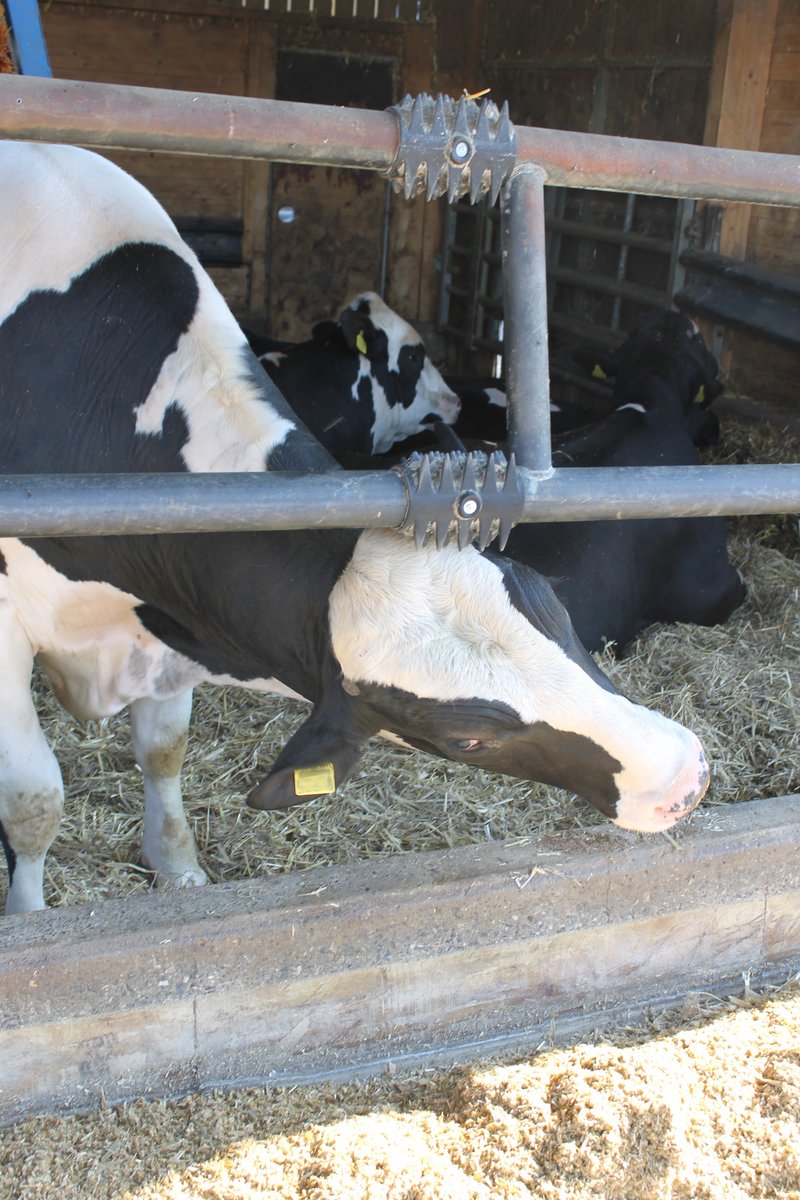
Nubby mats / Scratching mats
Studded mats are more malleable than chequer plate and are therefore more popular, but they wear out more quickly.
Rotating scrubbing brush
In selection trials, the rotating scrubbing brush proved to be the most popular. However, the high purchase costs, operating costs (electricity) and wear and tear have a negative impact. The rotating scrubbing brushes may be of particular interest for larger groups of bulls (40 or more animals in the group).

home-made
Homemade scratching and rubbing posts are also a possible alternative. The prerequisite is that the elements do not pose a risk of injury to the bulls. In addition, the release of rubber or plastics into the environment should be avoided. Example: "old sweeper brush with plastic bristles".
Assessment of abrasion possibilities by the working group
When purchasing scratching facilities for bulls, there are a number of factors that influence the purchasing decision. The working group "Housing systems in bull fattening" in the Focus Animal Welfare network has considered this issue and carried out a subjective evaluation of the systems.
| Type of scratching facility | Acceptance | Durability | Acquisition costs | Running costs | Comments |
| Scratch brush | ++ | + | + | None | |
| Chequer plate | - | ++ | ++ | None | |
| Studded mat | + | 0 | - | None | |
| Scratching posts | + | ++ | ? | None | |
| Rotating scrubbing brush | ++ | + | -- | -- (electricity) | For groups of more than 40 animals |
| Homemade | N/A | N/A | N/A | N/A | |
| Scour piles | N/A | N/A | N/A | None |
Literature
- Initiative Tierwohl (2022). Handbook on agriculture criteria catalogue for cattle fattening. initiative-tierwohl.de/wp-content/uploads/2022/02/2022-02-15_Kriterienkatalog-Rind_Rindermast.pdf (accessed on 26 January 2024)