
- Anne-Claire Berentsen, LAVES Lower Saxony
- Reinhard Brunner, Animal Welfare Pilot Farm
- Karl Harleß, Animal Welfare Pilot Farm
- Dr. Haiko Hofmann, Federal Association for Cattle and Pigs
- Mirjam Lechner
- Dr. Eckhard Meyer, Saxon State Office for the Environment, Agriculture and Geology
- Dr. Sandra Ripke, LAVES Lower Saxony
- Dr. Karl-Heinz Tölle, German Pig Farmers’ Association
- Dr. Astrid van Asten, North Rhine-Westphalia Chamber of Agriculture
- Dr. Maren Gerlach, North Rhine-Westphalia Chamber of Agriculture
- Ulrich Hartmann, North Rhine-Westphalia Chamber of Agriculture
- Marie Lüke, North Rhine-Westphalia Chamber of Agriculture
Introduction
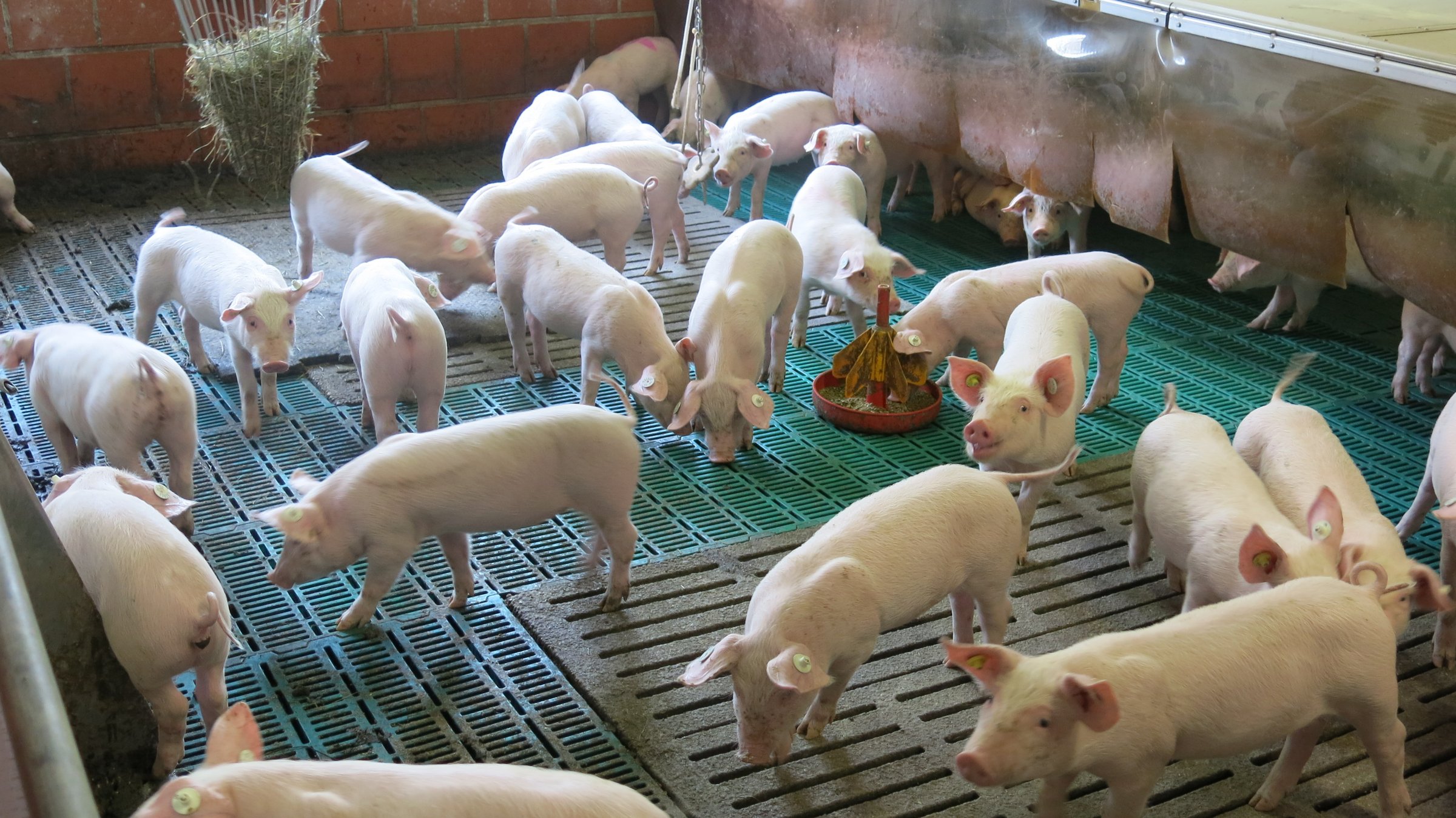
Tail-biting is a widespread problem in pig farming that can have significant implications for animal welfare and economic performance. It is a multifactorial phenomenon. Analysing and addressing the causes can be very challenging. In a small, non-representative survey, the Pig Division asked the network’s pilot pig farms about their experiences.

Tail docking of suckling piglets is practised in conventional pig farming as an effective method to prevent tail-biting. However, under EU legislation and the provisions of the German Animal Welfare Act, tail docking is permitted only in justified exceptional cases and only up to the fourth day of life. To facilitate a gradual phase-out of tail docking, the ‘National Action Plan for the Phase-out of Tail Docking to Improve Controls for the Prevention of Tail-biting and to Reduce Tail Docking in Pigs’ has been in place since 2019. The principles of the action plan (risk analysis, farmer’s declaration) were incorporated into the draft bill for the amendment to the Animal Welfare Act in 2024 and also placed greater obligations on pig farms. Even though the amendment to the Act was not passed, the EU will address the issue more rigorously in future.
Causes of tail-biting
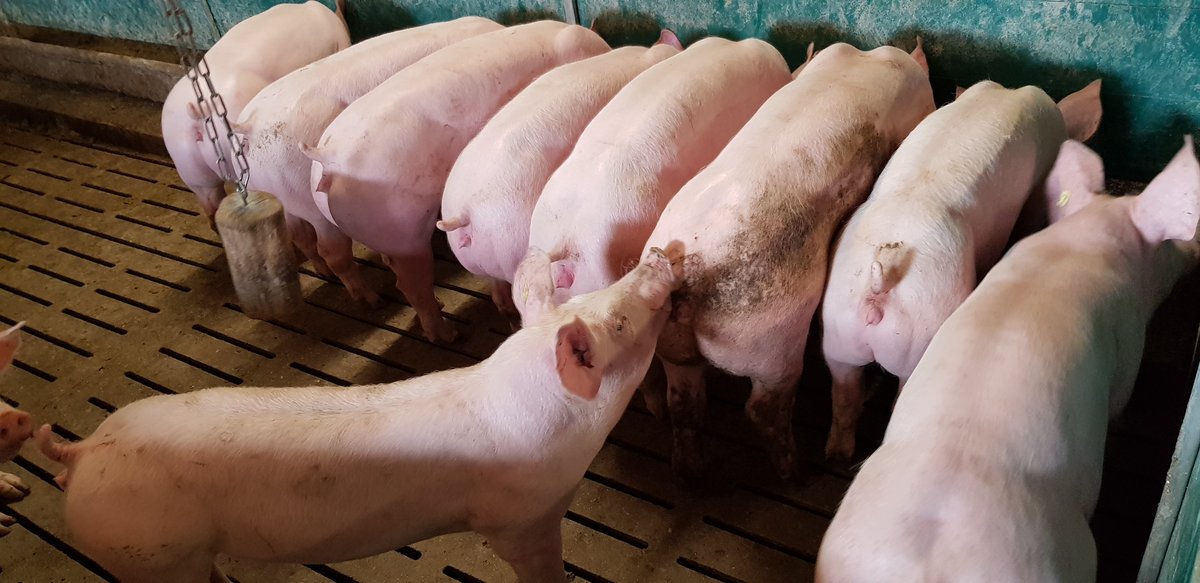
Tail-biting is a problem that almost all pig farmers have to deal with sooner or later: 19 out of the 20 pig farms surveyed have already experienced outbreaks of tail-biting.
With a multitude of possible triggers, it is difficult to identify the single cause of an acute outbreak of tail-biting. Around 20% of the farms surveyed stated that they had not identified the specific causes. The majority of farms attribute tail-biting to the ‘feeding’ complex. In particular, ‘feed structure’, ‘degree of grinding’ and ‘crude fibre content’ are cited as influential factors in feeding. The farms have found that toxin contamination of the grain and generally poor feed quality, particularly in wet harvest years, can be a cause of tail biting. Increasing the proportion of barley in the ration can help here: it provides satiating crude fibre, promotes colonic fermentation and has a lower mycotoxin load than, for example, wheat. Incorrectly measured feed quantities or a deficiency of individual feed components or nutrients, particularly amino acids, can be a cause of tail-biting. It is therefore advisable to review the feed ration, as well as feed quality and feed hygiene. The number of feeding points and water troughs is also crucial. An excessive animal-to-feeding-point ratio can lead to stress and restlessness within the group, thereby triggering tail-biting. Additional troughs are recommended as a short-term remedial measure.
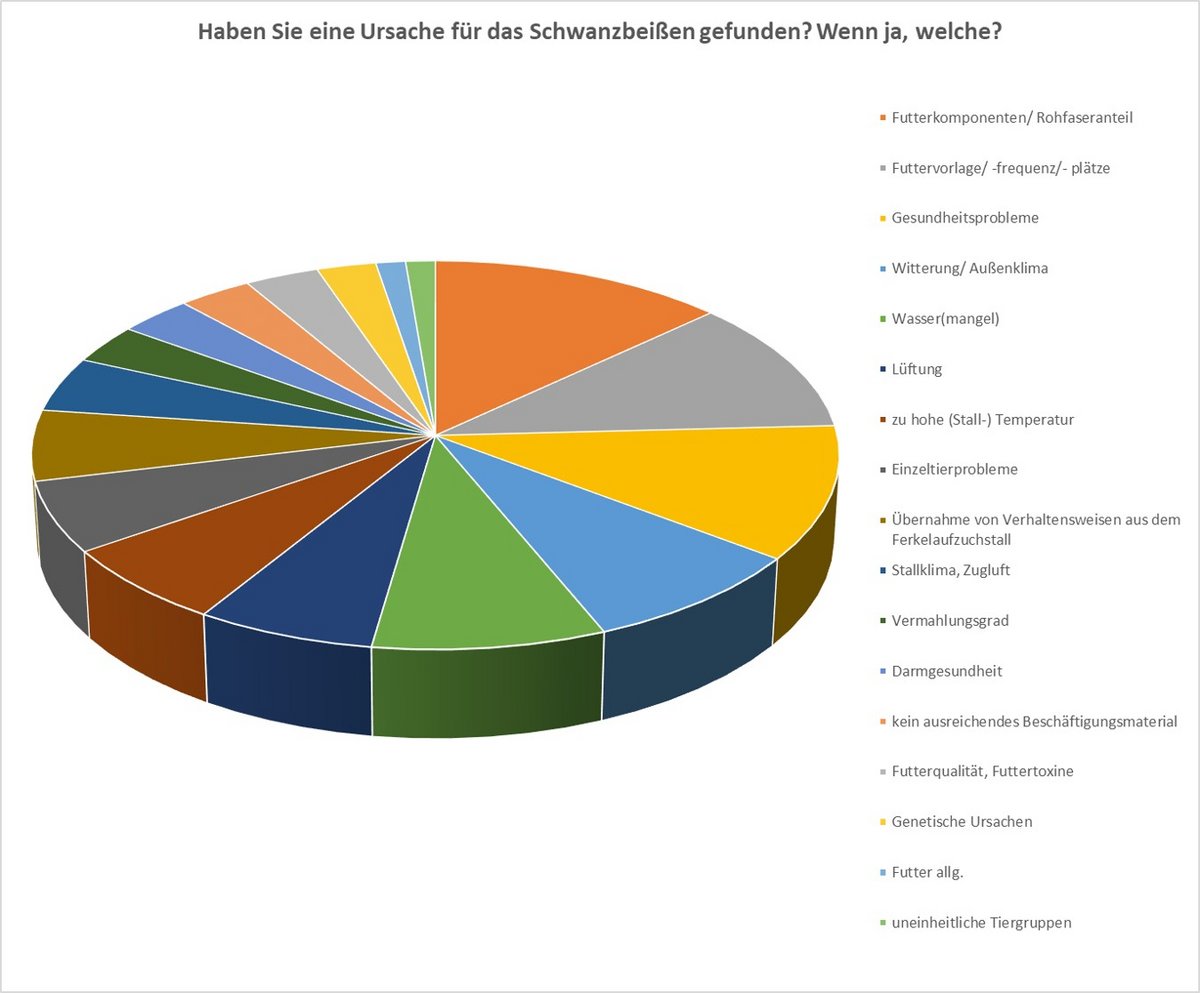
Around a third of farms cite health status as the cause of tail-biting. This includes both acute outbreaks of disease and subclinical conditions that lead to animals being generally weakened. Health is the common thread linking all farms. If health status is poor, health problems are often the trigger for behavioural disorders. Where health status is high, it is most often an overburdened metabolism that is to be regarded as the trigger. This is why feeding is so highly rated (Meyer 2025).
The third cause cited by the pilot farms was the issue of barn climate. This includes high temperatures (heat stress), changes in weather such as temperature fluctuations, as well as draughts and incorrect settings of the ventilation system.
Other causes include genetics, water, pen layout and enrichment materials.
Dealing with tail-biting
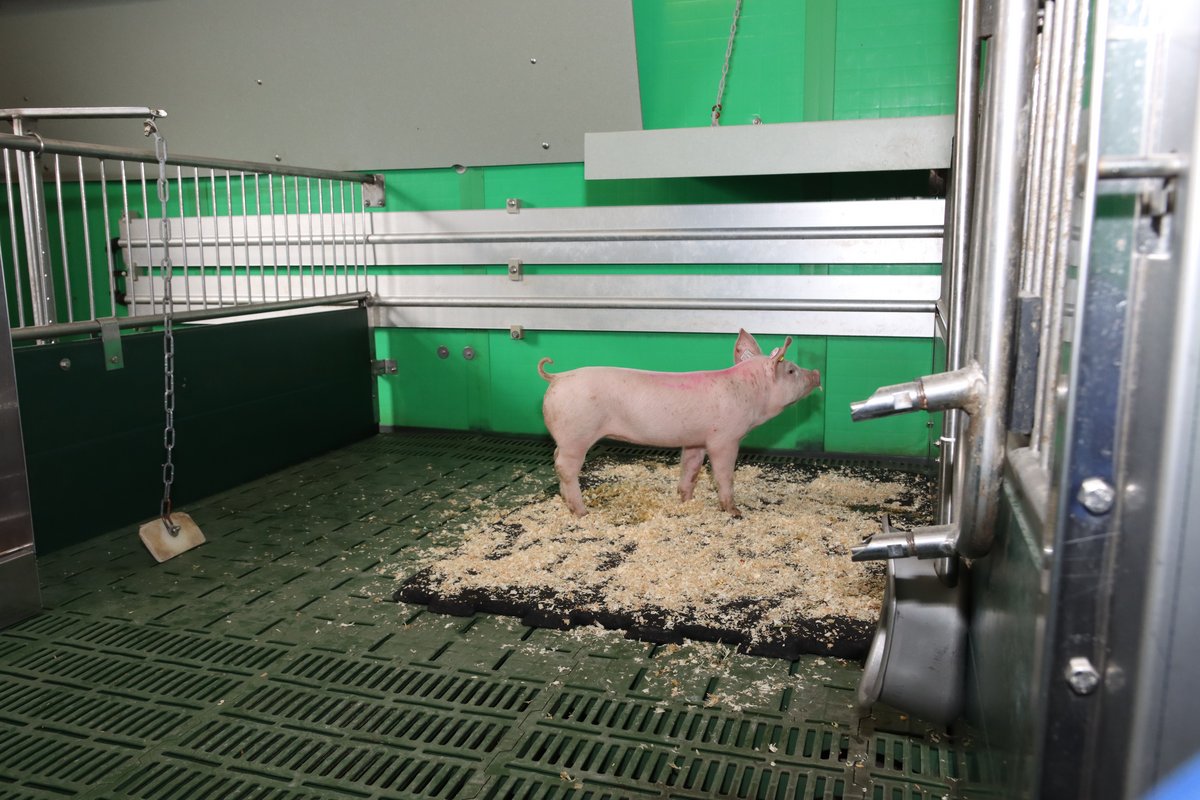
The pilot pig farms were also asked about their strategies for dealing with acute tail-biting incidents. Almost all farms attempt, as a first step, to identify and isolate the biter within the pen (Fig. 4). Most farmers then provide additional enrichment materials to distract the pigs. Items such as ropes, straw, chew sticks, hay, silage and jute cloth are provided. Some farmers also use feed additives and toxin binders such as rock meal. Moving the animals to a different pen can also distract them in the short term and bring the tail-biting under control. Farmers cite the care and separation of bitten animals as a further measure. If bloody injuries are already visible, treatment must be administered immediately. A vet should always be consulted for this. As a final step, farmers investigate the causes and check for potential risk factors such as ventilation, feeding and water.
When asked about particularly effective measures in the event of an outbreak, 40% of livestock owners cited the separation of the biting animals. A prerequisite for this is identifying the biting animal. On around a third of farms, additional enrichment materials and the provision of roughage in various forms help to bring the tail-biting outbreak under control.
Long-term changes
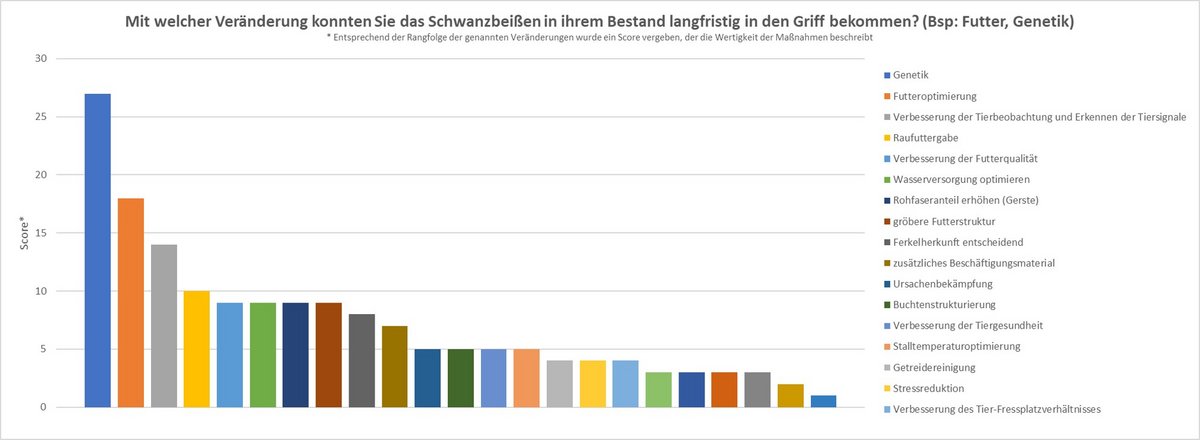
The responses from the pilot farms to the question regarding long-term changes that lead to the prevention of tail-biting outbreaks confirm that this is a multifactorial problem: for half of the farms surveyed, a single change was not sufficient to prevent tail-biting outbreaks permanently. It is often a combination of several factors that must be optimised and modified in order to prevent the pigs from becoming overwhelmed and the associated tail-biting in the long term.
| Feeding |
|
| Climate |
|
| Health |
|
| Genetics |
|
| Housing |
|
Although there is debate among experts regarding the extent to which behavioural traits are hereditary, it is clear that pedigree and genetics can play a role.
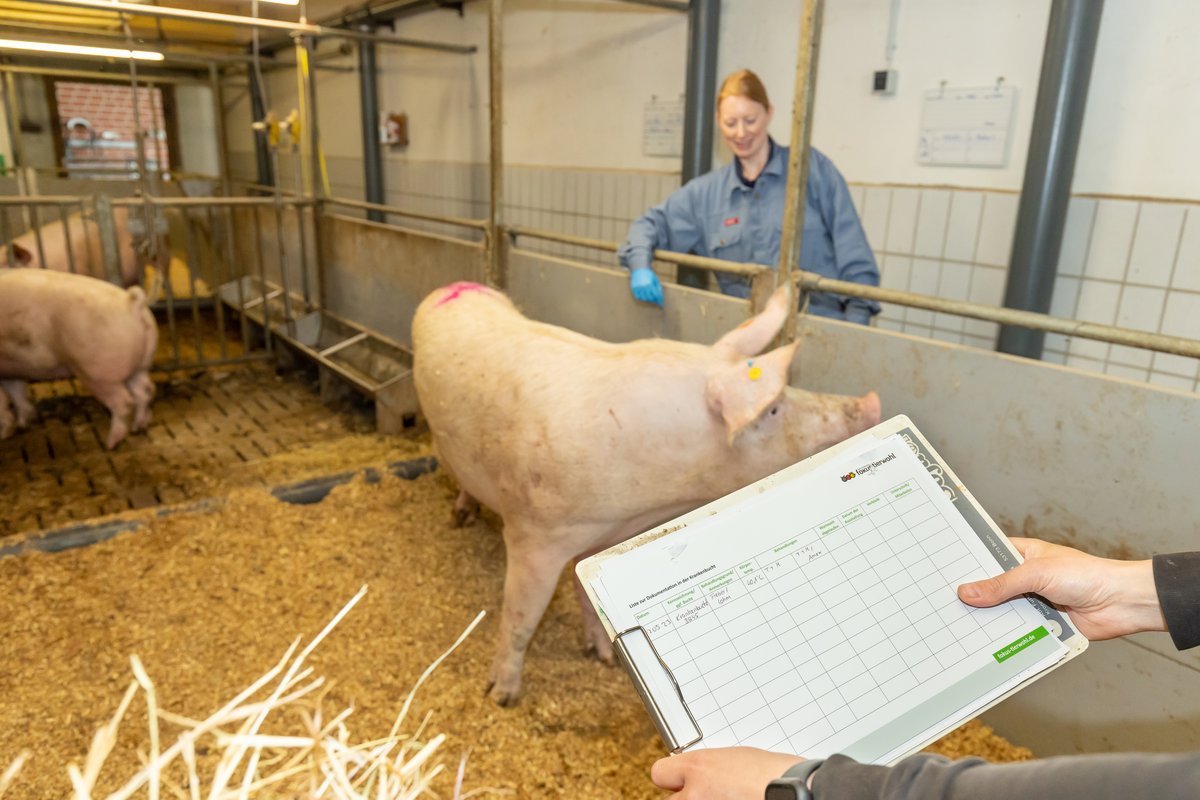
Early intervention is crucial to the success of remedial measures. Close observation of the animals during daily rounds is essential for the early detection of tail-biting behaviour. Attentive staff are key to being able to intervene quickly. It is helpful to observe the animals during their active period, usually in the late afternoon.
Conclusion
Overall, it is clear that almost every farm has experienced an outbreak of tail-biting at some point. The causes vary from farm to farm and are diverse. It is often helpful to work with an advisor to review the key factors in the barn and optimise housing conditions and management accordingly. In the case of injured pigs, it is essential to call the vet to ensure they receive appropriate treatment.