
Focus on Pig Welfare: Tips on keeping sows in the waiting pen and choosing a suitable pen layout
A report by the ‘Enclosure Design’ working group of the Fokus Tierwohl network
- Christoph Becker, farmer (Animal Welfare Pilot Farm)
- Dr. Veronika Drexl, SchweineSpezialBeratung Schleswig-Holstein e.V.
- Carmen Fögeling, North Rhine-Westphalia Chamber of Agriculture
- Wilhelm Schulte-Remmert, farmer (Animal Welfare Pilot Farm)
- Christoph Selhorst, farmer
- Dr. Manfred Weber, State Institute for Agriculture and Horticulture, Saxony-Anhalt
- Rudolf Wiedmann, independent consultant, Baden-Württemberg
- Sandra Terletzki, North Rhine-Westphalia Chamber of Agriculture
- Dr. Sabine Schütze, North Rhine-Westphalia Chamber of Agriculture
- Laura Schönberg, North Rhine-Westphalia Chamber of Agriculture
After sows have been inseminated at the mating centre, they are moved to the gestation barn, where they live in stable groups and a structured environment throughout their pregnancy. A major difference between the mating centre and the gestation barn is the amount of space available. In the mating centre, following the amendment to the Animal Welfare and Livestock Husbandry Ordinance (TierSchNutztV) in February 2021, sows must each have 5 m² of space available. Due to the high space requirements in the mating centre – necessitated by regrouping, the establishment of a hierarchy and oestrus behaviour – sows will likely be kept in the mating centre for a shorter period in future on some farms and moved to the waiting pen earlier. They remain there until approximately one week before the expected farrowing date.
The planning of group sizes in the waiting pen should take into account the structural conditions and the feeding system. In smaller groups, the legally prescribed space of 2.5 m² per sow (Table 1) leads to difficulties regarding pen layout, as the pen is generally still quite small. In large groups, the prescribed square metres are sufficient for pen layout. There, the various functional areas can be clearly separated.
| Area in square metres | |||
| for group sizes of up to 5 animals | for a group size of 6 to 39 animals | for a group size of 40 or more animals | |
| per gilte | 1.85 | 1.65 | 1.5 |
| per sow | 2.5 | 2.25 | 2.05 |
<figcaption>Table 1: Requirements for the minimum unrestricted usable floor area depending on group size according to the Animal Welfare Ordinance</figcaption>
Floor design
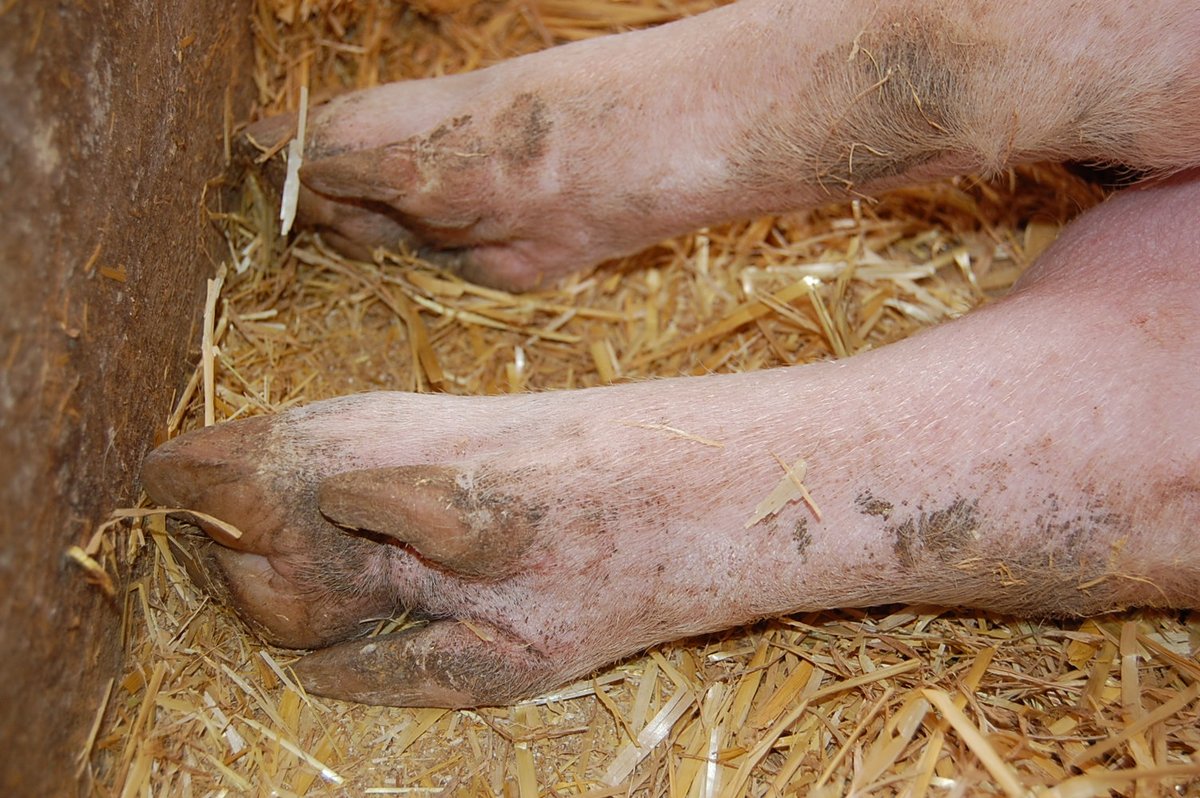
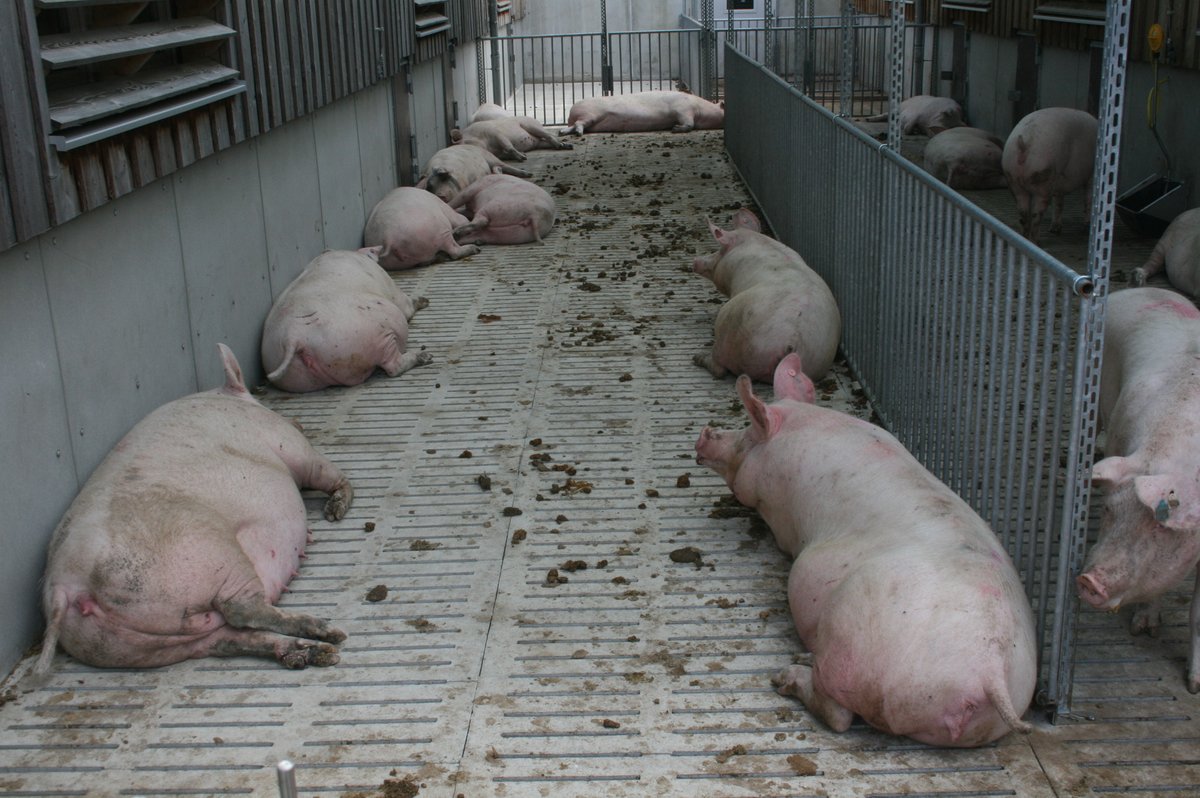
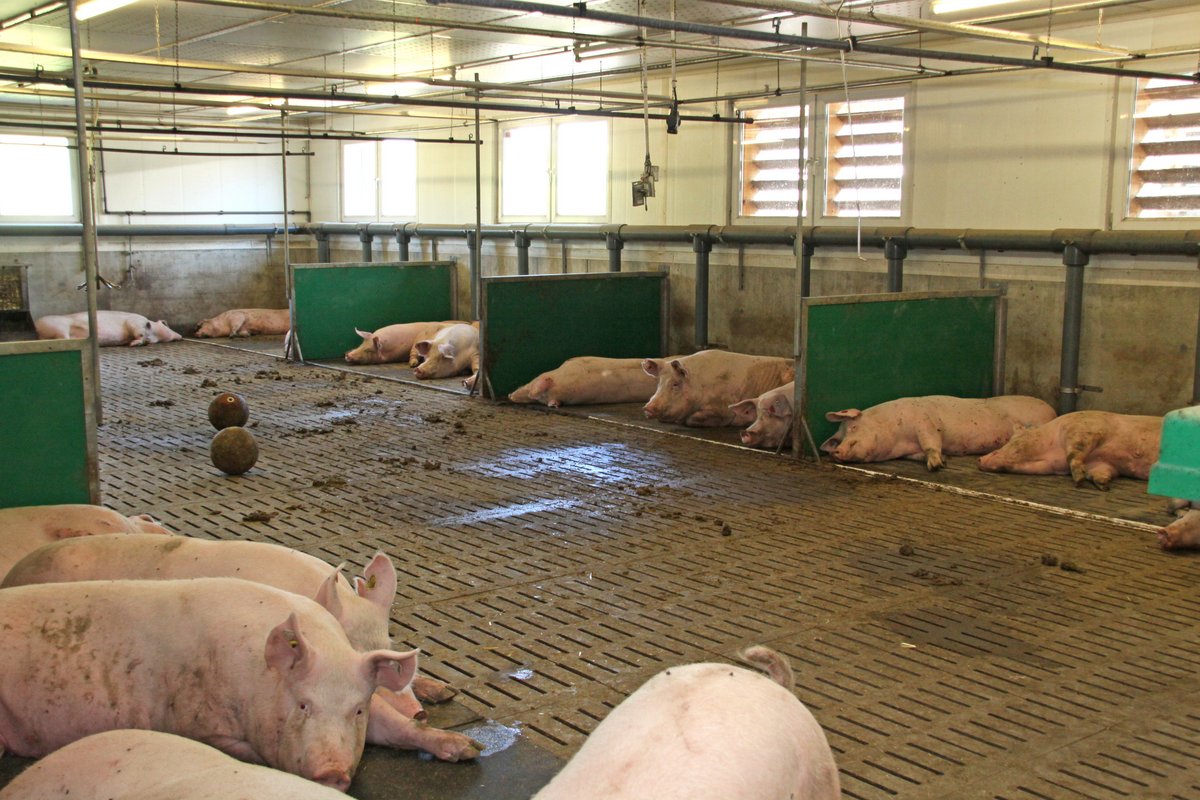
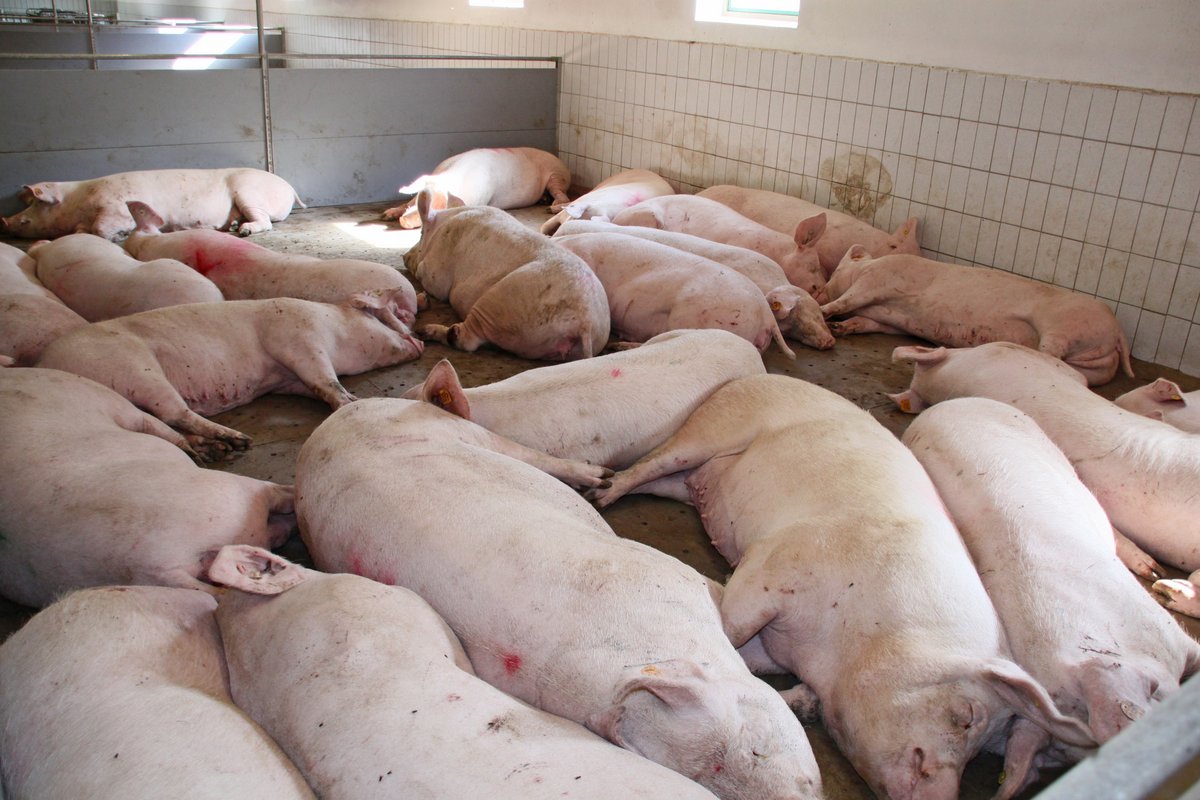
Where possible, just as in the breeding centre, fully slatted floors should be avoided in the holding pen, and non-slip, secure flooring should always be used. Animals are more active on solid flooring, which is also beneficial for their (hoof) health. A slightly rough floor surface aids hoof wear and promotes healthy hooves that are not too long (Fig. 1). If the animals’ activity levels drop due to poor hoof health, the risk of disease increases (see the podcast ‘Healthy hooves – healthy sows’). To provide sows with a suitable floor in both hot and cold weather, it is advisable to provide an area that allows the animal to release heat (Fig. 2) and one that prevents the loss of body heat.

Faecal area
In the manure area, as in other stages of production, it is advisable to install contact grids. Due to territorial behaviour towards animals in the neighbouring pen, sows tend to deposit faeces and urine in these areas, which is why the pen above can be designed accordingly (Fig. 3). In the case of solid-surfaced floors, there should be slight perforations or a gentle slope with drainage options to allow liquids such as urine or wash water to drain away. This also reduces the risk of slipping.1
With slatted floors, care must be taken to ensure sufficient faecal passage. The more space available in the pen, the more the animals spread out, resulting in reduced faecal passage.
Intense lighting encourages the establishment of a dunging area, as the animals prefer to defecate and urinate where it is particularly bright. Installing a lamp above the dunging area can therefore further support the formation of these functional zones. If outdoor runs are available, the animals tend to use these as dunging areas, as they prefer damp, cool and draughty spots for this purpose.2
Lounge area
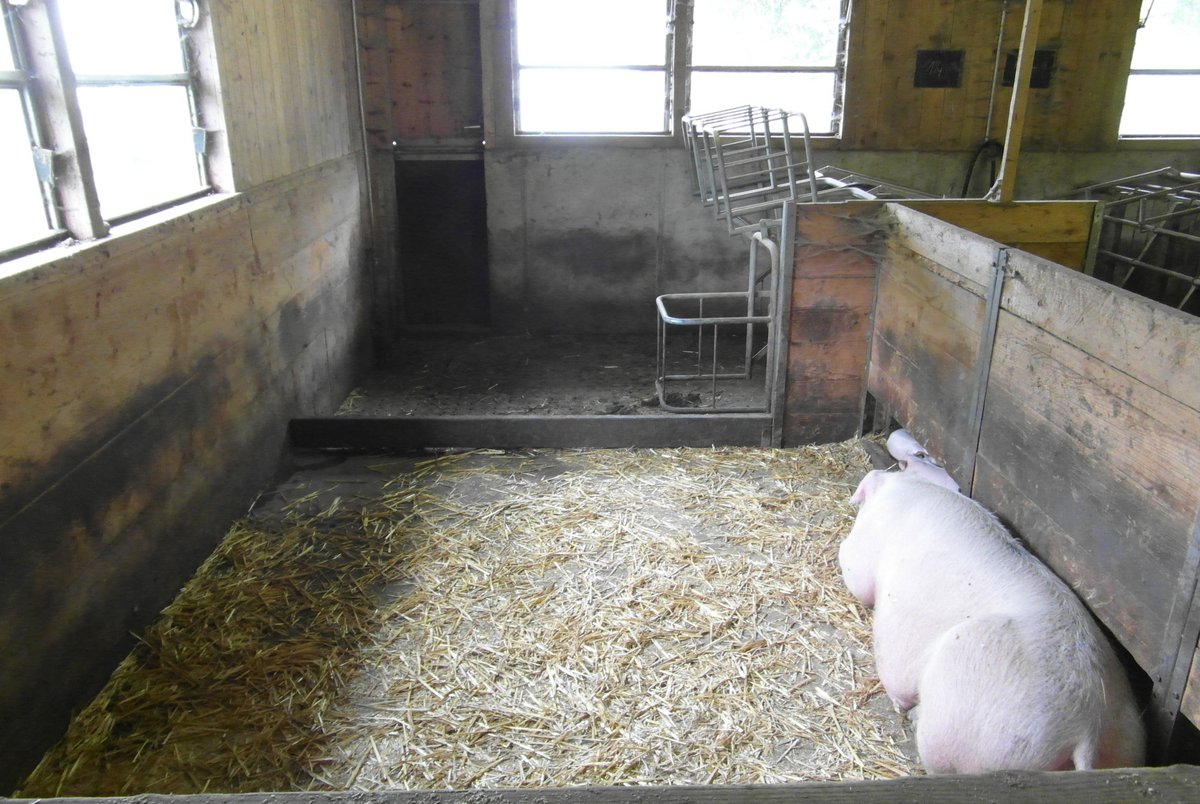
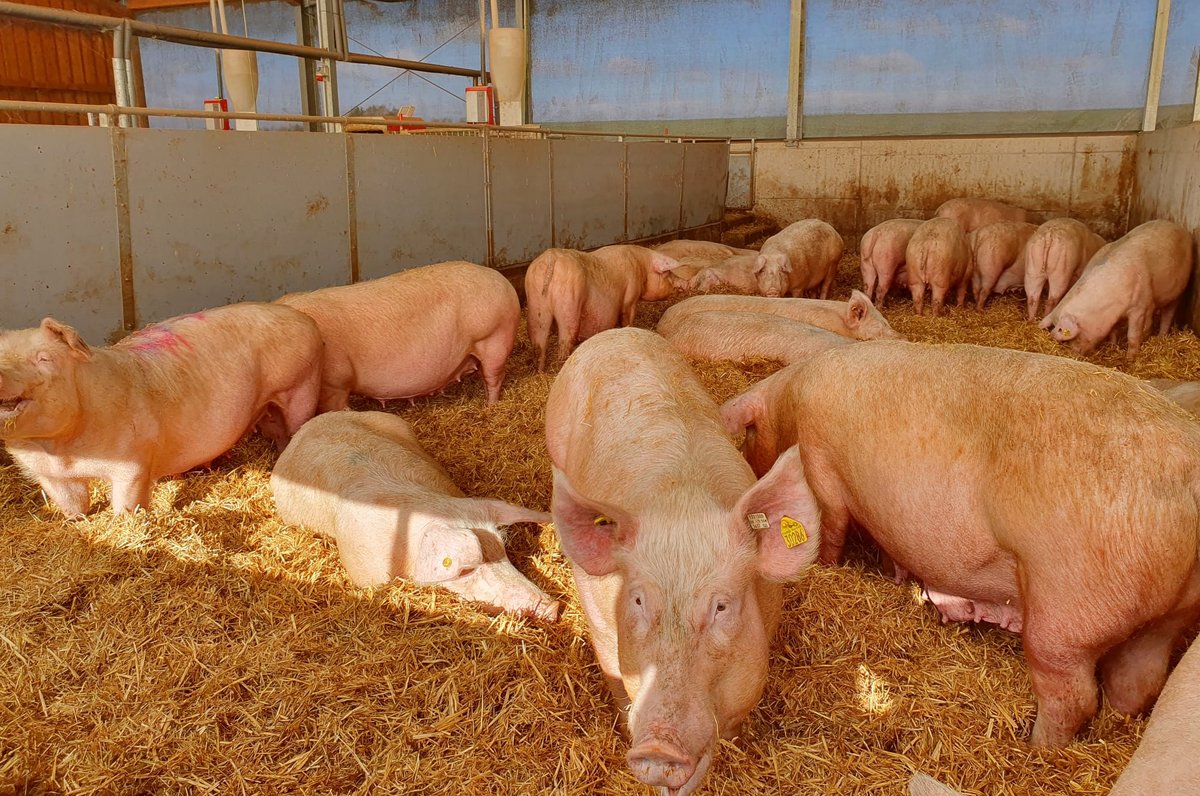
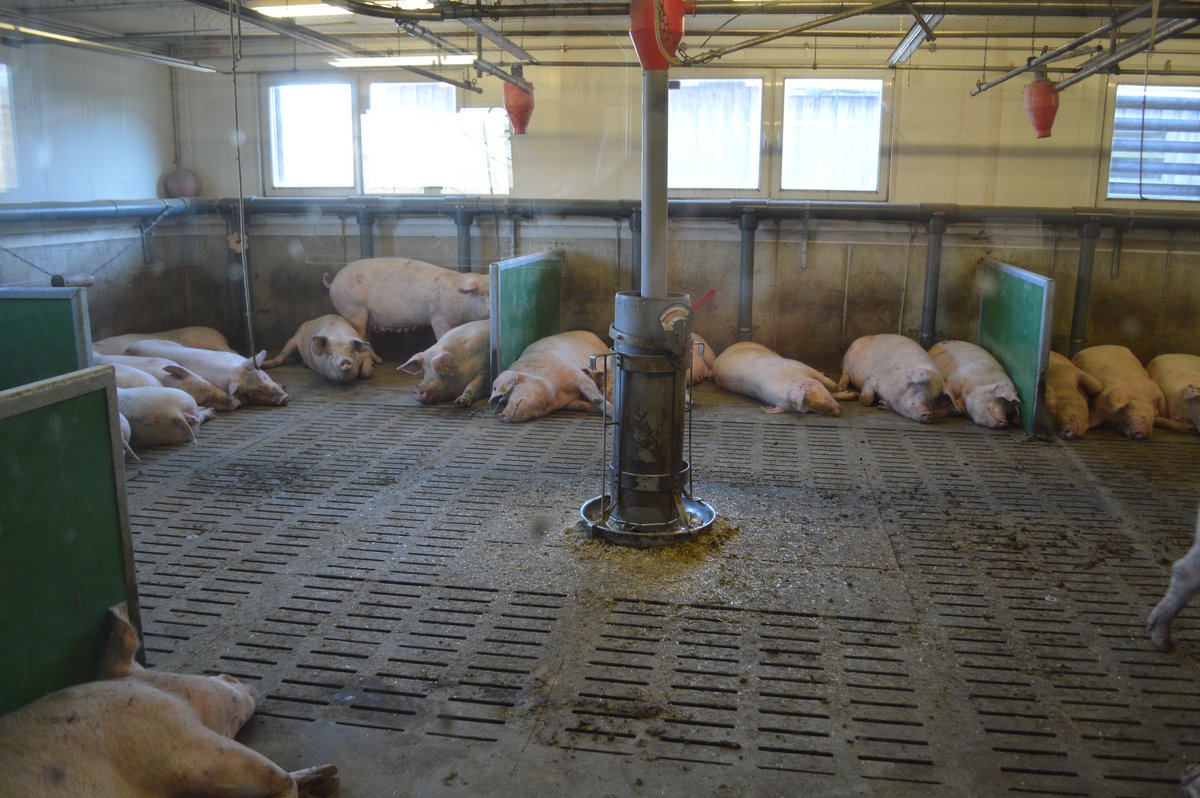
The sows need sufficient space so that all animals in a group can rest at the same time. It is important to ensure that the lying area is not much larger than the prescribed 1.3 m², so that the animals do not inadvertently turn it into a dunging area.3 The lying area should not be located in a passageway with heavy animal traffic. An access width of 2 m makes it easier for the sows to reach the lying area and provides sufficient space for individual spacing between the animals.4 Resting areas are generally not selected based on firmness or softness, but rather on whether the area is dark, draught-free and at a suitable temperature, as sows do not like draughts or bright areas for resting.2,4 If the resting area is poorly utilised, bedding or a cover over the resting area can be provided. This creates a pleasant microclimate for the animals. In addition, the cover, particularly under windows, creates a dimly lit resting atmosphere.1 Despite the resting area’s quiet location within the pen, it must be clearly visible for animal monitoring. Straw thresholds with a diameter of approx. 15 cm are suitable for separating bedded areas from slatted floors (Fig. 4). Resting pits at the edge of the pen are better accepted than resting islands in the centre.1
In the resting area, contact with animals in the neighbouring pen should be avoided. Opaque pen partitions create a sheltered space. The partitions of the resting pits should also be opaque. If they are sturdily constructed, they can also serve as resting aids for the sows. It is beneficial if the sows have a clear view from the lying area or the lying pits. The animals are then more relaxed, for example, when someone enters the barn. Several small lying pits (max. 2 m deep) are more suitable than a few large ones, as the latter often cause agitation when animals stand up from the rear area. Furthermore, the animals often defecate after standing up, which is why large lying pits are more likely to become soiled on the way from the lying area to the activity or dunging area than small pits (Figs. 5 & 6).
Littered, deformable lying areas prevent localised limb strain, skin and hoof damage, pressure sores and bursitis, and also reduce skin damage caused by rough floors whilst lying down or standing up (Fig. 7).1
Each sow must have 1.3 m² of lying area available, no more than 15% of which may be perforated.
Feeding
Wild boars, as well as pigs kept on pasture,6 spend just under 54–67% of the day resting. They spend the rest of the time mainly foraging for food. In piggeries, the animals rest more, as there is no need to forage. Feeding that also keeps them occupied allows for species-appropriate behaviour, as the animals can spend more time being active. There are various options for feeding sows in pig farming. The fundamental aim of feeding, particularly during gestation, is to maintain the sows’ individual condition. The choice of feeding system depends, for example, on group size or local conditions. In principle, pigs should be able to eat at the same time and without disturbance. This is possible, for example, via floor feeding. Individual feeding per animal is not always possible. In this case, it makes sense to form condition groups. Alternatively, however, individual allocation via on-demand feeding can be chosen.
If sows are kept in outdoor climate-controlled housing, increased feed consumption is to be expected. Additional roughage as enrichment feed should be provided not only with on-demand feeding, but also when using other feeding methods such as feeding stalls or floor feeding.
Collection points
The feeding stations and the larger group sizes they allow make it easier to organise the pens. It is important not to design feeding stations as dead ends. This can lead to crowding and fighting at the entrance. Ideally, the animals should be allowed to exit the station at the far end.
A disadvantage of this feeding system is that feeding all the animals takes a long time and does not allow for synchronised feeding. An advantage is that feeding can be tailored to individual animals. No more than 40 to 50 animals
should be allocated per station. Call-up stations allow for good pen structuring and separate resting, activity and dunging areas.4 However, as with all feeding systems, it is important that the animals are also provided with enrichment feed and measures to ensure satiety.1,4 This reduces stress at the station entrance. Generally, high-ranking animals eat first at feeding times with this system.
Food stalls
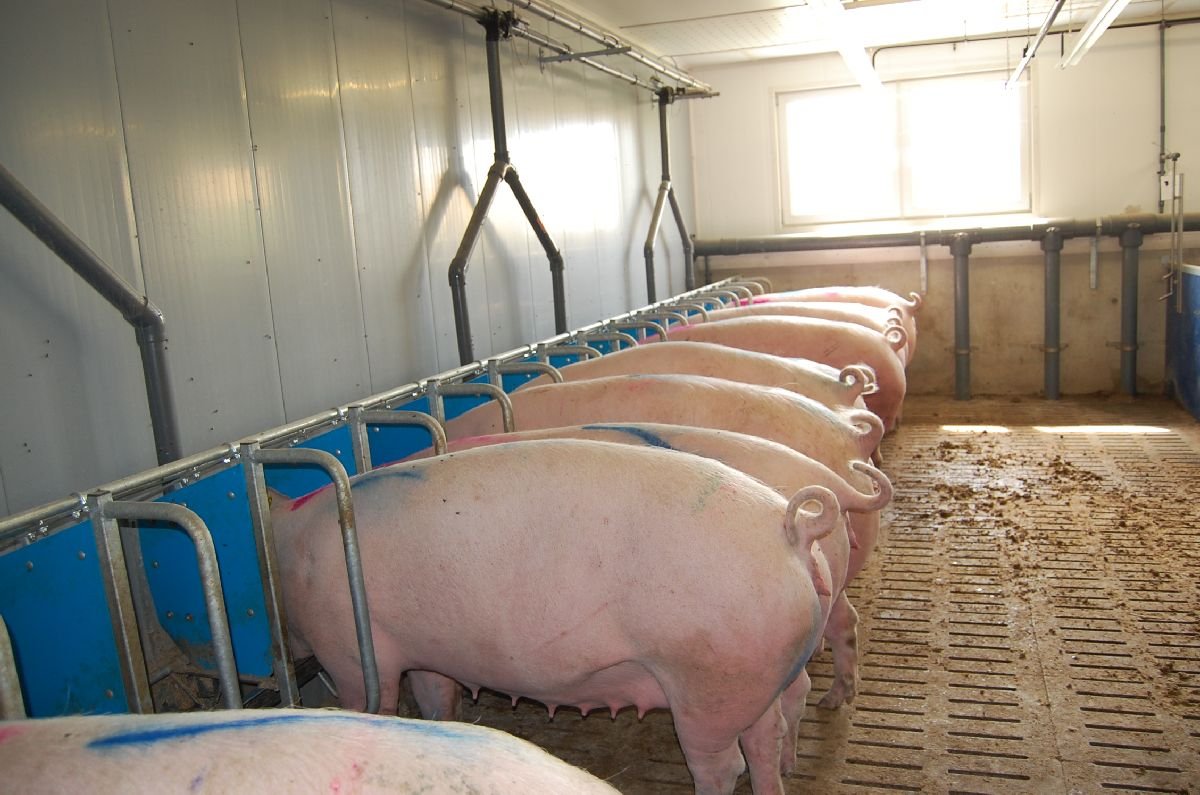
Feeding stalls offer another option for feeding in the waiting pen. A locking mechanism protects sows that eat slowly from being pushed around by other sows and reduces the risk of injury. A feeding stall width of 50 cm is well suited and is also sufficient for short-term restraint during treatment. Alternatively, long troughs with feeding space dividers can be used (Fig. 8). These are usually spaced 50 cm apart, but unlike feeding stalls, they are only approx. 70 cm deep instead of 200 cm. Feeding space dividers are only suitable for stable and small groups of up to 10 sows, but only if no restraining facilities are to be provided. The dividers should be opaque. Suitable materials include thin metal sheets, wooden boards or Resopal panels. A positive aspect of this feeding method is that the animals feed synchronously.
Ground feeding
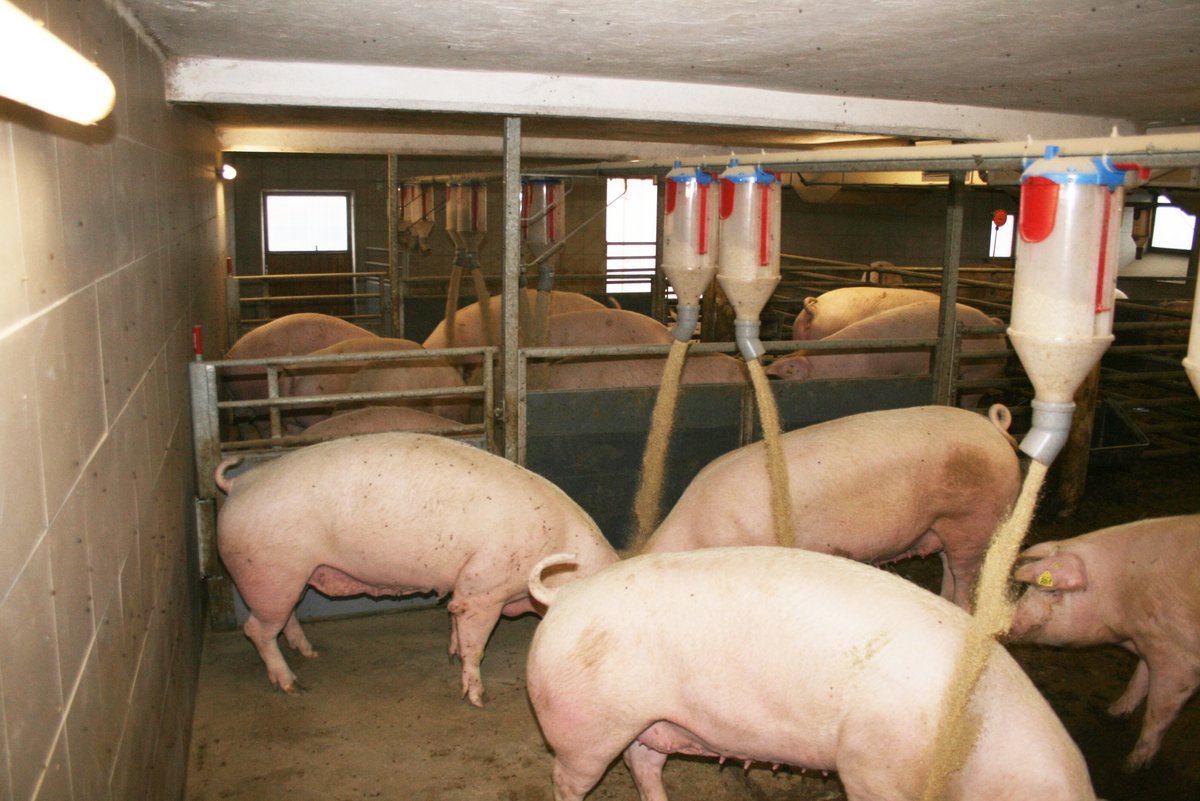
If a farm opts for floor feeding, it is choosing the most natural form of feed intake, allowing the animals to express some of their natural behaviours. The sows spend longer feeding and can all root around in the feed on the floor at the same time, searching for leftovers (Fig. 9). Only dry feeding is suitable for this, which can be carried out, for example, via pipe chains, augers or by hand.
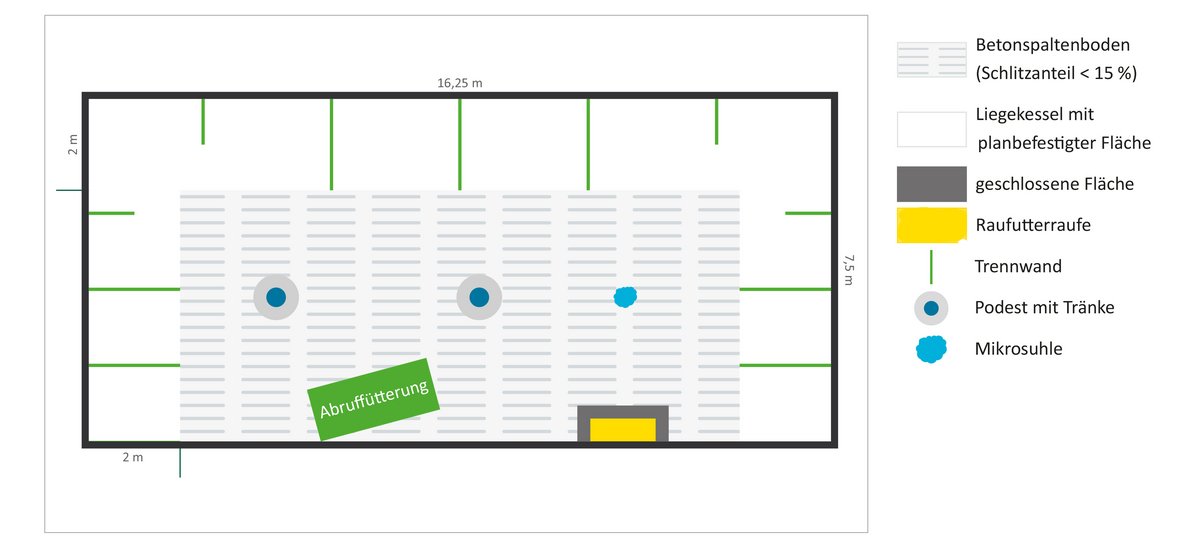
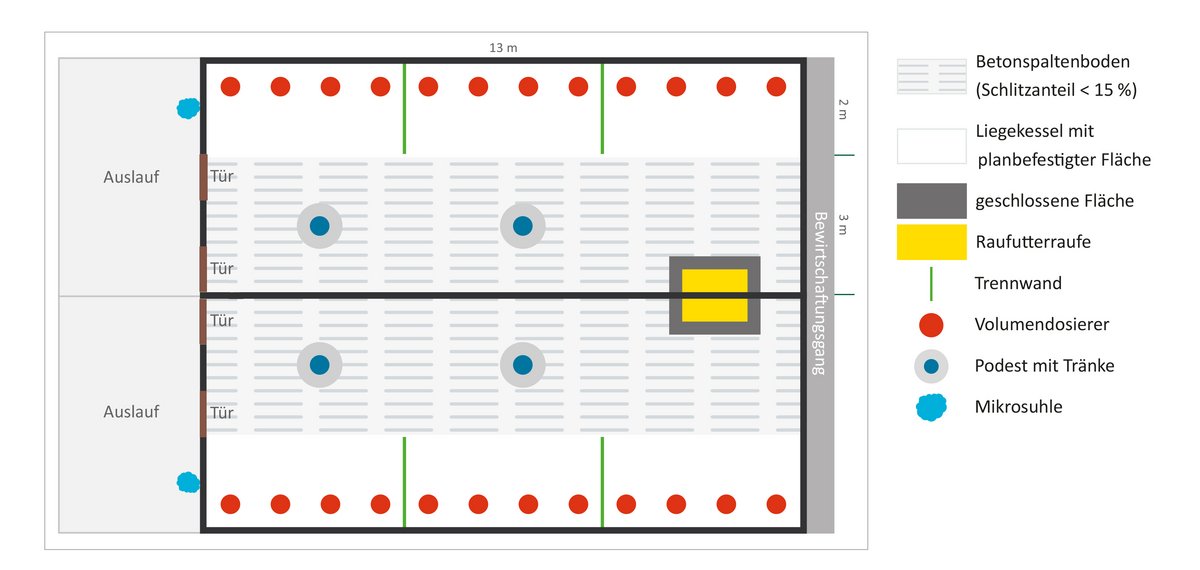
It is recommended to divide the sows into three condition groups, as individual feeding is otherwise not possible.1 A group size of around 20 sows is suitable. If the system is to be converted for floor feeding, a slatted floor is a basic requirement. The lying areas are often chosen as feeding areas, which means they are kept clean by the animals at the same time. It is recommended to feed once a day, dispensing the feed in two portions to ensure it is eaten cleanly. This avoids a great deal of agitation in the pen, and the lying area can be used for its intended purpose most of the time. With partially slatted floors, feeding on the solid floor ensures that it remains clean even in summer. Feed distribution should be as even as possible. The number and position of the volumetric feeders are crucial for this. The feeders should be mounted close to the wall to reduce losses through the slats. Nevertheless, it should be borne in mind that there must be sufficient space around the fallen feed so that all sows can reach it. Figure 22 shows an example pen for floor feeding developed by the working group.

Watering troughs
It is advisable to install the drinkers above slatted floors or other drainage points so that excess water can drain away. When using nipple drinkers, care must be taken to ensure protective guards are fitted to minimise the risk of injury (Fig. 10). If the drinkers are installed in a fixed area, a slope should be provided so that excess water can drain away via the slatted floors. Alternatively, the water can be drained away via pipes embedded in the concrete, for example. A perforated platform on which a drinker is placed is another option.
When using open drinkers, care must be taken to ensure that they are not installed in the manure area to reduce contamination from manure entering the drinker. A drinker island is recommended for this purpose.
Employment opportunities
Roughage racks are well suited for providing enrichment. They can be filled with straw or hay for the sows, for example, although hay is generally preferred to straw. Grass silage may also be provided, provided the material is of impeccable hygiene. In organic farming, the use of basic feed such as grass silage is mandatory.
The racks should be positioned in several locations within the pen so that animals of different social ranks have access to them. As animals often defecate in the outdoor area, the racks should be placed outside in clean areas. It should also be noted that, despite the racks, simple and mechanised manure removal is possible. There should be solid surfaces beneath the feed racks so that the feed does not fall directly through the slats, thereby avoiding problems with manure removal. Slatted floors can, for example, be closed off using slat clips. Raised edges on solid surfaces are not recommended, as these areas are more difficult to clean if the animals defecate on them or when removing leftover feed.
Racks available on the market often have a small capacity and need to be refilled frequently. This ensures the material is always fresh and attractive, but requires more work. To reduce the workload involved in frequent refilling, it is worth building larger racks yourself with a bit of DIY skill. These can be made, for example, from sturdy structural steel mesh. If there is sufficient space in the pen or for large groups in a large outdoor area, round bale racks can also be used.1
The spacing between the rack’s bars must be chosen so that the material cannot be pulled out completely straight away and end up on the floor, yet an adequate amount can still be accessed by the animals. Depending on the straw length, spacings of approx. 5–10 cm are suitable. On slatted floors, long straw is less suitable than shorter-cut straw. When mounted on the wall, the racks must hang low enough to be accessible to all animals. Areas of the rack that are out of reach at the bottom, or triangular shapes, should be avoided; the racks should therefore not be completely closed at the bottom. The feed remains in the hard-to-reach areas for a long time and spoils over time. This can result in sick sows. Examples of feed racks can be seen in Figures 11–16.
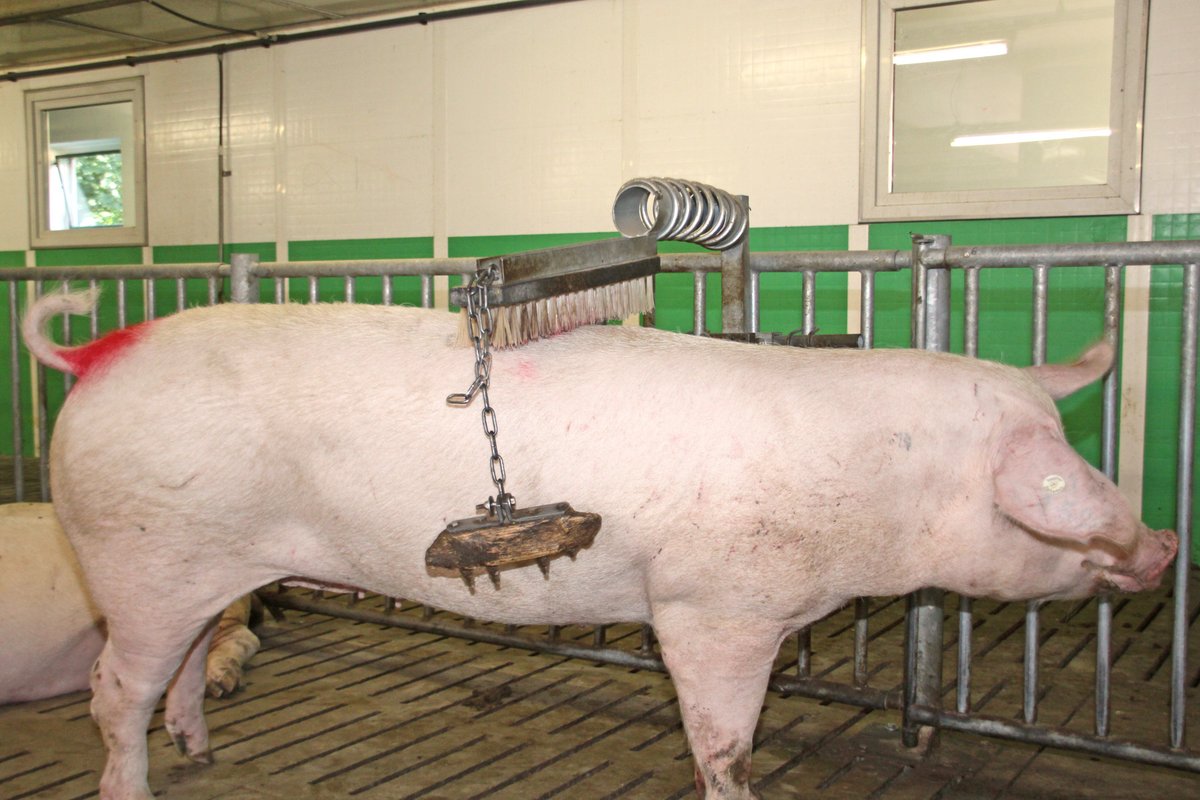

Other suitable enrichment options include rummage towers filled with materials (Fig. 17) or pellet dispensers. The latter are particularly well-suited for slatted-floor housing. In addition, various other enrichment materials can help ensure the sows are content in the pen. These include, in addition to roughage, areas with bedding, ropes or brushes (Fig. 18). To prevent the brushes from being gnawed on quickly, brushes from the cattle sector that rotate automatically can be used (Fig. 19). Scratching posts (e.g. wooden logs) or stainless steel scratching facilities can be used for scratching. The latter are more expensive, but are easy to clean.
Climate
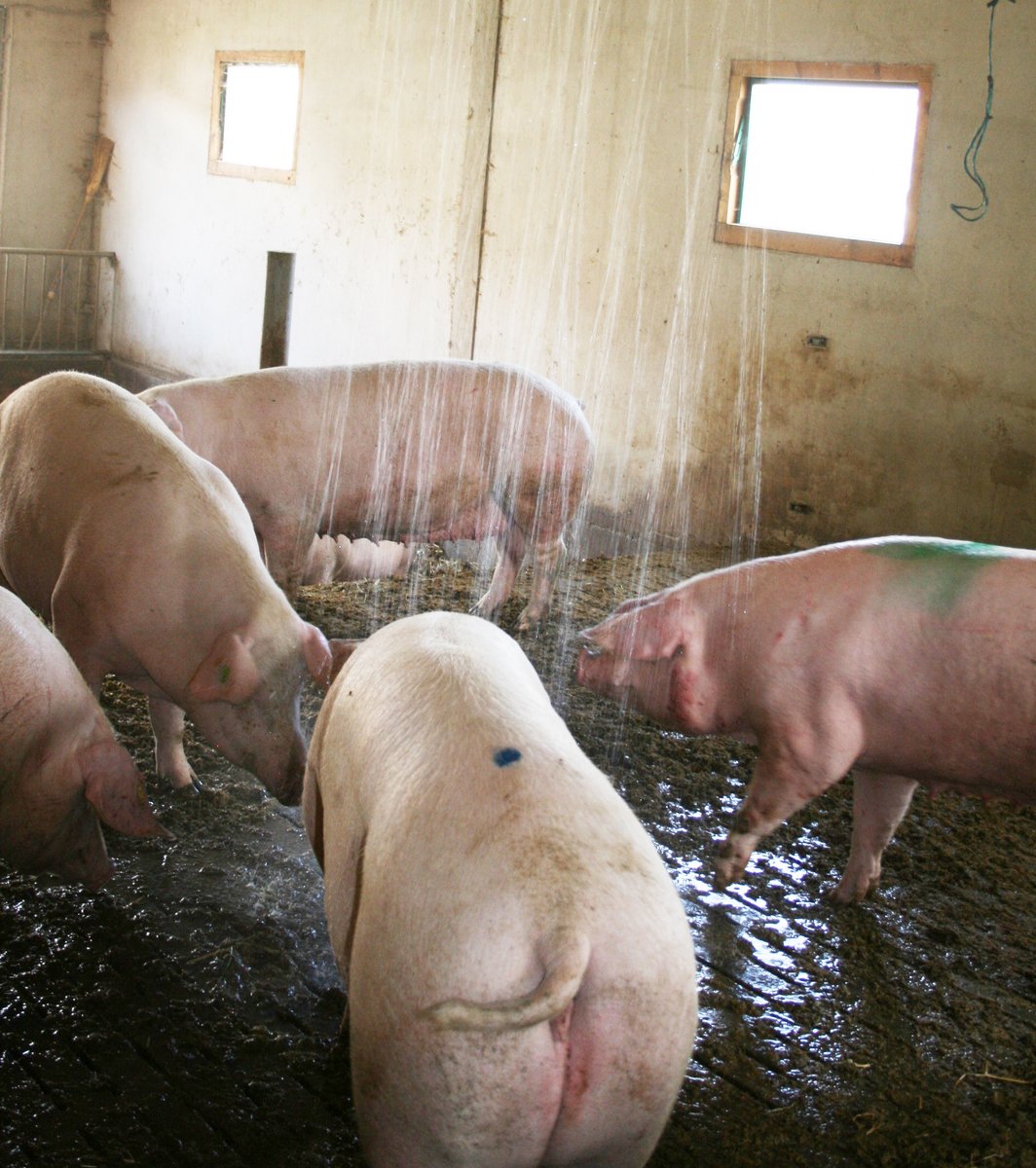
Pigs cannot sweat and, when temperatures are too high, have a strong need to dissipate heat. When temperatures are too high, the animals’ respiratory rate increases, for example, leading to heat stress. Prolonged periods of high temperatures can have adverse health effects.7 Wild boars use wallows in the forest to cool down. Our domestic pigs also have access to wallows dug into the ground. However, the working group advises against this, as the wallows quickly become heavily contaminated with pathogens such as leptospires and also involve a significant amount of work. In some cases, sloping areas that can be wetted are sufficient to allow the animals to cool down through contact with the ground. However, the working group recommends micro-wallows or light showers as the ideal solution (Fig. 20). These have the advantage that, for the most part, only the sows are wetted and not a large area of the surrounding pen. A simple Gardena system is sufficient. Paved floors should have a slight slope (approx. 1%) to allow liquids to drain away. In the outdoor area, covered cooling facilities help to prevent sunburn.
The heat requirements for sows and fattening pigs cannot be applied on a one-to-one basis, as sows have to heat a larger space due to the increased floor area and generate less heat than fattening pigs due to lower feed intake. For this reason, they must also have access to, for example, thermally insulated resting areas. This can be illustrated, for example, using the room volume at a ceiling height of 3 m: 2.25 m² per sow = 6.75 m³ room volume per sow vs. 0.75 m² per fattening pig = 2.25 m³ room volume.1 The resting area for sows should be climatically separated from the rest of the pen. It can be insulated or lined with plenty of straw.1
Sample bays
Examples of pens
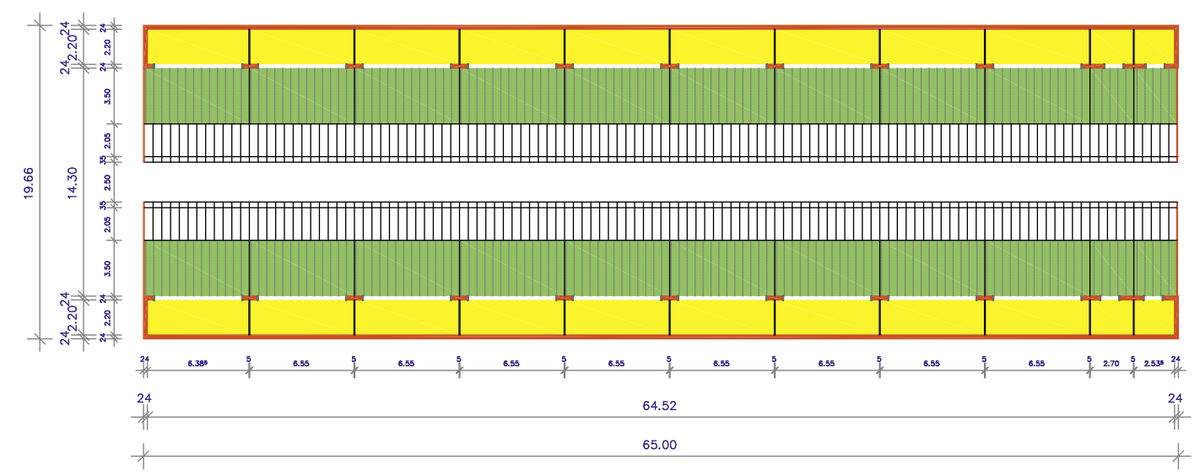
The ‘Pen Layout’ working group has developed two planning examples for pen layouts in the holding pen. One for a pen with on-demand feeding (Fig. 21) and one for a pen with floor feeding (Fig. 22). Reference is also made to an example of a three-section pen (Fig. 23). Further planning examples can be found in the comprehensive pig husbandry concept for sows and piglets.
Bibliography
- 1: BLE (2021): Farm-wide housing concept for pigs – sows and piglets: https://www.ble-medienservice.de/0073/gesamtbetriebliches-haltungskonzept-schwein-sauen-und-ferkel
- 2: LSZ (2021): Group housing of sows to be mated. Practical experience and examples: https://lsz.landwirtschaft-bw.de/pb/site/pbs-bw-mlr/get/documents_E949947673/MLR.LEL/PB5Documents/lsz/pdf/Projekte%20und%20Versuche/Gruppenhaltung_von_zu_belegenden_Sauen_1.Auflage.pdf
- 3: Weber R., Schiess C. (2006): Group housing of sows during the breeding season. Practical experience. ART Reports, No. 658/2006. Federal Department of Economic Affairs (FDEA), Agroscope Reckenholz-Tänikon Research Station (ART).
- 4: Hoy S., DLG Committee for Pig Production (2015): DLG Fact Sheet 408. Grouping of sows. DLG e.V., Frankfurt am Main.
- 5: LSZ (2022): Final report. Project: “Testing and evaluation of new husbandry methods involving group housing of sows at the breeding centre – effects on animal behaviour, integumentary and footpad damage, fertility and labour efficiency”: https://lsz.landwirtschaft-bw.de/pb/site/pbs-bw-mlr/get/documents_E-1984162133/MLR.LEL/PB5Documents/lsz/pdf/Projekte%20und%20Versuche/Abschlussbericht_MLRDeckzentrum_Projekt-Nr.%200386%20E_11-03-2022.pdf
- 6: DBV, ISN, BRS (2017): Current state of discussion on the housing of sows in the breeding centre. https://www.offensive-nachhaltigkeit.de/wp-content/uploads/2018/12/Diskussionsstand-zur-Haltung-von-Sauen-im-Deckzentrum.pdf
- 7: BMEL (n.d.): Making sow husbandry more animal-welfare-oriented: https://www.mud-tierschutz.de/schweine/tragende-sauen/aufstallung-und-management
- 8: Jais, C. (2019): Making sow husbandry sustainable! LfL Annual Conference 2019, Swine Symposium.