
- Uwe Beißwenger, Baden-Württemberg State Control Association
- Lambert Grosse, VzF GmbH
- Ulrich Kühnlein, Baden-Württemberg Cattle Fattening Advisory Service
- Martin Mayr, AELF Töging am Inn
- Stefan Müller, KälberKontorSüd GmbH
- Lower Saxony State Office for Consumer Protection and Food Safety
- Dr. Georg Teepker, Lower Saxony Chamber of Agriculture
- Klaus Zimmerer, AELF Nördlingen-Wertingen
- Lukas Trzebiatowski, Department of Veterinary Medicine, JLU Giessen
- Caroline Leubner, Landesbetrieb Landwirtschaft Hessen
Often, too little thought is given to the water supply for fattening bulls before and after the water installation. However, water is essential for almost all biological processes. The transition from an adequate to an inadequate water supply is gradual and is often noticed (too) late. Important criteria are the quantity and quality of the water. This article compiles suggestions and tips for ensuring and maintaining an adequate water supply for fattening bulls.
Biology of the bull
- A bull requires 4 (to 5) litres of water per kg of dry matter feed intake (depending on factors such as temperature, feed, exercise and performance).
- As a sucking drinker, cattle prefer to drink from open water sources.
- Water that is contaminated or otherwise impaired in quality is avoided.
- They check the smell and taste before drinking.
General information on water supply
- Water is the most important basic feed!
- The health, performance and well-being of bulls depend to a large extent on how well their water supply is guaranteed.
- Access to good quality water must be guaranteed at all times for all animals in the group. In the case of individual drinking troughs, the animal-drinking trough ratio must not fall below 8:1.
- Detailed information can be found at: Animal welfare indicators, Lower Saxony Animal Welfare Guidelines, Bavarian Animal Welfare Guidelines
- Good utilisation of feed energy and nutrients is only possible with an adequate water supply.
- There are various technical solutions for ensuring the water supply for fattening bulls, depending on the respective operating conditions. These vary from farm to farm.
- Even in sufficiently large pipes, limescale and suspended solids can build up and lead to insufficient flow.
- Insufficient water supply is often the result of a gradual process and is often not immediately apparent.
The farmer's goal must be to optimise the water supply for the animals.
Inadequate water supply
The signs of insufficient water supply usually develop gradually, and water shortage is often not recognised as the cause.
Possible reasons:
- too few drinking troughs
- dirty drinking troughs
- unfavourable position of the drinking troughs, making them difficult for the animals to access
- Deposits in water pipes/sieves/drinking valve
- Poor water quality
Possible signs in bulls:
- Decreased feed intake and daily weight gain
- Restlessness
- Urine drinking
- Increased heat stress in summer with increased respiratory rate
Procedure if insufficient water supply is suspected:
- Check flow rate
- Check the cleanliness of the drinking troughs – even slight contamination can impair water intake; if necessary, carry out a thorough cleaning and/or increase the inspection and cleaning interval
- Check the accessibility of the drinking troughs for the animals and improve if necessary (height, surroundings of the drinking trough)
- Detailed information can be found at:
- In deep pens, additional nipple drinkers can be installed in the rear area, especially as an alternative for lower-ranking animals.
- Carry out water testing if necessary
- Chemical
- Bacteriological
- Detailed guidelines can be found at: Lower Saxony Animal Welfare Guidelines for Beef Cattle Farming / DLG Information Sheet 399
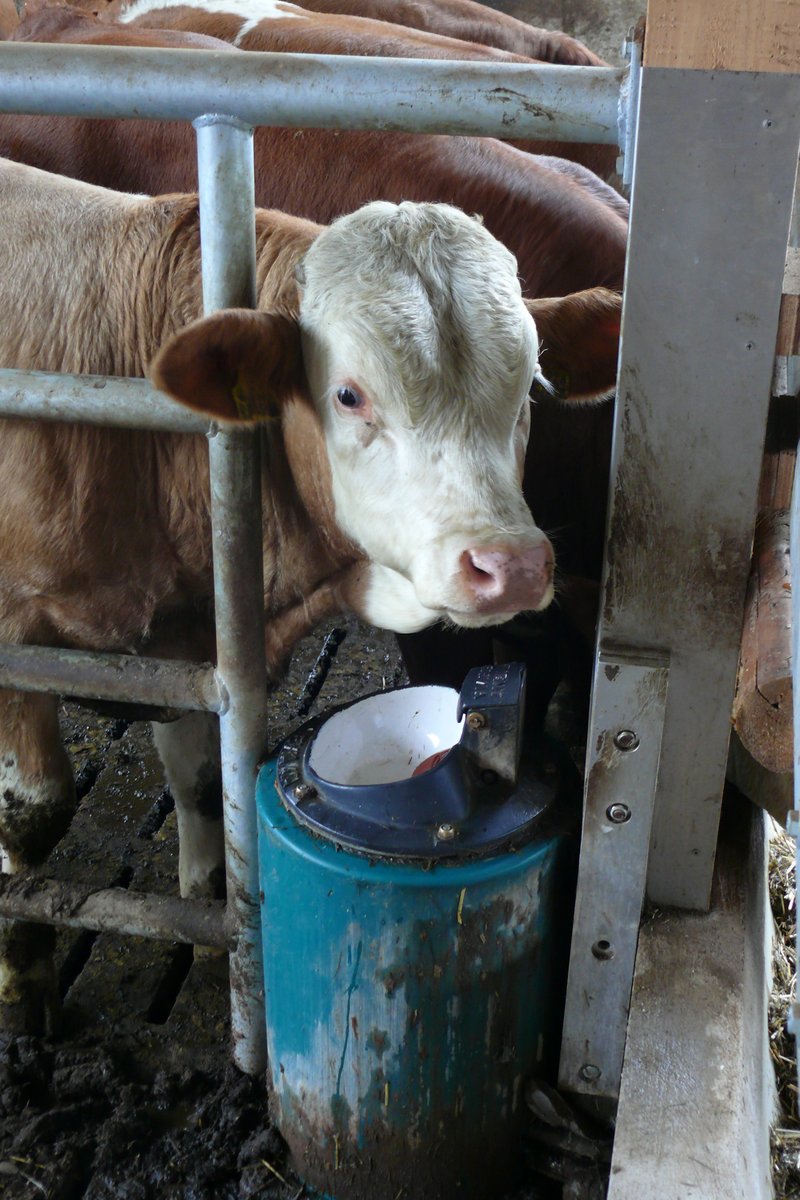
Regardless of where the trough is installed and what type of trough is chosen, occupational safety must always be guaranteed! Where possible, shell troughs should be installed as double troughs in the pen partition. This allows for good and safe control and cleaning from the feeding table (Fig. 1).
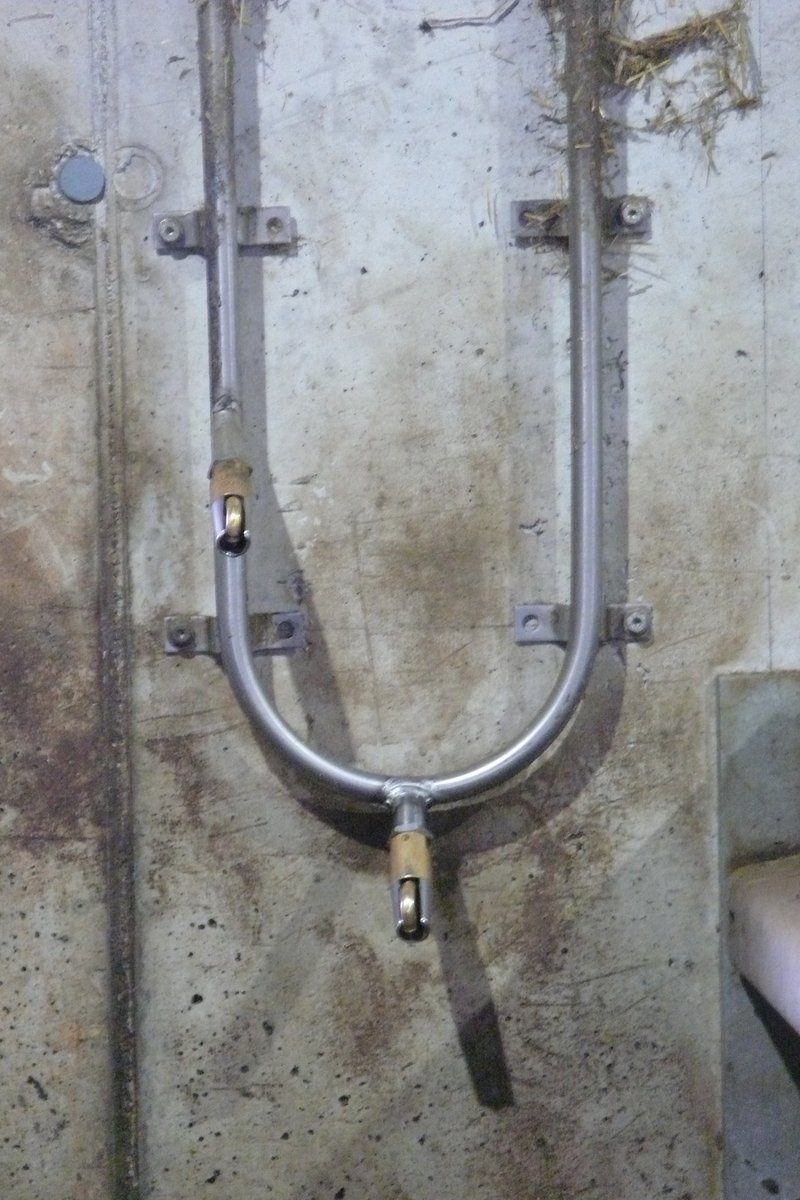
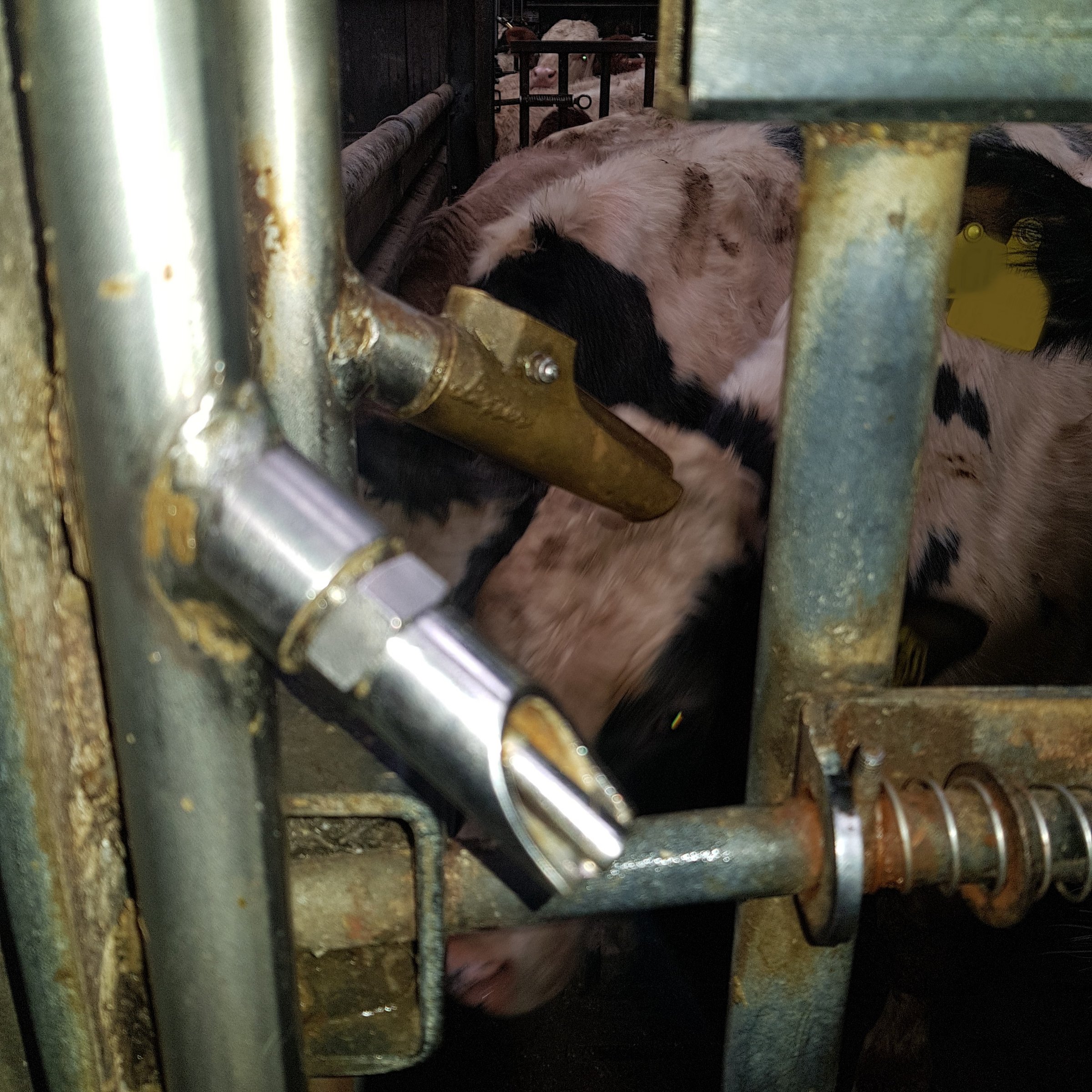
The installation of additional drinking troughs, e.g. as nipple drinkers in the rear area/transition area, improves the water supply for lower-ranking animals as well (Fig. 2). Installing them in the lying area can have a negative effect due to increased restlessness there. For occupational safety reasons, tap drinkers are less dangerous for checking in the pens, as they are less prone to contamination and therefore do not need to be cleaned as often.
Special feature of straw stables
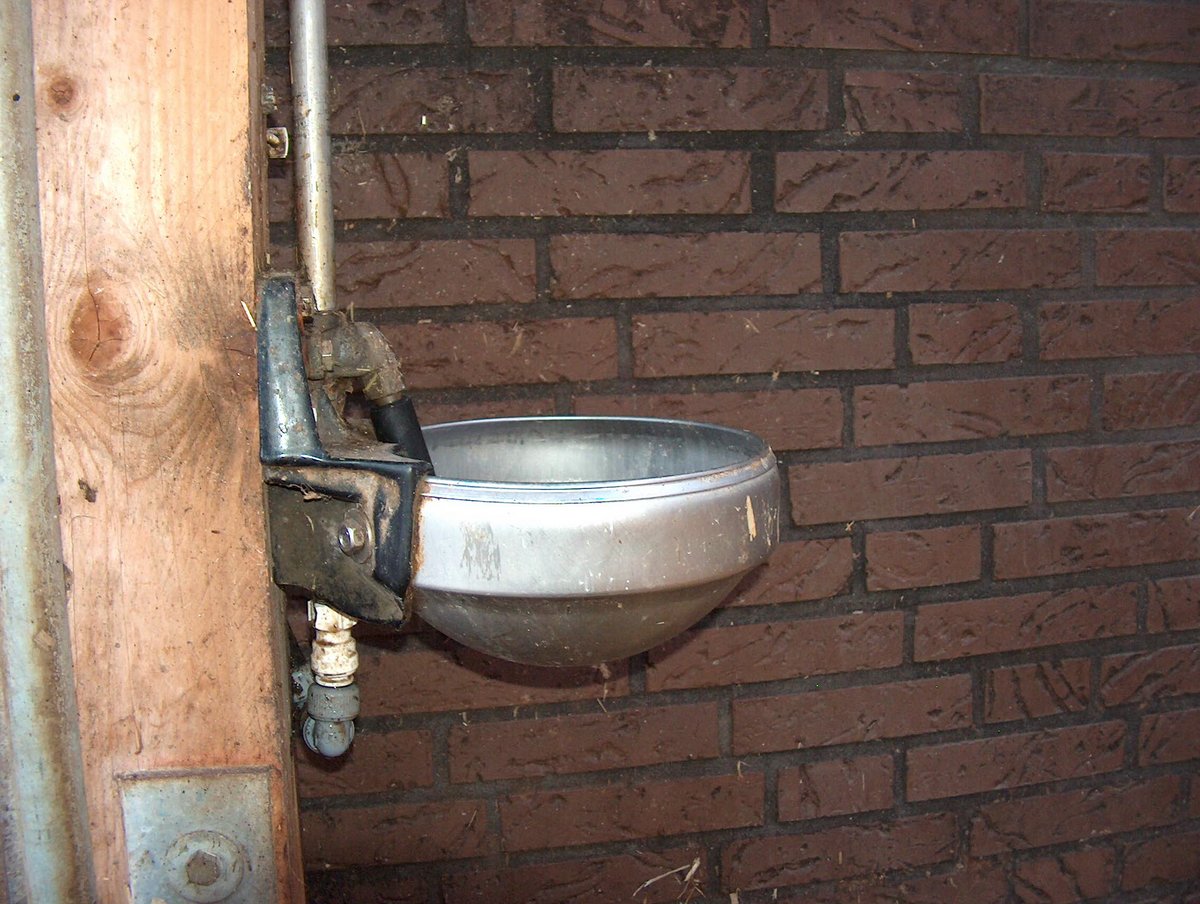
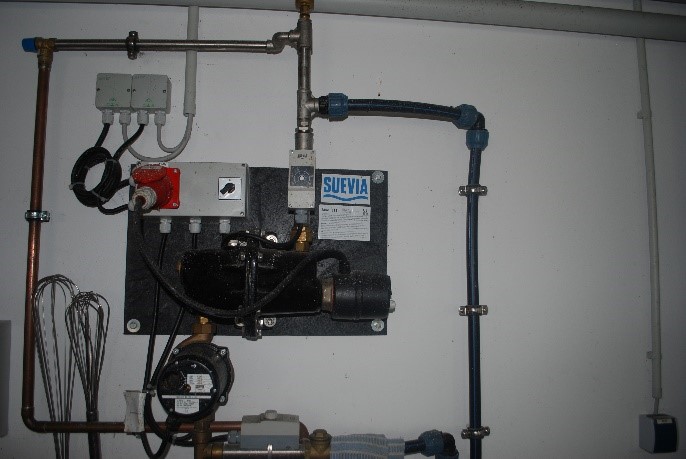
The general requirements are the same as in litter-free systems. When supplementing drinking troughs with nipple drinkers, it should be noted that these have increased water losses. In addition, straw consumption increases in order to counteract soil waterlogging. Water losses from troughs can also be reduced with shell troughs, e.g. by using a modified trough design (Fig. 3). In winter, care must be taken to ensure that the water in the troughs and piping system does not freeze. Circular systems with heating (Fig. 4) or heated individual troughs are suitable for frost protection.
Literature
- Bavarian Animal Welfare Guidelines for the Keeping of Beef Cattle and Suckler Cows, Bavarian State Ministry of the Environment and Consumer Protection (2022) www.stmuv.bayern.de/themen/tiergesundheit_tierschutz/tierschutz/mastrinder_mutterkuehe/index.htm (accessed on 09.08.24)
- DLG Fact Sheet 399: Water supply for cattle. Structural, technical and needs-based solutions www.dlg.org/fileadmin/downloads/landwirtschaft/themen/publikationen/merkblaetter/dlg-merkblatt_399.pdf (accessed on 12.10.24)
- KTBL (2020): Animal welfare indicators: Practical guidelines – Cattle www.ktbl.de/fileadmin/user_upload/Allgemeines/Download/Tierwohl/Leitfaden2020_Mastrinder.pdf (accessed on 12.10.24)
- Lower Saxony Animal Welfare Guidelines for Beef Cattle Farming (2018) www.laves.niedersachsen.de/startseite/tiere/tierschutz/tierhaltung/rinder/tierschutzleitlinie-fuer-die-mastrinderhaltung-162378.html (accessed on 09.08.24)
- Guidelines for the assessment of the hygienic quality of drinking water in accordance with feed law, Federal Ministry of Food, Agriculture and Consumer Protection www.bmel.de/DE/themen/tiere/futtermittel/orientierungsrahmen-traenkwasser.html (accessed on 12.10.24)
- Restless fattening bulls – observations from practice, Lower Saxony Chamber of Agriculture www.lwk-niedersachsen.de/bezst-osnabrueck/news/30978_Unruhige_Mastbullen_-_Beobachtungen_aus_der_Praxis (accessed on 12.10.24)