
Introduction
The central and overarching consideration in breeding for hornlessness is animal welfare. Looking to the future of livestock farming, it is generally the case that animal welfare, sustainability and economic viability must be considered together, so that high standards of animal welfare – for example, to avoid unnecessary interventions – can be implemented in a practical and sustainable manner. In modern husbandry systems, keeping horned cattle poses risks to both humans and the animals themselves. Herds comprising a mix of horned and polled animals are particularly problematic in this regard. Furthermore, occupational safety, herd management, as well as costs and labour requirements play a significant role in this context. For these reasons, many farms have opted to keep polled cattle for many years now. From an animal welfare perspective, every effort should be made to avoid any intervention on the animal; this is why breeding for hornlessness is becoming increasingly important and represents a key alternative to the previously dominant methods of cauterising horn buds.
Procedures for the ablation of horn buds in calves currently constitute an exceptional case under the Animal Welfare Act pursuant to Section 5(3), second sentence (in conjunction with Section 6(1), third sentence). Calls for stricter regulations governing the procedure – as reflected, for example, in the failed amendment to the Animal Welfare Act (TierSchG) of May 2024 and in the 2012 Düsseldorf Declaration – make it clear that a general ban is becoming increasingly likely in the medium to long term. In practice, additional legal tightening in some federal states already points to a further step in this direction (e.g. circular from the State of Lower Saxony (as at 2026), enforcement guidance/information sheets from Hesse, and guidelines from Bavaria and Brandenburg).
Note
On organic farms, the removal of horn structures has been permitted only in justified exceptional cases since 1 January 2009. Since 2022, the procedure has been governed by EU Regulation 2018/848, which defines the term ‘justified exceptional case’ more precisely.
The Demeter Association goes a step further and prohibits both dehorning and the deliberate breeding for hornlessness. Exceptions apply to individual, genetically hornless breeds kept in purebred herds (Angus and Galloway) as well as to female animals that are genetically hornless and were already part of the herd prior to the transition.
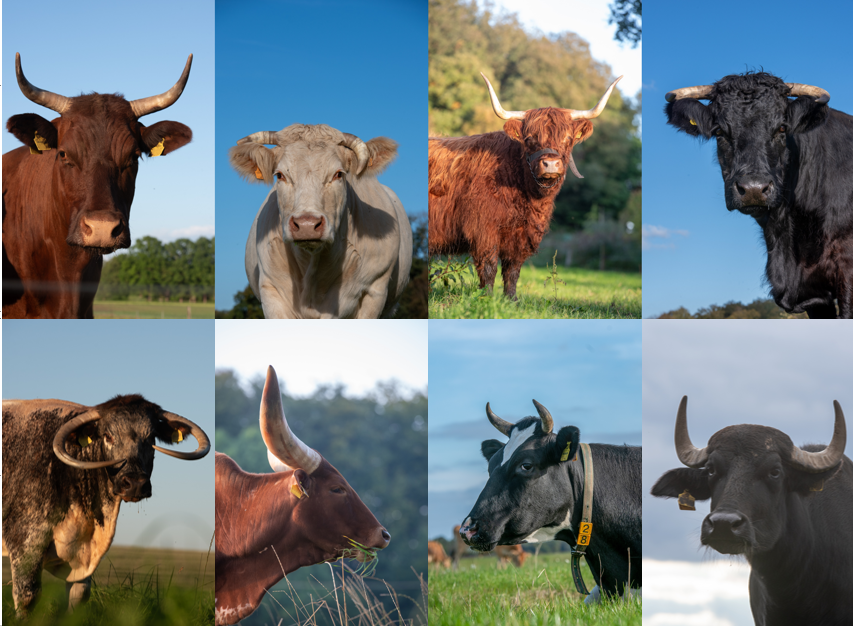
Cattle belong to the genus group of horned animals (Bovidae), which form part of the family of ruminants. Horns are paired skin appendages attached to the head of bovine species, the shape of which varies greatly between species and breeds (see Figure 1). They consist of a bony core (frontal bone process), which is surrounded by a permanently growing layer of keratin (horn substance). Between the keratin layer and the bony core are several layers of tissue that are well supplied with blood and innervated by nerves. The horn bud forms as early as the early foetal stage. In cattle, the growth of the horn substance begins approximately one month after birth. Genetically hornless individuals occur in all domesticated bovids as a result of naturally occurring mutations.
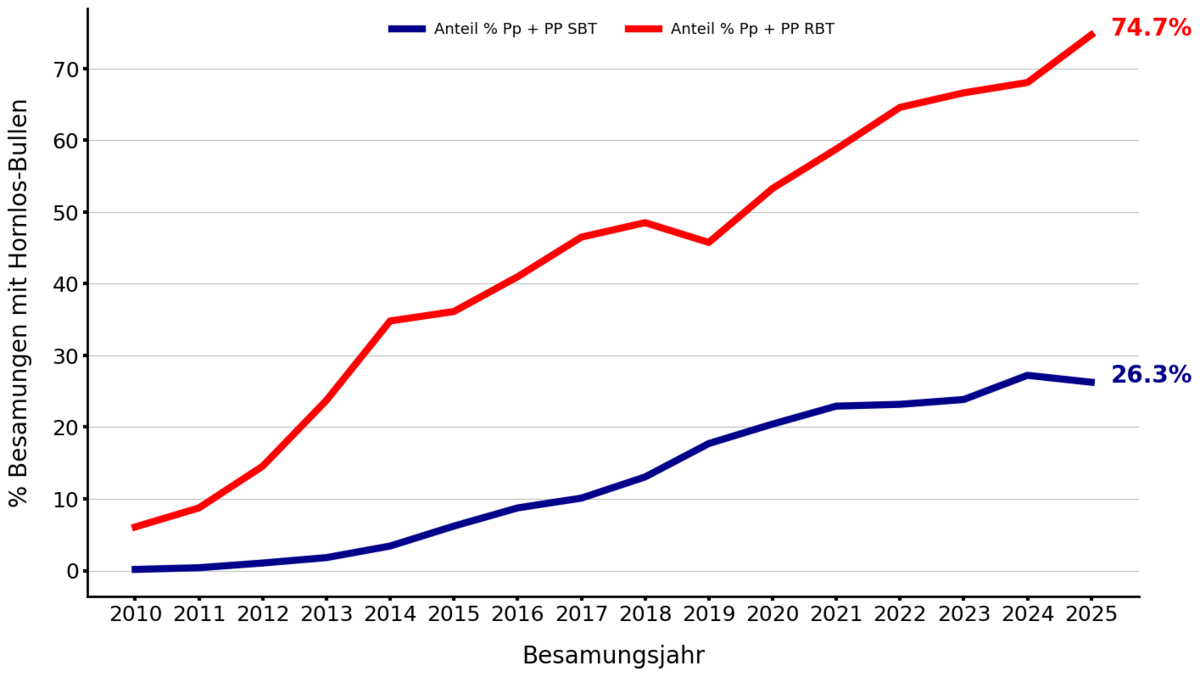
For the majority of dairy and dual-purpose cattle kept in Germany, the removal of horn buds is still carried out by cauterisation. The breeding of genetically polled cattle offers both conventional and organic farms an existing, animal-welfare-oriented alternative to dehorning or to keeping horned cattle.
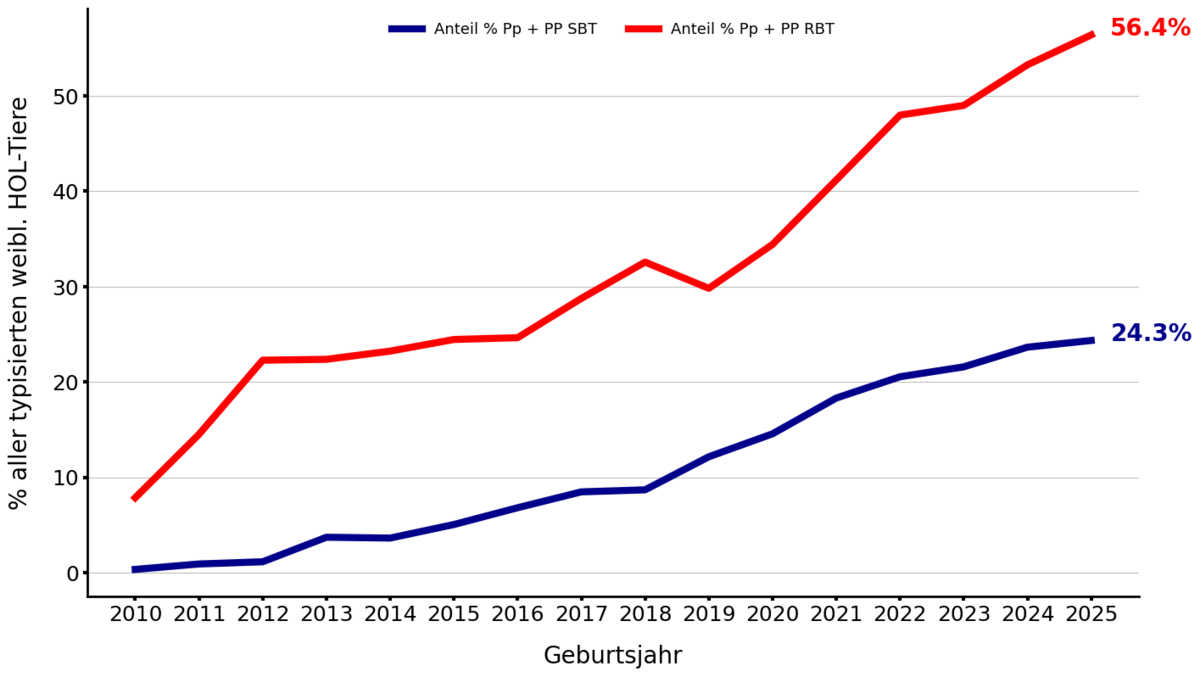
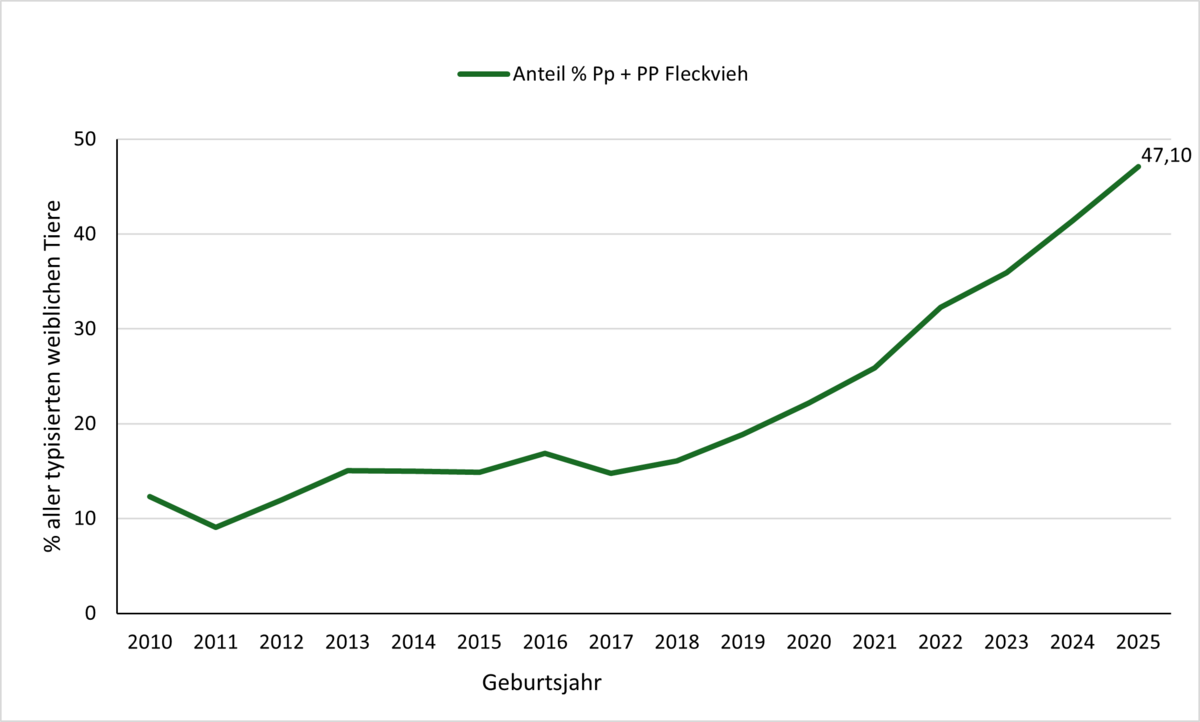
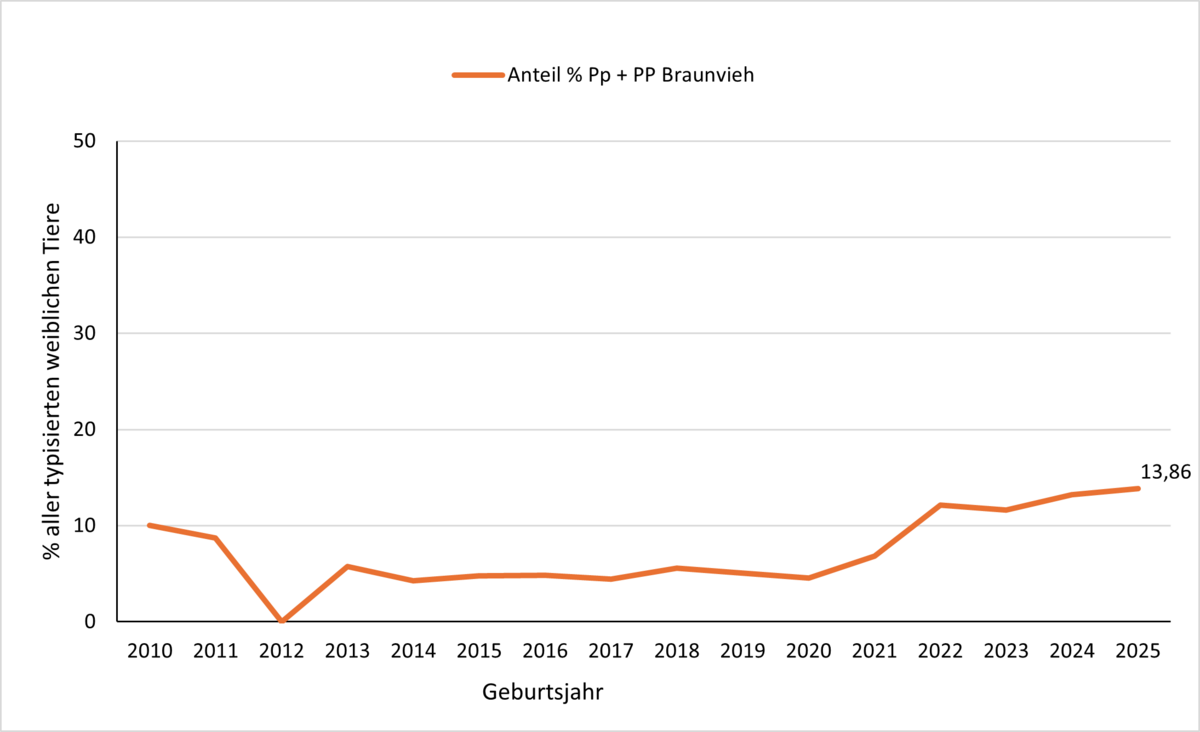
Cattle breeding associations have been responding to this for around 20 years by selecting genetically polled bulls across breeds of economic importance. The proportion of genetically polled cattle has risen significantly in recent years (Figures 2–5). In the 2025 birth cohort, the proportion of genetically polled, genomically tested female Holsteins from herd genotyping (approximately 33% of cattle in Germany) now stands at 24.3% for black-and-white Holsteins and as high as 56.4% for red-and-white Holsteins (Figure 2).
Hornlessness in cattle – inheritance and genetic transmission
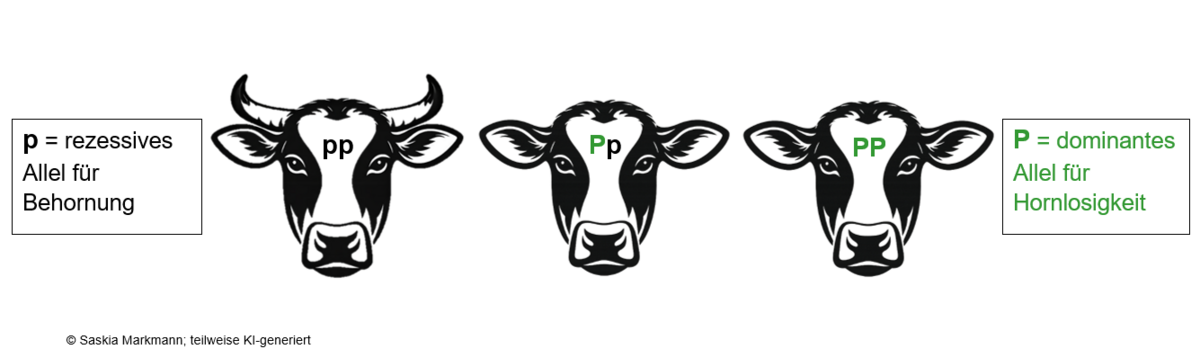
In cattle, polledness is essentially determined genetically by a gene locus on chromosome 1, known as the ‘POLLED’ or ‘polled’ locus. Over the course of evolution, beginning even before domestication, several structurally distinct polled alleles have arisen at this gene locus through mutations; this is referred to as allelic heterogeneity. The allele variants most widely found in European cattle breeds are the so-called ‘Celtic’ and ‘Frisian’ allele variants. Hornlessness is one of the few qualitative traits regarded positively by breeders that, at first glance, follows a pattern of inheritance consistent with Mendel’s laws: animals with at least one hornless allele variant (Pp, PP) are phenotypically hornless; only pp animals are certain to have horns (see Figure 6). Accordingly, the polled allele variants (Pc for the ‘Celtic’ variant and PF for the Frisian variant) are dominant over the horned allele variant (p), which is inherited recessively.
However, recent research findings suggest that the development of horns in cattle, as a fully-fledged organ, is genetically regulated in a far more complex manner than is controlled by a single gene locus alone. The ‘scurs’ (genotype designation PS) that occur in practice are typically loose horn buds that are not fused to the skull; from a genetic perspective, they are highly likely to occur exclusively in genetically polled animals (Figure 7).

A genome-wide study by Gehrke et al. on Holstein-Friesian cattle of polled descent shows that the occurrence and severity of wobbly horns depend on age, sex, the polled genotype (PP vs. Pp) and several other gene loci on various chromosomes. The authors therefore conclude that a simple monogenic inheritance pattern for horn formation should be rejected in favour of an oligogenic, quasi-quantitative model. In this model, the polled locus on chromosome 1 described above and the allelic variants present there have a strong gene-regulatory effect, which significantly influences horn formation and the genes involved in it.
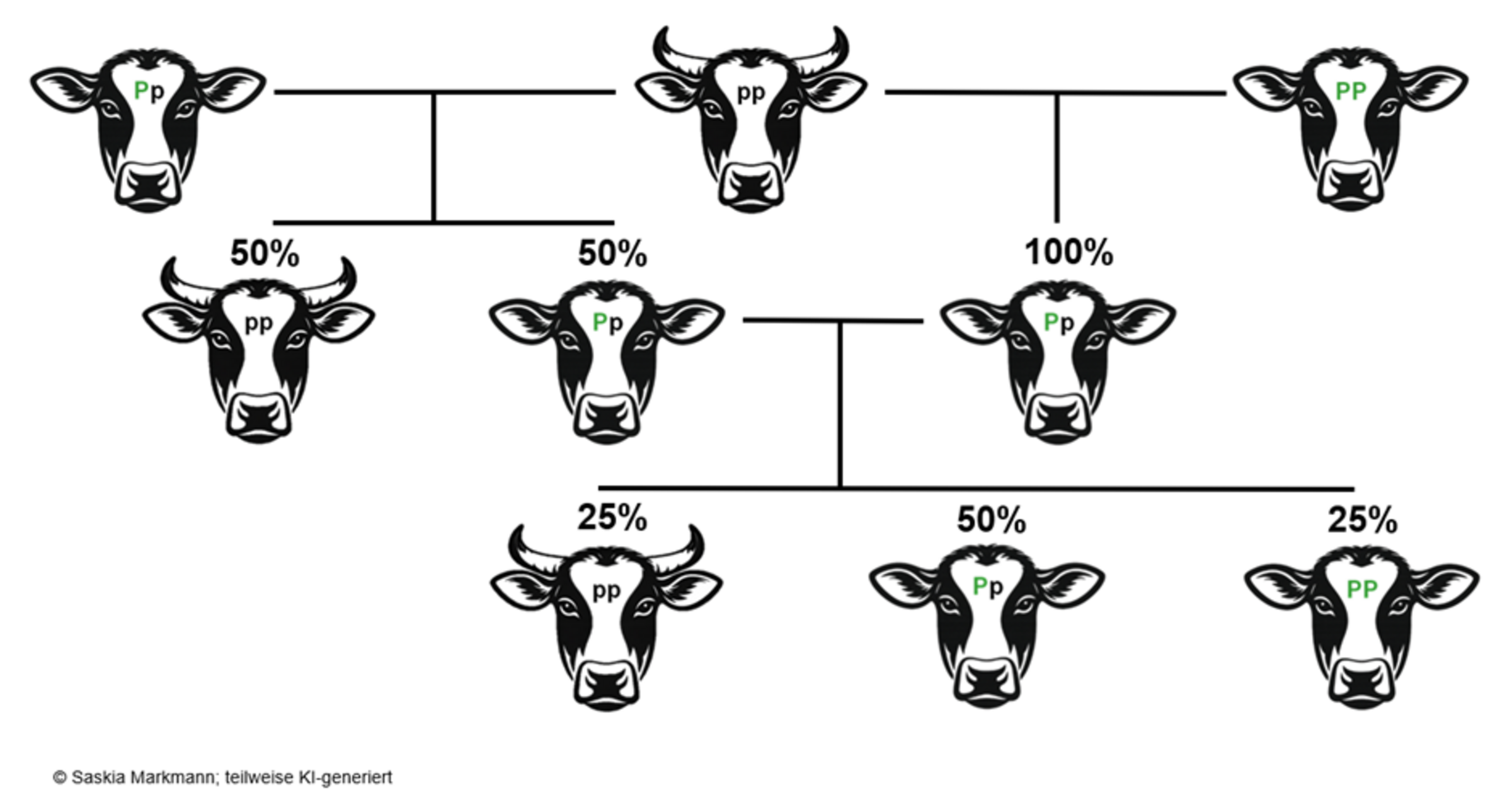
Due to the underlying Mendelian pattern of inheritance, the allele variants at the hornless locus can be selectively managed relatively easily through breeding. The inheritance patterns and the expected phenotypes can be calculated with clear probabilities when animals are mated (see Figure 8). In particular, if the genotypes (both allelic variants of an animal at the hornless locus, e.g. Pp or PP) of both breeding partners are known through genotyping, it is possible to mate them in a very systematic manner with a high probability of producing a phenotypically hornless calf. In practical terms, however, it should be noted that, strictly speaking, these probabilities only apply to each individual mating. In practice, when promoting heterozygous polled bulls, it is often claimed that 50% of their calves are polled. With a small number of matings, however, a deviation that is frustrating for the practitioner repeatedly occurs; this is, however, attributable to chance, for example, when 3 out of 4 daughters of a heterozygous bull are horned. This circumstance is a key reason why homozygous polled bulls (PP) are in very high demand, as all their offspring are guaranteed to be genetically and phenotypically polled, regardless of the horn status of the inseminated or mated cow.
Fact-check
Even though breeding for hornlessness is making great strides, from a genetic point of view it is not a ‘point of no return’. If heterozygous hornless animals (Pp) are crossed with one another or with horned partners (pp), horned offspring (pp) will result, in accordance with the calculable Mendelian probabilities. Therefore, as long as the horn allele (p) remains present in the gene pool, targeted selective back-breeding to reintroduce horns is, in principle, possible at any time.
Practical knowledge
Since the advent of polled genetics, genetic quality – as measured by breeding values – has improved in recent years. The broad range of options and the confidence in polled genetics have led to a significant increase in the number of polled animals in Germany across many breeds.
Intensive breeding efforts have not only vastly improved the genetic quality of polled sires; the range of options and the pedigrees behind polled bulls have also expanded, meaning that a large number of homozygous polled bulls are now available for artificial insemination.
The homozygous polled Red Holstein sire KEANE PP was the most widely used Red Holstein bull in Germany last year (2024). Among Fleckvieh and Brown Swiss breeds too, two polled sires – Woozle PP* (FV) and Boxer Pp* (BS) – took the top spots in the list of most-used bulls in 2024.
Almost half of the ‘Top 10 best-selling’ Holstein artificial insemination bulls in Germany are homozygous hornless, which underlines the growing importance of hornless genetics. The situation is similar for the Red Holstein, Fleckvieh and Brown Swiss breeds.

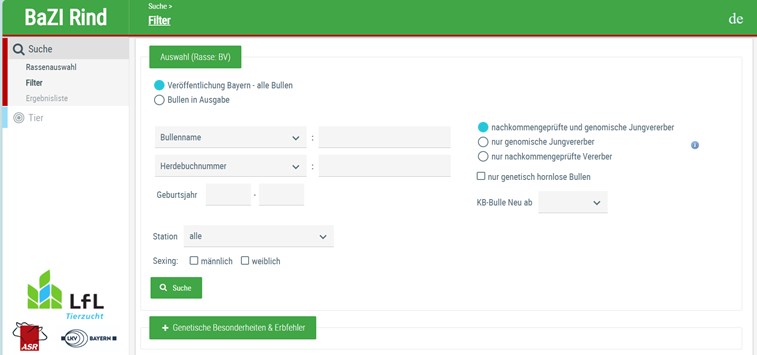
Immediately after selecting the breed, you can filter the results to show ‘only genetically polled bulls’. You can also refine the search criteria for horn status under the heading ‘Genetic characteristics and hereditary defects’. There, you can narrow down selection criteria relating to horn status (PP, PP* and/or Pp, Pp*, PS, P*S and/or P) and other genetic traits (* – based on a genetic test result).
Bulli and Interbull Databases – The bull databases for dairy cattle breeds
The polled bulls for the dairy cattle breeds Holstein-Sbt., Holstein-Rbt, Red and White-DN, Angler, Jersey and German Sbt. Lowland Cattle can be found on the vit website.
To the list of international bulls, including German bulls


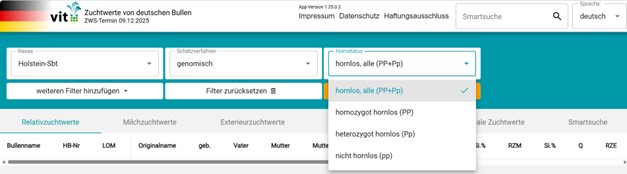
As with BaZI Rind, any number of additional filters can be applied here and, for example, during the estimation process, you can choose whether to display only genomic bulls, daughter-tested bulls or all bulls. Once all the desired criteria have been set and the search has been launched, the database lists all matching bulls in descending order by total breeding value (RZG). Although a filter for active bulls cannot be set here, the top lists on the page www.vit.de/vit-fuers-tier/zuchtwertschaetzung/zws-milchrinder provide an overview of the best active bulls.
Real-world experiences
Guido Simon is an organic farmer in the Hochsauerland district of North Rhine-Westphalia and runs a farm with around 70 dairy cows. Since 1998, he has specialised in breeding polled cows.
The Nieghorn farm is a family-run business in Langenbach in the Vogtland region, in the border triangle between Saxony, Thuringia and Bavaria. Around 135 cows are milked using two milking robots, and the farm cultivates some 300 hectares. Hornless breeding has been actively practised there for ten years.
Note: Interviews in german language only.
The interviews reflect personal accounts of real-world farming experience. The assessments and approaches described are based on individual farm decisions and do not constitute a universal recommendation. The breeding organisations mentioned in the interviews serve to illustrate specific practical examples. Other breeding organisations also offer similar services. This does not constitute a comprehensive overview.
A look into the future
Breeding for hornlessness will continue to grow in importance in the coming years, particularly due to the increasing use of new techniques in animal breeding. Modern genomic methods and more precise breeding value estimates – achieved, for example, through herd genotyping – enable an increasingly targeted selection of bulls, whilst taking into account both performance and health traits.
At the same time, rising animal welfare standards are setting a clear direction. Hornless breeding operates within the tension between animal welfare, genetic sustainability and economic viability, yet is increasingly becoming a key breeding objective. The move towards widespread adoption will still take time, but acceptance in practice is already high and continues to grow, and developments to date point in a clear direction. Not least, the reduction in workload for farms represents a win-win situation that is also in line with legal requirements.
The outlook for polled breeding is therefore positive overall. With growing populations of polled animals and further genetic progress, polledness is increasingly becoming an established standard trait in cattle breeding. The progress made in recent years clearly demonstrates that animal welfare, performance and economic efficiency can be successfully reconciled.
Further information
Bibliography
Federal Association for Cattle and Pigs e.V.
Davis E.B., Brakora K.A. & Lee A.H: (2011). Evolution of ruminant headgear: a review. Proceedings of the Royal Society B: Biological Sciences 278, 2857–65.
Gehrke L. J., Capitan A., Scheper C., König S., Upadhyay M., Heidrich K., Russ I., Seichter D., Tetens J., Medugorac I., & Thaller G. (2020). Are scurs in heterozygous polled (Pp) cattle a complex quantitative trait? Genetics Selection Evolution, 52, 6. https://doi.org/10.1186/s12711-020-0525-z.
Medugorac I., Seichter D., Graf A., Russ I., Blum H., Göpel K.H., Rozhammer S., Förster M., & Krebs S. (2012). Bovine polledness – An autosomal dominant trait with allelic heterogeneity. PLoS ONE, 7(6), e39477. https://doi.org/10.1371/journal.pone.0039477.
OMIA. (2019). OMIA 000483-9913: Polled/Horns in Bos taurus (taurine cattle). Online Mendelian Inheritance in Animals. Available at: https://omia.org/OMIA000483/9913/.
Simon R., Drögemüller C., & Lühken G. (2022). The complex and diverse genetic architecture of the absence of horns (polledness) in domestic ruminants, including goats and sheep. Genes, 13(5), 832. doi.org/10.3390/genes13050832
Zhu B., Zhang M. & Zhao J (2016). Microstructure and mechanical properties of sheep horn. Microscopy Research and Technique 79, 664–74.