

- Dirk Albers, Lower Saxony Chamber of Agriculture
- Dr. Ariane Boldt, State Research Institute for Agriculture and Fisheries
- Dr. Bernd Fischer, LLG Saxony-Anhalt
- Johanna Großklos-Bumbalo, AgriConcept Consulting Company
- Anja Heitmann, AgriConcept Beratungsgesellschaft mbH
- Dr. Hans-Joachim Herrmann, State Agricultural Agency of Hesse
- Dr. Dieter Krogmeier, Bavarian State Institute for Agriculture
- Konstanze Rohwer, Impulsbetrieb Tierwohl
- Nicola Sturm, LLG Saxony-Anhalt
- Dr. Anna Catrin Anker, Landesbetrieb Landwirtschaft Hessen
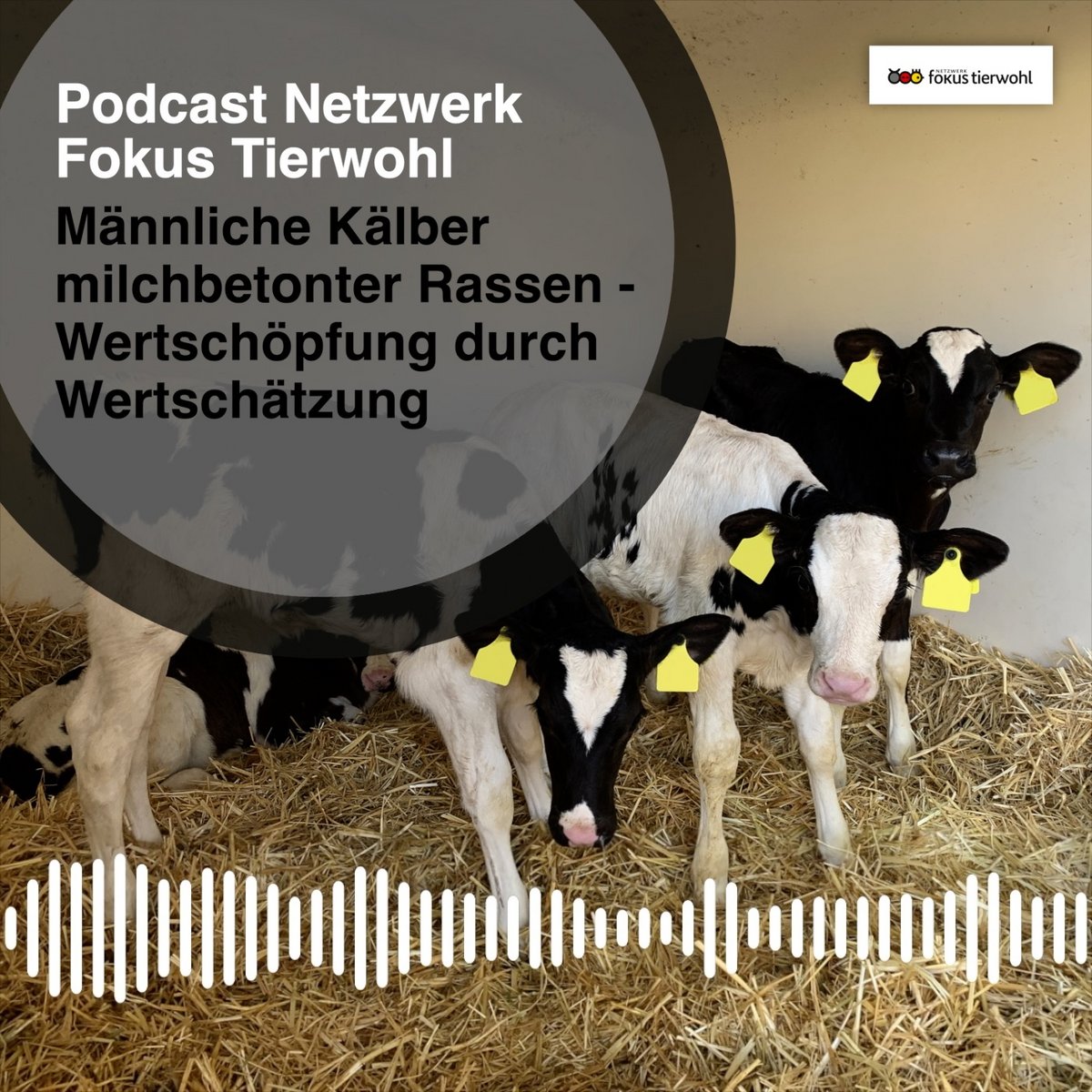
Marketing calves from dairy breeds can be challenging, as these breeds are primarily known for their milk production rather than their meat quality. Nevertheless, there are various strategies for making calves marketable.
The aim of the dairy farm is to provide uniform batches of age-appropriate, healthy calves from 28 days of age.
The change of farm is undoubtedly stressful for the calves. In order to minimise the stress of the transition, it is important to be aware of the relevant risks involved in the transfer from the farm of origin (via the dealer) to the fattening farm. Appropriate measures should be agreed with the fattening farm/dealer, for example within the framework of a marketing standard.
Joint marketing/cooperation is recommended for farms with small numbers of calves.
The following points, which are relevant for both the farm of origin and the fattening farm, could be included in a marketing standard:
- Minimum weight for male calves at 28 days:
- for dairy breeds (Holstein/Brown Swiss) > 60 kg
- for crossbred calves > 70 kg (possibly more, depending on the sire breed)
- Good, stable health without anatomical defects
- No signs of endo- and ectoparasites (coccidia, lice, etc.)
- Free from umbilical inflammation
- Information on feeding and forage regime
- Agreement on dehorning (if necessary, this should already have been done at 28 days)
- Agreements on the type and cost of vaccinations
- Proof of treatments, e.g. with antibiotics
- For crossbred calves: mating of sire breeds in consultation with the fattening farm
| Characteristic | Above average | Average | Below average | |
Live weight (kg)
| Milk-oriented breeds | > 65 | ≥ 55 - 65 | < 55 |
| Fattening crosses | > 75 | ≥ 65 - 75 | < 65 | |
| Health status | No anatomical defects | Minor anatomical defects | ||
| Free from inflammatory diseases or fever | ||||
| Musculature of the loin and hindquarters | clearly recognisable convex shape | Neither convex nor concave shape | Slightly concave shape | |
<figcaption>Table 1: Quality targets for calves for fattening at 28 to 35 days of age after rearing on the farm of origin</figcaption>

To achieve the marketing target set, calf rearing involves various interlinked components. Much like a jigsaw puzzle, the goal can only be achieved if every single piece is carefully taken into account. It begins with effective birth monitoring, including initial care and a sufficiently high and rapid supply of colostrum. From birth to sale, particularly with calves, a high standard of hygiene must always be maintained in both husbandry and feeding. To achieve high daily weight gains and the targeted uniform sale weights, the calf must be provided with milk and solid feed in accordance with its requirements.
You will find valuable information on the individual components via the following links:
Watering: How and how much should be watered?
A healthy calf needs sufficient nutrients to develop properly. Without an adequate milk intake, the calf is more susceptible to disease and may not gain enough weight before it is ready for market.
Ad libitum feeding
Calves are allowed to drink as much milk as they like at any time. Ad-libitum feeding offers the opportunity to fully exploit the calves’ growth potential. When managed correctly, high growth rates and healthy calves can be expected.
However, ad libitum feeding requires consistent monitoring and hygiene from the farmer and is therefore only recommended if sufficiently trained and reliable animal carers are available, even during peak periods in outdoor farming operations.
Rationed calf feeding
The calves are given two (preferably three) meals a day with a defined amount of milk. The advantages include a lower hygiene risk, as the feed is consumed directly, as well as lower consumption of milk or milk replacer. Feeding hygiene is supported after milk intake by adding a small amount of water (100–200 ml) to the feeding bucket to facilitate self-cleaning.
To achieve the growth rates mentioned above with a market weight of > 60 kg, the recommendation is:
- 2 x 5 l whole milk for purebred calves of dairy breeds
- 2 x 6 l whole milk for crossbred calves (higher growth potential)
Milk replacer with high nutrient availability may also be used. The quantity should be adjusted to the level of whole milk feeding in accordance with the manufacturer’s instructions.
Aspects of intensive calf feeding
Calves reared under intensive conditions are weaned with a significantly better body condition score (BCS) than those reared under restrictive conditions. In studies by Schuldt and Dinse (2020), increasing the daily water allowance to more than 8 litres led to a significant improvement in the calves’ body condition and health status.1
Note: in these studies, female calves were examined until sexual maturity without a change of farm. In the working group’s opinion, these results can be readily applied to male calves.

Animal Welfare Ordinance
Anyone who keeps calves must ensure that
(...)
4. every calf over two weeks old has access at all times to water in sufficient quantity and of sufficient quality;
5. every calf is fed at least twice a day, ensuring that the calves’ suckling needs are adequately met;
6. from the eighth day of life at the latest, calves are offered roughage or other structured feed rich in crude fibre for free access;
(...)
Solid food supply
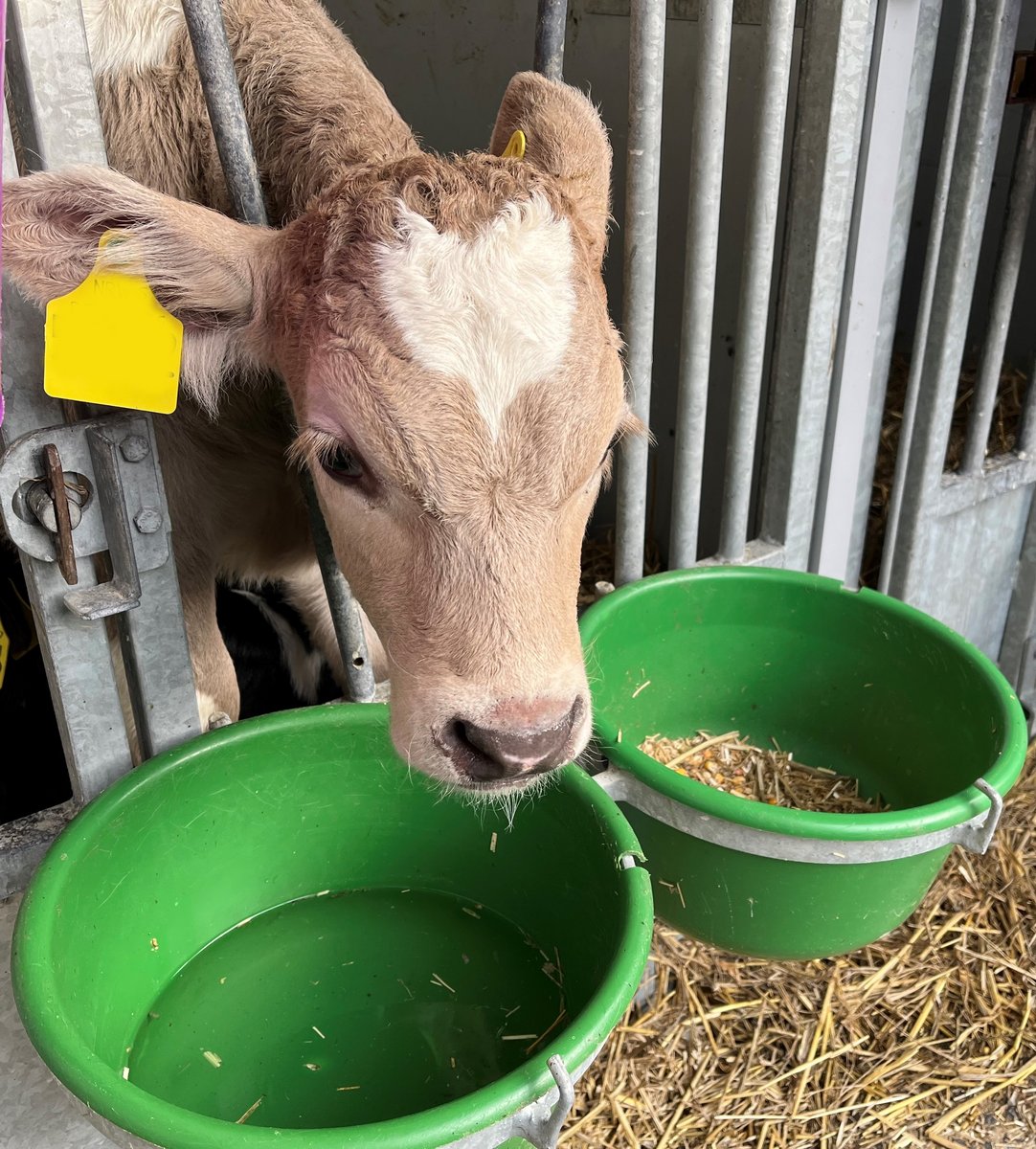
Just as calves need an adequate supply of milk, they must also be offered structured feed. According to the Animal Welfare and Livestock Management Ordinance, this should be provided from the eighth day of life. Many farms feed dry TMR, which is well suited for this purpose. Consulting with the destination farm regarding the type of solid feed to be provided makes the transition easier for the calf.
Quality over quantity!
Further measures to increase the value added from calf rearing:
- Through targeted selection, only the best purebred cows are inseminated with female (sexed) semen. Dairy cows of lesser breeding value can be inseminated with beef breeds to produce fast-growing crossbred calves.
- The number of calves to be reared and marketed can be reduced by extending the interval between calvings.
Which measure or combination of measures makes the most economic sense depends on many factors specific to the individual farm.


Further information
Further useful information on rearing and marketing can be found on the websites of the Lower Saxony Calf Initiative and KiWi RLP.
Bibliography
- Schuldt, A.; Dinse, R. (2020). Rearing female calves and young cattle on farms; Part I: Body condition scoring as a monitoring tool for growth and development, and the influence of body condition on health and performance. Neubrandenburg: Neubrandenburg University of Applied Sciences, Rector (Neubrandenburg University of Applied Sciences Series: Series I, Department of Agricultural Economics and Food Sciences; Vol. 9.) ISBN 978-3-941968-79-0