
(Image: Netzwerk Fokus Tierwohl, DLG e.V.)
(Image: Netzwerk Fokus Tierwohl, DLG e.V.)
Placing the feed trough and water trough in the slatted area can help to define the lying and dunging areas, as defecation often occurs after feeding.23
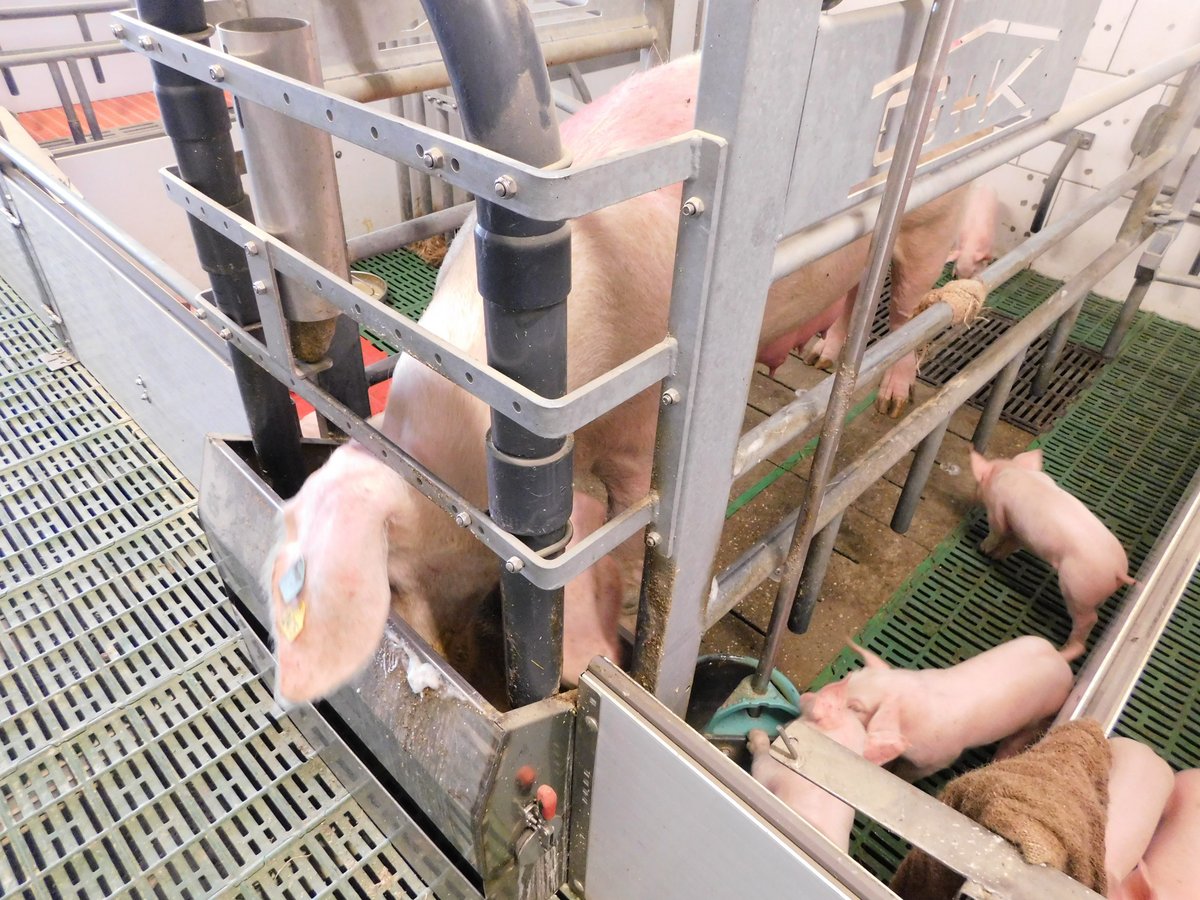
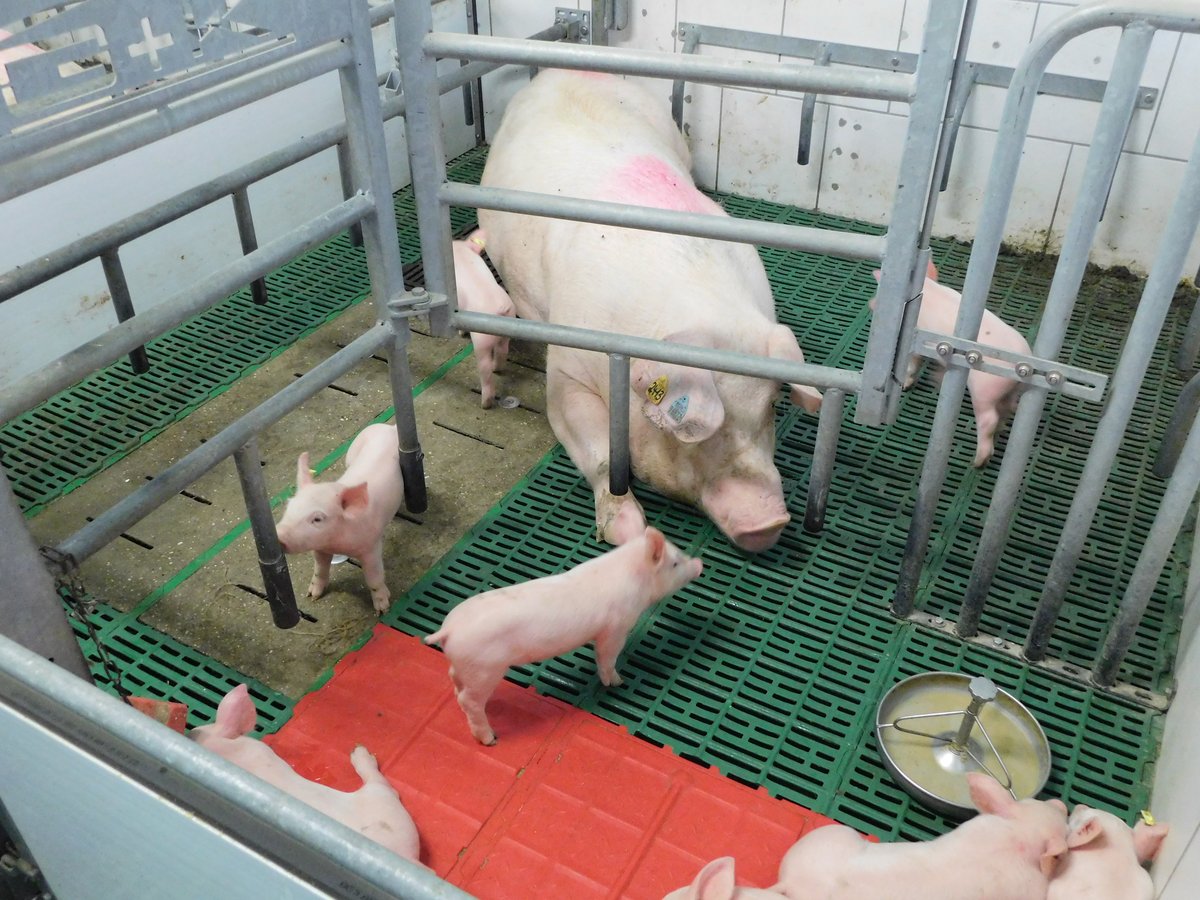
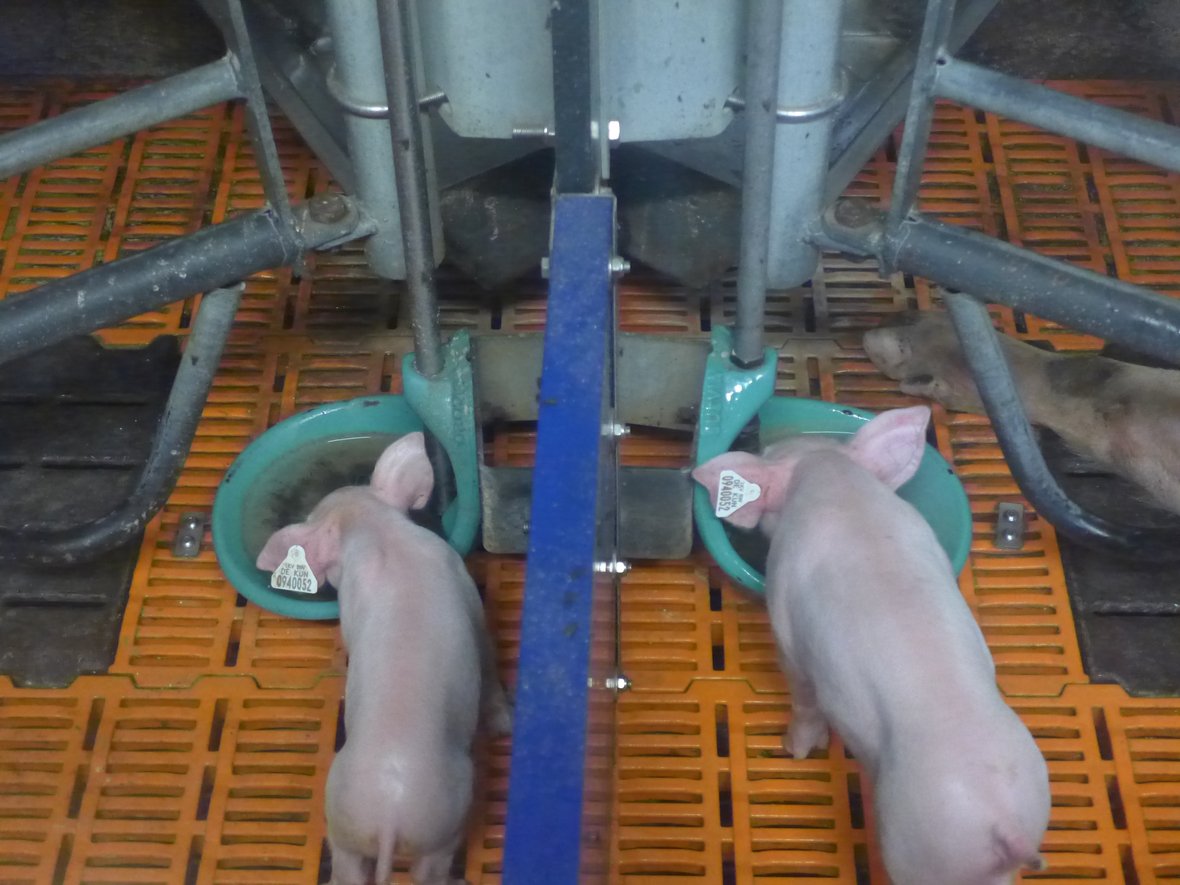
Good access to the trough and drinking trough is important for both the animals and the animal caretaker. To facilitate monitoring and cleaning, it is recommended that the trough and drinking trough be positioned facing the care aisle (Figs. 38 and 39). Consequently, the sow’s head faces the aisle.
(Image: Netzwerk Fokus Tierwohl, DLG e.V.)
(Image: Netzwerk Fokus Tierwohl, DLG e.V.)
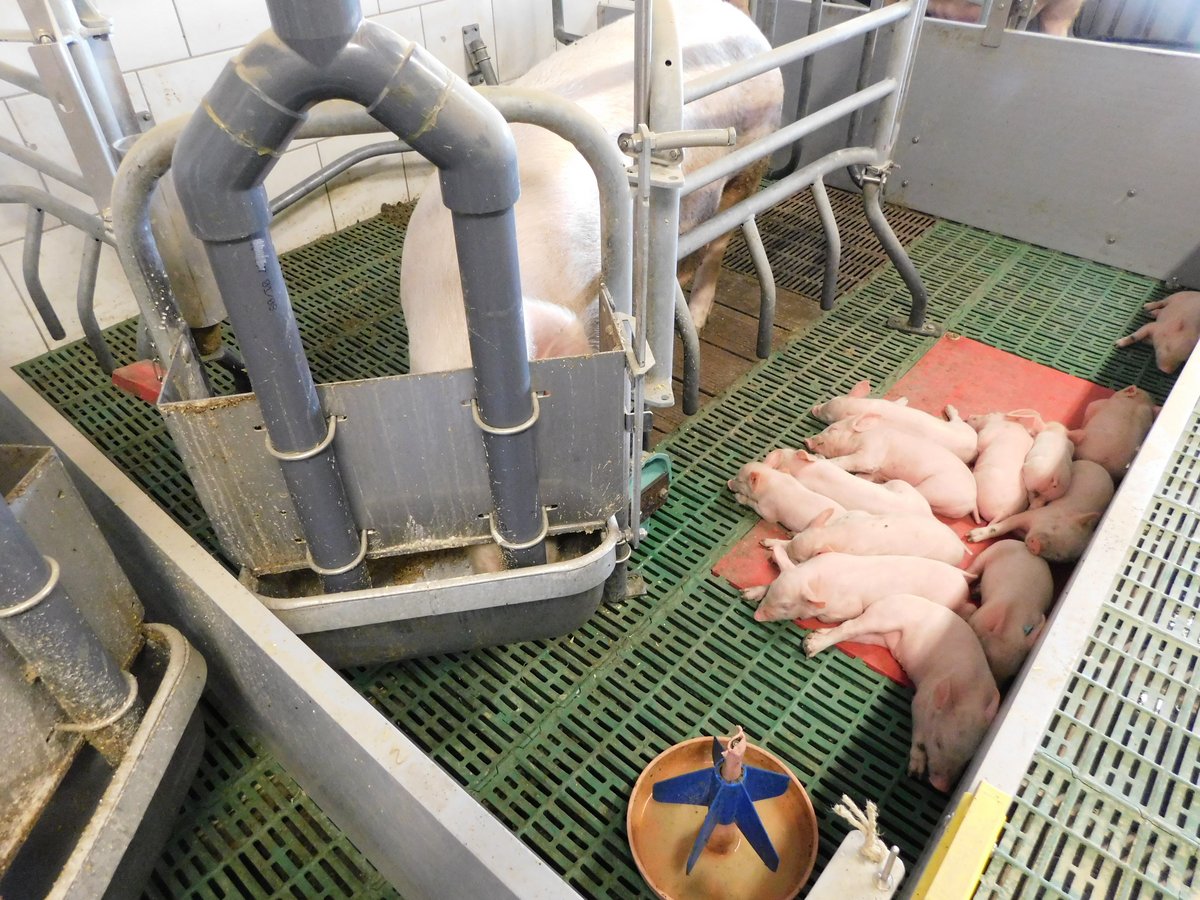
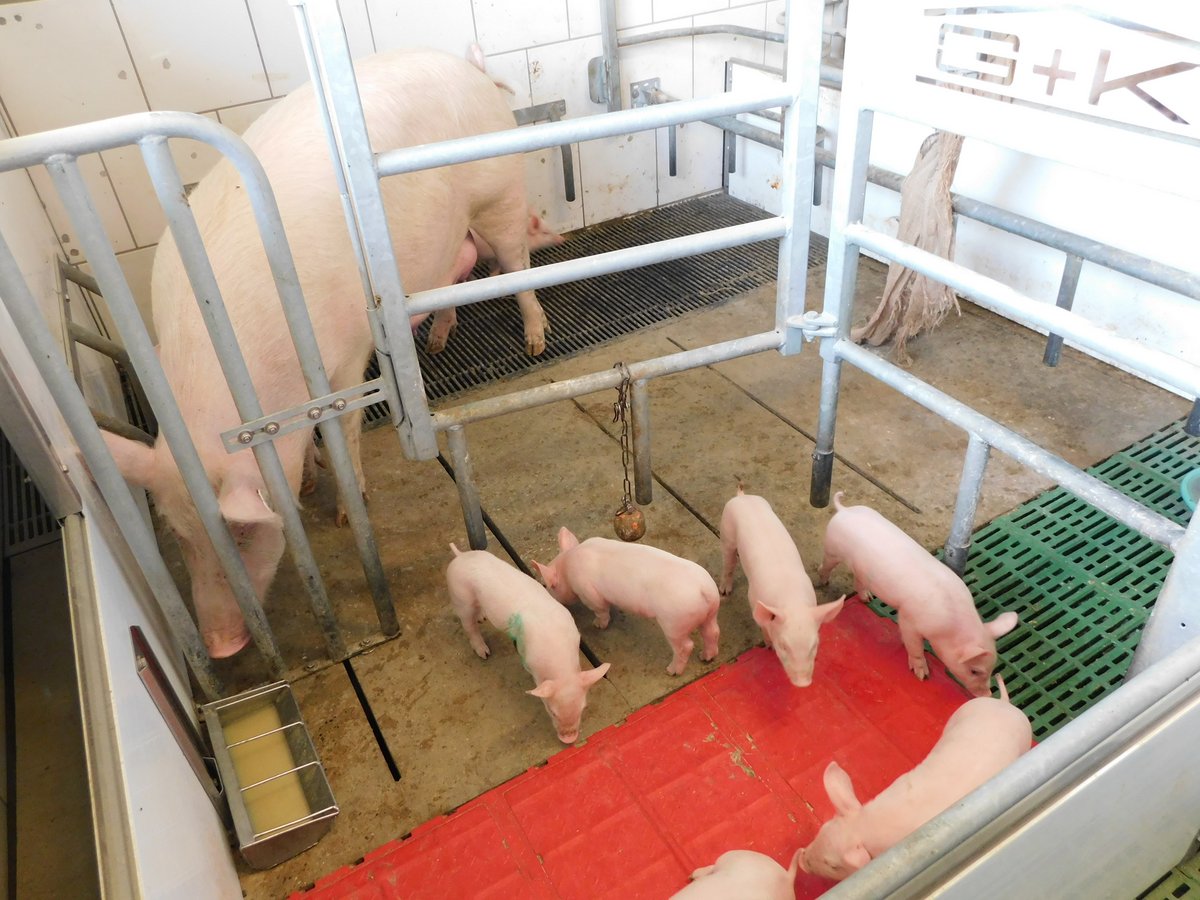
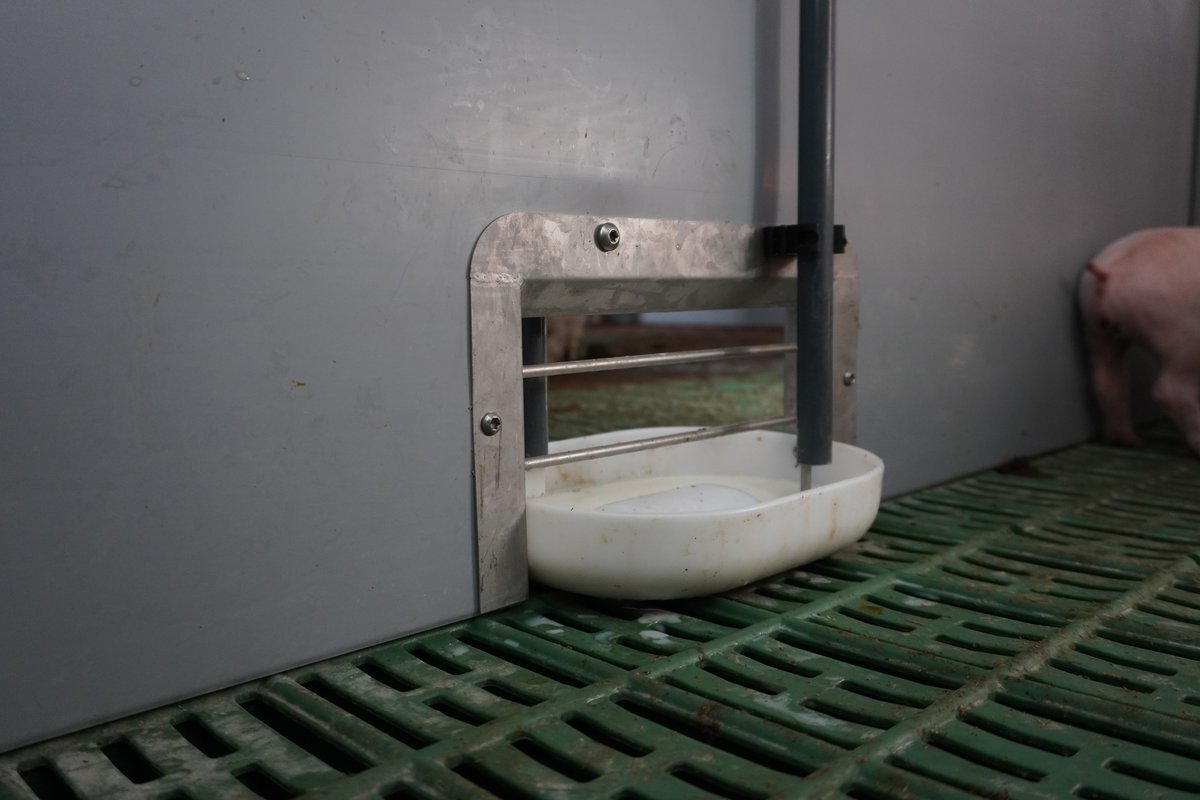
Additional feed troughs and milk cups for the piglets should also be easily accessible to both humans and piglets, but not to the sow (Figs. 40 and 41).
(Photo: M Lechner)
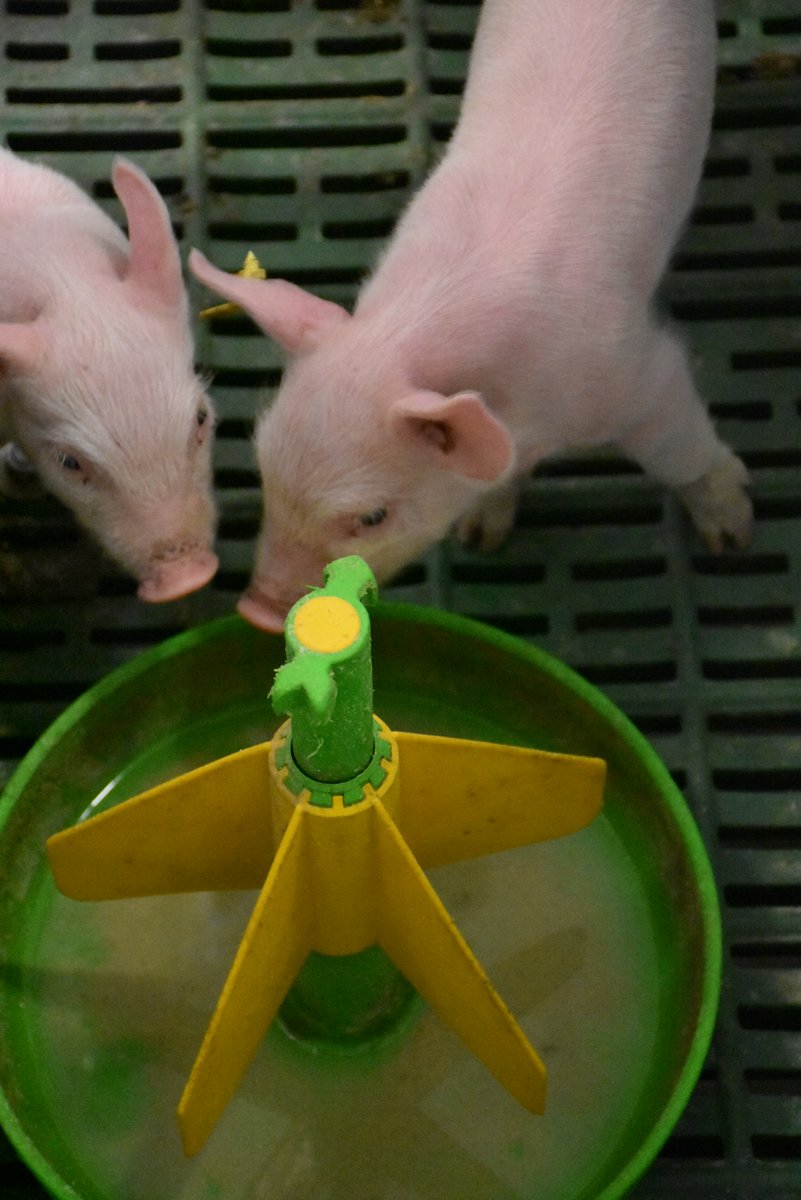
The mother-and-piglet drinker has proven effective for piglet water intake (Fig. 42). To keep the drinker as clean as possible and the surrounding area dry, drinkers are preferably installed above slats so that water can drain away. This also means that the drinker should not be positioned too close to the piglet nest. In piglet nurseries – i.e. where piglets remain in the farrowing pen after weaning – attention must be paid to the number and height of the drinkers, with the Animal Welfare Ordinance (TierSchNutztV) stipulating a maximum of 12 piglets per drinker for weaned piglets. As with sows, good hygiene must be maintained with regard to piglet drinkers. Dirty drinkers can become a breeding ground for germs and should therefore be cleaned regularly.
(Image: Netzwerk Fokus Tierwohl, FiBL Deutschland e.V.)
(Image: Netzwerk Fokus Tierwohl, FiBL Deutschland e.V.)
If there is sufficient milk available, piglets often pay little attention to drinking troughs during the first 14 days of suckling. For this reason, it is important from a hygiene perspective to connect the troughs to ring lines rather than branch lines.
Furthermore, water, electrolyte solution or milk can be provided via bowls or cups (Figs. 43 and 44).