


- Trapezoidal pen (a trapezoidal open area for sows, tapering towards the trough), narrow or wide (Fig. 2)
- Square pen (sides of roughly equal length) with a small or large square exercise area (Fig. 3)
- Rectangular pen (Fig. 4)
- Polygonal pen (e.g. L-shaped exercise area) (Fig. 5)
Trapezoidal, relatively narrow activity areas require more rectangular pens. The length and width should have a ratio of 3:2. This guides the sow’s lying behaviour in the desired direction (lengthwise within the pen). Together with positioning the feeding trough console more towards the centre and less at the edge of the pen, a more trapezoidal activity area is created for the sow when the piglet guard is open. This reduces piglet losses, as piglets are crushed not only when the sow lies down but also during rolling movements whilst lying down when the guard is open.8 Sows ‘roll’ up to 30% more when the lying (activity) area is generously designed.9 The ratio of the sows’ activity area to the piglets’ activity area (separated by the pen) must not be excessively in favour of the sows; a maximum of 1.5:1 is acceptable, but 1.2–1.3:1 is preferable.
A piglet guide board is an option for temporarily reducing the size of larger, square-shaped pens to make it easier for piglets to find the piglet nest or the sow’s teats, to prevent them from getting lost, and to control the sow’s lying behaviour.
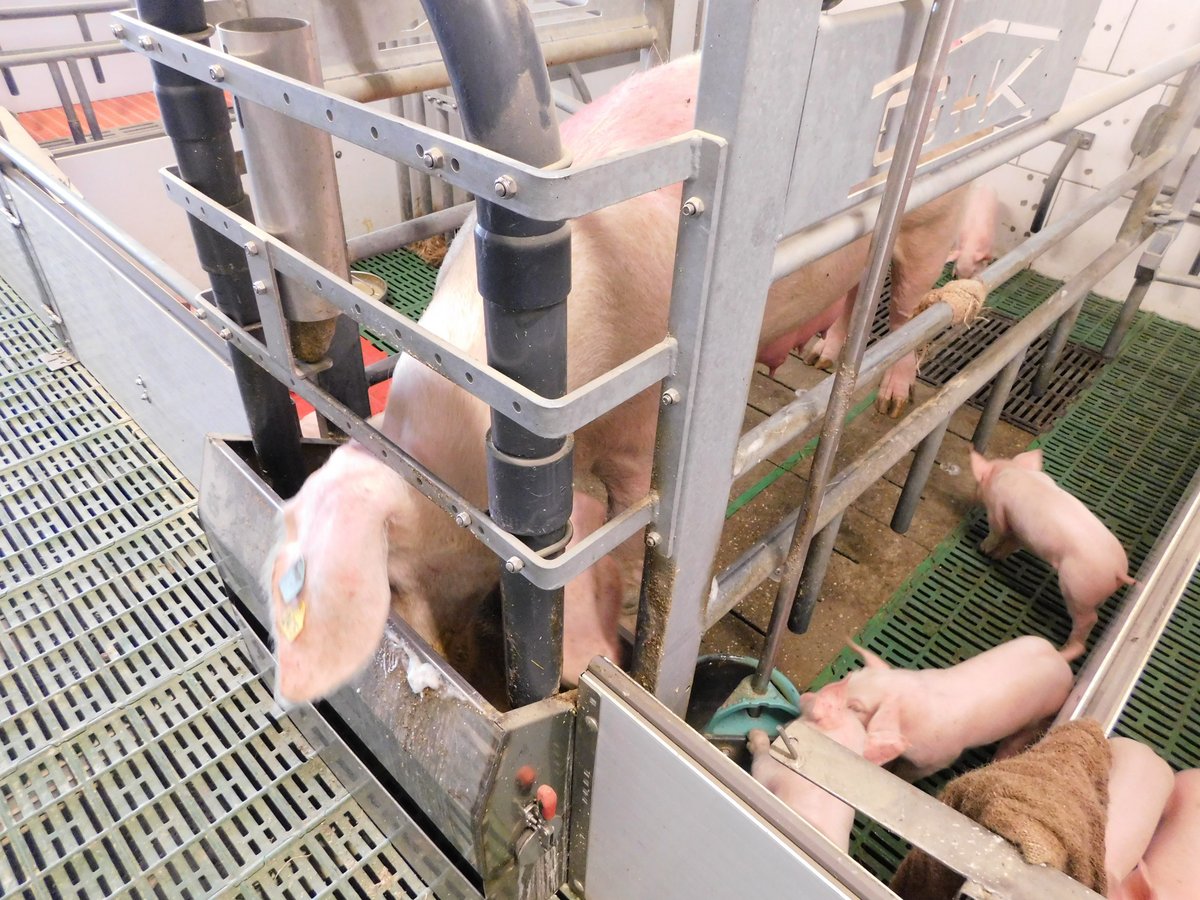
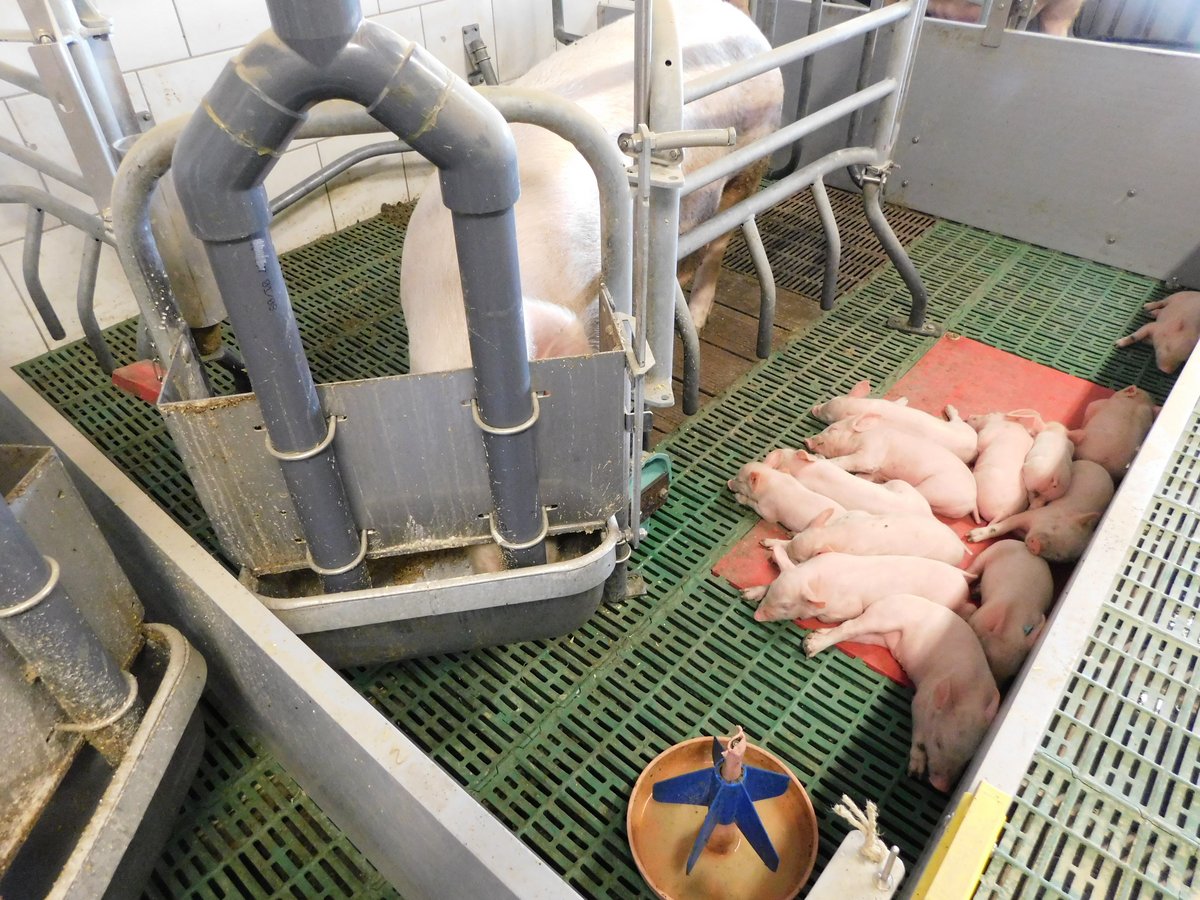
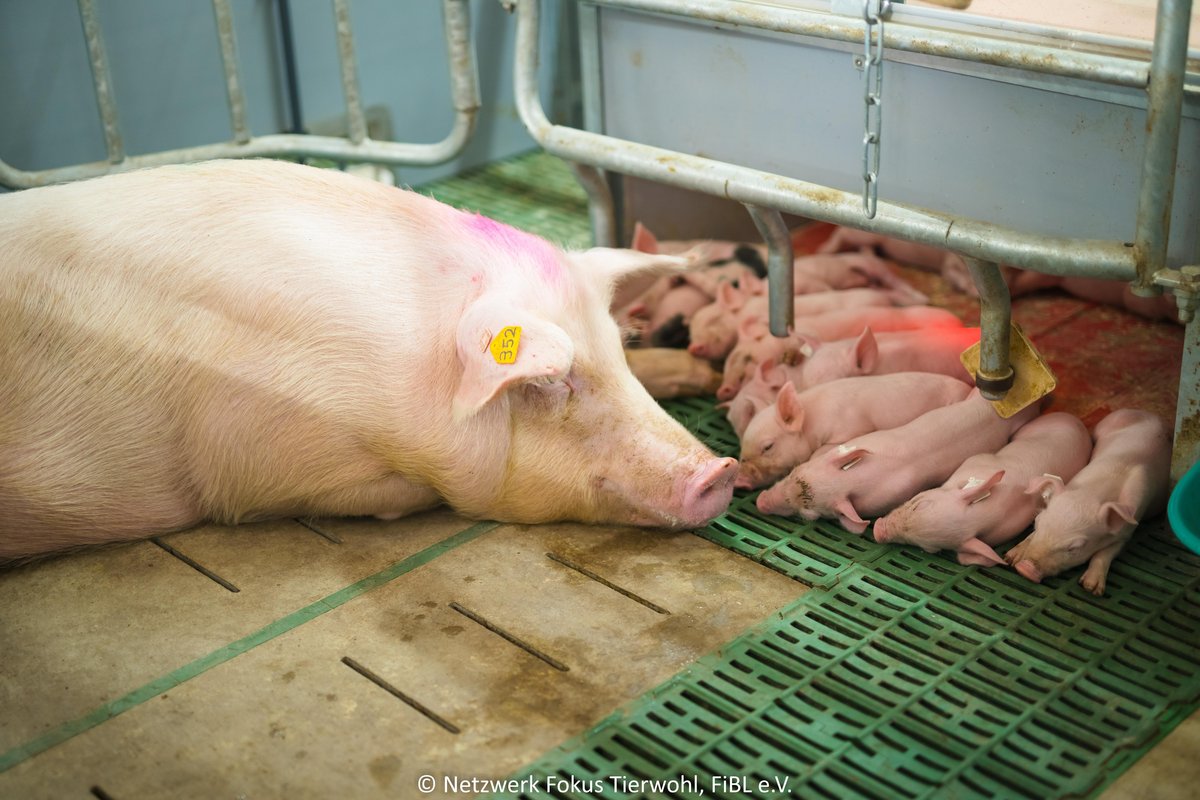
The orientation of the piglet protection cage is important in relation to the geometry of the activity area. Positioning the piglet protection cage straight within the pen has proven more effective, as it allows for a narrower opening compared to a diagonal arrangement. This has a positive effect on crushing losses, as the piglet protection cage provides the sows with additional support when lying down. In straight housing, the floor elements can be arranged parallel to the joists. This also reduces the risk of injury to the sow’s teats.10
One possible control mechanism is ensuring the sow’s line of sight is directed towards the centre of activity (Figs. 6–8), so that she does not have to keep turning round.