

The section ‘All about farrowing’ covers the period from the start of farrowing until the afterbirth is expelled.
A quick birth is always desirable, as it has many advantages. The proportion of stillborn piglets decreases and the vitality of the newborns increases. The piglets have a good start and better weight gain. A swift farrowing also brings several benefits for the sow. The stress of farrowing is reduced and the postpartum phase – that is, the maternal phase immediately following birth – often proceeds more smoothly. The subsequent weaning-to-oestrus interval is as short as desired.
Furthermore, the animal caretaker and the other sows also benefit from a swift farrowing process. The sooner all sows have farrowed, the sooner calm returns to the barn.

6.1 Birth
After an average gestation period of 115 days (ranging from 112 to 117 days), the piglets are born. The signal to begin comes from the piglets themselves. In the majority of sows, restlessness and a nesting instinct can be observed shortly before birth, in the form of the sow interacting with enrichment materials. In some cases, increased physical activity may be observed. The sows often seek out more comfortable lying positions.
Farrowing takes place whilst lying down. The sow lies down in a quiet lateral position about an hour before birth, and abdominal pressing can be observed. If milk can be expressed in a stream, this is a good indication that birth is imminent. If distinct pushing contractions and an increased respiratory rate are observed, it is clear that the time has come.6 The duration of farrowing in modern high-performance sows is becoming increasingly prolonged. With more than 16 piglets, farrowing lasts on average 6.85 hours.70 Sows that are able to move freely stand up at least once during farrowing for one to three minutes, usually between the first three piglets, and sniff the piglets. As the birth progresses, the sow remains lying down and rarely changes the side on which she lies, provided she is not disturbed. This also strengthens the mother-offspring bond. When a piglet is in the sow’s pelvis, she helps by pulling her hind legs in to facilitate the piglet’s passage. The intact umbilical cord prevents the piglets from straying too far from the sow whilst searching for the teats (rubber band function). The sow’s long tail also prevents the piglet from heading in the wrong direction. In doing so, the piglet uses the angles between the sow’s legs and hindquarters or belly as a guide. Piglets use the type and orientation of the bristles, the hardness of the body part (piglets seek soft teats) and the temperature (which increases towards the teats) as further ‘aids’ in locating the teats.71 To ensure the piglets find their way without difficulty, there must be no obstacles (e.g. piles of faeces/jute sacks) in their path. On the way to the teats, the sow’s hind legs present the first obstacle that must6 be walked round or climbed over (Fig. 17).
Experienced sows lift their hind leg when touched by their piglets, so as to clear the way to the teats for them.72 In the case of sows in farrowing crates, for example, it is often observed that they rest their hind leg on the bar of the piglet guard.
As the birth draws to a close, the sow makes grunting sounds (as a call) for her piglets. This serves to facilitate communication between the sow and her piglets and strengthens the sow-piglet bond. The noise level in the farrowing pen should therefore not be too loud.
About one to two hours (ranging from less than half an hour to four hours) after the last piglet is born, the afterbirth is expelled, marking the end of farrowing.
(© S. Schütze)
6.2 Fetal monitoring
In the farrowing pen, it is important to work calmly and carefully to avoid startling the sow and thus causing her stress.
To prevent increased losses of suckling piglets, sows should be monitored regularly during farrowing. The main aim of this is to ensure that complications during the birthing process can be detected and treated at an early stage.
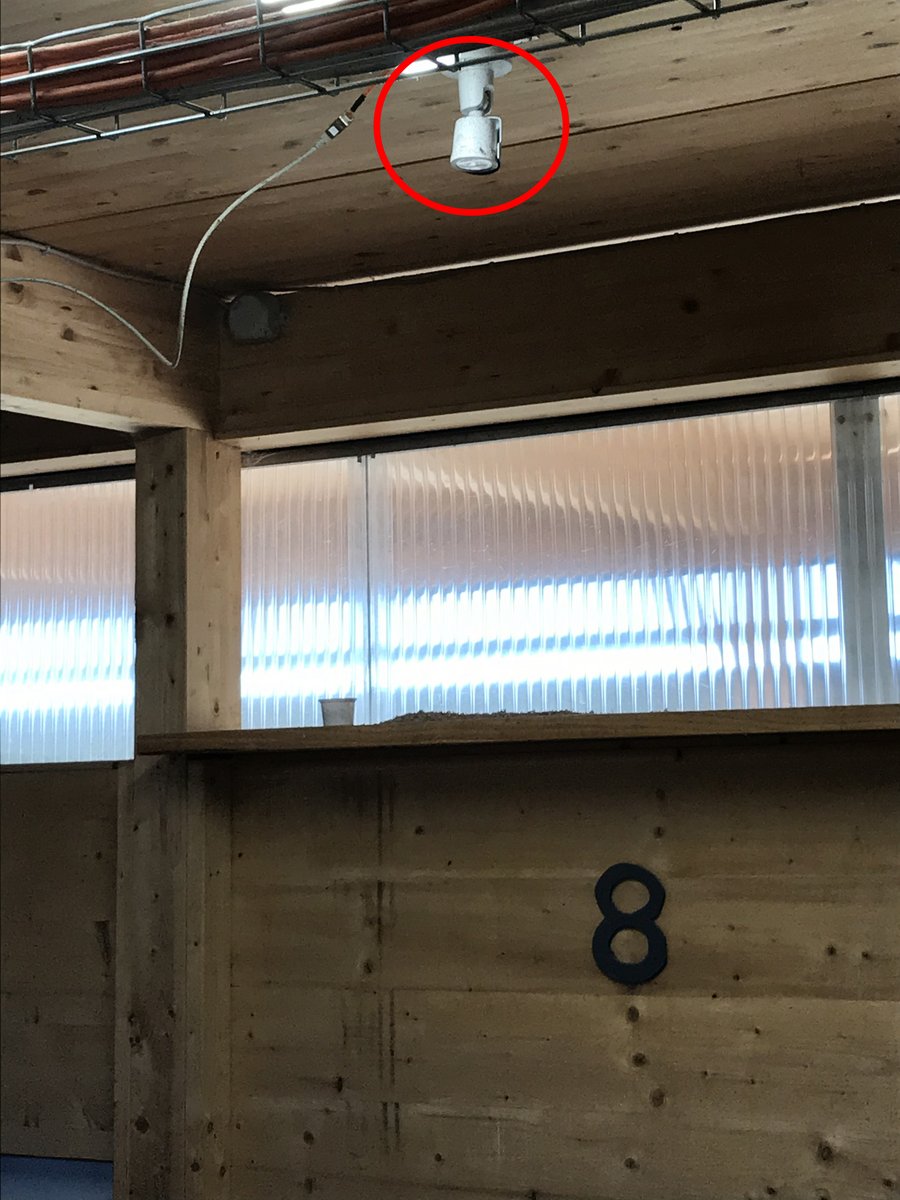
It is helpful to note down at the pen the time at which the piglets were born, how many were born, and whether assistance has already been provided or medication administered. This allows the progress and duration of the birth to be recorded, making it easier to identify stalled births objectively. Otherwise, it is easy to lose track, particularly in large sow herds and with large farrowing groups. If birthing problems are detected early, assistance can be provided in good time. Throughout the day, sows in the farrowing pen should be checked approximately every 30 minutes. Checks at night, or at least in the late evening and early morning, are also advisable to further reduce suckling piglet losses. Round-the-clock monitoring is very labour-intensive, as it requires more staff, but it can be worthwhile. Alternatively, as in the dairy sector, camera systems can make night-time monitoring easier (Fig. 18). Video surveillance is also beneficial for the sows, as the animals are not disturbed by the frequent comings and goings of the animal caretaker carrying out checks.
If farrowing always takes place at the weekend, birth monitoring is often reduced to the bare minimum. To make things more convenient for the animal caretaker, the weekdays for insemination can be chosen so that the main farrowing day falls within the working week. However, this often means that insemination must then take place at the weekend. Therefore, time slots with a high workload must fit into the farm’s individual work processes.
Piglets that take less than 40 minutes to consume their first intake of colostrum have a mortality rate that is lower than the average overall mortality rate (Fig. 19). If this threshold is exceeded, the mortality rate rises sharply. It is not just this absolute threshold that needs to be considered; clearly, every minute counts. Birth weight also has a dramatic effect on the relative mortality rate (average mortality rate of all piglets minus the mortality rate of the category). The lighter the piglets are at birth, the longer they take to reach the teats. Healthy piglets reach the teats in less than 10 minutes and have only a low risk of mortality. Lighter, weaker piglets take over an hour to take their first intake of milk and then have a significantly higher mortality rate. It is difficult to distinguish the cause and effect of the relationships between birth weight, vitality and the time taken to take colostrum.73

6.3.1 When is obstetric care required?
If milk has been flowing freely from the teats for more than six hours, or if the sow has been showing signs of labour for an extended period without any piglets being born, assistance is required. Normally, there should be no more than 15 to 20 minutes between the birth of each piglet. Action should also be taken if the sow’s general condition deteriorates. If two hours have passed since the birth of the last piglet without the afterbirth being expelled or the sow having eaten or drunk, action should also be taken.
6.3.2 Obstetrics: Step by Step
The first step is to identify the cause of the labour stalling!
Contractions can be stimulated by massaging the teat bar or gently massaging the flank area with your fist. This triggers the release of oxytocin. The renewed contractions often slightly alter the space inside the abdomen, and piglets that are slightly twisted can sometimes be turned back into the correct position.
If these initial measures do not help (no further piglet after 30 minutes or after two hours at the end of the birth, without the afterbirth having been expelled), a vaginal examination of the sow is carried out! Maintaining hygiene is of the utmost importance here. To do this, the external vulva is first cleaned and dried. Assistance with the birth is always carried out using long disposable birthing gloves and sufficient sterile lubricant. First, check whether the cervix is dilated. Then feel to see if a piglet is blocking the way and can be removed by hand. It is also important to check for any further piglets in the birth canal that cannot emerge on their own or have been blocked by another piglet.
If contractions are weak, the piglet must be actively pulled out of the birth canal. To stimulate contractions, the sow can be injected with calcium or, if necessary, oxytocin as well. However, it must first be checked whether the birth canal is clear.
First aid measures
- Swing piglets with blue discolouration (suspected lack of oxygen) by their hind legs and remove mucus from their nose and mouth
- Rub piglets dry to stimulate the cardiovascular system
- Place hypothermic piglets under a heat lamp or warm them up by suspending them in an air ring in a bucket of warm water
- Administer glucose (orally or 10 ml of a 5% glucose solution intra-abdominally) as a life-saving measure for weakened piglets

Animal Welfare Ordinance
Section 24(4)
"A farrowing pen in which the gilts or sows can move freely must have a floor area of at least six and a half square metres and allow the gilts or sows to turn around unhindered. A farrowing pen must also be designed in such a way that there is sufficient space behind the resting area of the gilts or sows to allow for unhindered farrowing and obstetric procedures."