
Activity material for calves
An overview of different employment opportunities in practice
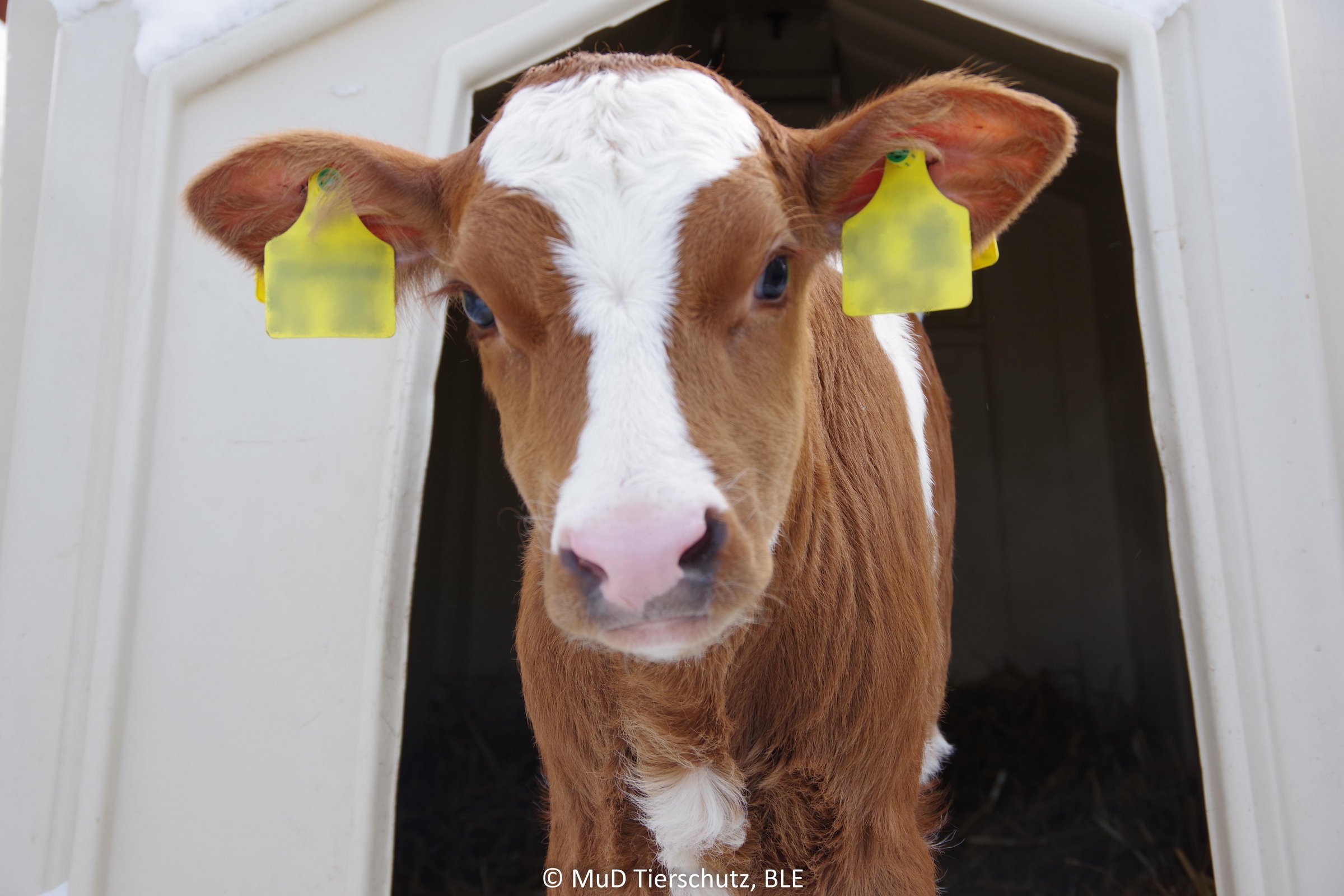
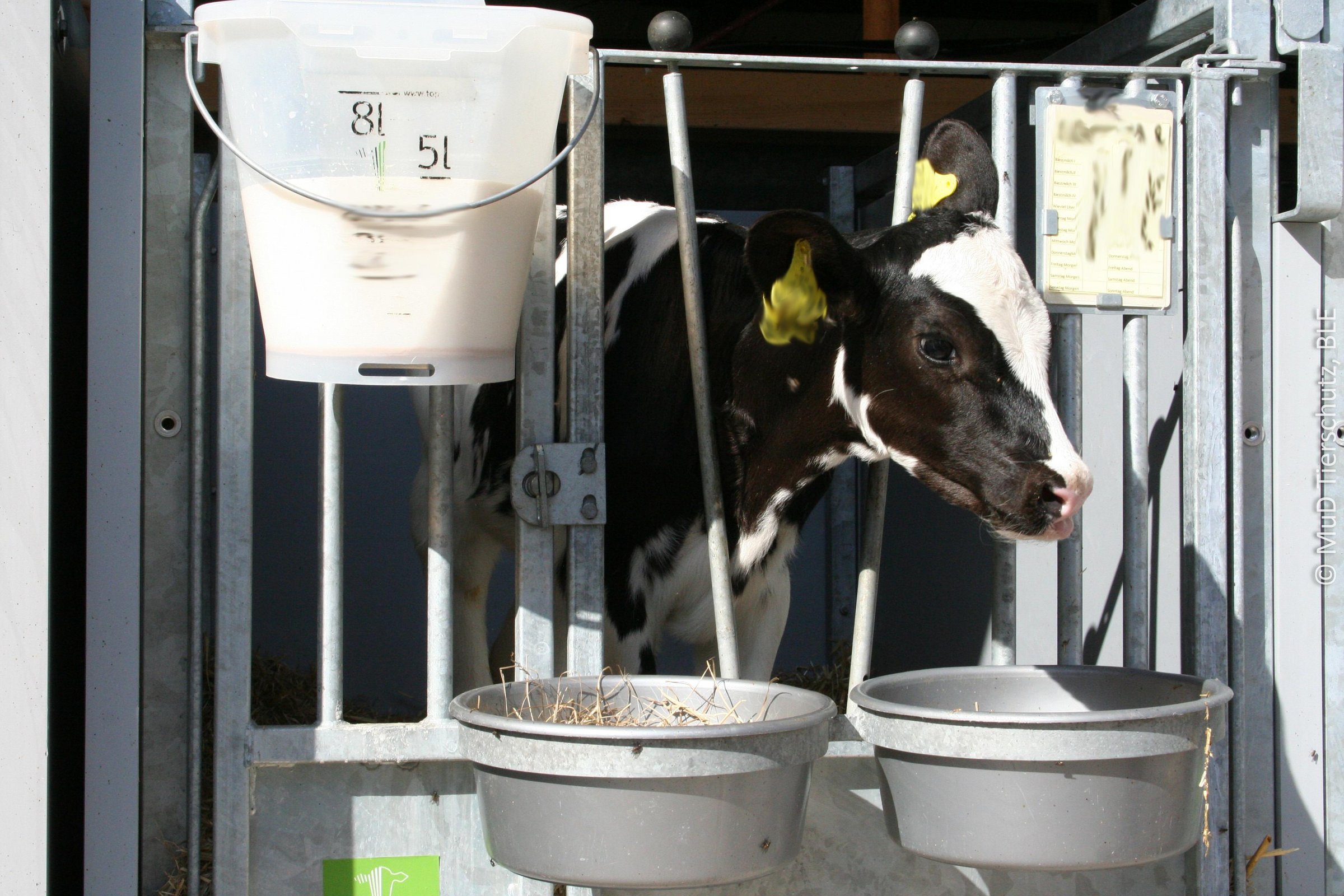
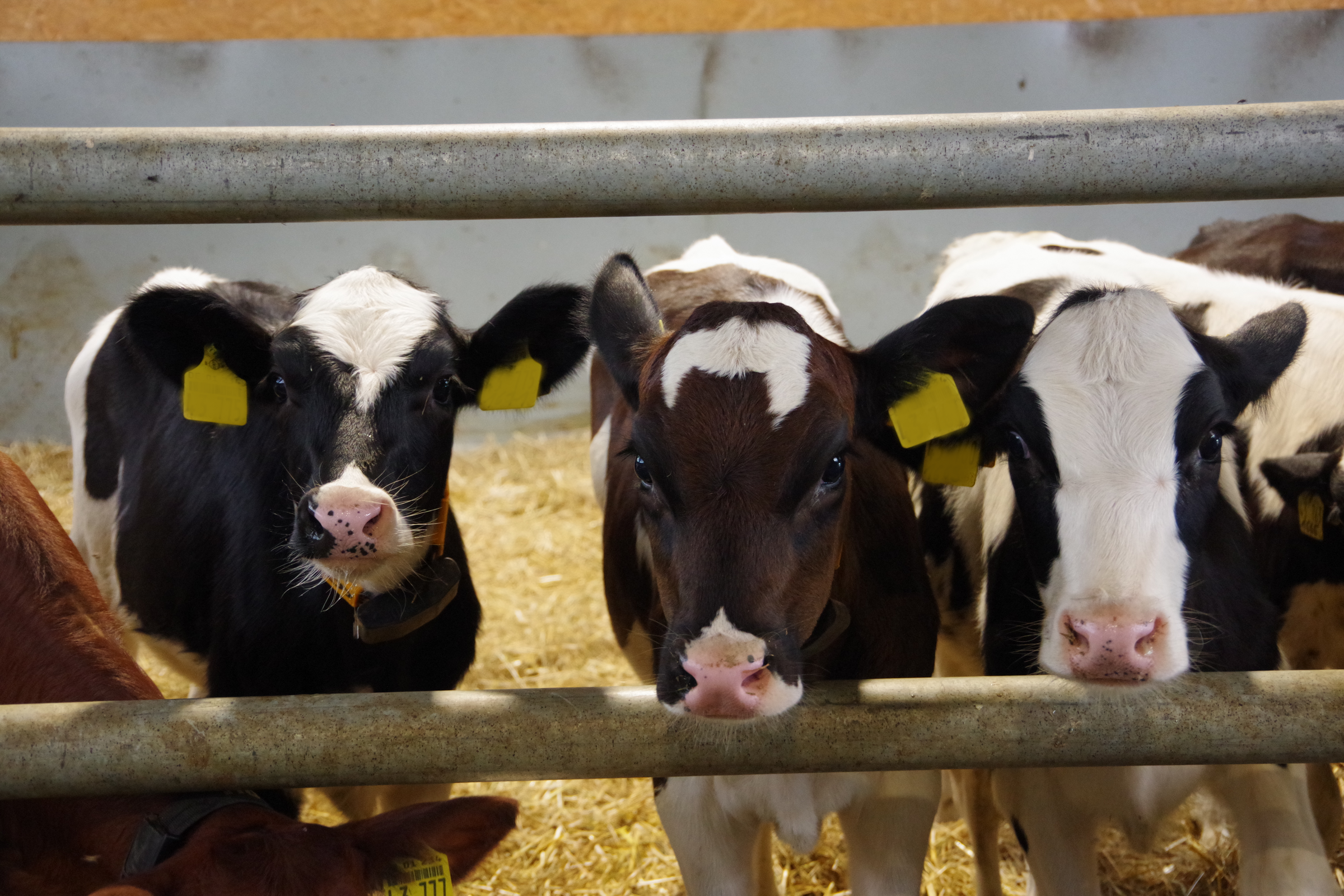
The motherless rearing of calves, which is common in dairy farming, places high demands on management due to the special needs of the young animals. It is not only necessary to cover the calves' nutritional requirements, but also to take into account the species-specific behaviour and satisfy the calves' needs. In addition to fulfilling the calves' need to suckle by feeding them with teats, social contact and play and exploratory behaviour also play a major role. If these needs are not sufficiently satisfied or not satisfied at all, behavioural disorders and oral stereotypies (mutual sucking, excessive licking) can result. This has a negative impact on animal welfare on the one hand and on the health of the calves in the long term on the other. The range of enrichment material on offer offers a variety of options for satisfying various of the aforementioned needs of calves.
As part of the MuD Animal Welfare Network Demonstration Farms "Optimisation of group housing of calves with regard to the avoidance and reduction of mutual suckling", a brochure was produced for farmers, advisors and other interested parties. It provides an overview of various housing materials, the costs involved and their suitability in practice.
What is the difference between the employment material?
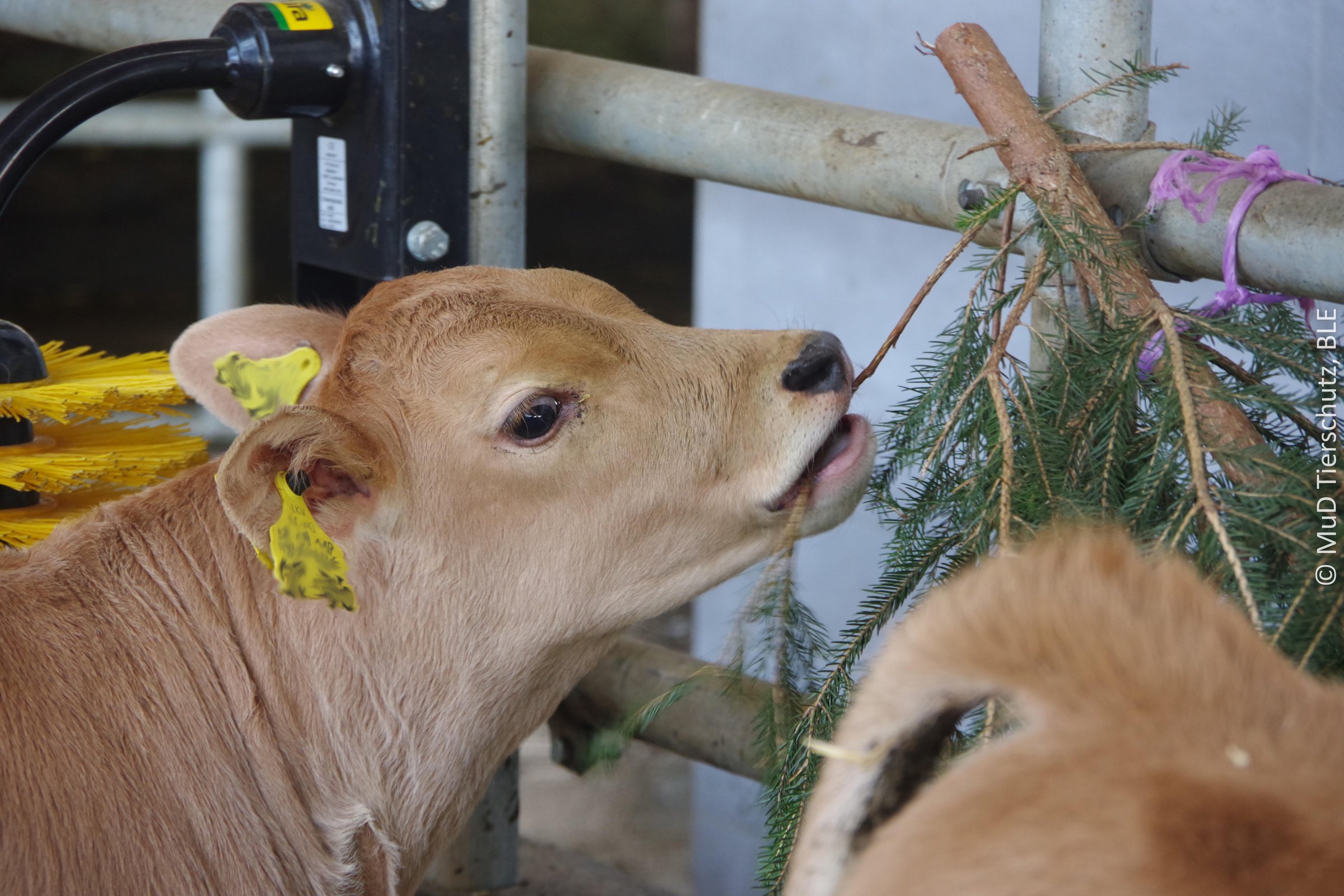
Both organic and inorganic materials are used to provide calves in group housing with incentives, in particular so that they can live out their play and exploratory behaviour. In addition to the tried and tested long straw, coniferous or deciduous wood branches also offer calves the opportunity to nibble on them or to use them as comfort equipment for scratching. The changeability of organic material provides calves with a constant stream of new stimuli and is highly attractive.
In the calf fattening area, on the other hand, play objects made of inorganic material from pig farming can be offered. In addition to plastic ropes, these include stainless steel chains with solid rubber toys that can be suspended from the ceiling. Due to their easy manoeuvrability, they encourage the calves to play. The advantage of inorganic-based toys and activity materials is that they are very durable, robust and easier to clean. However, it is also more expensive and quickly becomes uninteresting for calves.
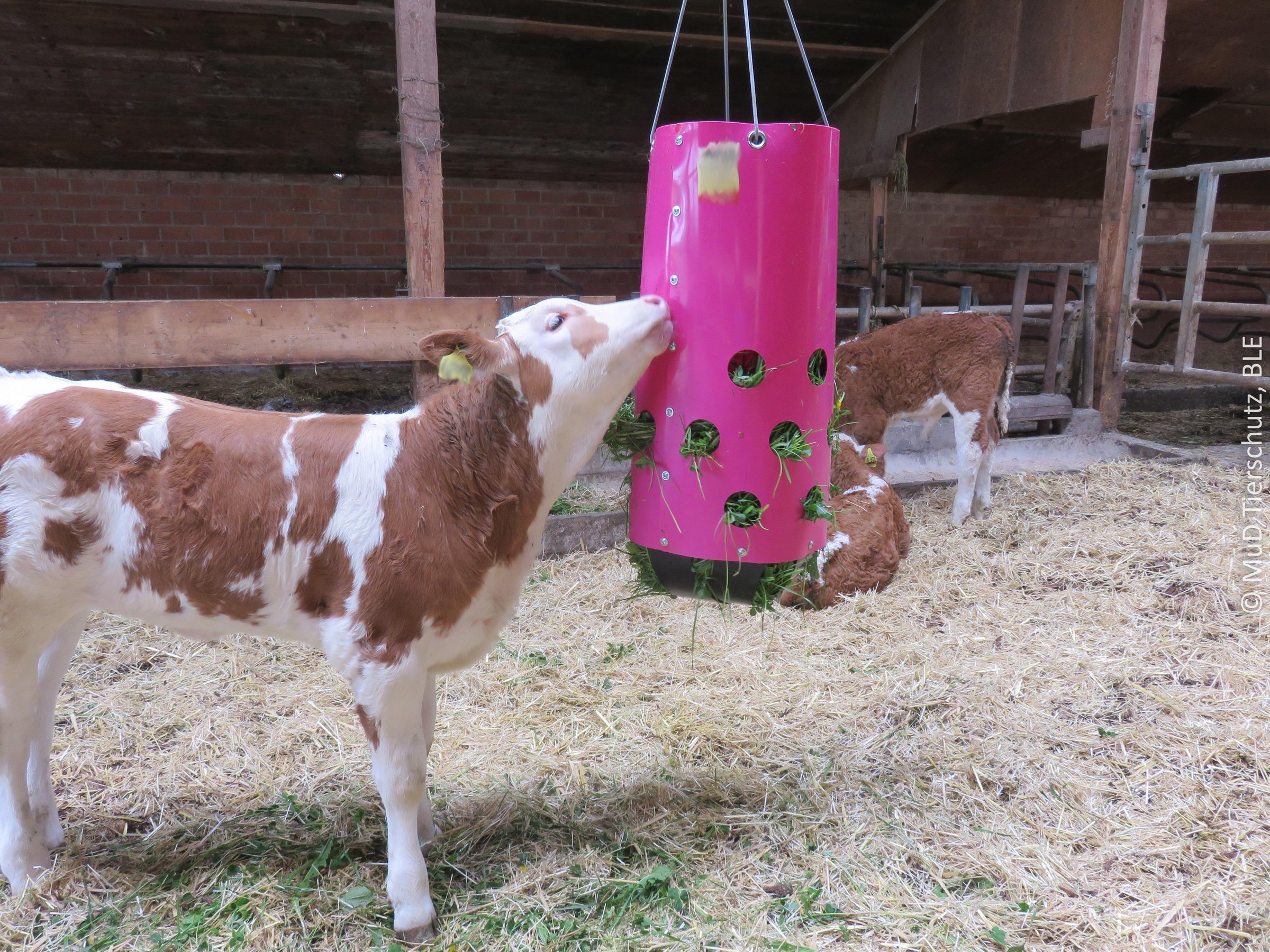
A combination of both materials are, for example, swinging roughage dispensers, in which various types of roughage (hay, silage, green cuttings) can be offered in bags or balls hanging from the ceiling. The advantage of these is that they are easy to move around and also keep the calves attracted to the feed on offer.
Overview brochure with a wide range of information
The brochure provides insights into the various behaviours and needs of calves and presents these in a compact and easy-to-understand way. It also provides a wide-ranging overview of the materials available in order to find the right activity material for each individual farm. In addition to the attractiveness for the calves, the resulting costs and the labour involved are also discussed as a decision-making aid. The network farms from MuD-Tierschutz also report on their experiences in the practical use of various occupation options. The reports are supplemented with photos and helpful tips.
Further results from the MuD animal welfare project: Results from the network - what has improved for animal welfare?
Brochure: Activity material for calves - an overview of different activity options in practice.