
(Kopie 3)
Cattle are transported throughout their lives for a wide variety of reasons. In particular, due to specialisation in livestock farming, animal transport has become an integral part of agriculture. For example, cattle are transported from the birth farm to the rearing and fattening farm and, in the vast majority of cases, finally to the abattoir. In addition, cattle are also transported for breeding purposes, e.g. to participate in breeding shows or for the exchange of breeding stock. Other reasons include trade at livestock markets, seasonal movements as part of grazing livestock management, transport to other European countries, and export to third countries.
Animal transport is subject to legal requirements and industry standards that have been repeatedly updated over the years. The aim of these requirements is to ensure the protection of animals during transport and to improve animal welfare.


Transportability of the animals
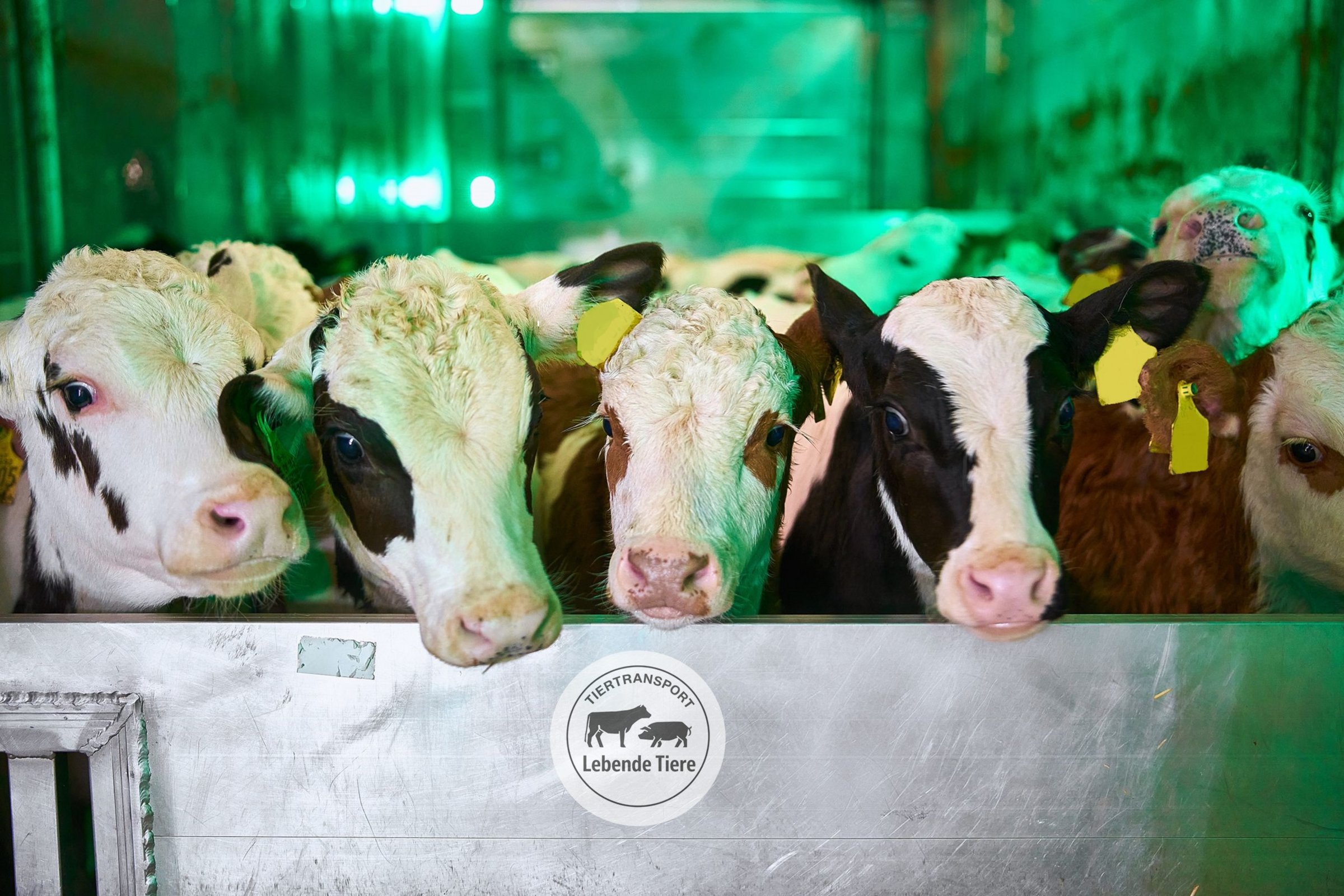
Transport always places a strain on the animals being transported (Figure 2). In order to prevent unnecessary pain and suffering (Section 1 of the Animal Welfare Act) for the animal, it is particularly important to assess the animal’s fitness for transport prior to transport.
To assess the fitness for transport of cattle, it is advisable to consult illustrated guidelines.
Guide: Correctly assessing the fitness for transport and slaughter of cattle
- Cattle are not fit for transport if
- they cannot move without pain or without assistance (injuries, physiological weakness, pathological conditions)
- they have large open wounds and/or severe organ prolapse
- they are in late pregnancy (> 90% of the gestation period)
- they have calved less than 7 days ago
- their umbilical wound has not yet healed (newborn mammals)
- Exceptions apply to sick or injured animals if
- they are only slightly injured or ill (consult a vet if in doubt)
- they need to be transported under veterinary supervision for medical treatment or further diagnosis
- they need to be transported following a procedure common in veterinary practice (e.g. neutering)

Transport documents/ documentation
When transporting animals, accompanying documents must be carried that contain information on the origin and owner of the animals, as well as the point of departure and destination. The start of the journey (including the date and time) and the estimated duration of the journey must also be recorded in these documents. In addition, for journeys exceeding 65 km, a valid certificate of competence must be carried by the driver and any accompanying persons. Transport operators require a licence for short-distance transport (Type I) in accordance with Article 10 or for long-distance transport (Type II) in accordance with Article 11 of Regulation (EC) No 1/2005. Individual accompanying documents, such as cattle passports, must also be carried. For journeys lasting longer than eight hours, it is also necessary to keep a logbook, a control book and to have a licence for the vehicle for long-distance transport. The additional requirements regarding the vehicle’s equipment must also be met. For cross-border transport, a TRACES certificate is also required. In accordance with Section 22 of the Livestock Transport Ordinance (ViehVerkV), drivers of livestock transport vehicles for which cleaning and disinfection are mandatory must carry a separate disinfection logbook for each vehicle. This may be combined with the control logbook.
Qualified staff – expertise
In accordance with Article 3(e) of Regulation (EC) No 1/2005, persons handling animals must be appropriately trained or qualified. This applies to the transport of all vertebrate species, including the transport of pet animals, as well as to farmers within the scope of Article 1(2) (transports of up to 50 km). Persons with completed vocational training in the professions of butcher (specialising in slaughter), farmer, equine manager, animal keeper, animal husbandry specialist or comparable vocational qualifications, as well as persons who have successfully completed a degree at a university or university of applied sciences in the field of agriculture or veterinary medicine, are considered to be suitably qualified. However, they must be informed about the content of Regulation (EC) No 1/2005 during regular professional development training.
Pursuant to Article 6(5) of Regulation (EC) No 1/2005, road vehicles in which domestic equidae, domestic cattle, domestic sheep, domestic goats, domestic pigs or poultry may only be driven or accompanied as attendants by persons holding a certificate of competence in accordance with Article 17(2) of Regulation (EC) No 1/2005. This does not apply to persons transporting animals over a distance of no more than 65 km. No certificate of competence is required for the transport of animals other than farm animals. The certificate of competence must be obtained in accordance with the provisions of Annex IV to Regulation (EC) No 1/2005 and Section 4 of the Animal Welfare Transport Ordinance of 11 February 2009. Alternatively, the certificate of competence may also be issued upon application if individuals already possess relevant qualifications. In such cases, the certificate of competence may be applied for directly or following a supplementary training course with the competent authority. Further information can be found in the Animal Transport Handbook.

Requirements for means of transport
Animals are usually transported in single- or multi-storey livestock lorries or special animal transport trailers. Transport by rail, ship or aircraft is also possible, but is not covered separately in this article.
Additional requirements apply to long journeys (> 8 hours) by road. The following must also be provided:
- Ventilation system
- Water supply system with drinking troughs
- Feed in sufficient quantity and of appropriate quality
- Bedding
- Temperature monitoring system including an alarm system
- Satellite-based navigation system
- Movable partitions

Space requirements for the transport of cattle
Different space requirements apply depending on the age and weight of the animals. Weather conditions, the animals’ physical condition and the duration of transport also influence space requirements. Animals must be provided with sufficient floor area and headroom in accordance with their size and the planned transport (see Figure 4).
Basic space requirements for cattle of different sizes are listed in Table 1.
| Weight | Space requirements | |
|---|---|---|
| Breeding calves | 50 kg | 0.3 – 0.4 m² |
| Medium-weight calves | 110 kg | 0.4–0.7 m² |
| Heavy calves | 200 kg | 0.7 – 0.95 m² |
| Medium-sized cattle | 325 kg | 0.95–1.30 m² |
| Adult cattle | 550 kg | 1.30 – 1.60 m² |
| Very large cattle | > 700 kg | > 1.60 m² |
Table 1: Space requirements for cattle during transport by age and weight (QS Qualität und Sicherheit GmbH 2025)
Contingency plans
Despite thorough preparation, unforeseen events can occur during the transport of animals. This applies to situations relating to the animals being transported, the transport vehicle and its drivers, weather and road conditions, and the occurrence of unexpected delays.
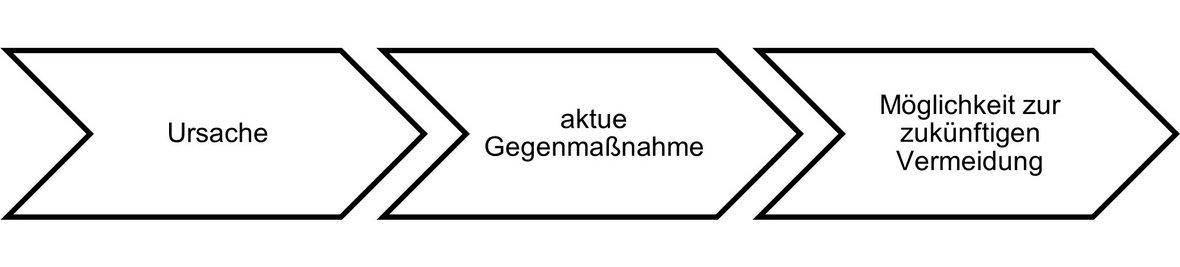
To ensure that you can act confidently in such cases, it is important to draw up contingency plans for the relevant route in advance; for long-distance transport, this is mandatory (Figure 5).
If animals sustain injuries or fall ill during transport, appropriate measures must be taken immediately.
- Isolation of the affected animal
- Provide first aid if possible
- Examination and, if necessary, treatment by a vet
- Administration of sedatives to ensure the animal’s welfare during transport only under veterinary supervision
- If necessary, carry out emergency euthanasia to prevent suffering
Examples of emergency plans
Handbook on Animal Transport 2021 – Appendices
Vogelsbergkreis emergency plan
Template: Emergency plan for the transport of animals for slaughter
Biosecurity
Cleaning and Disinfection
- Vehicles, transport containers and equipment used must be cleaned and disinfected no later than 29 hours after the start of transport.
- Cleaning and disinfection must be carried out before leaving livestock loading points, collection points or slaughterhouses.
- Drivers should avoid entering agricultural areas where possible and wear clean protective clothing when leaving the vehicle.
- Before each loading, it must be ensured that the vehicle is clean and disinfected. When transporting to slaughterhouses or collection points, drivers must carry a separate disinfection logbook for the tractor unit and trailer.

Transport operations (loading and unloading)
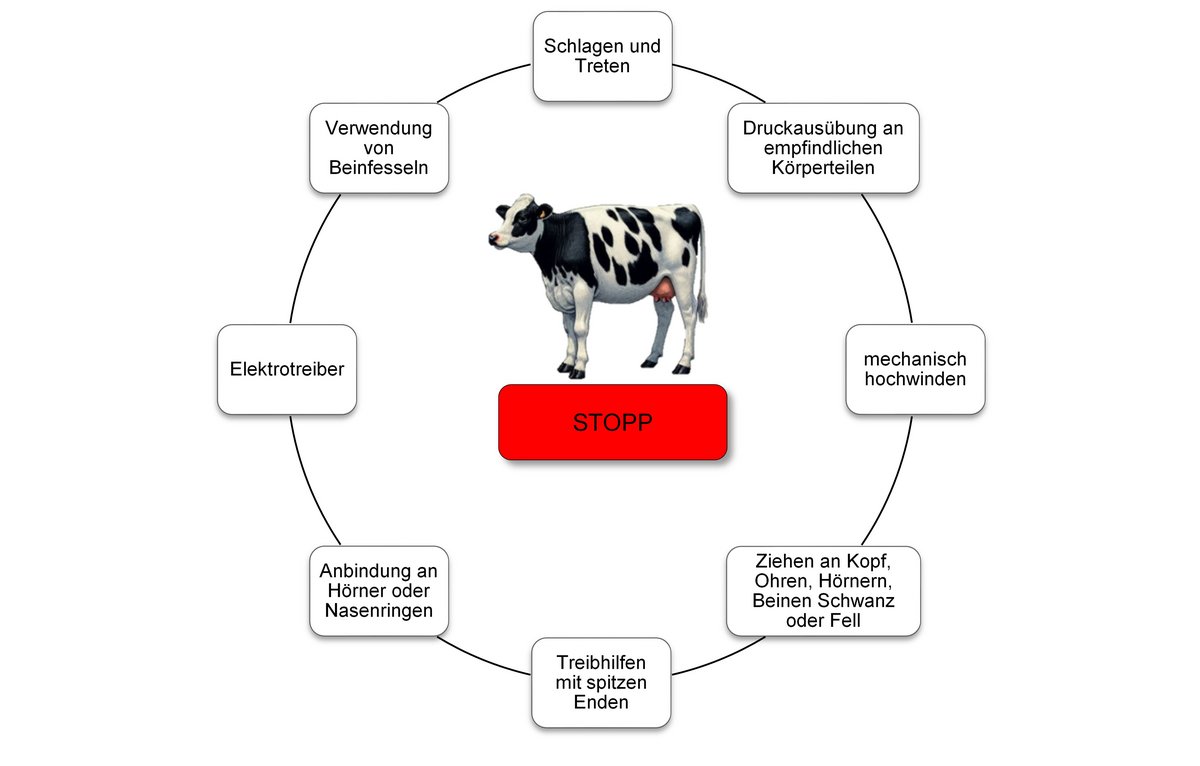
Loading and unloading are usually the most stressful stages of a journey. It is therefore particularly important to handle cattle in a calm and stress-free manner. Proper and careful loading and unloading play a key role in keeping the animals’ stress levels as low as possible. Improper practices must be avoided (Figure 5). Prior to loading, the animals’ fitness for transport must be checked in accordance with Regulation (EC) No 1/2005.
Further information
QS Guidelines for Animal Transport + Self-inspection Checklist for Animal Transport
BMLEH – Animal Trade and Transport
Veterinary Association for Animal Welfare – Animal Transport Working Group
Guidelines for optimised short-distance animal transport
Information from the District of Giessen – Animal Transport
European Commission – Questions and Answers on Animal Transport
Bibliography
- Working Group on Animal Welfare of the Inter-State Working Group on Consumer Protection (2024). Handbook on Animal Transport: Guidance on the implementation of Council Regulation (EC) No 1/2005 of 22 December 2004 on the protection of animals during transport and related operations, and on the Animal Welfare Transport Regulation of 11 February 2009.
- QS Quality and Safety GmbH (2025). Guide to Animal Transport (version dated 1 January 2025).
- R. Gayer, A. Rabitsch, U. Eberhardt (2015) Animal Transport: Legal Foundations, Transport Practice, including examination knowledge for the Animal Transport Certificate of Competence. Ulmer Verlag. ISBN 978-3-8001-7421-8