
Bedding
Damp litter can have a negative impact on animal health for several reasons. It provides a favourable breeding ground for germs and causes the turkeys to become chilled. Furthermore, damp litter (with a dry matter content of < 65 per cent) promotes the development and severity of footpad lesions.
A high moisture content also promotes the bacterial conversion of excess nitrogen in the droppings into ammonia. Ammonia can have a corrosive effect on skin, for example on the footpads, and thus cause damage. Furthermore, ammonia irritates the mucous membranes of the respiratory tract, thereby increasing the risk of respiratory diseases. Damp litter also increases the risk of coccidiosis during rearing. Moreover, damp litter can contribute to other intestinal diseases.
However, the quality of the litter is also important in terms of animal behaviour. It should enable the birds to engage in species-specific behaviours such as dust bathing and pecking¹. If this opportunity for activity is lacking, the risk of feather-pecking and self-mutilation may increase. On the one hand, a bird with soiled or damaged plumage looks different from its conspecifics.
On the other hand, a damaged plumage lacks natural protection against heat and cold, which can lead to problems with temperature regulation.
The moisture content of the litter should always be checked at several locations, i.e. in different functional areas (including the feeding and watering areas, and the resting area at at least 4–5 points within the house). It is particularly important to add fresh litter in good time as and when required (top-up as needed), which should not be done on fixed days but rather depending on the moisture content of the litter. The moisture content of the bedding must be closely monitored, particularly in connection with vaccinations, seasonal changes or the provision of salt. At these times, preventative and more frequent daily top-up of litter can help to prevent damp litter. This can lead to an overall reduction in the amount of litter used throughout the entire rearing cycle.
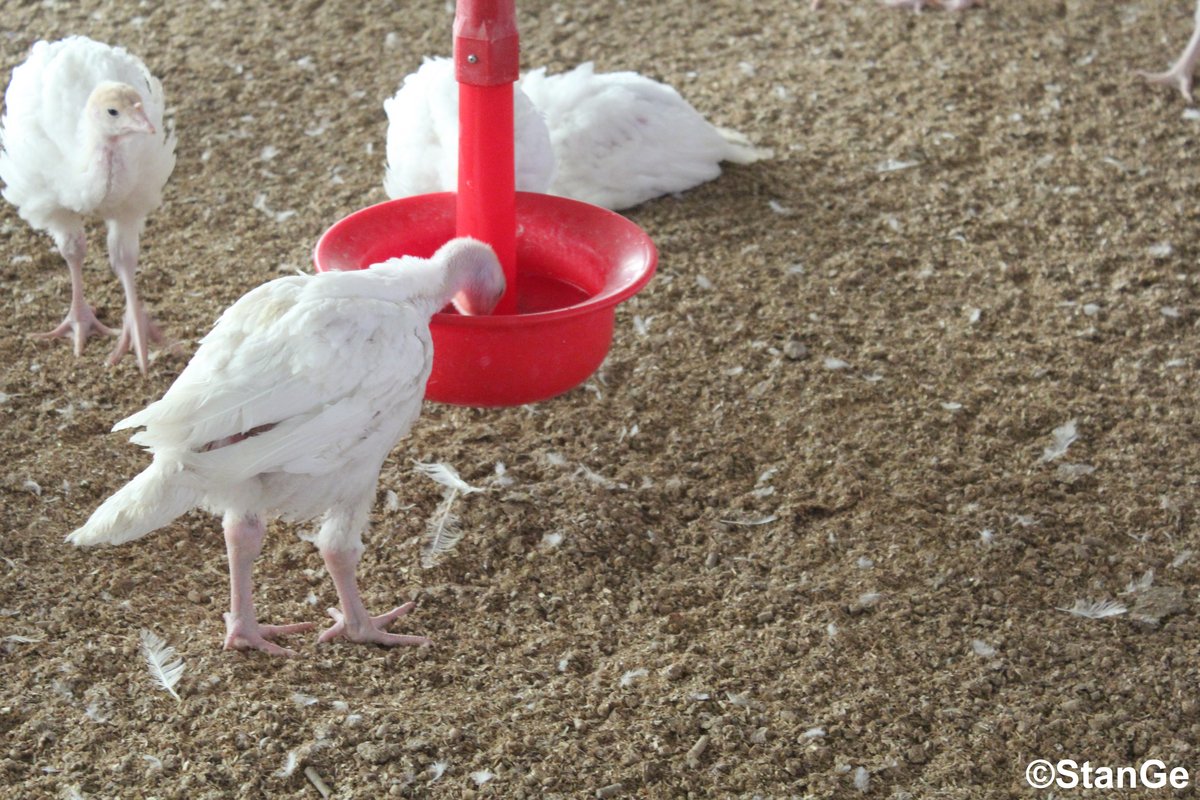
Loose and dry (ideally > 80% dry matter) right up to the day of removal from the barn¹, including in critical areas such as the drinking troughs
Deviating condition
Damp bedding (approximate range < 65 % DM)
Damp patches and mould growth
Measures
Remove very wet and compacted faecal bedding from the barn (rearing)
Select an absorbent bedding material in advance
If the bedding becomes damp, add sufficient fresh bedding; if crusts form, break them up with a tiller if necessary (ensuring adequate barn ventilation to manage dust and ammonia)
If necessary, turn the bedding material to help it dry out more quickly
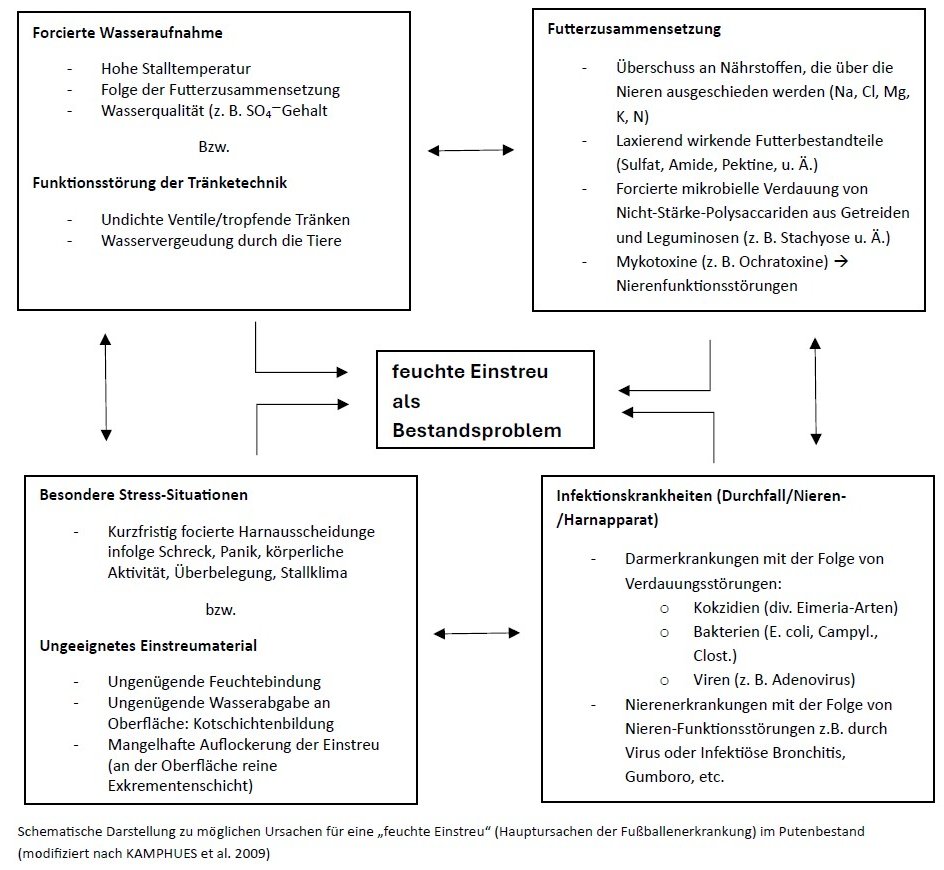
Identify the cause of the damp bedding (see also Fig. 5), including:
Does the ventilation setting need adjusting?
Are there any indications of a problem with gut health¹⁵?
Is the feed composition correct?
Check that the water troughs are working properly
Check the height of the drinking troughs, the water pressure and the water level7
Check whether the animals already show signs of changes to their footpads
If wet droppings are expected due to high water intake (for example, when salt is provided, during phases P2 to P4, particularly during phase changes, vaccination programmes or vitamin C supplementation), fresh litter should be added early on and for several days in a row