
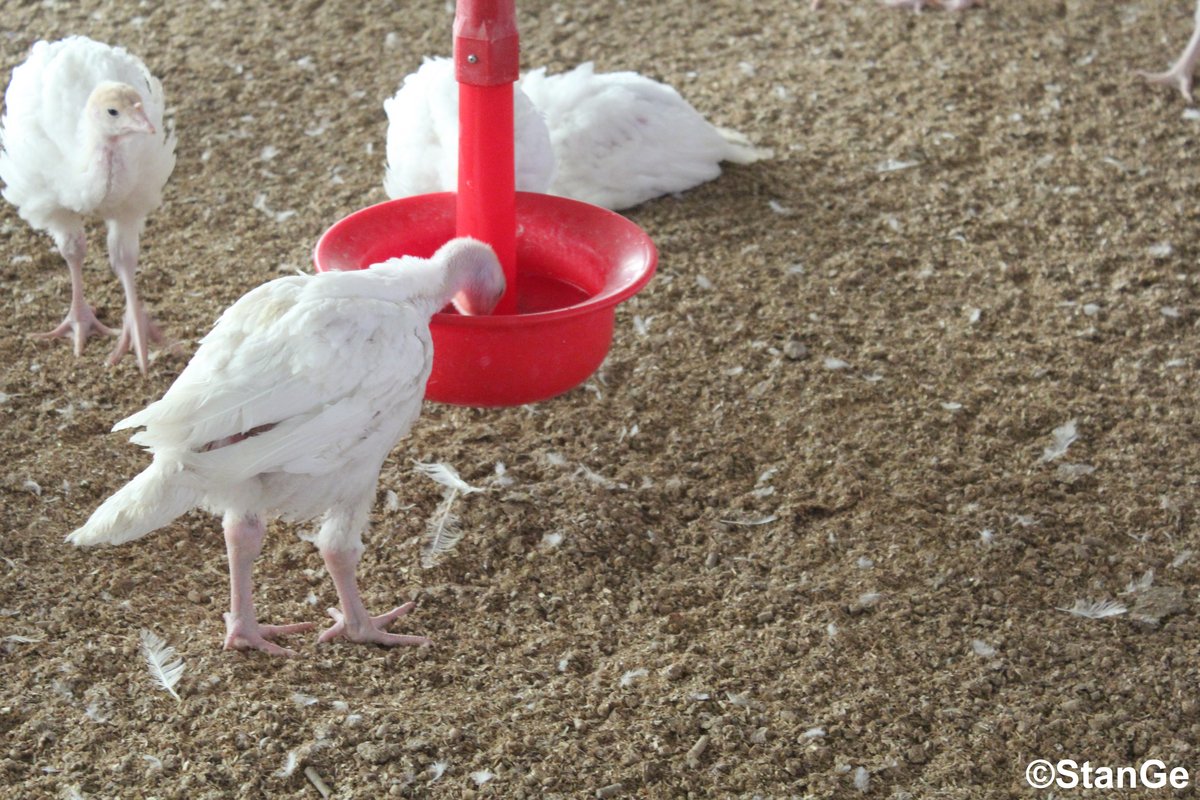

All drinking troughs are in working order and have an adequate flow rate
The height of the drinking troughs is adjusted to suit the size of the animals, so that water spillage is kept to a minimum
Waterers and feed troughs should be regularly re-adjusted to back height¹
Drinking troughs and water pipes must be kept clean
All birds must have sufficient access to drinkers and feeders (approx. 50–80 turkeys per standard feeder; 80–100 turkeys per standard round drinker)¹
Deviating condition
Faulty water systems / drinking troughs
Faulty water pipes increase water consumption and result in damp or wet bedding.
Deviating condition
Incorrect adjustment of the drinking troughs
If set too low, drinking troughs become dirty more easily and there is a greater risk of water being spilled, resulting in damp bedding around the troughs
Water troughs set too high make it difficult for the animals to drink enough water
Excessive water pressure causes the drinkers to overflow
A water level that is too high (depending on the drinking trough) encourages water to seep into the bedding.
Deviating condition
Contaminated drinking troughs
A lack of hygiene in drinking water has a negative impact on animal health
Measures
Contaminated drinking troughs
Round drinking troughs (open water supply) must be washed regularly
Water pipes must be flushed regularly, particularly at high temperatures and when flow rates are low
In addition, further measures should be taken to sanitise the water (e.g. organic acids, ORP system (oxidation-reduction potential))
Further information on drinking water hygiene can be found in the leaflet on gut health in turkeys.