

Breathing
Breathing – specifically, respiratory rate and breathing pattern – depends on external factors, such as exposure to heat (e.g. heat stress), or an animal’s state of health (e.g. due to respiratory infections).
Side note: The respiratory system
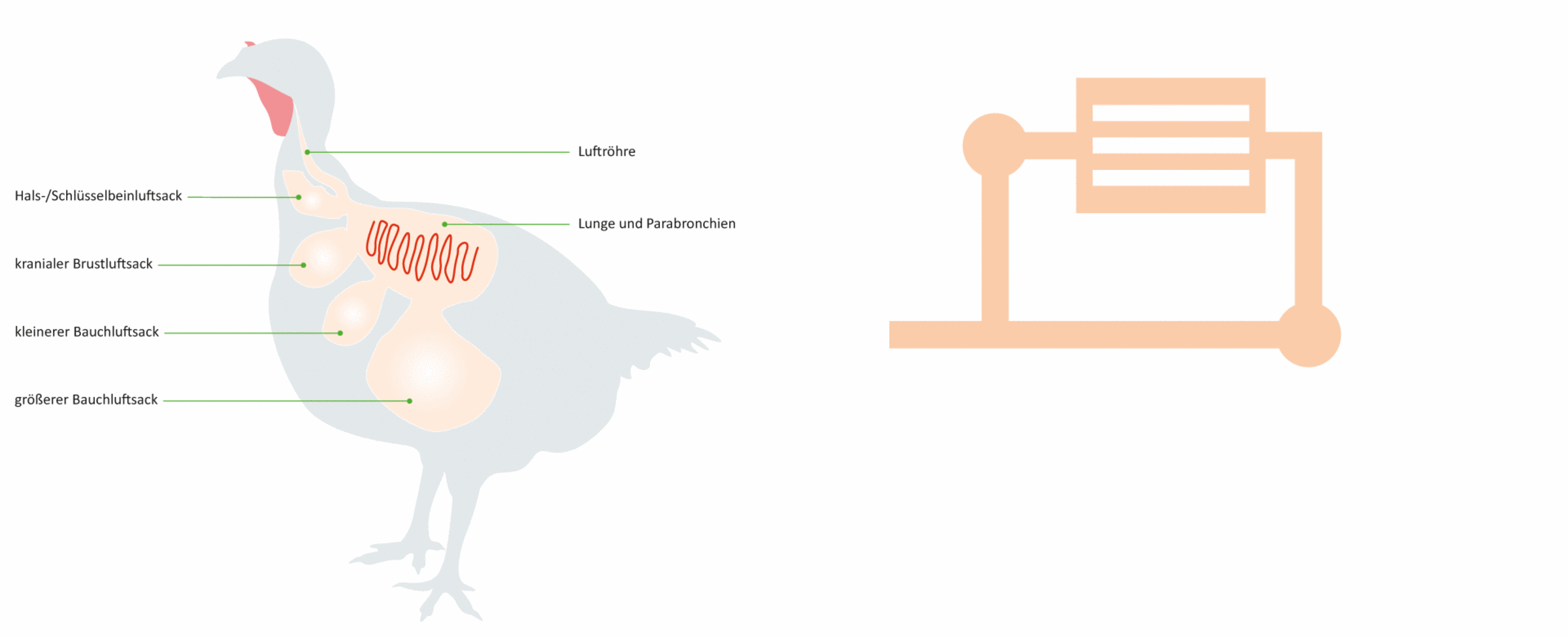
Like other birds, turkeys have two lungs and several thin-walled, expandable outpouchings of the bronchi, known as air sacs. Unlike chickens, turkeys have 7 air sacs instead of 9 (Fig. 24). The two lungs are almost completely fused to the ribcage and are therefore immobile, meaning that the system comprising the air sacs, lungs and supporting musculature (e.g. rib, ribcage, sternum and abdominal muscles) compensates for the absence of a diaphragm. This highly developed and specialised system enables extremely efficient oxygen uptake. The air sacs are classified into different groups according to their function. As the air sacs expand, air is drawn in by the resulting negative pressure (inhalation), whilst during exhalation, the air is expelled from the air sacs through muscular constriction of the trunk (the bellows principle, as illustrated by a bird; see animation, Fig. 25).
During the inhalation phase, the air sacs of the posterior group draw in fresh, ‘unused’ air, which they then force into the parabronchi during the exhalation phase. The anterior group of air sacs fills with ‘used’ air during the inhalation phase, which has been channelled via the parabronchi. During the exhalation phase, these then release the air directly to the outside. During inhalation and exhalation, the air is thus channelled through the air sacs and the lungs in a two-phase process.
In contrast, human respiration operates on a negative pressure principle, whereby air is drawn into the lungs through the expansion of the chest. Breathing air passes via the nose or mouth, the pharynx, larynx and trachea into the bronchi and finally into the alveoli, where gas exchange takes place. Oxygen then diffuses from the alveoli into the capillaries, whilst carbon dioxide passes from the blood into the alveoli and is exhaled. This process is primarily facilitated by the diaphragm and the intercostal muscles, which, by contracting, expand the chest, thereby creating negative pressure. During exhalation, these muscles relax again, the lung volume decreases and the air flows out passively. Breathing is largely controlled automatically by the respiratory centre in the brainstem, but can also be consciously influenced, for example when speaking or singing. At rest, adults breathe about 14 times per minute, moving approximately seven litres of air20.
However, the respiratory system is very sensitive. As air flows through the lungs in only one direction, air quality is crucial. Pathogens (such as E. coli), dust, ammonia or pollutants can irritate the airways and/or lead to infections. Furthermore, the residual volume of air is very small, meaning that turkeys have very little residual oxygen available to them in the event of exercise-induced stress or temporary respiratory restriction. Another problem arises from heat, which turkeys dissipate via, amongst other things, the mucous membranes of the respiratory tract. Heat stress leads to what is known as ‘beak breathing’. Overall, the turkey’s respiratory tract is highly specialised and extremely efficient, but also very susceptible to disruption.
Deviating condition
A trained ear can often detect breathing sounds associated with infectious and inflammatory processes. To do this, whilst the birds are still light enough to lift, a single bird can be held close to the ear (take care to avoid pecking injuries).
Panting: Turkeys regulate their body temperature almost exclusively through breathing, so that at high temperatures – particularly when combined with high humidity – they breathe more frequently or more heavily. Silent beak breathing through the open beak is then clearly visible. Breathing becomes more pronounced in hot weather or when ill
Sneezing: caused by dust, particularly in rearing (see background noise)
Runny nose (nasal breathing sounds): inflammation of the nasal mucosa caused by infectious agents
Noises from the lungs/parabronchi (wet/rattling): viral or bacterial infections of the lower respiratory tract, which can lead to inflammatory processes (air sac inflammation)
Coughing (dry) or gasping for air: particularly audible in cases of fungal infections
Measures
The house temperature should be checked, particularly when birds are breathing through their beaks in combination with high outside temperatures. The information sheet published by LAVES in Lower Saxony on preventing heat stress in poultry14 also provides guidance on this matter
Check the ventilation settings -> avoid draughts, check the humidity
If, in addition to beak breathing, respiratory noises, eye and nasal discharge and/or sneezing and/or coughing occur, a qualified vet should be consulted