
Stool consistency
The consistency of droppings is closely linked to animal health and is influenced by many factors. Further information can be found in the brochure ‘Intestinal Health’¹⁵ published by the Netzwerk Fokus Tierwohl. The foundations for stable gut health are laid as early as the rearing stage; this is crucial for subsequent nutrient absorption and, consequently, the animals’ growth. There are two types of faeces in poultry: caecal and colonic faeces.
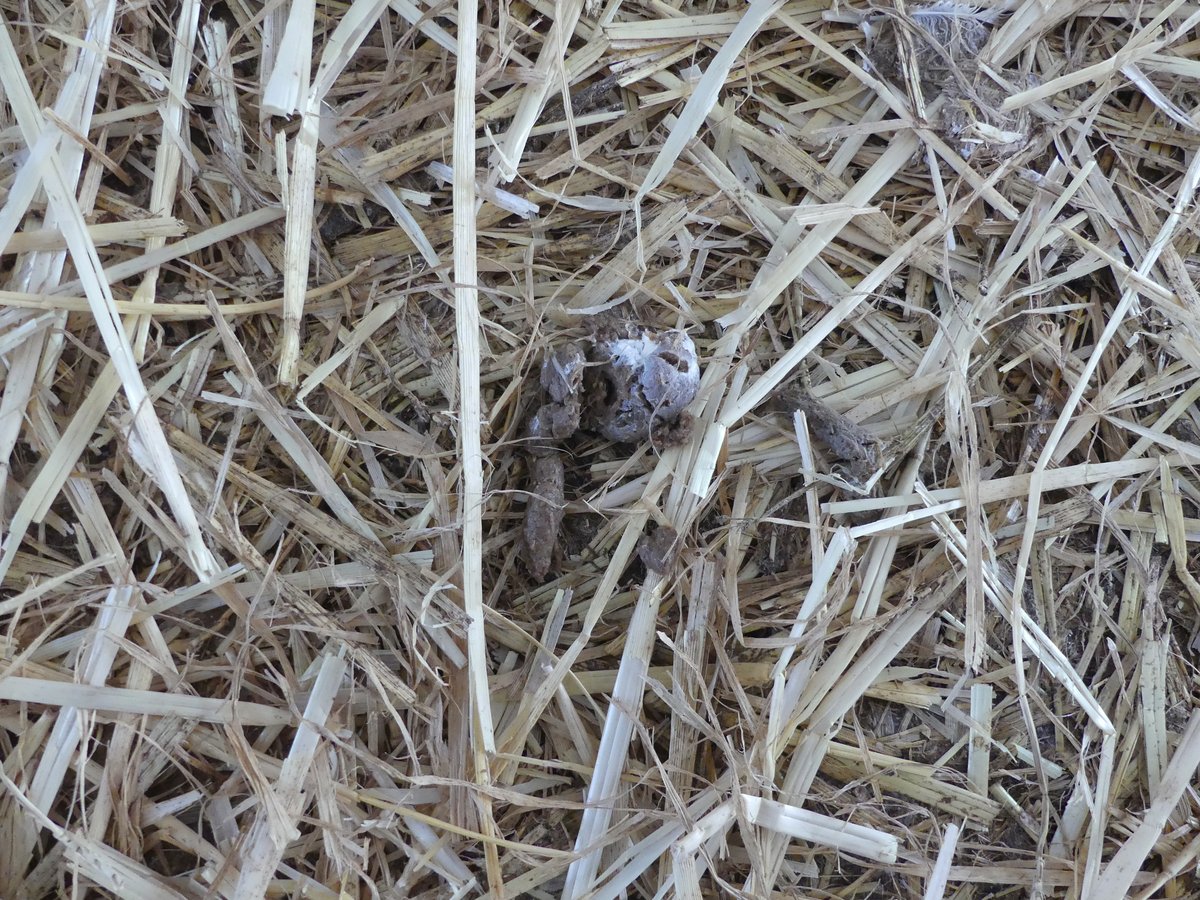
Caecal faeces are thicker in consistency than cecal faeces. They have a firm texture and contain very few undigested components. The excreted uric acid appears as a distinct white mass.
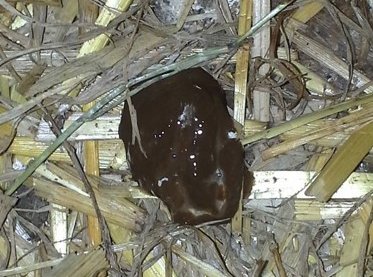
Cecal faeces, on the other hand, naturally have a soft, creamy consistency and are brown in colour. In chickens, it is known that cecal faeces are passed only once for every 7–11 regular faecal passages. It can be assumed that the frequency of excretion in turkeys is comparable. Cecal faeces are usually passed shortly after the lights are switched on in the morning and in the late afternoon.
Deviating condition
Increased uric acid production (polyuria) is indicated by a watery white coating on the faeces. Heat stress can lead to an increase in watery faeces due to increased water intake, causing the litter to become damp. The ratio of caecal to large-bowel faeces provides an initial indication of a problem area. Voluminous, watery or foamy caecal faeces also indicate dysbiosis or impaired gut health.
Signs of abnormal large intestine faeces: faecal piles that are larger or more voluminous, loss of firmness or consistency, oily and misshapen, colour abnormalities, watery, undigested feed particles, foul odour
Signs of changes in caecal faeces: scattered gas bubbles, foamy consistency, voluminous and flat, wet patches around feeding troughs, black tar-like excretions, traces of salmon-coloured intestinal mucosa, or faeces that are sulphur-coloured