
- Bernhard Feller, North Rhine-Westphalia Chamber of Agriculture
- Christian Meyer, Schleswig-Holstein Chamber of Agriculture
- Georg Silkenbömer, farmer
- Sandra Terletzki, North Rhine-Westphalia Chamber of Agriculture
- Dr. Sabine Schütze, North Rhine-Westphalia Chamber of Agriculture
Funding note:
This document was developed by the working group “Construction: Sows and Fattening” of the Centre of Excellence for Pig Welfare. It has been methodologically and didactically
adapted by DLG e.V. and FiBL Deutschland e.V. The joint project of the Chambers of Agriculture and agricultural institutions across all federal states aims to improve the transfer of knowledge into practice in order to make cattle, pig and poultry farms fit for the future in terms of animal-welfare-friendly, environmentally sound and sustainable livestock farming.
The project is funded by the Federal Ministry of Food and Agriculture pursuant to a resolution of the German Bundestag.
All information and advice is provided without any warranty or liability.
Publisher
DLG e.V. Agricultural
Centre
Eschborner Landstraße 122
60489 Frankfurt am Main
FiBL Deutschland e.V. Animal Welfare
Division
Kasseler Straße 1a
60486 Frankfurt am Main
As of: 08/2023
© 2023
Reproduction and transmission of individual text sections, drawings or images (including for the purpose of lesson planning), as well as the provision of this information sheet in whole or in part for viewing or download by third parties, is permitted only with the prior authorisation of the relevant department of the Animal Welfare Competence Centre and DLG e.V., Marketing Division, Tel. +49 69 24788-209, [email protected]
Animal welfare is more of a priority than ever, and pig farming is undergoing a transformation. Organic enrichment materials are now a legal requirement, and structural developments are leading to more deep-litter pigsties, increasingly with outdoor runs as well. In order to implement the increased use of bedding in practice, farms require sufficient storage facilities for hay and straw, suitable manure removal techniques and proper manure storage. Various aspects must be taken into account to ensure good quality hay and straw and to store manure in an environmentally sound manner. Various points should also be taken into account during manure removal, which on the one hand make day-to-day work easier and on the other hand protect the environment. The ‘Construction: Sows and Fattening’ working group of the Animal Welfare Competence Centre for Pigs from the Fokus Tierwohl network has summarised the most important points.
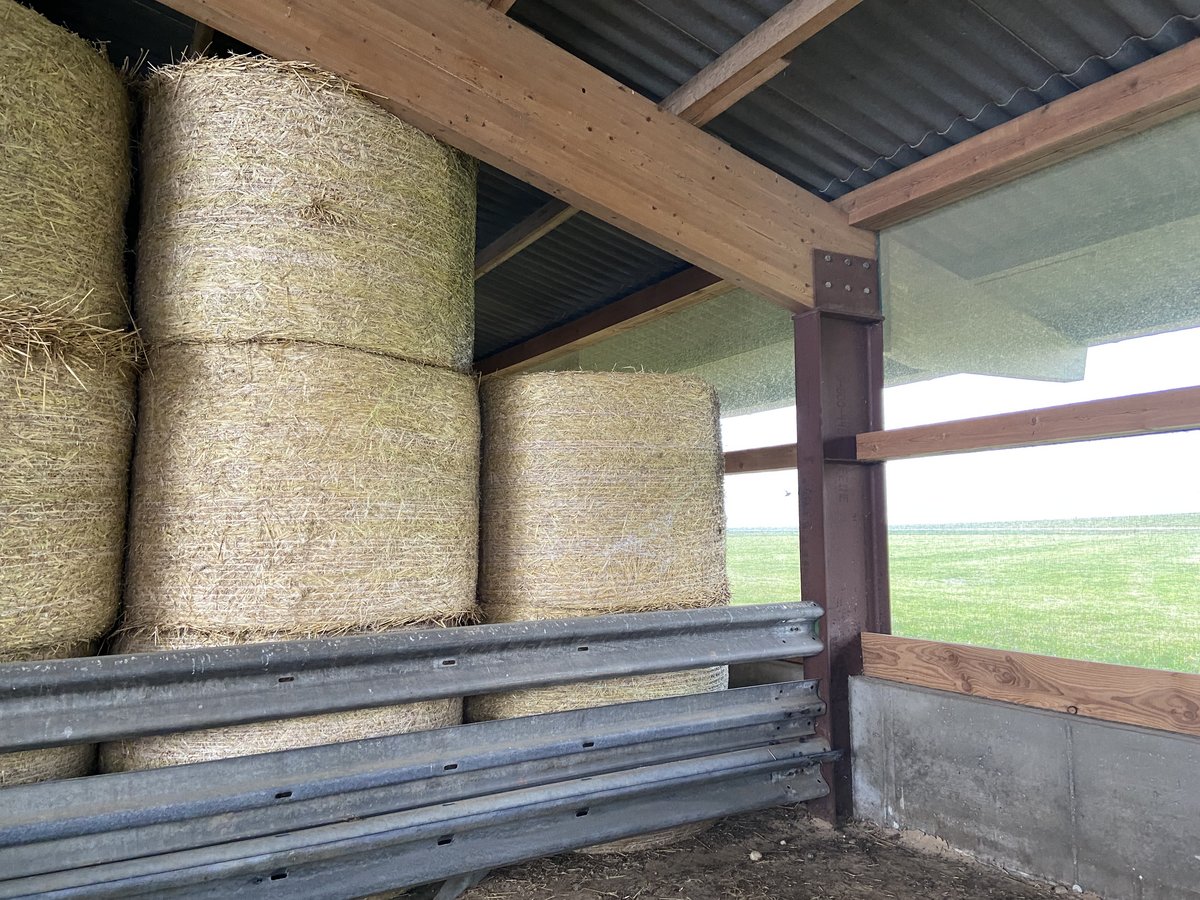
When storing hay and straw, care must be taken to ensure that they are kept dry and protected from the elements.1 Enclosed, well-ventilated sheds with solid floors are the ideal solution. Storing hay and straw under canopies or against buildings is not permitted for fire safety reasons. Cost-effective new structures include, for example, a post-and-beam building with point foundations and a base of paving or gravel. If topsoil is removed, the areas can be filled with sand and covered with gravel. It is crucial that water, such as rainwater, can drain away and that no moisture seeps into the bales from below. Bird protection nets stretched across frames are a cost-effective option for gates. The side walls can sometimes be constructed from drip edging, fibre cement sheets (Eternit sheets) or timber. Windbreaks are suitable for preventing driving rain (Fig. 1). If the bales are stored on pallets, moisture ingress from below can be prevented and ventilation of the bales promoted.2
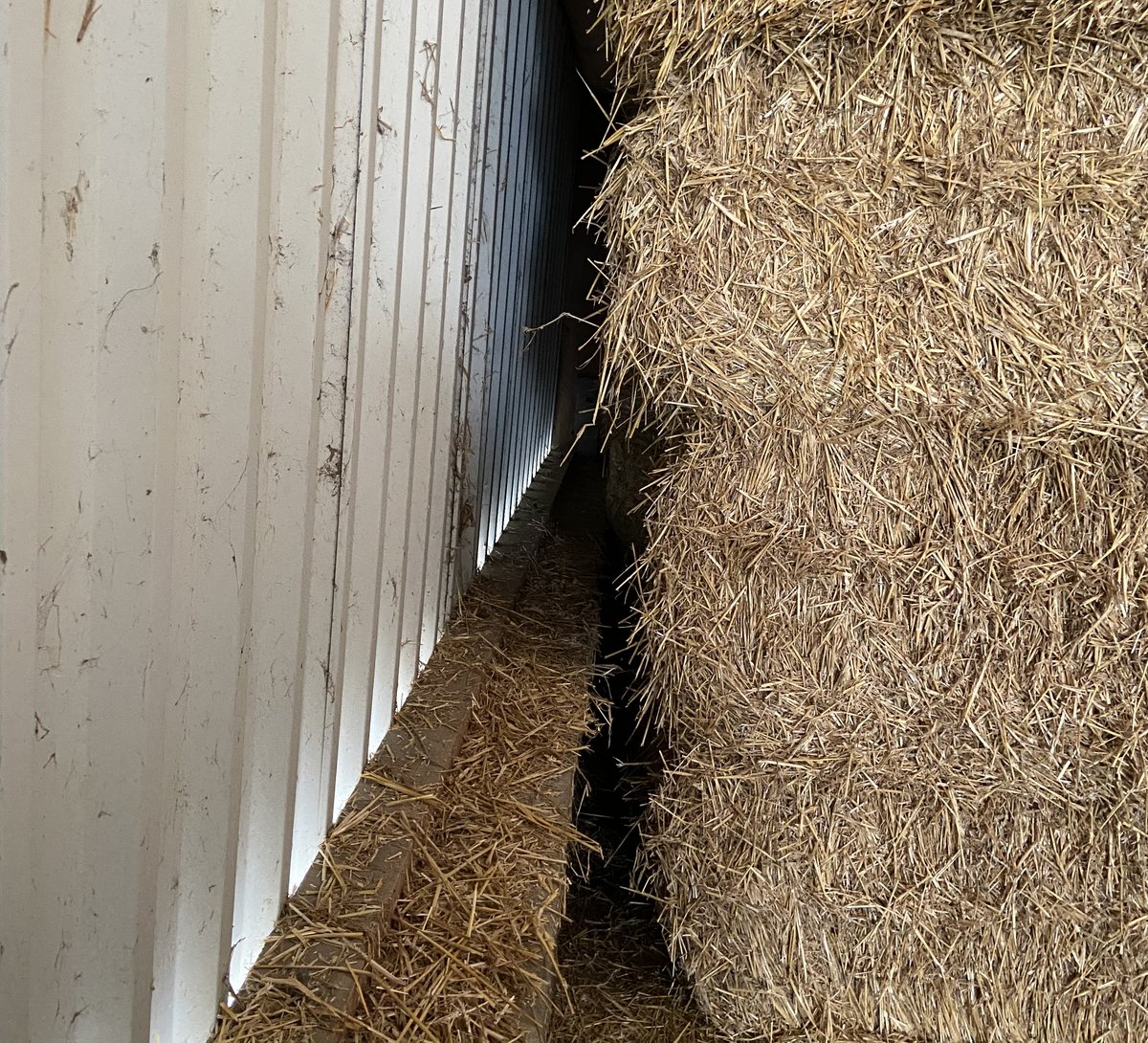
Biosecurity must not be neglected when storing hay and straw. If it is possible to set up the hay/straw storage area in the unfenced white zone, the vehicle collecting the bales must be disinfected before crossing the black-white boundary. It is advisable to construct a storage facility with several gates, at least for the handover process. The material can then be delivered from one side and removed from the other for use. If there are several gates, different feed qualities, such as hay and straw, or even new and old bales, can be stored and removed separately. Bird netting should protect straw and hay from the introduction of pathogens by birds. A gap of 10–20 cm between the wall and the bales not only ensures adequate ventilation but also helps cats to control rodent populations (Fig. 2).
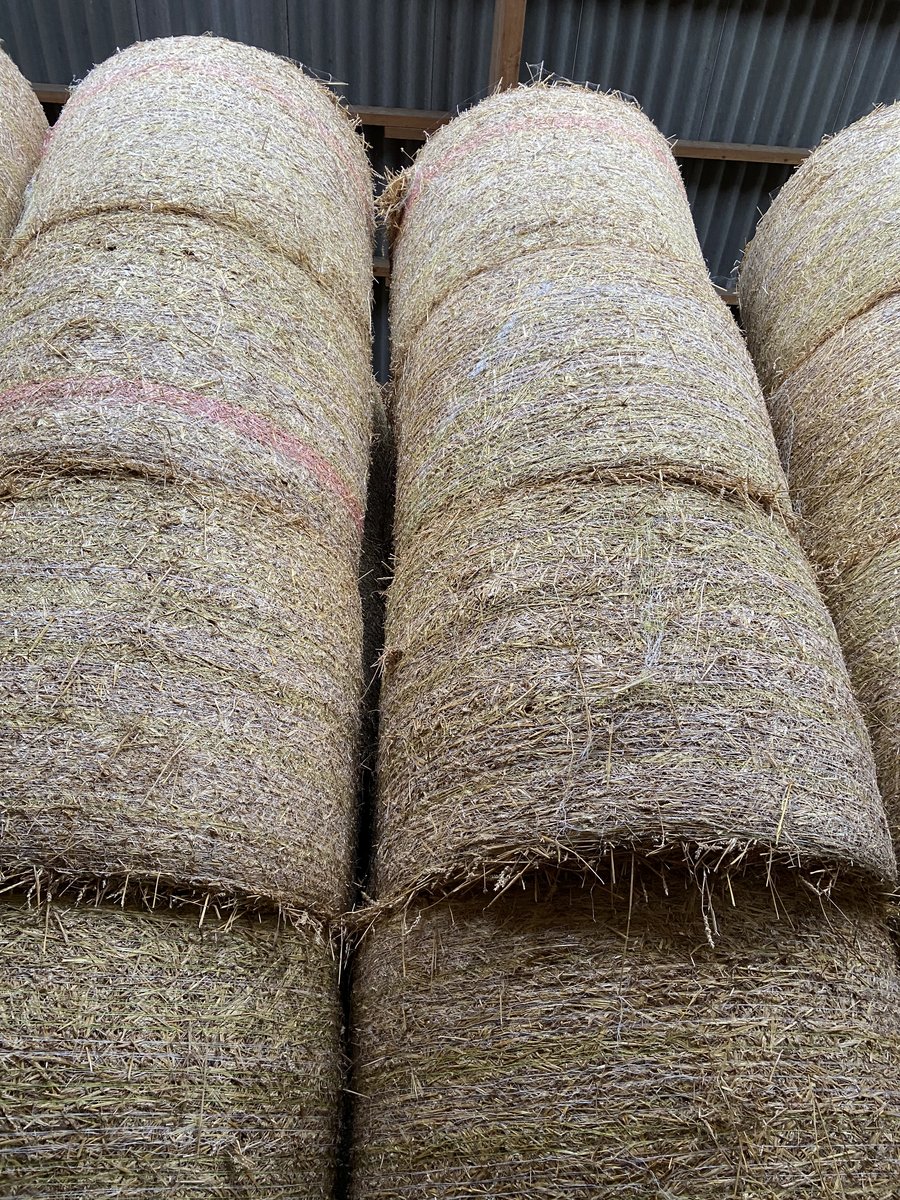
The question of how much storage space is required must be answered on a case-by-case basis, depending on the farm. The amount of storage space needed depends, for example, on the type of housing and the associated amount of bedding, but also on the shape of the bales. Round bales are less compact than square bales, so more space is required for storage. An average round bale weighs approx. 250 kg. The weights and dimensions of various bales can be found in Table 1 and used to determine the required storage space.
| Dimensions: Ø x H or L x W x H in m | Weight in kg | |
| Round hay bales | 0.90 x 1.20 | 123 |
| Round bales of hay | 1.60 x 1.20 | 370 |
| Round bale of straw | 1.50 x 1.20 | 294 |
| Square bales of hay | 2.00 x 1.20 x 0.90 | 269 |
| Square bales of straw | 2.00 x 1.20 x 0.90 | 295 |
| Square bales of straw | 1.60 x 1.20 x 0.90 | 215 |
<figcaption>Table 1: Sizes and weights of various hay and straw bales3</figcaption>
One advantage of round bales is that they are less demanding in terms of storage conditions. Whilst the more finely cut straw in square bales can soak up rainwater (like a sponge), the water tends to run off the long sides of the wrapped straw in round bales. As a result, a square bale exposed to water can rot completely, whereas with a round bale, only a small outer layer spoils.
It should be noted that hay and straw from areas affected by African swine fever must not be used, or must be stored for at least six months. Therefore, provided there is sufficient storage capacity, it is advisable to store a year’s supply from a single harvest in advance. Although this is more costly, the existing straw-based housing system can continue to operate even in the event of an outbreak. Furthermore, with ample storage capacity, sufficient high-quality material can always be kept in stock, even in rainy years when a good-quality harvest cannot be obtained.
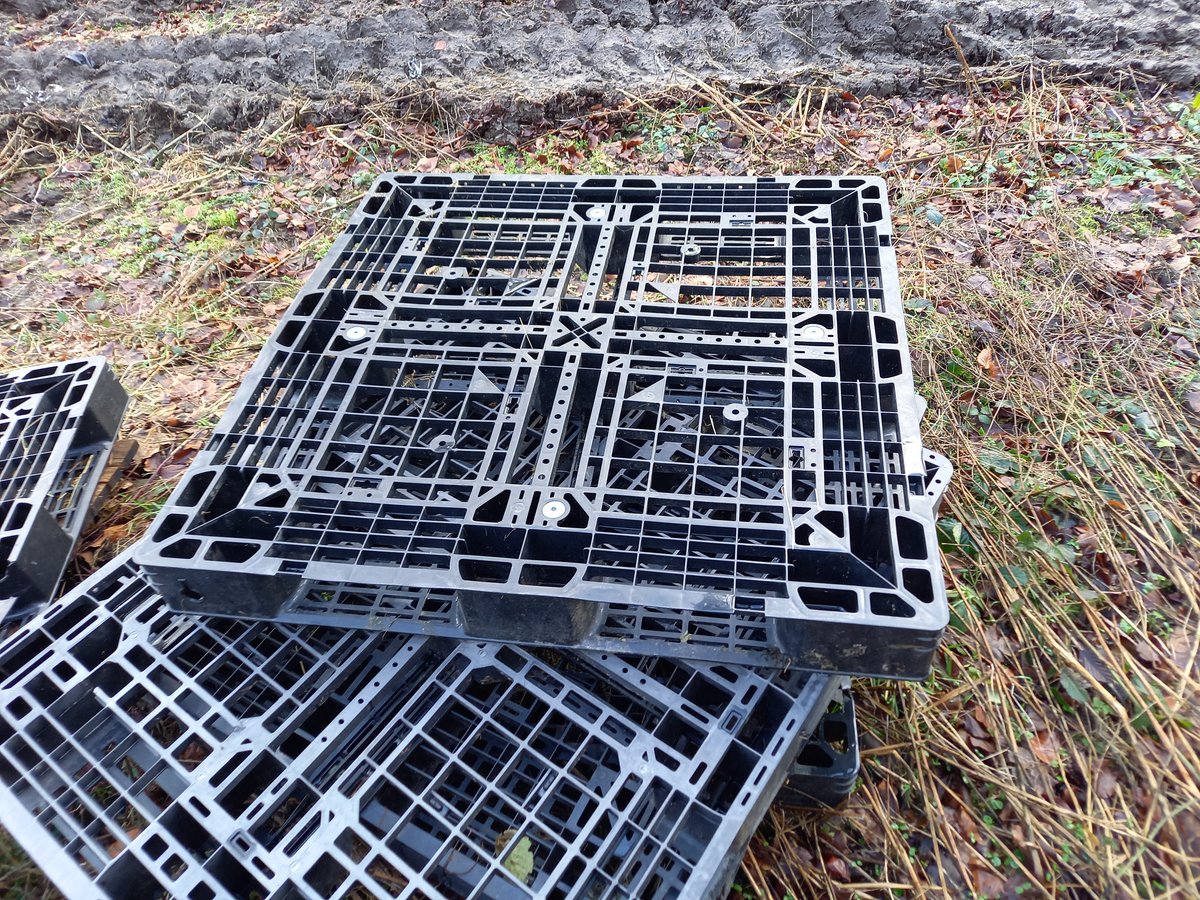
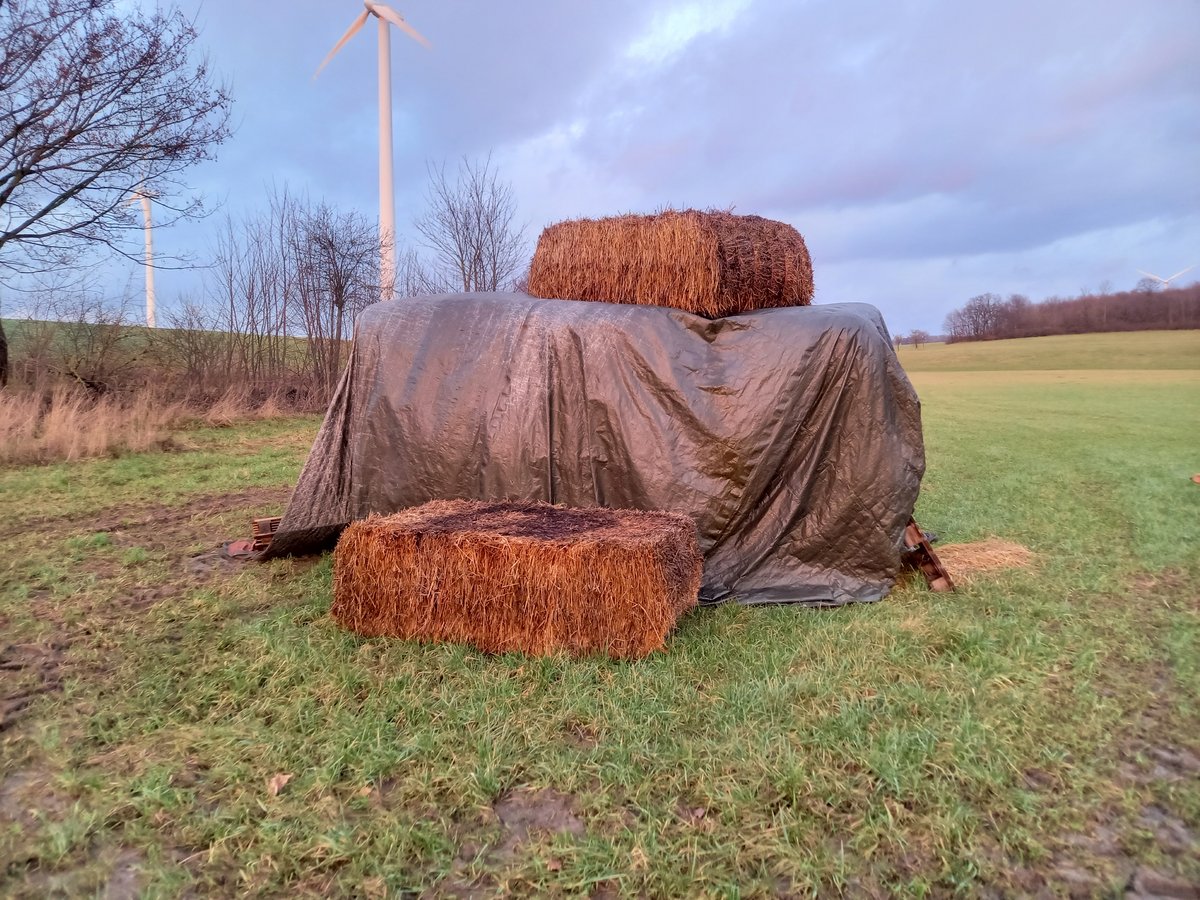
Storing hay and straw outdoors has the advantage that it involves little or no cost, and the land can be used for other purposes once storage is complete.1 However, due to biosecurity concerns and the potential for the quality of the bales to deteriorate as a result of weather conditions, this method of storage is not recommended. If indoor storage is not possible due to lack of space, outdoor storage remains the only option. To guarantee impeccable quality, a few points must be observed: It is important that moisture is kept away from the bales even when stored outdoors, by ensuring the bales are not placed directly on the ground but on raised surfaces such as pallets (Fig. 3).
The bale stack should not be covered with plastic sheeting, as condensation can form underneath, increasing the risk of mould growth. If plastic sheeting is used for short-term temporary storage, adequate ventilation must be ensured. Small openings near the ground are suitable for allowing condensation to escape. Straw fleece is better suited for covering stacks, as it is air- and vapour-permeable yet water-repellent when laid at an angle of at least 45 degrees. It is tear-resistant even in strong winds and is also UV-stable for several years. In the case of a square bale stack, the topmost bale should be placed upright on one of its long sides.1 If round bales are stored on their flat side, this has the advantage that the bales do not deform. It is important to ensure that no more than three round bales are stacked on top of one another to form a cylindrical pile. Taller stacks should be stacked in a staggered pattern to achieve greater stability through the interlocking structure. This serves occupational safety and is required by the employers’ liability insurance association.
After each bale is removed, the stack should be completely covered again to protect it from rain. If the bales are protected from moisture and from wild boars by a fence, and if rodent control measures are in place, the key basic requirements for outdoor storage are met. However, stacks stored outdoors are not as well protected as they would be in a closed building. Table 2 outlines the advantages and disadvantages of storage in a building and outdoors.
| Storage in a permanent building | Outdoor storage | |
| Advantages |
|
|
| Disadvantages |
|
|
<figcaption>Table 2: Advantages and disadvantages of indoor and outdoor storage</figcaption>
Fire safety
Dry materials such as hay and straw can catch fire quickly. This can be caused by external factors such as engines, sparks or open flames, or by the spontaneous combustion of freshly stored bales. In addition to the risk to human and animal life, fires cost a great deal of money and labour, and may also lead to problems with insurance companies. Insurers provide relevant guidelines for damage prevention in the VdS 3453 brochure ‘Fire Protection on Agricultural Holdings’. Fires can be prevented by avoiding the parking of motor vehicles in storage halls and stables.2 If this is not possible, a distance of at least 2 metres from combustible materials must be maintained.4 Work involving machinery that can produce sparks must also be avoided2 in the vicinity of flammable materials, as must, of course, the use of open flames. Having electrical installations inspected by a qualified electrician can identify hidden faults at an early stage. For example, supply cables, light fittings and switches in all buildings and rooms should be checked.2 For safety reasons, the maximum size of a storage area should not exceed 10,000 m³.5
The following distances should be maintained from various areas:
- 25 m from high-voltage power lines, livestock buildings and residential buildings with brick walls and tiled roofs2
- 50 m from forests, moors, railway tracks, thatched-roof and timber buildings2
- 300 m from schools and similar facilities2
- 100 m from other hay and straw storage areas4
It is advisable to check with your own insurance provider or review your policy to ascertain which fire safety measures must be observed to ensure the insurance covers the damage in the event of a fire. For example
, are you aware that dried crops must be checked regularly for spontaneous combustion immediately after storage? If this cannot be proven to have been carried out, insurance cover may be withdrawn in the event of a fire. The measurements should be recorded in writing, stating the date, the measurement points, the temperatures and the measurement depths within the bales. A sketch of the storage location can supplement the documentation.5 For measuring the crops, at least one measurement point per 20 m² should be selected. Temperatures in the bales up to 45 °C are safe (Table 3).5 Suitable devices are those tested by the DLG, insurance companies or the fire service, where the measuring sensor is inserted deep into the bale.
| Temperature | Measures | Measurement interval |
| up to 45 °C | Temperatures are safe – no danger! | daily |
45 °C to 60 °C | Unsafe – temperatures should be monitored constantly | every 12 hours – from 50 °C every 6–8 hours |
| above 60 °C | fire hazard – critical range, noticeable smell of burning or roasting, continuous monitoring at the heated location, notify the fire brigade, arrange an on-site appointment with the local fire chief | at least every 3 hours |
| above 70 °C | acute fire hazard – alert the fire brigade immediately (emergency number 112) |
Further information on fire safety
Contingency plans (drawn up by the Construction Working Group: Sows and Fattening)
Guideline on building regulations for livestock housing
Fire safety on farms – guidelines on damage prevention from German insurers
Alarm systems in livestock housing (DLG leaflet 422)
Preventive fire safety in agricultural construction (KTBL booklet)
(© Netzwerk Fokus Tierwohl, DLG e.V.)
(© Netzwerk Fokus Tierwohl, DLG e.V.)
(© Netzwerk Fokus Tierwohl, DLG e.V.)
(© Netzwerk Fokus Tierwohl, DLG e.V.)
Manure removal techniques
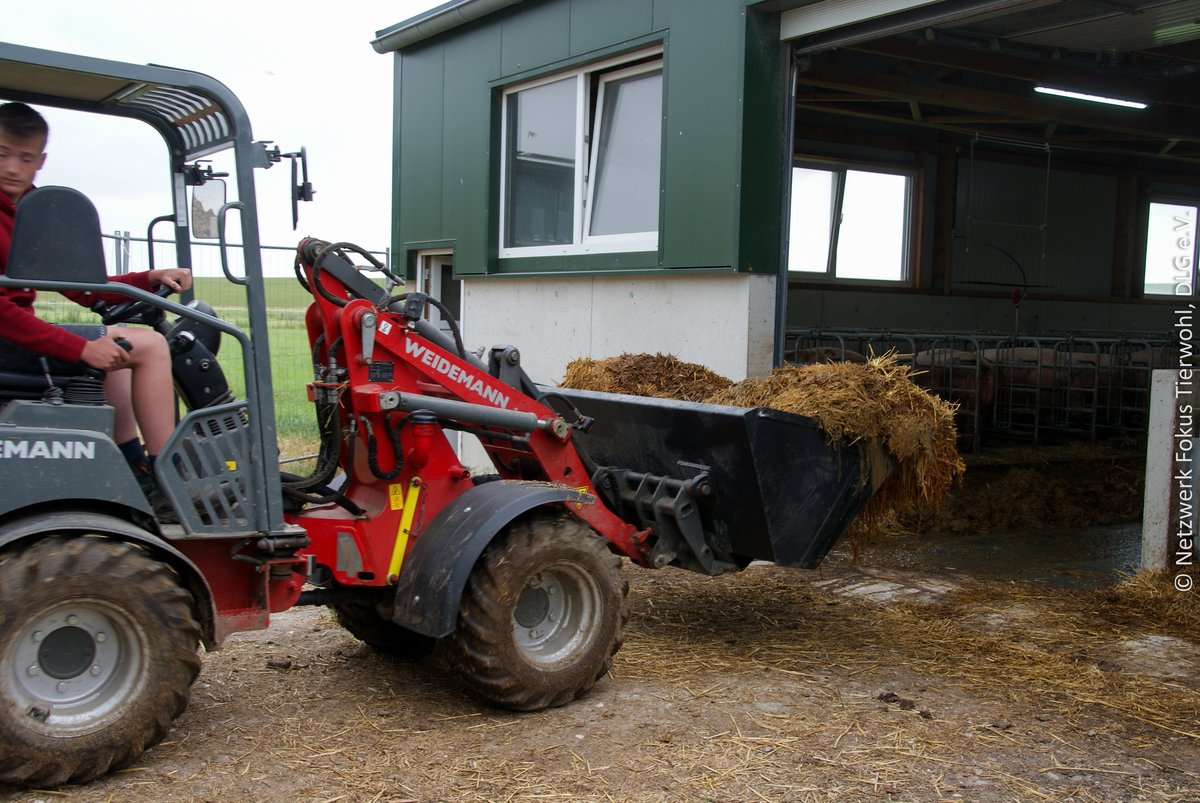
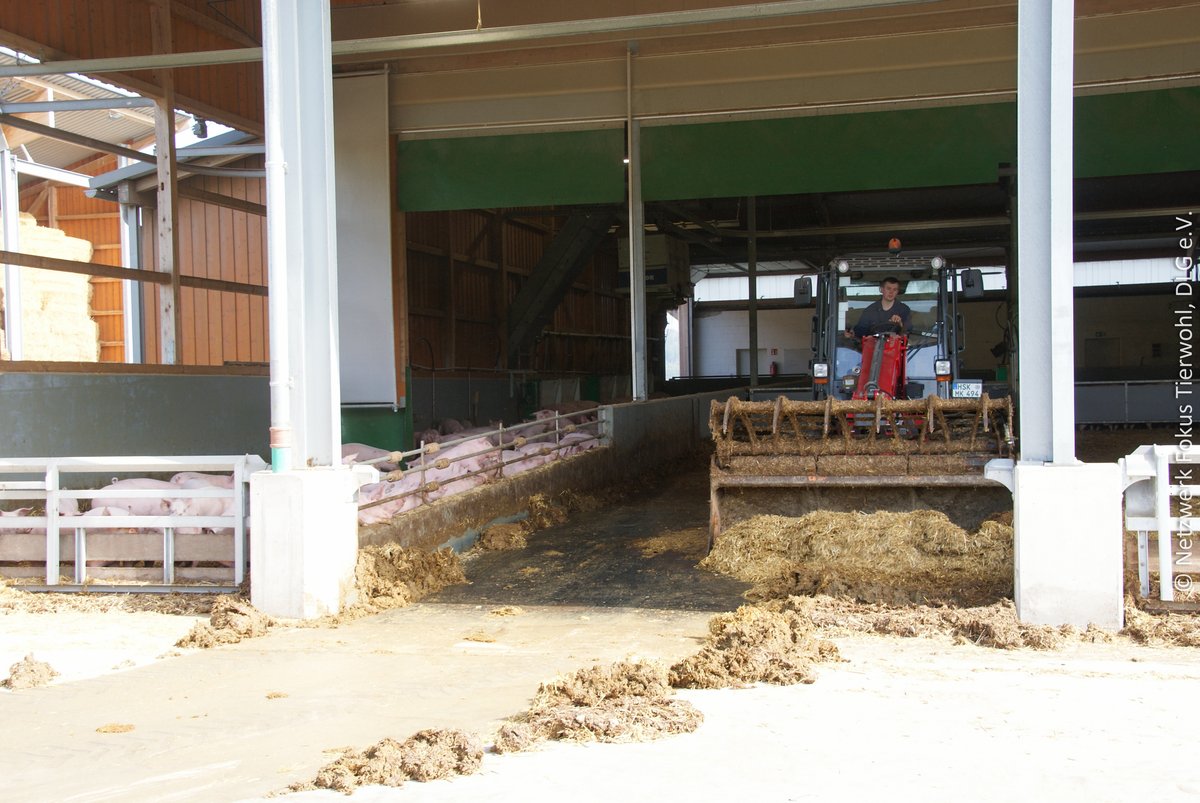
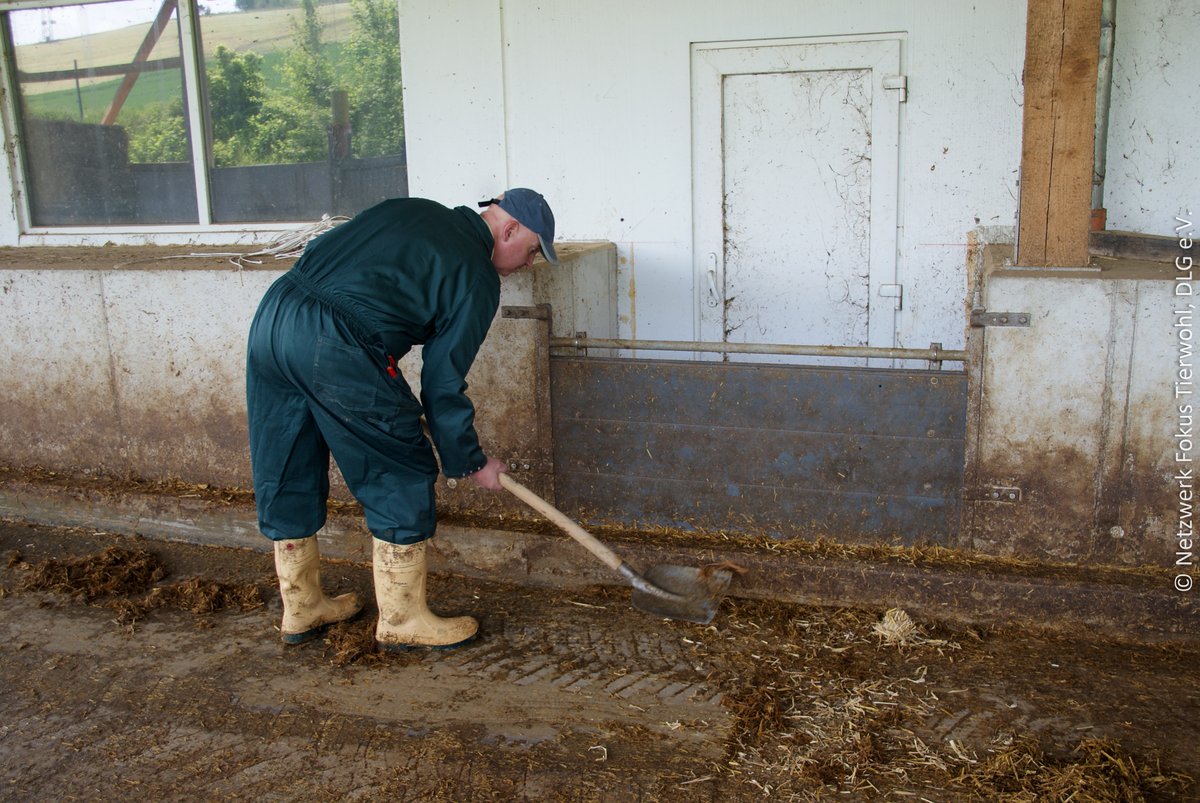
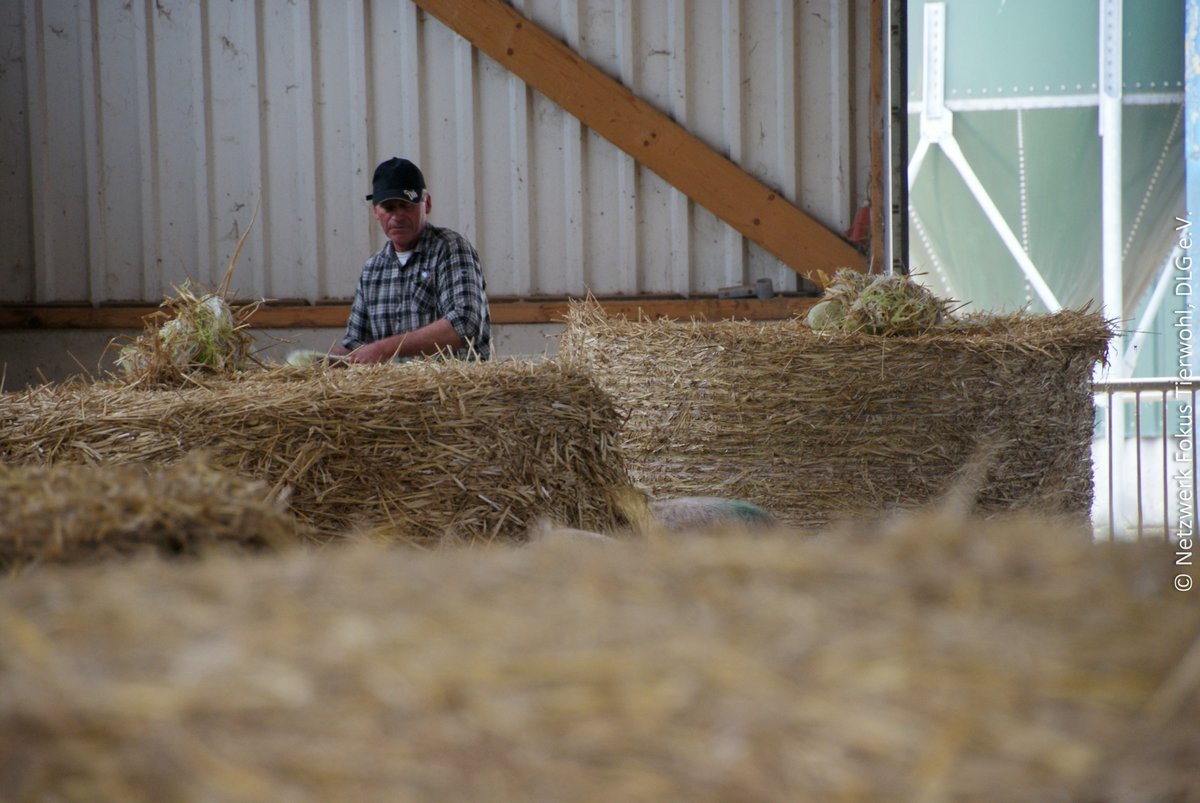
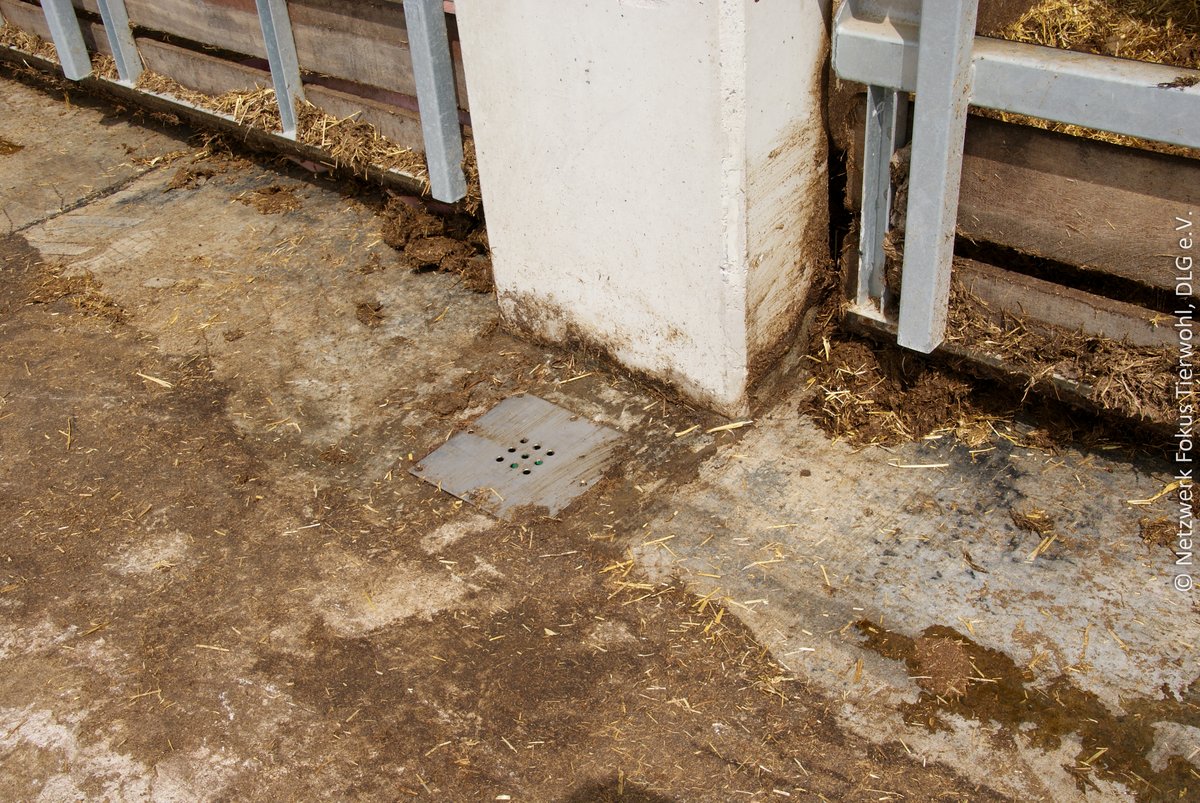
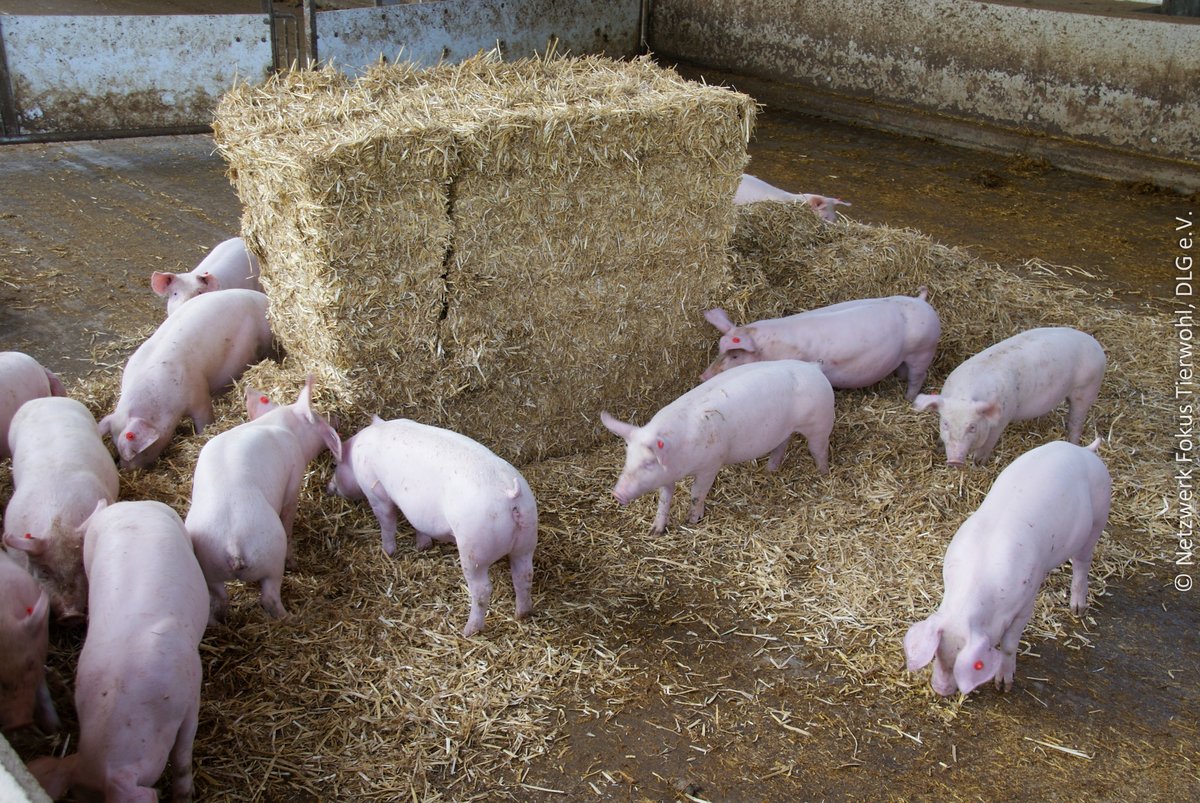
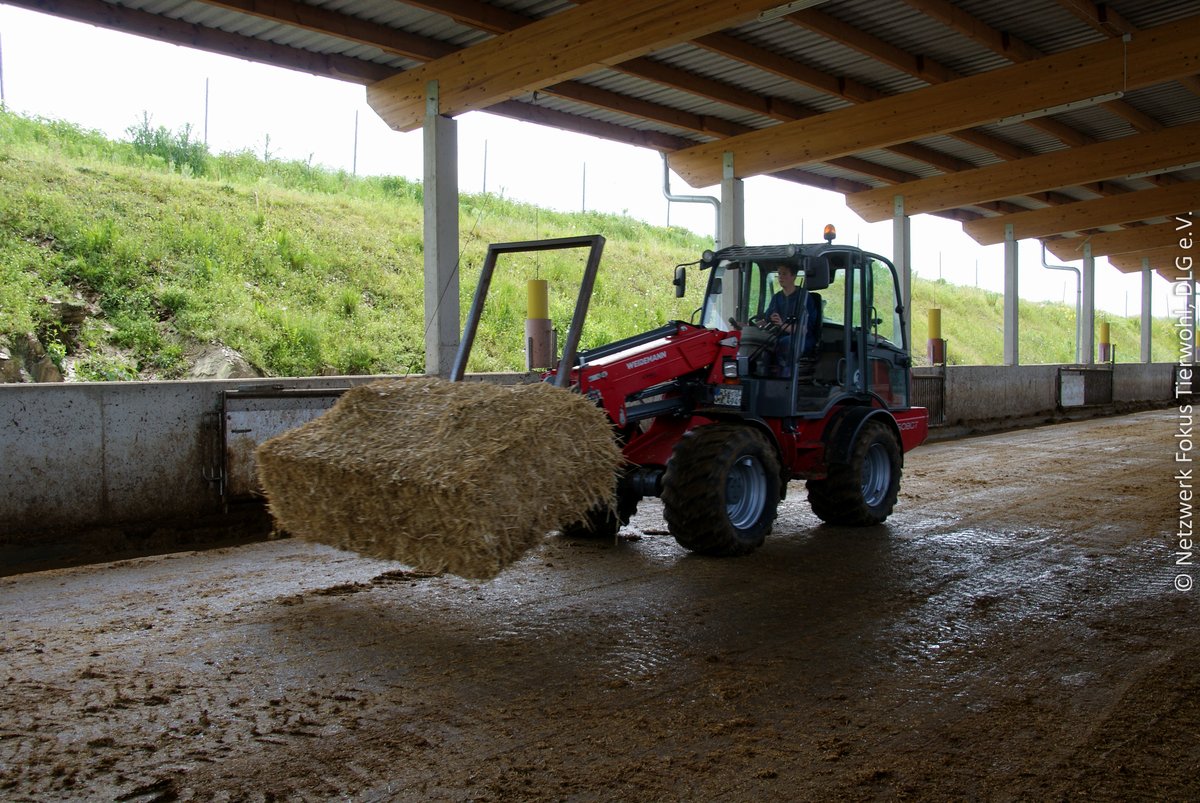
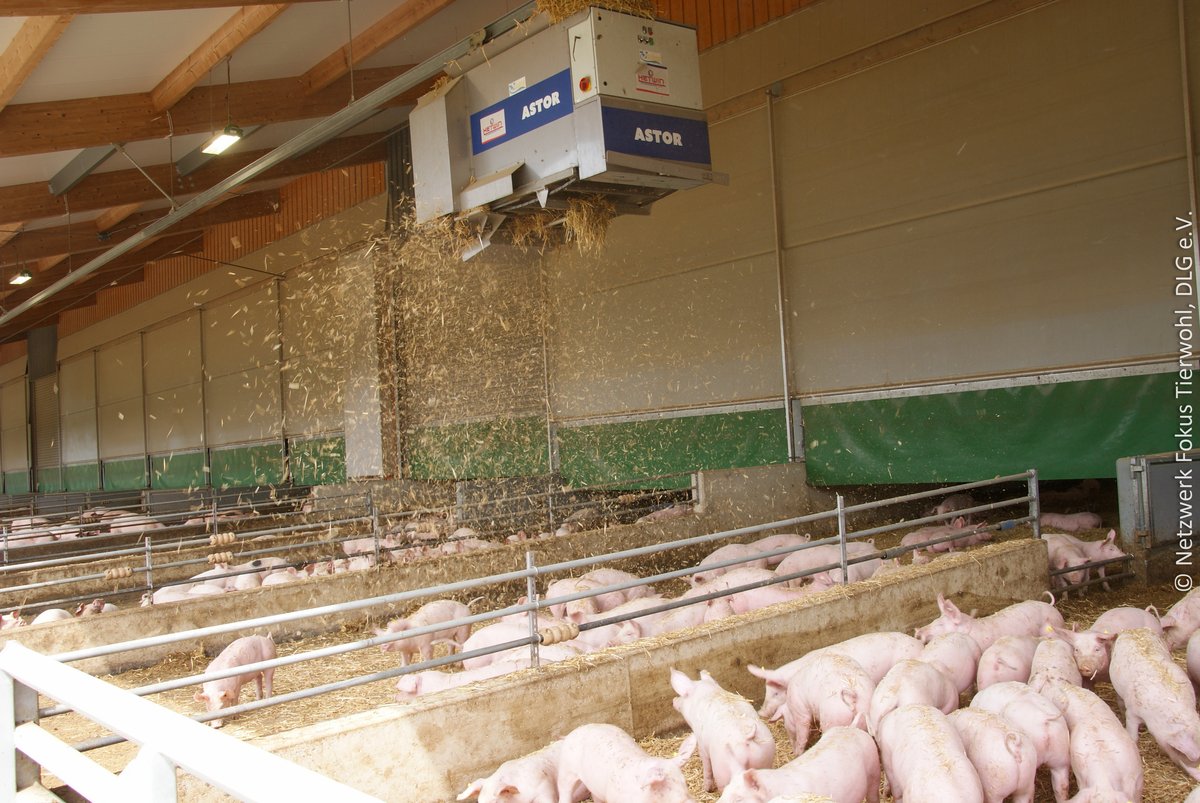
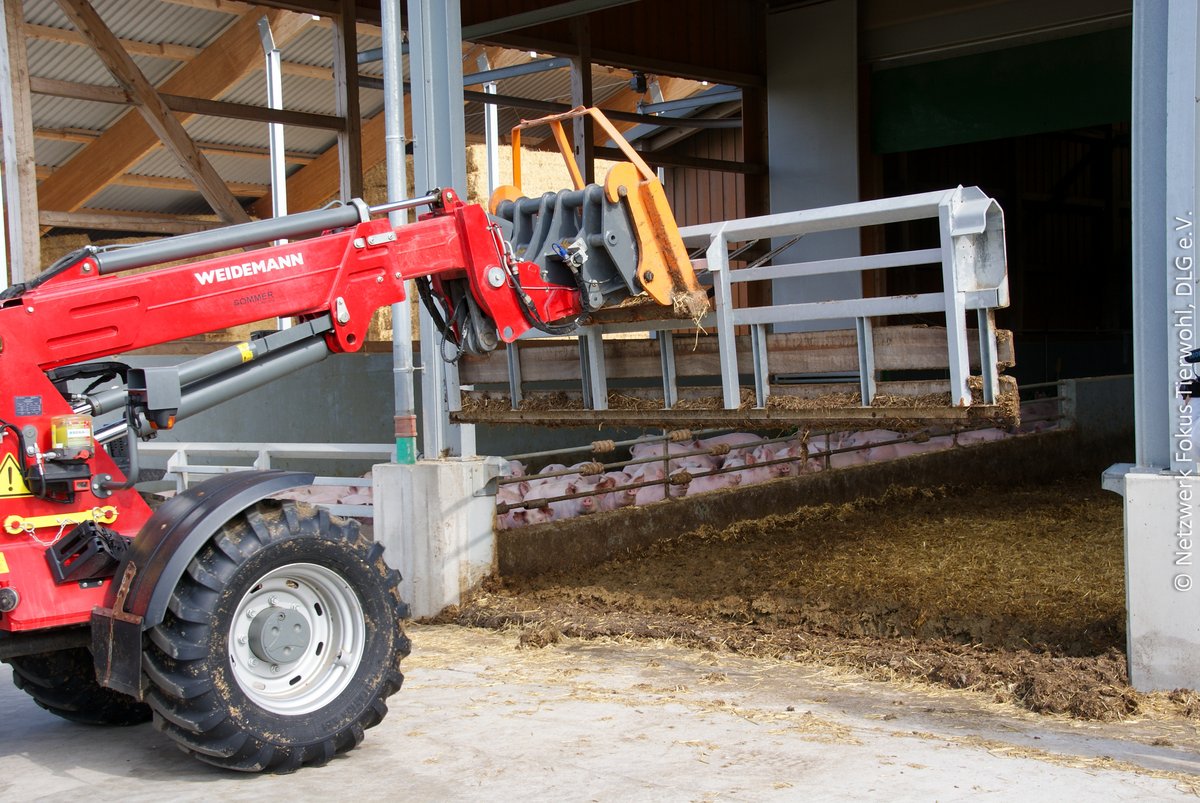
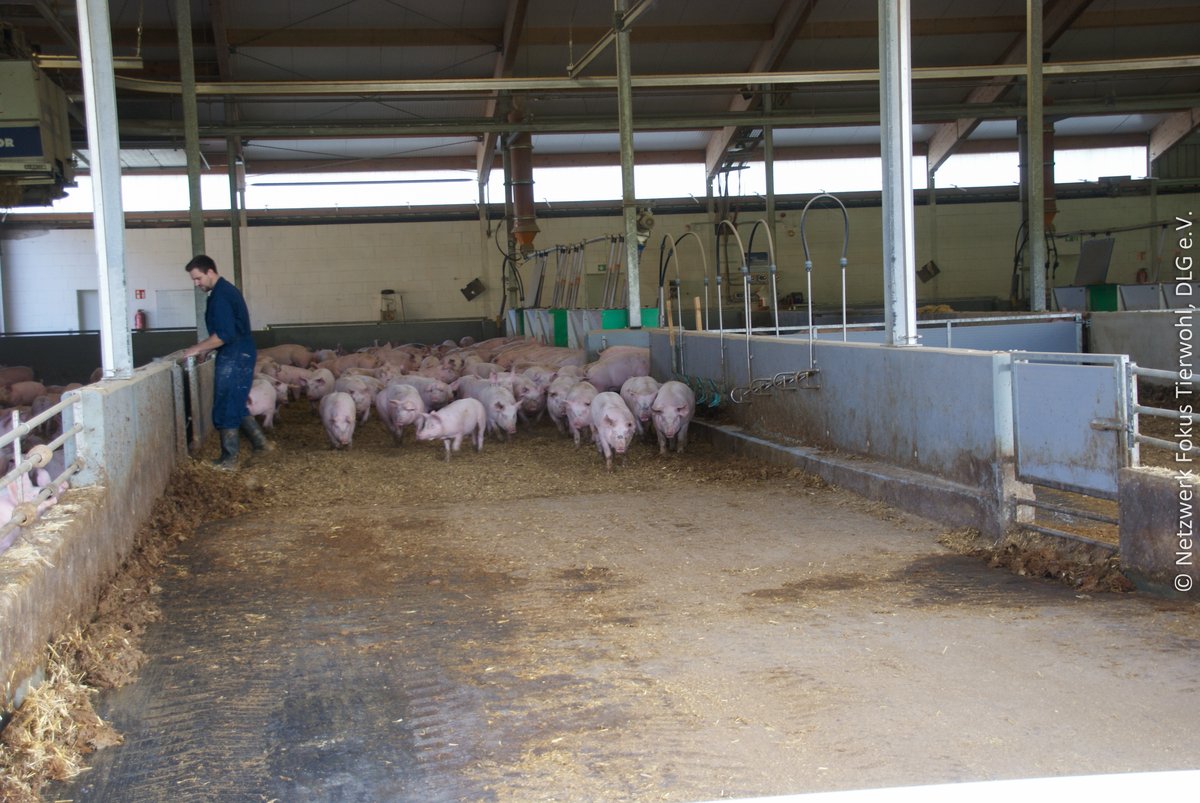
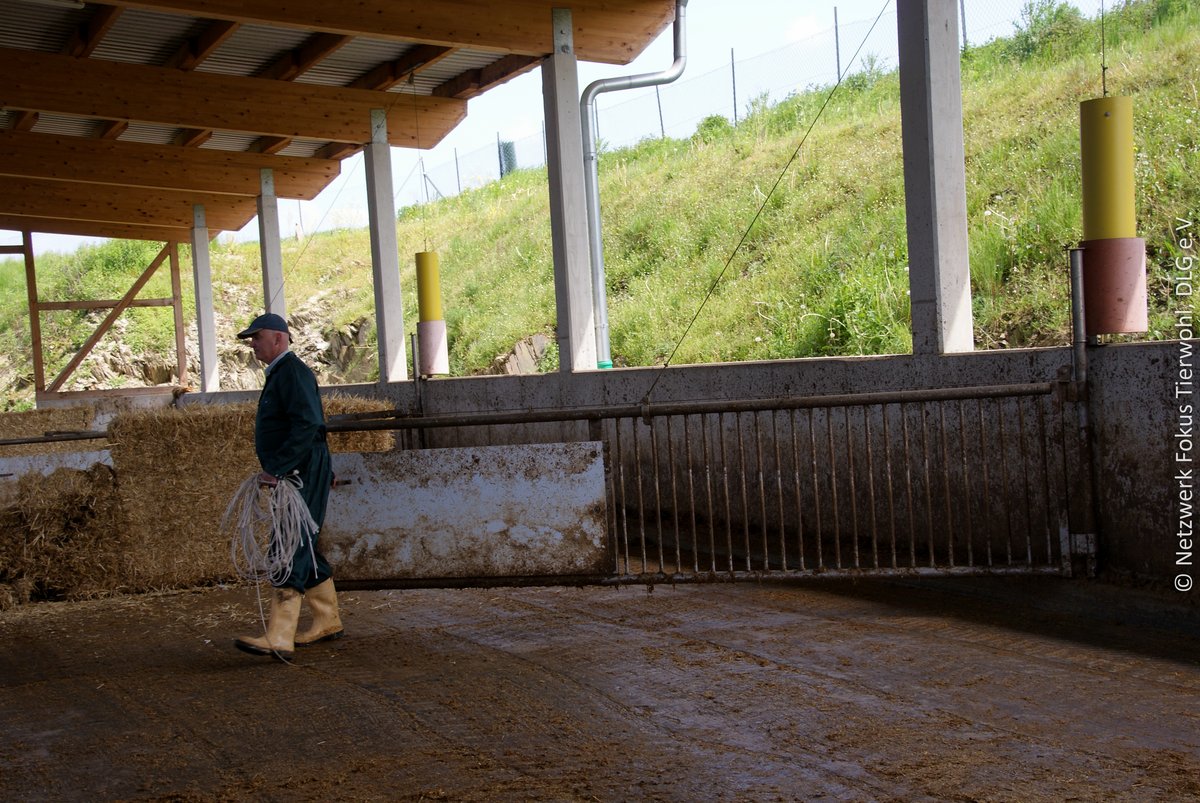
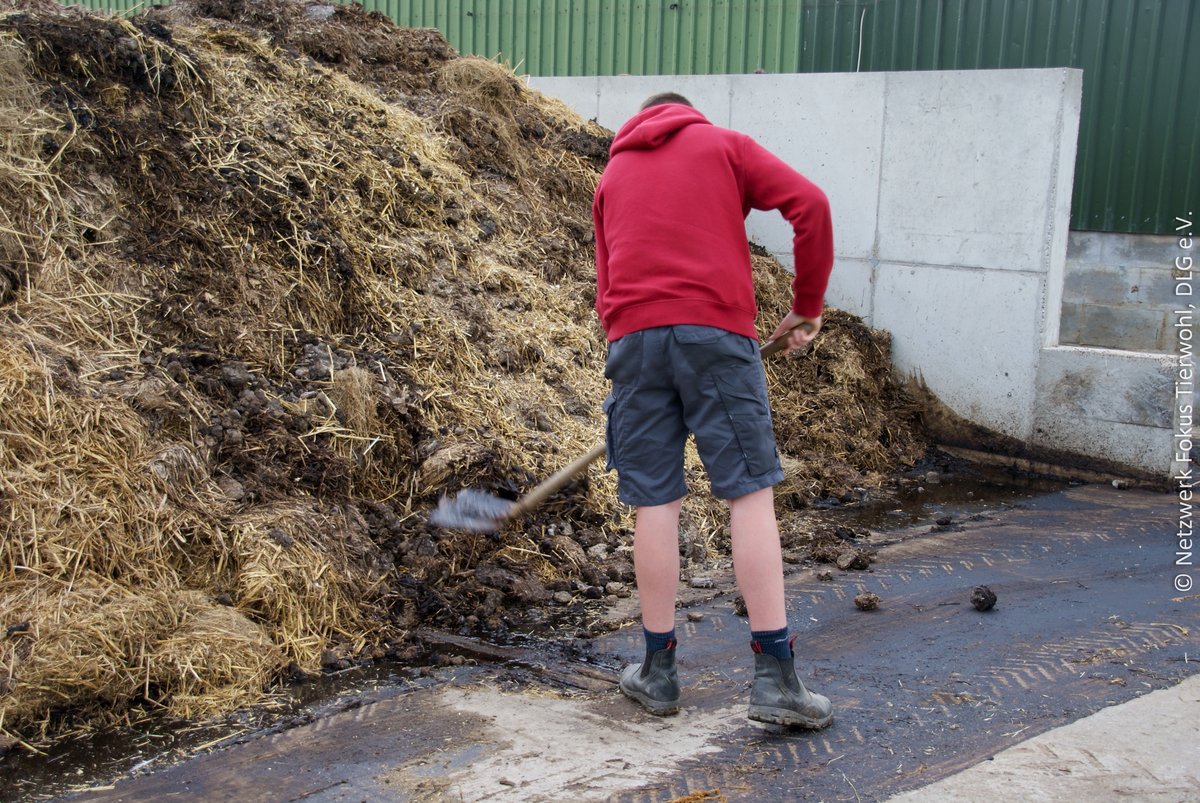
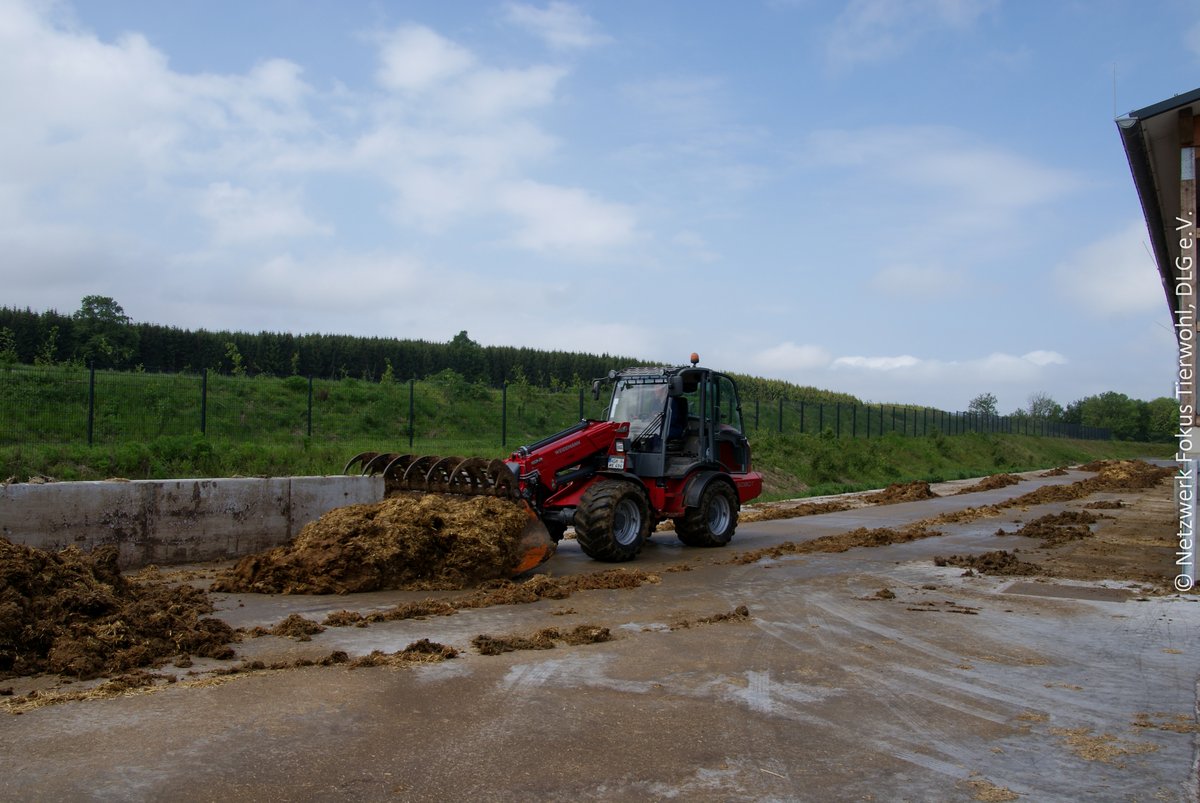
The primary purpose of using straw as bedding in livestock housing is to absorb manure and urine. It can also be used as organic enrichment material or to provide a soft lying surface. The soiled straw must be removed from the housing. To do this in a time- and labour-saving manner, the bedded area should be suitable for mechanical mucking out (Figs. 4 & 5). This can be carried out using mobile equipment such as tractors or wheel loaders, or via stationary mucking-out systems. Even though manual labour cannot be completely eliminated (Figs. 6 & 7), mechanical mucking out can greatly help to ease the workload. If an outdoor run is available, it saves time and labour if the animals use only this area for defecation, as it can be mucked out more easily than manure passages in the barn if constructed properly.6 If the pen partitions are made of mesh, the animals can see one another and territorial behaviour occurs,7 providing a further reason, alongside cold, draughts and damp, to use the outdoor run for defecation and urination. Folding partitions or swing gates between the pens and ground-level floors allow for the simultaneous mechanical mucking out of all outdoor runs. The functionality of the swing gates and barriers is crucial to the labour involved in mucking out. Furthermore, the mountings and fastenings of the swing gates on the walls must not, for example, impede mechanical mucking out.
The ‘Pen Structure’ working group has summarised further tips on pen design for piglet rearing and fattening, as well as group housing of sows in the mating centre.
(© Netzwerk Fokus Tierwohl, DLG e.V.)
Whilst pen-attached and bedded-down outdoor runs were previously found mainly on organic farms, they are now also being incorporated into conventional farms due to higher standards for animal welfare. In some cases, legal requirements and funding conditions stipulate the use of straw-bedded outdoor runs (e.g. AFP funding in North Rhine-Westphalia). However, it must be borne in mind that, unlike manure-urine separation with underfloor slides, straw bedding in the outdoor run increases emissions. It is therefore advisable to use straw bedding only in the animals’ resting area within the barn or hut.
Care must be taken to ensure that liquids such as rainwater and urine drain6 away quickly. This can be achieved by installing floor drains and ensuring a slight slope away from the building (Fig. 8).
(adapted from A. Deter)
Bedding poses a problem in partially slatted housing with a slurry system. Such systems are only suitable for very finely chopped straw (< 1–2 cm). With longer chopped straw, the question arises as to how the mixture of straw, manure and urine can be removed from the barn. Circulation or slalom systems are ruled out from an emissions regulation perspective. The only practical solution is actually the use of scraper technology beneath the slatted floors, such as a scraper with manure-urine separation. The manure can be transported out of the barn via the scraper and stored separately. If a new barn is being built, an underfloor scraper is indispensable nowadays. It is also suitable for barns where the construction of a deep slurry pit is not feasible.8 It is suitable for removing liquid manure from the barn, which may contain low to higher proportions of bedding. The scraper is guided along guide rails on the flat, reinforced concrete surface of the manure channel and pulled by a stainless steel cable.8 The base of the manure channel can be designed so that manure and urine are separated, with the urine flowing down a slight gradient into the urine channel and the manure being pushed along by the scraper.9 This results in less slurry in the barn or outdoor area, reduces ammonia formation and ensures better air quality. A major advantage is that the scraper operates completely independently and does not take up the farmer’s working time.8
Unlike in cattle farming, a slatted floor robot is not suitable for pigsties. If the pigs are not lying exclusively in the resting area, they are frequently hit by the robot. This is not only disruptive but can also lead to injuries. Furthermore, the pigs’ pronounced exploratory behaviour means that they interact heavily with the robot and thus destroy it. Implementation is also difficult because the pens are structurally separated, the stalls divide the barn, and the robot would consequently have to be moved back and forth between the pens and stalls.
The Havito system (Big Dutchman), a slatted-floor-free housing concept, incorporates the PigT manure removal unit. Alongside the underfloor scraper with manure-urine separation, it is currently the only system that achieves genuine manure-urine separation. The Havito system with the PigT requires a larger floor area. Furthermore, due to construction costs, it is not yet a common method in practice.
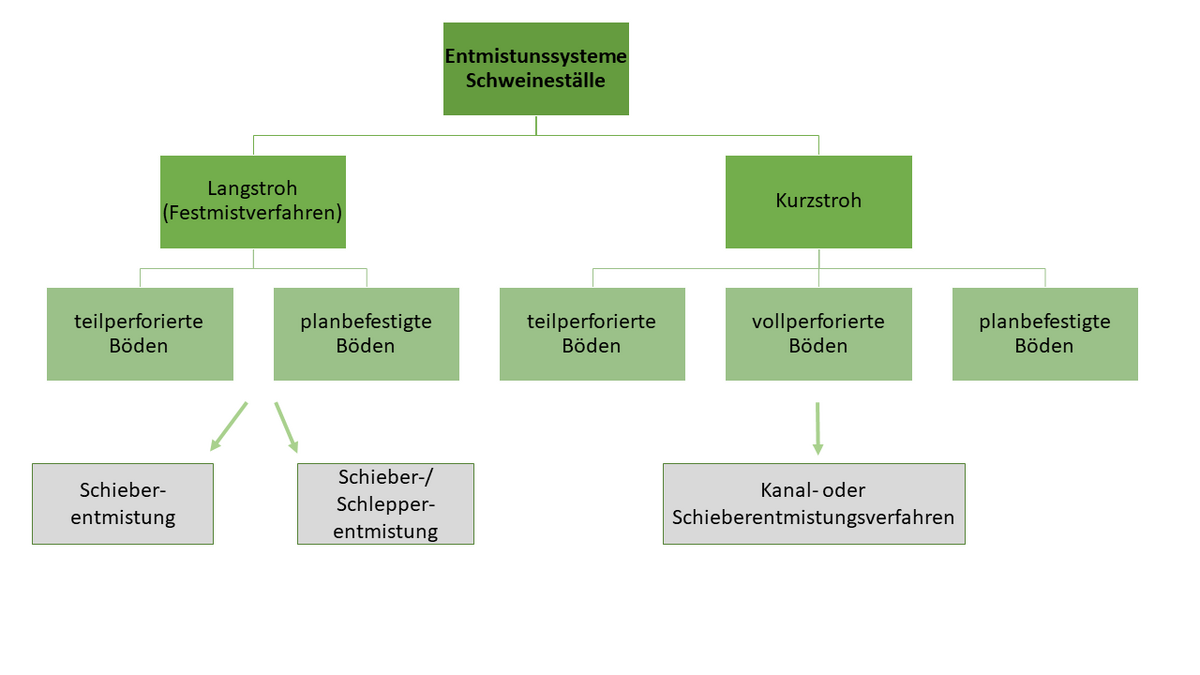
Fig. 9 illustrates which flooring or manure removal systems are best suited depending on straw length. Solid manure systems are recommended for long straw, whilst channel or scraper manure removal systems are recommended for short straw.
(© Netzwerk Fokus Tierwohl, LWK North Rhine-Westphalia)
(© Netzwerk Fokus Tierwohl, LWK North Rhine-Westphalia)
(© Netzwerk Fokus Tierwohl, LWK North Rhine-Westphalia)
Manure storage
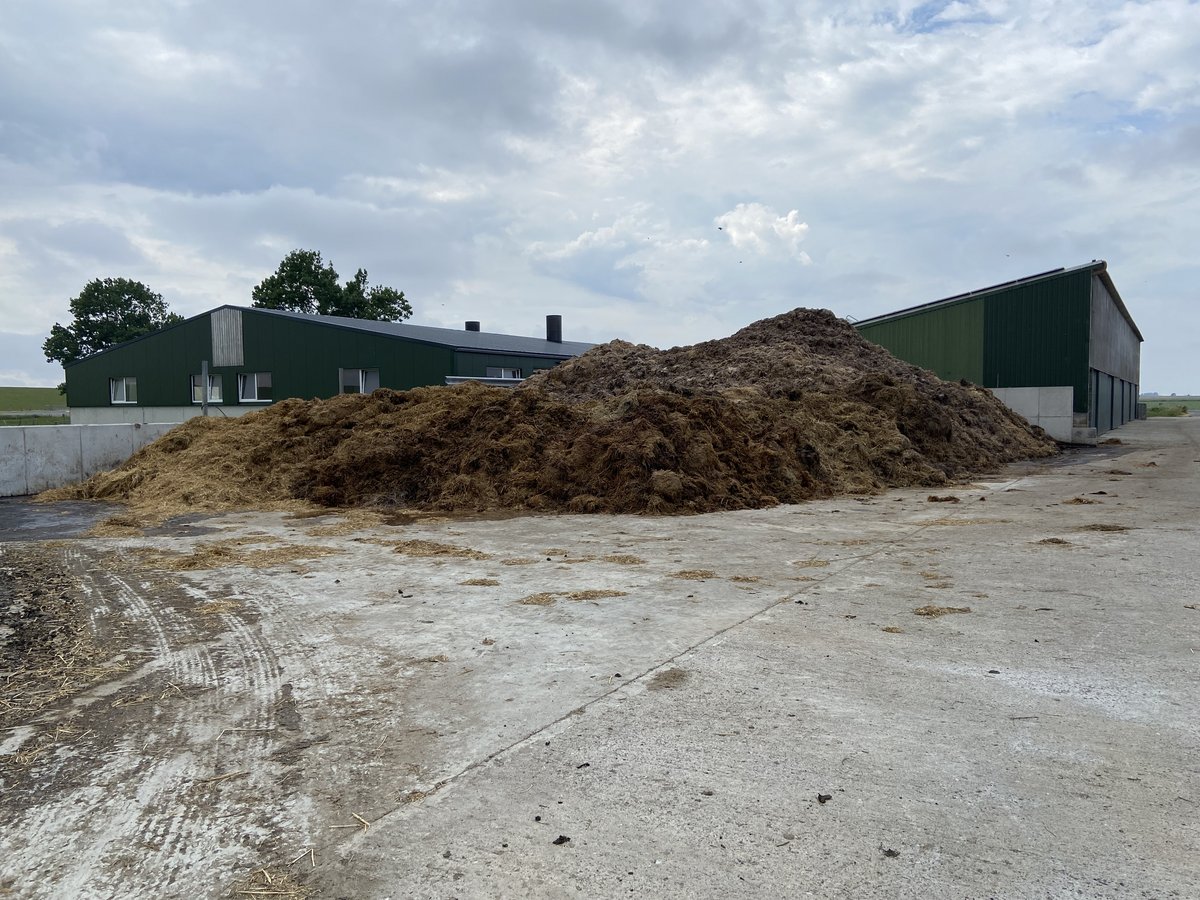
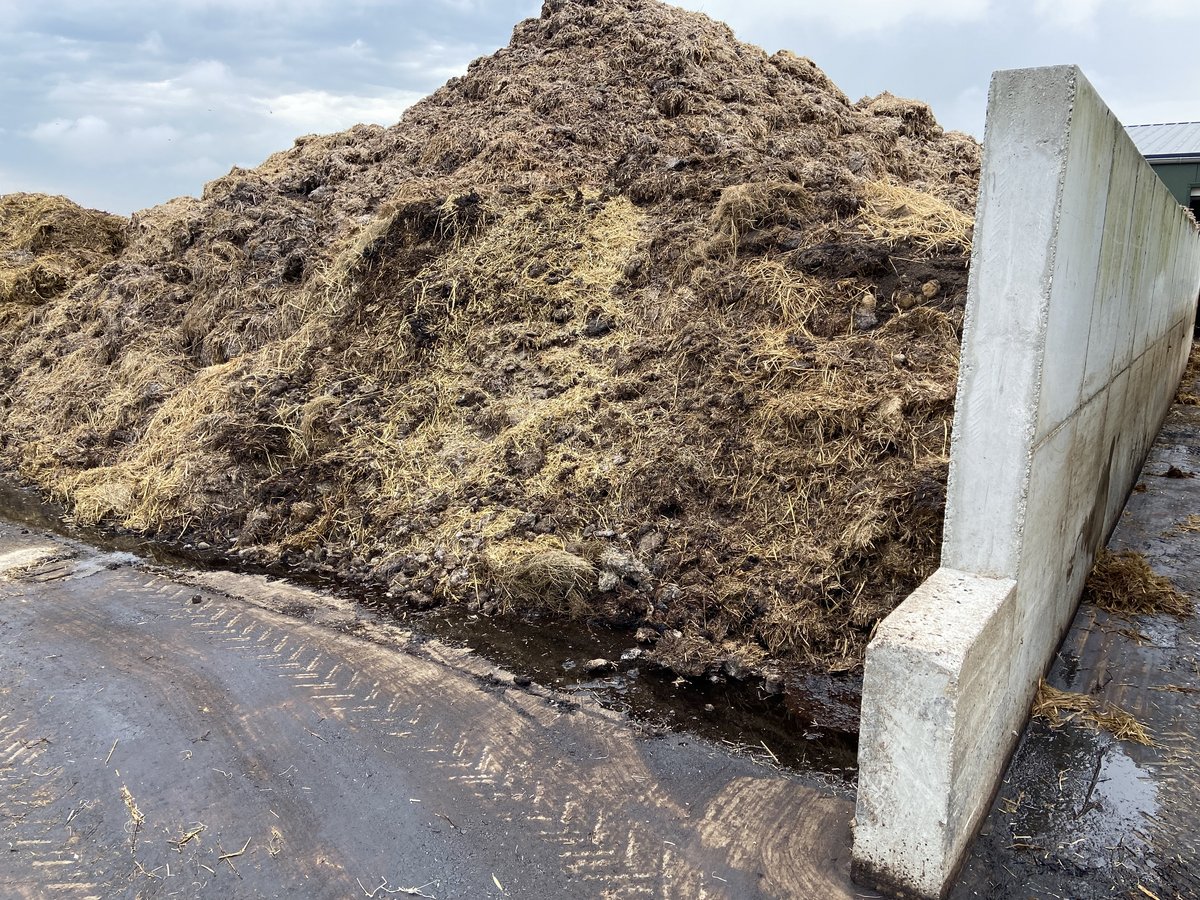
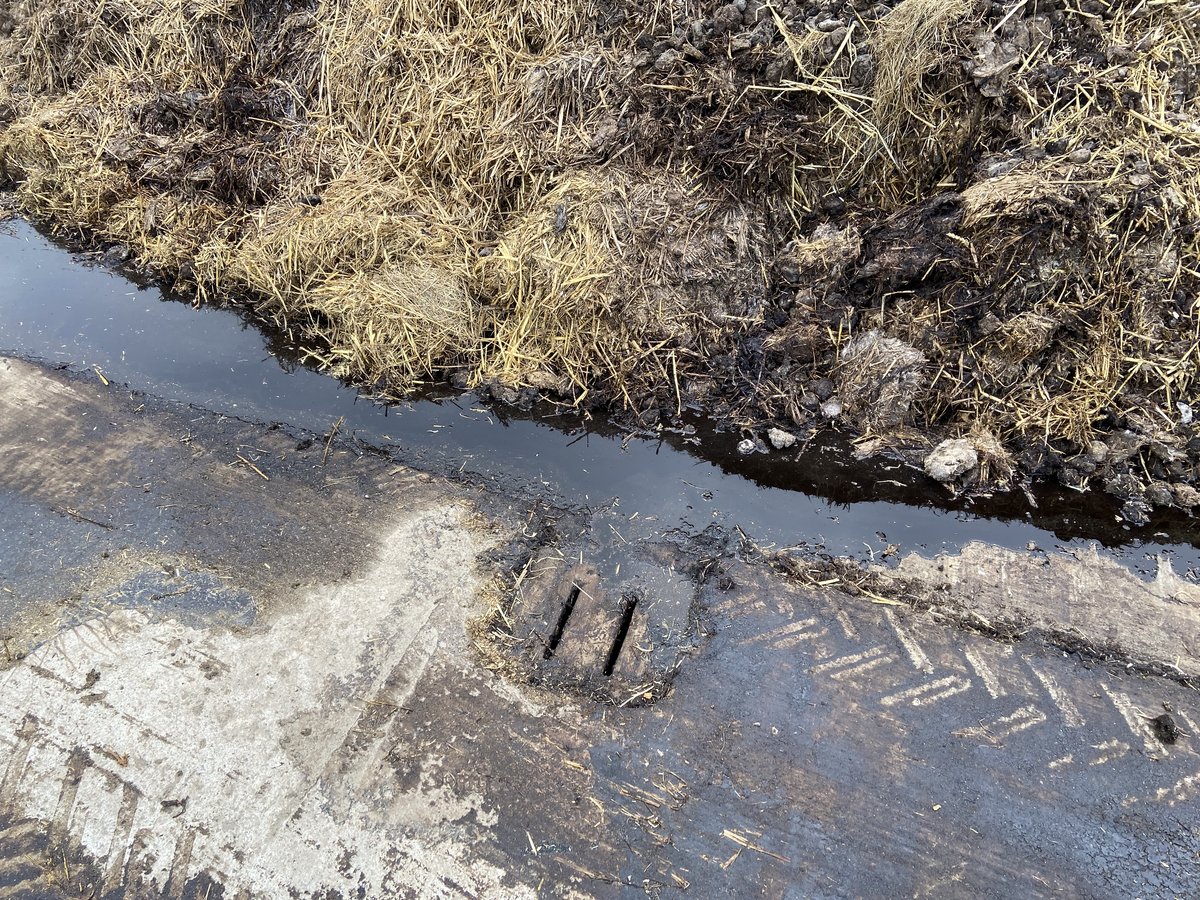
Where straw is used as bedding in barns, manure is produced. The legal requirements for storing this manure are clearly defined. In principle, manure storage areas require planning permission and must be notified to the relevant water authority.11 Manure storage areas, solid manure storage areas and collection pits for slurry are subject to the Ordinance on Installations for the Handling of Substances Hazardous to Water (AwSV). They must be impermeable to liquids and able to withstand chemical, thermal and mechanical stresses.12 Storage capacity for solid manure must be maintained on farms for at least two months. To allow for greater flexibility – for instance, if manure cannot be removed due to weather conditions or disease outbreaks – each farm should provide storage facilities capable of holding six months’ worth of manure (Fig. 10).13 Manure storage facilities with two to three side walls14 at least 20 cm thick and a wall height of 2.5–3 m are suitable, as this creates more storage capacity than without walls (Fig. 11).12 The walls also mean that a smaller overall footprint is required, which results in less rainwater needing to be collected and thus lower costs.12,17 In addition, the walls facilitate the loading of manure for spreading.11 If no walls are present, raised edges at the boundaries of the manure pad or channels sloping down to the pit are required to prevent slurry from flowing into the environment.11 A sufficiently large and paved area should always be provided for manoeuvring and loading. It must be ensured that contaminated water from the manoeuvring area is not discharged into the environment, but is directed into the slurry pit (Fig. 12).14 It must, without exception, be collected and properly disposed of or used as fertiliser.13
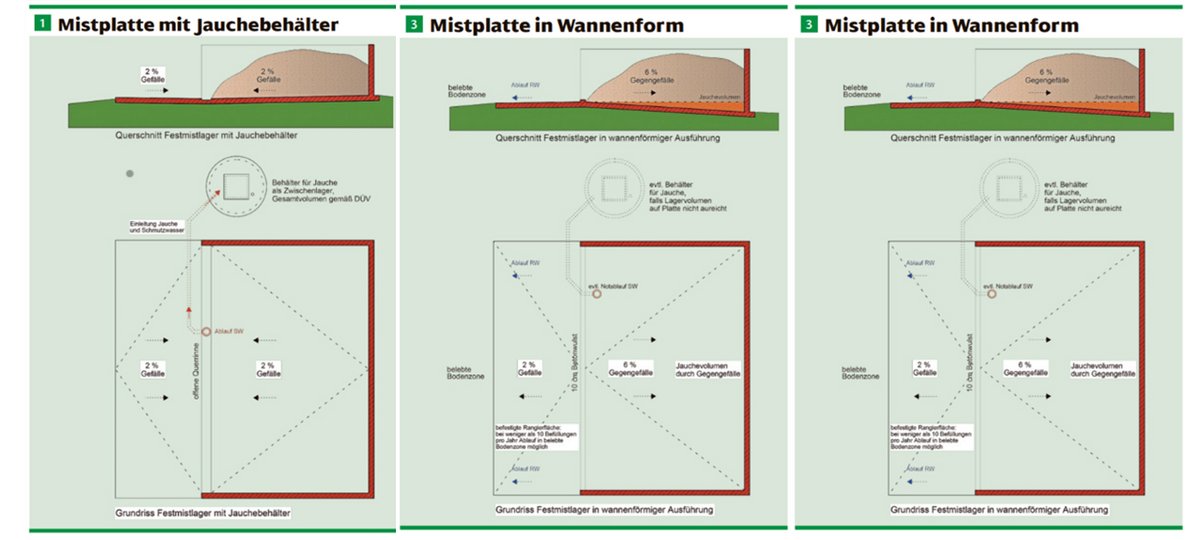
There are three types of solid manure slabs (Fig. 13) and, in addition, the storage of solid manure in occupied stables:
- with a roof
- with a slurry pit
- with a slurry trough
Which of these variants is chosen for a farm must be decided on a farm-by-farm basis or in accordance with the approval practices of the competent authority. For farms authorised under the Federal Immission Control Act, the current administrative regulation TA Luft (December 2021) stipulates a five-year transition period (ending in December 2026) during which slurry tanks and solid manure storage areas must be covered or roofed over.
Manure storage areas with slurry tanks do not have a roof, which is why they require a drainage system through which the slurry is channelled into a separate tank (Fig. 14). A 2% gradient towards the slurry channel helps the liquid to drain into the slurry storage area.12,14 Trough-type channels, which are also frequently used at petrol stations, are suitable for this purpose.14 Care must be taken to ensure that these are always clear so that drainage is guaranteed. A submersible pump can pump slurry from the collection tank into the slurry storage facility. This reduces costs and the required size of the collection tank.14
An advantage of the covered solid manure slab is that no storage capacity needs to be set aside for slurry. A sufficient roof overhang provides adequate protection against driving rain and prevents slurry from leaking out of the manure.12 It is nevertheless advisable to ensure the floor slab has a 2% gradient towards the rear or back wall. A disadvantage of the roofing is that, in the absence of moisture, the decomposition process is slower, meaning the manure cannot be utilised as quickly in crop production.12

(© Netzwerk Fokus Tierwohl, DLG e.V.)
Trough-shaped manure storage pits are generally not covered. A gradient of approximately 6% from the manoeuvring area to the rear end of the trough ensures that the slurry water produced by rainfall is collected in a sort of trough and can be absorbed by the manure.12 This design is particularly suitable for manure with a high dry matter content, which would be difficult to break down without liquids.11 As the manure storage area is situated in the slurry, stricter requirements apply to this type of storage – namely those for slurry tanks.14 According to the Technical Rule for Water-Polluting Substances (TRwS), an evaporation rate of just 15% is specified in this case, which is why more slurry storage space is required than is actually needed.
Provided legal requirements are met, manure storage within the barn is also permitted. Wall and floor surfaces must be impermeable to water.11
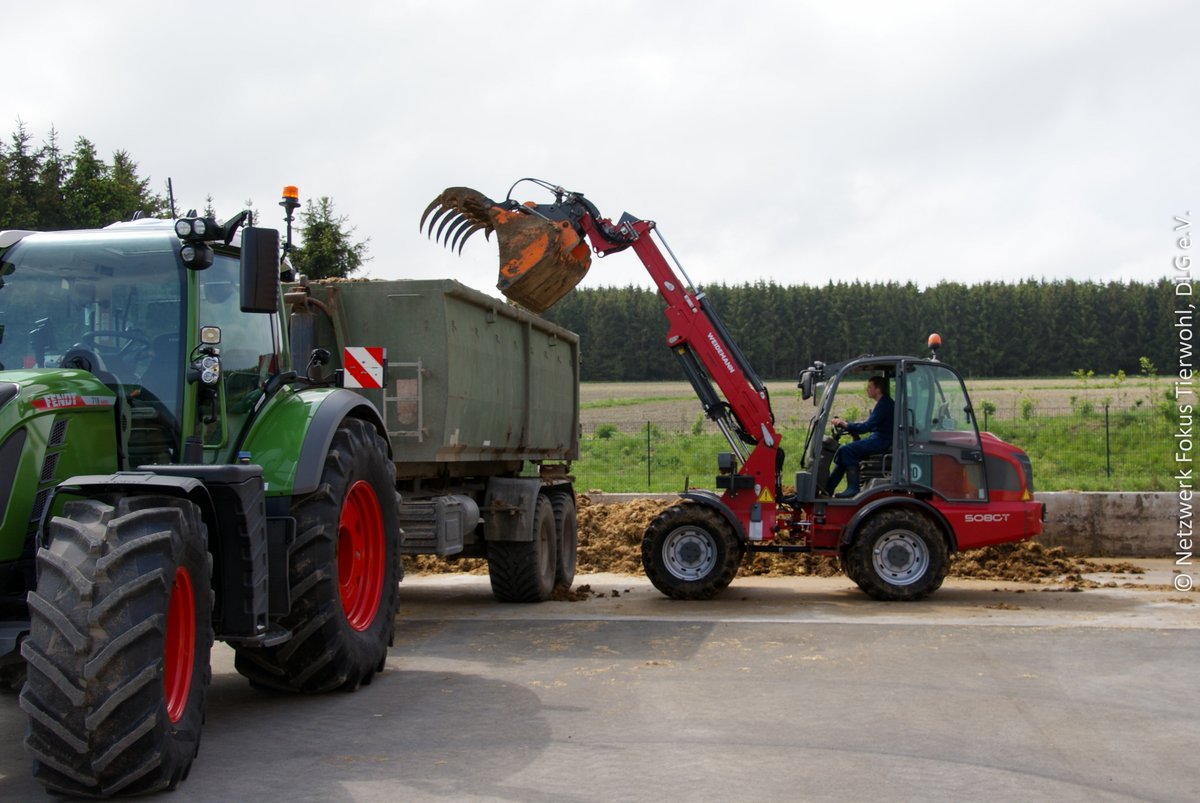
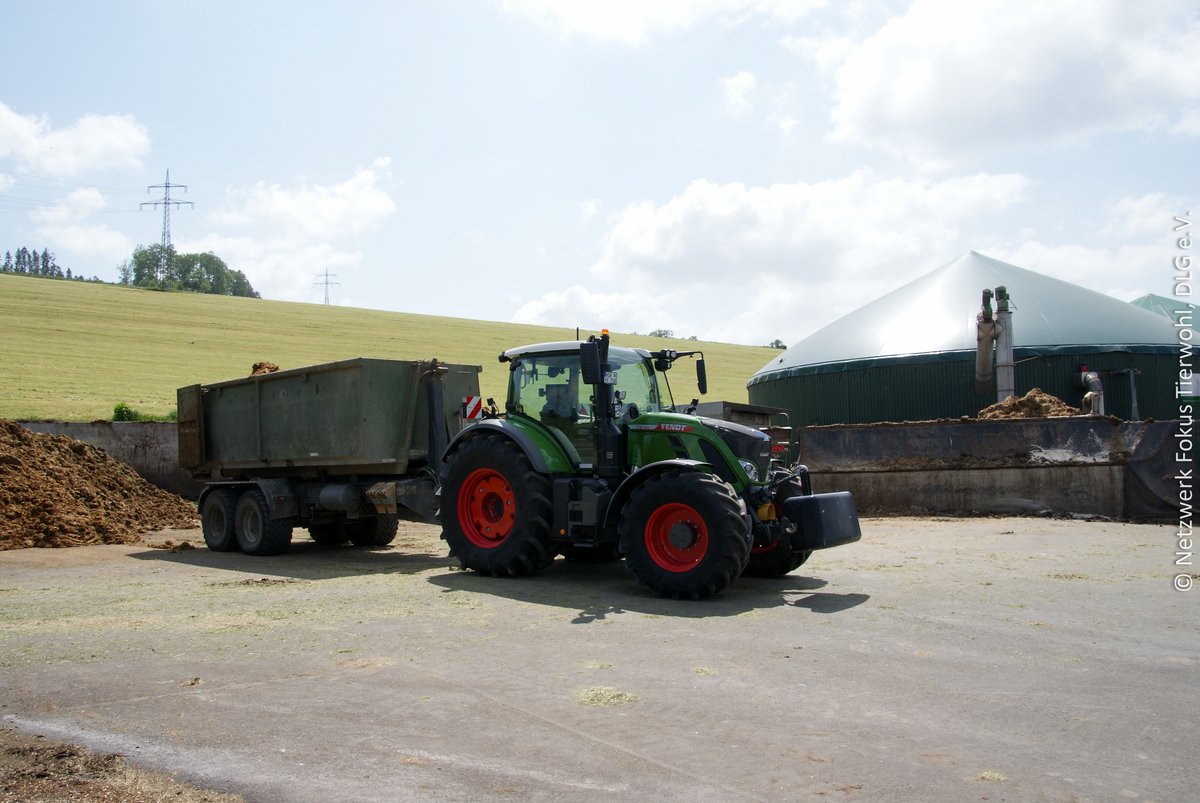
Which manure storage area is suitable for which farm must be decided on a case-by-case basis. It depends on the farmer’s preferences, local conditions and the level of mechanisation on the farm.11 As with the storage of hay and straw, sufficient capacity must be provided for the manure. To reduce the significant construction costs associated with the now generally required covered manure pad, it can be a major advantage if the manure produced can be transferred directly to a biogas plant (Figure 14).
If hay or straw is provided to the animals in small quantities solely as enrichment material, most of the material is consumed and no disposal is required, as no manure is produced.
In exceptional cases where storage on paved surfaces is not possible, the turned manure may be temporarily stored in the open field. A dry matter content of at least 25% prevents the formation of leachate and must therefore be maintained.13 If the dry matter content is less than 25%, storage sites compliant with slurry, liquid manure and leachate treatment systems (JGS systems) are required. Temporary storage is only permitted on agricultural arable and grassland areas, which should be level to prevent leachate from running off.13 The soil must be clayey or loamy. Otherwise, on sandy soils, for example, an under-surface barrier is required, which may consist of a layer of straw or clay minerals.15 If manure heaps in the open field are covered with a waterproof covering, they may remain in place for a maximum of six months. If uncovered, only four weeks. You can find further information on storage in the open field here.
If the manure is to be fed into a biogas plant, it may be placed in containers or trailers on the farm and transported to the biogas plant. Otherwise, no special storage facility is required. It must be borne in mind that the transport of manure is not permitted in the event of an outbreak of disease, and in such cases sufficient storage capacity must be available on the farm. This is regulated by the Swine Fever Ordinance (as of 2020).
If the construction of a new manure storage area is planned, a planner should be consulted who can demonstrate experience in the construction of manure storage facilities. You can also seek support from the agricultural authorities of the federal states when planning manure storage areas. In addition to advising on storage capacity, the experts can also provide guidance on matters such as the required distances from sensitive areas, for example water bodies.
Hay and straw storage

Manure removal techniques
Manure storage

Bibliography
- 1 Osthues, J. (2021a): Straw bedding: indoor or outdoor? www.wochenblatt.com/landwirtschaft/acker-pflanzenbau/strohlager-halle-oder-open-air-12623488.html
- 2 Anders, S. (2012): Storing hay and straw. Between safety and practicality. Pferdebetrieb 6/2012. https://www.brand-feuer.de/images/2/22/Pferdebetrieb_6-12_Heu_und_Stroh_lagern.pdf
- 3 Saxony Agriculture (2014): Storage dimensions and space requirements for roughage and concentrated feed. https://landwirtschaft.sachsen.de/download/Tab_Raumeinheiten_LW_2014.pdf
- 4 Osthues, J. (2021b): Straw storage: Regulations and insurance. www.wochenblatt.com/landwirtschaft/acker-pflanzenbau/strohlagerung-vorschriften-und-versicherung-12623496.html
- 5 LFV Lower Saxony. (n.d.): Preventive fire safety in hay and straw storage. Information sheet. www.brand-feuer.de/images/9/92/Heu_Strohlagerung_LFV_NDS_vb-info5-neu.pdf
- 6 Wiedmann, R. (2010): Cost-effective and labour-saving manure removal technology for flat-floored outdoor runs for fattening pigs.
- 7 Wiedmann, R. (2020): Straw is not a step backwards. Bavarian Agricultural Weekly. www.wochenblatt-dlv.de/feld-stall/tierhaltung/stroh-kein-rueckschritt-562380
- 8 Weber, M. (2013): Underfloor slurry scrapers: the technology is mature. www.topagrar.com/schwein/aus-dem-heft/unterflur-guelleschieber-technik-ist-ausgereift-9672266.html
- 9 KTBL (2022): Eligible technologies for emission reduction in livestock buildings. www.ktbl.de/fileadmin/user_upload/Artikel/Emissionen/Foerderfaehige_Techniken_zur_Emissionsminderung_in_Stallbauten.pdf
- 10 Deter, A. (2016): Trends in manure removal technology for pigs. https://www.topagrar.com/schwein/news/trends-in-der-entmistungstechnik-bei-schweinen-9568314.html
- 11 Hamann-Lahr, S. (2019): The construction of a solid manure slab is now important. LWK Rhineland-Palatinate, Construction and Technology Department. https://www.lwk-rlp.de/fileadmin/lwk-rlp.de/Beratung/BuT/Artikel_Festmist/2019_06_11_Bau_einer_Mistplatte_ist_wichtig.pdf
- 12 Deter, A. (2017): Guide: Storing manure correctly. https://www.topagrar.com/technik/news/ratgeber-mist-richtig-lagern-9359875.html
- 13 Tel, W. (2020): Storing horse manure correctly. https://www.kreis-warendorf.de/fileadmin/publikationen/serviceportal/66/festmist/pferdemist_richtig_lagern_2020_03.pdf
- 14 DVGW & LWK NRW (2018): Guidelines on the storage and application of solid manure. https://www.dvgw.de/medien/dvgw/regional/nrw/pdf/landwirtschaft-wasserwirtschaft/2018_Anhang_4_festmist.pdf
- 15 LAWA Fact Sheet (2019): Water management requirements for the storage of silage and solid manure on agricultural land for periods of less than six months. https://www.lawa.de/documents/lawa-merkblatt-lagerung-festmist-und-silage_1578302310.pdf