
- Dr. Christine Ahlers, Thuringian Animal Disease Fund
- Dr. Theresa Bormann, Federal Association of Rural Goose Farmers
- Michael Claßen, farmer
- Dr. Lea Klambeck, Osnabrück University of Applied Sciences
- Wilhelm Kollmer-Heidkamp, farmer
- Pia Niewind, North Rhine-Westphalia Chamber of Agriculture
- Dr. Stephanie Riederer, German Animal Welfare Association
- Jule Schättler, Lower Saxony Chamber of Agriculture
- Marc-Andre Kruse-Friedrich, DLG e.V.
- Marc Schneeweis, medianet Electronic Communication & Marketing GmbH
- Oliver Sahner, medianet Electronic Communication & Marketing GmbH
Funding note:
This document was produced as part of the collaborative project ‘Netzwerk Fokus Tierwohl’, funding reference numbers 28N-4-013-01 to 28N-4-013-17, by the ‘Waterfowl’ working group of the Poultry Animal Welfare Competence Centre and methodologically and didactically adapted by DLG e.V. and FiBL
Deutschland e.V. The joint project of the Chambers of Agriculture and agricultural institutions across all federal states aims to improve the transfer of knowledge into practice in order to make cattle, pig and poultry farms fit for the future in terms of animal-welfare-friendly, environmentally sound and sustainable livestock farming.
The project is funded by the Federal Ministry of Food and Agriculture pursuant to a resolution of the German Bundestag.
All information and advice is provided without any warranty or liability.
Publisher
DLG e.V. Agricultural
Centre
Eschborner Landstraße 122
60489 Frankfurt am Main
FiBL Deutschland e.V. Animal Welfare
Division
Kasseler Straße 1a
60486 Frankfurt am Main
Reproduction and transmission of individual text sections, drawings or images (including for the purpose of lesson planning), as well as the provision of the information sheet in whole or in part for viewing or downloading by third parties, is permitted only with the prior approval of the relevant office of the Animal Welfare Competence Centre and DLG e.V., Marketing Department, Tel. +49 69 24788-209, [email protected]
Foreword
The guide was produced as part of the ‘Fokus Tierwohl’ network. The ‘Fokus Tierwohl’ project is funded by the Federal Ministry of Food and Agriculture (BMEL) as part of the Federal Livestock Farming Programme. It is a joint project involving the Chambers of Agriculture and agricultural institutions from all federal states, with the aim of improving the transfer of knowledge into practice in order to make pig, poultry and cattle farms fit for the future in terms of animal-welfare-friendly, environmentally sound and sustainable livestock farming. For the first time, this network brings together specialist knowledge, organises the exchange of experience between practitioners, scientists, advisers and other groups, and thereby facilitates and promotes knowledge-sharing within the sector.
1 For the sake of readability, the masculine form is used when referring to people in this guide. In the spirit of equal treatment, the corresponding terms apply to all genders. The use of the masculine form is purely for editorial reasons and does not imply any judgement.
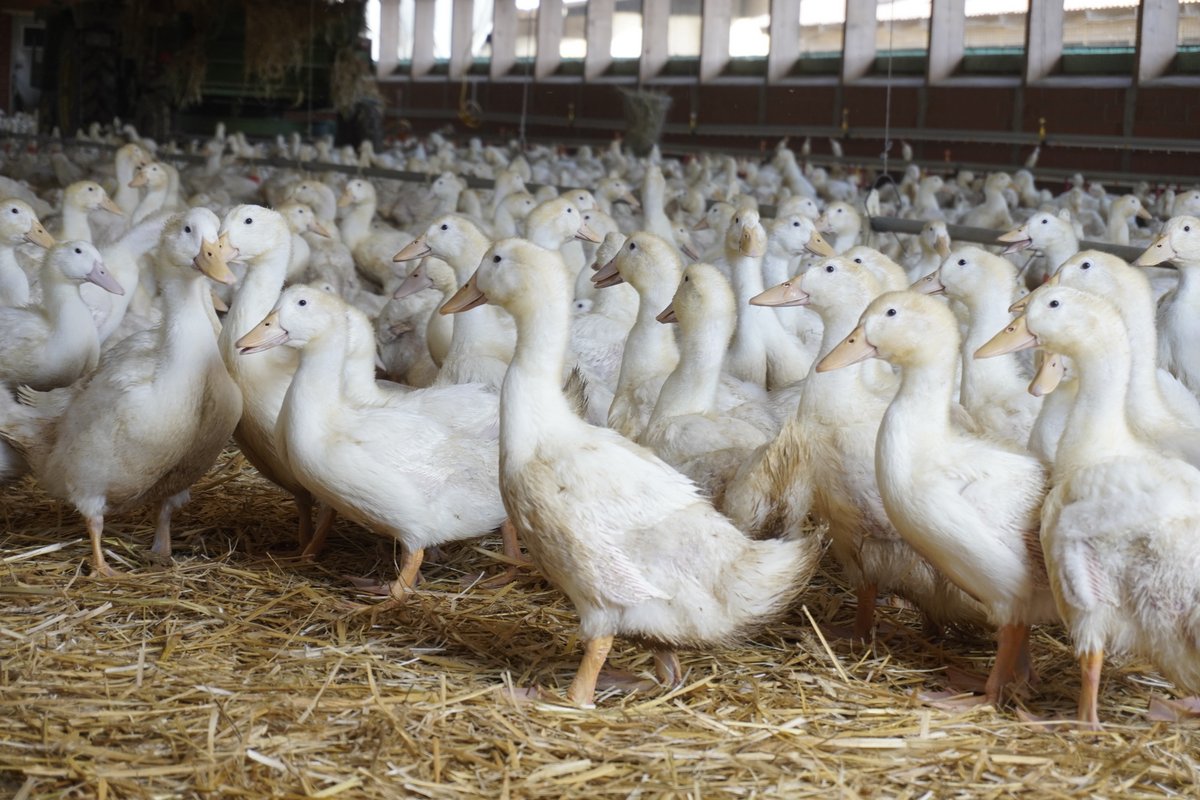
(© Regine Revermann, LWK Lower Saxony)
Introduction
In order to comply with the requirements of the Animal Welfare Act (TierSchG) regarding the rearing of Peking ducks, the Council of Europe’s recommendations on Peking ducks are taken into account alongside the general provisions of the Animal Welfare and Livestock Management Ordinance (TierSchNutztV). There are currently no further binding specific legal regulations in Germany.
To put the Council of Europe’s recommendations into practice, an agreement has been reached in Lower Saxony that specifies the husbandry requirements for Peking ducks.
The so-called ‘Peking Duck Agreement’ is an agreement between the Lower Saxony Ministry of Food, Agriculture and Consumer Protection (ML) and the Lower Saxony Poultry Industry Association (NGW) on the further development of minimum requirements for the rearing of Peking ducks. It is also used as a guide in other federal states outside Lower Saxony.
Under this agreement, livestock keepers undertake to comply with the minimum requirements for Peking duck husbandry set out therein. These apply to flocks of 500 Peking ducks or more and cover both rearing and fattening.
In accordance with Section 2(3) of the Animal Welfare Act (TierSchG), the animal keeper must possess the relevant knowledge and skills to ensure the animals are fed, cared for and housed in a manner appropriate to their behaviour, and must provide evidence of this expertise to the competent authority upon request.
According to the Peking Duck Agreement, the following are accepted as proof of expertise
- a successfully completed training course as a farmer or livestock manager, with specific focus on poultry farming (e.g. ‘Inter-farm training in poultry farming’ at the Ruthe Teaching and Research Farm of the University of Veterinary Medicine Hannover Foundation) or
- a successfully completed degree in agricultural sciences or veterinary medicine, or
-
the rearing of Peking fattening ducks for at least one year or eight fattening cycles without any animal welfare objections from the competent authority, involving no fewer than 500 Peking ducks and a veterinary herd management contract.
In cases of doubt regarding expertise in individual cases, the competent authority may require proof of such expertise during a technical consultation. This document is intended to impart expertise in the field of Peking duck husbandry. It may be used as part of inter-farm training or for self-study, e.g. as preparation for the aforementioned technical consultation.
Behaviour of Peking ducks
The natural and species-specific behaviour of Peking ducks has hardly changed despite domestication and intensive selective breeding.
However, changes have occurred in their ability to fly, the dissolution of pair bonds, a partial loss of breeding ability, and a reduction in aggression and flight behaviour towards humans.
The Peking duck is descended from the mallard (Anas platyrhynchos). Unlike the Muscovy duck (Cairina moschata), it shows a high degree of adaptation to aquatic life in terms of physique and behaviour. Muscovy ducks, on the other hand, rest in elevated positions such as on trees and tend to make less use of bathing opportunities. A clear distinction must therefore be made between the two species in terms of their behaviour and their requirements for the rearing environment.
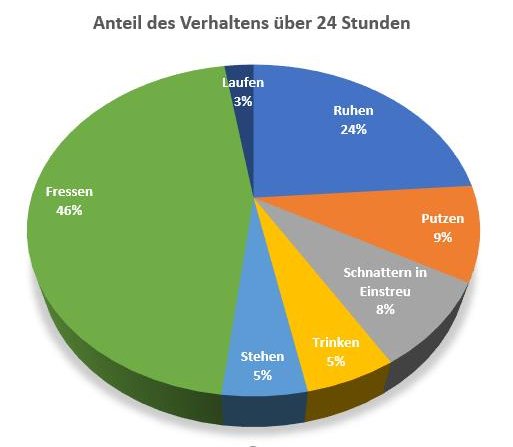
Fig. 2 shows the distribution of the animals’ behaviour throughout the day. Resting and preening take up most of their time. The animals are also active at night, but their main periods of activity are at dawn and dusk. The Peking duck thus differs fundamentally in behaviour from the chicken.
Functional group vs. functional area
- Functional circuit: A behavioural system organised according to functional, goal-oriented principles, involving corresponding coordination of movement
- Functional area: The spatial area of the postural system in which one (or more) functional circuits are performed
The following section discusses the behaviour of the wild type. Any deviations or distinctive features resulting from modern methods of rearing Peking ducks are also noted.
The reproductive behaviour of Peking ducks will not be discussed in detail, as in Peking duck fattening the birds are slaughtered before reaching sexual maturity.
Their movement patterns are largely linked to their feeding habits. Peking ducks can cover considerable distances on foot at a leisurely pace. Over short distances, they can run quickly and even hop onto low objects. On average, they reach running speeds of 0.3–0.6 m per second. With their short legs set far back on their bodies, they shift their centre of gravity alternately onto whichever leg is bearing the weight, moving their heads sideways in sync with this movement. This results in their characteristic waddling gait.
Feed intake
Peking ducks have a long, flat beak that is approximately 7 cm long and 2.7 cm wide. To help them feed, their beaks are equipped with lateral horn-like ridges, which enable them to pluck hard grasses and filter the finest food particles from the water.
Ducks employ various techniques for feeding. These include, amongst others, sifting, dabbling and pecking.
Sifting can be classified as an indirect form of drinking within feeding behaviour. The food is filtered from the water flowing past the sides of the beak with the help of the lamellae, transported further into the beak, collected in the upper part and swallowed.
Dredging is another frequently observed feeding technique, in which the head and neck are submerged in shallow water and food is taken from the bottom of the water.
- Drinking from nipple drinkers does not correspond to ducks’ natural behaviour, but it does offer hygienic advantages.
- With their necks and heads stretched out, the ducks nibble at the drinking nipple with their beaks open and swallow the water that flows out.
- Open drinkers or bathing facilities, where the animals can dip their heads or display bathing behaviour, pose a hygiene risk if they are not kept sufficiently clean.
Grooming behaviour refers to the wide range of behaviours that contribute to the cleaning and maintenance of the plumage, as well as to thermoregulation, and enhance the animals’ well-being. Plumage maintenance, or preening, takes place both on land and in the water.
Typical aspects of body and plumage care include:
Grooming with drinking/bathing water
- Bathing several times a day is part of ducks’ comfort behaviour.
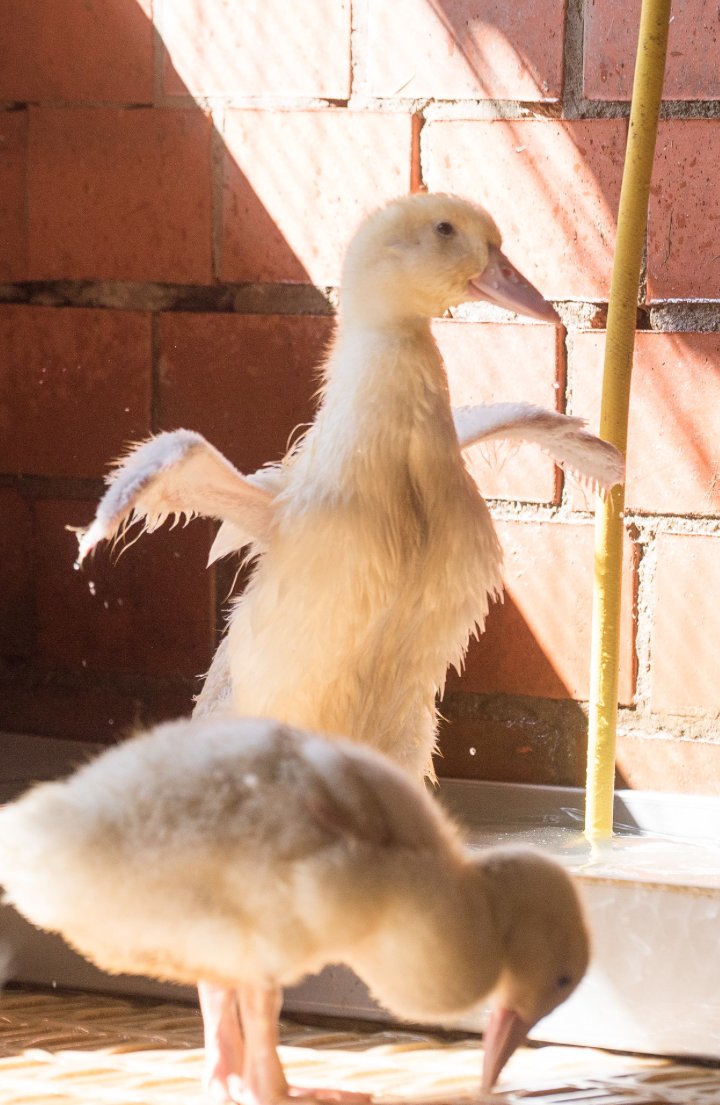
- Ducks wet their plumage by quickly submerging their head and neck and then jerking upright. The feathers are then smoothed and arranged with the beak and greased with the secretion from the uropygial gland.
- This species-specific behaviour is described by Knierim et al. (2004) as follows:
“The duck is on a body of water and begins bathing by shaking its tail rapidly. It then submerges its head up to its eyes in the water, stands up and lets water run over its body, shaking its body and raised wings. This movement is performed several times in quick succession. Afterwards, extensive plumage grooming is carried out on land using the beak.”
Beak washing
- By submerging its head in the water, the duck cleans its beak, nostrils and eyes.
- The birds dip their beaks into the water and blow water through their nostrils.
Grooming movements
- Feather preening is preferably carried out after bathing and in combination with greasing via the uropygial gland. The ducks smooth their beaks, necks, the sides of their heads and throats over entire areas of feathers or work on individual feathers.
- Wing flapping, shaking of the body and head, scratching and stretching of the legs can also be observed.

In the wild, ducks rest and sleep either sheltered on land or floating on the water. They rest and sleep after every meal. To do this, they tuck their heads into their shoulder feathers or pull their necks towards their backs and rest their beaks on their chests. They rest together in groups (synchronisation).
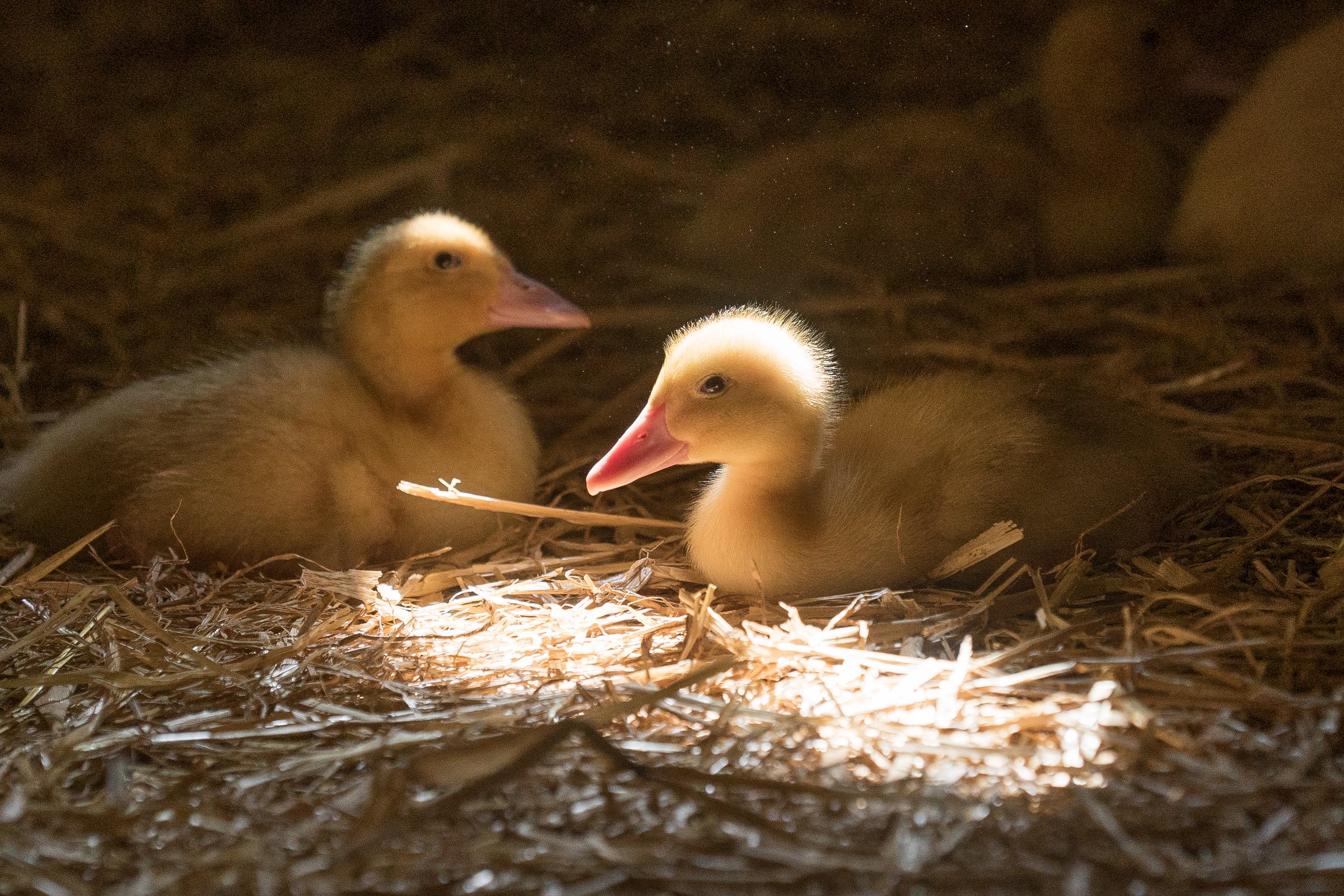
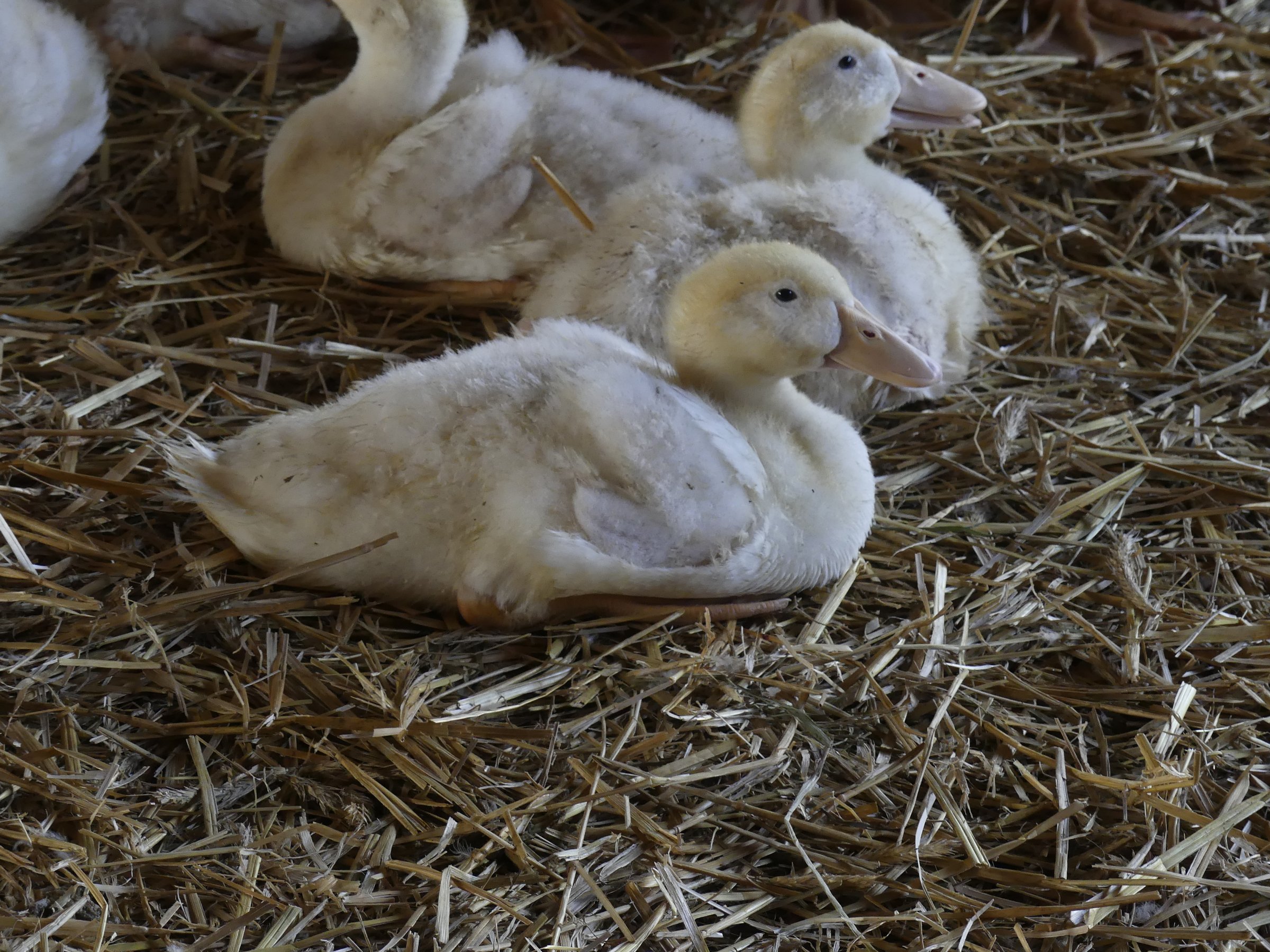
Social behaviour refers to all behaviours that serve to facilitate communication between animals. In the wild, ducks form loose social groups without a hierarchy. The birds rest and feed together in groups. From the third day onwards, the birds recognise one another in small groups; however, in larger groups they are unable to recognise individual birds. Ducklings have a tendency to run towards or after moving objects. Through this innate behaviour, a bond develops with the mother and siblings. In modern Peking duck husbandry, the birds are imprinted on the person responsible for their care.
Animal care and welfare: the responsibilities of pet owners
The animal owner or carer must check on the animals’ welfare at least twice a day by direct visual inspection.
Furthermore, the animal caretaker must also check all housing and care facilities daily to ensure they are in good working order (see TierSchNutztV § 4 General requirements for monitoring, feeding and care).
In order to develop a positive relationship between humans and animals, contact with the animal must take place frequently and in a calm manner, right from the very first days of life.
Animal-friendly management of the herd
When carrying out any work in the shed, the ducks must be handled calmly to prevent them from being startled when approached and to avoid causing unnecessary agitation within the flock:
- Avoid abrupt, hasty movements
- No prolonged or sudden loud noises
- No sudden, intense light
The ducks should be gently accustomed to the regular performance of certain tasks.
- The herding of the ducks must always be carried out calmly and slowly. Any obstacles that could injure the ducks should be removed beforehand.
- The smaller the group and the calmer the herding process, the less agitated the ducks will be and the lower the risk of them trampling over one another and causing scratch wounds, which could lead to the carcasses being rejected at slaughter.
Before entering the shed, the ducks should be ‘warned’ by knocking on the door or speaking to them. The ducks can be accustomed to your own voice.
No hasty attempts to catch individual ducks from the flock should be made. If individual birds need to be removed from the flock (e.g. for weighing), this should be done from a small group that has previously been separated from the flock using herding boards.
Before (mechanical) bedding is applied, preliminary animal checks ensure that there are no animals unable to walk in the shed. Mechanical bedding should always be carried out in the same manner at a slow driving speed (e.g. always clockwise) so as not to disrupt the animals’ routine.
The animals should be accustomed to the relevant machinery from the start of rearing.
Animal-friendly treatment of individual animals
Ducks must not be caught or lifted by their legs or a wing, in order to prevent injury, particularly to the feet.
“It is prohibited to drag or pull animals by the head, ears, horns, legs, tail or fur, or to treat them in such a way as to cause them unnecessary pain or suffering” (see Regulation (EC) No 1/2005, Annex 1, Chapter III, No 1.8(d)).
To handle individual animals or when an animal needs to be carried, the duck is lifted with both hands. To carry it, one hand is placed under the body and the other around the body to keep the wings in a closed position. Alternatively, both hands can be placed around the body, simultaneously securing both wings.
Ducks must not be carried suspended with their heads down.
Injured, sick or suffering animals, whose continued presence in the flock would cause avoidable suffering, must be immediately separated from the flock for treatment in a isolation pen (ensure unrestricted access to water and feed!) or humanely euthanised.
- Dead ducks must be removed from the shed immediately and stored in carcass containers in an appropriate manner and as cool as possible, and disposed of properly.
The rearing and fattening phases for Peking ducks take place in different sheds or production facilities, as the birds have different requirements in terms of housing conditions, such as temperature and feed. This also allows for more efficient use of shed space and enables two age groups to be kept on the same farm at the same time.
Peking ducks are currently kept predominantly in enclosed housing systems. If external conditions (e.g. suitable outdoor run area, current disease situation) permit, free-range rearing or rearing of the birds with access to an outdoor run—which should be predominantly covered with vegetation—is also possible from a certain age (usually after the first moulting of the young birds). However, this places additional demands on husbandry management.
The fattening of Peking ducks currently takes a total of approx. 38–42 days under conventional conditions. The rearing phase lasts approx. 16–21 days of this period. This also depends on the farm-specific mating interval. In organic farming, the birds are fattened for at least 49 days. In Peking duck fattening, both sexes are kept together.
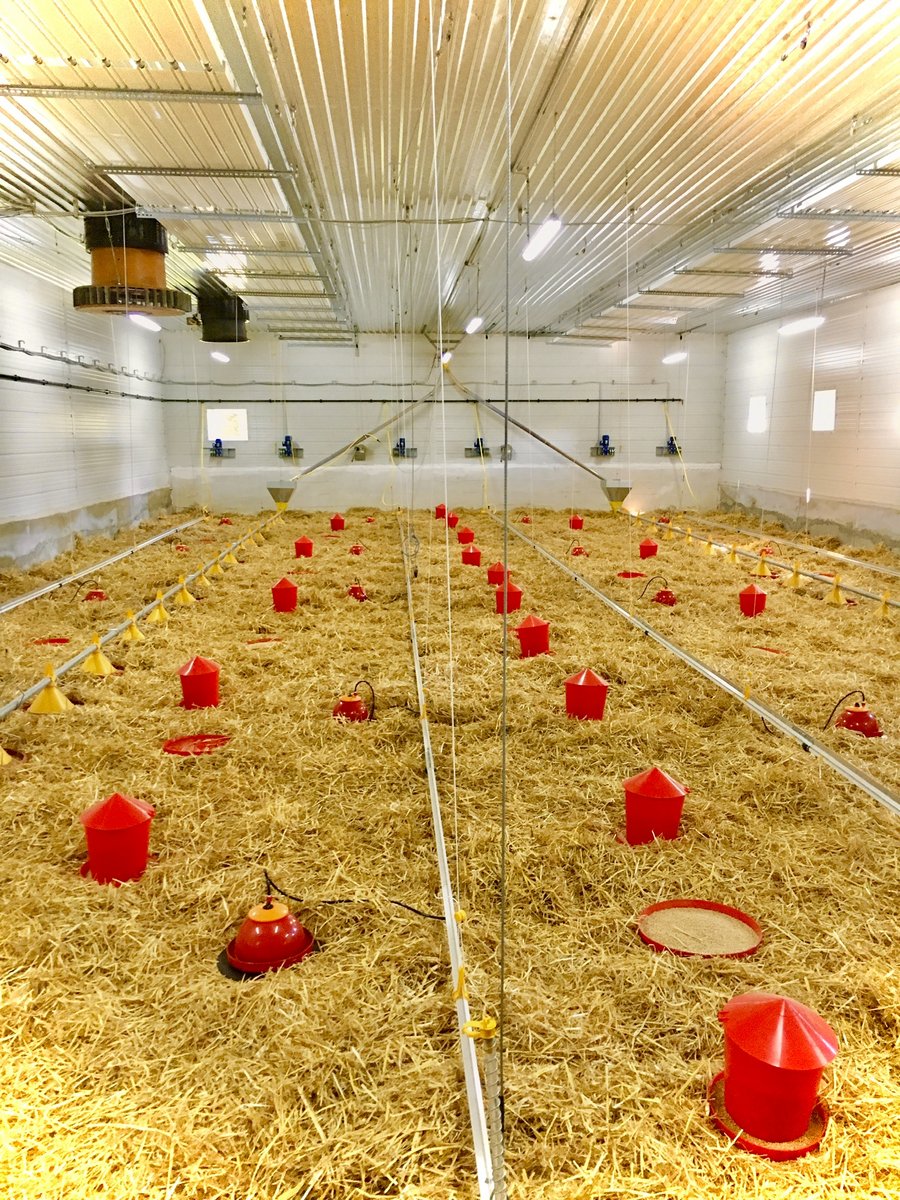
(© Wilhelm Kollmer-Heidkamp)
Preparing the stable
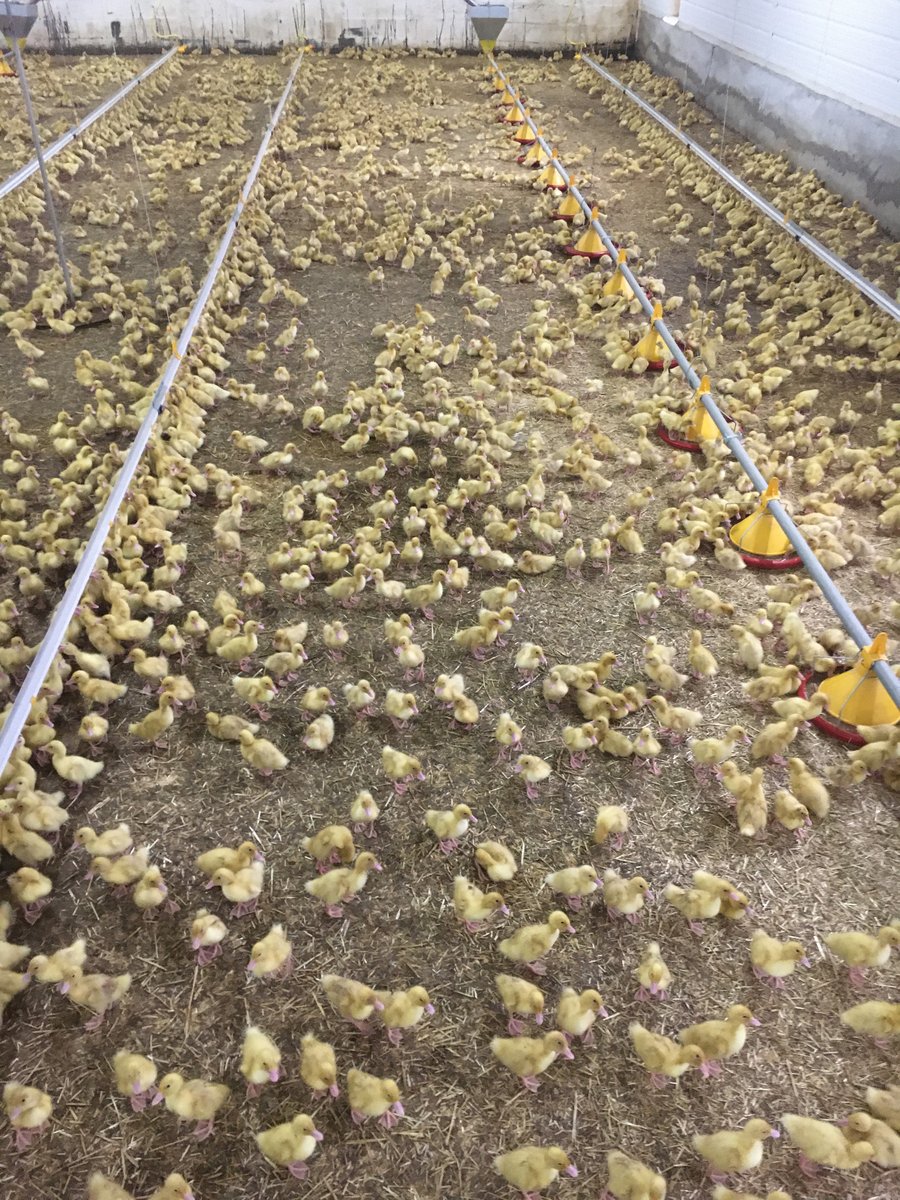
The cleaned and disinfected rearing shed is heated to a temperature of 30–32 °C before the chicks are brought in. At least two to three days should be allowed for this. Care must be taken to ensure that the floor and the walls of the shed are also preheated. If gas radiant heaters are used, the temperature beneath them should be approximately 33 °C and in the rest of the house approximately 28 °C, to ensure an adequate supply of heat for the chicks during the first few days. This allows the chicks to choose the temperature range in which they wish to stay.
The functionality of the feeding and watering equipment is checked. The drinker is rinsed beforehand. In the first few days, additional dip drinkers and feed trays are also set up.
Straw, preferably chopped, is used as bedding. The required initial bedding quantity is approximately 1.5–2.0 kg/m². The straw must be clean and hygienically sound. Wood shavings may also be used.
The total straw requirement for the entire cycle is approximately 2.5–3.0 kg per animal.
Settling in the chicks
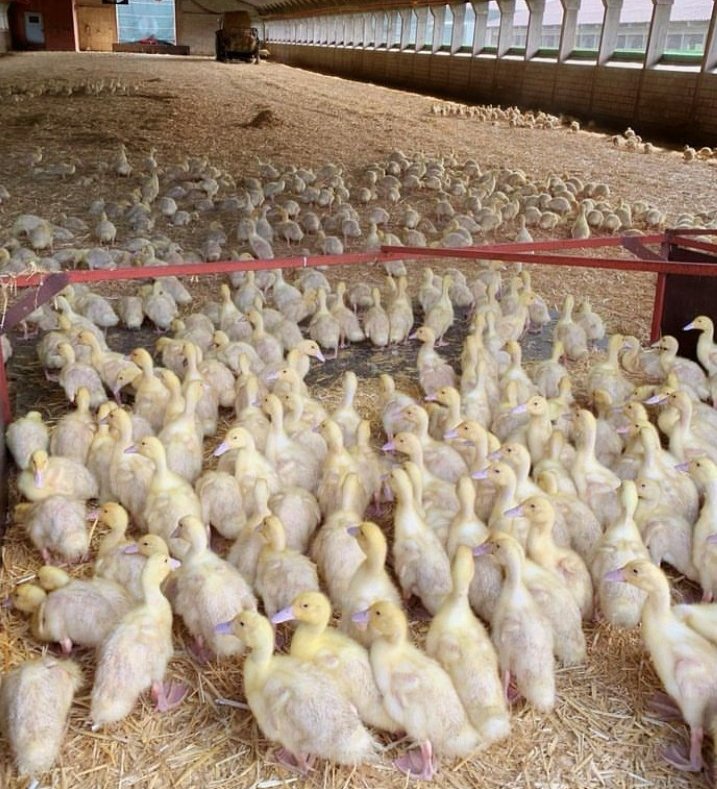
The animals arrive at the farm as day-old chicks from the hatchery in special transport crates. They should then be placed in the house quickly, but calmly.
Even whilst being housed, the animals can be encouraged by acoustic signals (e.g. the voice of the person in charge) to spread out as quickly as possible throughout the entire house. Ducklings are sensitive to sounds and will follow the voice of the person in charge. This also ensures that they find water and feed quickly.
Moving the animals to a new pen
In the two-phase fattening system, the animals are moved to the larger fattening shed after the rearing phase (around 16–21 days of age). Depending on the farm’s facilities, the animals can be driven directly from the rearing shed to the nearby fattening shed, or they can be moved (in groups) using a trailer. From this point onwards, the animals also have access to an additional water supply.
Stable temperature
The temperature should be 30–32 °C for the first three days (33 °C under heat lamps). The temperature is always measured at the animals’ height. As rearing progresses, the temperature can be reduced by 1 or 2 °C every day or every other day to prepare the animals for the conditions in the fattening house.
When setting the temperature, it is essential to pay close attention to the animals’ behaviour and their distribution, and to make adjustments at an early stage if necessary (see Chapter 5 – Abnormalities in animal distribution across the usable area).
Temperature fluctuations of 2.5–3 °C within a single day should not be exceeded during the first week of life, as the animals are not yet able to regulate their body temperature independently. Only after their first moult do the feathered ducks no longer have higher thermal requirements of their environment.
Guidance on managing heat stress during the warm summer months can be found in Chapter 5 – Heat Stress.
Ventilation/Harmful gases
Peking ducks are usually kept in open-sided sheds. However, air velocities exceeding 0.3 m/s at animal height should not be exceeded.
In forced-ventilation houses, the minimum air flow rate should be 4.5 m³/kg live weight/hour to ensure an adequate ventilation rate in summer.
The maximum concentrations of harmful gases are shown in the table below and should not be exceeded (Peking Duck Agreement, 2015):
| Harmful gas | Max. concentration per m³ of air |
| Ammonia | <10 ppm, not exceeding 20 ppm on a continuous basis |
| CO₂ | <3,000 ppm |
In summer, oscillating fans must be provided to ensure adequate ventilation (see Peking Duck Agreement).
Lighting
Lighting in the barn should be uniform throughout. For new builds and conversions, natural light covering 3% of the barn’s floor area should be factored in. The lighting schedule may vary during the acclimatisation period in the first three days. The light must be flicker-free and should resemble natural daylight as closely as possible.
The light cycle during the first three days at most may be extended to 24 hours to allow the animals to become accustomed to feeding and watering facilities. Thereafter, a day/night rhythm as close to natural as possible should be maintained, and a continuous dark phase of at least 8 hours must be ensured, provided that there is a deviation from the natural, seasonally varying dark phases. Appropriate dimming phases should be implemented prior to the change in lighting.
Emergency lighting of a maximum of 2 lux can serve as a guide at night.
Water
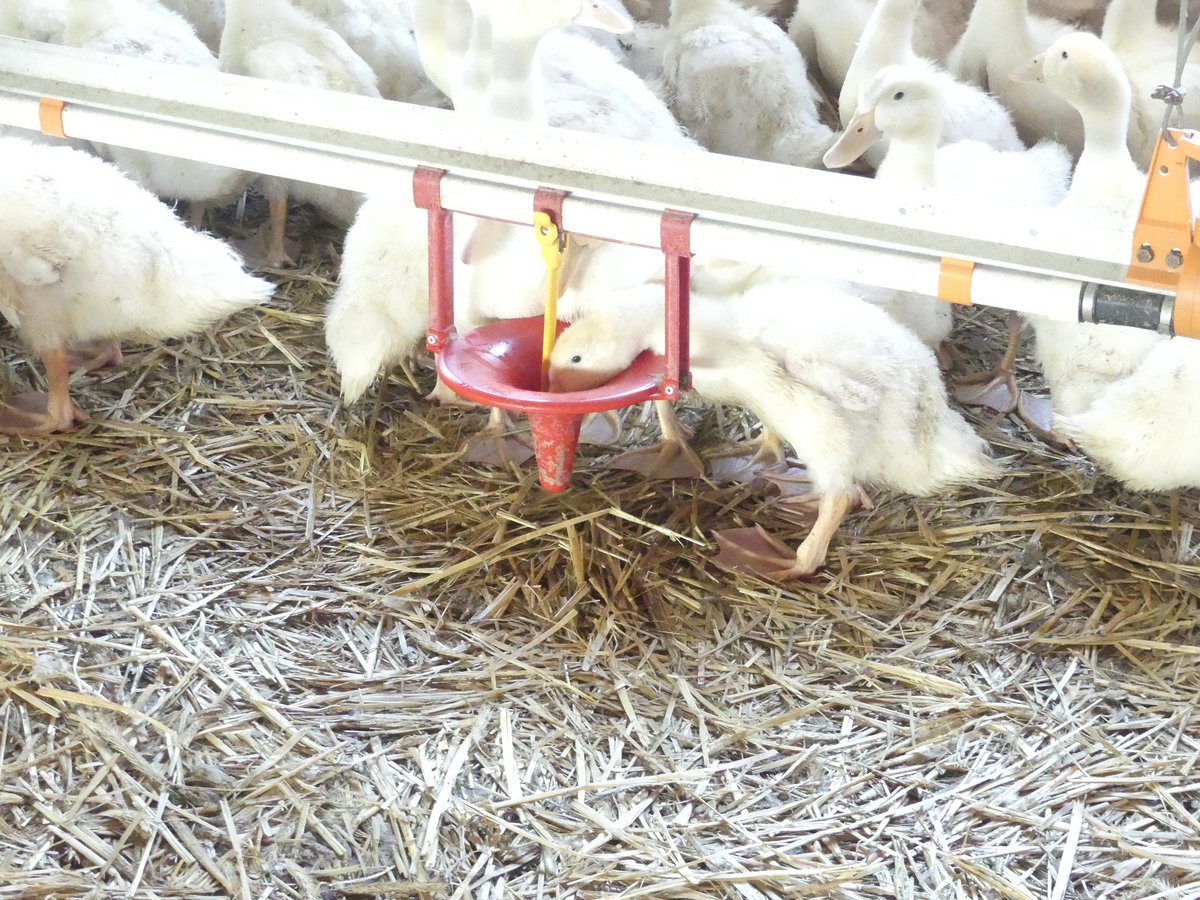
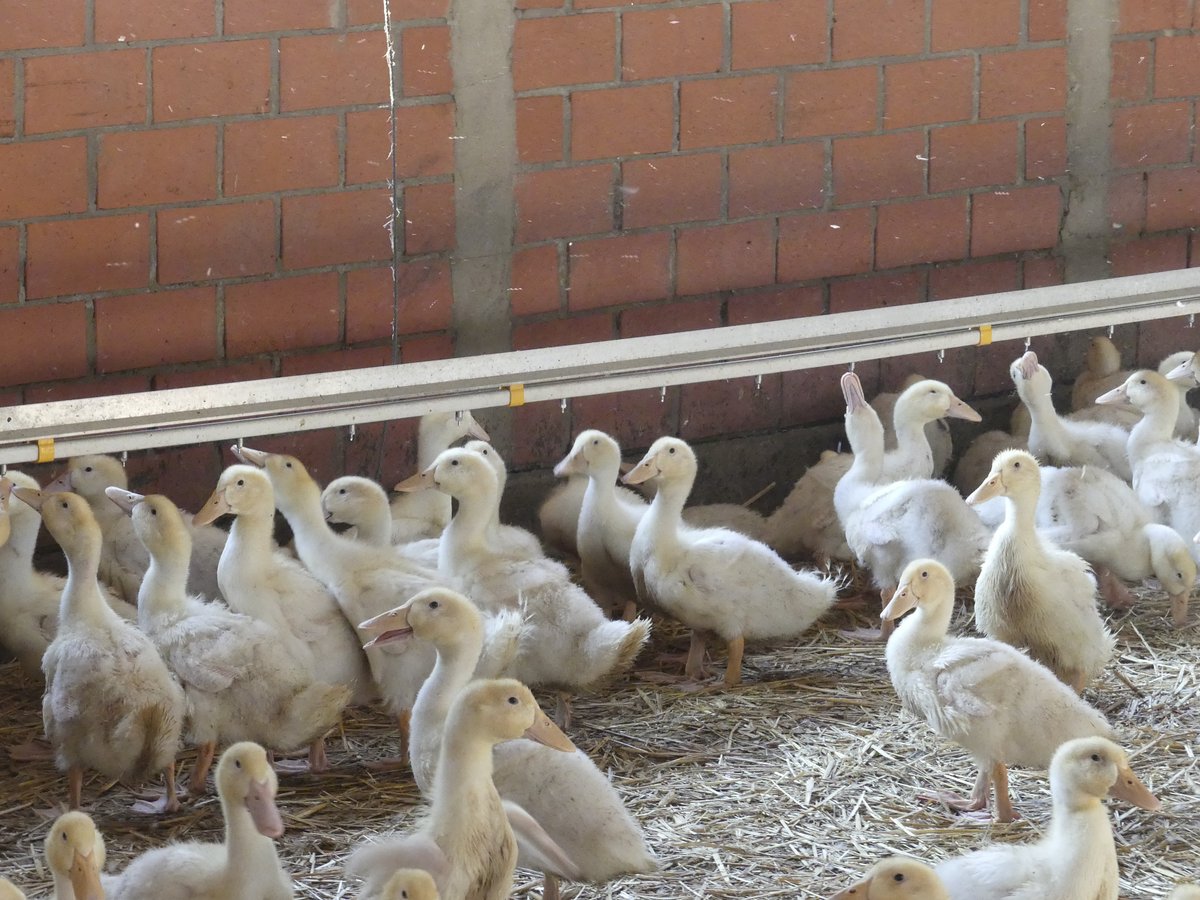
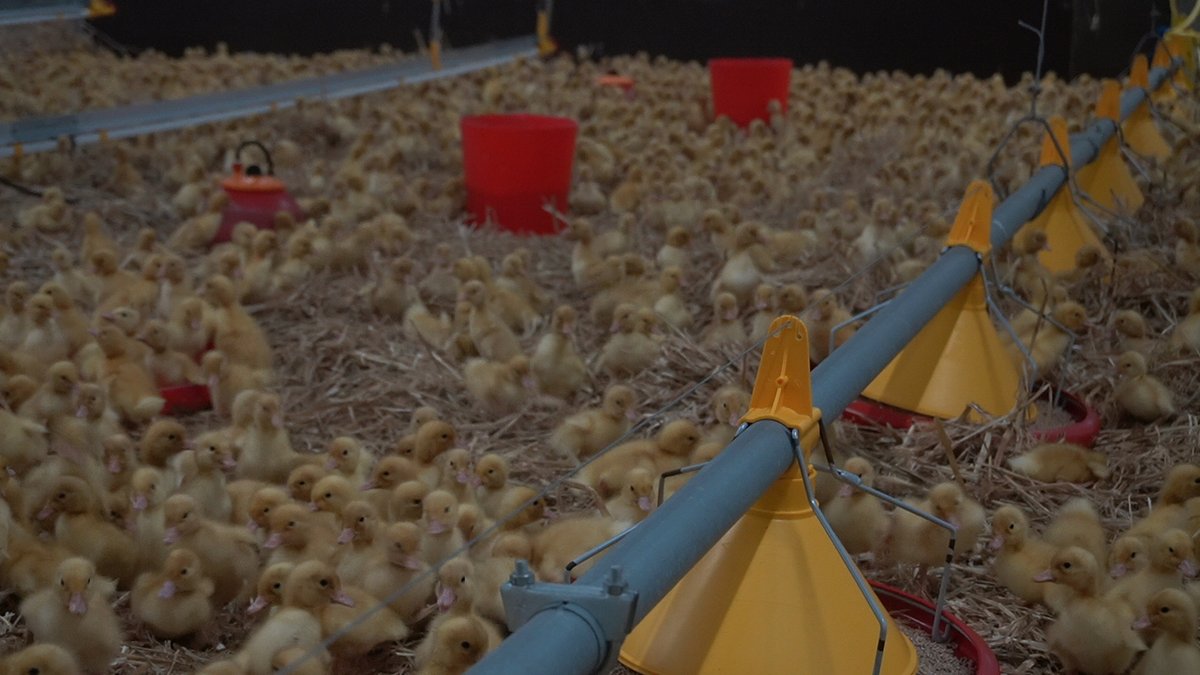
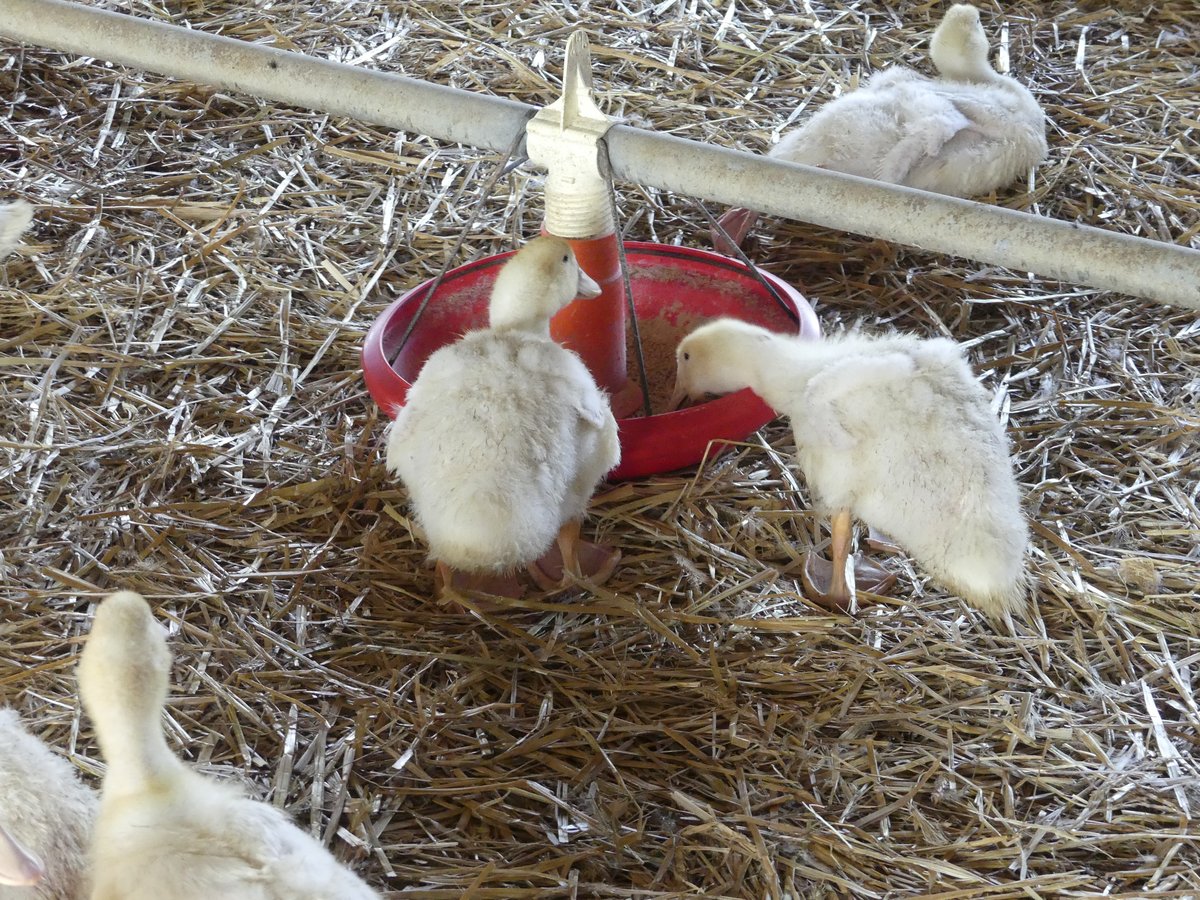
A constant supply of fresh and hygienically safe drinking water must be ensured for the animals. To this end, the functionality and hygiene of the drinking system must be checked daily. The drinking water for the chicks should be at approximately room temperature. During rearing and fattening, the animals are usually supplied via nipple drinkers. In the first few days, additional bowls of water or dip drinkers should be placed in the shed.
The requirements for drinking facilities during rearing and fattening are set out in the following table:
| Age of animals (days old) | Nipple drinkers (animals per nipple) |
| 1–5 | 25 |
| 6–21 | 15 |
| from 22 | 10 |
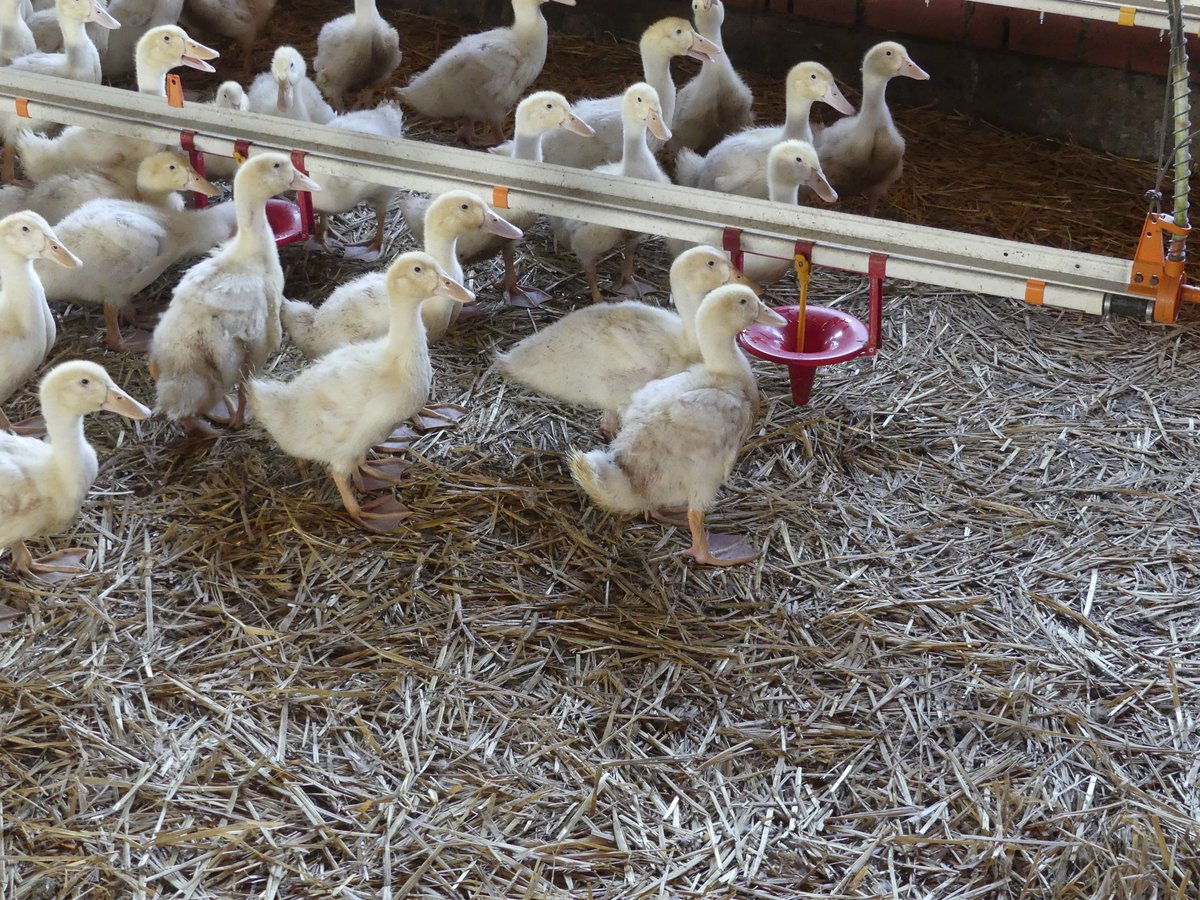
The height of the drinking troughs should be adjusted according to the age and size of the animals. Funnel-shaped drinking troughs should be positioned so that the animals can easily dip their heads into them (Fig. 11). Nipple drinkers should be easily accessible to the animals with their necks stretched out (Fig. 12).
Additional water supply
Under the Peking Duck Agreement, from the start of fattening – i.e. from the 22nd day of life at the latest – the animals must be granted access at all times to bathing water or water facilities where they can submerge their heads. These facilities must be easily accessible to all animals and available in sufficient numbers (specific recommendations can be found in the current version of the Peking Duck Agreement).
Positive results have also been achieved by providing open-access water in the form of a shallow basin or similar. This best enables the animals to engage in species-typical behaviour, as required by Section 2 of the Animal Welfare Act. In terms of housing hygiene, the provision of additional water requires adjustments to bedding management to prevent the bedding from becoming waterlogged. In addition, regular water changes and cleaning of the basins are necessary.
Food
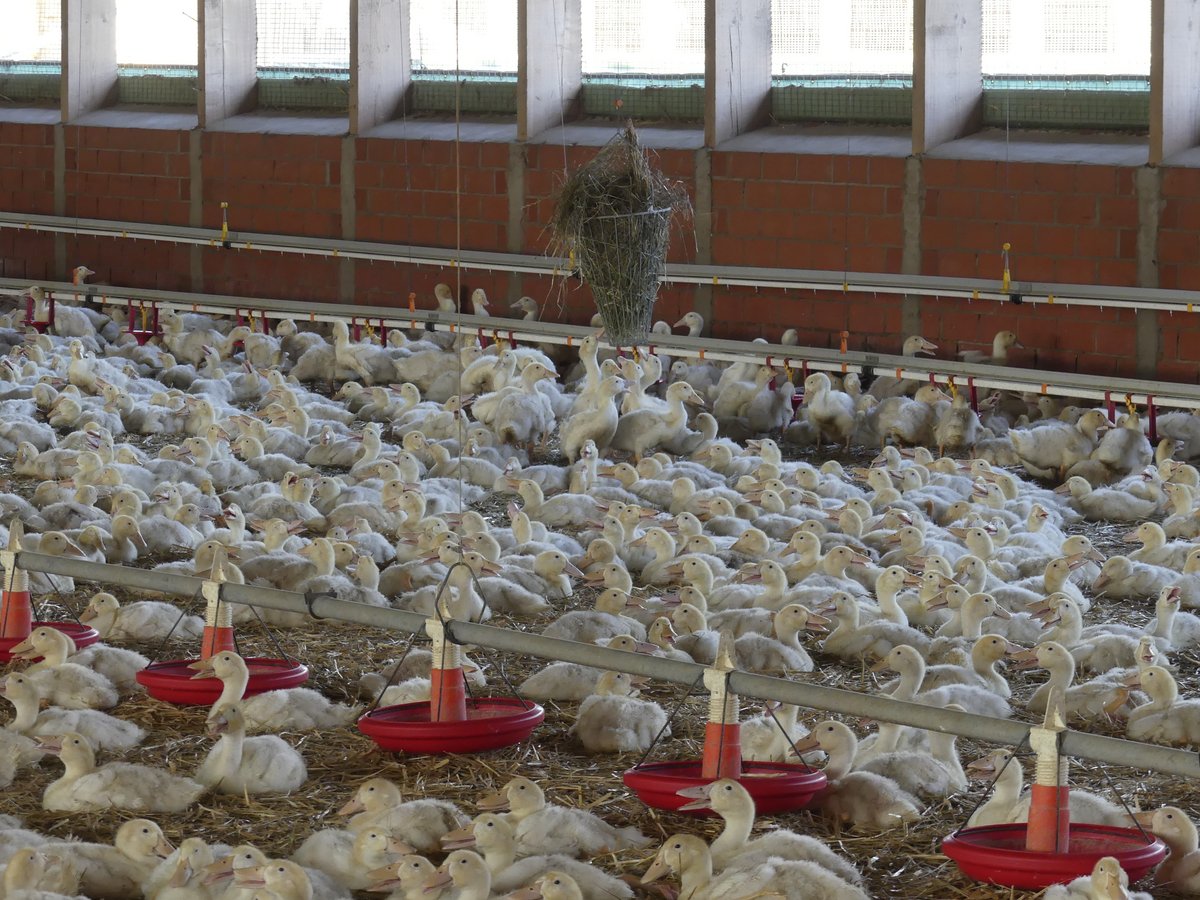
During the first 14 days, the animals are fed a starter feed with an energy content of approximately 12.0 MJ ME and a crude protein content of 21%. The subsequent intermediate fattening feed contains approximately 12.2 MJ ME and 18% crude protein, whilst the finishing feed has an energy content of 12.4 MJ ME and 17% crude protein. The feed is provided ad libitum. In the first few days, it should also be made available to the animals in feed bowls placed on the floor.
In accordance with the Beijing Duck Agreement, the usable trough length should be at least 0.8 cm per kg of live weight from day 1 to day 21, and at least 0.4 cm per kg of live weight from day 22 until slaughter.
Activity materials
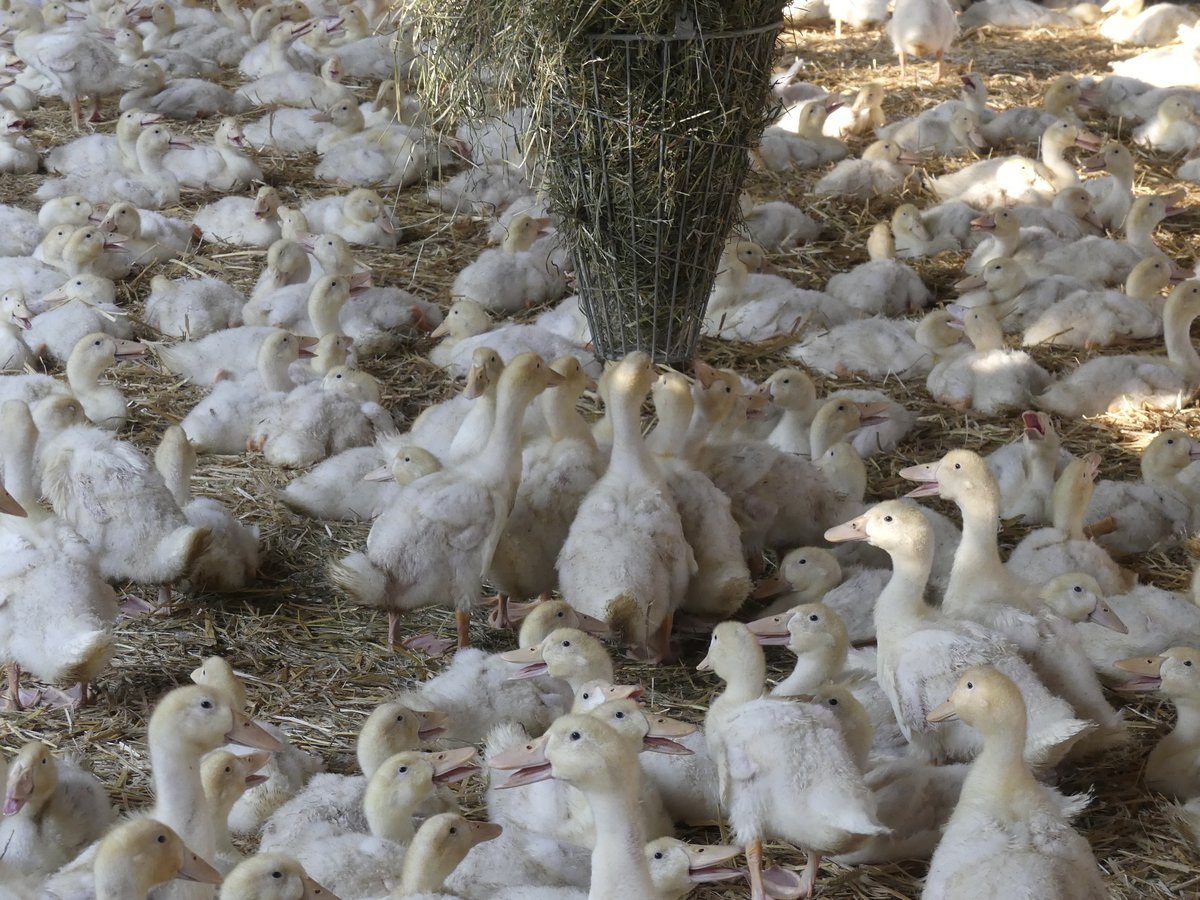
Suitable enrichment materials must be made available to the animals in sufficient quantities and encourage foraging and feeding behaviour. Suitable options include fresh straw or hay, which can be provided in racks or baskets. Care should be taken to adjust the height of the baskets or racks to suit the animals’ height.
The availability of water is also of great importance to the ducks as a source of activity.
Daily routine tasks
Animals should be checked several times a day, but at least twice a day. Chicks should be closely monitored, particularly during the first few days, and checks should be carried out several times a day. Important parameters include (see also Chapter 5: Criteria for assessing animal health):
- Distribution of the animals in the house
- Feed and water intake behaviour
- Movement
- Condition of plumage
- Consistency of droppings
- Condition of the eyes and nostrils
Fresh straw must be added daily. In rearing facilities, this is usually done by hand.
All housing and care facilities must be checked daily to ensure they are in working order (see Animal Welfare Ordinance § 4 General Requirements for Monitoring, Feeding and Care). Feed and water intake must be checked daily.
Special projects
This includes tasks that are not carried out on a daily basis but are performed with a certain degree of regularity during or following a fattening cycle. These include, for example, the cleaning and disinfection work required during the service period (see Chapter 8), care provided by the vet (see Veterinary herd management and health assurance programme), as well as examinations to be carried out, such as drinking water tests when using water from the farm’s own well.
Vaccinations
Vaccinations can be used to protect against various infectious diseases. Unlike chickens and turkeys, there is currently no compulsory vaccination requirement for ducks. It is standard practice to vaccinate parent birds before the start of the laying period (e.g. against Riemerella) in order to protect young ducklings through maternal antibodies. However, depending on the risk of infection, vaccination may also be advisable in individual cases for Peking fattening ducks. This should always be discussed with the vet responsible for the flock.
Veterinary herd management and animal health programme
Under the Peking Duck Agreement, the keeper must be able to provide evidence of a veterinary care contract. Under this agreement, a veterinary inspection of the flock must be carried out at least once every three months.
In addition, the flock must be inspected once per cycle by a qualified person (veterinarian or fattening supervisor). A report must be drawn up following each visit, assessing the health and welfare status as well as the behaviour of the flock. The authorities may request to see these reports.
Participation in a health assurance programme is intended to safeguard animal health by collecting and evaluating batch-specific indicators from rearing, fattening and slaughter. If this reveals a need for action, a health plan is drawn up and implemented in collaboration with the herd’s supervising veterinarian. This must also be presented to the competent authority upon request. The requirements regarding the obligation to carry out self-monitoring (Section 11(8) of the Animal Welfare Act) are thus fulfilled.
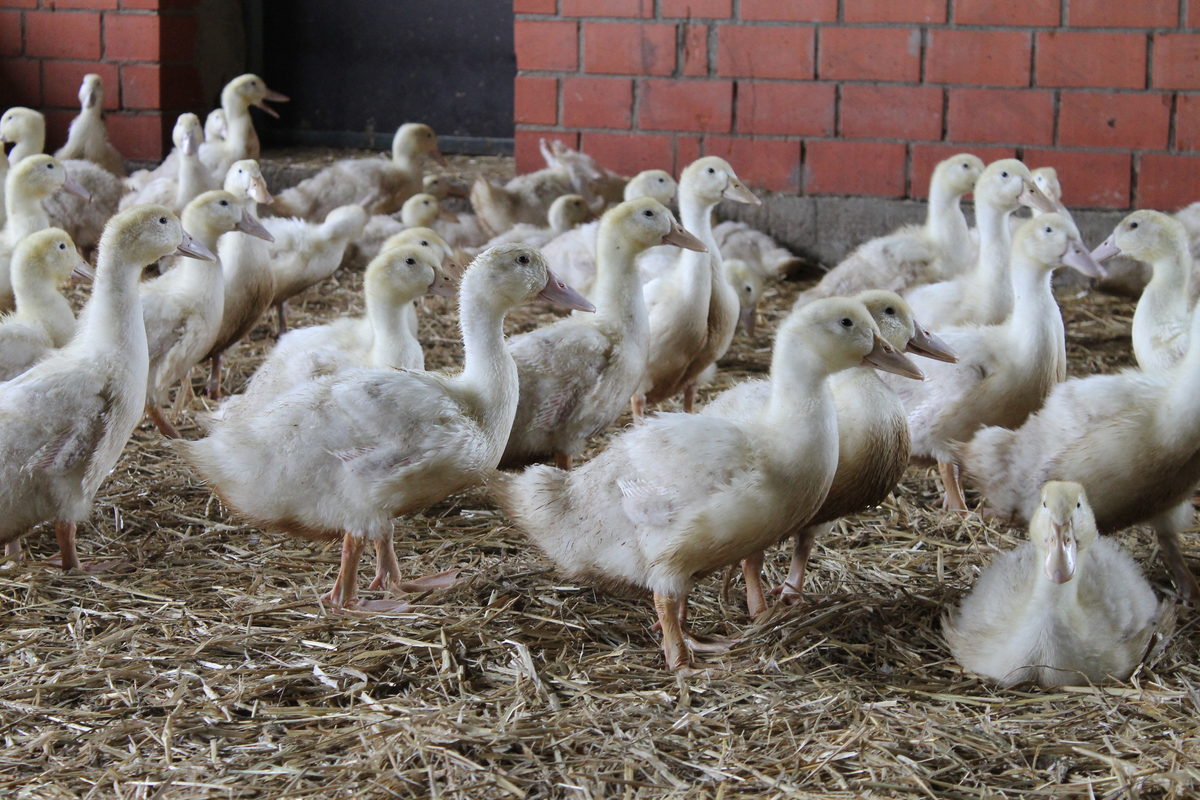
Overall impression of the herd
(including animal behaviour)
- Normal behaviour of the animals:
- Active
- Alert
- Reaction to the presence of people through quacking and movement
- No ducks in the flock show clinical symptoms indicating illness or injury
- The animals are not crouching (no tucked-in head)
- No conspicuous noises (e.g. sneezing/wheezing)
- No noticeable movement disorders

(©Jule Schättler, LWK Lower Saxony)
Anomalies in the distribution of animals across the usable area
- Even distribution across the available area in accordance with their herd behaviour
- No crowding
- No animals crowding against the outer walls
Feed consumption
Life stage (days) | Feed type | kg / bird |
| 1–16 | Starter | approx. 1.1 |
| 16–42 | Finishing feed | approx. 5.2 |
- Feed intake per animal is influenced by several factors, such as temperature or feed quality.
- Adequate feed intake is essential for meeting daily nutritional requirements and should therefore always be monitored.
- The relevant management recommendations from the breeding companies can be used as a guide.
Water consumption
| Week of life | ml / bird per day | ml / bird per day (with additional water available) |
| 1 | 120 | Up to 160 |
| 2 | 160 | Up to 300 |
| 3 | 300 | Up to 400 |
| 4 | 400 | Up to 500 |
| 5 | 500 | Up to 700 |
| 6 | 700 | Up to 900 |
| 7 | 900 | Up to 1,000 |
- Water consumption should not be equated with actual drinking water intake, as the birds also use water for preening and as a form of activity. It also depends on the outside or shed temperature and, in particular, on the watering system.
- Approx. 21 l per bird per cycle; with additional water available, approx. 28 l per bird per cycle
- Feed-to-water ratio
- approx. 1:2.7
- With additional water available: approx. 1:3.2
- Significant deviations in water intake may indicate illness in the birds or a faulty drinking system.
- The relevant management recommendations from the breeding companies can be used as a guide.
During the hot summer months, animals are more prone to heat stress. Appropriate measures should be taken in good time to prevent and reduce heat stress (see the information sheet on preventing heat stress in Peking ducks).

Nostrils
- Clean
- Unbound / free
- Unobtrusive breathing (with beak closed, no breathing sounds)
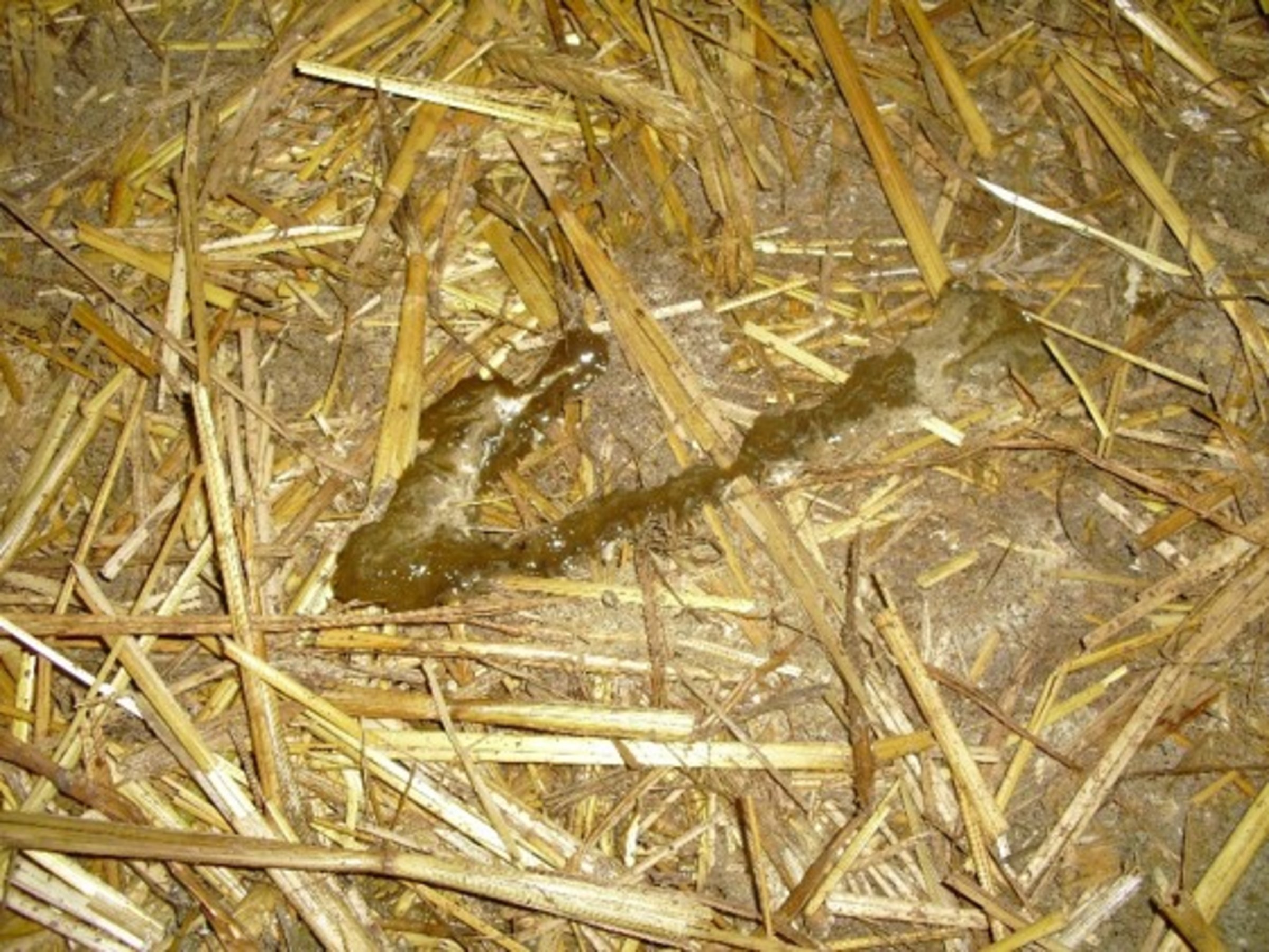
Weight trends
- Evenly distributed within a group of the same age
- Complies with the breeding company’s specifications
| Day of life | Weight in g | |||
| Spring curve | Summer curve | Autumn curve | Winter curve | |
| 0 | 55 | 55 | 55 | 56 |
| 7 | 246 | 264 | 238 | 245 |
| 14 | 702 | 722 | 730 | 709 |
| 21 | 1386 | 1344 | 1385 | 1335 |
| 28 | 2130 | 2085 | 2117 | 2092 |
| 32 | 2490 | 2350 | 2500 | 2470 |
| 35 | 2782 | 2678 | 2796 | 2807 |
| 42 | 3216 | 3082 | 3241 | 3331 |

Avian Influenza Regulation (Section 4(1) and (2))
(1) If, within a 24-hour period, losses of
- at least three animals within 24 hours in a herd or a spatially defined part of a herd comprising up to and including 100 animals, or
- more than 2 per cent of the animals in a flock or spatially defined part of a flock of more than 100 animals, or if there is a reduction in the usual laying performance or average weight gain of more than 5 per cent in each case, the keeper, subject to paragraph 2, must immediately have a veterinarian rule out the presence of infection with the highly pathogenic or low pathogenic avian influenza virus by means of appropriate tests.
(2) If, in a flock or a geographically defined part of a flock in which only ducks and geese are kept, over a period of more than four days
- losses amounting to more than three times the usual mortality rate of the animals in the flock or the spatially defined part of the flock, or
- a reduction in the usual weight gain or laying performance of more than 5 per cent
, the keeper shall immediately have a veterinarian rule out the presence of infection with the highly pathogenic or low pathogenic avian influenza virus by means of appropriate tests.
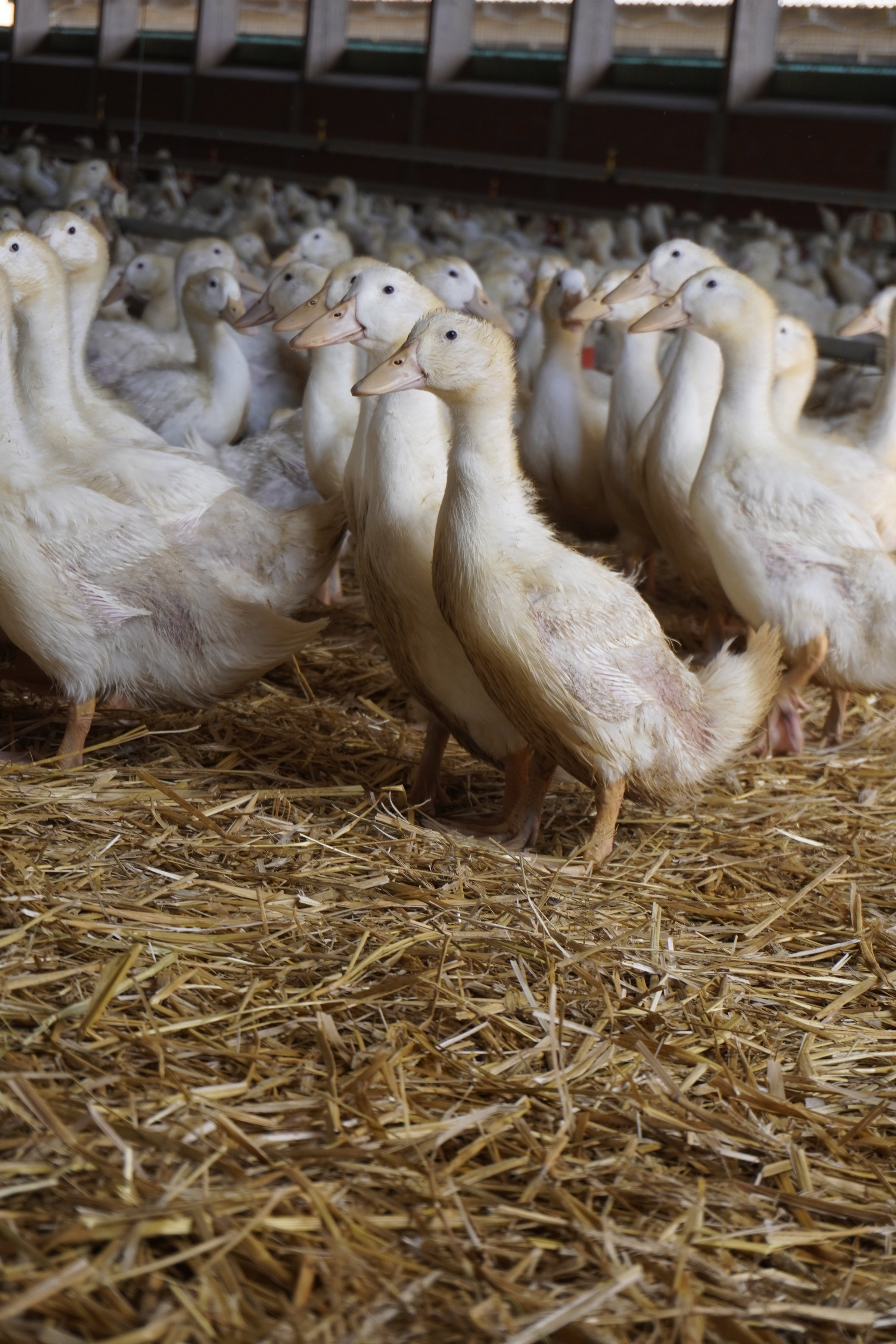
The animal keeper must immediately rectify any defects in the facilities that adversely affect the animals’ welfare, or take appropriate measures to protect the animals.
Any dead animals found must be removed immediately (see Section 4(1) sentence 1 no. 2 of the Animal Welfare (Livestock) Ordinance), stored properly and disposed of (see the Animal By-products Disposal Act (TierNebG)).
All technical facilities necessary for animal health and welfare (lighting, ventilation and supply systems) must be checked for proper functioning at least once a day. Emergency power generators and alarm systems must be checked for proper functioning at technically required intervals (see Section 4(1) sentence 1 no. 5 of the TierSchNutztV).
The results of the checks must be recorded daily in the barn log (see Section 4(2) of the TierSchNutztV).
At appropriate intervals, the barn, bedding storage areas and feed silos must be thoroughly cleaned and effectively disinfected in accordance with good professional practice (see Section 4(1) sentence 1 no. 10 TierSchNutztV); effective rodent and pest control must be ensured.
Identifying sick and injured animals
- Basis: Check the barn at least twice a day
- Careful observation of the animals, for which sufficient time must be allowed
- Pay particular attention to areas where weaker animals tend to congregate (e.g. corners of the barn and areas under or next to feeding/watering facilities)
→ Early detection of sick and injured animals
Taking appropriate measures
- In order to decide whether an animal should be removed from the herd, taken to a holding pen or euthanised, it must first be caught and examined.
- Once the animal has been caught, a decision must be made as to whether it can remain in the herd, whether there is a ‘reasonable cause’ for culling, or whether the animal can be moved to the isolation pen and returned to the group after an appropriate recovery period or treatment.
- If there is a prospect of recovery, the animal must be taken immediately to a holding pen with dry and soft bedding or a soft surface.
- Any animal which, based on a professional assessment of its physical condition, is unlikely to survive must – in accordance with the applicable Animal Welfare Slaughter Ordinance (TierSchlV) – be stunned in a manner consistent with animal welfare and killed without delay, and must not be placed in a separation pen.
- Where necessary, immediate measures must be taken for treatment and, where appropriate, a veterinarian must be consulted (Section 4(1) sentence 1 no. 3 TierSchNutztV).
- Where necessary, measures such as the direct provision of water and, where appropriate, feed, as well as wound care using covering, wound-healing sprays (e.g. zinc sprays) or treatment with further medication, must be provided for the animals in the isolation pen.
- Close monitoring of the course of the disease is required, which, depending on the circumstances, should exceed the minimum monitoring frequency of ‘twice daily’.
- Any animal in a isolation pen whose health condition, following expert assessment, shows no improvement within a reasonable period of time must be anaesthetised and killed in accordance with animal welfare principles. The animal keeper must ensure that the person carrying out the killing of the animals possesses up-to-date knowledge and skills relevant to animal welfare – including humane methods of stunning and killing (see Section 4(1) of the Animal Welfare Act).
- Reintegration: Isolated animals should be reintroduced to social contact immediately upon full recovery.
DLG Leaflet 477 ‘Handling sick and injured domestic and farm poultry’ provides guidance on deciding when a sick animal should be euthanised and when there is a chance of recovery.
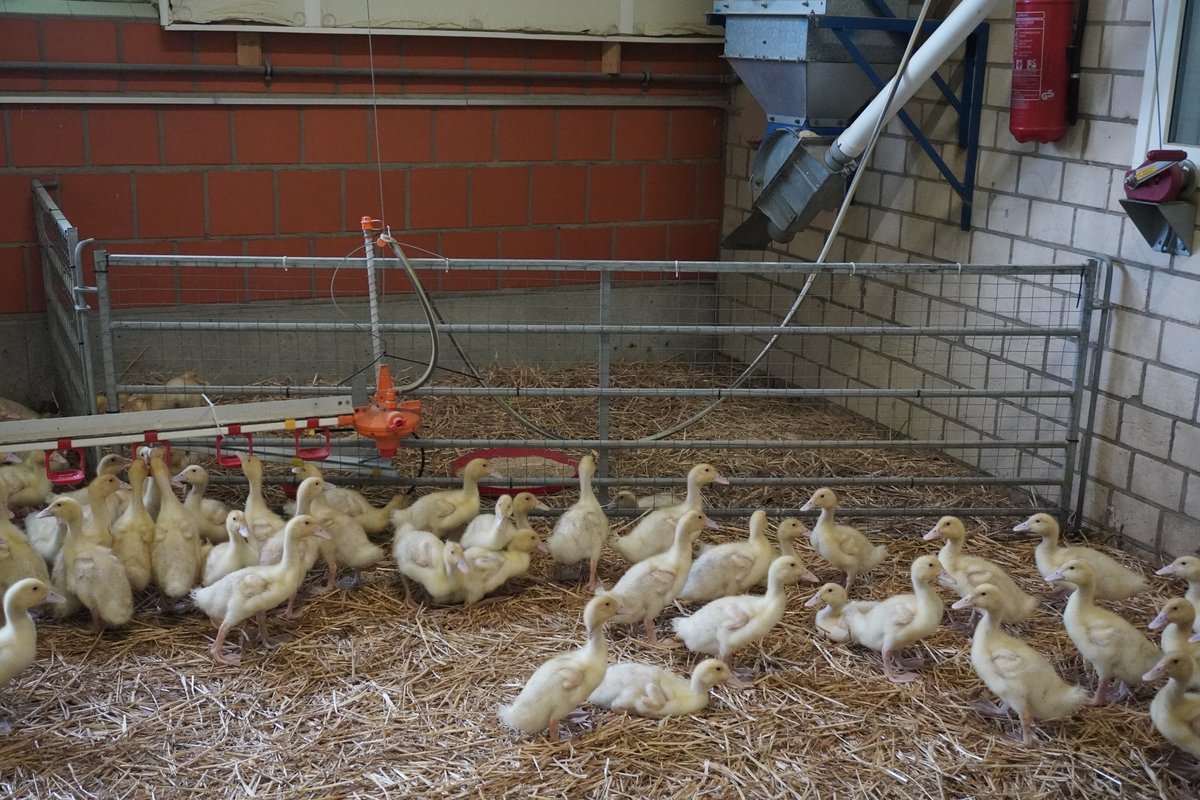
separation compartment
- Already available / can be set up immediately if required
- Space that can be expanded if required
- Peace and quiet away from other animals
- Social aspects such as visual, auditory and olfactory contact should be maintained (subject to animal disease control measures)
- Optimal supply of food and water
- Unrestricted access, even for animals with limited mobility
- Unrestricted access to fresh feed and water in clean troughs / drinking troughs
- Sturdy partition from the herd
- Good hygiene, regular cleaning of the facilities and surfaces
- Regular replacement of bedding
- Optimal ambient temperature for the animal, free from draughts
- In isolation pens, the requirements of the Animal Welfare Ordinance must be met.
Legal basis (emergency killing)
- Where an animal must be killed, the legal basis for this is provided by the Animal Welfare Act (TSchG), Regulation (EC) No 1099/2009 on the protection of animals at the time of killing, and the Animal Slaughter Ordinance (TierSchlV).
- ‘Emergency killing’ is defined as ‘the killing of injured animals or animals suffering from a disease that causes severe pain or suffering, where there is no other practicable means of alleviating such pain or suffering’ (Article 2(d) of Regulation (EC) No 1099/2009).
- A vertebrate animal may only be killed under effective pain relief (stunning) in a state of unconsciousness and insensitivity, or otherwise, insofar as is reasonable under the given circumstances, only in a manner that avoids pain. (Section 4(1) TierSchG)
- Persons who, on a professional or commercial basis, regularly anaesthetise or kill vertebrates for the purpose of killing must provide the competent authority with proof of competence. (Section 4(1a) Animal Welfare Act)
- Knowledge and skills regarding legal and technical requirements and methods of killing are necessary.
- The animal keeper must ensure that the person carrying out the killing of the animals possesses the necessary expertise, including the requisite skills.
- There is a reasonable ground for emergency killing if
- the animal has been suffering from severe, incurable pain for a prolonged period.
- the animal is suffering from a serious illness with no prospect of recovery.
- the animal is unable to take in food or water independently and is therefore no longer able to care for itself.
Procedure for humane euthanasia
Ducks identified as requiring slaughter must be killed as soon as possible to avoid unnecessary pain and suffering.
The duck to be killed must be handled calmly and gently until the anaesthetic takes effect, to prevent the animal from becoming agitated.
Every duck must be stunned before killing. Immediately after successful stunning, the animal must be killed using a suitable method (the standard practice is neck breaking).
The functionality of the equipment to be used must be checked before each use.
Stunning and killing should not be carried out in the middle of the flock and, where possible, without causing distress to the other animals.
Procedure
- Capturing the animal to be killed
- Restraining
- Restricting the animal’s movement so that it cannot evade the procedure and the stunning can be carried out safely. From an animal welfare perspective, a suitable room outside the barn (e.g. an antechamber) should be used for stunning and killing.
- Stunning
- Every vertebrate must be rendered unconscious and insensitive to pain before slaughter.
- The effectiveness of the stunning must be checked before killing:
- No breathing
- Pupils dilated / no blinking
- Touching the eye elicits no reaction (no longer any eyelid closure reflex)
- Neck muscles flaccid
- Beak opens easily
- No vocalisation
- No directed movements
- No vigorous wing flapping
- If there are signs of inadequate stunning (e.g. eyelid closure reflex, attempts to stand up, focused gaze, lifting of the head), stunning must be repeated immediately.
- Killing
- Killing must follow immediately after stunning.
- Killing must be carried out competently and safely, without delay and without causing fear or pain to the animal concerned.
- The onset of death must be carefully monitored:
- A palpable gap between the head and cervical vertebrae and
- No eyelid reflex (the eye remains open when a finger is brought close to it)
- No breathing
- No directed movements
- If breathing, eye reflexes or directed movements are observed after killing, the killing procedure must be repeated (if necessary, after re-anaesthetising – see Checking anaesthesia)
- Disposal
- It must be ensured that the animal is dead before the carcass is disposed of.
- Carcasses must be disposed of immediately and securely in the carcass storage facility.
Further guidance on the proper storage of carcasses can be found in the Lower Saxony Guidelines on the Proper Storage of Poultry Carcasses, taking biosecurity aspects into account.
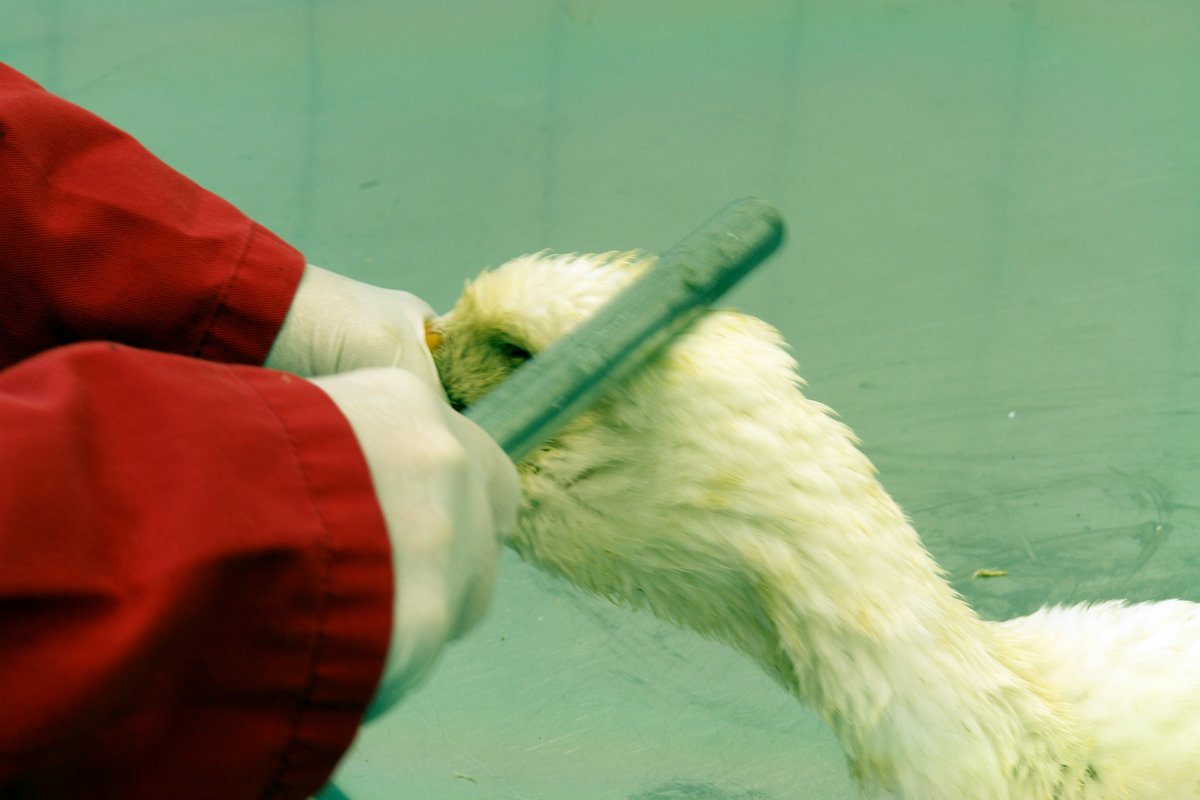
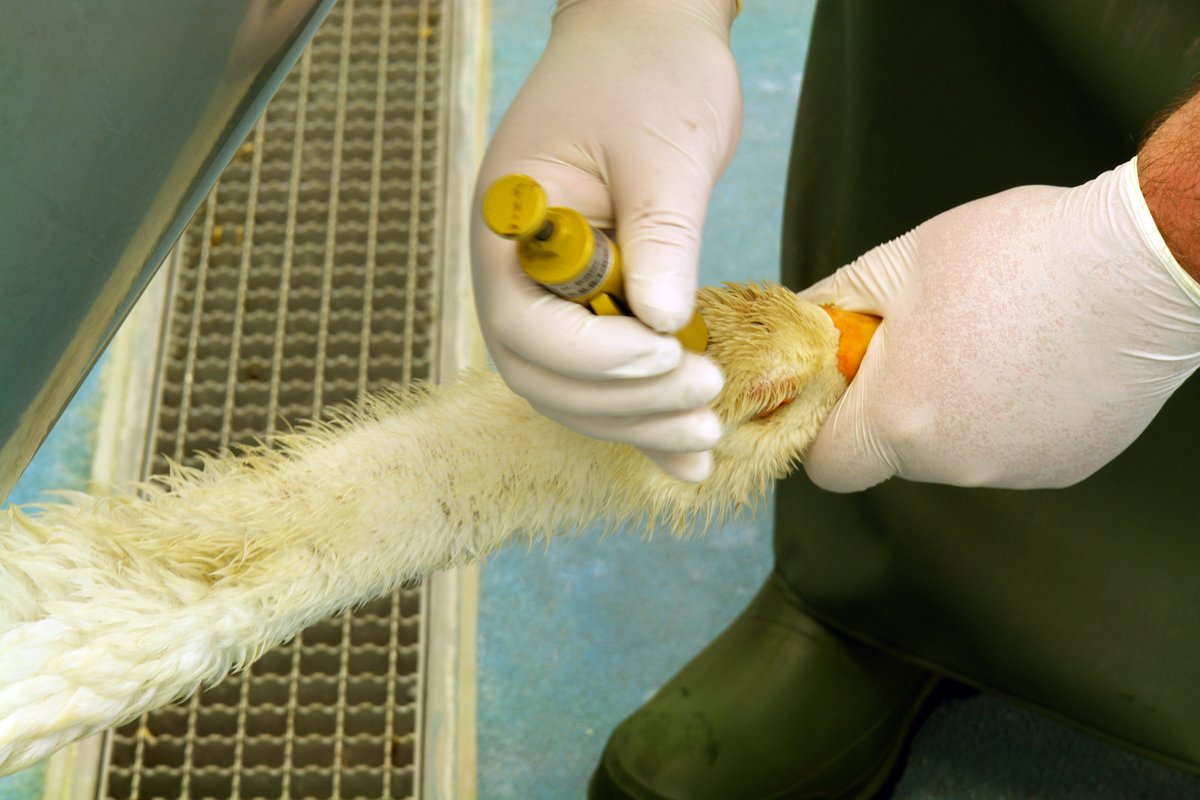
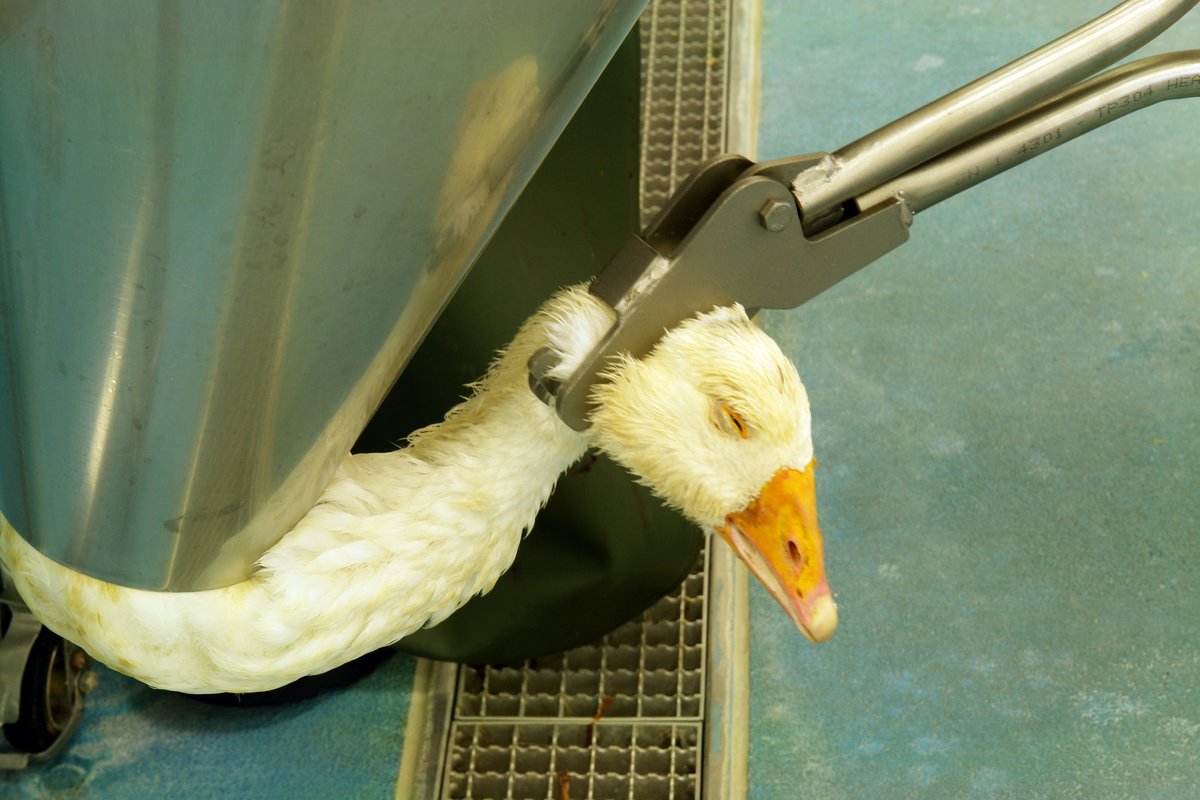
Permitted methods of stunning
Up to 5 kg live weight
- A sufficiently forceful, targeted blow to the head may be used as a stunning method for poultry weighing up to 5 kg. It must be delivered using a hard, blunt and heavy object appropriate to the size of the animal. The object must be brought towards the animal’s head, rather than the animal being brought towards the object.
No weight limit
- Penetrating bolt gun
- Non-penetrating bolt shooting
- Electrical stunning
Permitted methods of killing (TSchlV)
- Destruction of the spinal cord by neck break (fracture of the cervical spine between the skull and the first cervical vertebra)
- Permitted manually for animals weighing less than 3 kg (The neck is hyperextended with a sudden movement of the hand, severing the spinal cord directly behind the head.)
- using forceps (mechanical, designed so that the spine can be severed quickly and safely without great effort) for animals weighing 3 kg or more
- Blood drainage (not recommended for disease control reasons)
- Electrical cardiac arrest
A key prerequisite for a healthy, productive Peking duck flock – alongside optimal housing conditions and the best possible provision of feed and water – is to prevent, as far as possible, the introduction of pathogens and their spread within the flock. The measures required to achieve this on the farm are collectively referred to as ‘biosecurity measures’. These include hygiene (cleaning and disinfection) as well as structural measures (e.g. paved forecourts and access routes, fencing, maintenance of the facilities and structural integrity of the sheds, hygiene sluices) and various management measures (e.g. wearing protective clothing, order and cleanliness on the farm, control of visitor traffic, pest control, handling of sick and dead animals).
Biosecurity measures must be planned on a farm-by-farm basis and implemented consistently on a daily basis to ensure a good biosecurity status. It is advisable to draw up a biosecurity plan and coordinate it with the attending veterinarian. Where there is a high risk of infection, the biosecurity plan can be supplemented by vaccinating Peking ducks to prevent clinical disease in the flock (see Chapter 4 – Vaccinations).
The farm’s operational structure also affects biosecurity status: the more contact a poultry flock has with other animals, the greater the risk of pathogens being introduced. Farms with multiple animal species (particularly cattle and pigs) should ensure strict separation of the housing and care of different animal species. Different age groups within the Peking duck flock should also be strictly separated from one another to minimise the risk of pathogen transmission.
Further guidance on biosecurity measures can be found in the Friedrich Löffler Institute’s factsheet ‘Protecting poultry’.
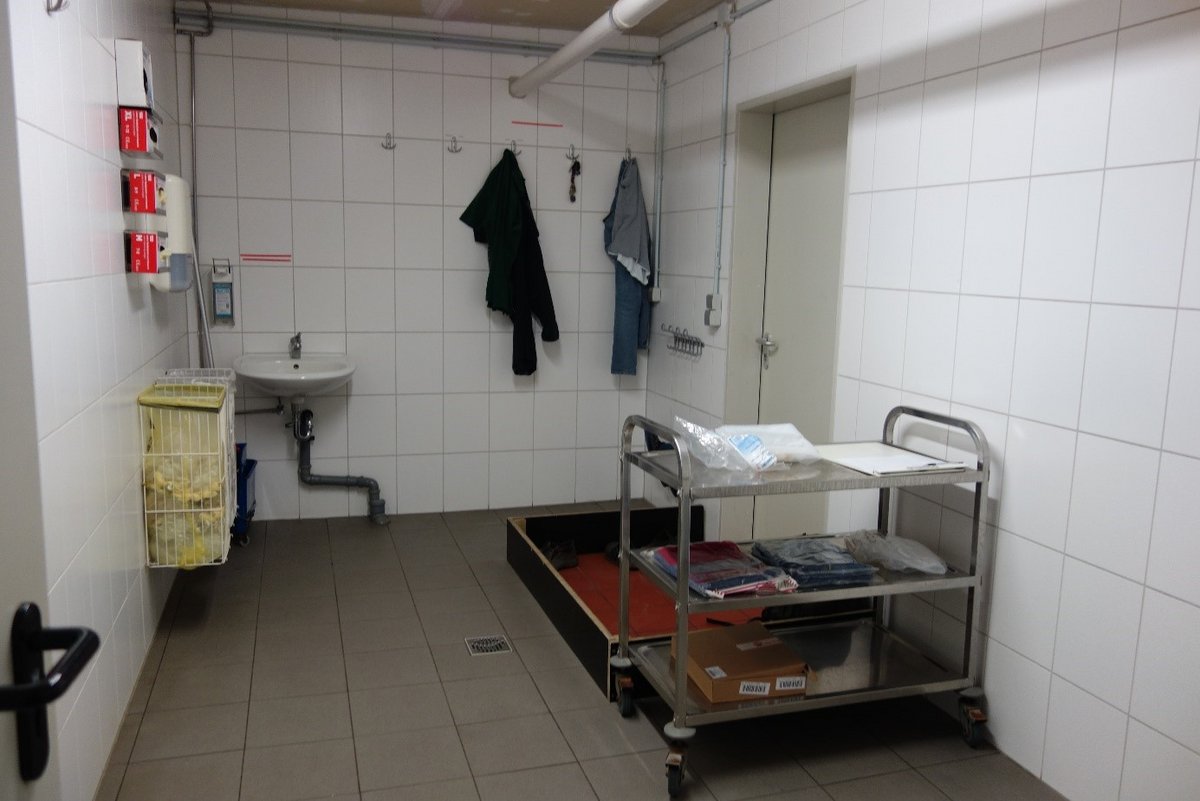
(© Jule Schättler, LWK Lower Saxony)
Biosecurity measures to prevent pathogens from entering the barn
- Sanitisation station at the stable entrance (changing shoes, hand hygiene, protective clothing)
- Controlled visitor access (keep stables locked; enter stables only in protective clothing worn exclusively in that stable)
- Use of hygienically safe feed, water, bedding and enrichment materials
- Feed storage in closed, clean containers (inaccessible to wild birds and pests)
- Regular cleaning of equipment and vehicles used in the barn
- No manure storage near the stable
- Continuous rodent control
- Monitoring of pest infestations (e.g. flies, beetles, mites) and control where necessary
- Tidiness and cleanliness in the vicinity of the barn
- If well water is used to water the ducks: regular (annual) microbiological testing of the drinking water
Different pathogens exhibit varying levels of resistance in the environment (for example, Riemerella bacteria die off within a few days in the environment, whereas worm eggs can persist in outdoor runs for years). Organic material (animal excrement, feed residues, litter, feathers), moisture and warm ambient temperatures favour the survival of pathogens. Thorough cleaning can reduce the bacterial load on the cleaned surfaces by up to three orders of magnitude (to one thousandth of the original load). Thorough cleaning is also a prerequisite for successful disinfection, as many disinfectants react with proteins (e.g. those contained in excrement, feed residues and blood), which significantly reduces their effectiveness on heavily soiled surfaces. By combining cleaning and disinfection, the bacterial load can be reduced by up to six orders of magnitude, i.e. ideally to one millionth of the original load. However, even disinfection does not achieve a germ-free, sterile environment.
Cleaning
Cleaning begins with removing manure from the empty stable. After dry cleaning, the stable should be swept clean and then wet cleaned. In cases of heavy soiling, it is advisable to use warm water (ideally 40 °C) and cleaning agents after thoroughly soaking the soiled surfaces. High-pressure cleaners are commonly used for effective wet cleaning (Caution: unsuitable nozzles, insufficient water flow, incorrect spray angles or an insufficient spray distance can lead to material damage and the widespread distribution of dirt particles/germs!).
The amount of cleaning agents required can be significantly reduced by pre-cleaning to remove coarse dirt or by thorough soaking. Any residual cleaning agents must then be thoroughly rinsed off with clean water to prevent surface corrosion and ensure the disinfection process is not compromised.
The following must be cleaned: livestock housing (from top to bottom), livestock equipment (including feed and water lines from the inside), work tools and vehicles, herding aids, loading ramps and other equipment in direct contact with the animals, livestock housing entrance areas and forecourts, feed storage containers and, finally, the equipment used for cleaning and the protective clothing worn during the process.
Cleaning is considered successful when all surfaces and interior fittings, containers, feed and water lines in the barn are clean and the waste water no longer contains any dirt particles.
The wash water used contains small amounts of nitrogen- and phosphorus-containing substances and is therefore defined as liquid manure.
Disinfection
Disinfection without prior thorough cleaning is ineffective: “You cannot disinfect dirt!” However, dirt is not always visible – it is precisely invisible residues (e.g. in uneven surfaces, cracks and small openings) that severely limit the effectiveness of disinfectants and allow germs to survive until the next time the stable is occupied. Disinfection should therefore take place as soon as possible after cleaning to prevent further contamination (e.g. from dust).
The barn must be completely dry before disinfection. Wet or damp areas ‘dilute’ the disinfectant and impair its effectiveness (dilution effect).
No disinfectant kills all types of germs and is suitable for every use. In the event of disease or increased risk of infection during the fattening cycle, it is therefore advisable to discuss the details of the planned disinfection with the attending vet. As a general rule, only disinfectants tested and listed by the DVG should be used. Products bearing the DLG quality mark have also been tested for material compatibility, among other things.
The concentration recommended by the manufacturer must be adhered to during application. It should be noted that different concentrations are required for different ambient temperatures and that certain disinfectants are ineffective or only partially effective in cold conditions (cold-induced inactivation, e.g. aldehydes). During the cold season, peroxides or chlorine solutions should therefore be used in preference. Application can be carried out using spraying, misting or aerosol methods.
As a general rule, 0.4 l of working solution per m² of surface area to be disinfected is required; for stable fittings, at least 30% extra must be allowed for. The contact time for most disinfectants should not be less than 2 to 4 hours, even if shorter times are specified by the manufacturer. Ideally, the disinfected livestock housing should then be left to air and rest ‘empty’ for 4 to 5 days.
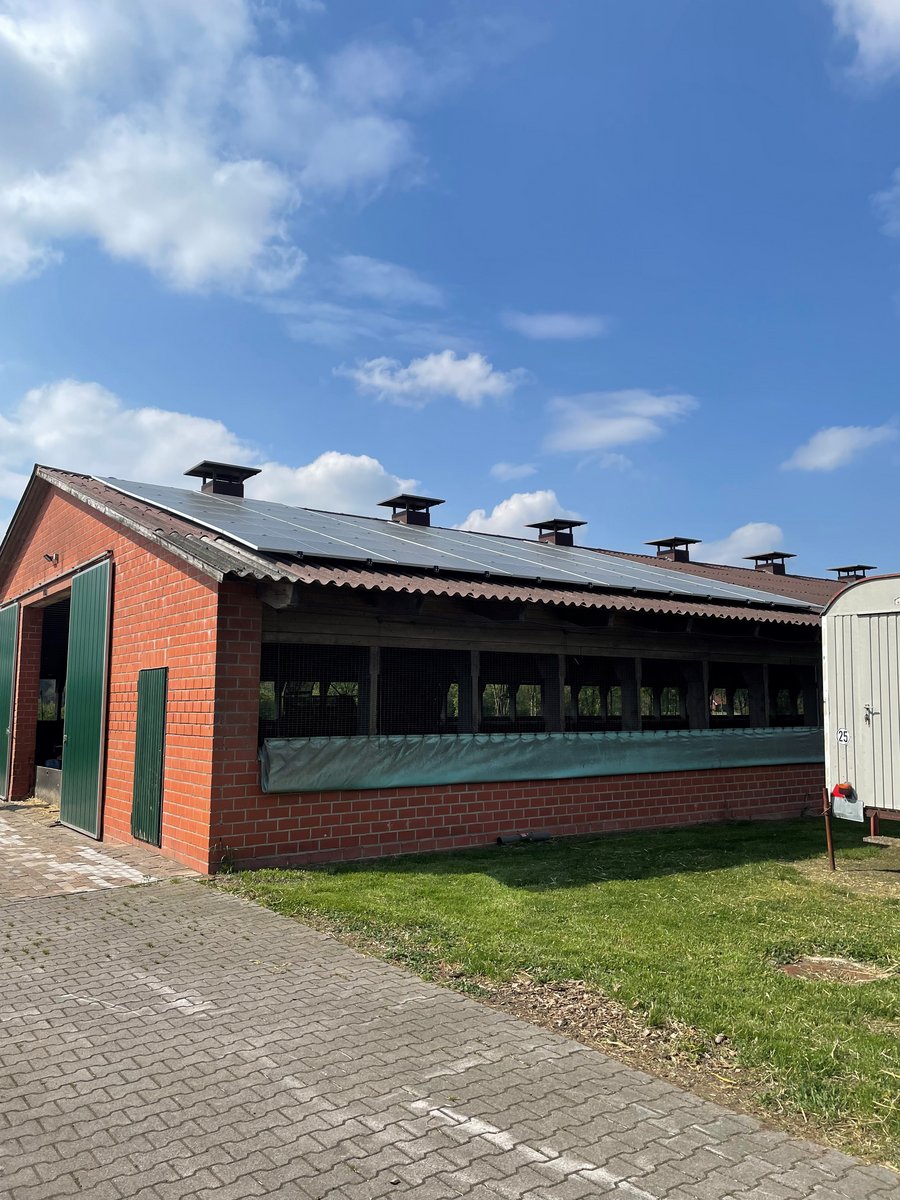
(© Peter Hiller, LWK Lower Saxony)
Hygiene measures during the current fattening cycle
- The hygiene airlock must be fully operational at all times.
- Daily inspection of the supply equipment and cleaning where necessary
- Flush the drinking system after each administration of veterinary medicines or feed supplements
- Immediate removal of dead animals from the barn, proper storage of carcasses (see Chapter 6)
- Bedding maintenance (checking moisture levels, adding fresh bedding and, if necessary, mucking out heavily soiled areas)
- Clean soiled work equipment
- Clean soiled work clothing (especially footwear)
- Clean and disinfect equipment (including vehicles where applicable) before using them in another barn
- Regular checks for rodent and pest infestations and control measures where necessary
- Keep the barn entrance, forecourt and access routes clean
- Keep vegetation in the area around the barn to a minimum
Avian influenza (highly pathogenic avian influenza, HPAI, ‘bird flu’) and the requirement to keep poultry indoors
Avian influenza is a fatal disease affecting birds. Chickens and turkeys are particularly severely affected, whilst geese and ducks exhibit milder symptoms.
The control of avian influenza is regulated by applicable EU law and, in Germany, additionally by the Avian Influenza Ordinance (GPVO). Among other things, the Ordinance stipulates that if mortality rates exceed 2% within 24 hours, or if there is a significant increase in animal losses in pure duck flocks over a period of more than four days, avian influenza must be ruled out as the cause by a vet (Section 4 GPVO).
To prevent the spread of the virus and to prevent it from entering one’s own flock, it is important to understand the routes of transmission and to take appropriate precautionary measures.
One of the most important measures is to prevent contact between farmed poultry and wild birds and their droppings. Open water bodies and feed provided in outdoor runs, for example, can attract infected wild birds. If the ducks then feed and drink from the same places, they can become infected with the virus. Poultry must therefore only be fed outdoors in areas inaccessible to wild birds and must not be watered using surface water to which wild birds have access (Section 3 GPVO).
The pathogen, which is excreted by infected animals in their faeces as well as in secretions from the nose and eyes, can find its way into the shed via contaminated footwear or clothing. Hygiene chambers at the shed entrances, where clothing and footwear are changed and hands are washed before entering the shed, play a significant role in reducing the risk of introduction. Vehicles that drive across the farmyard or even into the barn, such as the litter spreader, pose a high risk of introducing the virus. Therefore, forecourts and paths should be paved and, like the vehicles, cleaned regularly and disinfected where necessary.
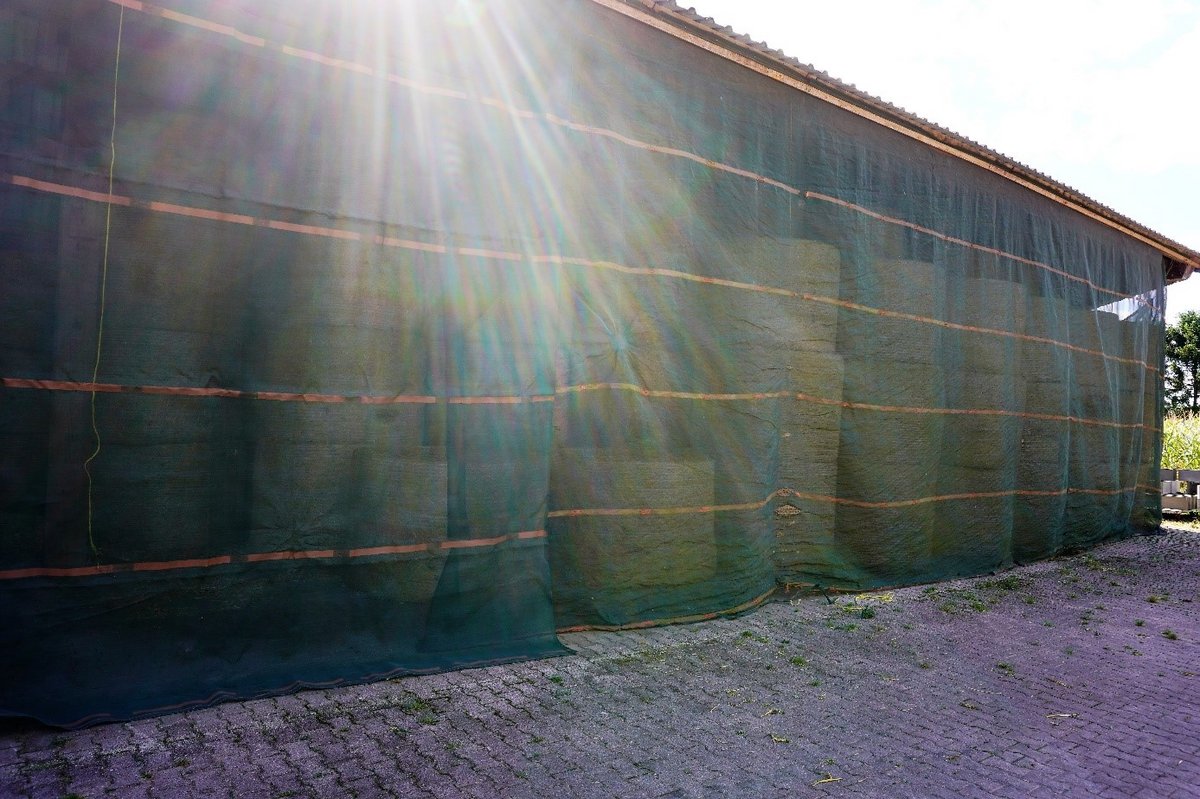
Feed or the straw bedding itself can also lead to the unintended introduction of the virus into the barn if these are not stored safely away from wild birds. The GPVO therefore stipulates that feed, bedding and other items with which poultry may come into contact must be stored in a manner inaccessible to wild birds (Section 6(3) GPVO).
Straw or bedding must be stored at least under cover; ideally, it should be stored in enclosed premises. Straw that must be stored outdoors must be covered with a sturdy plastic sheet and/or a net (see Figure 23).
In particular, the risk of HPAI introduction is higher in free-range systems compared to purely indoor housing systems, and appropriate precautionary measures must be taken. If the competent authority assesses the risk of HPAI occurrence as high, a mandatory housing order may therefore be issued (Section 13(1) GPVO).
(© Regine Revermann, LWK Lower Saxony)
To ensure adequate feed and water hygiene, certain principles should be observed.
- Feed quality should be checked regularly by means of a sensory assessment based on the parameters in the table below. If any quality defects are found in the feed, it should be replaced immediately with feed of impeccable quality.
| Parameter | Compound feed (ground grain / pellets) | Cereals |
| Texture | clumpy, damp Temperature (heated), caking, webs, foreign matter, abrasion content in pelletised feed | cloying, damp Temperature (warmed), caking |
| Odour | musty, stale, mouldy, yeasty, alcoholic (yeast contamination), sweetish (mite contamination), rancid (fat spoilage), putrid/carcass-like (protein degradation) | musty, mouldy, putrid, sweetish, yeasty, alcoholic, roasted aroma, stable or chemical odour, fishy (stone burn) |
| Taste | scratchy, burnt -> indication of fat/feed spoilage | unpleasantly bitter -> indication of immaturity or fungal contamination |
| Colour | washed-out – grey – dirty, white/yellow, green, blue discolouration Skin surface: diffuse greying or dark discolouration (-> black mould) | dirty-greyish, black-brownish, red-violet (stained), green (immaturity), reddish (Fusarium contamination) |
| Contaminants | Insects or insect fragments, rodent droppings, miscellaneous (glass shards, ‘silo residues’), different pellet types (diameter, colour, structure) | Sandy-earthy impurities, seedlings, admixtures (chaff, rodent droppings, foreign bodies), storage pests such as grain weevils, mites, etc. |
<figcaption>Table 4: Sensory testing and quality defects in selected feedstuffs (adapted from Kamphues et al., 2009)</figcaption>
- The best-before date of the feed should not be exceeded, as prolonged storage, particularly under suboptimal conditions, can adversely affect the quality of the feed.
- If using your own water (well water) to water the animals, regular (e.g. annual) microbiological and chemical-physical testing is recommended.
- An important factor in providing the animals with fresh water daily is the regular flushing of the pipes and cleaning of the water troughs (particularly after the use of veterinary medicines or feed supplements via the drinking system, as well as after prolonged periods of inactivity).
- The use of additives such as chlorine dioxide or organic acids is a suitable way of keeping drinking water pipes clean. These can, for example, be added to the drinking water via special dosing systems. The manufacturer’s instructions for use should always be followed. Physical methods such as pulse flushing (alternating air and water pulses) can also remove or prevent deposits in the pipes. However, the use of these additives does not replace regular external cleaning of the drinking facilities, e.g. round drinkers.
- Providing an (additional) open water supply to keep the ducks occupied always carries the risk of the litter becoming waterlogged and of a higher bacterial load, which can lead to an increased risk of disease in the animals. Measures should be taken to prevent this. Excess water can be drained away via (plastic) grates beneath the drinking area. It should be noted that the water must be collected and it must be possible to pump it out and, for example, spread it on arable land. Regularly moving the drinkers and regularly replenishing the litter around the drinkers can also counteract the litter becoming waterlogged. Furthermore, the water in open drinkers should be changed daily.
- Only high-quality straw (free from fungal infestation) should be used for bedding.
Bibliography
- Bavarian State Office for Health and Food Safety (2014): Guidance note on the stunning of turkeys
- DLG Information Sheet 430, 2nd edition (2018): Handling sick and injured pigs
- DLG kompakt (2021): Keeping special poultry – pasture-reared geese. No. 09/2021
- Golze, M. (2000): Ducks and geese do not conserve energy voluntarily. DGS Magazine 47, pp. 35–36
- Golze, M. (2005): Goose production. In: Niche areas of poultry farming and production.
- Internal KTBL commissioned work. Unpublished
- Golze, M. (2019): Presentation ‘New findings on pasture-reared geese and influences on the product quality of geese and ducks’. 5th Practical Day on Waterfowl Farming, Bernburg
- Kamphues, J., Coenen, M., Iben, C., Kienzle, E., Pallauf, J., Simon, O., Wanner, M., Zentek, J. (2009): Supplements to Lectures and Exercises in Animal Nutrition. 11th, revised edition, M. & H. Schaper GmbH, Hanover
- Keppler, C., Garrelfs, I. and Spindler, B. (2020): Management of sick and injured pullets and laying hens. DGS Magazine 31
- Laboratory of the Original Cantons (LABURK) (no year): Handling sick and injured farm animals
- Poultry Farming Guide (2020): Poultry Farming Guide, published by the Lower Saxony Chamber of Agriculture, 7th edition
- NEULAND Guidelines for the Humane Keeping of Geese (2018): NEULAND Guidelines (neuland-fleisch.de)
- Pingel, H. (2000): Ducks and Geese. Eugen Ulmer GmbH & Co., Stuttgart
- Reiter, K. and Bessei, W. (1995): A behavioural comparison of Pekin, Muscovy and Mulard ducks during the fattening period. 10th European Symposium on Waterfowl, Halle, pp. 118–121
- Schneider, K.-H. (2002): Goose Breeding for Everyone: The Practical Handbook. Oertel und Spörer, Reutlingen
- Schrader, L., Bünger, B., Marahrens, M., Müller-Arnke, I., Otto, Ch., Schäffer, D. and F. Zerbe (2006): Requirements for animal-friendly livestock farming. KTBL Publication 446, Darmstadt, pp. 25–31
- Swiss Confederation (2020): Technical Information on Animal Welfare No. 16.1
- Sieverding, E., Praxis am Bergweg (2017): Presentation ‘Animal-welfare-compliant stunning and slaughter of sick turkeys’. 7th Turkey Health Expert Group
- Speta, N. (2008): Case studies on water provision for grazing geese. Master’s thesis, H93 Department of Sustainable Agricultural Systems. University of Natural Resources and Life Sciences, Vienna, pp. 31–38
- Veterinary Association for Animal Welfare (TVT) (2006): Recommendations on the killing of farm animals by owners or carers (Information Sheet No. 75)
- Animal Health Service Bavaria e.V. and Bavarian Farmers’ Association (2019): Emergency slaughter of individual poultry – What needs to be considered? Information sheet, as at 29 July 2019 2019-07-29_Merkblatt Nottoetung Gefluegel_FINAL.pdf (bayerischerbauernverband.de)
- Agreement between the Lower Saxony Ministry of Food, Agriculture and Consumer Protection (ML) and the Lower Saxony Poultry Industry Association (NGW) on minimum requirements for the rearing and fattening of geese (‘Goose Rearing Agreement’), as of March 2020 Ducks / Geese | Lower Saxony Ministry of Food, Agriculture and Consumer Protection (niedersachsen.de) (Download section)
- Ordinance on Protection against Avian Influenza (Avian Influenza Ordinance) Avian Influenza Ordinance in the version published on 15 October 2018 (Federal Law Gazette I, pp. 1665, 2664)