
A key prerequisite for a healthy, productive Peking duck flock – alongside optimal housing conditions and the best possible provision of feed and water – is to prevent, as far as possible, the introduction of pathogens and their spread within the flock. The measures required to achieve this on the farm are collectively referred to as ‘biosecurity measures’. These include hygiene (cleaning and disinfection) as well as structural measures (e.g. paved forecourts and access routes, fencing, maintenance of the facilities and structural integrity of the sheds, hygiene sluices) and various management measures (e.g. wearing protective clothing, order and cleanliness on the farm, control of visitor traffic, pest control, handling of sick and dead animals).
Biosecurity measures must be planned on a farm-by-farm basis and implemented consistently on a daily basis to ensure a good biosecurity status. It is advisable to draw up a biosecurity plan and coordinate it with the attending veterinarian. Where there is a high risk of infection, the biosecurity plan can be supplemented by vaccinating Peking ducks to prevent clinical disease in the flock (see Chapter 4 – Vaccinations).
The farm’s operational structure also affects biosecurity status: the more contact a poultry flock has with other animals, the greater the risk of pathogens being introduced. Farms with multiple animal species (particularly cattle and pigs) should ensure strict separation of the housing and care of different animal species. Different age groups within the Peking duck flock should also be strictly separated from one another to minimise the risk of pathogen transmission.
Further guidance on biosecurity measures can be found in the Friedrich Löffler Institute’s factsheet ‘Protecting poultry’.
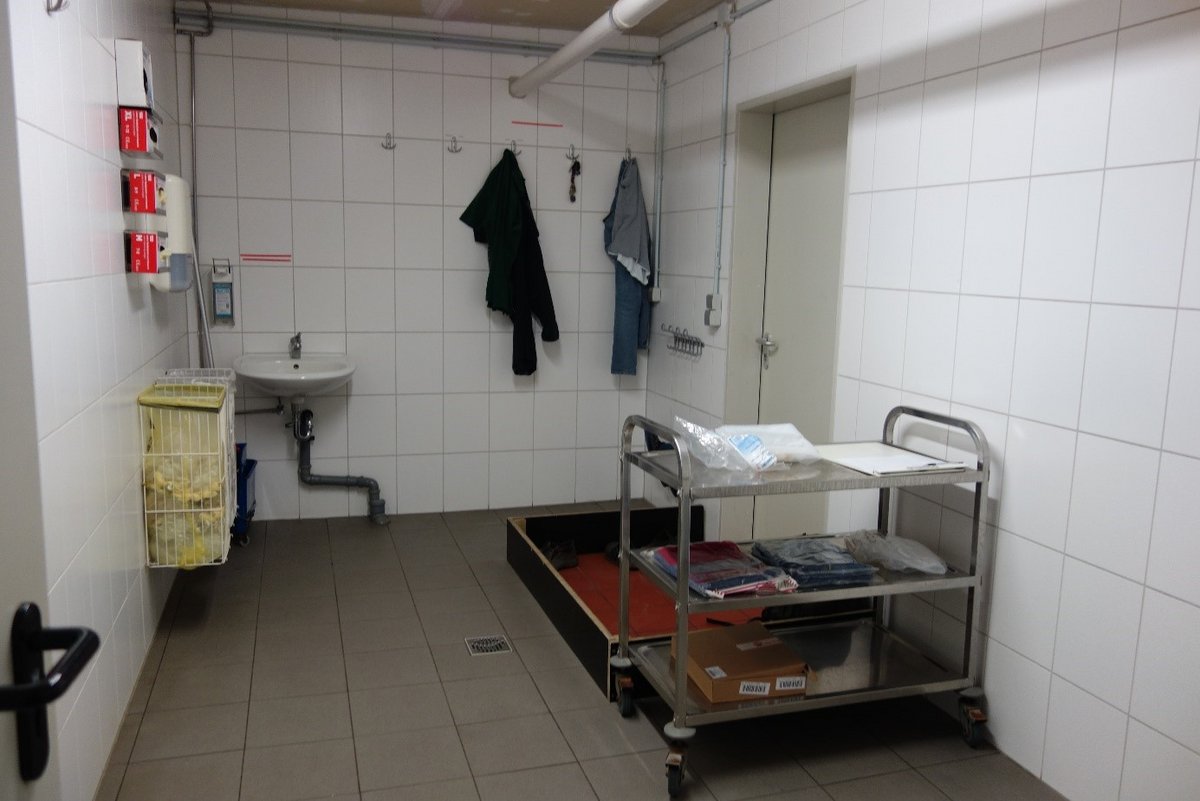
(© Jule Schättler, LWK Lower Saxony)
Biosecurity measures to prevent pathogens from entering the barn
- Sanitisation station at the stable entrance (changing shoes, hand hygiene, protective clothing)
- Controlled visitor access (keep stables locked; enter stables only in protective clothing worn exclusively in that stable)
- Use of hygienically safe feed, water, bedding and enrichment materials
- Feed storage in closed, clean containers (inaccessible to wild birds and pests)
- Regular cleaning of equipment and vehicles used in the barn
- No manure storage near the stable
- Continuous rodent control
- Monitoring of pest infestations (e.g. flies, beetles, mites) and control where necessary
- Tidiness and cleanliness in the vicinity of the barn
- If well water is used to water the ducks: regular (annual) microbiological testing of the drinking water