
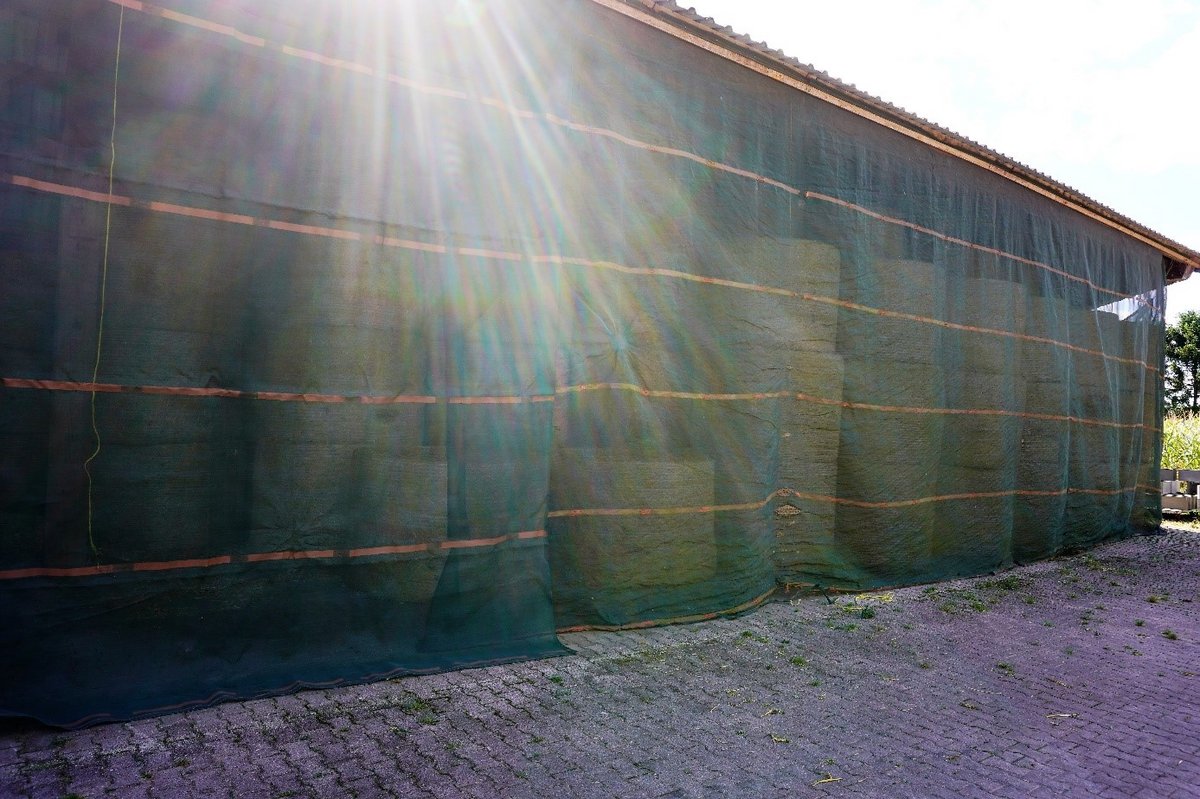
(Photo: Regine Revermann, LWK Lower Saxony)
Feed and water hygiene / Watering trough hygiene
To ensure adequate feed and water hygiene, certain principles should be observed.
- Feed quality should be checked regularly by means of a sensory assessment of the following parameters:
| Parameter | Compound feed (ground grain / pellets) | Cereals |
| Texture | dry, damp, moist Temperature (heated), caking, webs, foreign matter, abrasion content in pelletised feed | dry, damp, moist Temperature (heated), caking |
| Odour | musty, mouldy, yeasty, alcoholic (yeast contamination), sweetish (mite contamination), rancid (fat spoilage), putrid/carcass-like (protein degradation) | musty, mouldy, putrid, sweetish, yeasty, alcoholic, roasted aroma, stable or chemical odour, fishy (stone burn) |
| Taste | scratchy, burnt -> indication of fat/feed spoilage | unpleasantly bitter -> indication of immaturity or fungal contamination |
| Colour | washed-out – grey – dirty, white/yellow, green, blue discolouration Skin surface: diffuse greying or dark discolouration (-> black mould) | Intense, clear colour typical of the grain, dirty-grey, black-brownish, red-violet (stained), green (immaturity), reddish (Fusarium contamination) |
| Contaminants | Insects or insect fragments, rodent droppings, other (glass splinters, ‘silo residues’), various types of pellets (diameter, colour, structure) | Sandy-earthy impurities, seedlings, admixtures (chaff, rodent droppings, foreign bodies), storage pests such as grain weevils, mites, etc. |
- The best-before date of the feed should not be exceeded, as prolonged storage, particularly under sub-optimal conditions, can adversely affect the quality of the feed.
- If using your own water (well water) to water the animals, regular (e.g. annual) microbiological and chemical-physical testing is recommended.
- An important factor in providing the animals with fresh water daily is the regular flushing of the pipes and cleaning of the water troughs (particularly after the use of veterinary medicines or feed supplements via the drinking system, as well as after prolonged periods of inactivity).
- The use of additives such as chlorine dioxide or organic acids is a suitable way of keeping drinking water pipes clean. These can, for example, be added to the drinking water via special dosing systems. The manufacturer’s instructions for use should always be followed. Physical methods such as pulse flushing (alternating air and water pulses) can also remove or prevent deposits in the pipes. However, the use of these additives does not replace regular external cleaning of the drinking facilities, e.g. round drinkers.
- Providing an (additional) open water supply to keep the geese occupied always carries the risk of the litter becoming waterlogged and of a higher bacterial load, which can lead to an increased risk of disease in the animals. Measures should be taken to prevent this. Excess water can be drained away via (plastic) grates beneath the drinking area. It should be noted that the water must be collected and it must be possible to pump it out and, for example, spread it on arable land. Regularly moving the drinking troughs and regularly adding fresh litter around the drinking areas can also help prevent the litter from becoming waterlogged. Furthermore, the water in open drinking troughs should be changed daily.
- Only high-quality straw (free from fungal infestation) should be used for bedding.