
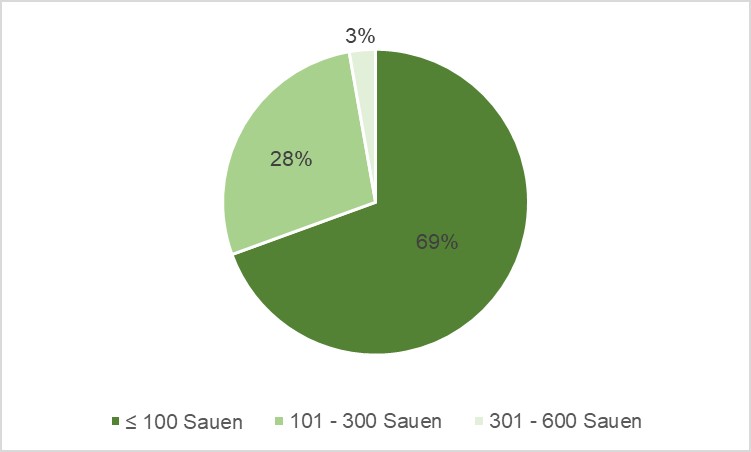
(Number of responses n = 36)

(Number of responses n = 38)
The phasing out of conventional farrowing crates in farrowing units is one of several changes introduced by the Animal Welfare and Livestock Management Ordinance. The available alternatives are either the installation of exercise pens or the conversion to pens for free farrowing.
Last year, the Pig Animal Welfare Competence Centre of the Fokus Tierwohl network called on sow farmers to share their practical experiences with exercise pens and free farrowing. The survey, which was conducted as part of the work of the Working Group on Piglet Losses, brings together practical experiences to date. You can find the experiences regarding the use of exercise pens here. A total of 214 sow farmers from across Germany, Austria and Switzerland took part in the survey. Of these, 80 participants stated that they practise free farrowing. Of these, 36 farms have more than five years’ experience. A further 27 participants have been practising free farrowing for between 1 and 5 years. In terms of the number of free-range pens on the farm, unlike the survey participants with exercise pens, there were only 5 sow farmers who had so far installed only a small number of pens for testing purposes. On 56 farms, all pens in the farrowing house already allow for free farrowing. The assumption that farms practising free farrowing are predominantly organic farms is not confirmed by the survey responses. The distribution of organic and conventional farms was balanced. A look at the farm sizes reported shows that the participants are predominantly farms with fewer than 100 sows (Fig. 1). Not all survey participants provided information on the location of their piglet production farm. Figure 2 shows the distribution of farms that provided their location.
A key difference from exercise pens is that, in free farrowing, the sow’s freedom of movement is not restricted either before or during birth, nor during the suckling period. To ensure occupational safety nonetheless, there may be devices to restrain sows briefly, for example for treatment. In organic pig farming, free farrowing has been standard practice for many years. There, the prescribed outdoor access usually serves as a means of temporarily separating sows from their piglets. When asked whether there is a way to restrain the sow for a short period, two-thirds of the participants answered ‘No’.
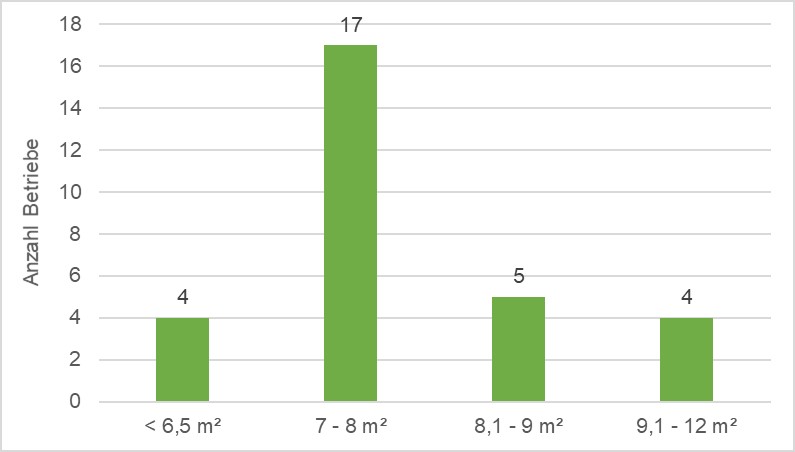
(Number of responses n = 30; no pens measuring 6.5–6.9 m²)
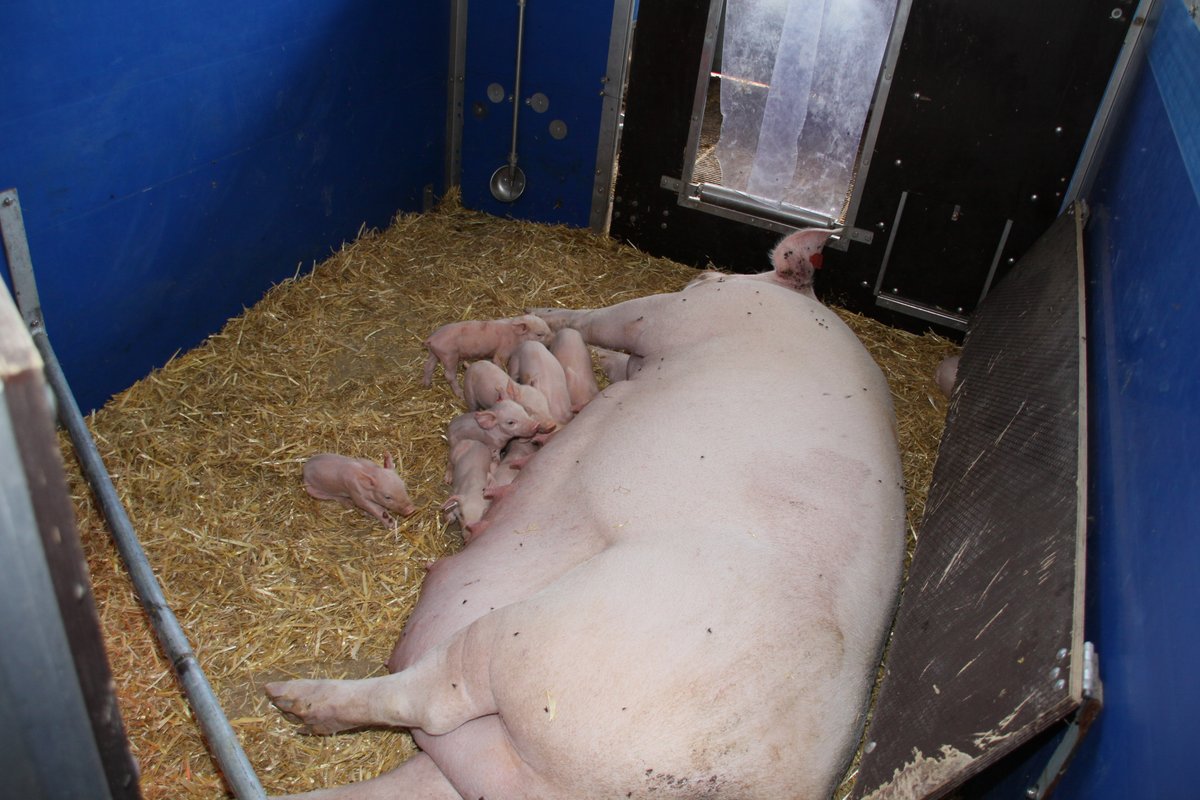
Photo: Ludger Bütfering, LWK NRW
It’s not just about size
From 2036, a minimum area of 6.5 m² will also apply to free-range farrowing pens on conventional farms. For organic farms, the minimum indoor area remains 7.5 m², as before. Of 30 sow farmers, only four stated that the size of their free-range pens was less than 6.5 m². The vast majority of survey participants keep sows farrowing freely in pens measuring 7 to 8 m². Some farms even have pens installed that, at up to 12 m², offer significantly more space than standard exercise pens (Fig. 3).
If one takes into account the outdoor runs available on some of the participating farms, sows and piglets have up to 15 m² of space available during the lactation period. However, more space is not automatically an advantage. To ensure that the sow establishes a fixed dunging area, or that the suckling piglets do not become chilled whilst searching for the piglet nest in their first days of life, the pen must be well structured. Dividing the pen into areas for lying, feeding and defecating can be achieved, for example, through the floor design or the placement of the piglet nest, as well as the trough and the drinker.
When asked what type of pens are installed in the respondents’ barns, 39 people replied. Of these, 26 stated that their pens were of their own design. As it is often only during practical use that it becomes clear whether and how well a pen functions, the participants were also asked whether they had carried out subsequent modifications. Although the majority did not need to make any adjustments, some farms implemented improvements to manage lying behaviour or farrowing, as well as changes to the piglet nest, trough and waterer. For instance, one farm reported having moved the piglet waterer from the nest towards the manure area, so that the nest could be kept dry and urine and faeces would be deposited by the piglets at the intended location. The piglet nests were also optimised, for example with curtains, to create a microclimate for the piglets. The most common modification was the retrofitting of resting aids, which also act as spacers from the pen walls, thereby providing the piglets with escape routes around the sow to minimise crushing losses (Fig. 4).
Farmers were also asked about the advantages and disadvantages of free farrowing (Table 1). In many cases, the ability for both sows and piglets to express their natural behaviours was cited as a positive aspect. Opinions differed regarding the assessment of the workload. Whilst some participants stated that the benefits for the sow (e.g. positive influence on the birthing process/animal health) also led to a reduced workload for the animal caretaker, for other participants, for example, catching the piglets for treatment resulted in an increased workload.
| Advantages | Disadvantages | |
| for the sow |
|
|
| for the piglets |
|
|
| for the animal carer |
|
|
<figcaption>Table 1: Advantages and disadvantages of free farrowing from the perspective of survey participants.(Categories were formed for the analysis of the responses. The responses are sorted by frequency.)</figcaption>
Thirty-three sow farmers responded to the question regarding the disadvantages of free farrowing for animal carers. Reduced occupational safety was cited by 23 pig farmers. This is also reflected in the responses to the question of how occupational safety is assessed in comparison to conventional farrowing pens. The majority of respondents perceive lower safety for themselves when working with free farrowing. The main danger stems from aggressive or very maternal sows, which makes both obstetric care, initial care of the piglets, catching them for treatment, and treating the sow herself more difficult.
Some of the participants saw no difference in occupational safety between the two farrowing systems. However, this requires knowing one’s animals and being able to assess dangerous situations. Identifying particularly maternal sows and taking appropriate precautions, such as entering the pen only with a board or confining the sow in the exercise area, also minimise the risk. Furthermore, a good human-animal relationship makes working with the sows much easier. A very good rapport with the herd and regular physical contact (e.g. stroking the head) ensure that humans are not perceived as a threat, thereby reducing the sow’s stress levels.
What else is important?
The selection of sows also plays a key role in the success of free farrowing. Respondents referred to both the choice of genetics and the individual animal. Not every sow is suitable for free farrowing. Many survey participants emphasised the importance of calm sows with good maternal traits. When asked whether the farm practised in-house replacement, 32 participants answered ‘yes’. Regarding sow selection, they stated that the criteria of ‘maternal instinct’, ‘piglet fitness’ and ‘aggressiveness towards humans’ were of the highest priority to them.
The switch to free farrowing is a challenge. One respondent summed up the key issues well: “The farrowing crate must be replaced by space, climate, structure and management”.
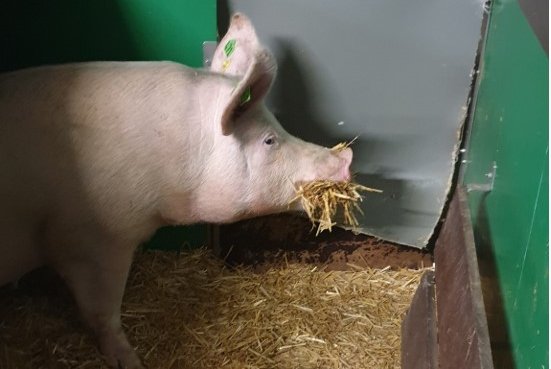
Image: Wilhelm Schulte-Remmert
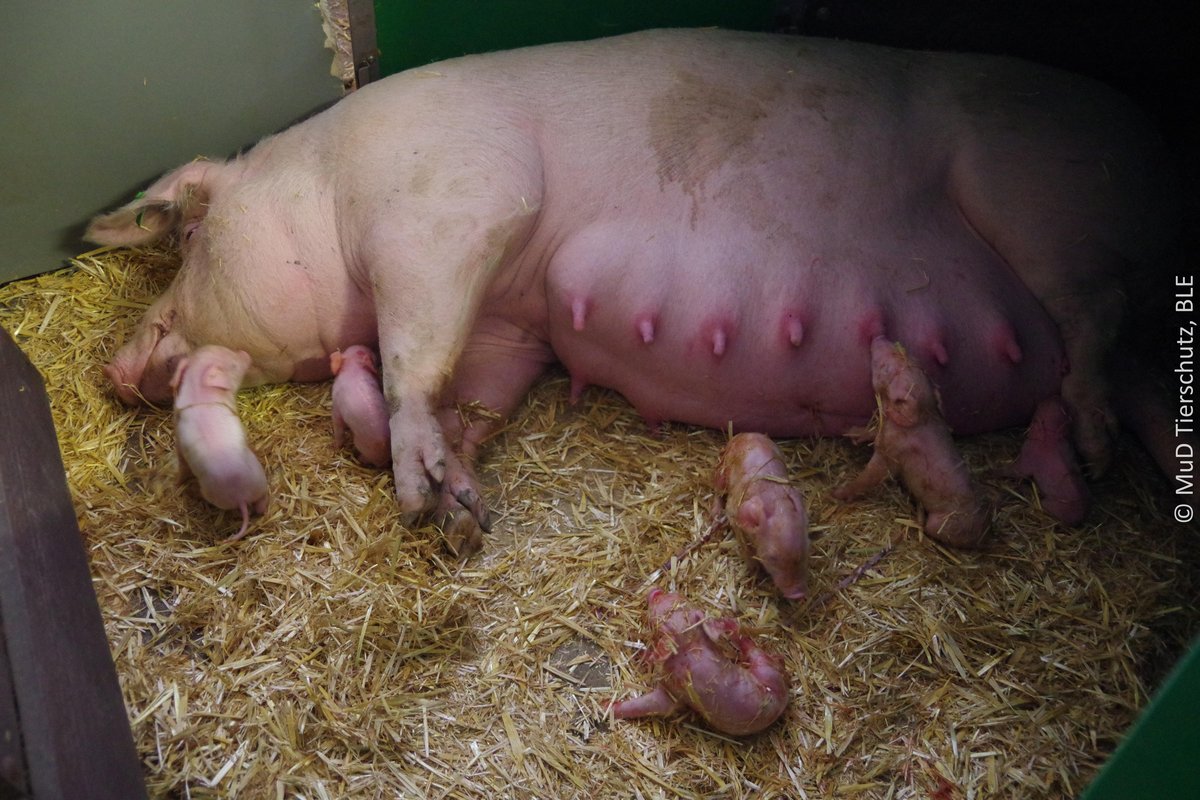
Image: MuD Animal Welfare, BLE