

What will farrowing look like in the future? Following the amendment to the Animal Welfare and Livestock Management Ordinance (TierSchNutztV), discussions regarding the permitted duration of sow restraint around the time of birth left ample room for speculation. Following the entry into force of the 7th Ordinance amending the TierSchNutztV in February 2021, it is now clear that there may only be a maximum restraint period of 5 days around the time of birth in pens with an area of at least 6.5 m². One way to meet these requirements is through so-called exercise pens. These feature a piglet protection cage and allow sows freedom of movement when they are not restrained. In contrast, with ‘free farrowing’, the sow’s movement is not restricted either before or during farrowing, nor during the suckling period (= free-range pen). However, the option for short-term restraint of the sow, e.g. for treatment, may still be available here.
With the aim of improving animal welfare, the amendment to the Animal Welfare (Livestock) Ordinance (TierSchNutztV) now finally provides the necessary planning certainty for piglet producers. The new requirements for farrowing pens apply to new buildings from the date the amendment came into force and, following a 15-year transition period, also to existing buildings; they involve high investment costs. An investment needs to be carefully considered. There is still time for planning – whether a pen ultimately meets the needs of the sow, piglets and farmer will only become clear in practical use.
A survey conducted as part of the work of the Working Group on Suckling Piglet Losses summarises the experience to date with exercise pens and free farrowing.
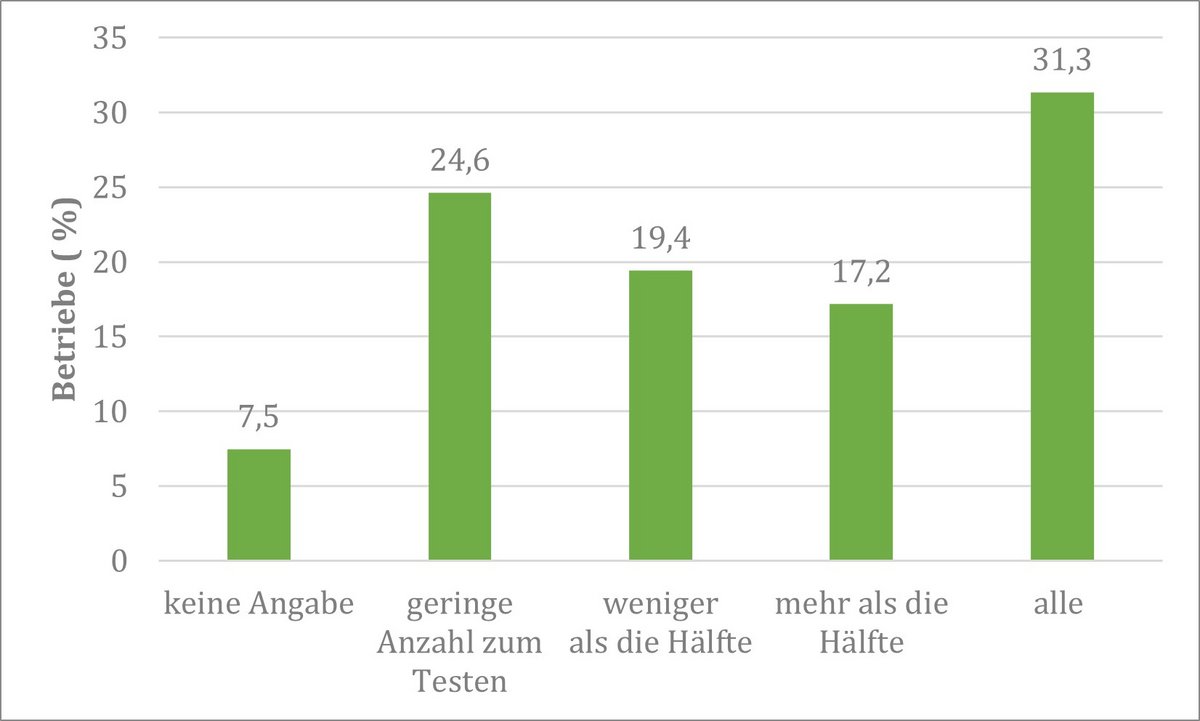
(Number of responses n = 134)
Practice survey brings together experiences
Some farms are already using exercise pens or free farrowing and have gained valuable insights into what works and what doesn’t. That is why the Pig Animal Welfare Competence Centre, part of the Fokus Tierwohl network, launched a survey last year. The aim was to collate the practical experience gathered on farms regarding exercise pens and free farrowing, in order to make this available to other farmers and thus support them in meeting the challenges ahead.
A total of 214 pig farmers from across Germany, Austria and Switzerland took part in the survey.
The responses from 134 farms with exercise pens are summarised below. You can find the experiences regarding the use of free farrowing here. The proportion of exercise pens varies across farms (Fig. 1).
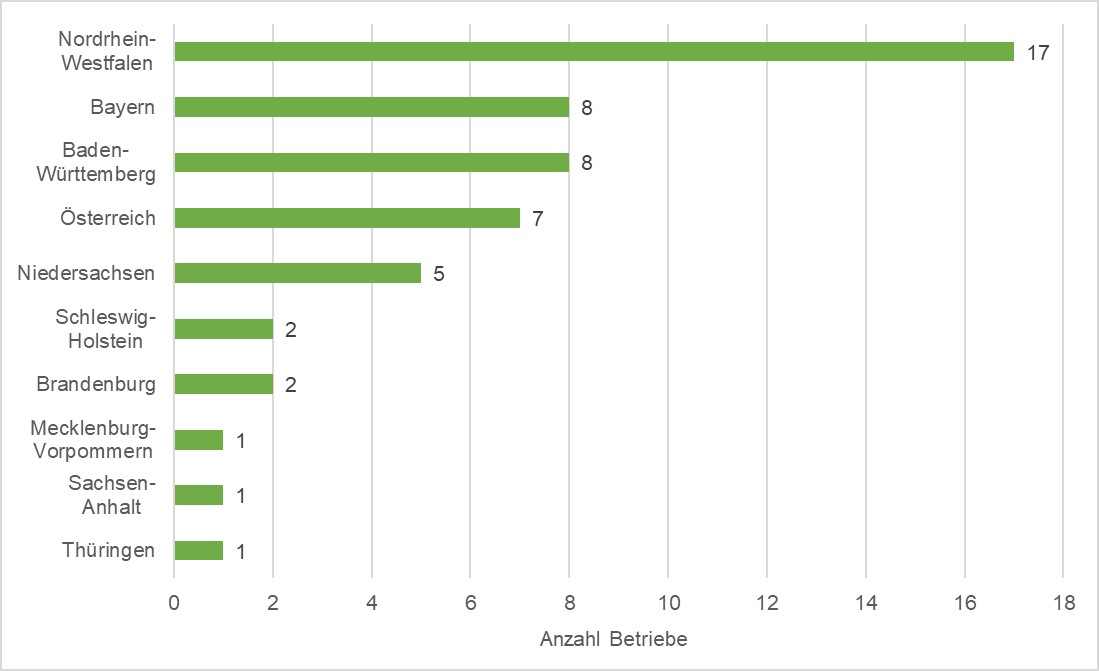
(Number of responses n = 52)
Around half of sow farmers stated that they had been using exercise pens for between 1 and 5 years. Just under 32% had only started using this form of sow management less than a year ago, whilst a further 16.4% had more than five years’ experience of using this farrowing system. The locations of the piglet production farms are distributed as shown in Figure 2.
Of those surveyed, 67 respondents provided information on the manufacturers of the exercise pens installed. At 25.4%, pens from Schauer Agrotronic GmbH were the most common. In second place, with 17.9%, were exercise pens from En-Sta Stalltechnik GmbH, whilst 13.4% of survey participants each use pens from Big Dutchman and Stallprofi Hof- und Stalltechnologie GmbH. With regard to the size of the exercise pens, 20 farms stated that the installed exercise pens have an area of less than 6.5 m² and will therefore no longer comply with the law after the transition period ends in February 2036.
Exercise pens serve as a bridge between conventional farrowing crates and free farrowing. They offer both advantages and disadvantages, which the survey participants outlined, as shown in Table 1. Unsurprisingly, the increased freedom of movement for the sow was most frequently cited as a positive aspect of exercise pens. Opinions differed when it came to assessing the workload. Whilst some participants stated that the benefits for the sow (e.g. positive impact on animal health/farrowing process) also lead to a reduced workload for the animal caretaker, for other participants, tasks such as opening and closing the farrowing crate or catching the piglets for treatment resulted in an increased workload.
| Advantages | Disadvantages | |
| for the sow |
|
|
| for the piglets |
|
|
| for the animal carer |
|
|
<figcaption>Table 1: Advantages and disadvantages of exercise pens from the perspective of survey participants.(Categories were formed for the evaluation of the responses. The responses are sorted by frequency.)</figcaption>
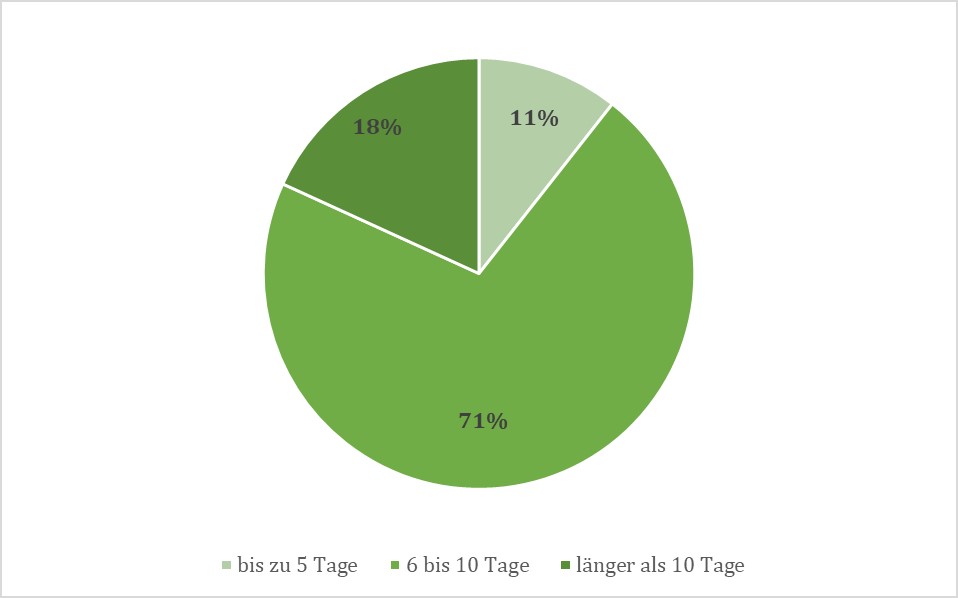
(Number of responses n = 66)
When asked about the timing of closing and opening the farrowing crate, the responses (n = 66) varied considerably. The majority of survey participants still make use of the option to restrain the sow in the farrowing pen for longer than 5 days (Fig. 3). The most common response was that sows are restrained 2 days before the calculated due date (27%). The average total restraint period was 8 days. The longest reported restraint period was 21 days.
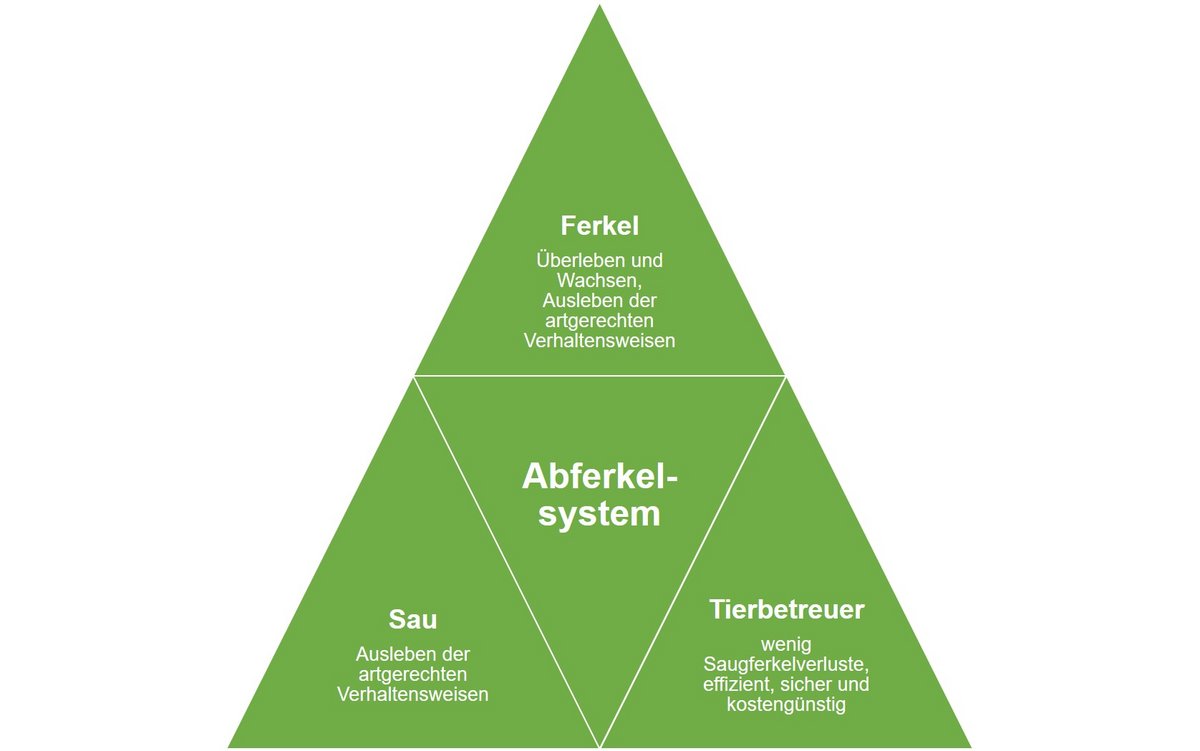
Here, everyone will certainly have to experiment for themselves to determine how to distribute the permitted 5-day tethering period across the farrowing period in a way that suits their individual farm. Experience shows that the piglet protection cage must be closed in good time before birth, as the sows need to get used to being tethered. Furthermore, there is otherwise a risk that too many piglets will be crushed whilst the farrowing crate is still open. However, closing it too early is rather detrimental, as confinement also causes stress and hinders the sows’ ability to build a nest. It is a fine balance between meeting the needs of the sows, the piglets and the animal caretaker (Fig. 4).
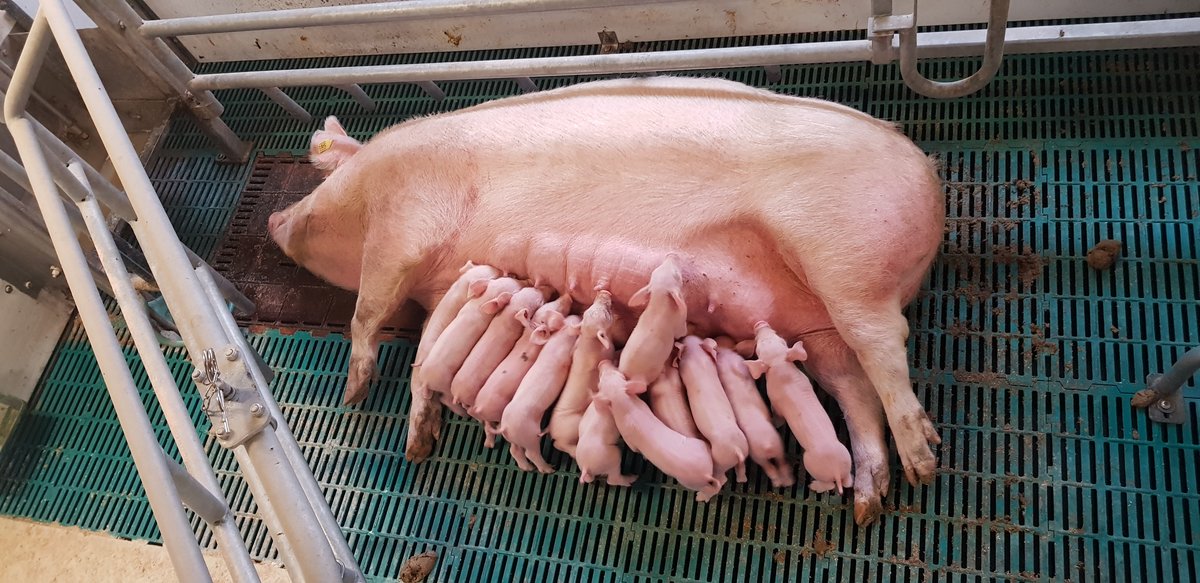
(Image: Katja Menzer, LfULG)
Here’s what the survey figures reveal
Note: A statistical analysis of the data could only be carried out using a small sample of farms that provided all the necessary information on suckling pig losses.
A representative evaluation is heavily influenced by farm-specific factors, which complicates the analysis. Nevertheless, the results are consistent with those from reliable trials conducted at teaching and research institutes. On the farms evaluated, products from well-known manufacturers – ranging from Schauer, En-Sta, WEDA and Big Dutchman to Vissing Agro and even in-house designs – have been in use for varying lengths of time. This results in decent outputs of just over or just under 30 piglets per sow per year. Compared to standard pens with fixation throughout the entire suckling period, this is on average (only) one piglet per sow per year fewer. As expected, the difference stems from the piglet mortality rate. However, farms that have been using free-range pens for a long time (> 5 years) do not initially achieve better results than those that have not been doing so for as long. The reason for this, however, is not a lack of accumulated knowledge, but rather that the technology has also improved. The older pens have an average size of less than 6.0 m², whilst the newer ones average 6.6 m². Experience from research institutes shows that ever larger pens (> 7 m²) do not improve outcomes for either humans or animals. However, less than 6 m² is clearly insufficient and will not meet legal requirements after the transition period. On the other hand, farms that have adopted this system and already operate around half of their pens as exercise pens achieve significantly better results (highly significant: +4–5 piglets per sow per year) than farms with few such pens. Thus, the experience and attitude of the farmers still play a major role.
With the technology used by various manufacturers, there is at least a tendency (as shown significantly in the trials) that the design of the pens is about guiding the sow’s lying and resting behaviour. Measured by the piglet loss rate, this works better on a more trapezoidal or tapered activity area for the sow (Fig. 5) than on a square or polygonal floor area. This is the only way to encourage the sow to settle down on a designated standing area (with adequate stability) and, where possible, supported by the piglet protection cage, whilst minimising rolling movements whilst lying down. All other floor plans allow for a wider opening angle of the cage and thus greater freedom of movement for the sow, but result in higher piglet losses. In the analysis across farms, this amounted to only a few percentage points (2–3%). However, the actual effect is greater and, in trials conducted for this purpose, amounted to more than 7% or one piglet per litter that can be sold.
Frequent feeding (> twice daily) means the sow has to get up frequently, which tends to increase the risk of piglet loss. Feeding just once a day is gentler on the piglets, but is still insufficient in terms of the stated annual output (3 fewer piglets per sow per year compared to twice-daily feeding) and is therefore not recommended.
With regard to the crate closure times surveyed before and after birth, it was difficult to distinguish between cause and effect, as farms experiencing problems with unsatisfactory piglet loss rates tend to keep the sows in the crates for longer (> 10 days). However, based on the available figures, it is clear that it is correct to close the piglet protection crate in good time before birth. Young sows in particular need to get used to being confined. Furthermore, if the pen is closed too late, there is a risk that too many piglets will be crushed whilst the farrowing crate is still open, as the sows toss and turn under the influence of labour pains. According to the data, the best results are achieved with confinement periods of 2–3 days. However, as the legal requirement will eventually only permit a 5-day confinement period around the time of birth, we actually need this period after the birth. So there is still more to learn in this area too.
The most pronounced differences, though heavily influenced by farm-specific factors, are seen in the genetics used or the sows’ origin. It is evident that breeding companies have so far made varying degrees of progress in supplying sows that make exclusively positive use of the free-range access granted. It is to be hoped that the maternal traits responsible for this – which have arguably been lost to some extent in conventional husbandry – will be given greater priority in selection in future.
Dr Eckhard Meyer, Köllitsch Teaching and Research Farm
Don’t just jump straight in
The respondents agree on one thing: take your time when deciding on a pen! Start by installing a few different types of pens for testing, running them alongside the conventional ones. This will allow you to gain experience and identify the criteria that are important to you when it comes to designing and managing the pen. After all, the pen must be suited to your farm. Where possible, also take advantage of opportunities to discuss practical experiences with colleagues. Visit other farms and try out procedures such as opening and closing the piglet protection cage for yourself.
Every beginning is difficult
Above all, however, do not give up straight away if you encounter setbacks at the start. Sows that are used to conventional farrowing pens may struggle with a new, differently designed pen. Consequently, higher piglet losses may occur temporarily during the transition phase. However, such setbacks should not be taken as proof that the system itself is flawed.
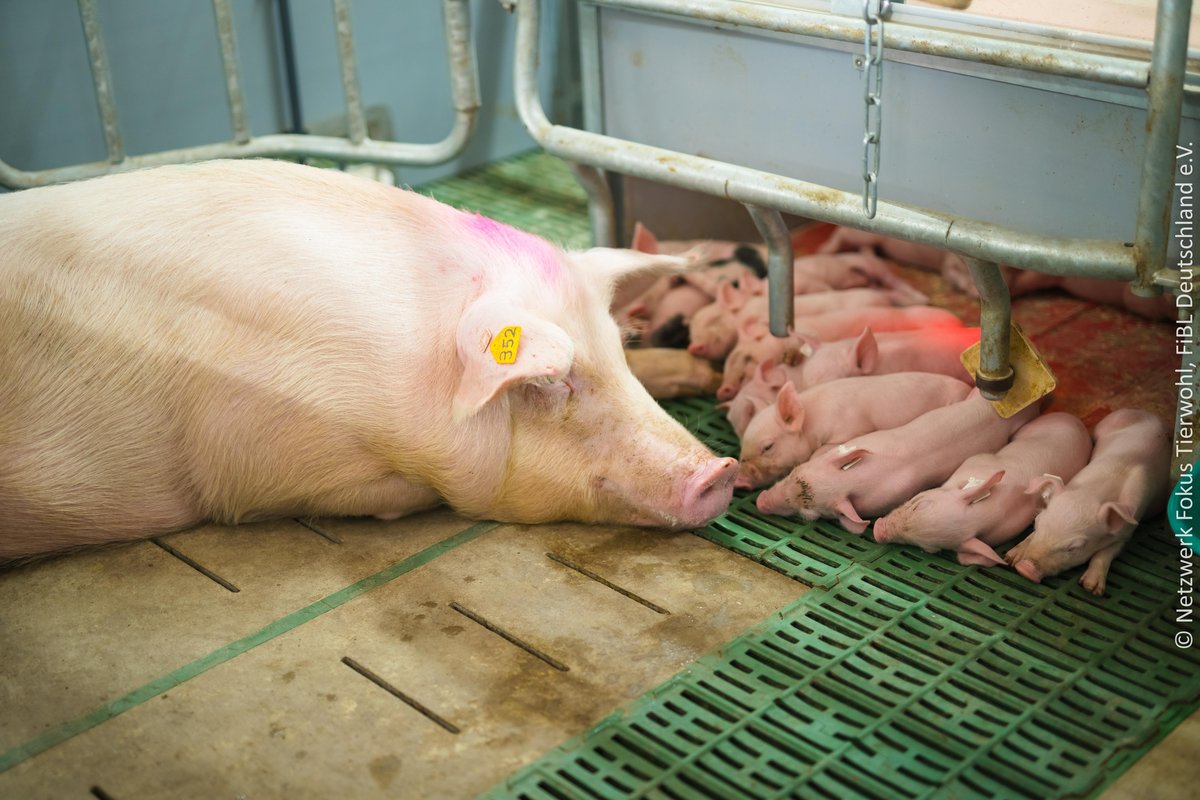
(Image: Netzwerk Fokus Tierwohl, FiBL Deutschland e.V.)

(Photo: Ludger Bütfering, LWK NRW)
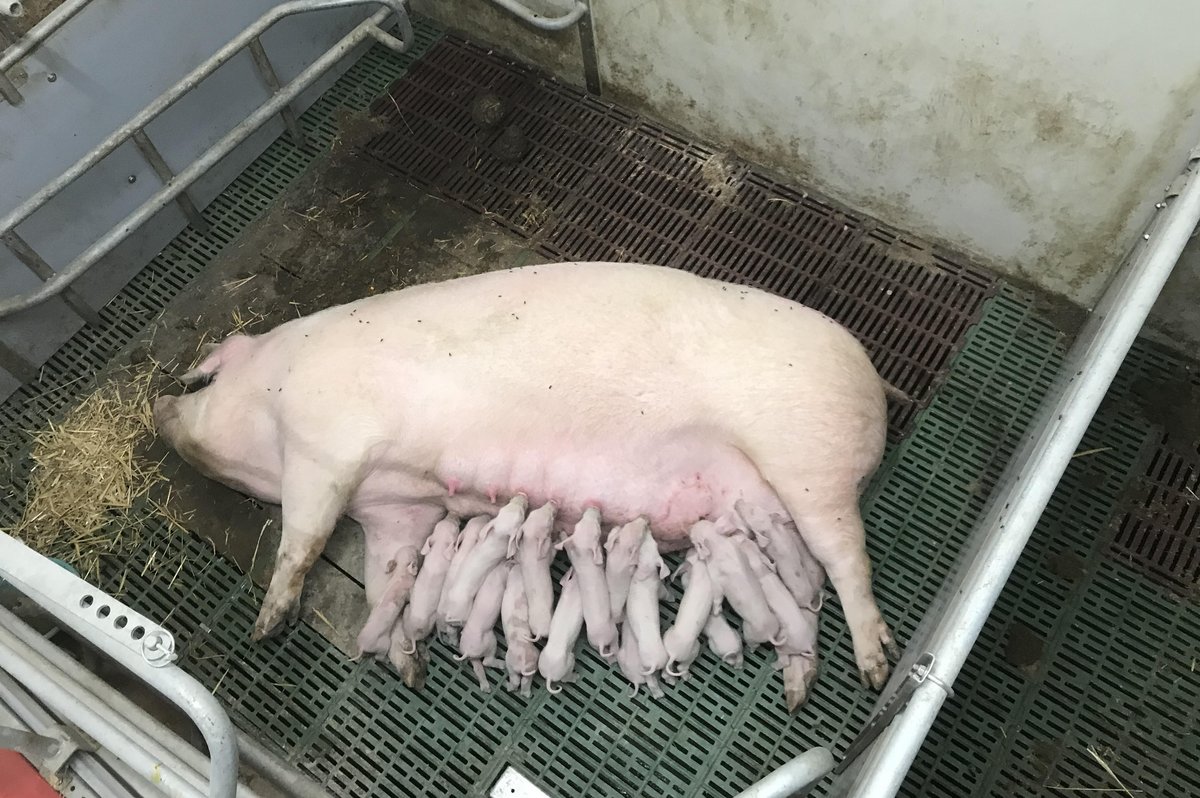
(Photo: Lukas Schmidle)