- Alina Kathrin Lückemann
- Prof. Dr. Robby Andersson, Osnabrück University of Applied Sciences
- Dr. Friedhelm Deerberg, Consultancy & Project Management in Organic Farming
- Tobias Ferling, Lohmann Deutschland GmbH & Co. KG
- Dr. Peter Hiller, Lower Saxony Chamber of Agriculture
- Dr. Christiane Keppler, State Agricultural Agency of Hesse
- Dr. Annika Lange, German Animal Welfare Association
- Prof. Dr. Stephan Schneider, Nürtingen-Geislingen University of Applied Sciences
- Henner Schönecke, Federal Egg Association
- Dr. Dieter Schulze, Praxis Am Bergweg GmbH
Funding information
This project was funded by the European Agricultural Fund for Rural Development (EAFRD).
This document was developed by the Poultry Animal Welfare Competence Centre as part of the joint project ‘Network Focus on Animal Welfare’, funding reference numbers 28N-4-013-01 to 28N-4-013-17, and was methodologically and didactically prepared by DLG e.V. and FiBL
Deutschland e.V. The joint project involving the Chambers of Agriculture and agricultural institutions from all federal states aims to improve the transfer of knowledge into practice in order to make cattle, pig and poultry farms fit for the future in terms of animal-welfare-friendly, environmentally sound and sustainable livestock farming.
The project is funded by the Federal Ministry of Food and Agriculture pursuant to a resolution of the German Bundestag.
All information and advice is provided without any warranty or liability.

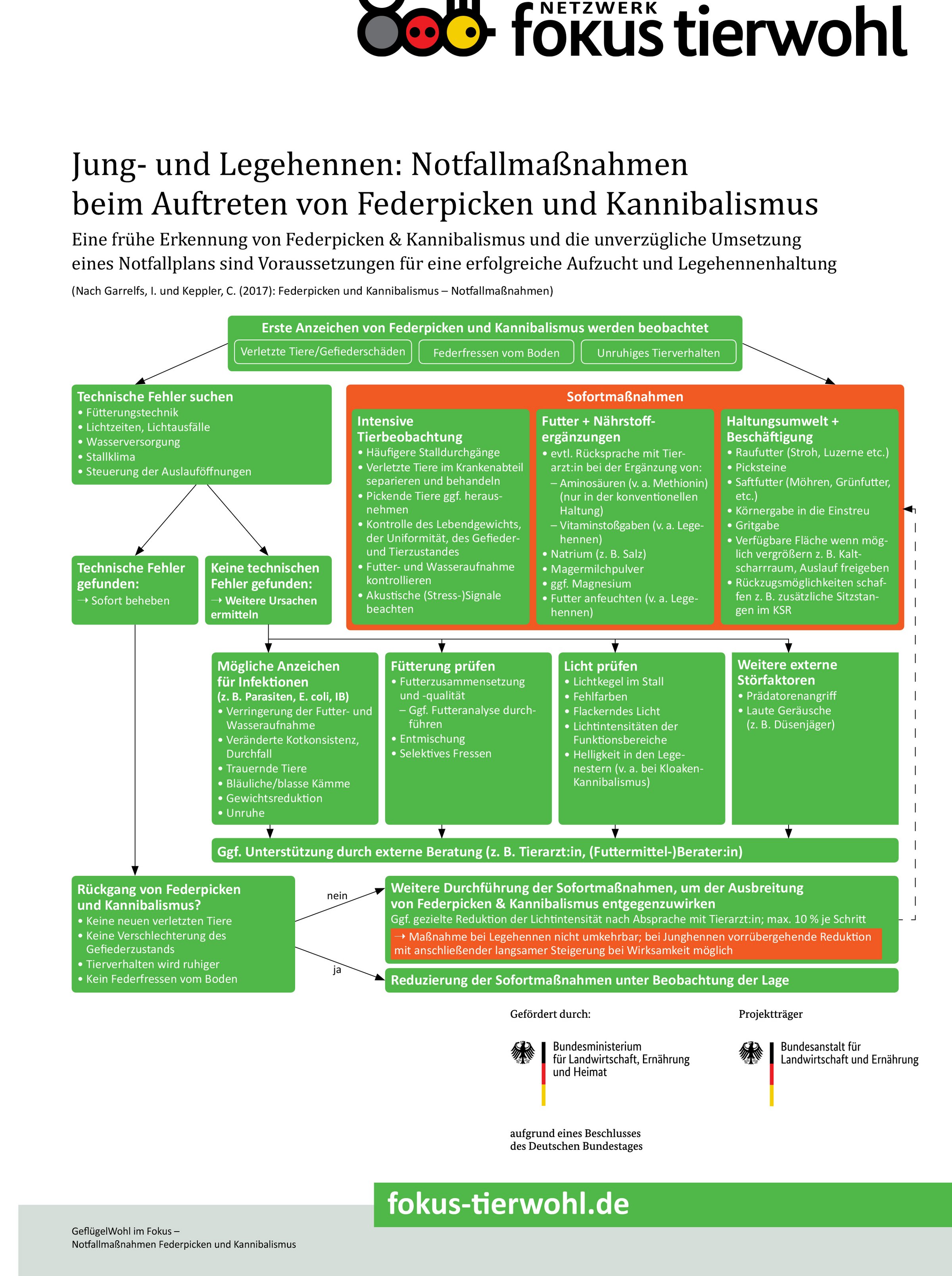
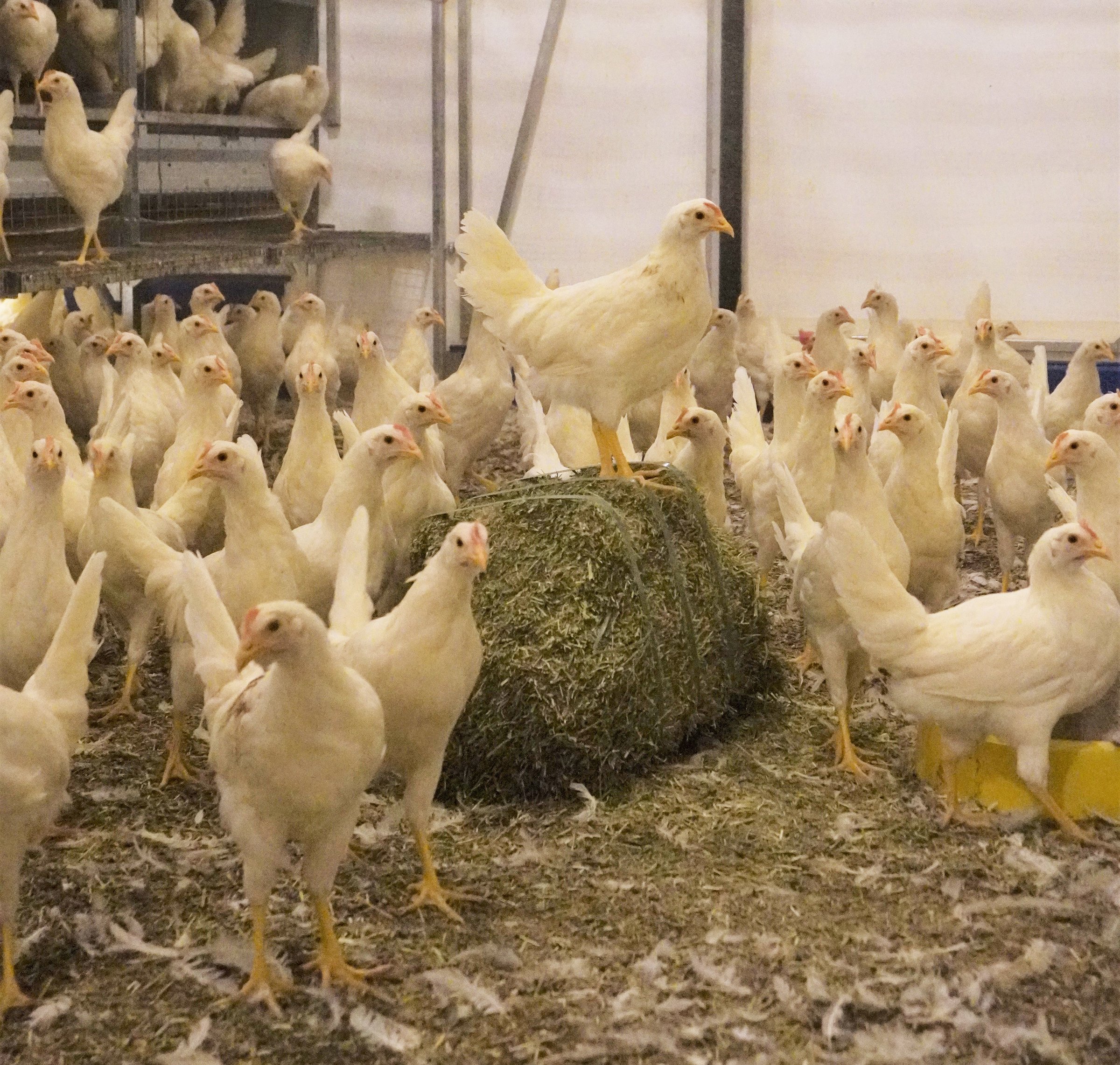
The foundations for the behaviour and performance of future laying hens are laid during the rearing phase and require a great deal of specialist knowledge and experience. Mistakes made during this phase cannot usually be rectified later on during the laying period. It is therefore essential to detect feather pecking and/or cannibalism at an early stage and to take immediate steps to prevent these behavioural disorders.
Feather pecking and cannibalism are not behaviours motivated by aggression, but stem from misguided foraging behaviour. The triggering factors can vary greatly. A precise and systematic investigation of the causes is therefore important.
An emergency plan drawn up for this purpose by the Young and Laying Hen Working Group provides an overview of the necessary control measures to minimise feather pecking and cannibalism.
Download: Poster "Emergency measures in the event of feather pecking and cannibalism in pullets"
Further information on the topics of pullet rearing, feather pecking and cannibalism:
Animal welfare in poultry Critical control points