

- Philipp Franz, farmer, Agrarprodukte Bernsgrün-Hohndorf eG (pioneer farm for animal welfare)
- Dr. Daniel Gieseke, University of Kassel
- Prof. Isabel Hennig-Pauka, Foundation of the University of Veterinary Medicine Hannover
- Dr. Heiko Janssen, Lower Saxony Chamber of Agriculture
- Katja Menzer, Saxon State Office for the Environment, Agriculture and Geology
- Wilhelm Schulte-Remmert, farmer (Animal Welfare Pilot Farm)
- Dr. Sabine Schütze, North Rhine-Westphalia Chamber of Agriculture
- Laura Schönberg, North Rhine-Westphalia Chamber of Agriculture
Thanks to genetic progress, improvements in insemination management and a more tailored approach to caring for sows during gestation, the biological performance of sows has improved steadily in recent years. This is particularly evident in the increased number of live-born piglets. What is now required is adapted management of large litters to minimise piglet losses during the suckling period whilst ensuring that strong and healthy piglets are weaned.
How is this already being managed by piglet-producing farms in Germany? Which measures are of particular importance to sow farmers? Can general recommendations be derived from practical experience? These and other questions were to be answered by a 2023 survey on management measures for handling large litters, initiated by the ‘Suckling Piglet Losses’ working group of the Fokus Tierwohl network.
Information about the businesses
A total of 89 piglet-rearing farms of varying sizes took part in the survey. As not all participants answered every question, the dataset on which the results are based varies. Around one third of participants keep between 101 and 300 sows, one third between 301 and 600 sows, and the remaining farms keep fewer than 100 or more than 600 sows (9% and 16% of participants respectively). One participating farm in each group keeps fewer than 10 and more than 3,000 sows. More than half of the farms operate on a 3-week cycle, and group sizes of between 21 and 40 sows were most frequently reported.
Eighty-five and 87 participants respectively provided data on the average litter size (total piglets born) and the number of live-born piglets per litter. The mean number of total piglets born per litter across all farms was 17.7. On average, the number of live-born piglets per litter was 16.1, with a range of 12.7 to 19.9 live-born piglets per litter.
Throw compensation
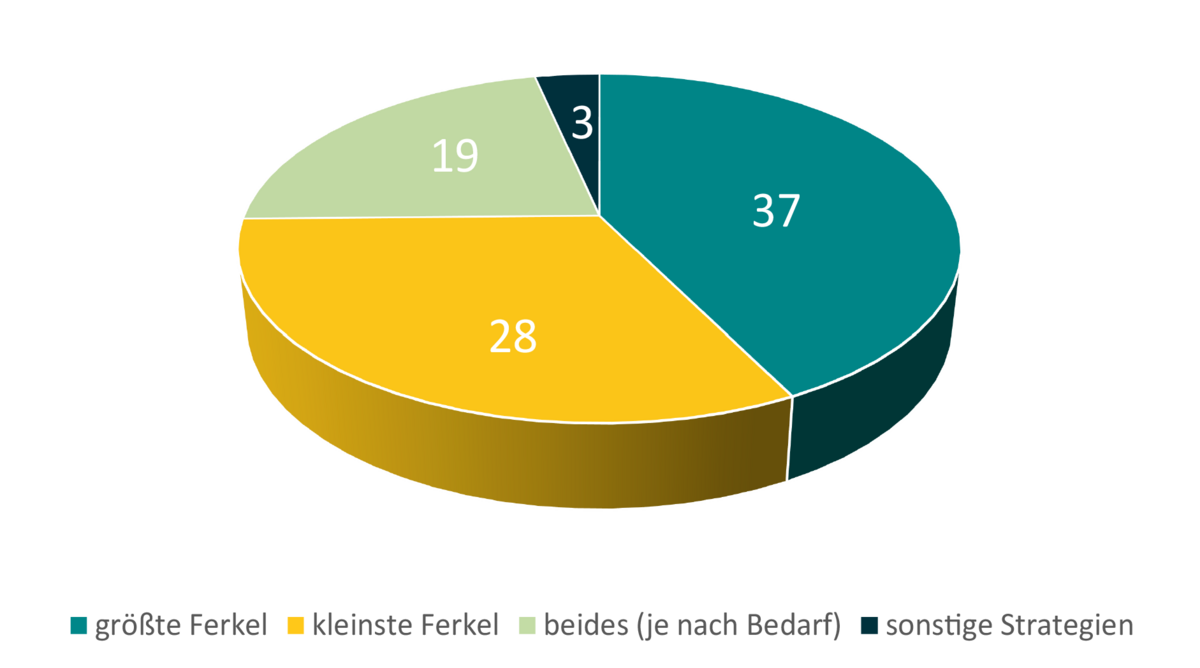
Immediately after birth, colostrum is a vital source of energy for every piglet. Before litter equalisation takes place, each piglet should consume colostrum from its own mother. Therefore, litter equalisation should be carried out no earlier than 12 hours after the birth of the last piglet in a litter. This is also the predominant practice: 48 out of 89 participants stated that they carried out the first litter balancing on the first day of life, but no earlier than 12 hours after birth. 29 of the farms move the piglets for the first time on the second to third day of life and 10 during the first week of life. However, it is not only the timing of litter balancing that is crucial to the success of this measure. The aim of distributing individual piglets from very large litters to other sows within a farrowing group with fewer piglets is to prevent suckling piglet losses due to starvation and to achieve uniform weaning weights. At the same time, the sow’s biological potential is taken into account by matching the number of piglets to the number of teats and milk yield. As the survey responses show, there are various strategies: transferring the largest or smallest piglets, transferring entire litters, or transferring piglets not according to a fixed pattern but depending on the situation (Fig. 1). It should be noted that there are farm-specific differences as to which measure works best.
The litter size to which pigs are redistributed is just as important as the frequency of redistribution and whether pigs are moved between different farrowing groups. Of the 86 participants, 75 stated that they move piglets within a weaning group. The other 11 farms move piglets between different farrowing groups. Furthermore, 25 farms stated that they carry out litter balancing once, whilst 28 farms do so twice and 27 more than twice during the animals’ stay in the farrowing house. Among the survey participants, 47 out of 89 stated that 14 piglets was the average litter size to which balancing was carried out. For the majority of participants, the maximum litter size after reallocation was 16 or 15 piglets (30 and 25 out of 84 farms respectively).
It is certainly advisable to carry out litter equalisation only within a single weaning group. Whilst ‘re-weaning’ smaller piglets from the previous weaning group can sometimes result in more uniform weaning weights, this is also associated with adverse effects. The immune systems of older piglets from a different weaning group are already more developed, and the microbial flora with which the piglets have come into contact may also be different. In the worst case, this leads to infections in the younger animals and can result in growth retardation due to reduced milk intake or missed suckling times. Mortality may even increase as a result.
As a general rule: as much as necessary, but as little as possible! Because every swap increases the risk of spreading germs.

Feeding systems
In highly fertile sows, the average number of teats is regularly lower than the number of piglets born alive. This means that there are usually more piglets than the sows can nurse. Rearing these ‘surplus’ piglets is a challenge that must be addressed from both an animal welfare and an economic perspective. To this end, the concept of ‘foster rearing’ is employed, i.e. piglets are not reared by their own mother, but by natural foster sows or, in exceptional cases, by an artificial foster sow.
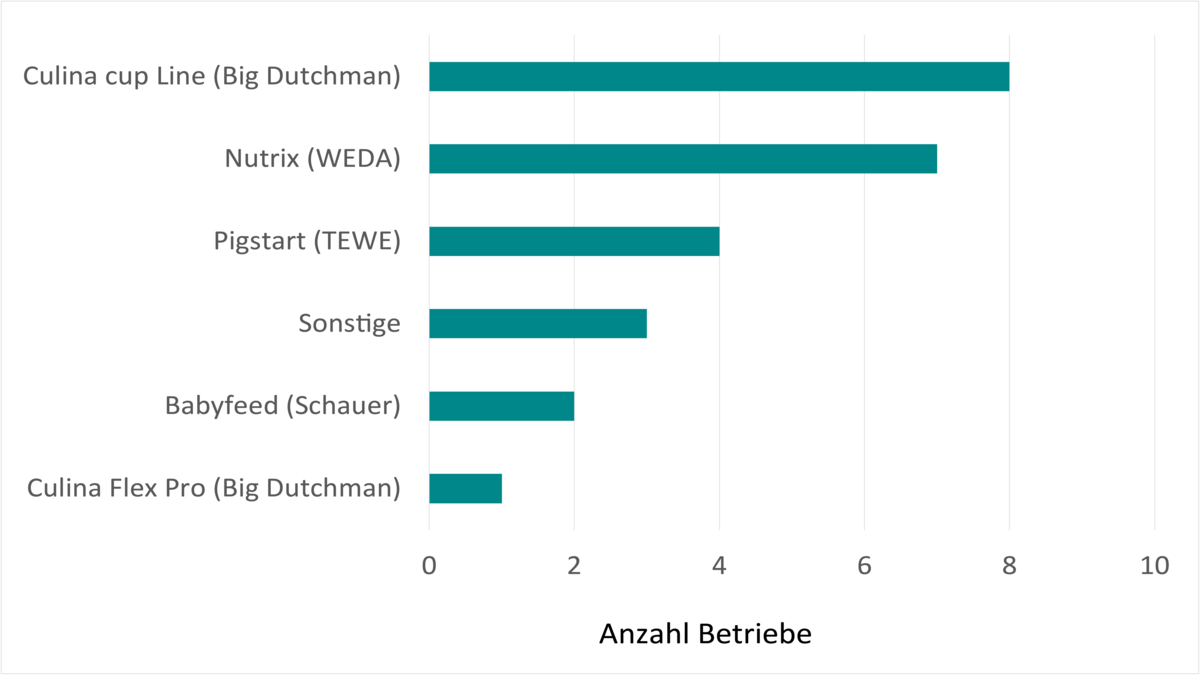
The question of whether a foster system forms part of management in the farrowing house was answered by 87 participants, with the majority of respondents using foster sows (Fig. 2).
With regard to satisfaction, the three farms using artificial sows were asked to rate the artificial sow systems on a school grading scale. On average, the artificial sows received a grade of 2.8. User satisfaction was therefore only moderate. A positive point noted was that artificial sows alleviate the stress of having to use more foster sows shortly after birth, leaving more time for the piglets. However, the piglets grew too far apart after 7 to 10 days. It was also noted that piglet development is poorer with technical sows than with natural sows. As a technical sow can never replace a natural sow, rearing with technical sows is always only a last resort.
Supplementary feeding
Supplementary feeding of piglets should be distinguished from the use of foster sows. Supplementary feeding does not involve rearing piglets without their mothers; rather, the piglets are fed in addition to the sow’s milk. Furthermore, all piglets can benefit from supplementary feeding, whereas in a foster sow system only those piglets that are placed with a foster sow receive ‘special treatment’. Depending on when supplementary feeding of suckling piglets begins, it serves a different purpose. Early supplementary feeding of milk or milk replacer is primarily intended to keep very young piglets alive, for example, if the sow’s milk yield is insufficient or if small, weak piglets have less chance of securing a teat. Later supplementary feeding with prestarter, on the other hand, is intended to prepare the piglets for the upcoming feed change at weaning and thus reduce the drop in weight gain after weaning.
44 out of 87 respondents who answered the question offer piglets additional piglet milk via a supplementary feeding system. Of these, 18 farms stated that they use a mobile system and 25 a stationary system. In the case of mobile supplementary feeding, 13 farms feed by hand. Various systems from different manufacturers are available on the market. The stationary supplementary feeding systems used by the survey participants are shown in Fig. 3.
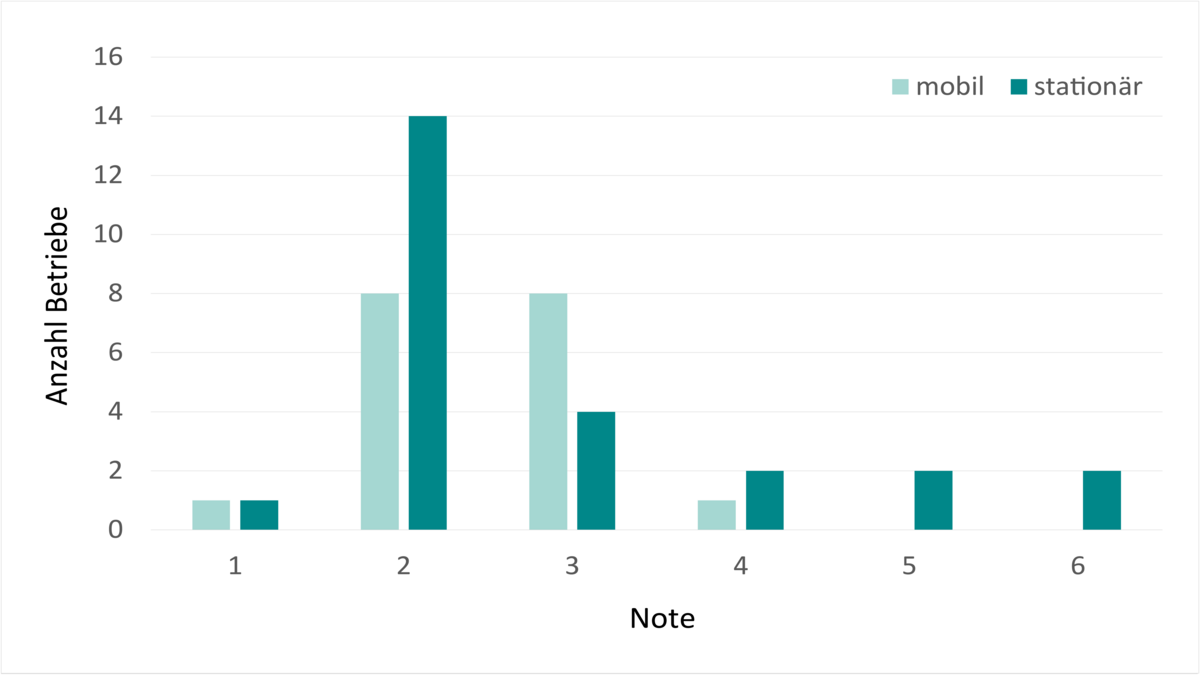
The majority of respondents are satisfied with the supplementary feeding system they use (Fig. 4). However, particularly in the case of hand-feeding, the workload was cited as a drawback, and it was noted that feeding small amounts frequently is hardly feasible. Farms most commonly begin supplementary feeding between the first and fourth day of life and continue for an average of 14 days. Among the 45 responses received, the duration varied between 3 and 28 days.
Practical experience
At the end of the survey, participants were asked to rank various predefined measures in order of importance with regard to the management of large litters. 82 respondents submitted their ratings. This resulted in the following ranking:
- Adequate colostrum supply
- well-planned, sow-specific litter balancing
- Timely supplementary feeding of suckling piglets
- Use of a foster system
The following are also considered important management measures in practice:
- optimal feeding/conditioning of sows
- Health (monitoring) of sows
- Maintaining the health of piglets
- Split suckling
- Birth monitoring
There are many factors that can be adjusted to minimise piglet losses during the suckling period whilst ensuring that strong and healthy piglets are weaned. Some of these measures begin even before birth and must be considered on a farm-by-farm basis. The overriding importance of high vitality in healthy suckling piglets for their development and health in all subsequent life stages justifies the significant management effort required during this phase. Furthermore, the number of piglets sold is of paramount importance from an economic perspective.
- "Take the sow's temperature at least twice after farrowing; monitor the farrowing process closely"
- "Supply of additional immunoglobulins and nutrients"
- "Check sow records to see whether the sow was a foster sow in the previous litter (and therefore reared many piglets) or was perhaps ill (and therefore may have reared fewer piglets or poor-quality piglets); check teat quality → then select piglets"
- "Optimised sow feeding in the farrowing pen, excellent conditioning of sows prior to farrowing"
- "Breed smaller litters; treat the number of piglets as an optimum (around 15) rather than a maximum"
- "Homogeneous litters, splitting of large litters during or shortly after birth"
- "Regular litter balancing"
- "Split nursing"
- "Sorting large and small piglets"
- "Provide water for an extra week"
- "Sow health (fever, discharge), switching from gestation feed to lactation feed two days after farrowing"
- "good staff"
- "Sows with sufficient milk yield, individual assessment of udders, sow feeding management to maximise performance, close monitoring of farrowing"
- "the mother or the genetics"
- "Forming mixed litters (up to 40 piglets per 2 sows) with intensive supplementary feeding"
- "Colostrum supply, litter balancing, foster system, group suckling, supplementary feeding is provided from day one as we have floor troughs for the sows, no overly old sow herd, selecting sows based on performance"
- "Vaccination management for sows"
- "The sow must be able to suckle properly; otherwise, the other measures are of no use. Ensure a balanced age structure – too few young sows will overburden the older sows with too many small piglets."
- "Maintaining piglet health (diarrhoea)"
- "Smooth farrowing of sows, ensuring sows take up water and feed after birth, preventing MMA problems."
- "Feeding the sow before birth and increasing feed intake after birth. Monitoring the birth. This results in few problems with MMA and good milk production."
- "Good udder condition, problem-free birth, strong piglets"
- "A good birth weight for piglets is very important for achieving uniform litters, so that litter equalisation is kept to a minimum (sow feeding therefore plays a major role)"
- "Proper transfer of sows to the farrowing pen (water and feed), sows’ trust in humans, i.e. calmness during all work with the animal"
- "Remove the larger piglets on the first day of life so that the smaller ones can suckle sufficiently"
- "Ensure that the sow eats and has enough milk, maintain the sow’s feed intake at a consistently high level, and generally maintain the sow’s health throughout the entire lactation period."
- "Sows that produce plenty of milk"
- "If there are more than 18 piglets, we split the litter in half and rotate the piglets every 1.5–2 hours."
- "Provide water in an open trough for the piglets from birth and always check the temperature in the piglet nests!!!, supply the sow with water, take her temperature, check her udder"
- "Sows in good condition after birth, full litter separation on day 3"
- "Sow’s milk yield, teat functionality"
- "Piglets with colostrum deficiency (underweight, hypothermic piglets should be fed using a lambing bottle (colostrum powder in milk replacer)). Separate the first-born, heavy piglets into crates in the farrowing pen after they have taken colostrum and practise split-suckling for a maximum of two days."
- "High health status of the sow herd, replacement and systematic selection regardless of market conditions"
- "Balanced litters, count functional teats"
- "The sow must be healthy"
- "Initial treatment as advised by the vet, teeth grinding in accordance with the Animal Health and Welfare Ordinance"