
Quarter-selective drying - sustainably reducing the use of antibiotics
Recommendations from science and practical experience - guidelines from the "Knowledge - Dialogue - Practice" project phase of the animal welfare model and demonstration project published: The aim of the MinimA project was to test a drying-off treatment consistently oriented towards the detection of mastitis pathogens under practical conditions. To this end, 16 dairy farms across Germany carried out quarter-selective drying off in their herds. Based on the experiences and suggestions of the project farms, these guidelines for action were drawn up.
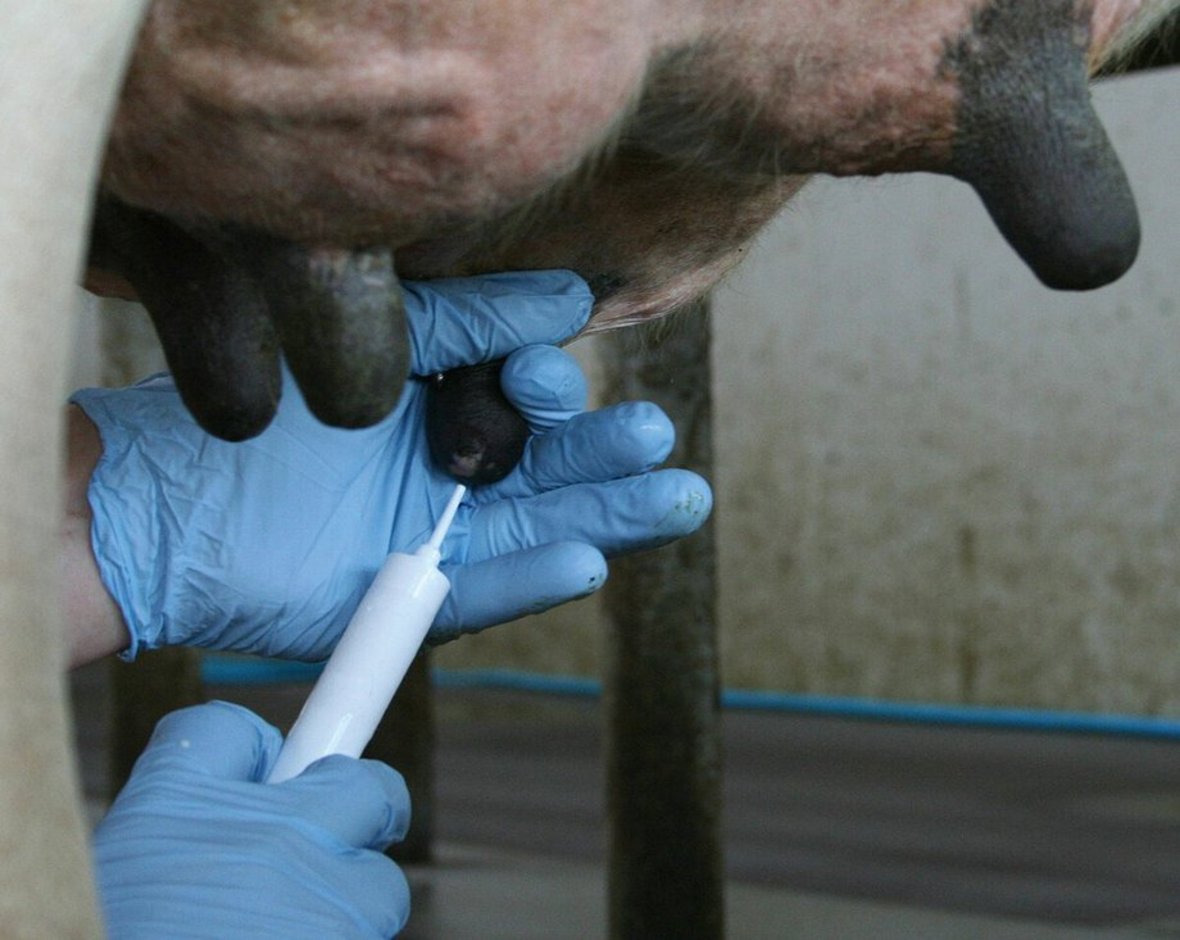
In order to reduce the use of antibiotics, selective drying-off strategies are used on many dairy farms. These strategies are largely based on data on cell content from milk performance testing. The decision on antibiotic treatment is made at cow level. The MinimA project ("Sustainable minimisation of antibiotic use through quarter-selective dry cow treatment in dairy cows") pursued a different approach based on the udder quarter and consistently focussed on pathogen detection. The principle: only udder quarters that are proven to be infected are treated with antibiotics. For this purpose, quarter samples from the cows are analysed for mastitis pathogens before the planned dry-off date. Depending on the results of the bacteriological examination, the respective udder quarter is then dried off with an antibiotic-containing drying off preparation and an internal teat sealer or with a teat sealer alone. This procedure was successfully tested on 16 farms in the project and is now to be further established in practice. This guide is intended to support interested farmers in introducing the quarter-selective dry-off procedure in their herds.
To the guide "Quarter-selective drying off - sustainably reducing the use of antibiotics"