
Design of weather protection to provide insulation against the cold
The cows must be able to retreat to a sheltered area in adverse weather conditions. This area must be designed in such a way that heat loss—for example, due to wind—is reduced, the coat remains relatively dry, and heat loss to the cold, damp ground is minimised when the cows are lying down.
Furthermore, a weather-protected area is a clear indication that the livestock keepers are fulfilling their duty of care towards the animals.
Furthermore, a natural (rows of trees and bushes), weather-protected area enriches flora and fauna by providing a habitat for birds, insects, etc.
Objectives for the design of weather protection:
- sufficient resting time (otherwise exhaustion may occur)
- normal rumination behaviour (energy for heat production)
Key elements of weather protection
- Wind protection
- Lying area: reduce conductive heat loss through bedding
- Protection from precipitation
There are various ways to incorporate these key elements without overburdening the individual animal.
Types of weather protection
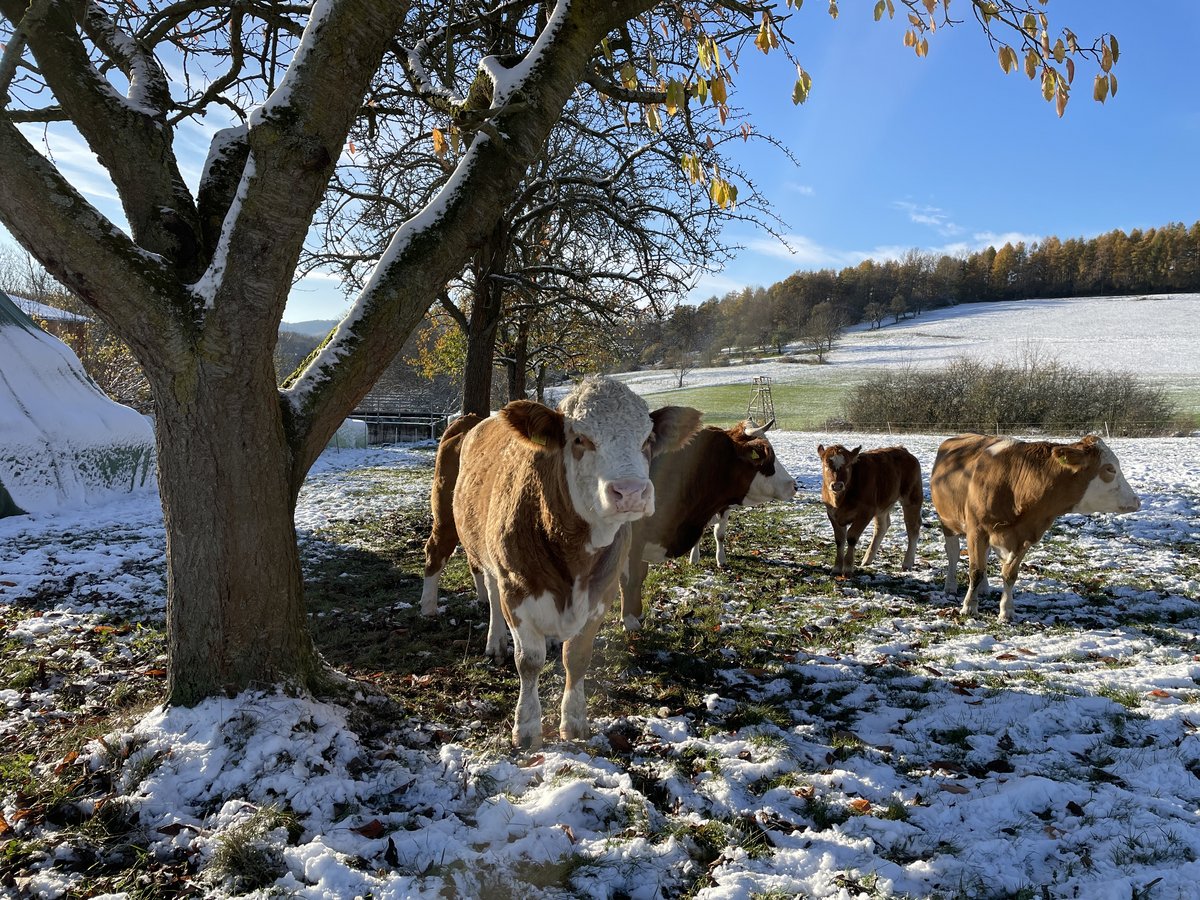
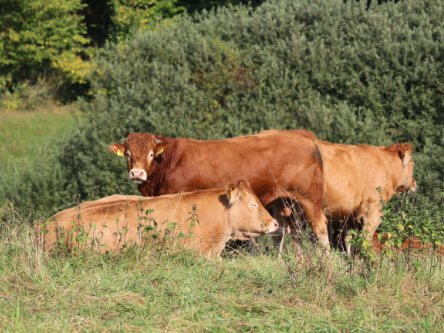
It is essential to provide a bedded, wind-protected resting area that must be kept dry in order to ensure that cows spend around 50% of the day lying down. Areas with high levels of precipitation (snow and rain) may require a roof (shelter). Studies show that the duration of lying down by cows in snowy areas was sufficient when they had access to shelter. The cows’ lying times decreased significantly (from 50% of the day to 35%) when access to the shelter was not possible (Morgan et al., 2011). This clearly demonstrates that in regions with high levels of precipitation (snow or rain), shelter is of some importance. In areas with low winter precipitation (continental climate), however, shelter is generally not required if sufficient lying areas are available. Site- and farm-specific approaches should be promoted and implemented by livestock farmers. Various systems of weather protection can be combined in this context.
Wind protection
High wind speeds can also cause the body temperature of suckler cows to drop. Against this background, wind protection appears to be necessary for such weather conditions. If rain or drizzle additionally soaks the suckler cows’ coats, the insulating effect of the coat is significantly reduced and the processes involved in drying the coat generate additional evaporative cooling. In the case of short-term events, no impact on the welfare of the suckler cows is expected. However, should the combination of wind and rain persist for several days, providing shelter would be beneficial for the cows’ thermoregulation.
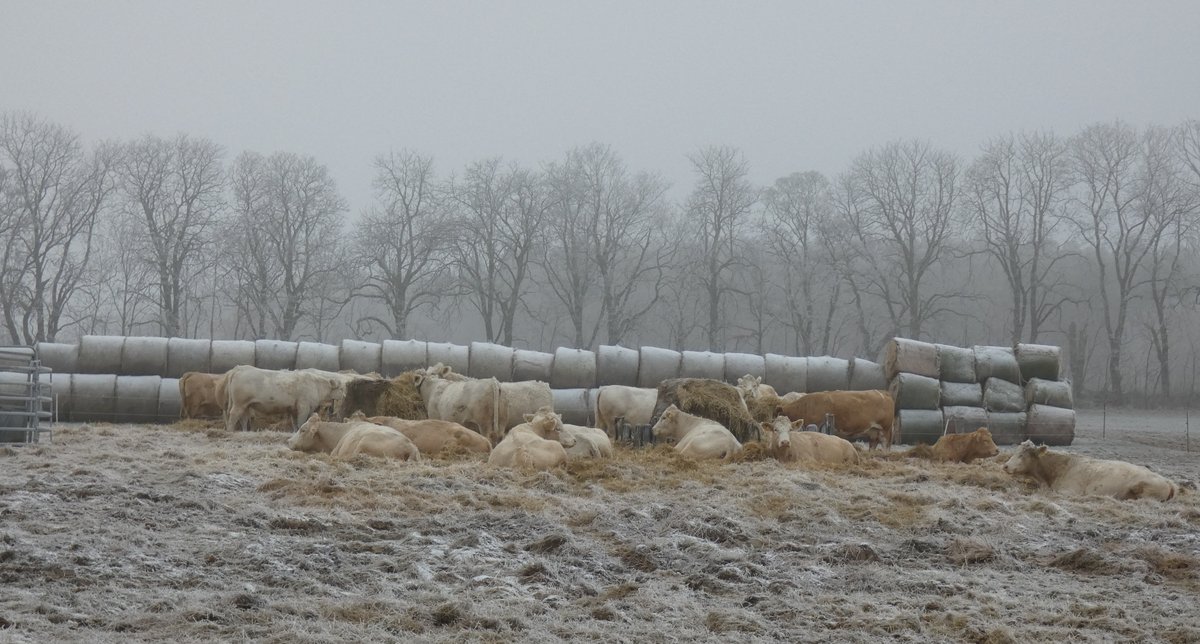
- Reduction of heat loss through natural shelter such as hedges, rows of trees and woods, or artificial windbreaks such as windbreak walls (straw bales or windbreak nets) or shelters aligned to provide protection against the prevailing wind direction
- if wind and rain persist = rain protection required
The extent to which wind protection is required for the outdoor rearing of suckler cows must always be assessed on an individual farm basis. It should be borne in mind that wind protection can also provide protection against rain when wind and rain occur simultaneously.
Natural wind protection
Provide wind-protected areas for suckler cows and calves:
- Rows of trees and bushes
- Deciduous trees: are only suitable to a limited extent
- trees of varying heights provide good protection
- Hilly terrain* (animals position themselves behind hilltops)
- Deep bedding provides (partial) protection from the wind
*Terrain with hills, hollows and depressions
Type of windbreak | Distance from the windbreak Height of the windbreak multiplied by factor… | ||||
| 5 | 10 | 15 | 20 | 30 | |
| Reduction in wind speed (%) | |||||
Deciduous tree, single row, porosity: 65–75% | 50% | 65% | 80% | 85% | 100% |
Conifer, single-row, porosity: 40–60% | 30% | 50% | 60% | 75% | 95% |
Conifer, multi-row, porosity: 20–40% | 25% | 35% | 65% | 85% | 95% |
Windbreak, porosity: 0% | 25% | 70% | 90% | 95% | 100% |
If an area lacks natural, established windbreaks, trees planted in a single row or, preferably, in multiple rows can provide protection (KTBL Publication 481). According to Brandle and Finch (1991), conifers planted in a single row with a porosity of 40–60% result in a density of between 40 and 60%. This reduces the wind speed on the leeward side (the side facing away from the wind) to approximately 30% of that on the windward side (the side facing the wind). The area thus protected is five times as deep as the tree row is high. Planting in multiple rows with a porosity of 20–40% achieves a density of 60–80% and reduces wind speed to 35%. In this case, the protected area extends to a depth equivalent to 10 times the height of the trees (Table 11).
Structural windbreaks
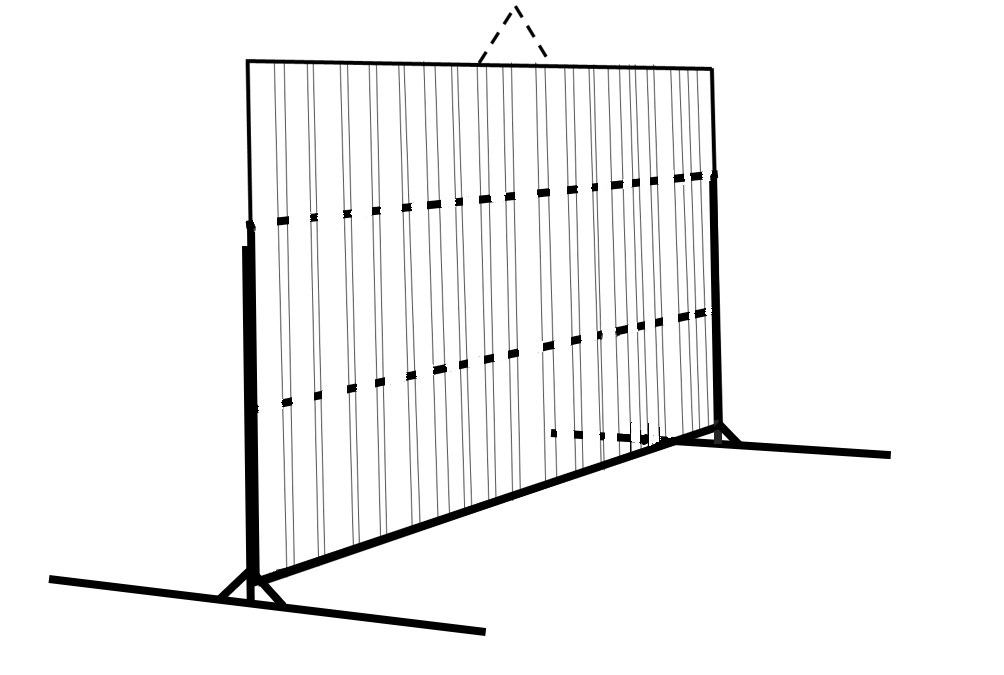
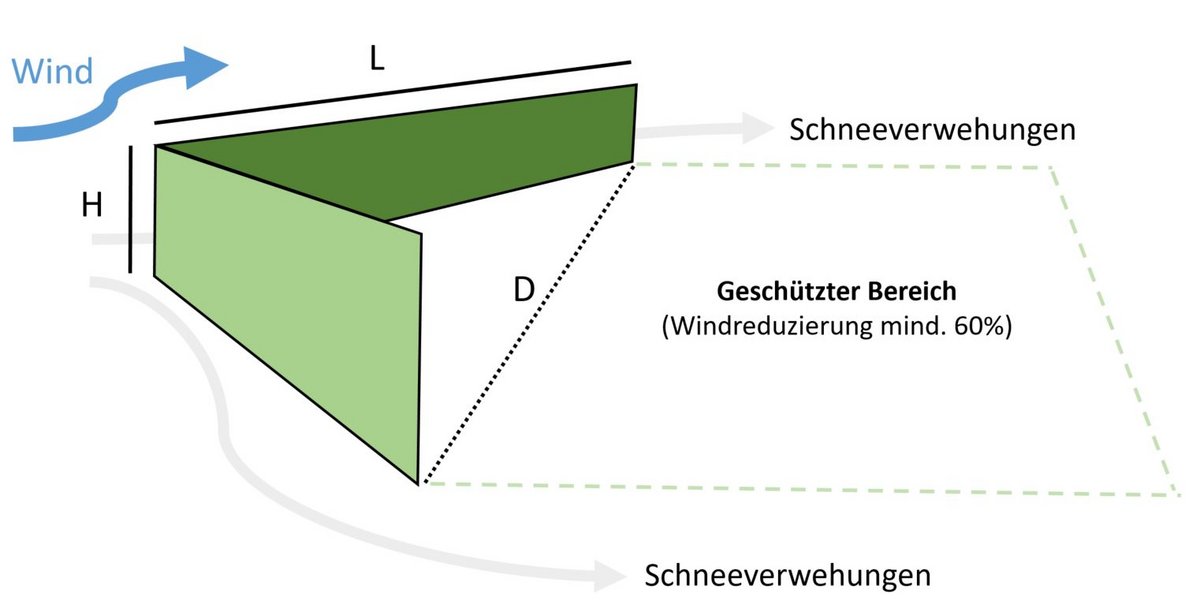
If there is no naturally occurring windbreak for the animals on the land, it is possible to erect windbreaks. Ideally, these should be:
- portable
- permeable (to prevent turbulence)
- ideally: V-shaped (90°)
According to North American studies by Klein (2009), a porosity of 20–35% is considered optimal. Wind speed is reduced to 20–30% of the initial level.
Example: 9 m/s (32 km/h) is reduced to 1.8–3 m/s (6–9 km/h)
Care must be taken to ensure that the windbreak extends to the ground to prevent draughts (KTBL Publication 481). A windbreak is effective within an area whose depth corresponds to 6–8 times the height of the windbreak (Figures 14 & 15).
Assuming a space requirement of approximately 7 m² per cow and calf, the following wall dimensions and floor areas apply depending on herd size (KTBL Publication 481):
| Herd size (cow-calf pairs) | Required sheltered area1) | Windbreak 2) 3) | |
| n | sq m | Height (m) | Length (m) |
| 20 | 140 | 2 | 12 |
| 50 | 350 | 3 | 19 |
| 100 | 700 | 4 | 29 |
| 200 | 1400 | 4 | 58 |
<figcaption>Table 12: Area of the sheltered area and wall dimensions depending on herd size, according to KTBL Publication 481 (2010)1) Space requirement per cow-calf pair approx. 7 m² (cow: 500–700 kg); calf: older than 2 months; polled). 2) Protected area = length × (height × 6), rounded. 3) Porosity of the windbreak wall 25 to 33%.</figcaption>
L-shaped, T-shaped or cross-shaped floor plans offer optimal protection; in addition, care should be taken to ensure that the sides are of equal length. To give lower-ranking animals the opportunity to escape, and as they are of limited practical use, acute angles should be avoided (KTBL Publication 481).
Comparative studies
Graunke (2007) studied the behaviour of suckler cows in Sweden between December and March (winter) on a pasture with access to various sheltered areas:
[1] without shelter,
[2] woodland,
[3] shelter and facing the wind, and
[4] near shelter and facing the wind.
(In [3] and [4], it depends on the animals’ exact location.)
Here it became apparent that, depending on the wind chill temperature (which refers to the perceived temperature, see Chapter 3.2), the decision to remain in the open or in the forest was significantly influenced. At low temperatures, combined with strong winds, the forest was more likely to be sought out as natural shelter. Structural windbreaks, by contrast, were rarely used (Graunke, 2007). She concludes that suckler cows and cattle were able to adapt to the weather conditions and behaved in accordance with the degree of shelter available. It is important to note that “…the cows and heifers were able to find warmer wind chill temperatures without necessarily having to seek out the three protective grazing areas”. The conclusion of the comparative study is that individual animal and site-specific differences (precipitation, soil conditions, etc.) must be taken into account, as correspondingly different solutions are possible.
Golze (2000) and Zube (1996) also state that suckler cows and beef cattle only utilise the artificial shelter area (shelter) after a prolonged period of rain with low temperatures and strong winds.
Livestock farmers should always ask themselves why a shelter is not being used, for example, whether there were disadvantages for the animals inside the shelter that outweighed the risks of being exposed to bad weather. Accessibility often plays a role; the location of the shelter and the associated view of the pasture can also determine whether or not the animals use it.
sleeping area
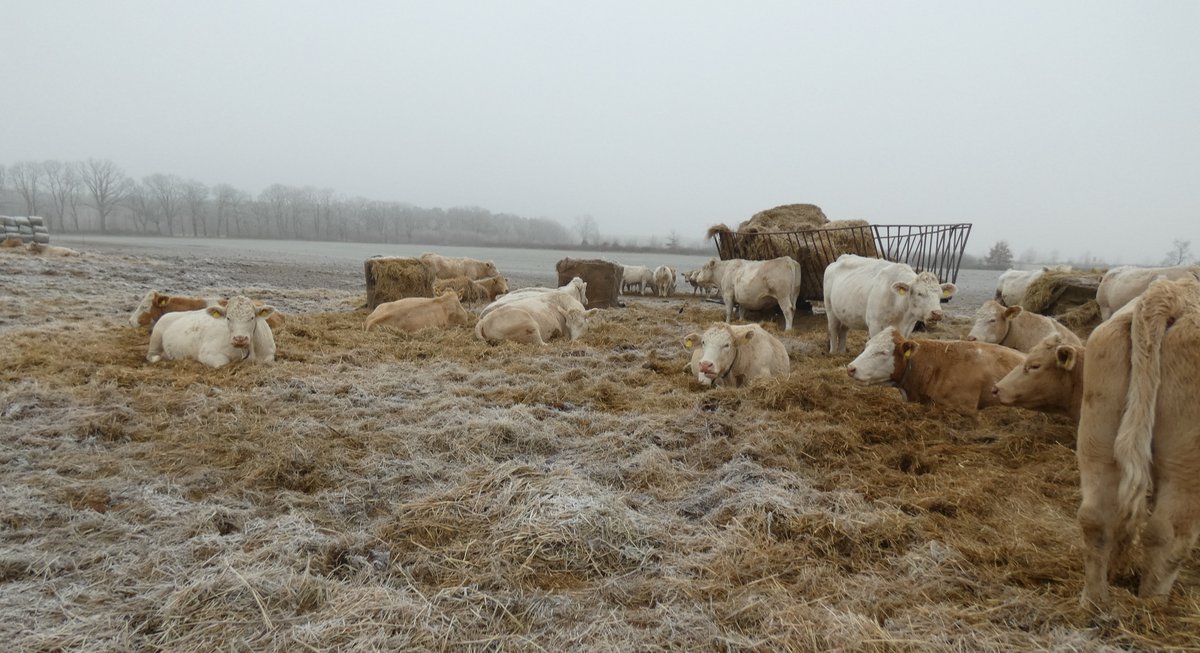
In addition to protection from the wind, a dry lying area is required that provides the animals with insulation from below. The following requirements apply to an optimal lying area for protection against the cold:
- sown grassland or catch crops are sufficient provided there is sufficient vegetation and no severe weather conditions
- A bedding area is necessary under winter weather conditions (e.g. straw, wood chips, hay, litter; suggestion for pure grassland farms: green matter from contractual nature conservation)
- A bedded lying area requires management tailored to the farm and weather conditions (situational frequency and quantity of bedding); in the event of extreme weather conditions (days requiring protection), additional bedding should be provided within 24 hours at the latest
- Sufficient lying area (depending on herd size, herd behaviour, horn status, calves at foot) of 4 m² per suckler cow and 1 m² per calf
- Options for choice, particularly for low-ranking animals in larger herds
- A separate area for calves is advantageous (e.g. under a shed, calf shelter)

Cattle usually avoid direct contact with cold, damp ground, which helps to minimise heat loss. Under certain circumstances, this behaviour may occur more frequently during prolonged rain and low temperatures and could lead to exhaustion. As rumination occurs in conjunction with lying down, disturbed lying behaviour can also impair rumination. This can disrupt the body’s heat production.
The tables in Chapter 2.1 show space requirements for cows and calves in sheltered areas. It is clear that a distinction must be made between polled and horned cattle. Furthermore, herd size and body mass play a role. Social behaviour within the herd must also be taken into account. For example, dominant cows may prevent other herd members from accessing the sheltered area. To prevent this, the access must be wide enough, or additional sheltered areas can be provided. A minimum area of 4 m² per cow and 1 m² per calf can be assumed, depending on horn status, body mass, age, herd size and social behaviour.
Mazurek et al. (2010) describe an ‘Animal Welfare Index’ (AWI) for suckler cow husbandry in Ireland and distinguish between the type and cleanliness of the flooring and the exercise yard or pasture. The scores shown in Table X are specified as guidelines for the assessment. For example, lying mats with long straw are rated highest. However, in addition to the lying mat itself, the cleanliness of these areas and the areas surrounding them are also included in the scoring.
| Score | Substrate or bedding material | Cleanliness of the lying area | Surroundings of the lying area | Condition of the grassland |
| 2.5 | Straw > 60 mm | |||
| 2.0 | Straw 30–60 mm | |||
| 1.5 | Wood chips or peat | |||
| 1.0 | Plastic mats | clean | clean | Good condition of the scar |
| 0.5 | Wooden slats / panel | average | Average | |
| 0.0 | Concrete slats | dirty | dirty | Fair condition with gaps |
| -0.5 | Concrete | heavily soiled | heavily soiled | Trampled vegetation |
<figcaption>Table 13: Scores for the assessment of lying areas, according to Mazurek et al. (2010)</figcaption>
Protection from the wet
A shelter is not always necessary to ensure protection from the wet:
- Site conditions are decisive in determining the extent of protection required
- In some locations, wind protection can also act as protection against precipitation
- Dry bedding on a resting mat offers (partial) protection against moisture
- Structural measures (shelter)
- Structural and technical measures allow bedding to become less saturated
According to Wallbaum 1996 and Wassmuth et al. 1999, shelters can provide comprehensive protection from the weather. These should be designed with animal welfare in mind so that they can be used by all breeds. In the absence of fresh air, in the event of draughts or on muddy ground, the animals will avoid shelters and seek out other areas to rest.
The open side of the shelters should face away from the prevailing wind direction and, if possible, face south. The winter sun has a positive effect on animal health (KTBL Publication 481).