
Environmental factors that exacerbate or alleviate cold stress
In general, low temperatures, high wind speeds, damp and cold lying areas, precipitation and high humidity increase heat loss and thus contribute to cold stress.
| Stressful animal-related factors | Consequences for suckler cows |
| Damp, soiled coat (e.g. from lying on the ground without bedding) | Increased heat loss (damp coat loses its insulating effect) |
Incomplete development of winter coat and/or coat partially damaged by ectoparasite infestation | Increased heat loss |
| Low body reserves – thin subcutaneous fat layer | increased heat loss |
The adverse weather conditions listed in Tables 6 and 7, and their resulting consequences for suckler cows, can lead to poor body condition, disease, an associated increased energy requirement during illness, hoof problems, metabolic disorders, and hair damage or loss caused by ectoparasites.
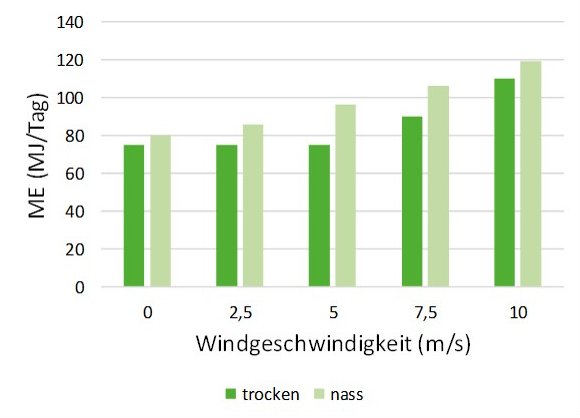
Research from Scotland by Morgan et al. (2011) clearly shows that the energy requirements of (pregnant) suckler cows can vary greatly depending on wind speed and the condition of their winter coat. For instance, energy requirements can rise from around 80 MJ ME per suckler cow per day in calm conditions to almost 120 MJ ME per day when the coat is wet and the wind speed is 10 m/s (Figure 4).
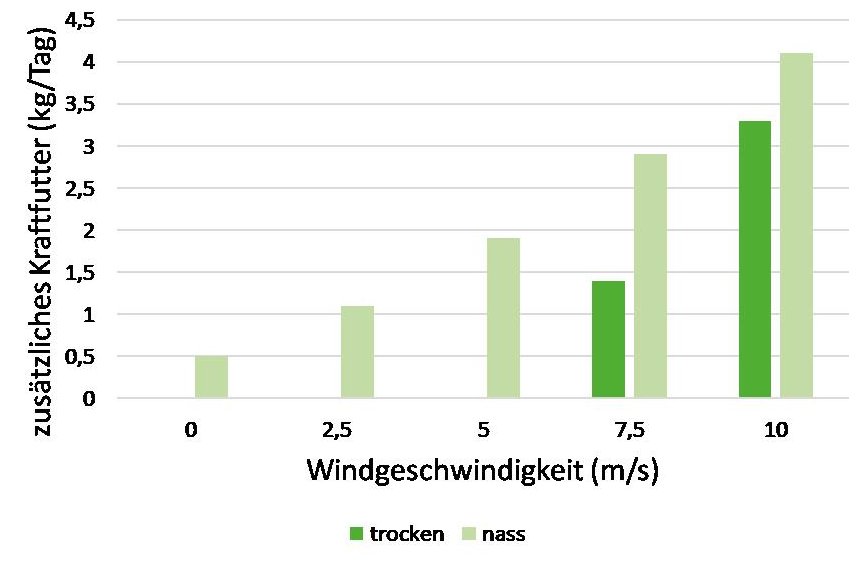
Depending on the feeding system, the increased energy requirements of suckler cows during cold spells cannot be addressed in the short term by simply adjusting their existing feed or ration. Livestock farmers must be able to make adjustments. Against this background, Morgan et al. (2011) recommend offering the animals additional feed in the form of concentrate during cold stress to mitigate the effect of increased heat loss. Here, the farmer must make a decision based on wind speed, coat condition and body condition. The recommended amounts of additional concentrate feed according to Morgan et al. (2011) are shown in Figure 5. Management practices must also be adapted accordingly, and access to pasture must be maintained even in poor weather conditions.
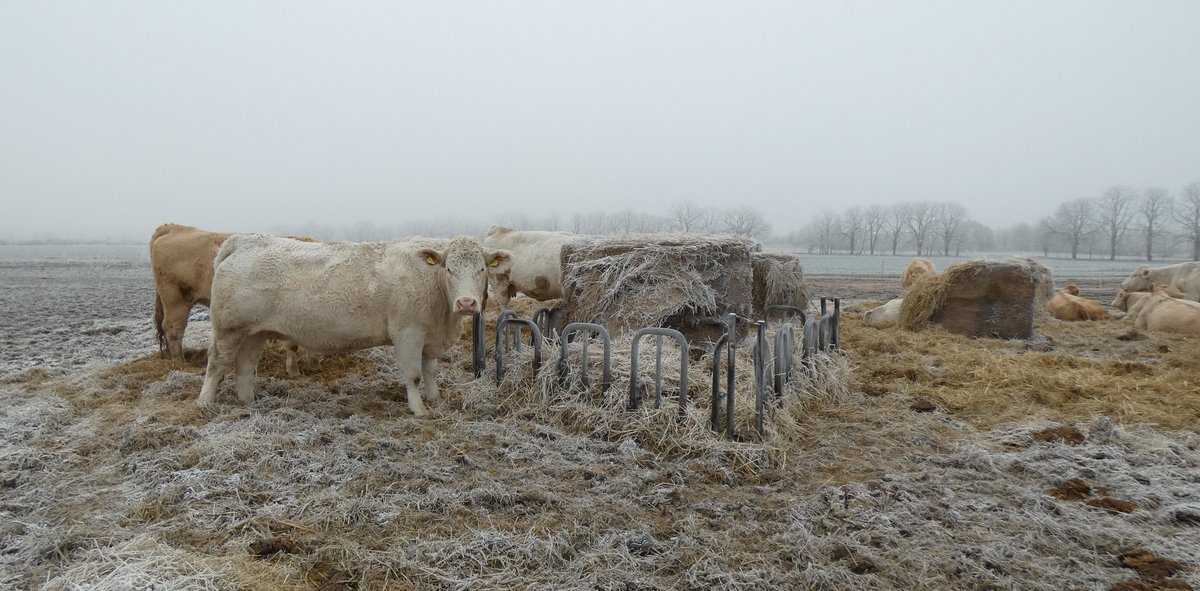
To counteract adverse environmental factors and their resulting consequences, attention should be paid to mitigating factors relating to the animals and weather conditions, as listed in Table 8. This is based on animals being in good health and having appropriate protection from the weather.
| Mitigating animal-related factors | Mitigating housing factors |
| dry winter coat | bedding-covered lying area |
| optimal feed and energy intake | Wind protection |
| Good physical condition | Rain protection |
| Good health is essential | |
| Individual animal adaptation responses (see 4.2.) |
<figcaption>Table 8: Mitigating factors for suckler cows and their calves (Animal Welfare Network, Suckler Cow Working Group)</figcaption>
Adaptive responses and capabilities
Suckler cows may respond to cold stress with changes in behaviour, health and performance. A distinction must also be made here between short- and medium-term adaptive responses and capabilities.
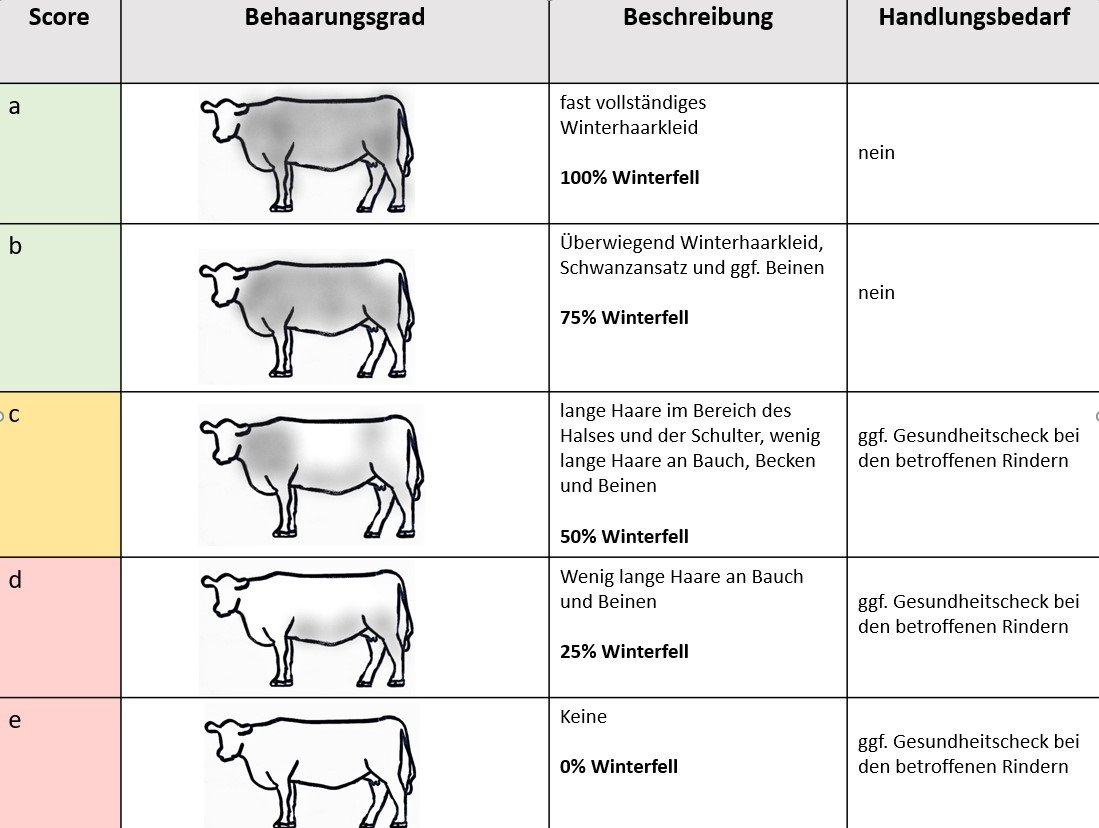
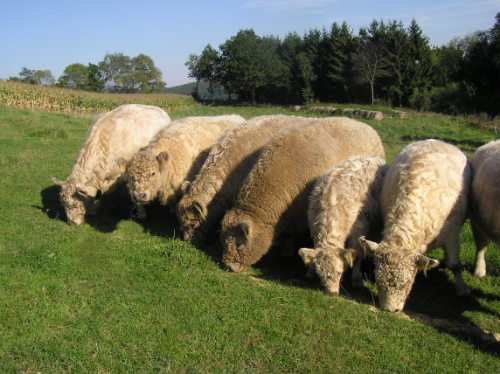
An important aspect for suckler cow farmers is training their eye to recognise and assess the winter coat, see Figure 7. This can vary within a herd, breed and over the course of the year, see Figure 8. The winter coat should be assessed once at the start of winter. The cooler the region becomes, the earlier the winter coat should be assessed (by early November at the latest). In older and younger animals, the coat change may take longer. The aim should be for approximately 60% of the animals to fall into scores a and b.
Short-term ethological adaptive responses
Cattle exposed to cold stress are unable to exhibit their normal behaviour. Consequently, biological functions, animal welfare and health may be impaired. This may be accompanied by behavioural changes which, if needs are not met, can develop into behavioural abnormalities (Polsky and von Keyserlingk, 2017).
| Behavioural element | Reaction to heat loss |
| Body posture |
|
| Change of location |
|
| Behavioural changes |
|
<figcaption>Table 9: Ethological adaptation – reduction in heat loss (after Waßmuth et al., 1999)</figcaption>
According to Sporkmann et al. (2016), lying behaviour also decreases as the CCI increases (i.e. lower temperature). Up to -10 °C, an average of 9.5 hours per day was spent lying down. At temperatures between -10 and -20 °C, this lying time decreased to less than 8 hours per cow per day.
Table 10 shows that cattle avoid lying down on uninsulated surfaces in damp-cold and dry-cold weather and tend to seek out bedded areas in such conditions. Seeking shelter, on the other hand, is preferred under these weather conditions and less so in dry-warm weather. The feeding area alone, at a corresponding distance, is visited more frequently in dry-warm and damp-cold weather and less frequently in dry-cold weather.
| Weather | |||
| Behaviour | dry - warm1 | damp and cold2 | dry and cold3 |
| Lying on uninsulated surfaces | 12% | 0% | 0% |
| Seeking out the bedding area | 0% | 4% | 18% |
| Seeking out the shelter | 5% | 24% | 22% |
| Visiting areas > 80m away from the feeding station | 80% | 50% | 26% |
<figcaption>Table 10: Behaviour depending on weather conditions (proportion of cows), according to Waßmuth et al. (1999)1 dry and warm (>6°C)2 damp-cold (-6°C–0°C, precipitation3 dry and cold (<-6°C)</figcaption>
Short-term physical adaptation response
- Mobilisation of bodily reserves
- Vasoconstriction
- Shivering
- Increase in oxidative processes
- Reduction in respiratory rate to below 20 breaths per minute (Webster, 1974)
Medium-term physiological adaptation response
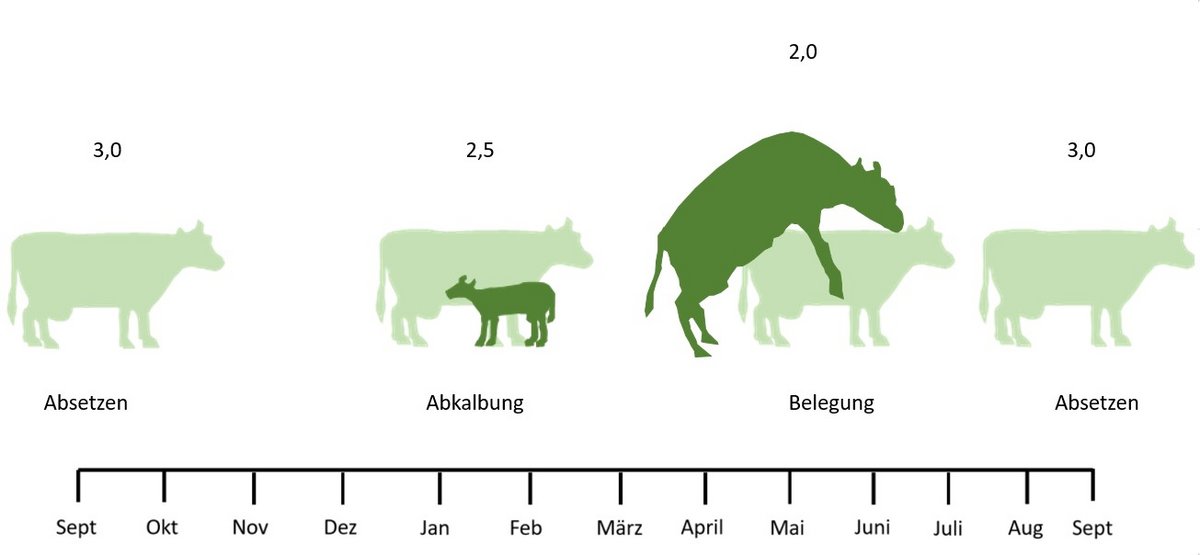
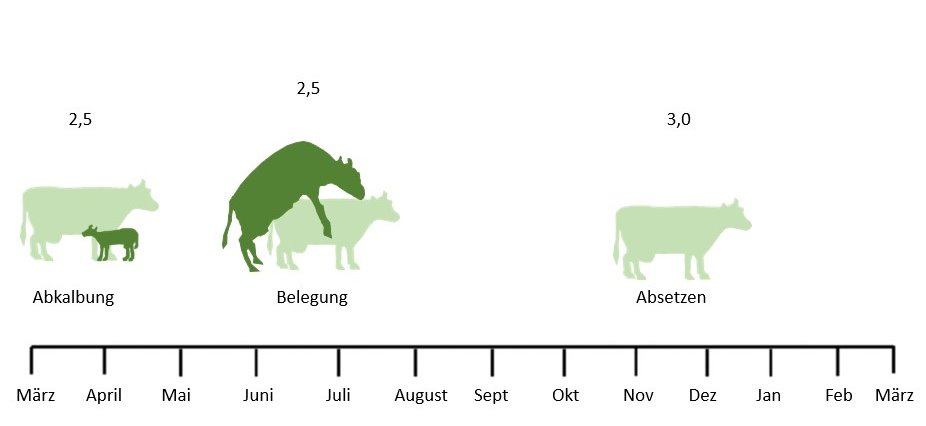
Over the course of the year, body reserves must be built up and broken down depending on the calving season (Figures 10 and 11). It is important to note that beef cattle are ‘build-up’ types rather than ‘turnover’ types. The appropriate body condition for the relevant season is required. This is easier to achieve if the animals are healthy and able to adapt to the changing seasons. The adaptation of the coat to the season is another medium-term adaptive response. The degree of hair cover according to Durbin et al. (2020) (see Figure 8) can be used to assess the change in coat. The change in coat has a strong genetic component (high heritability), but mineral supply and, where applicable, disease-related coat change problems also play a role. Breed-specific differences in skin thickness and thermoregulation should also be taken into account. For instance, Galloways with thicker skin and denser hair suffered fewer injuries from frozen troughs, and weanlings born close to winter have thicker skin.
Side note: Body condition in suckler cows
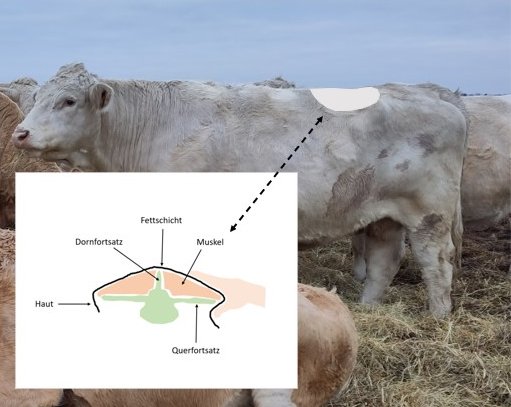
To avoid problems relating to fertility and calving, suckler cows should not be allowed to become over-conditioned during the calving season. By assessing body condition, the animal can serve as a direct indicator. Figures 9 and 10 show the target body condition scores for suckler cows. These vary throughout the year depending on the expected calving date. By the time the calves are weaned, the loss of body condition following calving should have been compensated for (KTBL Publication 481). Figure 11 illustrates the lumbar grip method for assessing the body condition of suckler cows.
Effects on animals when their capacity to adapt is exceeded
When managed correctly, winter outdoor housing promotes health but does not cure diseases. Therefore, only healthy cows may be kept outdoors in winter. Even in outdoor housing, separate care for individual animals must be ensured in the event of illness or injury.
The adaptive responses of sick animals are limited by, for example:
- Ectoparasite infestation, which damages the resilience of the winter coat; particular attention must be paid to lice in winter
- Endoparasitic infections/worm infestation
- Lame animals that have difficulty moving
- Metabolic disorders
- impaired feed conversion/intake
- Chronic diseases
- Multiple concurrent problems/diseases further restrict adaptive responses
Health consequences:
- Increased incidence of diseases due to excessive heat loss (winter): autumn tetany, metabolic disorders, respiratory diseases, parasitic infections, frostbite on the extremities (calves: ear necrosis)
- Severe depletion of body reserves, emaciation