
Thermoregulation in cattle under weather stress
Cattle are warm-blooded animals and therefore have a constant body temperature (approx. 38–39 °C). Thermoregulation has the task of keeping this body temperature as constant as possible, regardless of the ambient temperature. The greater the effort required by the body to maintain a constant body temperature, the greater the "weather stress". The following section explains the basics and interrelationships of thermoregulation in cattle.
Temperature zones and thermoregulatory capacity
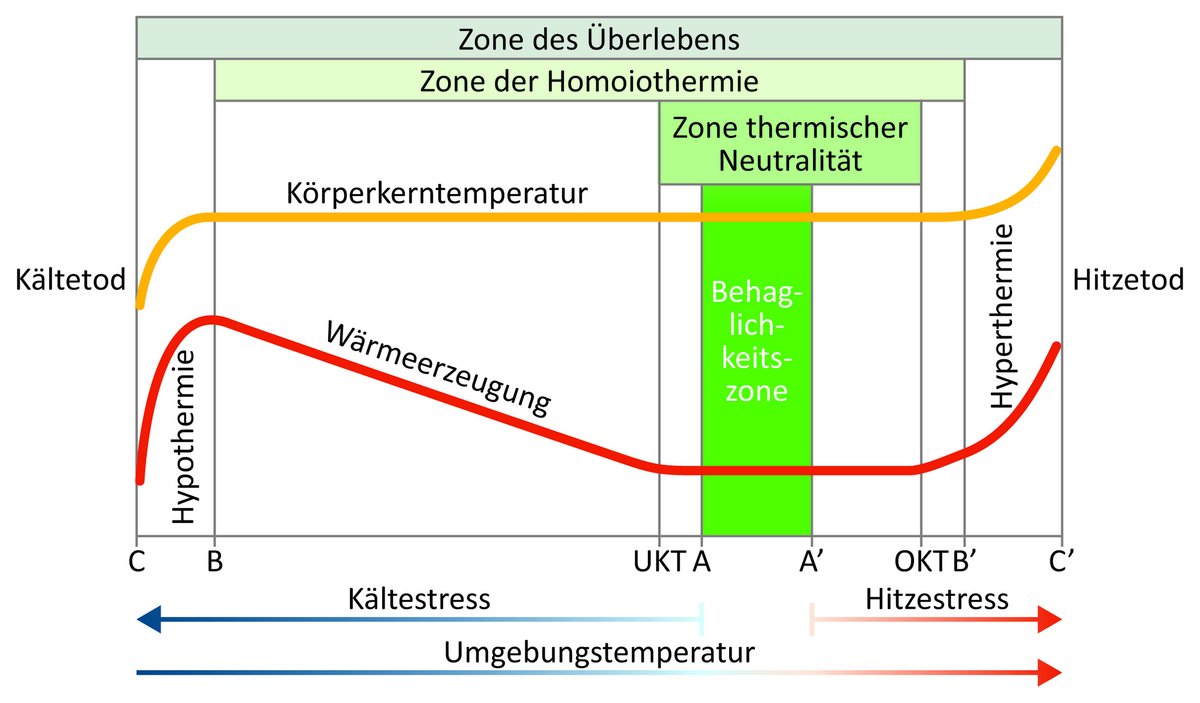
According to Bianca (1968), the thermoneutral zone, in which the animal does not need to expend additional energy to regulate its body temperature, is between 0 and 16 degrees Celsius for cattle.
If temperatures fall below or exceed limits B and B', the animals can no longer maintain their body temperature within physiological limits and there is a risk to life (Sporkmann et al., 2016).
Calves whose mothers take very good care of their offspring (early drying, presentation of the udder, physical closeness, shade and warmth, etc.) have a higher tolerance to adverse weather conditions than those that are left to fend for themselves. The thermoneutral zone for suckling calves is described as +15 °C to +25 °C with a humidity of 50 % to 60 %. For older calves that already have a functioning rumen and can therefore ruminate, the thermoneutral range is assumed to be +5 °C to +15 °C (Berkemeier, 2021 in Elite Magazine, Hufelschulte, 2020 in topagrar).
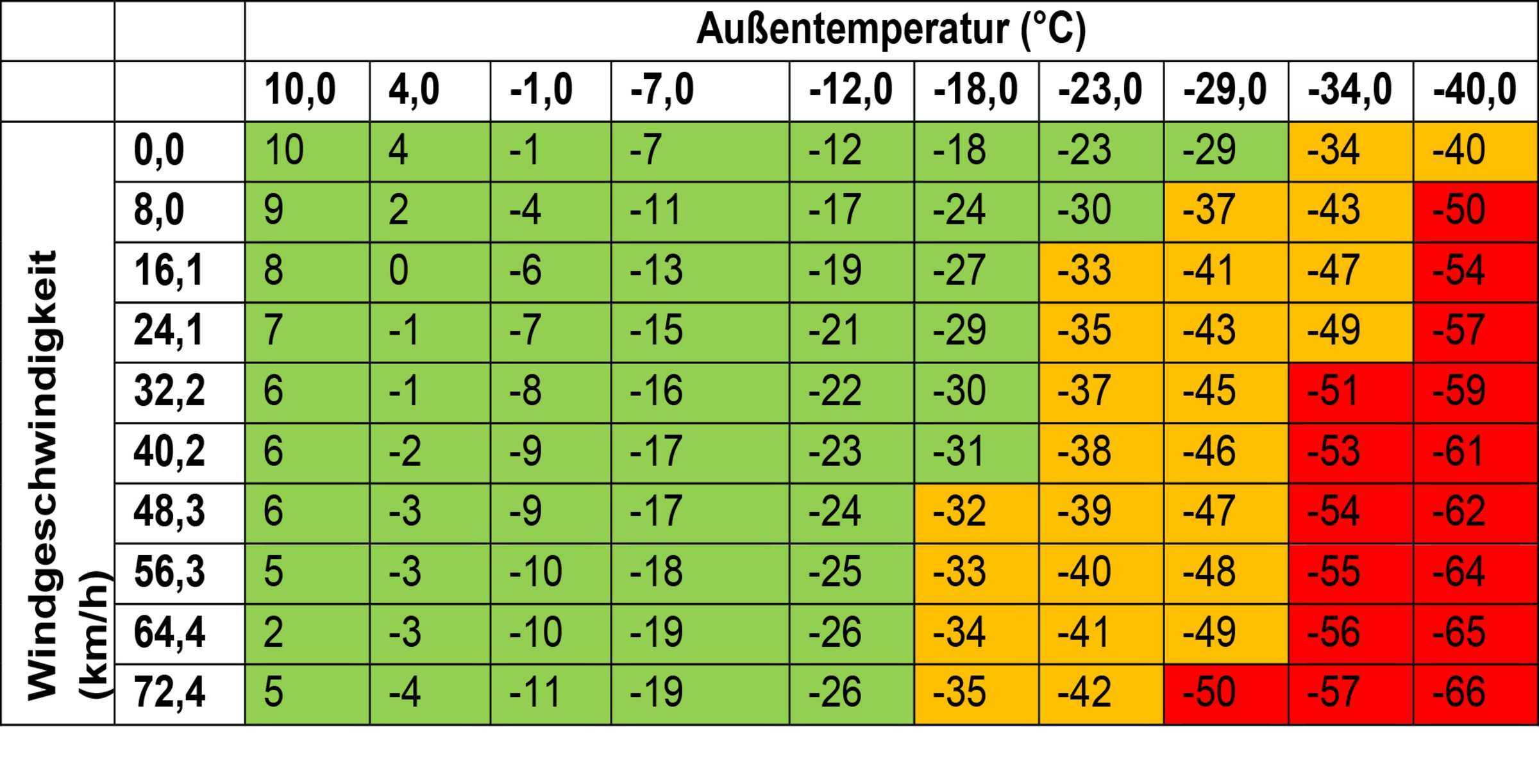
Green zone: low risk for adult animals
Orange zone: increased risk of necrosis due to exposure to cold for body parts with little hair (udders, scrotums); stress for animals with latent diseases
Red zone: high risk, especially for young animals
Limits of adaptability
- As soon as the core body temperature falls below the normal range (37.5 °C), this is referred to as hypothermia (Dirksen et al. 2006). If the core body temperature continues to fall, there is a risk of death from exposure
- The greater the thermal stress, the more maintaining core body temperature competes with useful performance and health ("increased adaptation").
- If heat intake/production falls below heat loss, the core body temperature drops
- Wind can extract considerable amounts of heat from the body; as wind speed increases, so does the temperature at which animals can maintain their physiological core body temperature
- Table 4 shows the outside temperature as a function of wind speed. The lower the outside temperature and the higher the wind speed, the lower the "perceived temperature".
According to the NRC (2016), suckler cows that are in good physical condition and have an adapted winter coat can easily tolerate a temperature of -21°C in the middle of pregnancy. However, the coat must be dry and clean. According to the NRC (2016), suckling suckler cows can also survive lower temperatures without physical harm. However, at temperatures below -30°C, most animals experience cold stress (Anderson et al., 2022). For weaker animals, the cold tolerance limit should be around -29°C. If the rectal temperature falls below 28°C, action must be taken, as the animals are no longer able to regulate their own body temperature. Rectal temperature is considered the gold standard, but is only moderately feasible in practice.
According to Mader et al. (2010), six areas of cold stress can be subdivided based on temperature, as shown in Table 5. Here it can be seen that extreme cold stress was only assessed at temperatures below -30 °C. It should be noted that the assessment of temperature categories may vary between breeds and also between animals.
| CCI Temperature (°C) | Assessment |
| Above 0 | No cold stress |
| 0 to -10 | Mild cold stress |
| -10 to -20 | Moderate cold stress |
| -20 to -30 | Severe cold stress |
| -30 to -40 | Extreme cold stress |
| below -40 | CAUTION / DANGER TO LIFE |
<figcaption>Table 5: Comprehensive climate index CCI according to Mader et al. (2010)</figcaption>
The findings of Sporkmann et al. (2014) are interesting in this context, as they show that no changes in the water intake of suckler cows could be observed depending on the comprehensive climate index level. The number of visits to the drinking troughs also showed no clear trend with increasing cold stress (Sporkmann et al., 2014).
(modified according to FAT report No. 620)
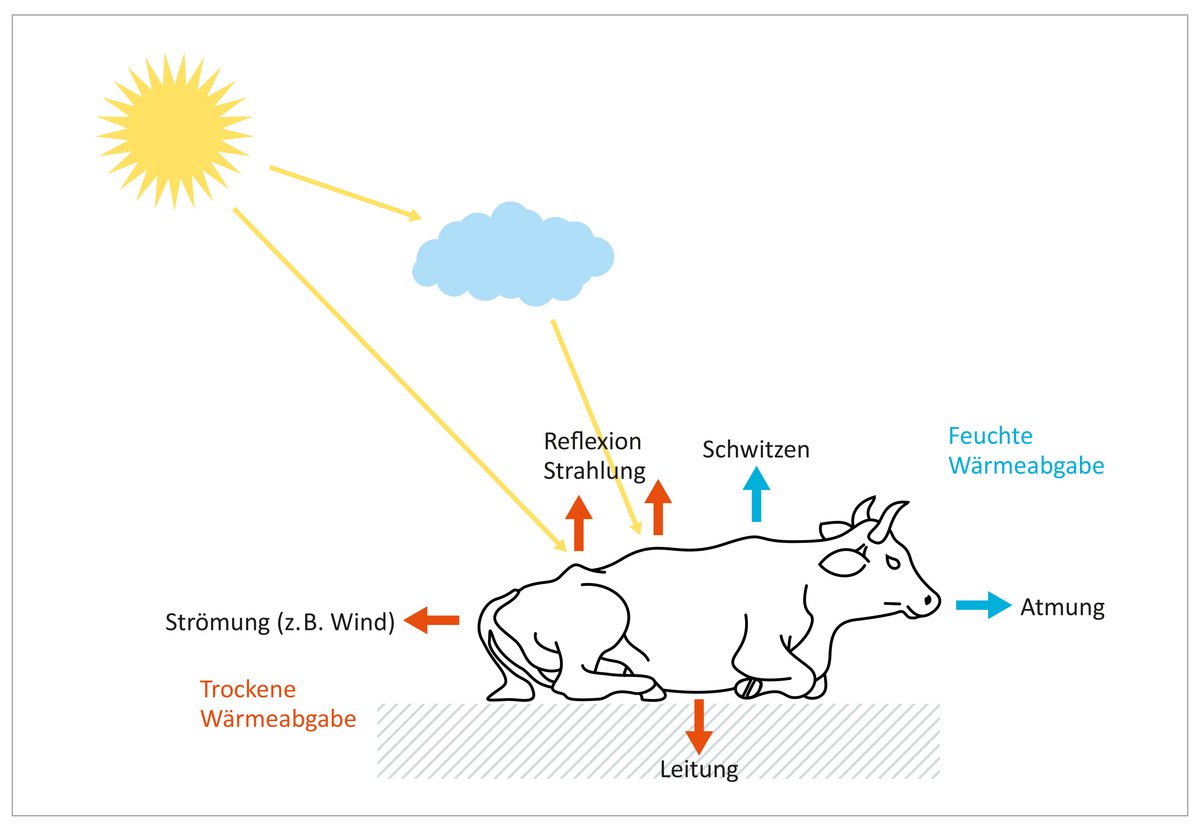
(modified according to FAT report no. 620)
Heat transfer
There are various options for heat exchange:
- Heat conduction: Heat flows towards the medium with the lower temperature (e.g. water, air, ground).
- Heat flow or convection: Heat is transported away by a flowing medium (e.g. wind).
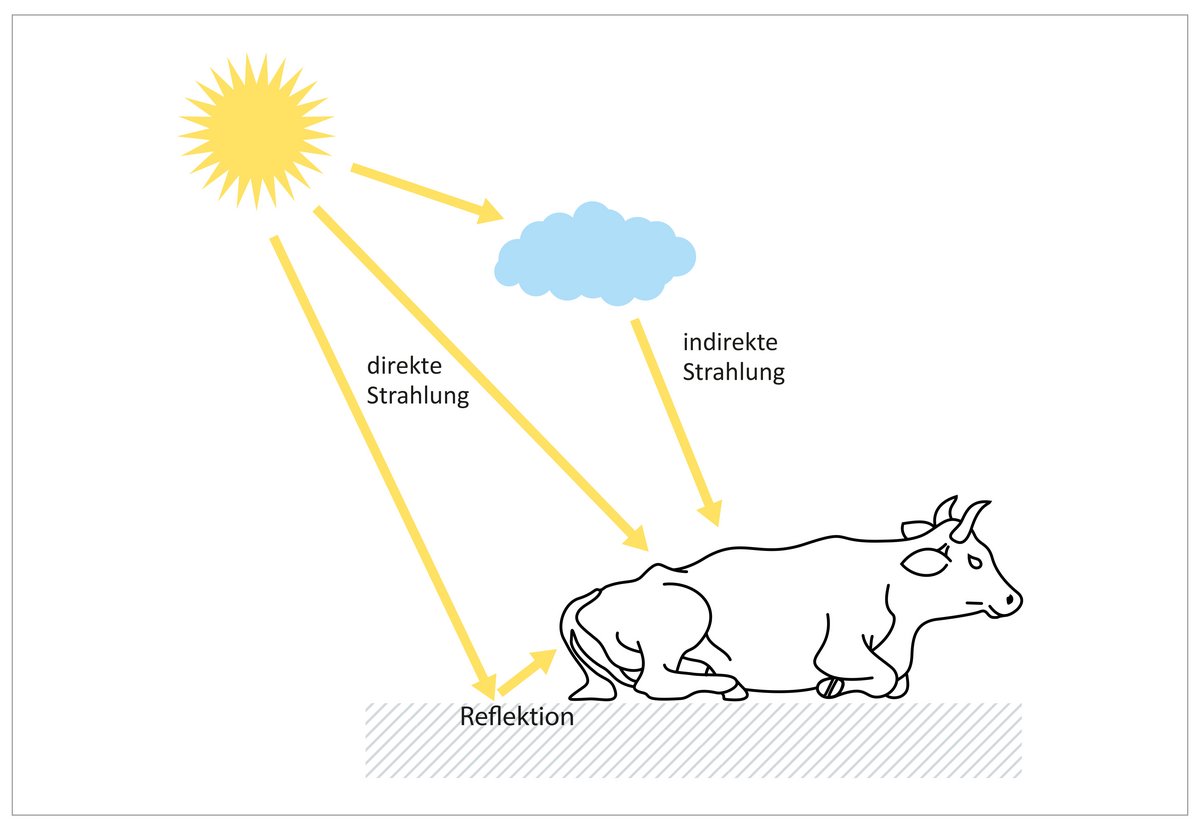
- Heat radiation: Heat is transferred by electromagnetic waves (e.g. sun rays)
- Evaporation: Energy is released via water vapour (sweating, panting)
Direct sunlight significantly increases the animal's heat input. Cloud cover reduces heat input compared to direct radiation.
Cold and wet lying areas, (high) wind speeds and wet fur increase heat loss in winter.