
If, following an assessment by the farmer and/or the vet, it is decided that the animal requires treatment, the next question is whether the animal can remain with the herd. The following section explains when the animal should be moved to the recovery pen and what a suitable pen looks like.
There are several terms used in practice to describe this pen. ‘Recovery pen’ is another term for ‘sick pen’. The term simply clarifies the purpose of the area, as the pen is intended to help sick animals recover.
If the answer to one or more of the following questions is ‘yes’, it is recommended that the animal be moved to a recovery pen.
- Is the animal’s general condition severely impaired?
- Is the animal unable to consume sufficient food and water independently?
- Is it difficult to observe the animal within the group?
- Is the animal so impaired that it cannot hold its own within the herd?
- Is there a risk of serious injury from other animals?
- Do the housing facilities cause the animal significant harm?
- Is there a risk of disease transmission to other animals?
If the answer to at least one of these questions is ‘yes’, the animal should be moved to the recovery pen.
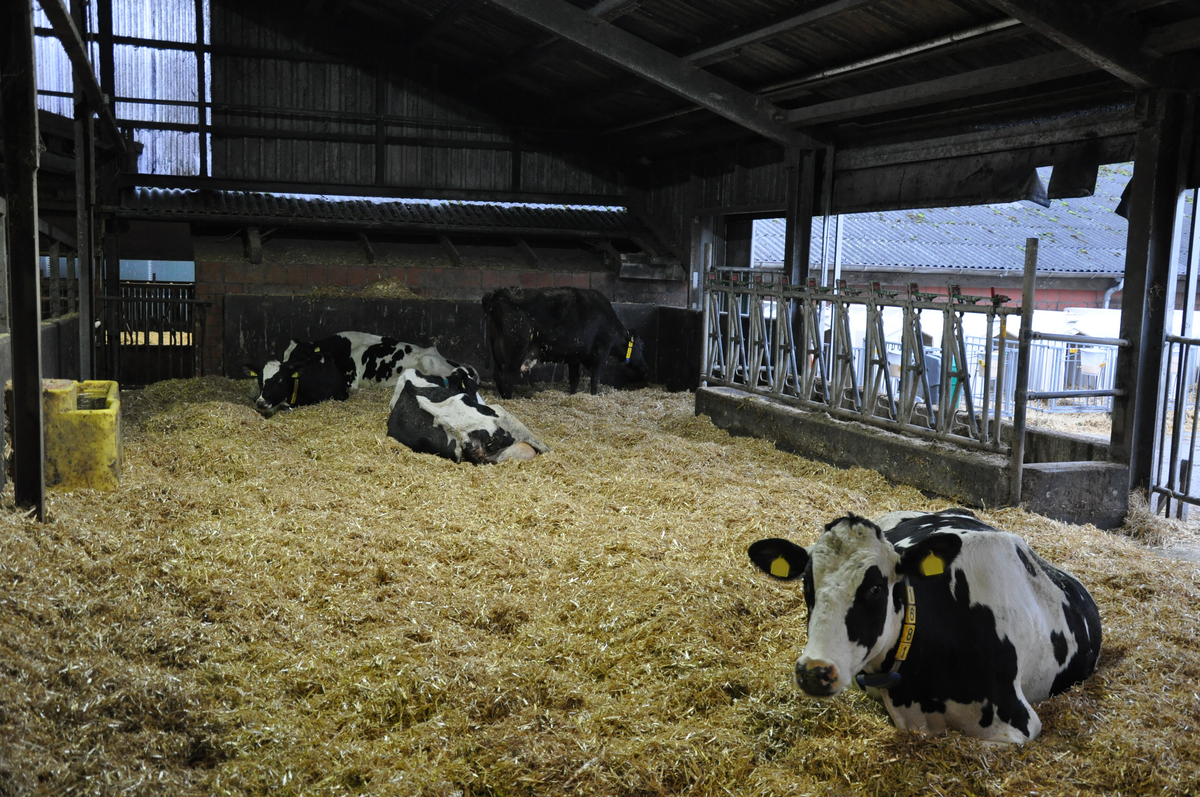
- at least one recovery pen (a calving pen is not a recovery pen, as there is a risk of infection there)
- for group pens: at least 8 m² per animal
- For individual pens: at least 12 m² per animal
- The pen must be ready for use at all times
- Animals in the pen should have olfactory and visual contact with the herd (but physical contact should be avoided)
- Animals in the pen should be easy for carers to monitor (good visibility, at least 400 lux whilst carrying out work)
- The pen should be provided with dry, soft bedding to ensure sufficient footing (required by law)
- The pen must have an optimal indoor climate (no direct sunlight, no draughts, no dripping or condensation, sufficient air circulation, 200 lux). Air conditioning should be available and used
- A sufficient quantity of good-quality feed and water must be provided in the pen
- Milking must be possible in the pen or, if feasible for the animal, carried out using the usual milking system
- The pen should be equipped with sufficient, suitable and easy-to-use restraining options (feeding barriers, swing gates, tethering facilities)
- The animals in the pen should not be exposed to prolonged high levels of noise
- Easily accessible for humans and animals for feeding, care and repositioning
- The pen must be easy to clean and disinfect thoroughly
- If infectious diseases are suspected, it is advisable to separate the animal(s) to another building so that there is no contact with the rest of the herd