How do cattle and horses perceive their surroundings – and why do they sometimes react ‘suddenly’ to things that seem quite unremarkable to us? An animal eye simulator brings the sensory perception of both species to life and demonstrates how field of vision, depth and motion perception, as well as light-shadow contrasts, affect orientation and behaviour.
With the help of animal eye simulators, typical triggers for hesitation, evasive behaviour or startle responses can be better understood – such as sudden changes between light and dark, glare, reflective surfaces or unexpected movements in the surroundings. This provides concrete, practical starting points for reducing stress in human-animal interactions, designing stables, farmyards and driveways in a way that is appropriate for the animals, and ensuring greater safety in daily handling. The aim is to better understand behaviour and to improve animal welfare and the quality of handling in the long term through small adjustments.
Sensory perception in cattle
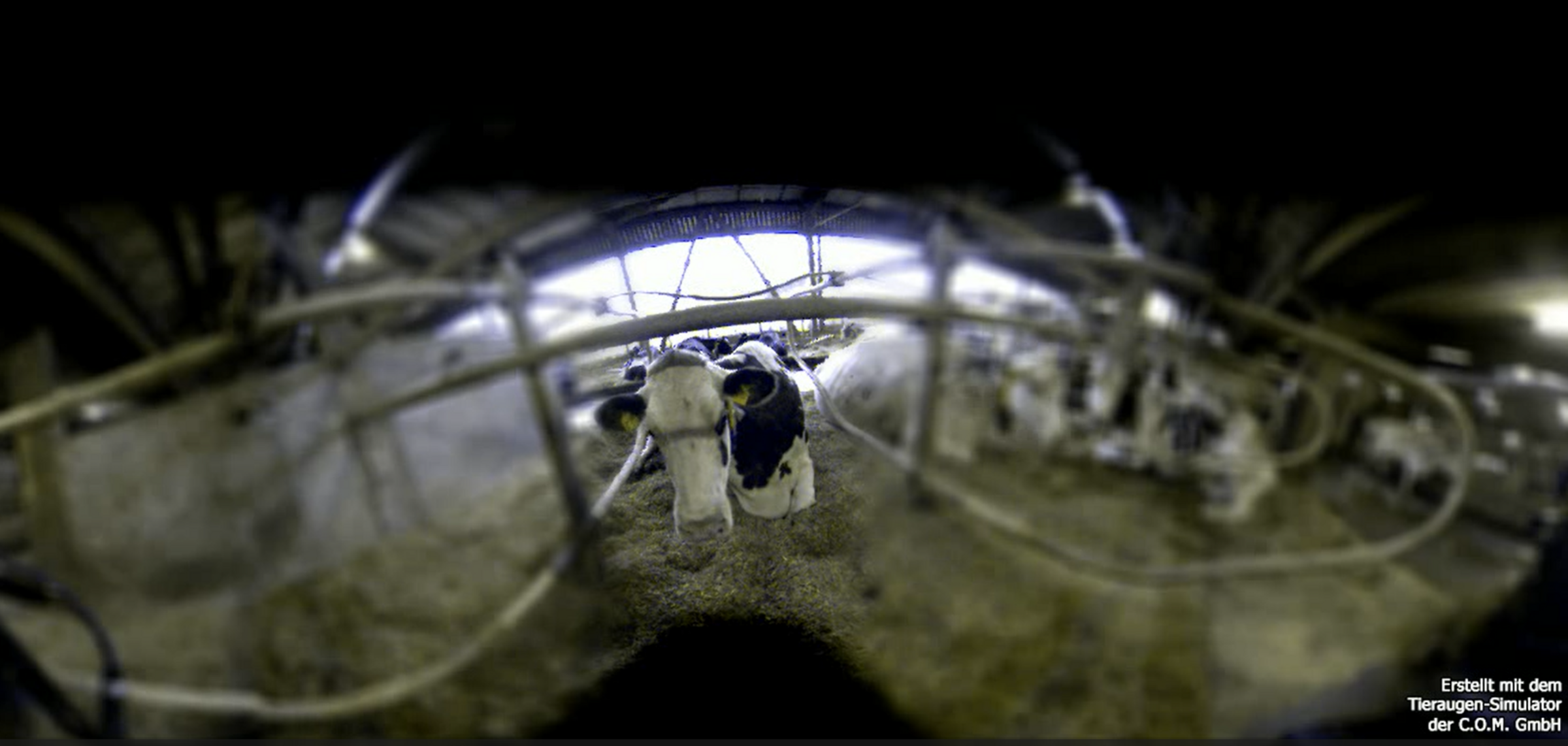
The cattle eye simulator visualises how cattle perceive their surroundings and helps users understand everyday situations from the animal’s perspective.
The simulator helps identify typical triggers for anxiety, hesitation or evasive behaviour – such as glare, harsh contrasts, reflective surfaces or sudden movements along the pen. This provides concrete starting points for reducing stress during handling, improving the design of pens and penways, and enhancing workplace safety. The aim is to better understand animal behaviour and to sustainably improve animal welfare and handling quality through small, practical adjustments.
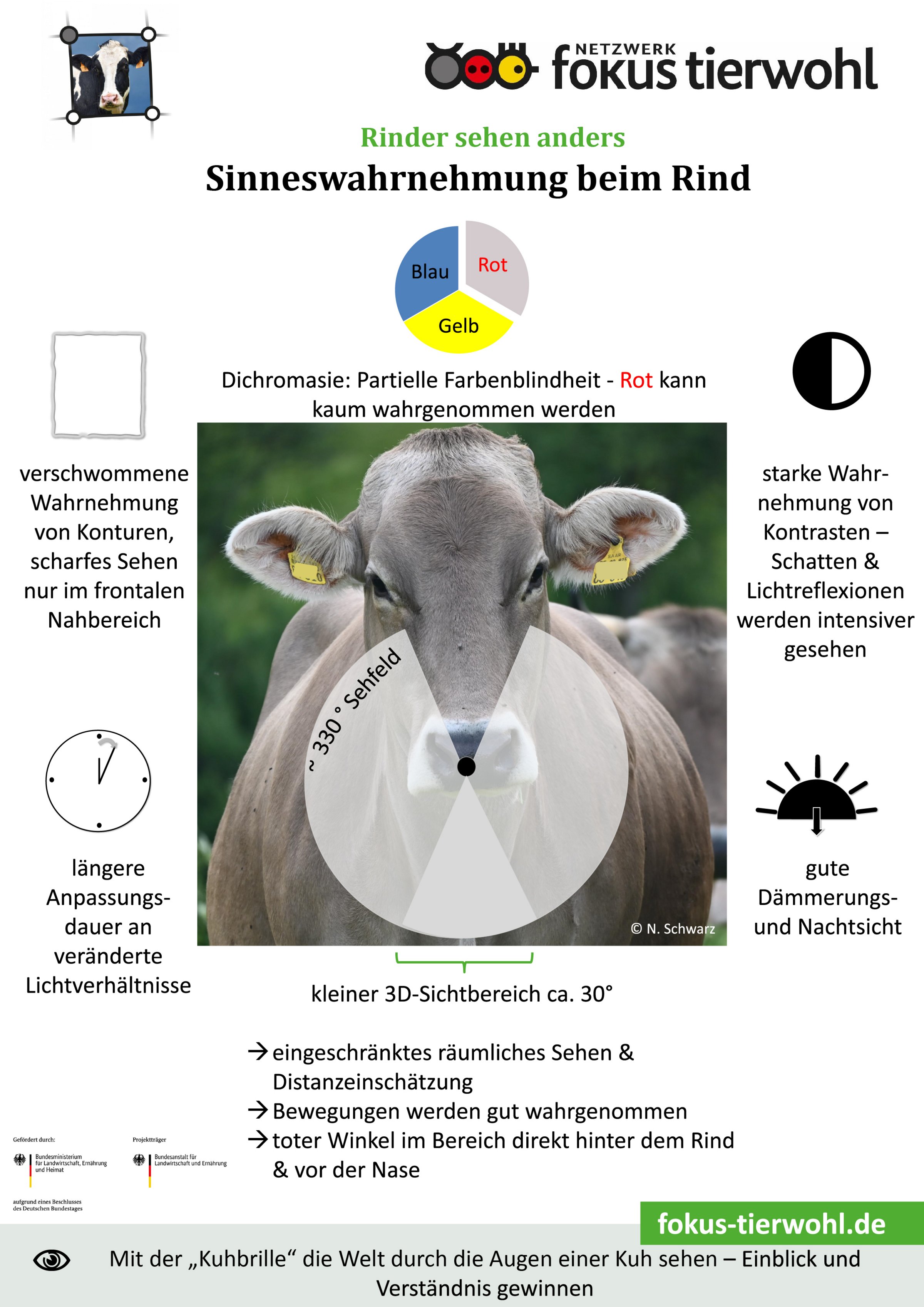
A three-part poster set from the Cattle Animal Welfare Competence Centre within the Fokus Tierwohl network highlights the key aspects of visual sensory perception in cattle, compares this with human vision, and provides practical tips.
Sensory perception in horses
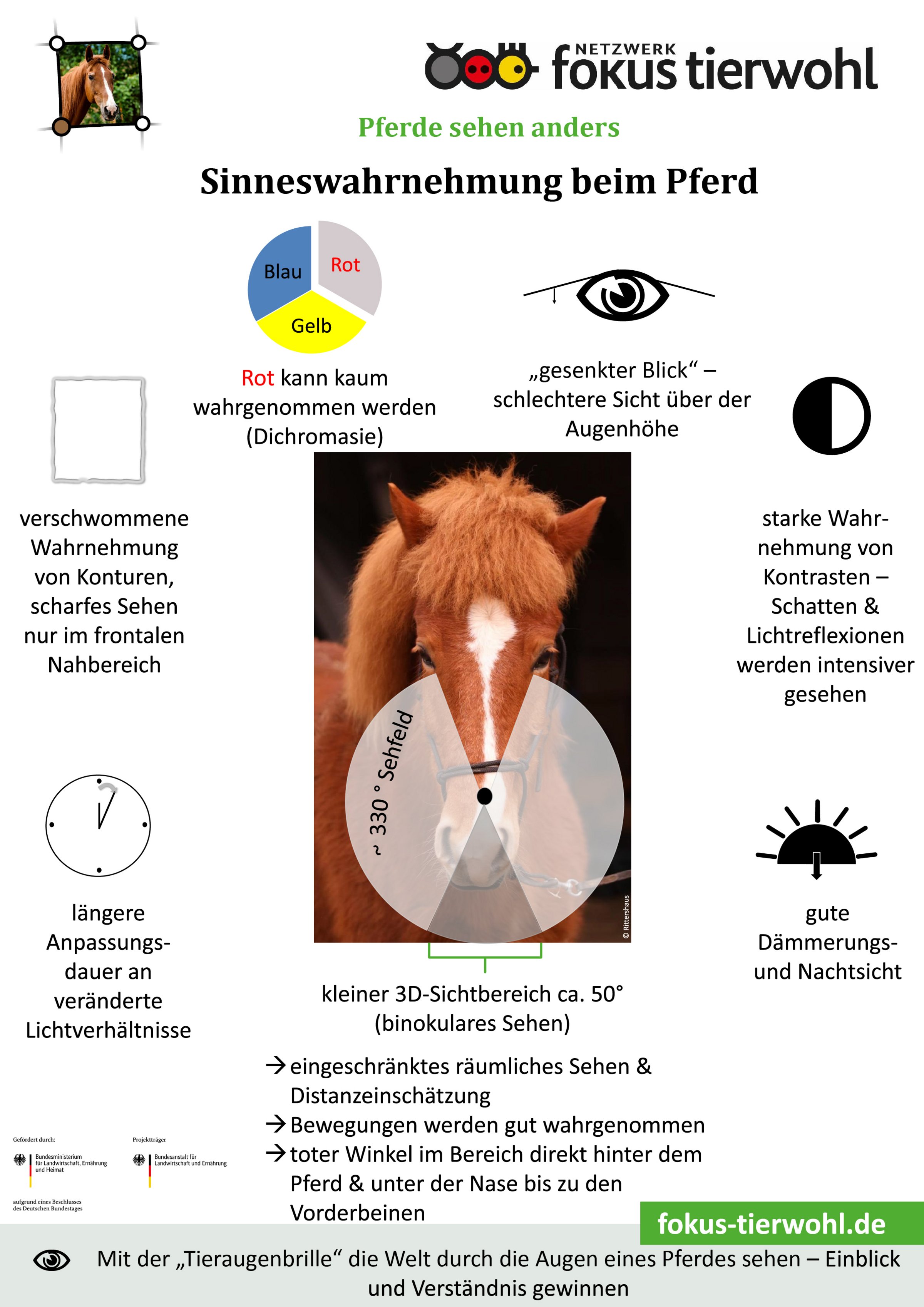
How does a horse perceive its surroundings – and why do certain situations seem ‘harmless’ to us, yet suddenly threatening to the horse? The Horse Eye Simulator allows you to experience the horse’s perspective and helps you to better understand its behaviour.
This reveals typical triggers for startle responses, hesitation or evasive behaviour – such as strong contrasts, sudden changes in light, reflective surfaces or unexpected movements in the surroundings. Practical measures can be derived from these insights: calm, clear guidance, appropriate positioning of people, and a low-stimulus design for stables, yards, transport and training areas. The aim is to reduce stress, ensure greater safety for both humans and animals, and provide a better foundation for training, routine and trust.
A poster from the Cattle Animal Welfare Competence Centre within the Fokus Tierwohl network highlights the key aspects of horses’ visual sensory perception.