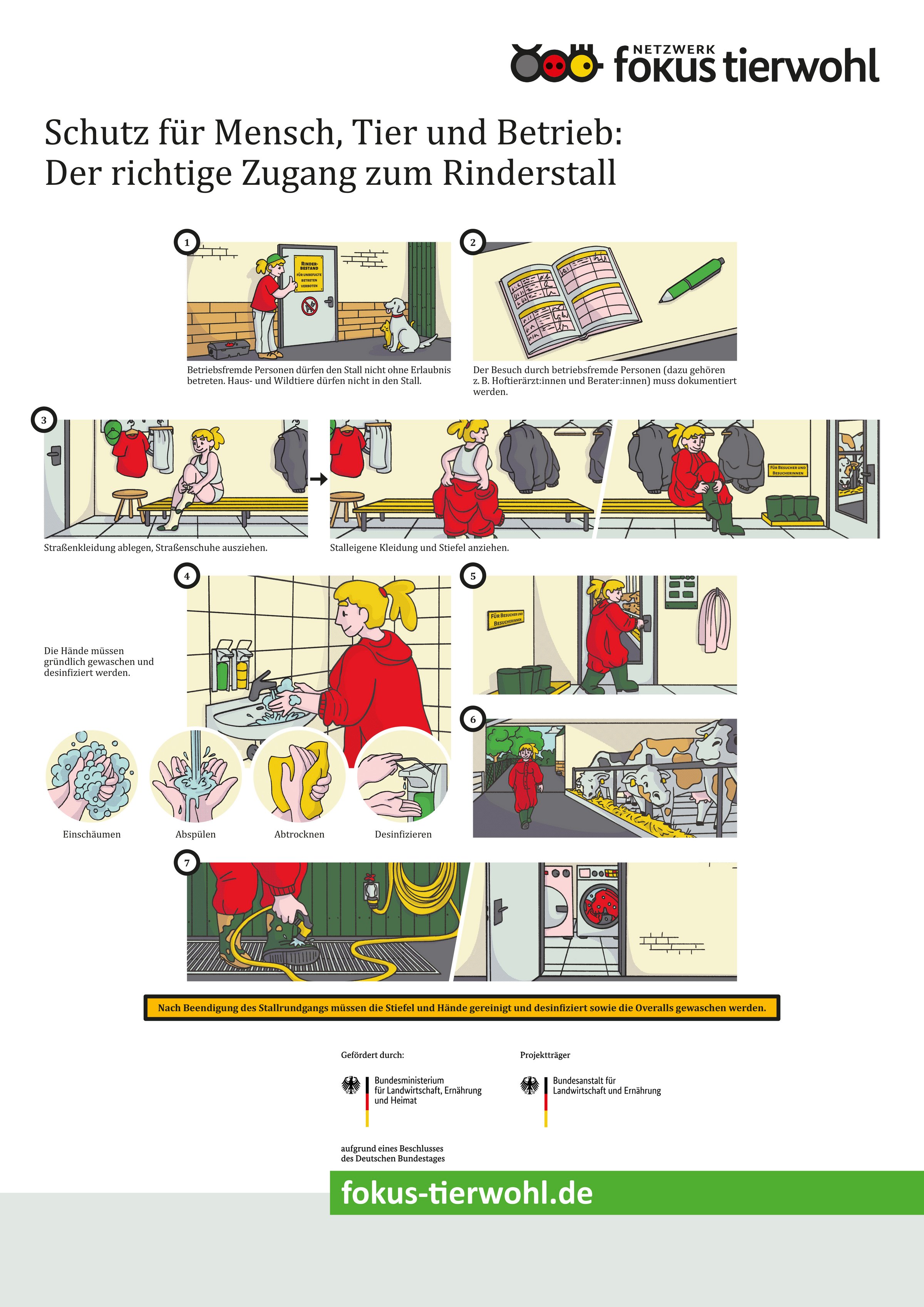
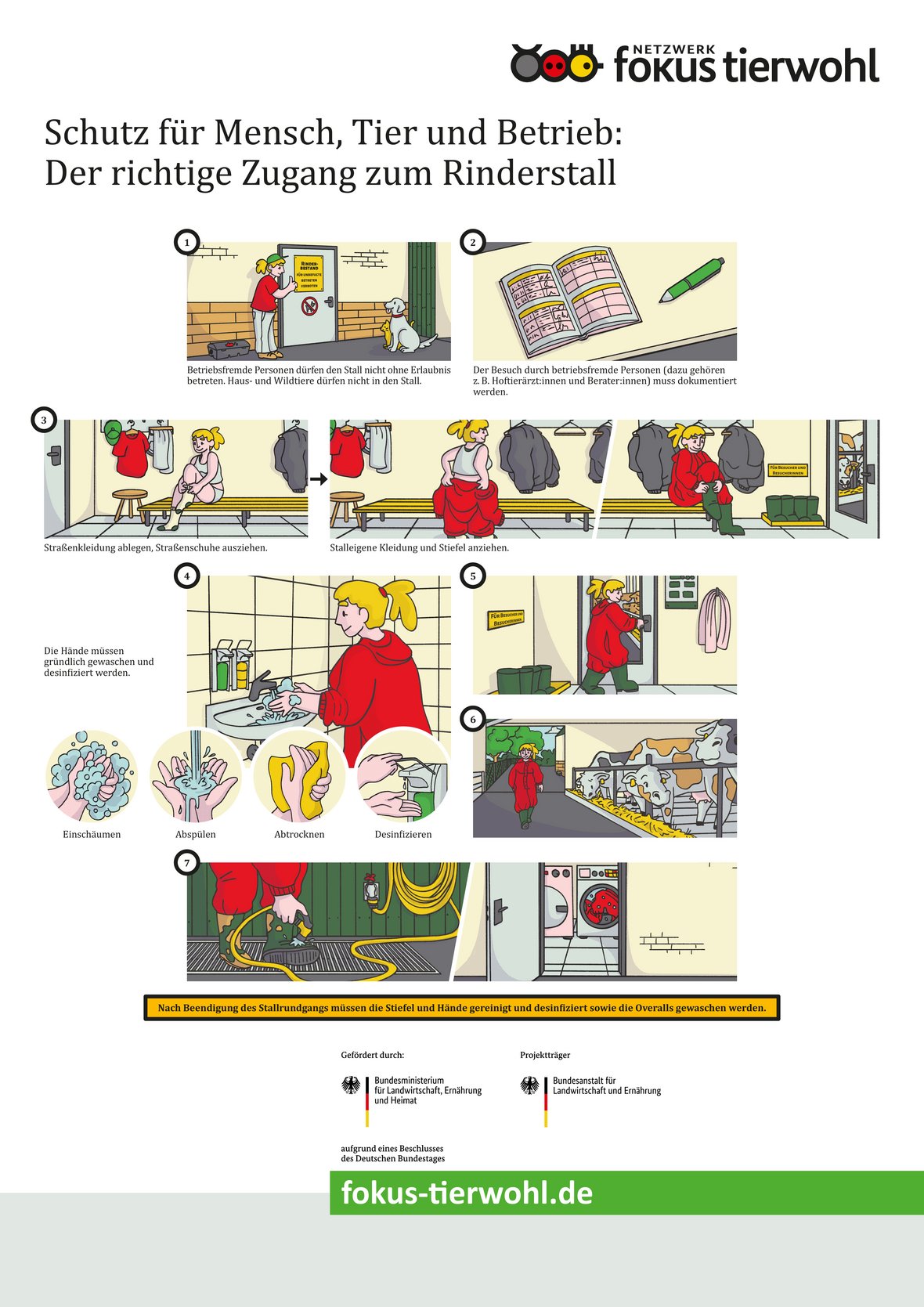
Livestock keepers are responsible for the health of the animals in their care, for good animal husbandry practices, for minimising the risk of disease spread, and for taking appropriate measures to protect against biological hazards and maintaining the relevant documentation (biosecurity management plan) (see AHL). Acute disease outbreaks, such as those of bluetongue (BTV-3 and BTV-8) and foot-and-mouth disease in recent years, have once again made it clear that the issue of biosecurity must not be neglected on cattle farms either.
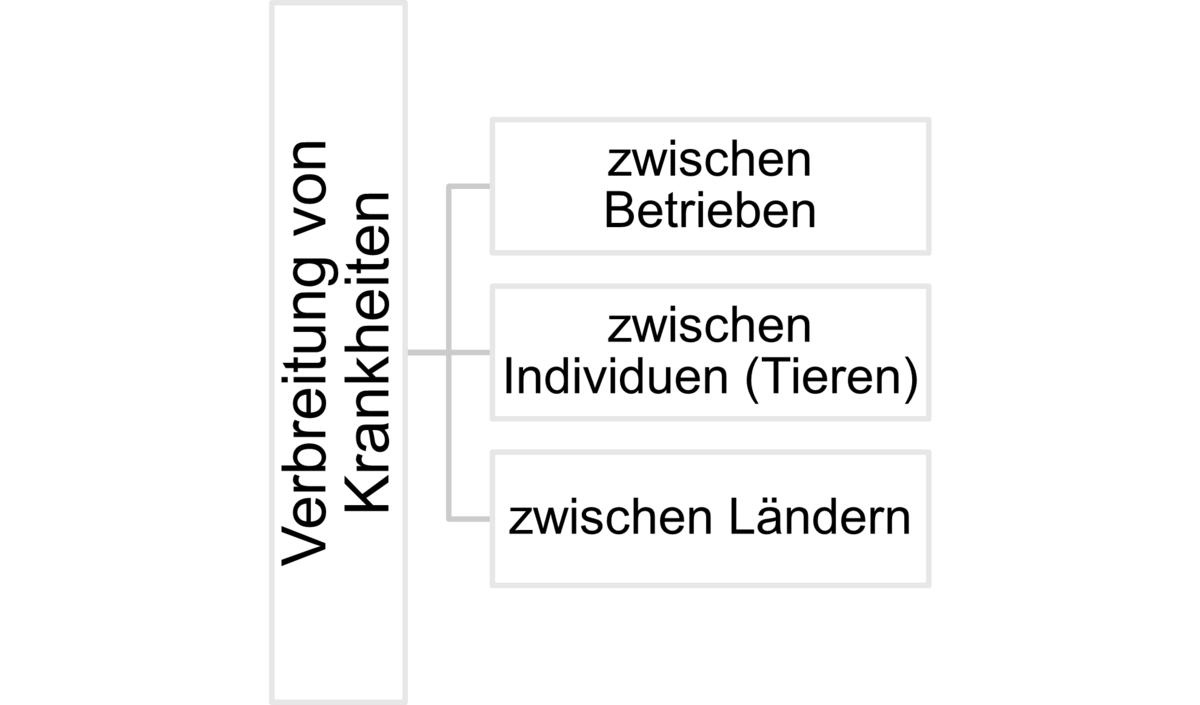
Biosecurity measures
Biosecurity measures can be divided into internal and external measures. Internal measures comprise all precautions taken within a farm to prevent the transmission and spread of pathogens. External measures, on the other hand, aim to prevent the introduction of pathogens, for example, onto a farm (into a system).
The implementation of and compliance with biosecurity measures help to
- Protect one’s own farm
- Protecting neighbouring farms
- Receiving compensation in the event of an outbreak
- Avoiding restrictions on trade in animal products
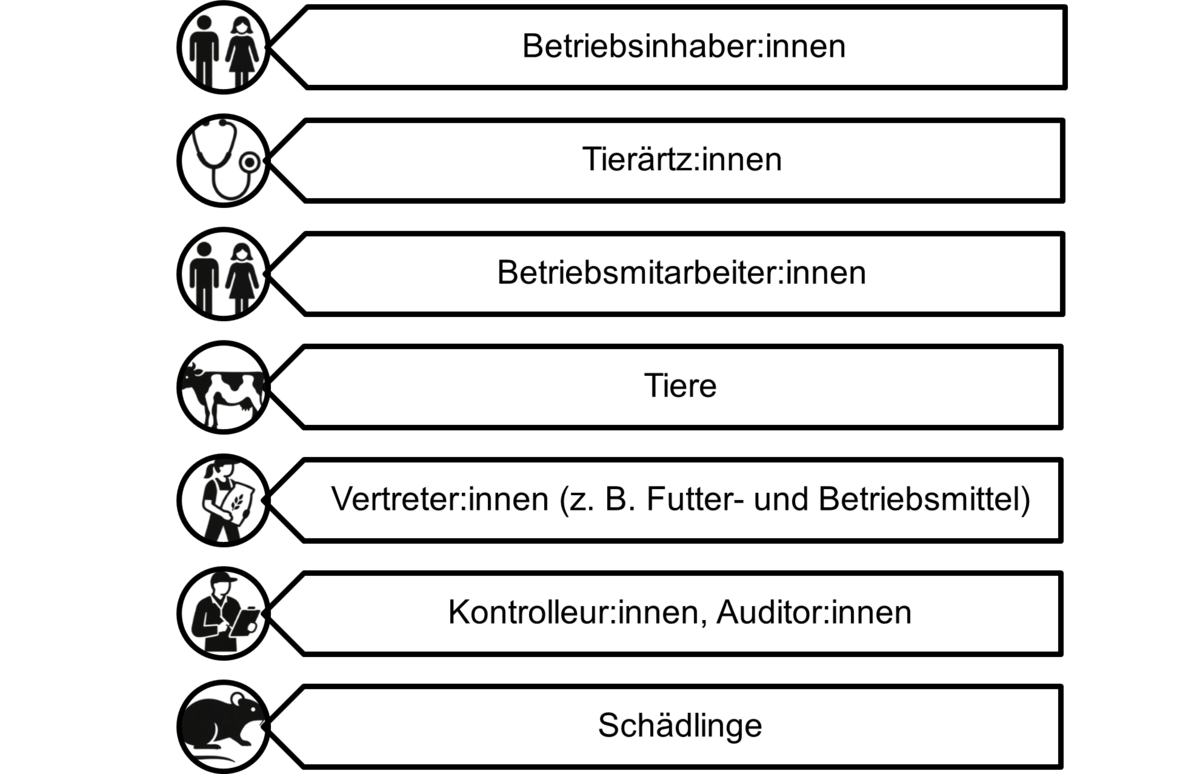
One of the most important measures, particularly for preventing the spread of disease, is the control of movements. To this end, it is important to be aware, within one’s own business, of which movements take place regularly or even just occasionally. Knowledge of and awareness regarding the farm’s biosecurity measures and the reasons behind them apply to everyone on the farm. Regular training sessions should therefore be held for staff.
Biosecurity plans
On the initiative of the Lower Saxony Animal Disease Fund and Landvolk Lower Saxony, biosecurity plans have been developed for poultry, pig and cattle farms. These help livestock farmers to analyse existing hazards and potential routes by which pathogens could be introduced onto the farm, to assess risks and to define appropriate measures to reduce or prevent them. These measures are set out in writing in a farm biosecurity plan and should be reviewed and updated regularly.
The University of Vechta’s ‘risk traffic light’ is a free online tool that can be used to carry out a risk assessment for one’s own farm in order to decide whether further measures should be taken.
Farmers can find (further) support from vets, animal disease insurance schemes (in some cases in conjunction with animal health services) and advisory organisations run by the federal states.

Animal Health Law (AHL) Regulation (EU) 2016/429
Animal By-products Disposal Act
Animal Welfare and Livestock Husbandry Regulation
Regulation on the Movement of Livestock
as well as regulations specific to each federal state
In addition, in the event of an outbreak:
Delegated Regulation (DEV) (EU) 2026/322
As well as regulations specific to each federal state