
Piglet castration
Since 1 January 2021, the castration of piglets without anaesthesia has been prohibited under the Animal Welfare Act.
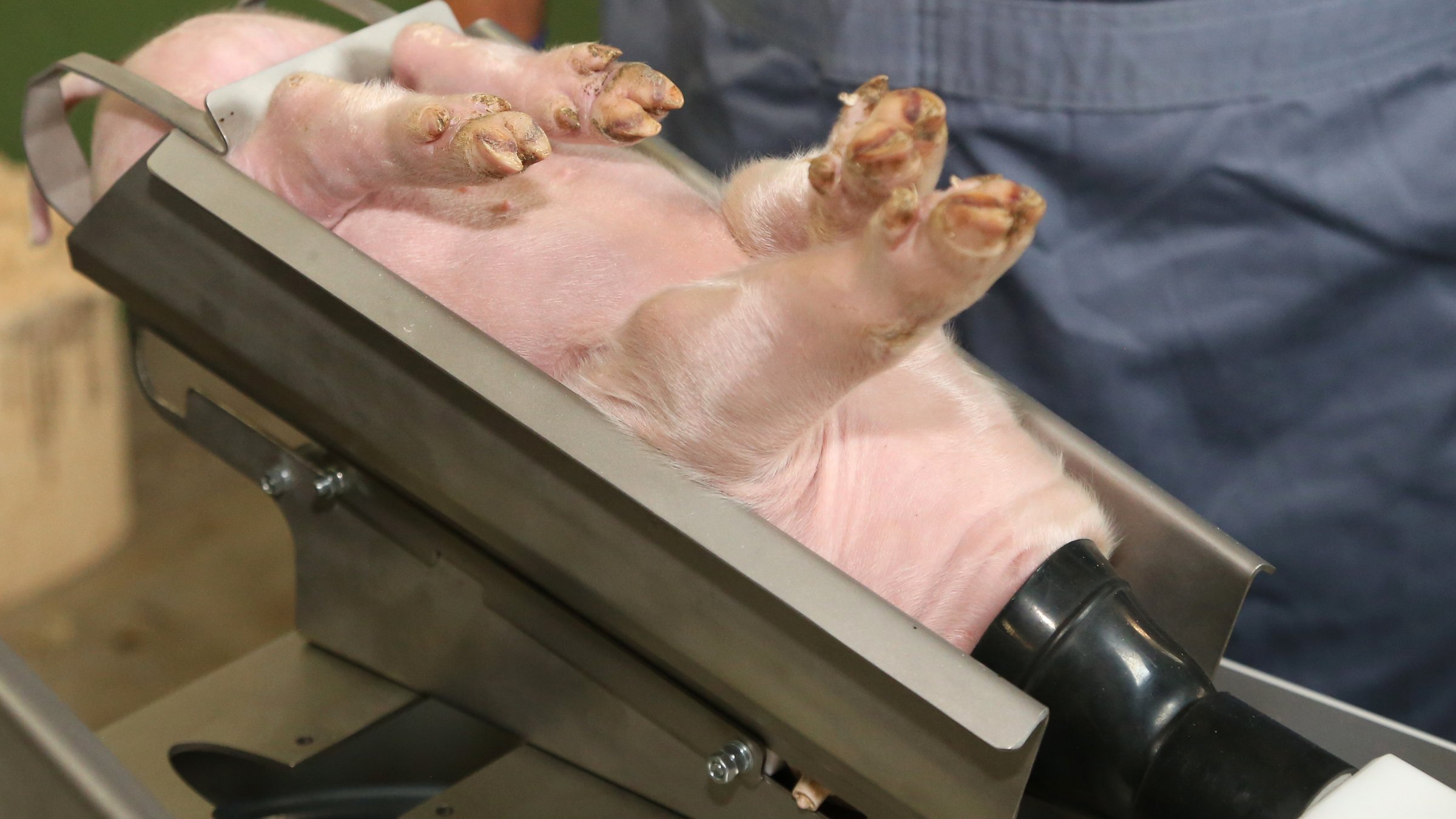
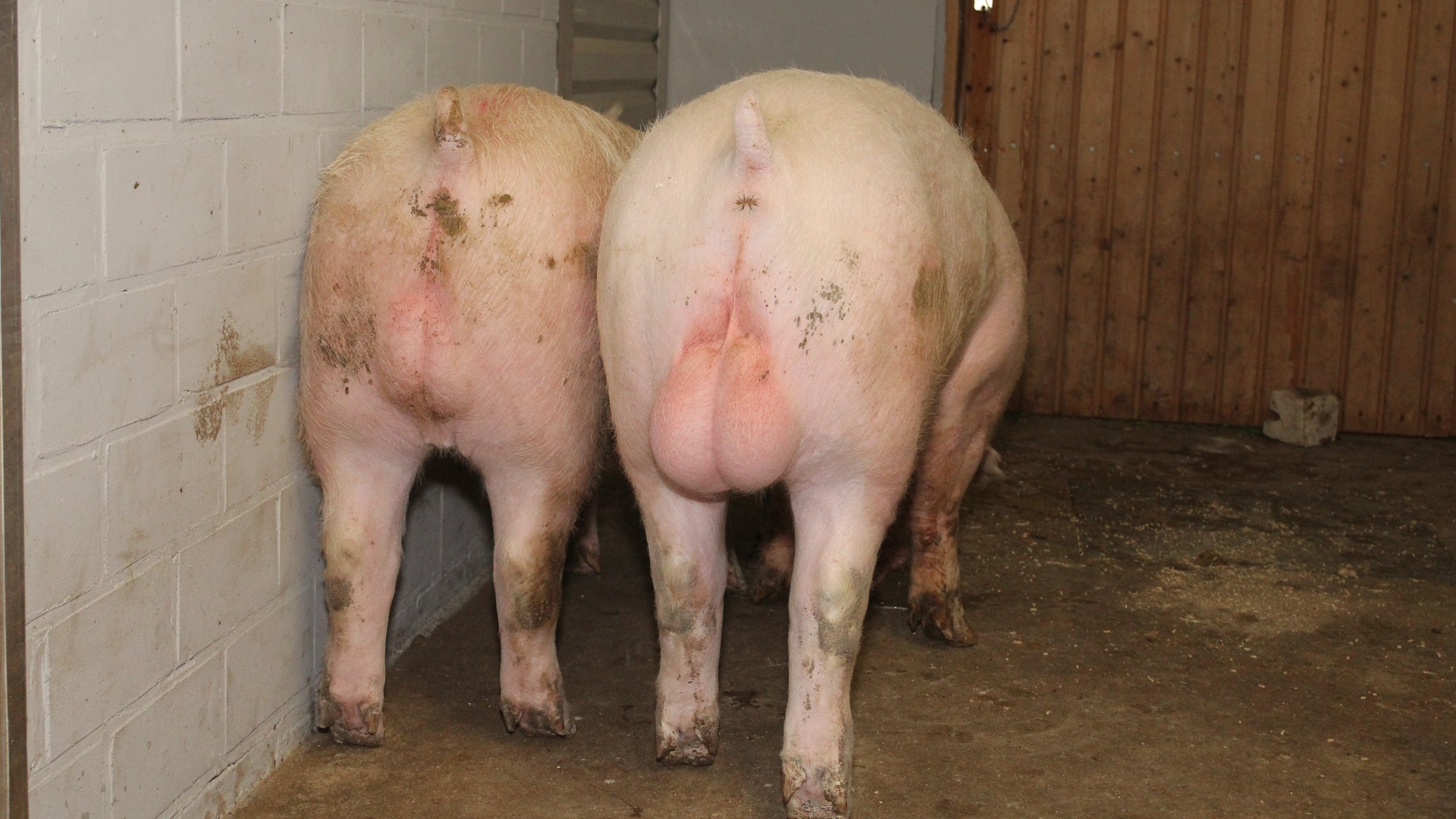
Both non-surgical and surgical procedures are available as alternatives to piglet castration without anaesthesia. In boar taming and immunocastration, no surgical intervention is performed on the piglet. If male piglets are to continue to be surgically castrated, the anaesthesia required for this can be achieved either by injection anaesthesia or inhalation anaesthesia with isoflurane. It should be noted that only a vet is permitted to administer injection anaesthesia. Once the farmer has obtained the relevant expertise, they are authorised to administer inhalation anaesthesia themselves.
Training in the administration of inhalation anaesthesia
To enable farmers to use isoflurane for piglet castration, the requirement for veterinary supervision was lifted via the Piglet Anaesthesia Competence Regulation (FerkBetSachkV). To acquire this competence, three consecutive modules must be successfully completed:
- A 12-hour theoretical course, including a written examination, covering the following content
- Legal principles
- Anatomy of the male reproductive organs
- Physiology of the cardiovascular system
- Anaesthesia suitability of piglets
- Anaesthesia and pain
- Administration of isoflurane anaesthesia in piglets, including a demonstration
- Recognising and managing anaesthetic complications
- Handling of veterinary medicines
- Hygiene management and disinfection
- Anaesthesia equipment
- Practical phase under the supervision of a vet
- Practical examination
Isoflurane – refresher training
Farmers who have acquired the necessary expertise in isoflurane anaesthesia for the castration of male suckling piglets are required, under Section 6 of the Piglet Castration Expertise Regulation (FerkelBetSachkV), to attend a refresher course within three years of the initial issue of the certificate of competence.
To renew the certificate, farmers must attend a course lasting at least two hours, for which they will receive a certificate of attendance. Proof of attendance must be provided to the competent authority upon request.
Important: In addition to the theoretical training, the farm veterinarian must also assess the practical skills in handling the equipment within three years.
Certified anaesthesia equipment
Under the Piglet Anaesthesia Competence Regulation, the isoflurane anaesthesia equipment used must meet certain requirements (Section 5 of the Regulation). As a prerequisite for funding for an isoflurane anaesthesia machine from the Federal Ministry of Food and Agriculture (BMEL), certification must be in place regarding aspects of animal welfare, user safety and environmental protection. Five machines in a total of seven variants have so far been certified by the DLG (German Agricultural Society).
Test reports on isoflurane anaesthesia units
User safety
User safety in particular should be a top priority when using isoflurane and isoflurane anaesthesia units. The Social Insurance for Agriculture, Forestry and Horticulture provides detailed information on this subject on its website. In addition to general information on occupational safety, the site also offers sample operating instructions in various languages, a checklist for use on the farm, and guidance on storage conditions and the disposal of isoflurane, all available for free download.
Sample operating instructions for piglet castration
An overview of DLG-certified equipment is provided by videos produced by the North Rhine-Westphalia Chamber of Agriculture in collaboration with the manufacturers and funded by the Federal Ministry of Food and Agriculture.
Centre of Excellence for Isoflurane Anaesthesia established
As part of the Federal Livestock Farming Programme, a centre of excellence named IsoKomp was established on 1 October 2021 by Ludwig Maximilian University of Munich and the pig health services of the Chambers of Agriculture of North Rhine-Westphalia and Lower Saxony to address isoflurane anaesthesia in suckling piglets. The Federal Ministry of Food and Agriculture is funding this initiative. Farmers, farm veterinarians, supervisory authorities and manufacturers can obtain free support and advice from the newly established centre of excellence. Regional contacts identify and investigate the issues. For example, isoflurane measurements can be carried out on the equipment and in the surrounding area. The findings and experience gained are intended to be incorporated into agricultural practice so that the castration of piglets under isoflurane anaesthesia is carried out in a manner that complies with animal welfare standards, is safe for users and is legally compliant.
Contact:
LMU Munich, Department of Swine Medicine Sonnenstraße 16 84764 Oberschleißheim Tel. +49 89 2180 789-64 Email: [email protected]
LWK North Rhine-Westphalia, Swine Health Service Ostinghausen – Haus Düsse 59505 Bad Sassendorf Tel. +49 2945 989-761 Email: [email protected]
LWK Lower Saxony, Pig Health Service Hermann-Ehlers-Str. 15 26160 Bad Zwischenahn Tel. +49 441 340-10203 Email: [email protected]
Online information sessions on alternatives to piglet castration without anaesthesia
On behalf of the Federal Information Centre for Agriculture (BZL), a number of member organisations of the Federal Association for Cattle and Pigs (Bundesverband Rind und Schwein e.V.) offered free online seminars across Germany in 2020. The aim was to once again highlight the advantages and disadvantages of the various methods to piglet producers and fatteners, thereby helping them to decide on a viable alternative for the future.
Various formats were offered.
NORTH RHINE-WESTPHALIA
The digital presentations are still available on the YouTube channel of the North Rhine-Westphalia Chamber of Agriculture.