
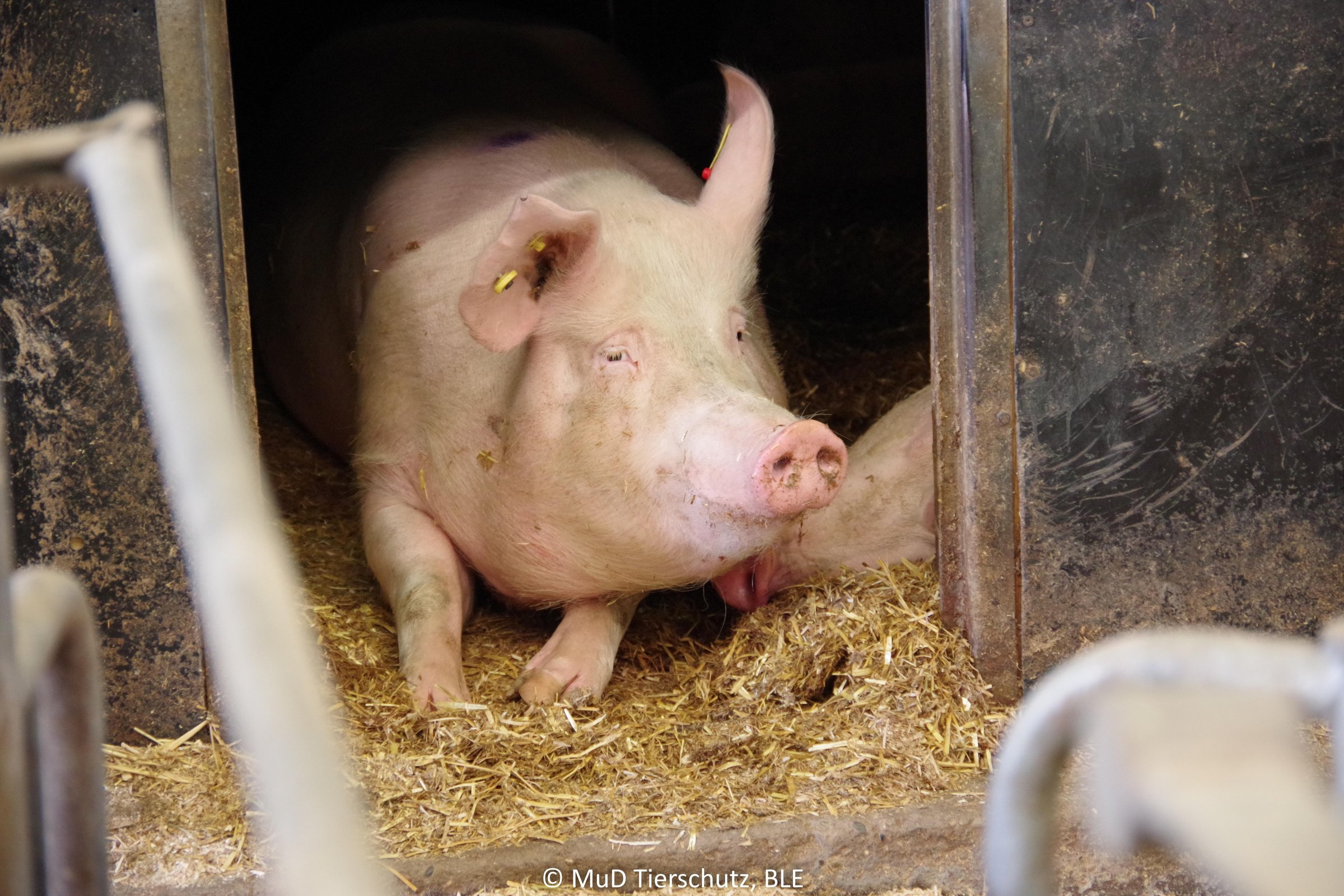
On four dates in July 2021, the North Rhine-Westphalia Chamber of Agriculture (LWK NRW) held an online crash course for pig farmers with small herds as part of the Animal Welfare Focus Network. Keeping pigs as pets is becoming increasingly popular in Germany. In order to enable humans and animals to live together harmoniously, the characteristics of the species must be taken into account. Experts therefore provided information on veterinary law, anatomy and physiology, behaviour, husbandry, feeding and health management of domestic and farm pigs. After the presentations, the participants' many technical questions led to discussions that lasted late into the evening.
The kick-off event on 15 July 2021 got off to a very practical start. "Sometimes a pig is just a human being! And what distinguishes us?" was the title of the lecture by Dr Jürgen Harlizius, specialist veterinarian for pigs and head of the pig health service at LWK NRW. After a brief introduction to various pig breeds, he first discussed the domestication of wild boars. These came into contact with humans as early as 8500 BC. He then used a model to present the anatomical features of pigs to the participants in front of their screens. Many listeners took the opportunity to ask the renowned pig expert practical questions about hoof care, pig dentition and the digestive system.
Dr Christian Reimer from the Animal Breeding and Domestic Animal Genetics Working Group at the Department of Animal Sciences at Georg August University in Göttingen then gave a presentation. He gave the nearly 240 interested pig farmers insights into mini pig breeding and its origins in Germany, using the example of the Göttingen miniature pig. According to a survey conducted at the event, many participants keep this breed of pig at home. Miniature pigs are bred for use in medical research in the fields of psoriasis, acne, herpes, cardiac arrhythmia, high blood pressure and diabetes. This pig breed is particularly well suited for this purpose because mini pigs are physiologically similar to humans, have a uniform appearance, are easy to keep and are the right size for surgical procedures. Dr Reimer also took the opportunity to discuss the special features of mini pig breeding, such as the small gene pool and the associated risk of inbreeding. Inbreeding can result in seizures, malformations and strabismus.
A week later, the second day of the event began with a focus on veterinary law in pig farming. Professor Wilfried Hopp from the Soest District Veterinary Office explained animal welfare, animal disease and pharmaceutical law to pig farmers. Due to the current situation surrounding African swine fever, he provided participants with extensive information about the virus, the current situation and countermeasures. This topic is currently also of great concern to pig farmers with small-scale operations, as they have been thrust into the spotlight by the ASF cases in two small-scale operations in Brandenburg. Professor Hopp took the opportunity to once again clearly point out the biggest risk factor for the introduction of ASF: feeding food waste. This is strictly prohibited, regardless of the size of the herd.
Professor Hopp also addressed a number of rules for free-range pig farming, as the practice of keeping pigs in mobile stables is becoming increasingly popular. For example, farm managers must double-fence the pigs, use signs to indicate that unauthorised persons are not allowed to enter the premises, and have various facilities and rooms for cleaning, disinfection, changing and feed storage. Suitable facilities for the proper storage of used pigs must also be available.
The second speaker of the evening, Dr. Sabine Schütze from the Pig Health Service of the LWK NRW, addressed the question "What is my pig trying to tell me?". Using numerous photos and videos, she demonstrated the wide variety of behaviours exhibited by pigs. Afterwards, she answered numerous questions in detail. An important aspect that affects small-scale farmers more than livestock farmers with several pigs is the potential misbehaviour of animals that grow up without conspecifics. Keeping pigs individually is only permitted in exceptional cases and with visual contact with other pigs (TierSchNutztV). Through various quiz questions asked during the presentation, participants learned that their pigs spend approximately 70% of their active time searching for food and more than 12 hours a day resting and sleeping.
The third speaker, Christina Weber, agricultural economist and trainer at VBZL Haus Düsse, provided practical insights into small-scale pig farming. Weber was able to give pig farmers many helpful tips and tricks for keeping large and small pigs in a manner that promotes animal welfare. The insights ranged from the correct fencing for free-range pigs to stable design for mini pigs. Weber also took the opportunity to emphasise that keeping pigs is not easy and cannot be compared to keeping a dog. Therefore, one should think carefully before purchasing a pig, even if pigs are "wonderful and very enriching animals".
The third event focused on feeding and health management for pigs. Dr Gerhard Stalljohann, former feeding consultant at LWK NRW, addressed the question "What, when and how do pigs like to eat?". He discussed pig digestion in detail and explained the various nutrients, minerals and active ingredients in feed, as well as feeding recommendations and feed mixtures. Feeding small and large pigs according to their needs requires different feed rations depending on the age of the animals, and constant access to fresh water is a must. It is particularly important not to overfeed mini pigs. Approximately 1–2% of their body weight in feed per day is sufficient. However, feeding is not only intended for food intake, but also serves to keep the animals occupied.
On the last day of the crash course, Dr. Jürgen Harlizius addressed the important questions "How do I keep my pig healthy? What diseases can occur and what can I avoid?" He discussed various hereditary diseases, parasites, proper hoof care, inflammation, infectious diseases and the appropriate nutritional status of a pig. Using a variety of images, he clearly illustrated how diseases can be recognised. The first thing to do if you notice unusual behaviour is to take the pig's temperature! Pigs have a fever if their temperature is above 39.5 °C, and below 38.5 °C is considered hypothermia. In the discussion that followed, many questions were asked about preventing sunburn in pigs, to which light-coloured pigs kept outdoors are very susceptible.
The crash course gave some small-scale pig farmers the opportunity to exchange ideas and network with each other.
Author: Viola Erfkämper, North Rhine-Westphalia Chamber of Agriculture