
Central German Pig Day
Sustainable pig farming
Following a long-standing tradition, the Central German Pig Day took place in Halle-Peißen on 11 November 2021. The biennial expert forum was prepared and organised jointly by the Thuringian State Office for Agriculture and Rural Areas, the State Institute for Agriculture and Horticulture Saxony-Anhalt, the Saxon State Office for Environment, Agriculture and Geology in cooperation with the Altmark Schwein producer association and the nationwide project "Netzwerk Fokus Tierwohl" (Animal Welfare Focus Network). It addressed the major challenges facing almost 20,000 German pig farmers in meeting technical and social requirements for animal welfare and environmental protection while remaining competitive. The industry is currently in a serious crisis, triggered by a sales-related decline in prices and rising costs for the products produced. Added to this are increasing regulations and a lack of planning security, coupled with the simultaneous demand for restructuring of the economic sector. In central Germany, this affects more than 600 pig farms, which keep 2.1 million pigs.
The framework conditions are primarily set by the Animal Welfare Livestock Farming Ordinance (TierschNutztV) and have significant consequences, particularly for sow farming. However, these requirements are only part of the major challenges facing pig farmers. Back in 2015, the Scientific Advisory Board for Agricultural Policy (WBA) at the Federal Ministry of Food and Agriculture developed recommendations for socially acceptable livestock farming in its report "Ways to socially acceptable livestock farming". With the draft bill on the state animal welfare label, a number of criteria have already been defined for piglet rearing and pig fattening that describe how these areas of pig farming should look in the future. At the same time, the Borchert Commission agreed on a timetable for the transformation of livestock farming. Since the summer, pressure has increased due to announcements by food retailers that they intend to source fresh meat only from husbandry types 3 and 4 by 2030. Unfortunately, there is still no answer as to how the food retail programmes and the state animal welfare label can be reconciled. But that's not all: the TA Luft (Technical Instructions on Air Quality Control) will come into force next month, posing an additional challenge.
Many of the issues mentioned above were addressed in the first conference block, "Framework conditions for future pig farming", moderated by Dr Simone Müller (TLLLR).
Future requirements for pig farming and animal welfare from the perspective of the Borchert Commission
Phillip Schulze Esking, himself a pig farmer in the Coesfeld district and member of the Competence Network for Livestock Farming, opened with the topic "Future requirements for pig farming and animal welfare from the perspective of the Borchert Commission". The speaker began his presentation with a current situation analysis and did not sugarcoat anything. The fact that 60% of German piglet producers and 40% of pig farmers (ISN, September 2021) say they want to give up pig farming illustrates the plight of German livestock farmers. It is of little help that the situation is very different in other parts of Europe, e.g. Spain. Corona and ASF have resulted in our pig farmers losing €30 to €50 per pig. Changing consumer habits and meat substitutes also make it clear that pig farming is facing real competition. The gap between German pig farmers and the cost leaders has widened. At the same time, the transformation of animal husbandry demanded by society will accelerate structural change and herd reduction. It is a major challenge to preserve what is still there in order to implement the restructuring.
The question of who should bear the additional costs incurred in the market has still not been resolved. While pig farmers have always been proud to operate in a free market for decades, they will have to take a different path in the future. It is already clear today that the additional costs cannot be covered by the proceeds from products sold on the market. Animal welfare has now become a "public good", but unfortunately, the reality for such goods usually points to market failure. This makes Philipp Schulze Esking's demand all the more consistent: "If a wealthy society demands changes from livestock farmers but is unable to pay for them at the shop counter, then it must ensure that production in the country can be maintained through transfer payments!" Referring to the state animal welfare label, the speaker estimated that although the goal is to convert pig farming by 2040, binding criteria for the levels (1 "ITW-Plus", 2 "Outdoor Climate" and 3 "Premium") are not expected until the end of 2022. A great deal of negotiations are still ongoing, including within the ad hoc working group dealing with the requirements for outdoor climate stables. This is also necessary in view of the special importance of biosecurity. Adjustments to building and environmental law are urgently needed. Addressing the food retail trade, Esking emphasised, "The most important signal for German pig farmers is 5xD, because this is the only way to maintain the weakest link in the chain, piglet production in Germany."
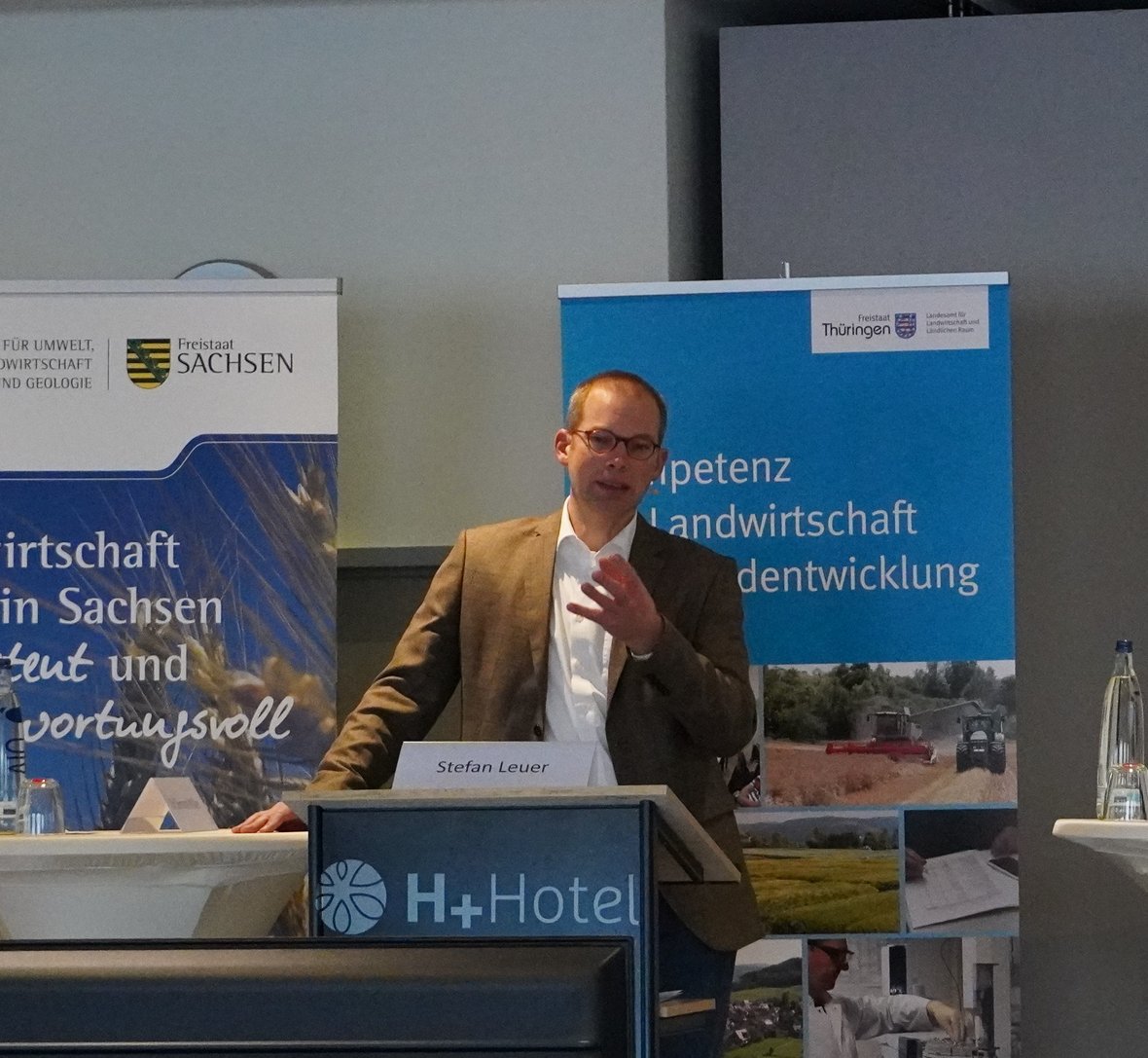
Image: LLG
Business consequences of improved animal welfare
Stefan Leuer from the North Rhine-Westphalia Chamber of Agriculture (LWK) described the "economic consequences of improved animal welfare". These depend primarily on the additional costs of pork production.
A reflection of slaughter revenues in pig farming over the last thirty years illustrates the long-term yield conditions: pig farmers have had to operate and plan investments at an average of €1.50/kg slaughter weight over the past 30 years! Additional requirements from a wide range of areas (e.g. no tail docking, castration, etc.) are not yet reflected in the price. When the "more" animal welfare that society is vehemently demanding is questioned, a wide variety of aspects come into focus: these range from "feeling better about eating meat" to the discussion of possible size limits for livestock farms to the actual observable effects on the animals themselves. Various programmes, which also promise higher prices for livestock farmers, are intended to "sell" this increase in animal welfare, i.e. make it marketable. The abundance of programmes almost always includes more space and a permanent supply of roughage. So far, the discussion has focused almost exclusively on pig farming.
In the long term, however, piglet production will also have to be included, because even from the Borchert Commission's point of view, only a "single product" is transparent and credible at the checkout counter. Leuer looked at the animal welfare costs of €25 per fattening pig from the perspective of direct cost-free services. This partial cost amount includes all services minus the costs that change in connection with production (feed, animals, water, energy, vet, insurance). It is used to finance labour and fixed costs that are also related to animal welfare programmes. Using examples, he showed the construction and investment costs that can arise for the implementation of the various animal welfare programmes (€58–372 per fattening place). Since roughage supply is also a mandatory criterion of many programmes, various technical solutions were critically examined in relation to mechanisability and supply per animal. What often appears inexpensive at first glance may not necessarily be the best option. Another problem is that far too little attention is paid to the increased production costs in piglet production, or calculations are made independently of the programme with constant animal input costs. If piglets are to continue to be produced and born in Germany, this must change urgently and, realistically speaking, will lead to significantly higher production costs per animal.
Stefan Leuer stated clearly: "At the moment, established animal welfare programmes offer the best prospects!" It remains to be seen whether Germany will continue to play a significant role in the international market with the transformation of animal husbandry. At present, all domestic producers who are looking for and find a regional market have a good chance.
What motivates a future generation of pig farmers?
When talking about the future, it is also about the motivation to take on a task. Gesa Langenberg, a pig farmer from Bockstedt in Lower Saxony, succeeded in giving hope in a very authentic and captivating way with her remarks on "What motivates a future generation of pig farmers?" Her messages can be summarised as follows: "You need a certain amount of passion, a partner who is willing to join you, and the willingness to take on responsibility." The praise that many participants gave the young mother afterwards was well deserved, and anyone who wants to be inspired by her confidence should check out the YouTube channel "Hundert Hektar Heimat" (A Hundred Hectares of Home). Having an inner conviction like Gesa Langenberg and saying "Yes, animal husbandry in Germany has a future" was one of the most motivating moments of the 2021 Central German Pig Day.
New concepts for pigsties
The second part of the conference was devoted to the topic of "New concepts for pigsties". The focus was on the major changes in husbandry systems. "There has never been such a demand for the implementation of a large number of changes in such a short period of time," said moderator Dr. Manfred Weber (LLG). The increasing social demands on husbandry practices of the future are not a passing fad. This was recognised early on by the presidents of the chambers of agriculture and state institutions, which is why a group of experts has been working "holistically" on a husbandry concept for pig farming of the future since 2016. As a result, two brochures on the piggery construction of the future were published on the BLE website, initially for fattening pigs, but subsequently also for sows and piglets.
The tension between the Animal Welfare Act and implementation guidelines
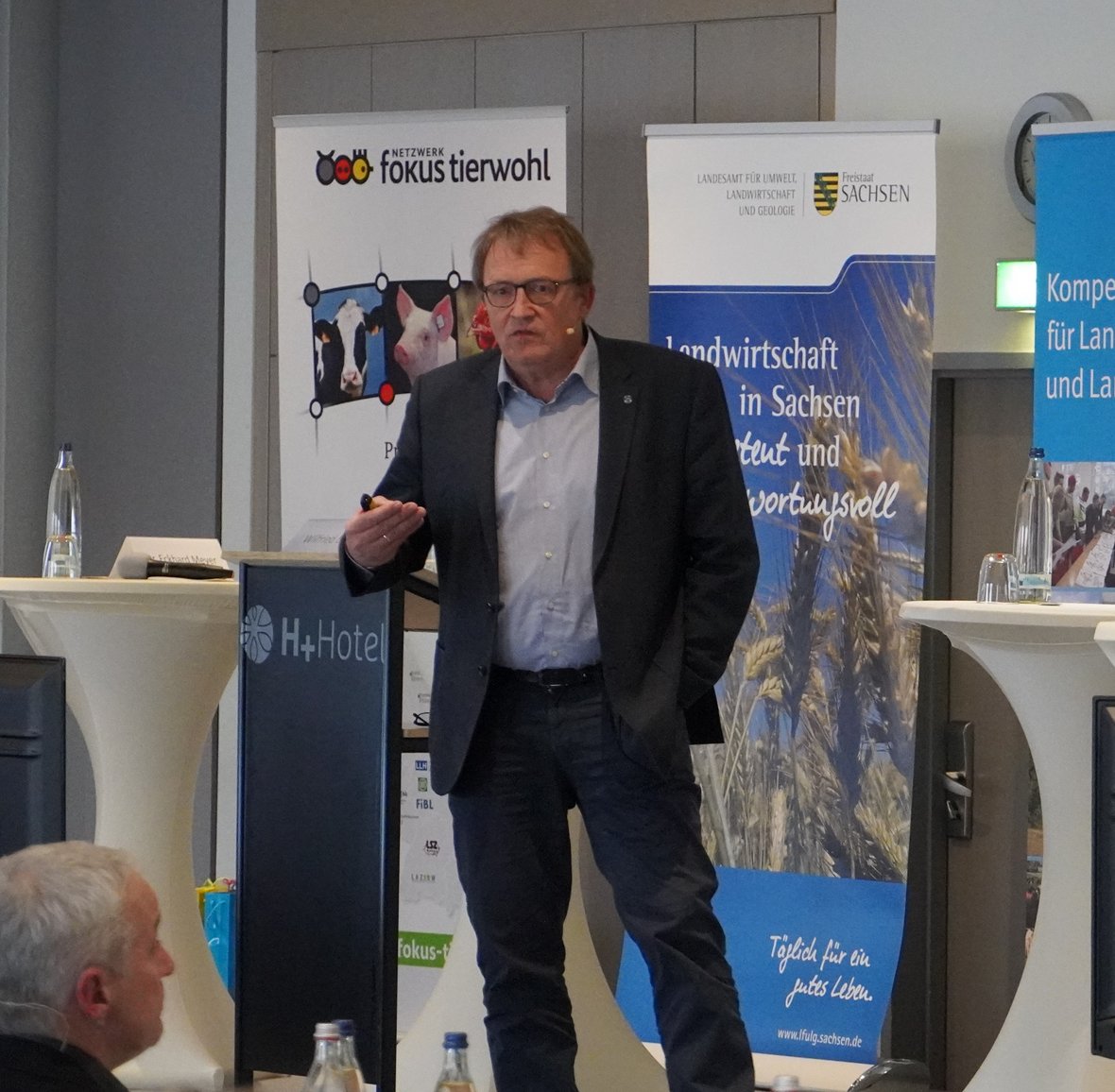
The basic standard for future procedural design is set by animal welfare legislation, and so, after a long development process, the new Livestock Farming Ordinance for Pigs was announced at the beginning of the year. At the same time, implementation guidelines were published, which are to be understood as recommendations for administrative action. The new version of the Animal Husbandry Ordinance (Tier-SchNutztV) involves considerable effort in some cases and (with some justification) allows room for technical progress or scope for interpretation for different farms and their conditions. Implementation guidelines specify the requirements, but every specification also carries a risk! Dr Eckhard Meyer (LfULG) pointed this out in the first presentation of this block, "The tension between the Animal Welfare Ordinance and implementation guidelines", and presented practical solutions.
Requirements that involve little construction work (organic enrichment material, requirements for the animal-feeding space ratio, especially for sensor-controlled feeding systems) are more or less a question of human attitude and technology. For everything that cannot be eaten, the implementation guidelines stipulate that requirements such as these must be installed and renewed. This should be done more regularly than before as part of routine and stable inspections. Nevertheless, it is important not to act strictly in accordance with the legal wording, because every form of activity can have a positive effect, be an alibi or even have a negative effect.
The potential problems with the requirements for the animal/feeding space ratio arise mainly from the fact that the legal wording on ad libitum feeding is older than the technology under discussion. The aim is to ensure that all pigs are fed to satiety, which must also be a matter of practical assessment. On the other hand, the requirements involving high construction costs (movement pens, mating centre) and therefore longer transition periods are a question of space allocation and costs. Multi-phase solutions inside and outside the classic barn building urgently need to be further developed with a view to future viability and approval. Hygiene is important in the farrowing area, and it is more important than in other areas to reconcile the different temperature requirements of increasingly large sows and small piglets. For this reason, actively heated piglet nests should not be larger than necessary. The interpretation of the requirements should be reconsidered! Past experience has taught us that "only the regulation is justiciable". Before construction begins, the opinion of the supervisory authority must be sought.
Planning examples for stables based on animal welfare concepts
Wilfried Brede from Serviceteam Alsfeld GmbH presented "Planning examples for stables based on animal welfare concepts" from his practical consulting work. He based his presentation on the food retail initiative and initially focused on conversion solutions for husbandry types 3 (outdoor climate) and 4 (premium) in pig fattening. Taking into account the bonuses currently paid in the selected programmes, his examples show that the economic efficiency of pig fattening under conditions of husbandry types 3 or 4 is significantly better than the currently applicable yield conditions for ITW farms.
He also emphatically pointed out that, to date, only fattening is "required and promoted" in animal welfare programmes. Higher husbandry requirements in fattening, sow husbandry (e.g. farrowing pens > 7.5 m², outdoor access in the mating and waiting area) and piglet rearing, as applicable in the EDEKA-SÜDWEST Hofglück programme, for example, also result in correspondingly higher piglet prices. For pig farmers, this would mean paying the piglet producer an additional €13 to €23 per piglet in the calculation example. As a result, in addition to the bonuses for the type of husbandry, higher payment prices of 47 cents (level 3) or 74 cents (level 4) per kilogram of slaughter weight on the hook would be necessary in order to be able to operate economically! This makes it clear that financing the investments and compensating for the additional annual costs incurred compared to the standards currently in force urgently need to be resolved! His summary, "Farmers need clear guidelines and reliable planning horizons, individual 'master plans' and assistance with building law and immission control issues in order to implement greater animal welfare," was also directed honestly and critically at German agricultural policy.
Contemporary attitude in old stables?
Can there be a "contemporary approach in old stables?" asked a Thuringian working group led by Dr Simone Müller (TLLLR). The feasibility study presented was developed in connection with the State Animal Welfare Label, the introduction of which was already decided by the former Federal Cabinet on 4 September 2019. Since it cannot be assumed that every fattener will be able to build new stables, possibilities for converting conventional stables are of great interest. The benchmark was set by level 2 (outdoor climate) and level 3 (premium with outdoor access) of the draft bill on animal welfare labelling regulations, which has been available since August 2020. The space requirements for sustainable pig farming are significantly higher than the current requirements, at 47% in Level 2 and 100% in Level 3. Significantly higher requirements are also imposed on the size and design of the lying area. In all cases, it must be at least 0.6 m² in size and soft or strewn with litter. Outdoor climate contact in level 2 is possible through a barn that is open on one side with natural ventilation. Alternatively, an outdoor area without size requirements can be provided. This is the main difference to level 3, in which a minimum of 0.5 m² of outdoor area per animal must be provided. According to the Borchert Commission's plans, around 40% of fattening places should comply with level 2 by 2030. Level 2 is set to become the legal standard by 2040. The two project designers presented solution options for two of four conventional pavilion-style housing facilities.
Dr Richard Hölscher presented the conversion of a 6,000-animal fattening facility in eastern Thuringia, which was favoured by the farm management. The four detached barns, which date from the 1960s, are to be converted into an outdoor climate barn with an indoor outdoor area, including large group housing. The reduction in stock will be 45% with a space allowance of 1.5 m²/animal. At just under €200/animal, the conversion is relatively inexpensive while retaining the existing active ventilation system. Jörn Wilke's concept for a fattening facility with 9,520 animal places in western Thuringia envisages fundamental changes in the housing with outdoor access, pen structuring and the creation of free ventilation. Here, too, the farm manager favours large group housing. The conversion will cost just over €700 per animal place, with the reduction in stock due to the addition of an external, partially covered outdoor area amounting to only 16%. The eligibility of the conversion solutions for approval will be examined by means of immission prognosis reports. Several questions that cannot yet be answered conclusively make it clear that it is high time to provide pig farmers with guidelines for conversion or new construction that are eligible for approval.
The tension between the environment, animal welfare and performance
During the lunch break, the focus was on face-to-face conversations, which many had long missed. At the same time, the opportunity was taken to discuss sustainable developments and proven products for pig farming with representatives from over 20 different companies.
This discussion continued during the practical lecture section in the afternoon, "The conflict between the environment, animal welfare and performance", moderated by Dr Eckhard Meyer (LfULG). It is well known that conflicts of interest between these factors cannot be ruled out. However, in future, farms will have to position themselves in such a way that these conflicts have less of an impact or that apparent disadvantages may even turn into advantages. One example of this is N/P-reduced feeding. The new TA Luft (Technical Instructions on Air Quality Control) stipulates that BImSchG (Federal Immission Control Act) farms must reduce emissions (NH4) through N- and P-reduced feeding with immediate effect, and all other farms must do so from 2026. The previous reference value of 3.64 kg NH3/fattening place per year is to be reduced to 2.92 kg NH3, which corresponds to a reduction of 20%. For the feeding of fattening pigs, this means a reduction in the crude protein and phosphorus content of the feed by approximately the same amount to 14% crude protein (vs. 17% = universal fattening, or 16.5% = NP reduced) and 0.42% phosphorus (vs. 0.5% = universal fattening, or 0.45% = NP reduced).
N and P-reduced feeding as a prerequisite for future pig farming
However, Dr Manfred Weber from LLG Iden was able to impressively demonstrate in his presentation that "N and P-reduced feeding must be seen as a prerequisite for future pig farming". The economical use of feed with significantly reduced N/P levels for fattening pigs, sows and piglets is possible without any fundamental problems. Ultimately, the calculated reductions are in line with the so-called "safety margins" of the past. However, omitting these surcharges requires precise knowledge of the nutrient supply capacity of all ration components. If these are known with sufficient accuracy, even in-house mixers can produce appropriate mixtures. However, it is important that any deficits in the aminogram or the Ca/P ratio are compensated for by choosing an appropriate mineral feed. Studies in Iden have shown that N/P-reduced feed does not necessarily lead to deficits in the P and Ca content of the metacarpal bone or to intermediate metabolic problems (transcription profile of P transporters in kidney tissue) compared to standard feed according to the GFE. However, practical problems with the development of the musculoskeletal system, especially in young animals, can arise if the above-mentioned requirements for a feed with a significantly reduced N/P ratio are not met. From a practical point of view, the moderator believes that absolute crude protein levels of 13% and phosphorus levels of 0.4% should not be undercut.
Pilot project on not docking piglets' tails under conventional farming conditions in Brandenburg
The implementation of the "tail docking ban" decided at European level poses the greatest challenges for agricultural practice compared to the ban on sow stalls and castration without anaesthesia. At present, the goal is still to achieve a ban on tail docking! Nevertheless, the two-year grace period granted in the action plan is now over. All farms that are not yet able to keep undocked (control) pigs are expected to take concrete measures to move forward in the required direction.
Jennifer Gonzales from the State Office for Rural Development, Agriculture and Land Consolidation (LELF) in Ruhlsdorf reported on the results of a "model project on the abandonment of tail docking in piglets under conventional husbandry conditions in Brandenburg". In a Brandenburg farm with 1,500 sows in a closed system, three trial runs from the suckling period to the end of pig fattening yielded relatively good results with the rearing and fattening of uncut piglets. To ensure that around 80 to 90% of the piglets housed reached the end of rearing or fattening uninjured, the pen structure and enrichment opportunities (organic enrichment material) were first improved. The first step is to create a more obvious division of functional areas for pigs through the design of the floor, feeding and drinking areas or contact grids. Thanks to the good health status of the animals and the management on the farm, the injuries that did occur healed well, as confirmed by results from Köllitsch. Almost 70% of problems in pig fattening are caused by unhealed injuries from piglet rearing. In contrast, around 30% of the risk of recurrence arises from the (negative) conditioning of the animals that has already taken place. If uncut piglets survive piglet rearing unscathed, the probability of further tail injuries occurring during subsequent fattening is also higher. In order to intervene in good time in the event of abnormalities, it is absolutely necessary to have sufficient staff to observe the animals closely.
Practical experience shows that not docking tails can increase the time spent in the barn by a factor of 4 to 6, while Köllitscher's experience shows that the risk associated with docking tails decreases by exactly the same factor! Staff shortages are not a problem unique to agriculture, but measured against today's requirements, they are a particularly serious problem compared to other areas of society. It is therefore important to first identify the problem areas in husbandry, feeding and barn climate within the scope of the farm's capabilities. Management aids such as the Saxon list for avoiding tail docking can help with this. Small steps in the barn are more important than big ones on paper. The degree of tail docking is also suitable for taking the necessary steps.
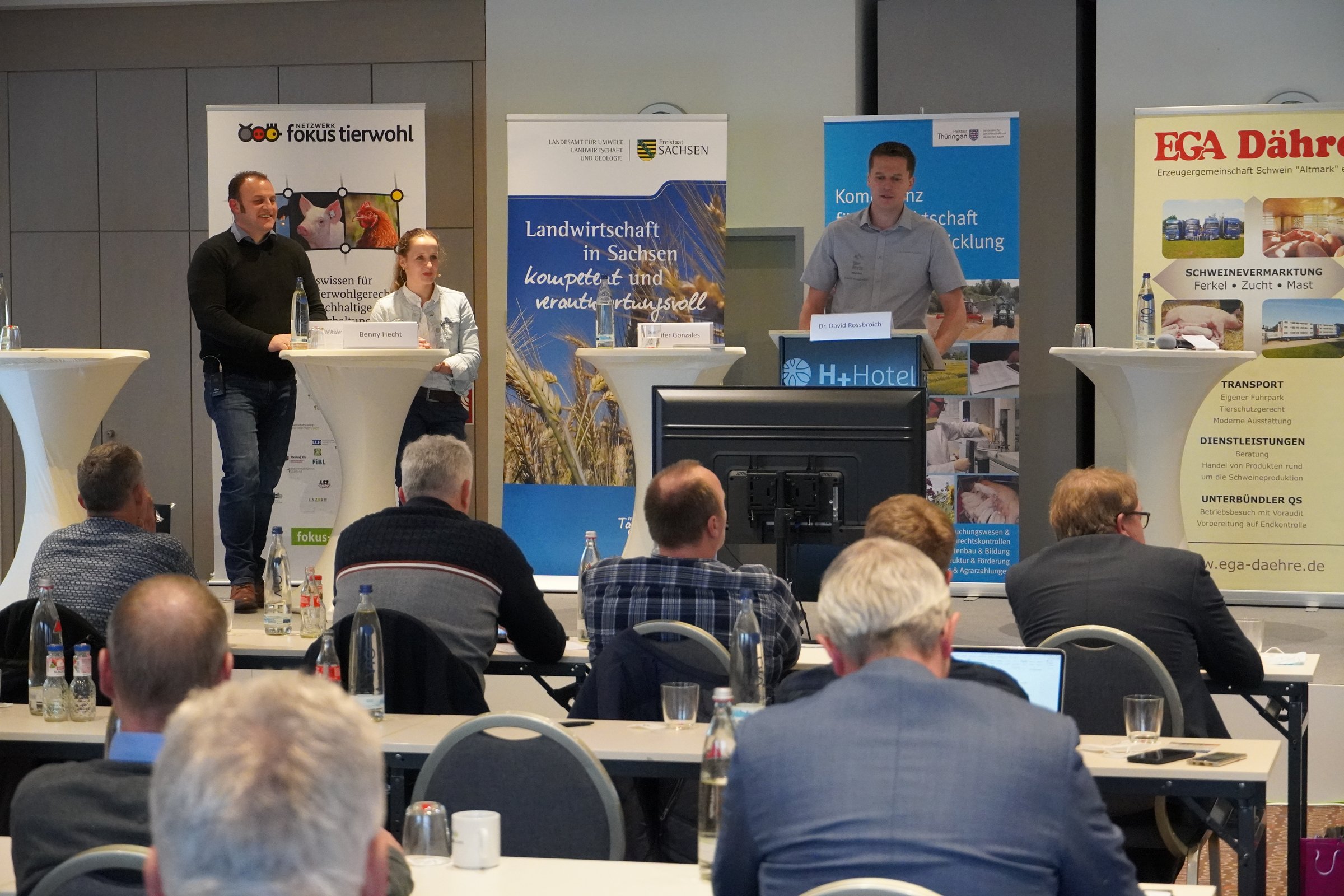
Image: LLG
Isoflurane or ketamine: how can piglets be anaesthetised in a practical manner?
Of the three big Cs (castration, tail docking, crates), the first was the most pressing, as there has been no further postponement of the ban on piglet castration without anaesthesia beyond 1 January 2021. It is clear that, despite all the lip service paid to the issue, we will still have to castrate around 80% of male piglets nationwide because the market demands it. Around 20% of slaughter pigs can be slaughtered as intact boars and as immunocastrates, with boars accounting for an estimated 15% of the total. According to current thinking, the pain relief required by law for castration is only possible with the aid of inhalation or injection anaesthesia. The latter is reserved for veterinarians. This was the backdrop for the next block of presentations, which answered the question: "Isoflurane or ketamine: how can piglets be anaesthetised in a practical manner?"
First, David Rossbroich, a veterinarian at the Wonsees group practice, pointed out that in the catchment area of the veterinary practice (northern Bavaria and Thuringia), inhalation anaesthesia accounts for by far the largest share, with around 70% of all farms and 95% of all pigs treated. The anaesthesia equipment available from the five well-known manufacturers on the market was briefly presented. They have advantages and disadvantages, and the possible technical weaknesses were identified during the relatively difficult introductory phase at the beginning of 2021. These were less of an issue as the farms were trained and instructed by the manufacturers. The problems discussed in the scientific literature based on studies in Switzerland (insufficient depth of anaesthesia, delayed administration of painkillers) should be less of an issue with the devices, which are significantly more advanced in Germany. However, it is important to make adjustments specific to each farm. There are no known effects on suckling piglet losses or health complaints among users.
Benny Hecht from Meinsdorfer AG was one of the first farms to obtain the necessary certificate of competence in Köllitsch. The farm keeps 320 breeding sows in a closed system, so that approximately 120 male piglets per week are "put to sleep" using the farm's own "PorcAnest 3000" from Promatec. According to the farm's records of the individual cost factors (equipment, operating resources, labour), the necessary costs per piglet amount to €1.28. The advantages are that the procedure can be carried out by the farmer himself and is fundamentally animal-friendly. So far, there have been no anaesthesia incidents or losses. The costs are also manageable and are even falling slightly over time. The logistical preparations required for anaesthesia, combined with greater unrest at work and the risk of litters being mixed up, are seen as disadvantages. At the same time, occupational safety must be constantly monitored. For this reason, the farm has also gained experience with the use of ketamine by the vet. This is also seen as an opportunity to "outsource" work processes. The decisive factor is that the veterinary staff required for this can be fully committed.
Carolin Mieth, herself a veterinarian at the Tierzucht Packisch farm in northern Saxony, has established the procedure together with Katja Holz in a herd of 3,500 sows. The advantages are that no technical equipment is necessary and the previously very "sophisticated" procedures do not have to be significantly changed. Colleagues do not need any additional certification of competence and are not burdened by the use of anaesthetics. In contrast to isoflurane, the use of ketamine has the advantage of being suitable for slightly older piglets (> 4 days). In exceptional cases, these can be castrated by the veterinarian present if they are older than 7 days. Farmers with isoflurane certification are not allowed to do this. A significant disadvantage is the considerably longer recovery time for the piglets, but this can be significantly reduced by optimising the procedure. The amount and ratio of ketamine to azaperone must be adjusted to the individual body weight of each animal. In addition, adjustments must be made for differences in the vitality of the piglets. As a result, average recovery times of 1:45 hours are now possible, compared to 6 hours in the past. However, intensive aftercare of the boar piglets is also important here. Above all, they must not be allowed to cool down and, in contrast to piglets anaesthetised with isoflurane, they are stronger and therefore remain dazed for longer, putting them at risk of being crushed. In the future, the aim is to switch to needle-free injection. The farm has already had good experiences with this.
Maintaining a high level of health in Central German businesses in the long term
The greatest good for humans and animals lies in health. It is the prerequisite for economic efficiency and for all the requirements discussed here. The aim is not only to establish a "high health status in Central German farms", but also to "maintain it in the long term". Jan Oosterveld, farm manager at Van Asten Tierzucht in Neumark, and Franziska Feicht, supervising veterinarian at Tierärzte Wonsees GmbH, showed how this can be achieved.
The sow herd in Neumark was established in 2007 with the highest health status. Since then, the status has remained stable and free of PRRS and M. hyo, as well as other relevant pathogens. The foundation for maintaining this freedom is the vaccination of mother animals against the most important pathogens (Glässer, influenza (H1N1, H1N2, H3N2 and H1panN1, erysipelas and parvovirus). The greatest challenge lies in immunoprophylaxis and the integration of gilts, which are less immunocompetent due to their age. In addition, great importance is attached to biosecurity against the introduction of diseases. Employees are required to understand and practise biosecurity in their everyday work, not just during training courses. This begins with the consistent implementation of the "black/white" and "all-in/all-out" principles and does not end with the spatial or colour separation of the individual areas. Particular attention is paid to everything that enters the herd from outside. This starts with boar semen and extends to all operating resources, from feed to enrichment materials, building materials and tools. It is important to know what is happening and developing in the animals. This requires intensive and regular herd monitoring and evaluation of the results. Three times a year, all those involved meet on site to evaluate the current findings (farm evaluation, feed tests, fertility, vaccination schedule, health monitoring), identify weak points and define new goals and a timetable for implementation.
Maintaining an "unsuspicious herd" is therefore also possible, or even more so, under the conditions of a large facility! To achieve this, cooperation and communication between all those involved in herd health is absolutely essential!
Summary and outlook
Never before have the challenges facing pig farming in central Germany been as great as they are today. The most important task is to combat African swine fever (ASF). It threatens the entire German pig population and is therefore a national task that the federal government must not leave to the states and counties alone. A lack of responsibility and legal basis must not be used as an excuse for government inaction. Instead, new and more vigorous methods of combating the disease and concepts for marketing animals from the affected areas are currently needed. Farms must not be left to cope with this alone! Only then will German pig farming be able to muster the strength to face the challenges demanded by society. This is not possible with the average payment price of €1.50/slaughter weight over the past 30 years. At the same time, many costs (feed, construction costs, energy) have risen during this period. Productivity increases in human labour and the biological performance of animals were therefore urgently needed. Today's livestock housing is therefore the end product of a development that has focused on labour productivity and animal performance.
If animal welfare and environmental protection are to receive even more attention in the future, costs will rise without further productivity gains being possible. The era of cost leadership is therefore over, and a binding agreement between farmers and the state is needed. In order to restructure animal husbandry, farms first need reliable framework conditions that support this process rather than hindering it, as is currently the case. The concepts for the restructuring of livestock housing in central Germany are ready and have been presented. The greatest technical challenge is the implementation of a hygienically acceptable outdoor climate stimulus against the backdrop of the threat posed by ASF. In these difficult times, it is important not to lose motivation for future-oriented action. It helps to reflect on what has already been achieved in the past with the resolution of the three major "K questions".
As an alternative to piglet castration without anaesthesia, two practical methods have been established, namely inhalation and injection anaesthesia, which are being incorporated into the daily work routine of farms and further developed. When it comes to keeping uncut piglets, the journey is still the destination, and farms are expected to take credible measures to follow this path. Established management tools provide support in this regard. The requirements of the new Livestock Farming Ordinance, which are already in force today, are essentially a question of human attitude and technology. The implementation of the requirements prohibiting individual housing in crates requires structural work, which is progressing very slowly due to the aforementioned circumstances (planning security, producer prices). It should not be forgotten that piglets from Germany will be needed in the future. The strengths of Central German farms should therefore not be overlooked. These lie in the production of large, uniform batches with a defined high health status. It is important not only to build this up, but also to mobilise all forces to maintain it in the daily work routine.
Health status must be lived, because health is the greatest asset. This applies equally to humans and animals.
Authors:
Dr Simone Müller, Thuringian State Office for Agriculture and Rural Areas
Dr Eckhard Meyer, State Office for Agriculture and Horticulture Saxony-Anhalt