
Design of weather protection to provide heat protection
Shearer et al. (1991) state that cattle prefer the shade provided by trees to structural weather shelters (as the leaves of the trees also generate evaporative cooling through evaporation).
- Airy design of the shelter (Sambraus 2001), a shelter that allows good air circulation (e.g. netting)
- Netting instead of a tarpaulin allows for greater air movement and reduces static problems caused by precipitation
- Sufficient space for all animals (GEH 2019, TGD Freiburg 2005)
- Protection from insects (TGD Freiburg 2005)
- Entrance area as large as possible, space for 2 cattle (GEH 2019, TVT Fact Sheet No. 85, 2001); 2 cattle must be able to pass each other without encroaching on their personal space (otherwise: ranking fights), no dead ends, possibility to move out of the way
- Provide access to cool shelter
- Shade structures should be positioned in the pasture in the direction of the wind or in areas exposed to the wind
Basic requirements for heat protection:
- Shade for all animals at the same time
- Airy/exposed to the wind
- A bed of straw prevents localised nutrient accumulation (nutrient fixation) and damage to the sward
- Water supply must be guaranteed ad libitum. This should not take place in the shaded area (disturbance, water accumulation)
Naturally sheltered areas as heat protection
- Natural shelter from the weather is beneficial. Naturally sheltered areas, if necessary through the planting of new trees/hedges
- Adapted herd management/grazing management and use of more shaded pastures
- Grazing management (no overgrown forage, moving the herd in the evening hours, ensure rumen filling)
- Sustainability and resource conservation must not be overlooked
- Woodland grazing is subject to the Federal Forest Act and the state forest laws
- Natural shelter options (hedges, trees, bushes, woodland, rocky outcrops…): must be effective throughout the day
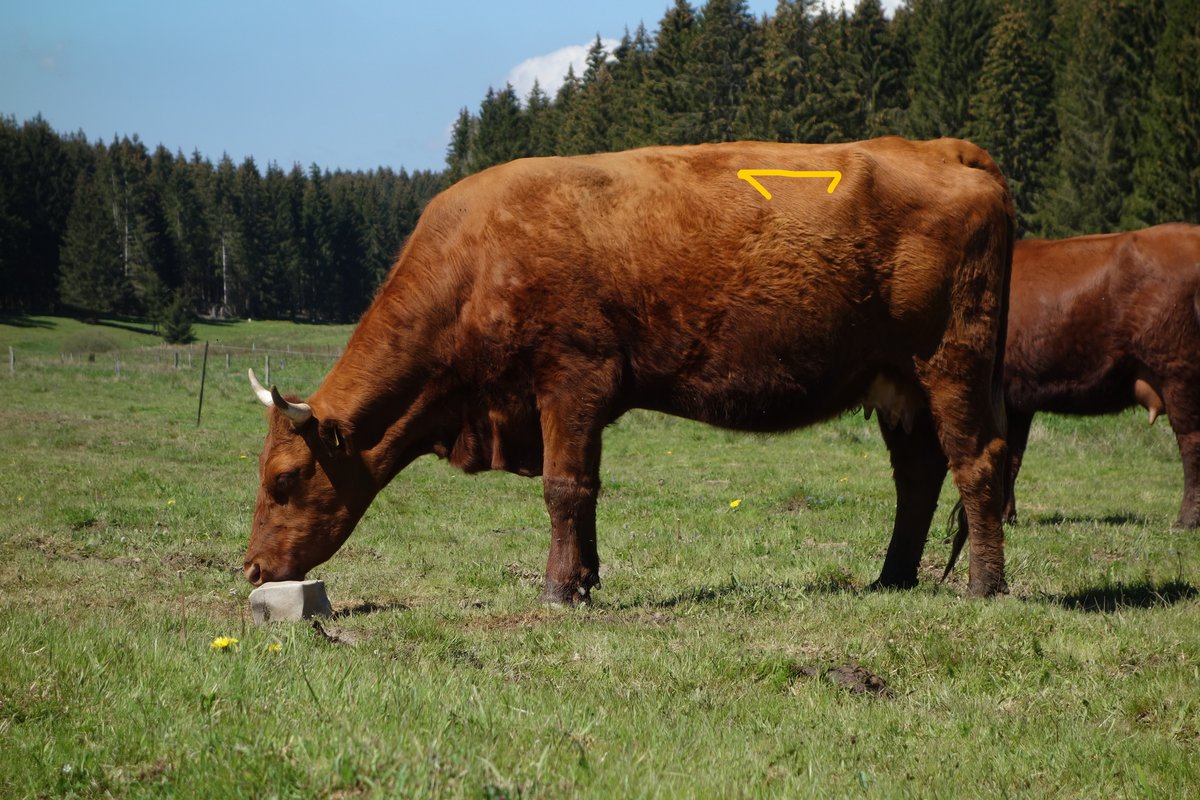
(Image: H. Scholz)
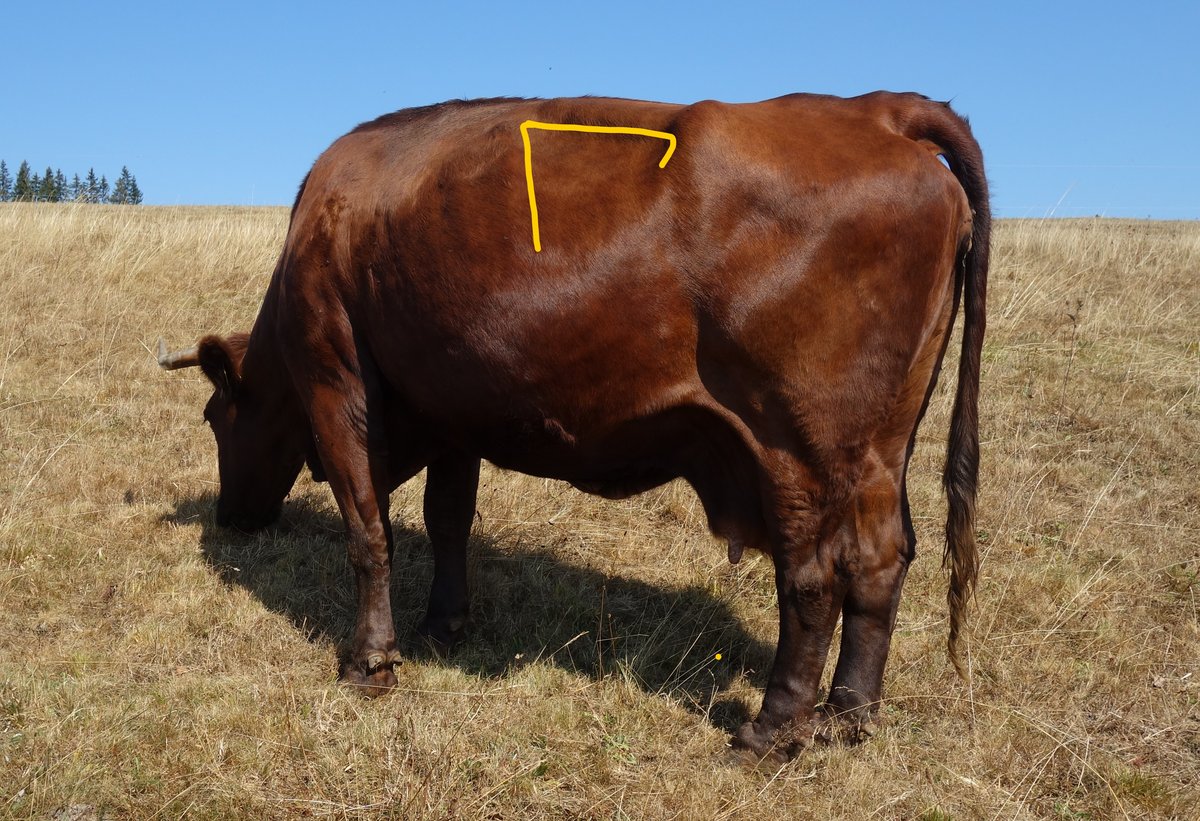
(Image: H. Scholz)
Structural and technical design, including, or rather primarily, mobile weather protection
Legal requirements vary considerably between the federal states.
- AwSV (Ordinance on Installations for Handling Substances Hazardous to Water)
- Fixed weather protection: subject to planning permission
- Nature conservation law
- Building law (State Building Regulations)
- Water law
- Non-permanent weather protection:
Effects on the turf/soil
- As sunlight diminishes, temperatures drop and soil moisture increases, soil compaction and damage to the turf occur (KTBL 481)
- Animals spending long periods in shaded areas leads to
damage to the turf and soil structure
localised nutrient accumulation in the soil from urine and faeces → changes in vegetation - Contamination of heavily used areas by faeces and urine
Conclusion
Legal regulations require adequate protection against adverse weather conditions. It is therefore necessary to assess heat-stress situations using the THI and to identify them by observing animal behaviour (e.g. seeking shade, panting – panting score). Where necessary, the animals’ adaptive responses should be supported by providing airy, shaded areas for all animals. Protection is considered adequate if no animal standing unprotected shows signs of severe heat stress.