
EIP project ‘WurmFrei’: From diagnosis to action: Worm infestation and control strategies in free-range laying flocks
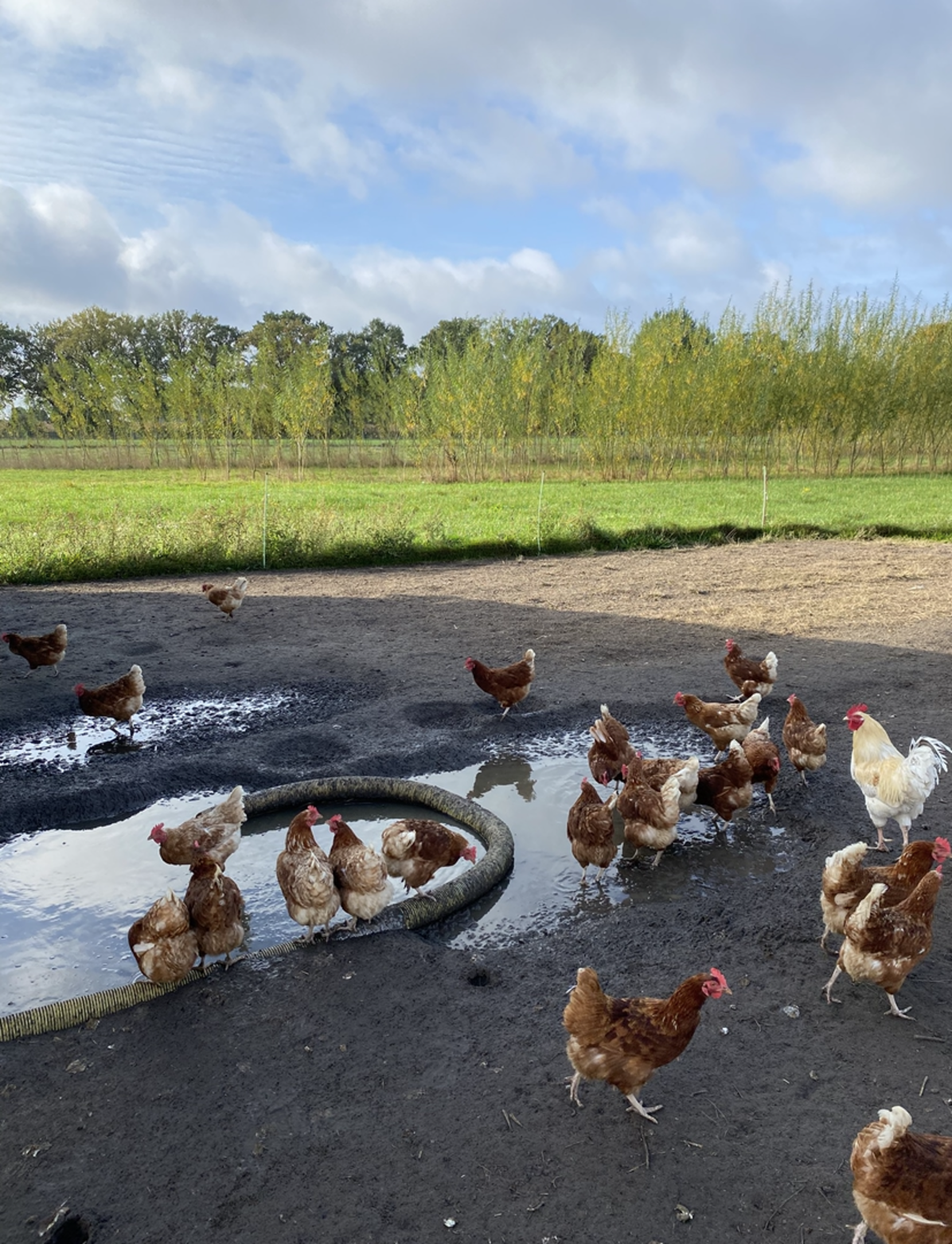
Endoparasites pose a serious health risk in layer hen farming. The risk of repeated infection is particularly high in systems with access to outdoor runs, as infectious worm eggs are excreted in the droppings and accumulate in the soil there. Infection occurs mainly through the oral ingestion of worm eggs from the environment and via intermediate hosts such as earthworms, which are regularly ingested in the outdoor run. Particularly in the area close to the house, which is heavily used by the birds, there is a high concentration of faeces. As a result, the hens are in constant contact with potentially infectious material and can easily re-ingest the parasites.
However, effective biosecurity measures can only be implemented to a limited extent in free-range systems. A strict separation of birds and faeces, as is possible within the house, is virtually impossible to achieve in the outdoor run.
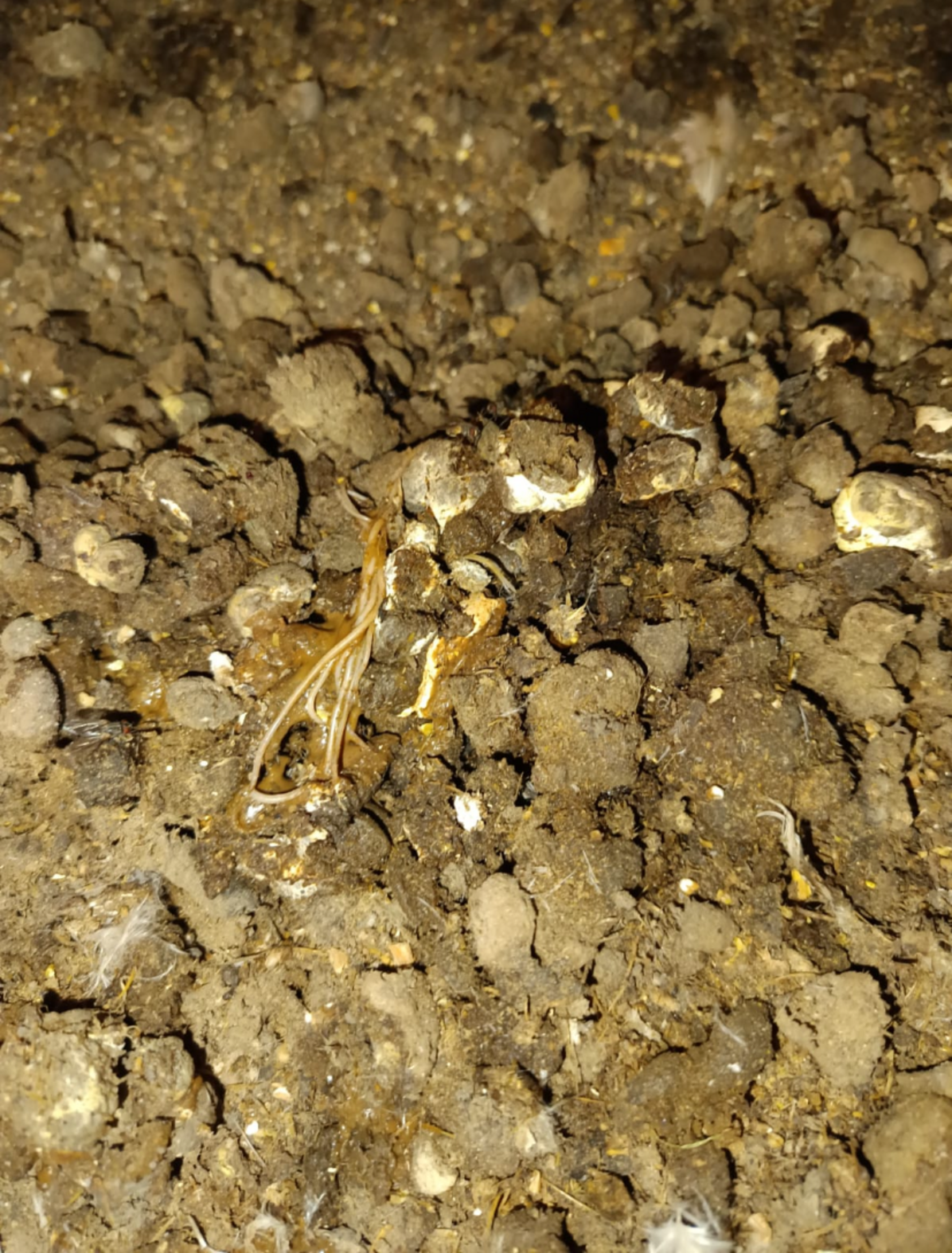
Among the most significant endoparasites in poultry farming are the roundworm (Ascaridia galli) and the cecal worm (Heterakis gallinarum). Following oral ingestion of infectious worm eggs, the Ascaridia galli larvae hatch in the small intestine after approximately 10–20 days, after which they migrate and develop within the intestinal mucosa. The adult, sexually mature worms produce eggs again, and the hen excretes infectious worm eggs once more. A life cycle is completed after approximately 8 weeks. In organic farming, the mandatory access to an outdoor run increases the risk of early infection even during the rearing of pullets.
Chemical anthelmintics are routinely used to control worm infections. Within the European Union, only the benzimidazole class of active substances is currently authorised for laying hens, which includes, amongst others, the active substance flubendazole. These preparations demonstrate high antiparasitic efficacy but are associated with various challenges. Repeated applications can, for example, lead to resistance. Organic farms are not permitted to market the eggs produced as organic products during the treatment period (approx. 5–7 days) and a subsequent waiting period of 48 hours, which leads to financial losses. Against this backdrop, there is a growing need for alternative strategies for sustainable parasite control.
The EIP project ‘WurmFrei’ aims to address these issues and seeks to identify and scientifically evaluate practical, alternative approaches to controlling worm infestation in laying hens. The project will run from July 2024 to July 2027 and represents a collaboration between the Lower Saxony Chamber of Agriculture, the Foundation of the University of Veterinary Medicine Hannover, the Research Institute for Farm Animal Biology, Naturland NRW e. V. and two commercial farms.
An initial project objective is to first assess the current worm burden in 50 conventionally and organically reared laying hen flocks in Lower Saxony. To this end, pooled faecal samples will be analysed regularly throughout the entire laying period and accompanying management data collected. In addition, soil samples from the outdoor run areas will be examined to quantify environmental contamination with infectious worm eggs. In selected farms, post-mortem examinations of dead birds will also be carried out to randomly assess the extent of infestation in hens with adult worms, in addition to the worm eggs in faecal samples. In addition to quantifying worm egg excretion and identifying worm species, the study focuses in particular on analysing the influence of different housing systems (organic versus conventional; mobile housing versus fixed housing) and management strategies on the incidence of infection.
Each flock is examined during farm visits at three defined time points – at the start (24th/25th week of life), in the middle (50th week of life) and towards the end of the laying period (80th week of life). This involves the collection of pooled faecal and soil samples, the recording of housing and hygiene management parameters, a visual assessment of the birds, and the completion of a standardised questionnaire by the farmer. In addition, the farmers collect pooled faecal samples themselves at ten-week intervals, which are analysed in the laboratory to determine the number of worm eggs excreted per gram of faeces.
Initial project results show that at the start of the laying period, almost all flocks examined are free of detectable worm infestation. From around the 40th to 50th week of life, however, worm burden increases continuously, which is reflected in increased use of chemical anthelmintics. The preparations used to date have demonstrated very high efficacy and reduced worm egg excretion almost completely. From the 60th week of life onwards, a renewed increase in worm burden is observed in numerous flocks, meaning that anthelmintics are frequently administered multiple times within a laying period.
In contrast, herbal antiparasitic agents investigated to date have shown only minor to no antiparasitic effects. Continuous monitoring of worm infestation is therefore crucial for identifying infection dynamics at an early stage and for ensuring that the use of chemical deworming agents is targeted and as resource-efficient as possible. In the long term, the “WurmFrei” project aims to contribute to the development of practical and sustainable strategies for parasite control in laying hen farming, thereby improving animal health, animal welfare and the economic stability of farms. The aim is to develop a web-based application for assessing the risk of worm infestation.
“Unfortunately, herbal deworming does not work. The worms are a permanent presence and severely weaken the animals; they place a significant and ongoing strain on them, thereby making them more susceptible to disease. The drinking lines become blocked and a thick biofilm forms inside them. In organic farming, there is no practical way to clean the pipes. Chemical deworming is therefore, unfortunately, unavoidable. Deworming once or twice a year without switching to free-range rearing would be a sensible measure.”