
Spotlight on Avian Influenza – How can I protect my animals?
Currently (as of November 2025), a massive outbreak of avian influenza is being observed in Germany, with more than 1 million birds culled in Lower Saxony alone (since the start of 2025). The last comparable large-scale outbreak of avian influenza in Germany occurred between November 2020 and June 2021 and affected over 250 poultry farms, ranging from small-scale to commercial operations. (FLI: Avian Influenza (colloquially known as bird flu) – Animal Disease Information System; maps on HPAI).
Avian influenza is an infectious disease caused by viruses whose natural reservoir is wild waterfowl. The viruses occur in both low-pathogenic and highly pathogenic variants, with different subtypes. Low-pathogenic avian influenza viruses tend to cause only rare or mild clinical symptoms in domestic poultry. However, there is a possibility that the viruses may spontaneously mutate into a highly pathogenic form, the clinical presentation of which then corresponds to avian influenza. This is highly contagious and usually results in a severe course of the disease. Once introduced into the poultry house, the entire flock is affected within a few days. (FLI FAQ: Highly Pathogenic Avian Influenza)
Cases of infected wild birds and/or commercial poultry flocks have currently been confirmed nationwide. According to the Friedrich Löffler Institute (FLI), the risk of the highly pathogenic avian influenza virus spreading among wild birds and of transmission to poultry and captive birds in Germany is classified as high (Risk assessment for highly pathogenic avian influenza H5). This is reason enough to review biosecurity measures on farms and tighten them where necessary.
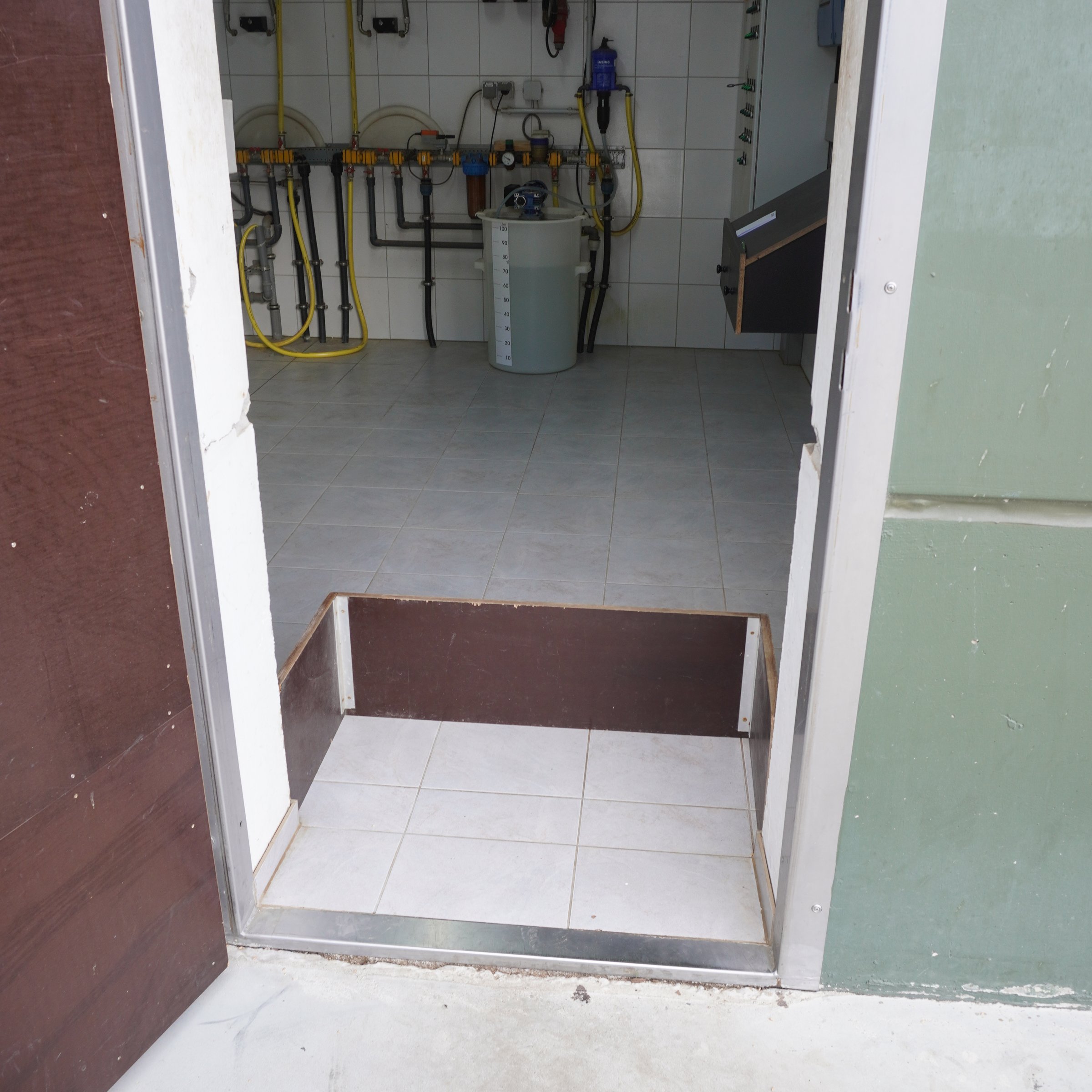
Image: Regine Revermann, LWK Lower Saxony
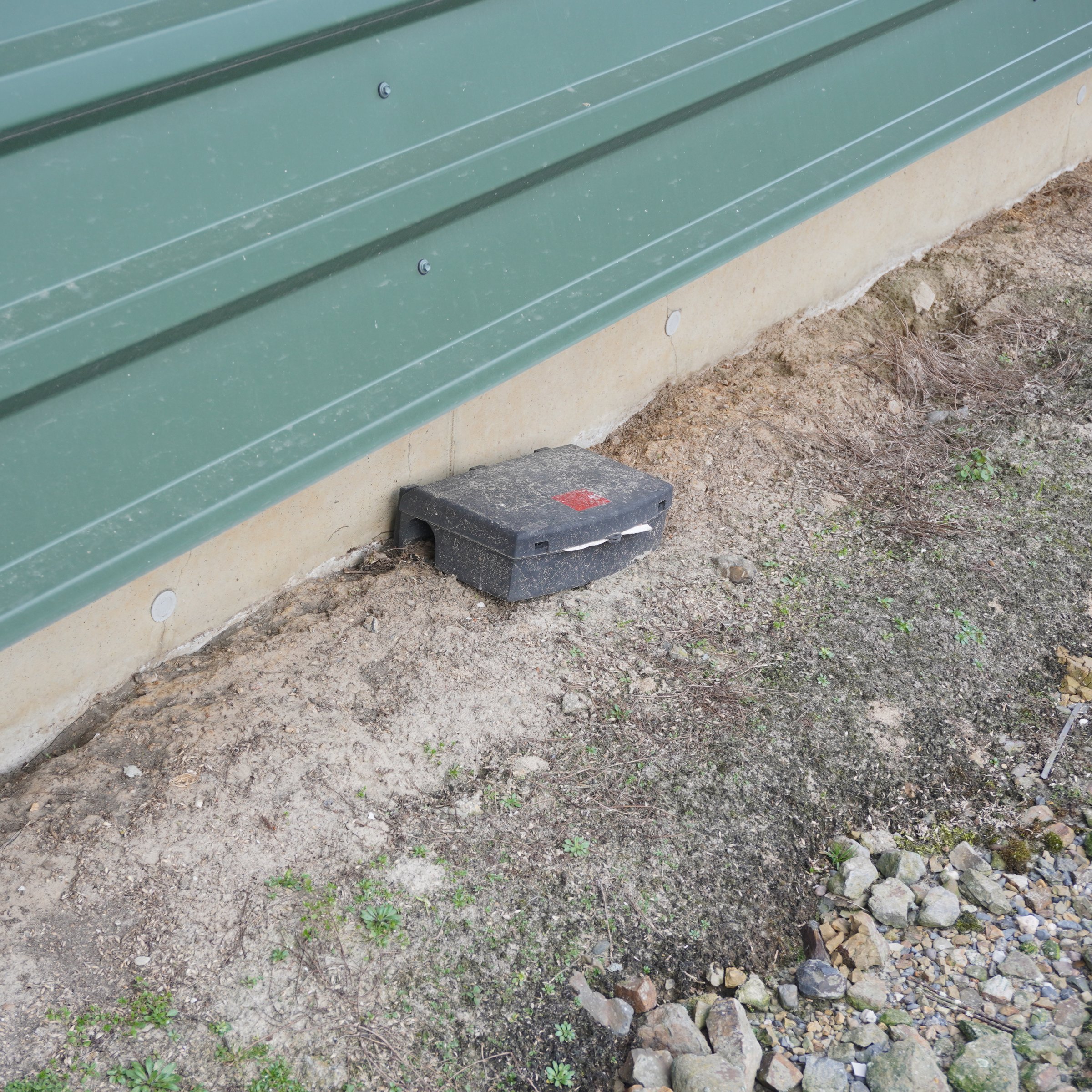
Image: Regine Revermann, LWK Lower Saxony
Routes of introduction of the highly infectious viral disease
To prevent the spread of the virus and to prevent it from entering your own flock, it is important to be aware of the routes of transmission and to take appropriate precautionary measures.
One of the most important measures is to prevent contact between farm poultry and wild birds and their droppings. Open water bodies and feed provided in outdoor runs, for example, can attract infected wild birds. If chickens, ducks or geese then eat or drink from the same spots, they can become infected with the virus.
The virus can also find its way into the shed via contaminated footwear or clothing. Vehicles that drive across the farmyard or even into the shed, such as the litter spreader, pose a high risk of introducing the virus. They must therefore be cleaned and disinfected regularly.
Ultimately, however, feed or straw bedding can also lead to the virus being unintentionally introduced into the barn if it is not stored safely away from wild birds.
Measures to be taken in the event of a suspected case
The control of avian influenza in Germany is regulated by the Avian Influenza Ordinance and applicable EU law. Among other things, these stipulate that in the event of increased mortality rates within 24 hours (generally > 2%), the causes must be investigated by a vet or the veterinary authority. As this is a notifiable animal disease, the competent veterinary authority must be informed immediately in the event of a suspected case. Samples are then taken from the farm and examined by an official laboratory. If the suspicion is confirmed, the entire flock must be culled in accordance with animal welfare standards and the animals subsequently disposed of safely (Further information). This is followed by the professional cleaning and disinfection of the poultry house or farm premises.
In a further step, the veterinary authority establishes a protection zone comprising a restricted area and a surveillance zone around the affected farm. Within these zones, various measures regulated by the Avian Influenza Ordinance come into force to prevent the further spread of the virus.
Biosecurity measures – What can livestock farmers do in practice?
First and foremost, the motto is: prevention is better than cure! In particular, farms with free-range systems or open-air housing should take appropriate precautions. Contact with wild birds or infected material must be prevented as far as possible.
Firstly, the number of people granted access to the sheds should be kept to a minimum. Access to the flock should only be permitted when wearing clean (protective) clothing. A disinfection tray or mat in the entrance area of the shed helps, when used correctly, to disinfect footwear or the tyres of wheelbarrows or vehicles.
As a further important measure, feed and bedding (e.g. straw) should always be stored in such a way that wild birds have no contact with them. Ideally, this should be covered by a roof and/or additionally covered with nets or tarpaulins.
To minimise the incentive for wild birds to rest or take up feed and water in the area near the barn, the management of outdoor access should be reviewed. It is crucial that no feed or water is provided to the animals outside the barn. Large puddles or open areas of water should also be avoided at all costs and filled in with suitable material. In fields near the barn, any plant debris remaining after harvest should be ploughed in promptly.
Pests and domestic animals should also be kept away from the flocks, as they can act as vectors and transmit the virus.
The Lower Saxony Animal Disease Fund also provides a clear checklist for biosecurity measures. From 1 January 2026, poultry farms in Lower Saxony with more than 1,000 birds will be required to have such a plan in place. In principle, however, smaller farms and hobby farmers should also have appropriate measures in place.
In principle, a vaccine could also be considered for combating avian influenza. Only so-called marker vaccines may be used, which allow a distinction to be made between vaccinated and infected animals. However, the spread of the virus within the vaccinated population cannot be entirely ruled out. Furthermore, current EU regulations restrict the trade in meat and eggs from vaccinated animals. In Germany, however, such vaccination is not currently authorised.
Mandatory housing – What now?
If there is an increase in cases of avian influenza, the competent veterinary authority may issue a general order, which includes, amongst other things, a mandatory housing requirement. Poultry farmers should keep a close eye on the avian influenza situation at all times and take precautionary measures in case they need to house their animals.
In the event of short-term housing, e.g. of laying hens in a mobile coop, there is an increased risk that the birds will exhibit stress-related behavioural abnormalities such as feather pecking after a short period of time. To prevent this, appropriate measures must be taken in advance. To increase the housing area, extensions can be erected which are covered at the top with a roof or tarpaulin and fitted on the sides with mesh no larger than 2.5 cm to prevent direct contact with wild birds. In general, greater care should be taken to ensure that the litter allows for scratching and that sufficient feed and hygienic drinking water are available in the house. It is recommended to equip the shed with additional enrichment materials, such as carrots in a bag, pecking bowls, pecking stones, straw bales and alfalfa bales. It is advisable to check the stock of enrichment materials in good time and to build up a supply of various attractive materials so that you can act quickly in an emergency.
It is difficult to predict how long a mandatory housing order will remain in place, as this always depends on the current disease situation.
Various institutions provide information materials on avian influenza for livestock farmers. The University of Vechta, in collaboration with the FLI, has developed an online tool designed to show livestock farmers how at risk their own farm is from avian influenza (University of Vechta risk traffic light). Helpful fact sheets and checklists are also available.
Guidance/Information sheets
University of Vechta Risk Indicator
Biosecurity – Biosecurity – Lower Saxony Animal Disease Fund
Information sheets from the Lower Saxony State Office for Consumer Protection and Food Safety
Diagram: "Possible sources of introduction of avian influenza viruses into turkey and duck flocks"
References
- https://tierseucheninfo.niedersachsen.de/startseite/anzeigepflichtige_tierseuchen/geflugel/geflugelpest/geflugelpest/aviare-influenza-190642.html
- https://www.openagrar.de/servlets/MCRFileNodeServlet/openagrar_derivate_00068835/FLI-Risikoeinschaetzung_HPAI_H5_2025-11-06.pdf
- https://www.openagrar.de/servlets/MCRFileNodeServlet/openagrar_derivate_00068710/FLI-Information-FAQ-Gefluegelpest-2025-10-24.pdf
- https://www.fli.de/de/aktuelles/tierseuchengeschehen/aviaere-influenza-ai-gefluegelpest/karten-zur-klassischen-gefluegelpest/
- https://tsis.fli.de/cadenza/repositories/j-SlqCKELaTDy8RoFRCW/workbooks/Aviaere-Influenza-ugs.-Avian influenza,KZDvzqKWkpK-ZFdJr5jq/worksheets/Overview,3Z_PXs-JPrCrYS7PhzuD?workbookHash=EWJQ5MSfkriwmUVhaK63Bi0eaPUErzz_5K3ahOa9o5a1Lvxt
- https://www.ndstsk.de/uebersicht/tierkoerperbeseitigung/biosicherheit
- Ordinance on Protection against Avian Influenza (Avian Influenza Ordinance) Avian Influenza Ordinance in the version published on 15 October 2018 (Federal Law Gazette I, pp. 1665, 2664)
- Rautenschlein, S. and Ryll, M. (2014). Diseases of Farm Poultry (1st edition). Eugen Ulmer KG