
A look at future-oriented housing systems for broiler chickens
Practitioners and consultants discussed what future housing systems for broiler chickens should look like at a two-day workshop in Meppen, Lower Saxony. The programme also included a visit to the Windstreek house in the neighbouring Netherlands.
Field visit to the Netherlands
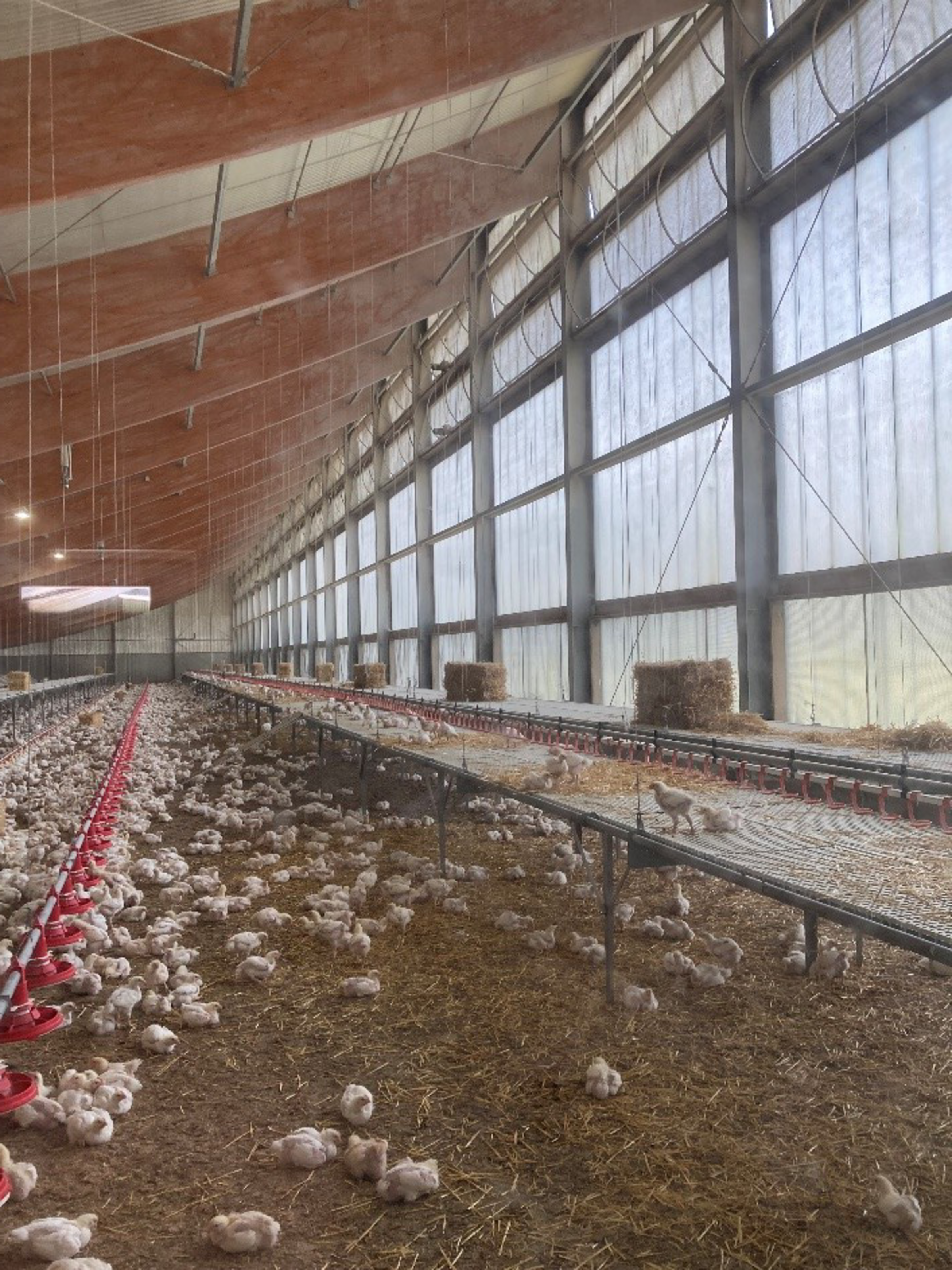
On the first day, the participants visited the Nijkamp family’s innovative ‘Windstreek’ house. With 23,000 broilers (Hubbard JA 757) at 25 kg/m², the house offers a particularly animal-friendly concept: gravity ventilation, plenty of natural light, raised levels, dark brooders and enrichment materials promote activity and animal welfare. The house design was developed in collaboration with Wageningen University and meets the Dutch Beter Leven 1-star standard (comparable to German housing type 3).
Professional exchange and future-oriented discussions
The second day focused on presentations and panel discussions. A keynote speech by Svenja Paul from the company ‘VetVise’ on digitalisation and the use of AI in poultry houses provided fresh insights. The participants then worked in small groups on three key questions:
- Optimal barn climate for broiler chickens
- Animal-friendly and labour-efficient enrichment measures
- Use of light (natural and artificial) to promote animal welfare
In a World Café, ideas such as climate zones, combined heating and ventilation systems, dark brooders, raised levels, automated enrichment systems and light zones were discussed. The small-group discussions yielded numerous practical approaches. Regarding the house climate, the focus was on the flexible design of different climate zones to meet the animals’ needs at various life stages. For the housing environment, raised levels, dark brooders, structured house areas and automated enrichment and litter-spreading systems were considered particularly promising. In the area of lighting, it became clear that zoned lighting with variable intensity and a specific light spectrum (e.g. UV content) is an important topic for the future that requires further research.
Authors: Jule Schättler, Hannah Kanwischer, Dominik Jacobs; Lower Saxony Chamber of Agriculture