
Measures integrated into the process
There are various process-integrated options for reducing emissions from livestock housing systems using slurry management. These are designed to reduce the emissions generated by slurry, as the mixing of faeces and urine produces ammonia, which is harmful to both animals and the environment. Furthermore, more ammonia escapes at high temperatures than at low temperatures, which is why the barn climate must also be taken into account.1 A well-structured pen essentially ensures that the animals create a designated area for faeces and keep the pen clean, thereby reducing the surface area from which emissions occur. Furthermore, there are methods such as the separation of faeces and urine, the reduction of the slurry surface area, and slurry cooling or acidification, which are discussed in detail in the following sections. All process-integrated measures that also reduce the concentration of harmful gases in the barn have a positive effect on the barn climate, animal welfare and occupational safety.
Several methods are eligible for funding:
Slurry cooling
As lower temperatures result in less ammonia (NH₃) being released than at higher temperatures, slurry cooling can be a measure for reducing emissions and, consequently, protecting the environment. This is because, even at temperatures as low as 15 °C, the conversion of urea into ammonium and the release of ammonia increase significantly. Another advantage of cooling is odour reduction, which results from the reduced activity of microorganisms.17 Slurry cooling can be carried out using pipes embedded in the floor or in the form of floating cooling elements (Figures 2 & 3) on the surface of the slurry.17 The floating cooling elements are more efficient as they cool the slurry directly at the surface where emissions occur. The cooling fins can be flexibly adapted to different channel sizes. In deep-littered barns with slatted floors that use the litter as roughage and/or enrichment material, or in barns with deep-littered lying areas on partially slatted floors, the use of cooling fins should be avoided.17 If this is not possible, the fins should be installed in the direction of slurry flow. Otherwise, when the slurry is drained, roughage-rich feed and organic enrichment material may stick to the fins.
Ideally, the floats should be positioned just below the slurry surface and be completely covered by slurry. They must be corrosion-resistant and resistant to acids in the slurry. An automatic detection system for damage to the pipes is necessary to prevent excessive water ingress into the slurry system.17 The temperature of the uncooled slurry depends on the temperature in the animal pen. Water flowing through the pipes cools the slurry, with a target slurry temperature of 10–15 °C being recommended. However, 10 °C involves an unacceptable energy consumption and cannot be maintained by some commercially available systems. The temperature of the uncooled slurry also depends on the temperature in the animal pen; that is, for slurry in the outdoor climate zone of a barn, a correspondingly lower energy consumption is to be expected. The TA Luft specifies an NH3 reduction of 50% for the cooling fins when slurry is cooled to (sustained) 10 °C or below.
The pipes embedded in concrete are located approx. 10–12 cm deep in the concrete floor of the slurry channel. The spacing between the pipes, which have a diameter of approx. 25 mm, is approx. 35–40 cm. The slurry channel should not be deeper than 40 cm.17 The pipes in the floor may require more frequent emptying of the slurry channel to achieve a sufficient cooling effect. The TA Luft specifies an NH3 reduction of 40% for the cooling pipes if the slurry is cooled (permanently) to below 10 °C.
Retrofitting this system in older buildings is primarily recommended in the form of floating cooling fins. Where fins are laid in the floor of the channels, it must be weighed up whether the effort is worthwhile or whether another system for reducing emissions is more proportionate. In principle, slurry cooling in the barn only makes sense if the heat can be utilised in other areas of the barn via a heat pump (e.g. farrowing area / piglet rearing). This measure is suitable for all areas of pig farming. Trials on slurry
cooling are currently taking place as part of the ‘EmiMin’ project.

(Image: L. Wokel)

(Photo: F. Hagenkamp-Korth)
(Image: Fokus Tierwohl, North Rhine-Westphalia Chamber of Agriculture)
(Image: Fokus Tierwohl, North Rhine-Westphalia Chamber of Agriculture)
Separation of faeces and urine
If the enzyme urease in manure comes into contact with the urea in urine, ammonia is produced within just 0.5 to 1 hour.1 The aim of manure-urine separation—a structural and technical measure designed to reduce emissions—is therefore the immediate separation of manure and urine, as well as the separate storage of these excreta.1 Manure-urine separation is suitable for fully and partially slatted floors for both indoor and outdoor use.17
There are three methods, which have been tested to varying degrees and are in use: underfloor scrapers beneath the slats and overhead or underfloor manure belts with manure-urine separation.
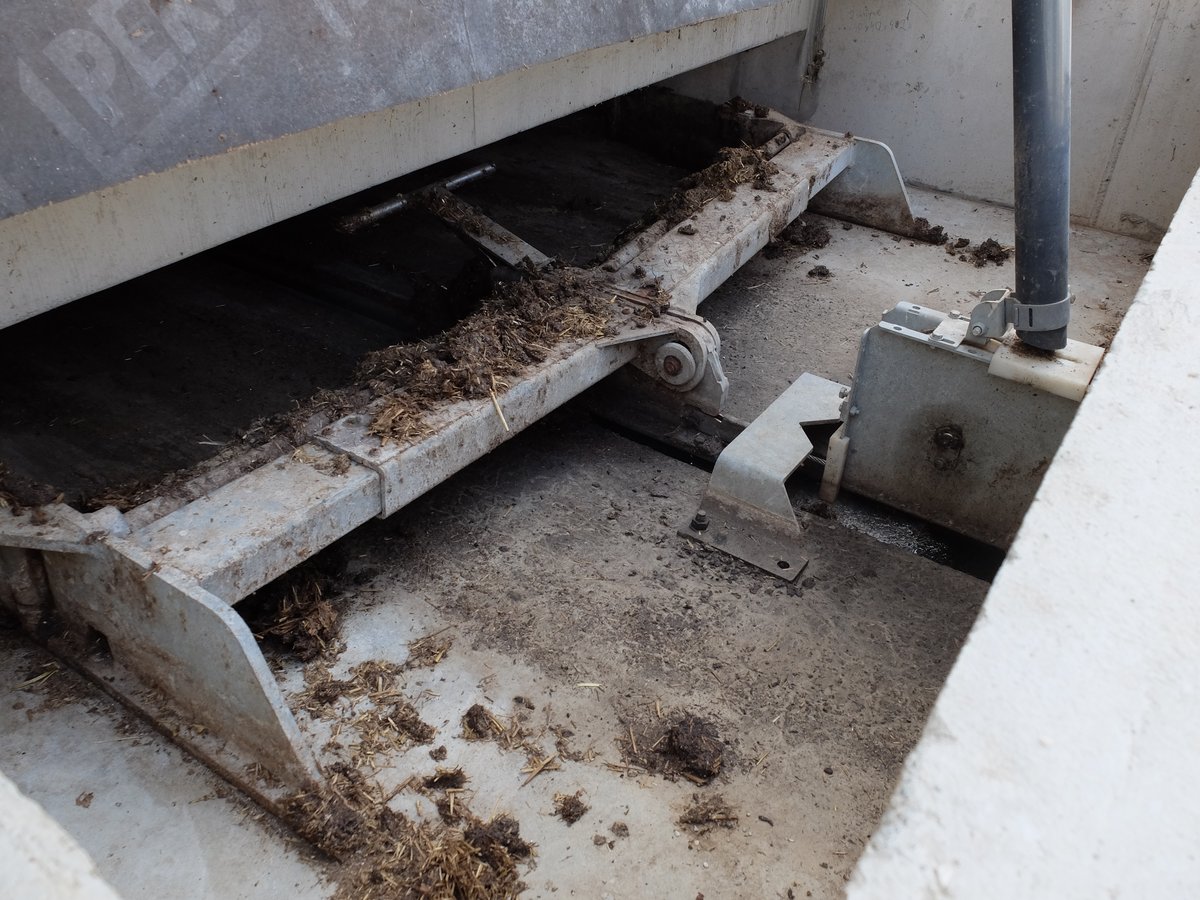
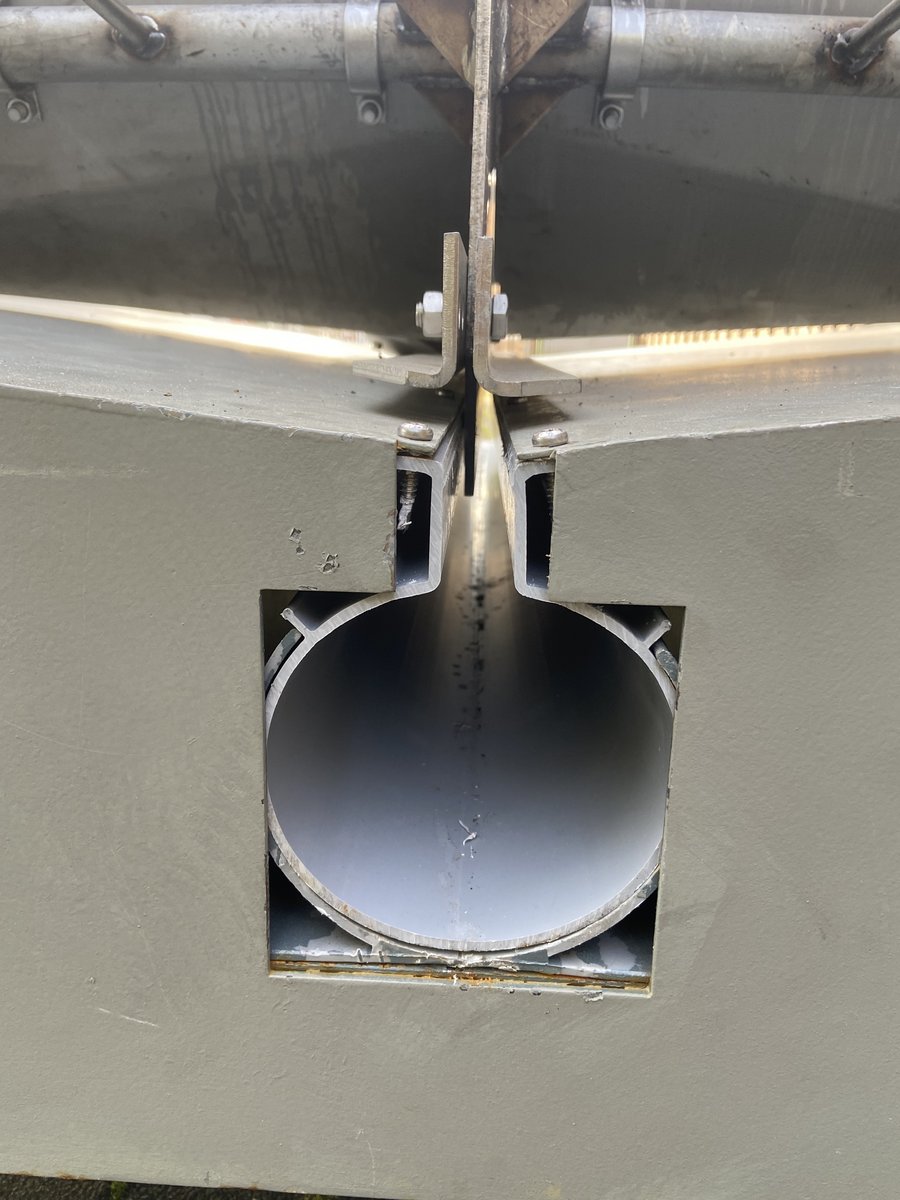
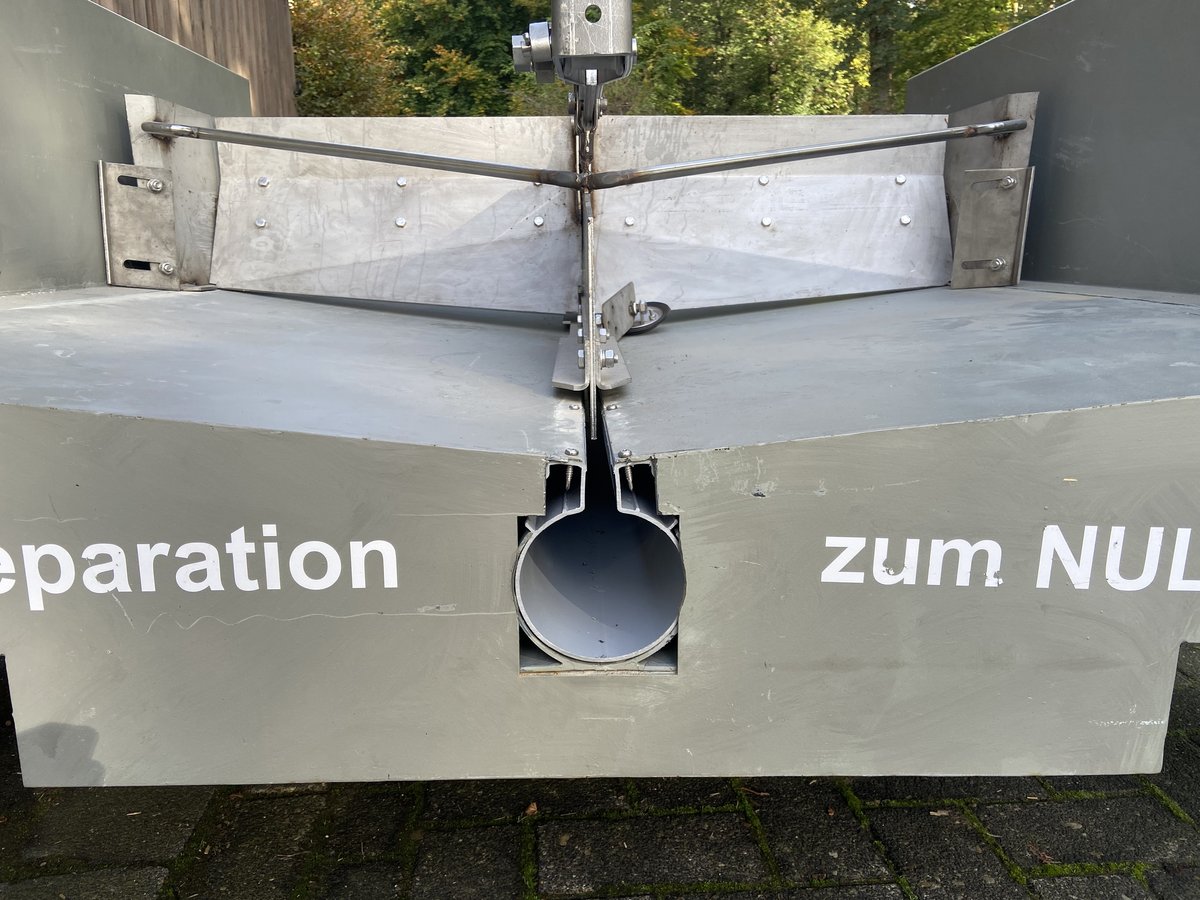
In the case of the underfloor scraper (Figures 4–6), there is a V-shaped slurry channel beneath the slats, with a channel base sloping at 5–10%1 and a central urine channel. A V-shaped underfloor scraper driven by a cable-pull mechanism is used to push the manure that has passed through the slats into a (ideally) separate shaft. Depending on the size of the animals, the scraper must be operated several times a day (up to 12 times). Due to the gradient, the urine flows away via the urine channel so that, ideally, it can be stored and utilised separately from the manure. The longitudinal gradient should be 1% to allow the urine to drain away by itself. For the urine channel, a slot width of 0.5 cm and a diameter of approx. 15 cm are recommended.17 The scraper should also empty the urine channel.1 Three-dimensional slatted floors can be added, which could further reduce emissions.18
Underfloor manure belts also have a V-shaped slurry channel floor with a manure belt. Manure and urine reach the manure belt installed beneath the slatted floor via the slatted floor. A gradient of approx. 4 degrees towards the centre of the channel is also recommended for the manure belt, so that urine can drain off separately. The manure belt runs several times a day.
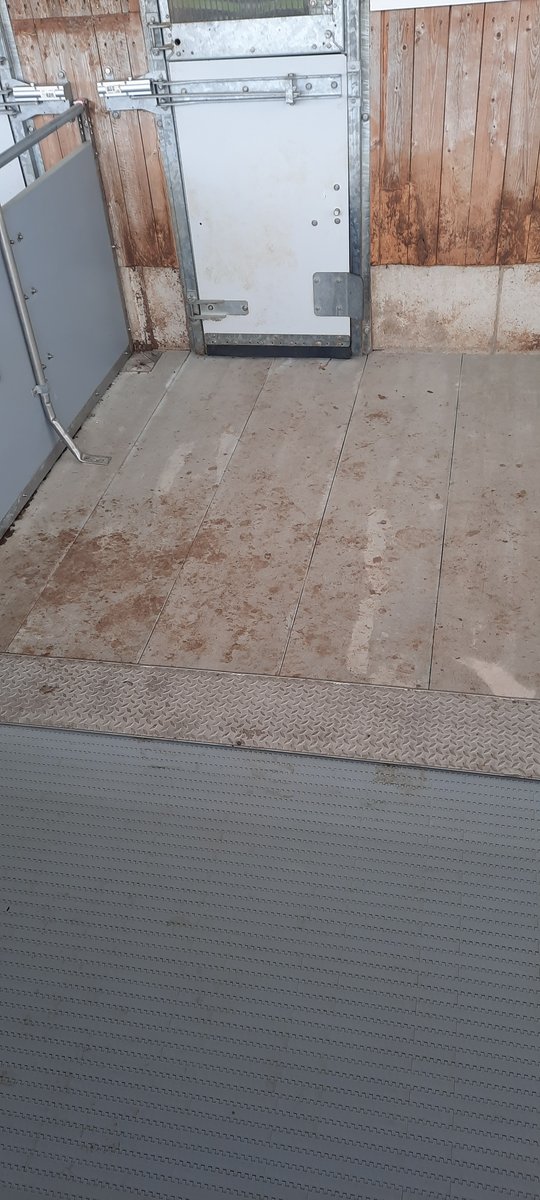
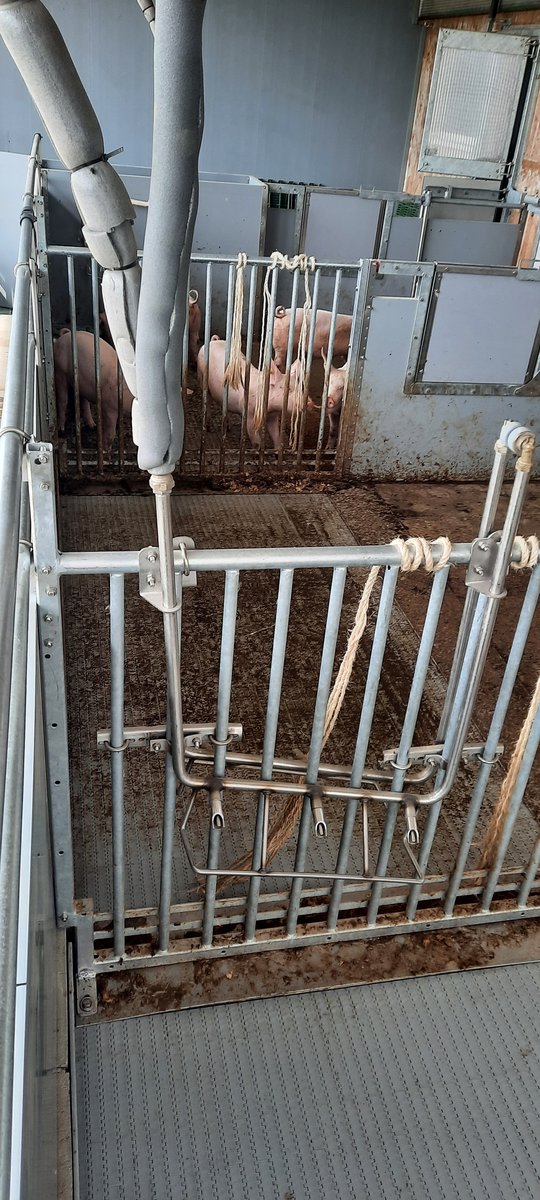
Above-floor manure belts (Figures 7 & 8) convey the manure via the belt into a channel located beneath the floor, which is fitted with a slide gate. Directly beneath the perforated manure belt is a urine trough that collects the urine. The tray must be flushed with water twice daily to remove solid particles such as hay or straw. The belt should run several times a day. Research findings on ammonia reduction are not yet available for the above-floor manure belt.
Manure-urine separation can achieve ammonia reductions of 40 to 50%.17 A further advantage is the reduction of odours and hydrogen sulphide.1 Manure-urine separation is classified as one of the best available techniques according to BAT conclusions, but is not yet included in Annex 11 of the TA Luft. The ‘EmiMin’ project is currently researching this measure, but no conclusive results on reduction potentials are available yet.
(Image: F. Hagenkamp-Korth)
(Image: F. Hagenkamp-Korth)
(Image: L. Wokel)

(Photo: L. Wokel)
Reducing the size of the slurry channel
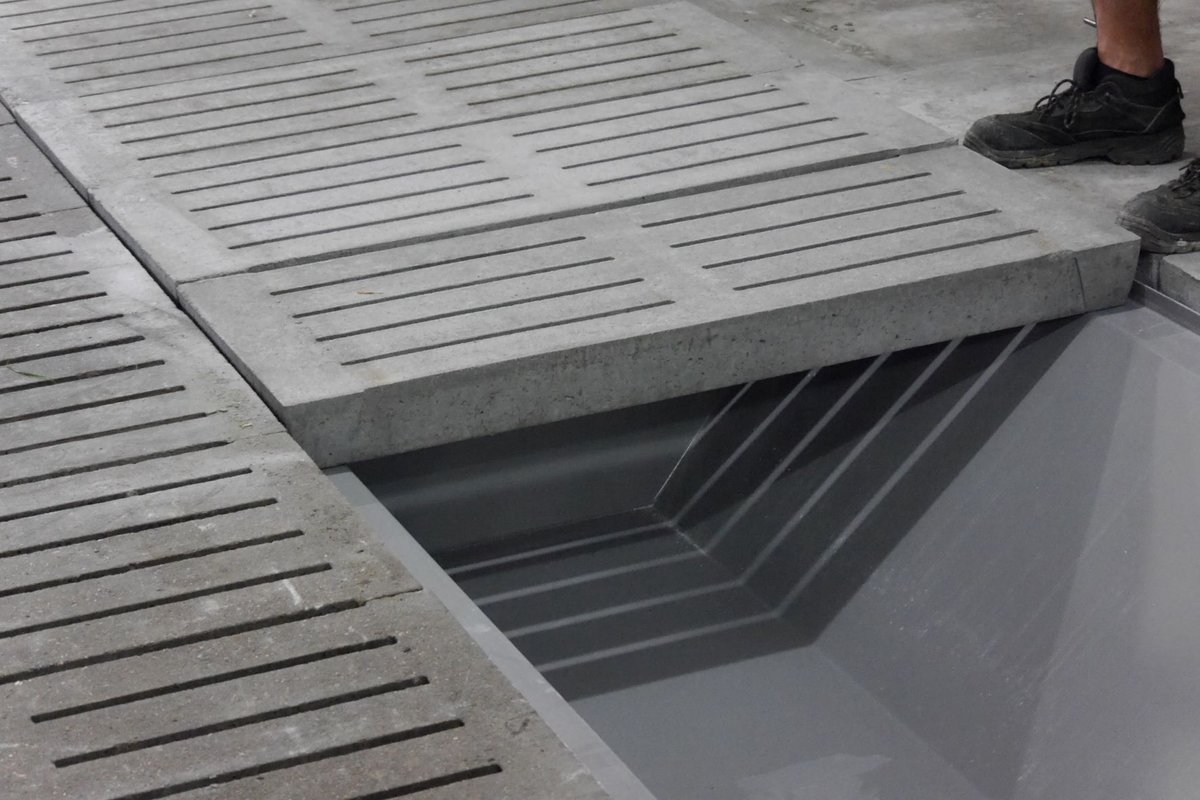
By installing sloped side walls or slurry troughs, the volume of the slurry channel – and thus the amount of slurry stored in the barn – can be reduced, as can the surface area of the slurry and, consequently, the area from which emissions occur. This helps to reduce ammonia emissions from the barn. There are two options: slurry troughs, which can be retrofitted in barns, and sloping side walls, which must be structurally adapted to the slurry channel. Retrofitting the slurry channel to reduce its volume is therefore generally costly, whereas slurry troughs (Figures 9 & 10) can be produced by the manufacturer to fit the specific farm with minimal effort. The base of the troughs is sloped so that the manure collects at the lowest point of the trough. The sloping side walls of the slurry channel and those of the troughs should be smooth so that faeces and urine drain away immediately and do not adhere to the walls. This would increase the emitting surface area again.17 Keeping the side walls clean and possibly rinsing them may therefore be necessary and, in this case, entails additional effort.
It is recommended that at least 30% of the floor area in the barn be paved to reduce the slurry surface area within the barn, and that the channels have an incline of between 45 and 60 degrees. Smaller slurry channels should be emptied at least twice a week and additionally fitted with an overflow. Emptying takes place via a plastic pipe at the bottom of the channel.17 Before restocking, the channel floors should be filled with approx. 10 cm of water to prevent small amounts of manure from sticking and drying out.17 The slurry-filled troughs should be drained when the fill level reaches approx. 12 cm. Due to the reduced storage capacity, external slurry storage is generally always necessary.
The reduction in slurry channel volume can be achieved with fully and partially perforated floors; however, the emission reduction effect is greater with partially perforated floors. A fundamental prerequisite for achieving the desired emission reduction is the cleanliness of the animals and the pen. The pigs must accept the manure area so that the surrounding surfaces and the animals themselves remain clean. This is necessary throughout the year. It is often forgotten that soiled surfaces and animals are partly responsible for a high proportion of the emissions generated in the barn. Various recommendations can be used for pen layout to ensure that the different functional areas are maintained: for example, contact grids between pens and humidification of the manure area, well-planned positioning of drinking troughs and feeding areas, temperature control of the lying areas, and the design or adjustment of the ventilation system. Further information on pen layout can be found in an article by the ‘Pen Layout’ working group.
Partial and fully slatted floors, in combination with sloping side walls in the manure channel, can reduce NH3 emissions by up to 50% in accordance with the TA Luft. This measure is also classified as BAT and corresponds to the current state of the art according to the TA Luft (2021).
(Image: V. Overmeyer)

(Image: V. Overmeyer)
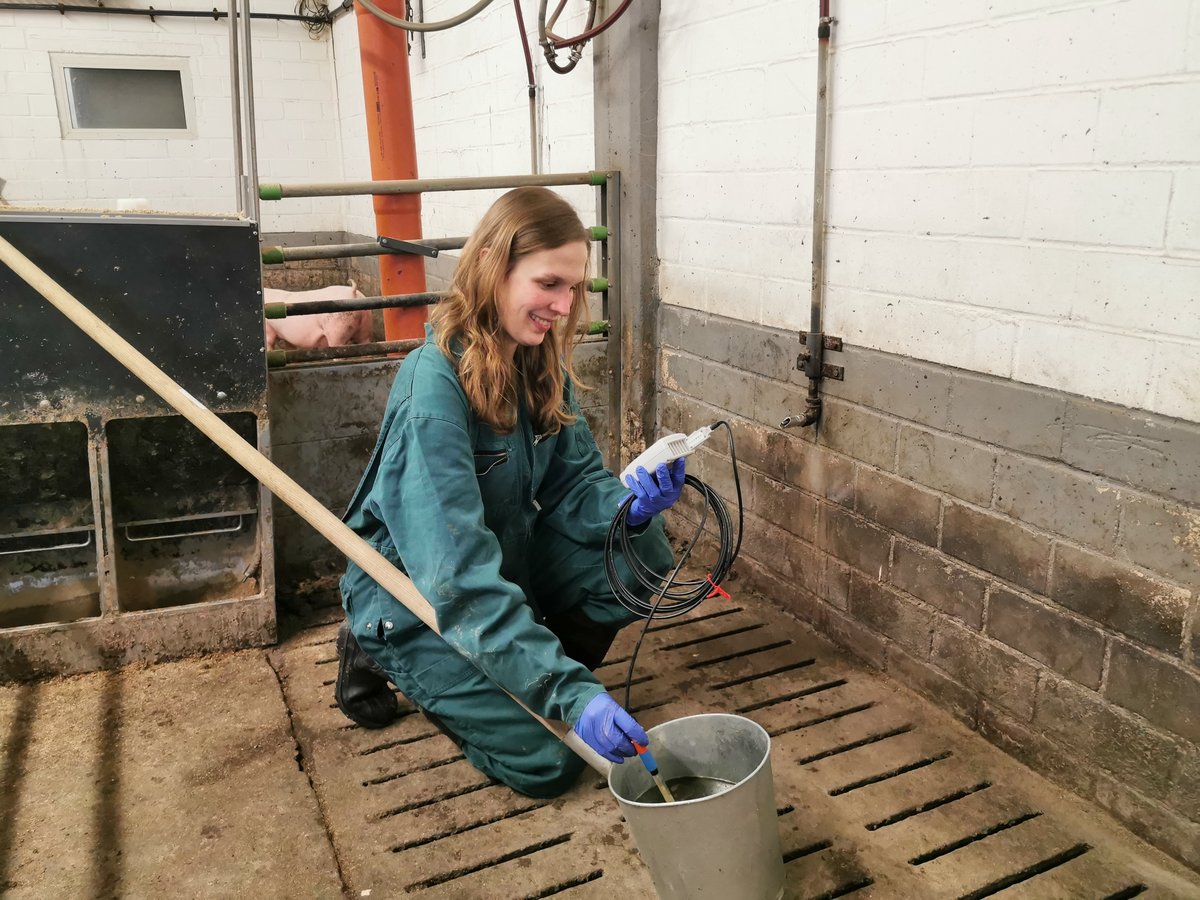
(Image: Veronika Overmeyer)
Acidification of slurry
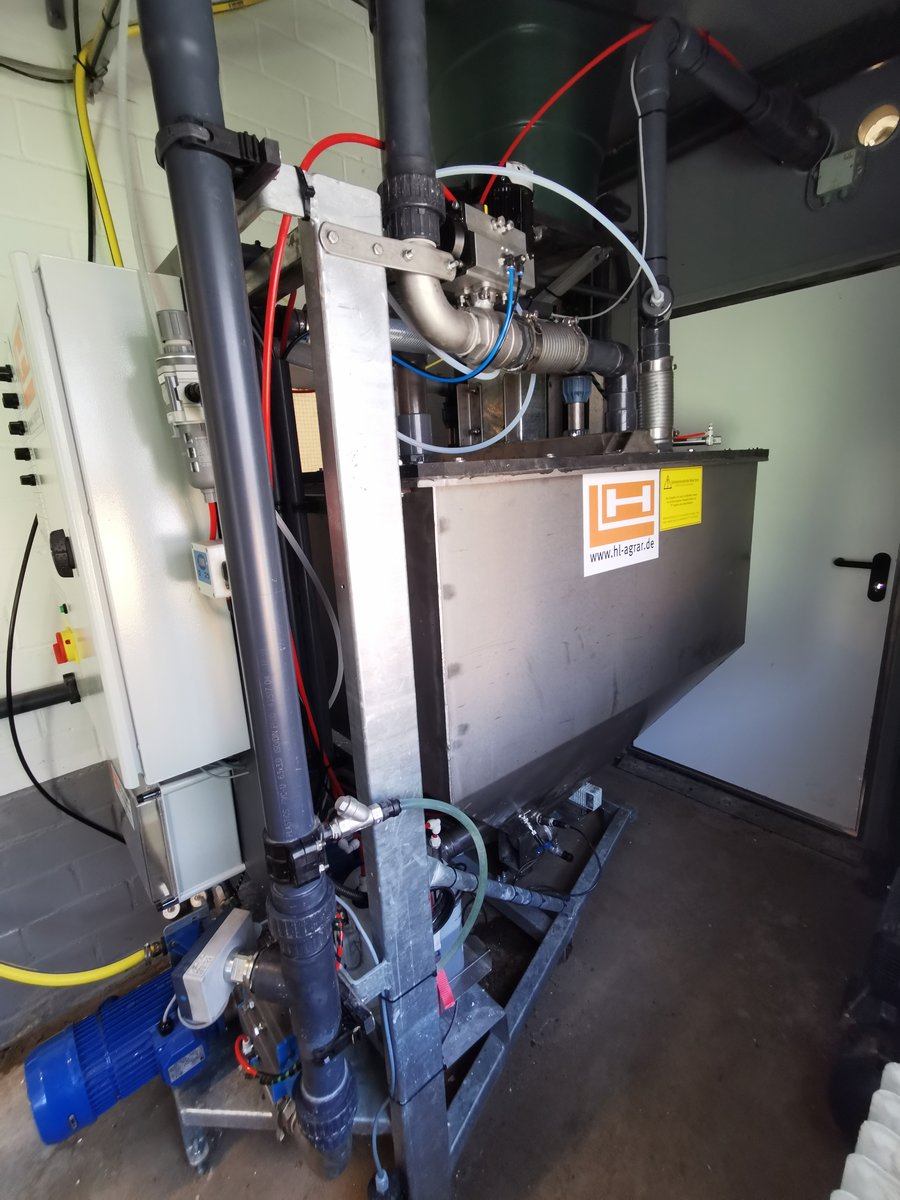
The acidification of slurry in the barn is already an established practice in Denmark, through which ammonia volatilisation as well as methane and carbon dioxide emissions in livestock farming can be reduced. By shifting the ammonium-ammonia equilibrium in the slurry, the proportion of ammonia that would otherwise be released into the environment as a gas is reduced. There are three different methods: acidification of slurry in the barn, in storage, or during spreading. Emission reductions through slurry acidification can reach up to 40% in the barn.19 For acidification, a portion of the slurry is pumped from the slurry channel into an external processing tank. An automatic pH measurement is carried out there. Acid is then dosed into the slurry depending on the pH value. After the acidification process, the freshly acidified slurry can either be pumped back into the slurry tank or stored outside the barn. The pH value is reduced from 6.0 to 5.5 through the automatic addition of sulphuric acid. As the pH value of the slurry rises again without the continuous addition of acids, acids must be added daily or several times a week.20 The consumption of these acids for pig slurry to maintain the low pH value is approximately 15–17 kg per m³ of liquid manure.19,20 When determining the required amount of acid, attention must be paid to the unit of measurement. 9 litres of 96% sulphuric acid correspond to a quantity of approximately 17 kg, which is required for on-farm liquid manure acidification per cubic metre of slurry.19 It must be noted that acidification causes foaming, which is why it is necessary to aerate the slurry at the same time.20 Acidification can reduce ammonia emissions by up to 40% and methane emissions by up to 67% compared to non-acidified slurry.19 This process is particularly suitable for new buildings, as it requires significant structural work, but retrofitting liquid manure acidification is also possible in existing buildings.19 A positive effect of slurry acidification is an increase in nitrogen available to the soil.
Slurry acidification is well established in Denmark, but has only been implemented on one dairy farm in Germany due to the complex legal situation. For the practical application of this process, an amendment to the Ordinance on Installations for the Handling of Substances Hazardous to Water (AwSV) is required, so that acidified liquid manure may be stored in JGS facilities. This amendment is currently pending.
The Federal Environment Agency has produced a detailed report on slurry acidification. Furthermore, research results are available from the ‘SAFT’ project, which focused on the ‘development of a retrofit solution for acid application in slurry channels of livestock housing’. Figures 11–13 illustrate the technology and the measurement of the pH value using a pH probe.
Acidification is classified as the best available technique.
(Image: H. Schulte)
(Image: H. Schulte)
Urease inhibitors
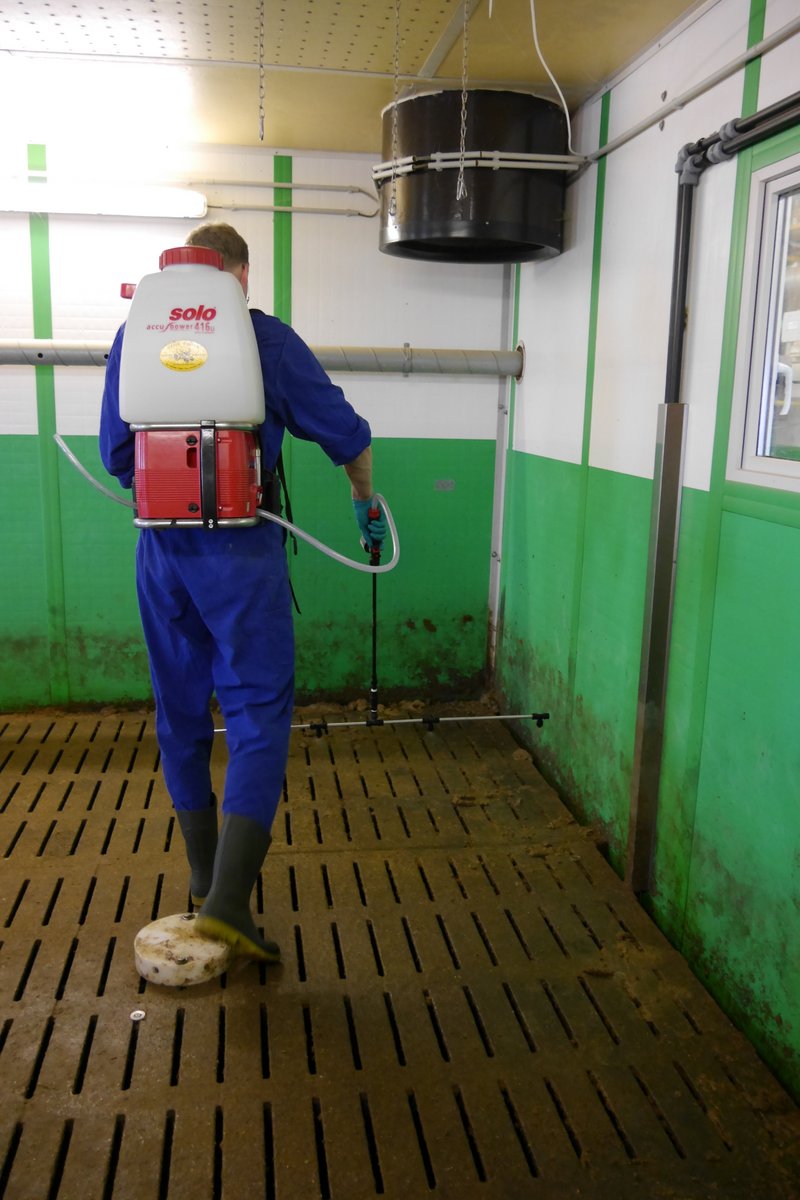
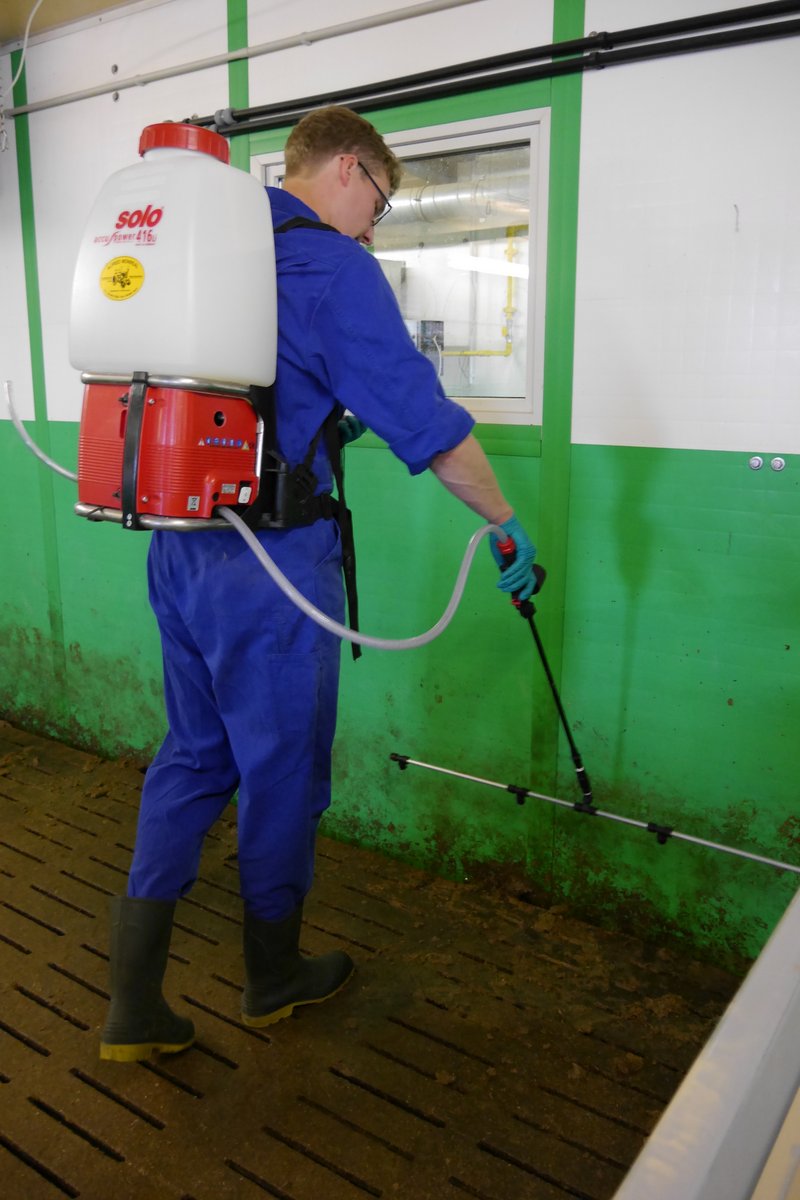
One potential method for reducing emissions could be the use of urease inhibitors (Figures 14 & 15). When faeces and urine come into contact, the enzyme urease converts urea into NH3. The urease inhibitor inhibits the urease enzyme, thereby reducing the formation of NH3. To achieve the greatest possible reduction, the inhibitor should be sprayed daily onto the slatted floor or into the slurry channel beneath the floor. No adverse effects on animal health or performance parameters are expected. When used in a forced-ventilated barn on a slatted floor, this method can achieve an NH3 reduction of up to 21%;21 in a slurry pit with natural ventilation, the reduction can be as high as 29%.22 In the cattle sector, approval of the inhibitor is targeted for 2023. Its application in pigsties will take a little longer; it is therefore not yet state of the art. Research into this method is currently being conducted at the University of Kiel as part of the ‘EmiMin’ project.