
- Dr. Hans-Joachim Herrmann, Hesse State Agricultural Agency
- Antoine Janssen, Agricultural Specialist in Hoof Care
- Mag. Hubert Reßler, Hochstädter Klauenpflege GmbH
- Dr. Jörg Willig, Cattle Health Service, LUFA North-West
We would also like to thank Dr Fanny Rachidi, Clinic for Hoofed Animals, University of Leipzig, for her valuable support.
- Caroline Leubner, Landesbetrieb Landwirtschaft Hessen
When it comes to hoof care, safety must be ensured for both animals and humans. A suitable hoof trimming stand, well-designed handling systems and sound knowledge on the part of the staff carrying out the work form the basis for this. Safety begins with the choice of hoof trimming stand, as incorrect equipment can lead to injuries, and in extreme cases even to the total loss of a limb. A considerate and careful approach to handling the animal, combined with working efficiently in the stand, is a fundamental requirement for reducing the risk of injury. Otherwise, injuries are possible in any hoof care stand. Information on correct and safe animal handling can be found in the guide ‘Integration and Organisation of Hoof Care’.
To find the right hoof trimming stall for your own farm, you should first examine various models (e.g. through demonstrations, at trade fairs or as part of hoof care courses) and, ideally, test them yourself. You can choose between tilting or drive-through stalls, which show little difference in terms of safety. Depending on your farm’s specific procedures, you should consider whether the stall should be mobile or permanently installed. Permanently installed stalls can often be better integrated into regular routine procedures and are therefore recommended.

(Photo: Gudrun Plesch)
The hoof trimming stall should be well-equipped, adjustable to the height of the person using it, and suitable for the cows. The size of the animals is an important factor, as a hoof trimming stall that is not correctly adapted to the animals can cause restraint-related injuries (e.g. abrasions, etc.) or stress. In the case of heavily pregnant animals or animals with pre-existing health conditions (e.g. limb injuries, extensive open wounds or animals that have recently undergone surgery), the urgency of the hoof care must be assessed on a case-by-case basis.
The stand must bear a CE mark. Before each hoof care session, all wear parts and the stand itself must be checked for damage to prevent injuries to both animals and humans.
Access to the hoof trimming stand should be level and equipped with a non-slip surface. Furthermore, the animal should be able to enter freely, and ideally the animal’s head should be caught or secured by a self-catching device.
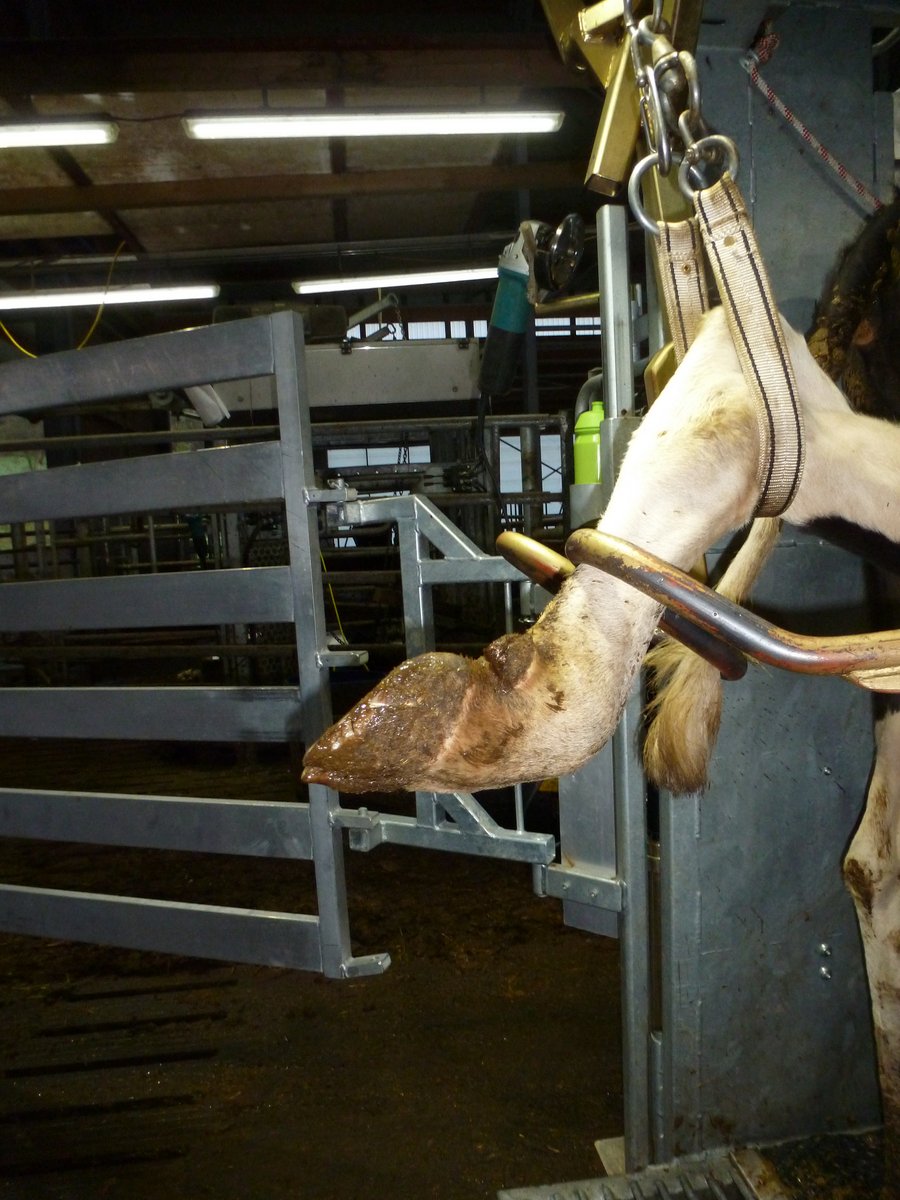
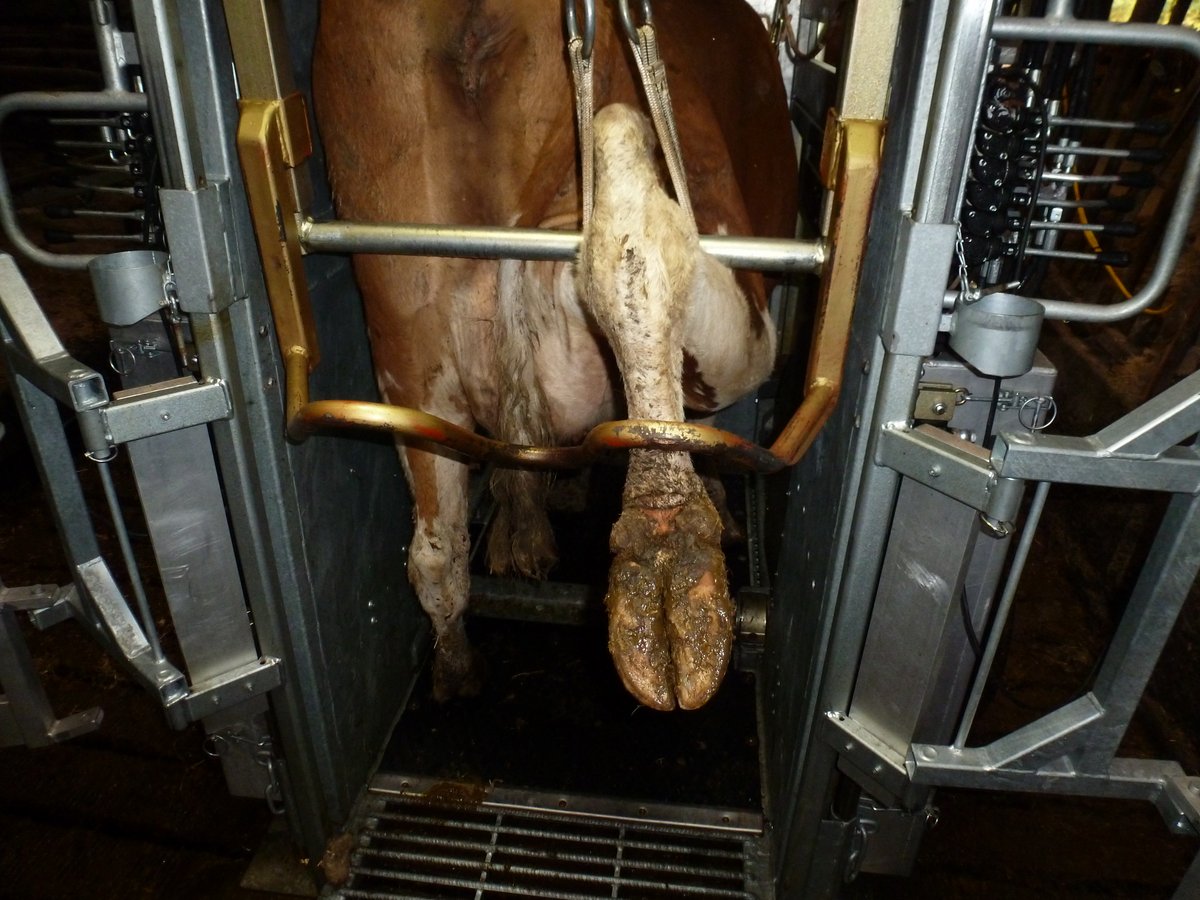
The animal can be secured using individually adjustable belly straps and thigh loops, which are designed to prevent injuries whilst working on the animal. Depending on the manufacturer, plastic-coated chains or ropes may also be used. Individual adjustment is intended to ensure that nerves and blood vessels in the relevant body regions are not pinched. As the cow is fully restrained, it cannot significantly alter its posture or position, which minimises the risk of injury. To prevent muscle tension or joint hyperextension leading to strains on tendons and ligaments, the limbs should only be secured in a natural position. When secured using a W-bracket, it is also ensured that the limbs are secured laterally and that hoof horn correction can be carried out safely with millimetre precision (Figs. 2 & 3).
The contact surfaces of all restraint devices must be designed and manufactured in such a way that they do not pose a risk of injury to the animal (e.g. sharp edges, etc.).
Mechanical stands must be fitted with a backstop for the hand cranks. It is important, amongst other things, that the restraint devices on the stand can be released immediately, even under load. Electrical control units must always be accessible from a safe position.
Health and safety at work
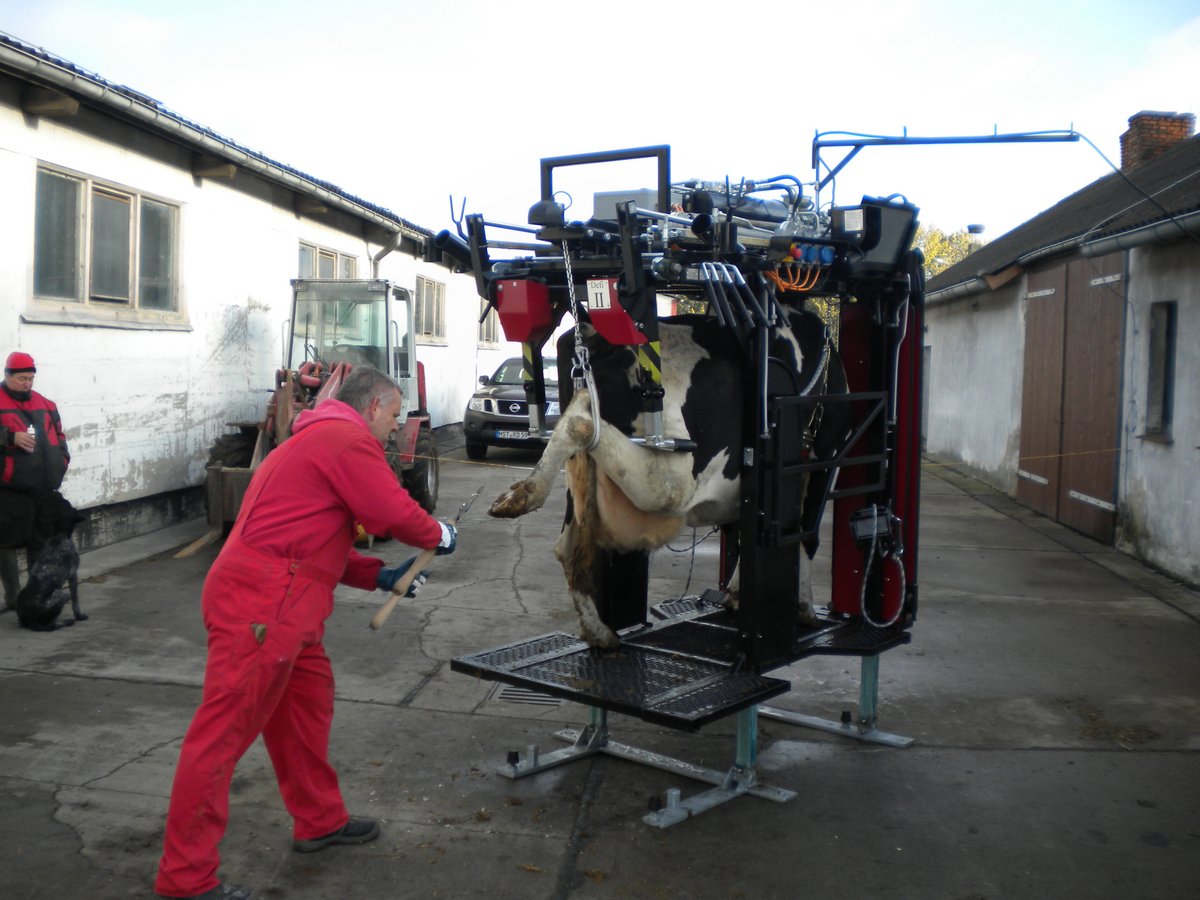
For the person carrying out hoof care, fully securing the cow reduces the risk of injury and significantly improves safety at work. To ensure there is sufficient light for safe work on the hoof, good, glare-free lighting of the work area without shadows, with a minimum illuminance of 500 lux, is essential. With a height-adjustable stand, work can be carried out on the hooves from all sides whilst maintaining an ergonomic posture, which, above all, protects the back in the long term. Taking a step forward improves stability and relieves pressure on the spine (Figs. 4, 5 & 6).
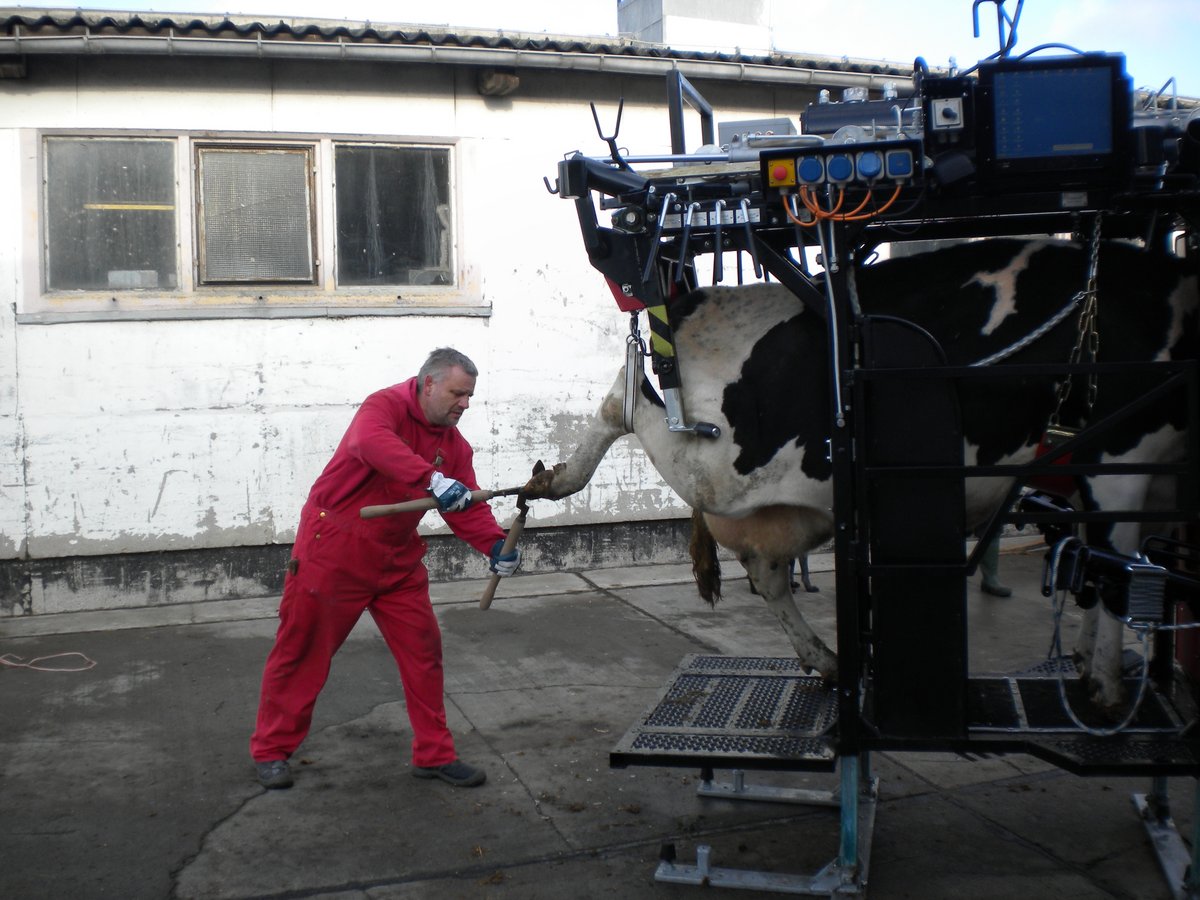
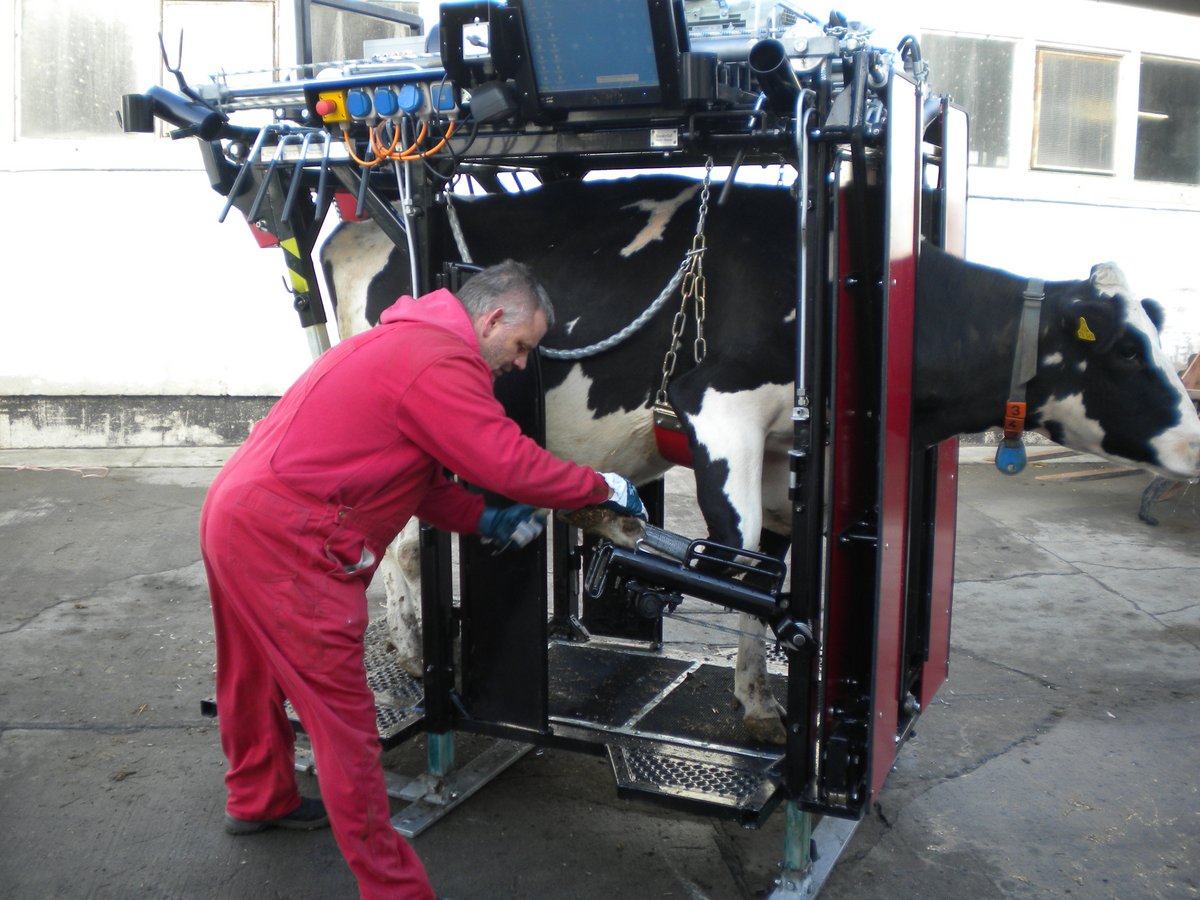
Personal protective equipment is particularly important when carrying out hoof care and plays a major role in occupational safety. The occupational safety regulations of the German Agricultural Social Accident Insurance Association (SVLFG) must be observed. It is essential to mention that safety shoes or boots with a treaded sole are mandatory.
Personal protective equipment for hoof care includes (may vary depending on the tools used):
- Safety goggles to protect against flying hoof shavings when working with angle grinders
- Ear protection when using angle grinders
- Gloves
- Disinfectable or disposable gloves when using chemical agents or antibiotic-containing sprays and when treating infectious diseases.
- Forearm protection
- Leather apron
- Dust mask depending on the type of grinding disc (e.g. abrasive discs) used
When using chemical agents (e.g. adhesives for bonding PVC or wooden blocks) or antibiotic-containing sprays (e.g. blue spray), the relevant instructions for use and the precautions outlined therein must be observed to ensure safe use for both humans and animals.
(Image: LLH)
Various tools are used for hoof care, depending on the different working methods and/or personal preference. These include hoof knives, pliers, hoof scissors and angle grinders fitted with abrasive discs or blade discs, each of which has different handling requirements.
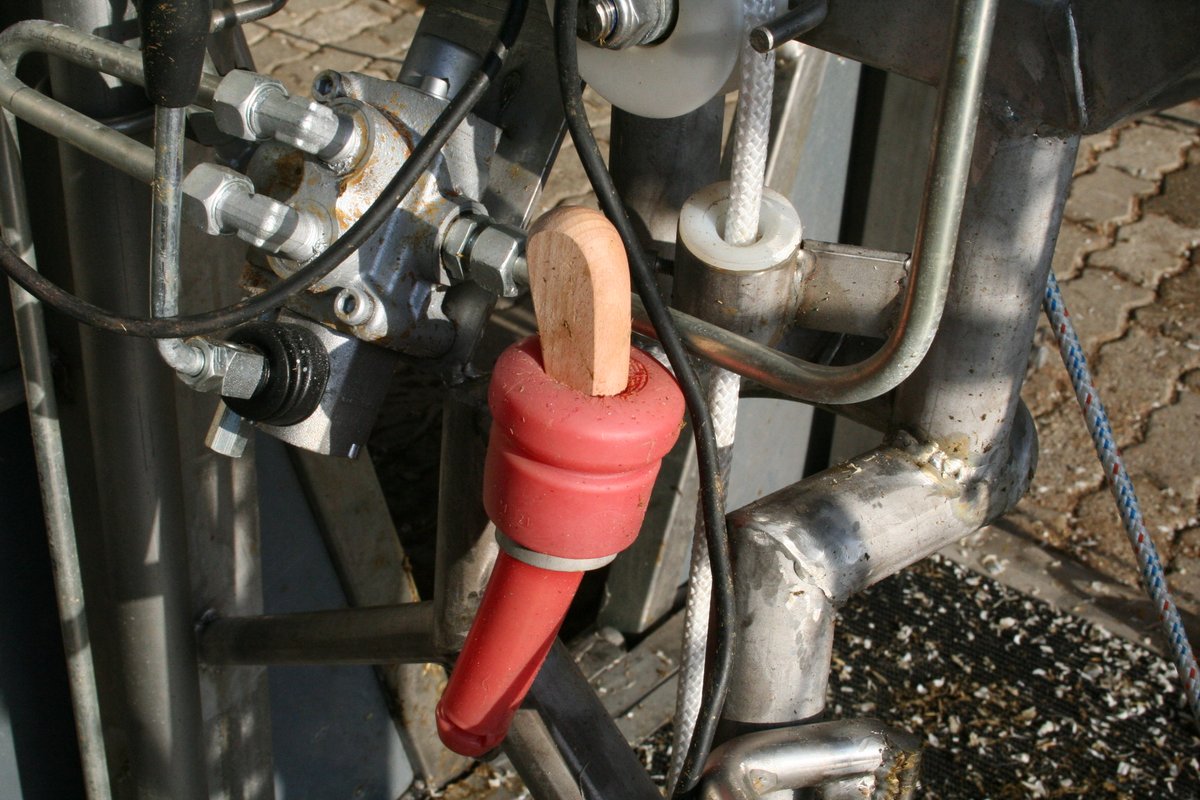
With knives, hoof scissors and pliers, care must be taken to ensure they are sufficiently sharp to make clear, smooth and clean cuts without requiring much force. When cutting with a hoof knife, one should always work towards one’s own hand. For this reason, left- and right-cutting versions are available on the market, which are used alternately. To prevent injuries and maintain the cutting edge, hoof knives can be stored safely during breaks, for example in leather pouches or teat rubbers (Fig. 7). The latter are easier to clean and disinfect to prevent the transmission of pathogens. Hoof scissors and pliers also require proper storage when not in use. They should be stored lying flat or hanging on a stand and should not be left on the floor.
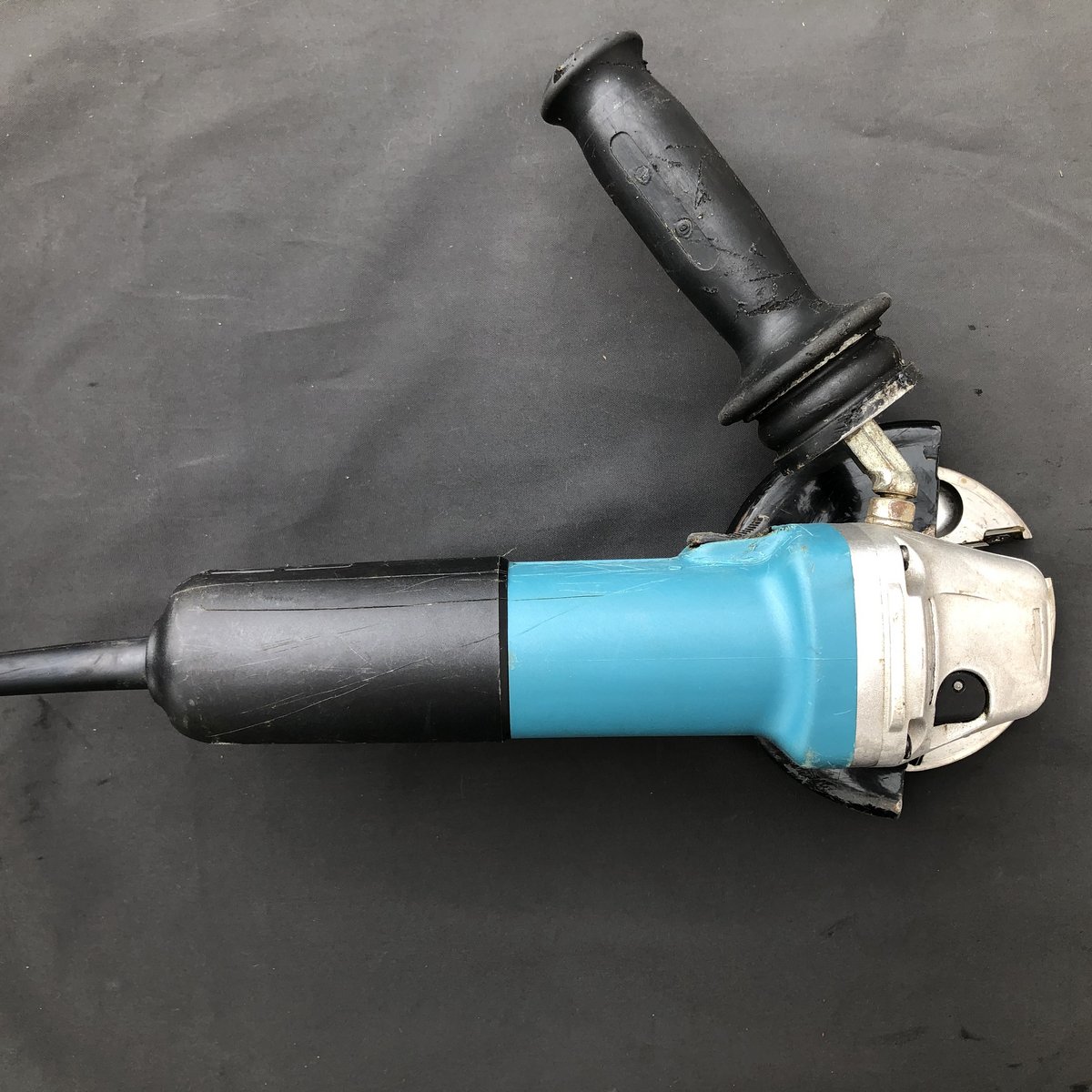
When it comes to electrical equipment, there are significantly more health and safety considerations to bear in mind. As required by regulations, this equipment must be inspected annually by a qualified health and safety officer. A residual current device (RCD) (> 30 mA) is essential to prevent dangerous electric shocks. Angle grinders must be held with both hands. Even so-called one-handed angle grinders are no exception and must be operated with both hands. Therefore, a side handle and a disc guard are absolutely essential. To ensure a correct and ergonomic posture, the handle can be fitted at a 45° angle. It is advisable to fit an ergonomic, easily accessible mount for the angle grinder on the claw stand (Fig. 9). Discs must have only a minimal degree of imbalance to prevent excessive vibration, particularly affecting the hands and arms. Additionally, vibration-reducing handles can be purchased for the angle grinder. As a general rule, the more aggressive the angle grinder discs are, the more securely the base must be fixed during work on the animal to prevent injuries.


Hygiene
The general hygiene rules for people also apply to hoof care in order to minimise the transmission of pathogens. In all cases, both the person carrying out the hoof care and any assistants who come into contact with the equipment should wash their hands thoroughly with soap and water before and after work. Ideally, disposable gloves should be worn, particularly in view of diseases transmissible from animals to humans (zoonoses). Washing work clothes after each visit should be standard practice for external hoof trimmers. Ideally, personal work clothes should remain on the farm and be used only there.
Once hoof care is complete, it is important to thoroughly clean and, if necessary, disinfect the hoof care station and the tools. The station should be cleaned using a high-pressure washer. The tools used are best cleaned with a brush and warm water. In cases of heavy soiling, cleaning additives should be added to the wash water. Hoof knives with plastic handles are much safer to clean than those with wooden handles. If there is a high risk of infection on the farm due to an increased incidence of contagious (hoof) diseases, it is advisable to disinfect the equipment and the station afterwards. Studies have shown that pathogens capable of reproduction, such as treponemes, can be found on hoof knives if they are not disinfected.
After wet cleaning, the hoof care station and tools must be completely dry before disinfection so that the disinfectant can be fully effective. Only DVG-approved disinfectants should be used. Particular attention should be paid to the spectrum of activity. In the case of external hoof care, the hoof care practitioners themselves clean and disinfect their equipment and hoof care stations. However, the cleanliness of all equipment should still be checked before hoof care to prevent the introduction of diseases from other stables.
Bibliography
DLG e. V. (2010). DLG Fact Sheet 362: Hoof Care Stalls. 1st edition. DLG e. V.
Gillespie, A. V., S. D. Carter, R. W. Blowey, G. J. Staton, and N. J. Evans. 2020. Removal of bovine digital dermatitis-associated treponemes from hoof knives after foot-trimming: a disinfection field study. BMC Veterinary Research 16(1):330. https://doi.org/10.1186/s12917-020-02552-8
Gillespie, A., S. D. Carter, R. W. Blowey, and N. Evans. 2020. Survival of bovine digital dermatitis treponemes on hoof knife blades and the effects of various disinfectants. The Veterinary Record 186(2):67. https://doi.org/10.1136/vr.105406
Hulek, M. (2005). Hoof Health & Hoof Care. Stocker.
Catalogue of Representative Noise and Vibration Data in the Workplace (KarLA) (2019). Measured HAV exposure levels – https://www.karla-info.de/hand-arm-vibration/hav-immissionswerte-gemessen
Schleswig-Holstein Chamber of Agriculture (2020). Organisation and Management of Hoof Care. Hoof Care Seminar.
Schneller, W. (1984). Healthy Hooves – High-Performance Cattle: Significance, Causes, Prevention and Treatment of Hoof Damage. Schober.
Reszler, G. Hoof Care and Hoof Diseases. https://www.praxis-bootz.de/fileadmin/tierarztpraxis-bootz/redakteur/PDFs__Dokumente/Rezsler-Script-KlauengesundheitM17.pdf
Rosensteiner GmbH. Your own – well-organised cattle care area checklist. https://rosensteiner.at/fileadmin/user_upload/Checkliste_Pflegeplatz.pdf https://rosensteiner.at/produkte/klauenpflege/pflegeplatz
Social Insurance for Agriculture, Forestry and Horticulture (2017). Latest news on health and safety. https://www.svlfg.de/rinderhaltung