
Focus on large companies in Mecklenburg-Western Pomerania
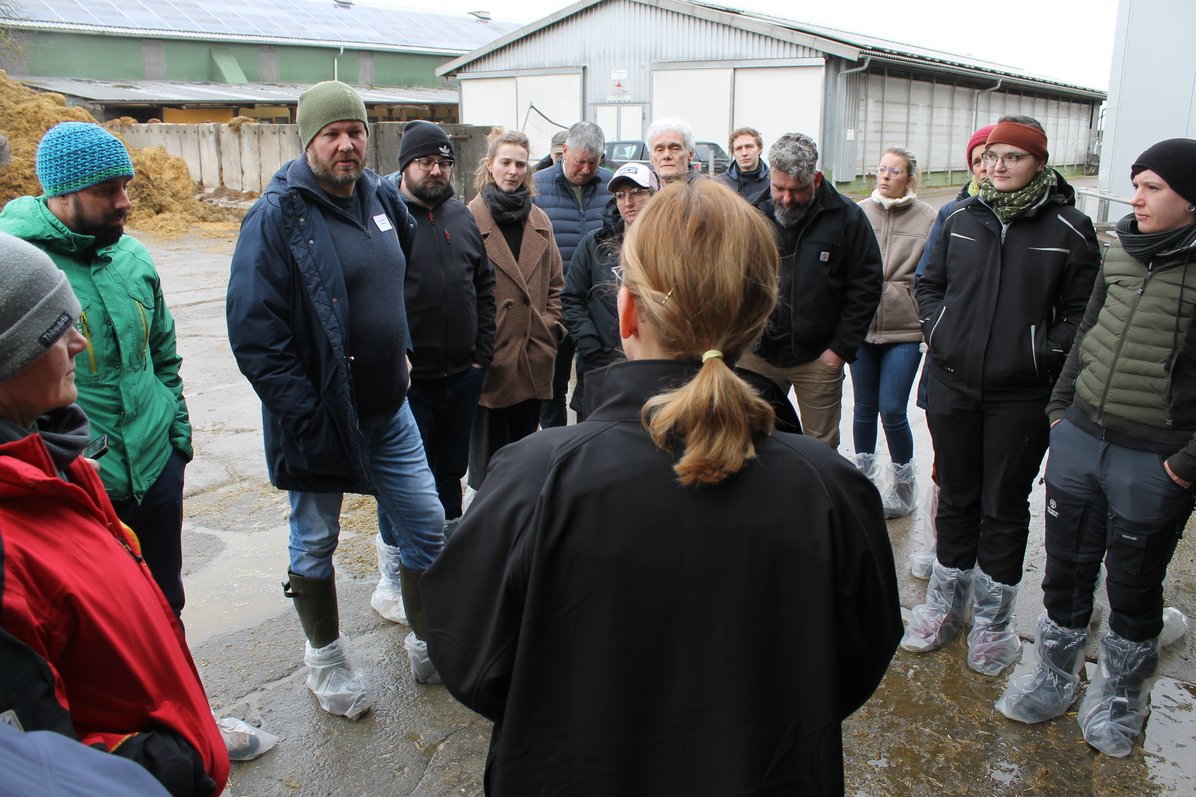
On 24 and 25 February 2026, 24 participants gathered for a networking meeting of the cattle pilot farms in the Animal Welfare Focus Network at the network's largest pilot farm, Hof Karp in Mecklenburg-Western Pomerania.
After a warm welcome and light refreshments, farm manager Christian Karp presented the farm, which has over 1,600 dairy cows and also includes its own dairy in Hagenow. Dr Deise Knob from Justus Liebig University in Giessen then presented the latest results from the Green Dairy project. She compared the carbon footprints of two organically managed test herds, each of which was fed either intensively or extensively with pasture grazing. The subsequent discussion highlighted the role of cattle farming in the utilisation of grassland and the climate relevance of dairy cows. There was agreement that the diverse aspects of sustainability would be addressed in greater depth at one of the upcoming network meetings.
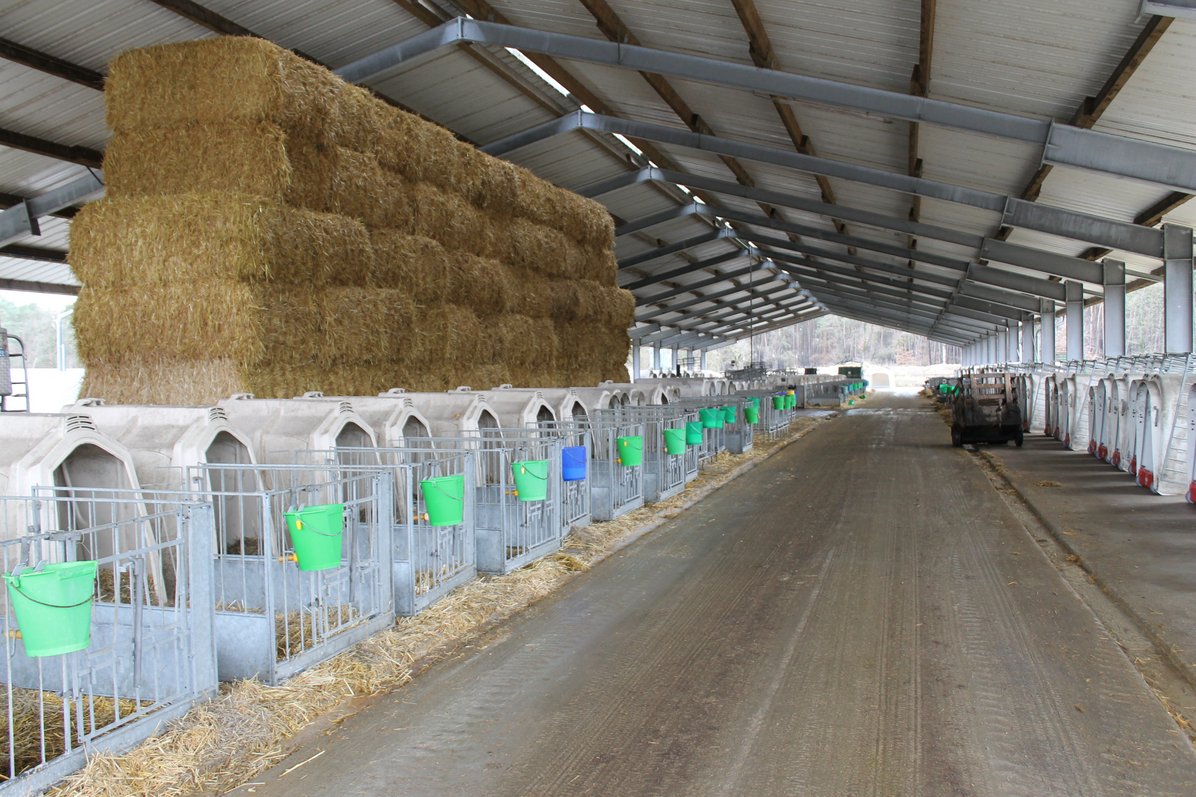
The participants eagerly awaited the subsequent farm tour. Together with his herd manager, Christian Karp led the group from the calf area to two newly constructed barns. The logistical efforts required to care for such a large number of animals were particularly impressive. The feed rations for all animals consist almost entirely of components produced on the farm itself, and the attached biogas plant ensures a consistent circular economy. In the evening, the group travelled on to Wismar, where the day ended with a relaxed dinner together, providing an opportunity for intensive professional exchange.
The second day of the event took the group to ADAP Rinderzucht GmbH in Ahrenshagen. Farm manager Christine Schulz presented the breeding farm with around 800 dairy cows. The aim is to breed long-lived cows with a high proportion of A2 milk. Accordingly, an optimal start to rearing is of great importance, including summer grazing for young cattle. During the tour of the calf and young cattle areas, the participants were able to see this for themselves. The farm is also involved in public relations work and offers regular tours for nursery and school groups. Prof. Dr Gudrun Plesch concluded the technical part of the event with an overview of the latest findings on the integration of young cattle into dairy cattle housing. After two intensive days full of impressions, the meeting ended with cheese from the farm and products from the small Wagyu herd of ADAP Rinderzucht GmbH.
With numerous suggestions for topics related to animal welfare and sustainability, as well as the express wish to meet again soon, the participants said their goodbyes – and gave the organising team valuable ideas for planning the next network meeting.
Author: Anne Zinkowski, FiBl Deutschland e.V.