
The majority of animals raised for meat, which are often brought in as day-old chicks, come from abroad. The best-known breeding company is ‘Grimaud Frères Sélection’ from France, where beak and claw trimming is still permitted. The import of these animals is permitted because in Germany only the trimming itself is prohibited, not the rearing of animals that have been trimmed abroad10.
The animals are fattened separately by sex, with the ducks being slaughtered after 63–70 days and the drakes after 77–84 days. At this point, the animals weigh approximately 2.5 and 5 kg respectively6. The timing of slaughter depends on feather growth: at the time of slaughter, there should be as few growing feathers as possible to facilitate plucking11.

Preparing the stable
After a sufficient fallow period (at least 10 days following a thorough clean-out), preceded by cleaning and disinfection, new birds can be introduced. Muscovy ducks are more sensitive to temperature than Peking ducks. The cleaned and disinfected shed must be heated to a temperature of 34 °C before the birds are introduced. At least two to three days should be allowed for heating. Care must be taken to ensure that the floor slab and the shed walls are also preheated. If gas radiant heaters are used, the temperature beneath them should be 34 °C during the first week and 27 °C in the rest of the shed, to ensure an adequate supply of heat for the chicks during the first few days. This allows the chicks to choose the temperature range in which they wish to stay. There should be one radiant heater for every 300 ducks 11.
The functionality of the feeding and watering equipment is checked before the chicks are placed in the house. The drinkers are also rinsed beforehand. In the first few days, additional nipple drinkers and feed trays are set up.
Fattening is generally carried out largely on slatted floors, as the animals’ interaction with water causes the barn floor to become waterlogged. In the first two weeks of life, the slat spacing and width must be < 1.5 cm. From the third week of life, the slat width may be a maximum of 2.5 cm. Straw, preferably chopped, is used as bedding. The straw must be clean and hygienically sound. Wood shavings may also be used. From the fifth week of life, at least 20% of the barn floor area must be covered with bedding.
Quality of bedding
- Perfectly hygienic
- Dry
- Clean
- Loose, no clumping
- Low dust
- Visibly free from fungal infestation
The most commonly used bedding material is short-chopped straw, although other materials, such as pellets, are also possible. Approximately 2.5–3 kg of bedding is required per animal per cycle. However, fine sawdust is not recommended, as it poses a risk of intestinal obstruction.
If any abnormalities are detected (e.g. mould infestation, contamination, damp clumps, unusual odours or colours), immediate action must be taken to prevent or minimise any adverse health effects on the flock and to optimise housing conditions.

Settling the animals in
The animals arrive at the farm as chicks from the hatchery in special transport crates. They should then be placed in the house quickly, but calmly.
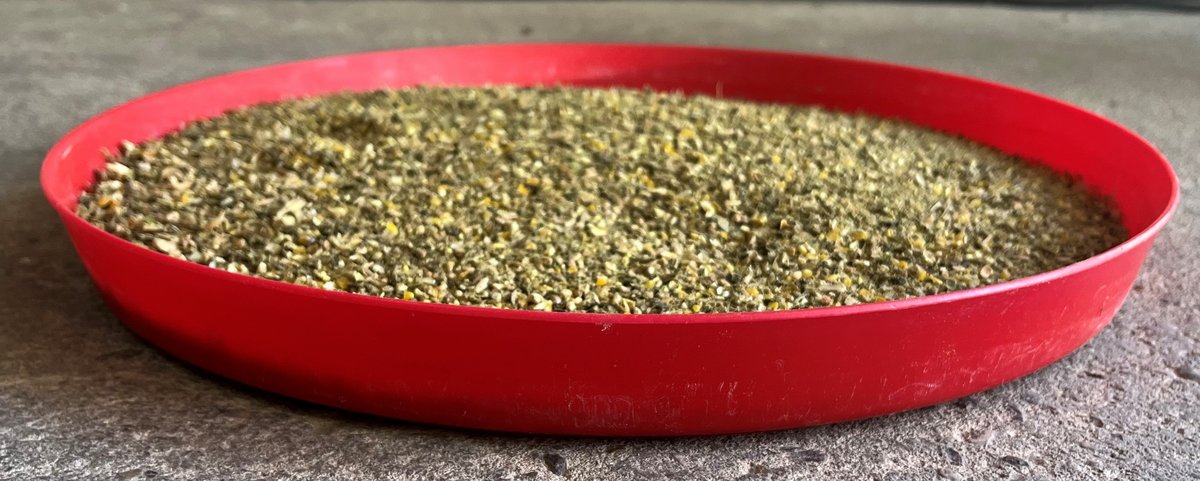
Even whilst being housed, the animals can be encouraged by acoustic signals (e.g. the voice of the person in charge) to spread out as quickly as possible throughout the entire house. Ducklings are sensitive to sounds and will follow the voice of the person in charge. This also ensures that they find water and feed quickly. It is particularly important to encourage the (day-old) ducklings to drink, as the animals often do not drink water on their own straight away and may then become dehydrated. Here, the ducklings are encouraged to drink by manually activating the drinker and placing them in front of it. To make it easier for the animals to drink water in the first few days, so-called ‘duckling plates’ (Fig. 7) with an additional water supply are recommended.
Moving the animals to a new pen
In the two-phase fattening system, the animals are moved to the larger fattening shed after the rearing phase (around 16–21 days of age). Depending on the farm’s facilities, the animals can be driven directly from the rearing shed to the nearby fattening shed, or they can be moved (in groups) using a trailer. From this point onwards, the animals also have access to an additional water supply.
Unlike Peking ducks, muscovy ducks generally spend their entire lives in the same shed. Moving them from a rearing shed to a fattening shed is technically possible, but is not recommended due to the birds’ sensitivity to stress. It is preferable to partition off the chicks’ living area within the shed, for example using mesh partitions, and to expand this area as the birds grow older. Both sexes are reared in the same shed, but are kept separate from one another due to their different slaughter ages10.
Stocking density
In Lower Saxony, stocking density must not exceed 25 kg live weight per square metre of usable floor space. Provided the health monitoring programme is adhered to, a density of 35 kg live weight per square metre is permitted. This programme involves an analysis of various rearing-related parameters, e.g. animal losses, vaccination programmes and the use of medicinal products, as well as the examination of slaughter poultry. These are intended to provide insights into animal health and welfare. These specifications are legally binding in Lower Saxony; in other federal states, they may be used as recommendations. The area under drinkers and troughs may be included in the calculation if these are height-adjustable and are permanently positioned at back height. The area covered by the water supply facilities to be provided is counted as usable area4.
Stable temperature
Muscovy ducks are more sensitive to temperature than Peking ducks. The temperature should therefore be as follows:
- Week 1: 34 °C heat lamp, 27 °C room temperature (in brooder houses without a heat lamp, 34 °C room temperature)
- Week 2: 30 °C heat lamp, 24 °C room temperature (in brooder houses without a heat lamp, 30 °C room temperature)
- Week 4: 18–20 °C room temperature
- Week 5: 16–20 °C room temperature
- From week 6 (when fully feathered): 15–18 °C room temperature
When setting the temperature, it is essential to monitor the birds’ behaviour and their distribution so that adjustments can be made at an early stage if necessary (see Chapter 5 – Abnormalities in the distribution of birds across the usable area).
Ventilation/Harmful gases
Musk ducks are usually kept in mechanically ventilated, elongated sheds with a gable roof¹¹. Smaller groups of up to around 250 birds are sometimes also kept in converted livestock buildings. When constructing new sheds, it is recommended that an outdoor climate area be included in the plans³.
In the case of forced ventilation, the farmer must ensure that the ventilation system is fully operational. To ensure ventilation and the continued care of the animals even in the event of a power cut, an emergency generator must be provided and regularly checked to ensure it is in working order2.
The maximum concentrations of harmful gases are shown in Table 2 and must not be exceeded:
| Harmful gas | Max. concentration per m³ of air |
| Ammonia | In animal areas < 10 ppm, must not exceed 20 ppm on a continuous basis |
| CO₂ | <3,000 ppm |
Ventilation must be adjusted to ensure heat exchange, whilst draughts should be avoided. A technical inspection should be carried out by a specialist firm prior to the summer period. The barn’s construction should comply4 with DIN standard 18910 regarding ventilation.
Lighting
Lighting in the barn should be uniform throughout the entire activity area. A uniform, indirect supply of daylight covering 3% of the barn’s floor area should be factored into the design of new and converted buildings. During the first few days of life, continuous lighting should be provided and the barn should be sufficiently bright (60–80 lux)¹¹. Thereafter, a day/night rhythm as close to natural as possible should be maintained. A continuous dark phase of at least 8 hours must be ensured, provided that there is a deviation from the natural, seasonally varying dark phases. Appropriate twilight phases should be established before the light changes.
The light must be flicker-free (> 160 Hz) and should correspond as closely as possible to the spectrum of natural daylight12. Emergency lighting of max. 1 lux can serve as a guide at night4.
In principle, there should be a means of blacking out the windows to counteract any problems with cannibalism that may arise. Particularly from the 5th to the 8th week (feathering stage), direct daylight exposure can be stopped and light intensity reduced to prevent cannibalism4. However, this must always be approved by the attending veterinarian.
Water
A constant supply of fresh and hygienically safe drinking water must be ensured for the animals1. To this end, the functionality and hygiene of the drinking system must be checked daily. The drinking water for the chicks should be at approximately room temperature. During rearing and fattening, the animals are usually supplied via nipple drinkers. However, to support the animals’ natural behaviour, round drinkers are preferable7. In the first few days, additional bowls of water or dip drinkers should be placed in the house.
The requirements for drinking facilities during rearing and fattening are shown in Table 33:
| Age of animals (days old) | Nipple drinkers (animals / nipple) | Round troughs (trough rim / g live weight) |
| 1–15 | 25 | 3.1 cm |
| from 15 | 10 | 0.5 cm |
The height of the drinking systems should be adjusted according to the age and size of the birds. Nipple drinkers should be easily accessible to the birds when they stretch their necks. In the first few days of life, they should be adjusted so that the drops on the nipples are at eye level for the chicks. As already mentioned, particular attention must be paid to ensuring an adequate water supply for the chicks, especially during the first few days of rearing. The ‘chick trays’ mentioned above (Fig. 7) are recommended for this purpose.
To prevent the formation of biofilm, it is advisable not to add any additives to the water where possible (for exceptions, see Chapter 6 – Feed and Water Hygiene and Consumption).

Additional water supply
In accordance with Council of Europe recommendations³, ducks should be provided with additional bathing facilities to enable them to engage in species-specific behaviour. According to the Muscovy Duck Agreement⁴, these facilities (e.g. trough drinkers from the fifth week of life) must be easily accessible to each animal and evenly distributed across the housing area. To prevent the litter from becoming waterlogged, it is recommended that these facilities be placed over perforated flooring or on grids. This additional water supply can help to counteract problems with cannibalism7. The water facilities must be designed in such a way that the animals are able to cover their heads with water or submerge them and take water into their beaks to spread it over their bodies3.
Activity materials
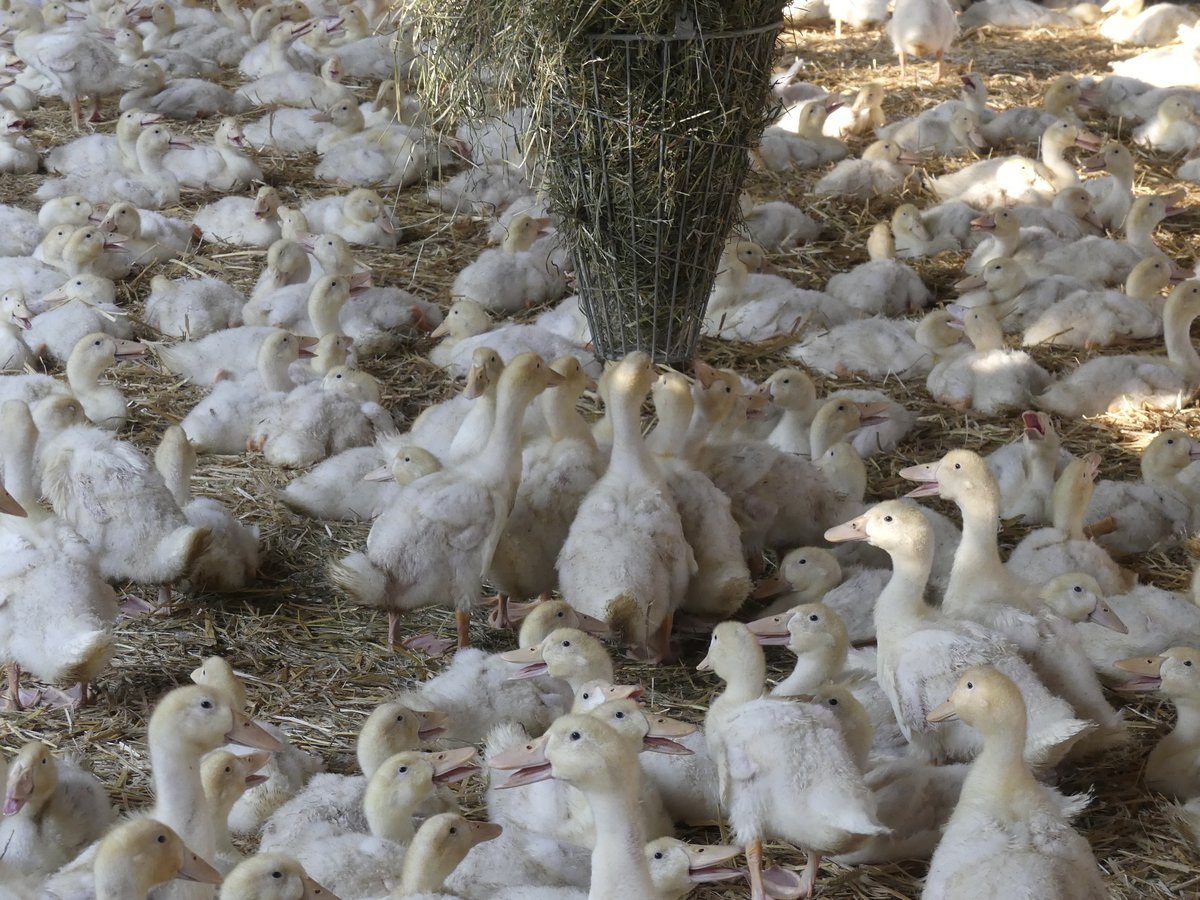
Adjustable enrichment materials must be available to the animals in sufficient quantities at all times and should encourage foraging and feeding behaviour⁴. Suitable options include fresh straw or hay, which can be provided in racks or baskets. Care should be taken to adjust the baskets or racks to suit the height of the animals. This enrichment material can help to make the animals’ environment less monotonous and thus contribute to preventing cannibalism. However, care must be taken to ensure that the items provided do not pose a risk of injury or infection to the animals3.
Outdoor climate zone
Under the Muscovy Duck Agreement⁴, an outdoor climate area must be provided when constructing new enclosed fattening sheds, provided that this does not conflict with building regulations or environmental protection legislation. If the animals are given access to an outdoor run, a shelter must be provided. Furthermore, the open areas used should be utilised according to the rotation principle in order to keep the potential pathogen load as low as possible3. Contact with open water bodies to which wild birds have access must be prevented for disease control reasons (see also Chapter 10 – Avian Influenza (Highly Pathogenic Avian Influenza, HPAI, ‘bird flu’).
Daily routine tasks
Animals should be checked several times a day, but at least once a day² , ⁴. Chicks should be closely monitored, particularly during the first few days, and checked several times a day. Important parameters include (see Chapter 5 – Criteria for assessing animal health):
- Distribution of the animals in the house
- Feed and water intake behaviour
- Movement
- Condition of plumage
- Consistency of droppings
- Condition of the eyes and nostrils
Bedding management must ensure that dry bedding is always available to the animals. If necessary, additional bedding must be provided several times a day. Only high-quality straw (free from fungal infestation) should be used for bedding.
Checking supply reliability: Watering and feeding equipment must be checked daily to ensure it is in working order. Feed and water intake must be checked daily. The feed and water provided must be of impeccable quality (see Chapter 6 – Feed and water hygiene and consumption).
Monitoring and, where necessary, adjusting the barn climate: Any deviations in temperature or ventilation settings should be rectified immediately following the inspection round.
All incidents deviating from the standard must be documented. These include, for example, animal losses with causes of death, the administration of veterinary medicines, or hygiene and/or biosecurity deficiencies. These should also be rectified promptly.
Special tasks
This includes non-daily tasks that nevertheless occur with a certain regularity during or following a fattening cycle. These include, for example, the cleaning and disinfection work required during the service period (see Chapter 9 – Cleaning and Disinfection), care provided by the veterinarian, and examinations to be carried out, such as drinking water tests when using water from the farm’s own well.
Vaccinations
Vaccinations can be used to protect against various infectious diseases, particularly where there is a high risk of infection. Unlike chickens and turkeys, there is currently no compulsory vaccination requirement for ducks.
Vaccination against parvovirus11 is recommended. The exact vaccination schedule should always be discussed with the veterinarian responsible for the flock.
Self-monitoring obligation and veterinary care
By collecting and evaluating indicators relating to rearing, fattening and slaughter, the requirements for the self-monitoring obligation (Section 11(8) of the Animal Welfare Act) are met4. These must be documented.
A veterinary care contract is recommended so that there is a direct point of contact in the event of illness.