
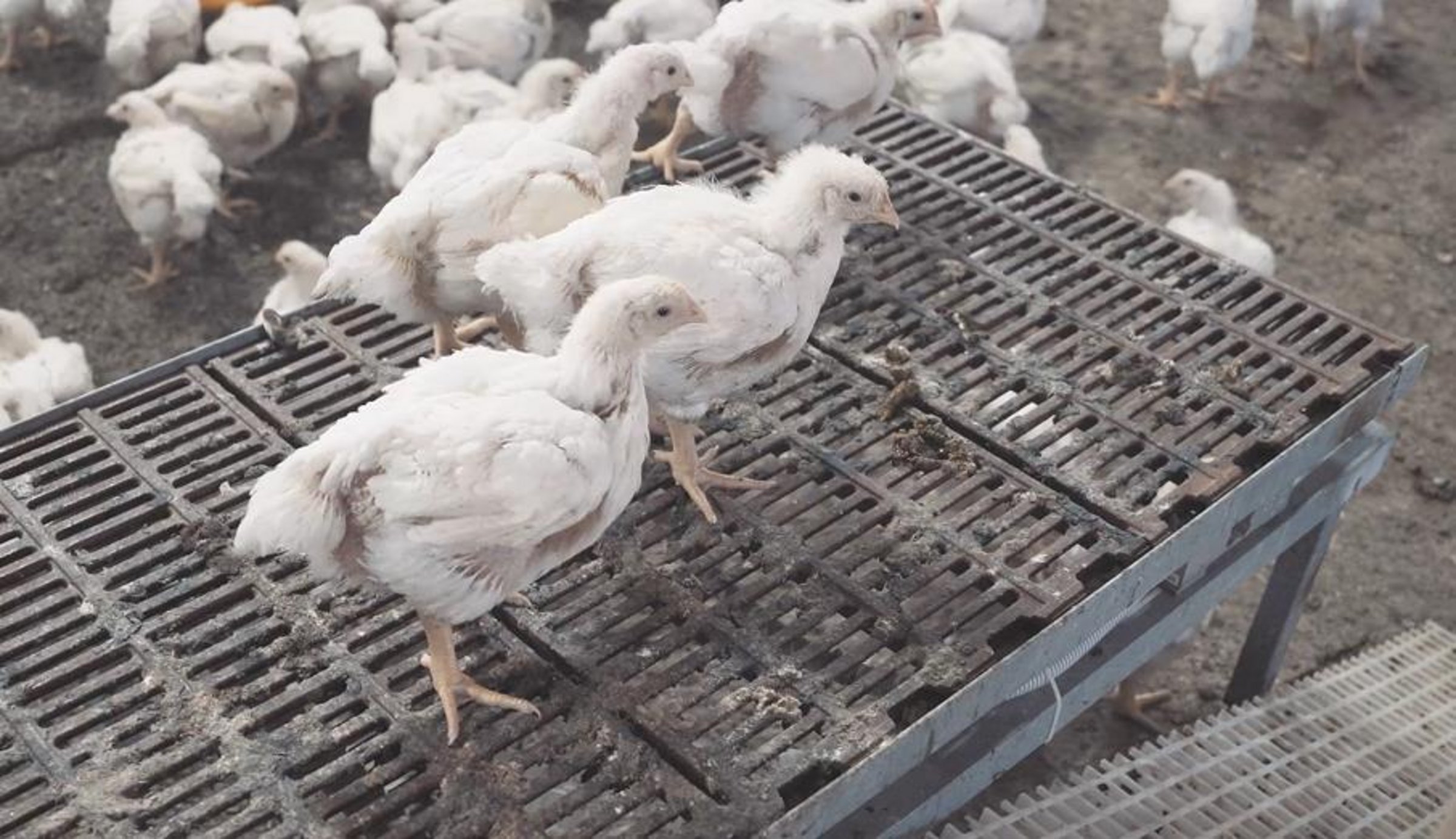
The office of the Poultry Animal Welfare Competence Centre, based at the Lower Saxony Chamber of Agriculture (LWK), had already organised and moderated a panel discussion on the topic of ‘Raised perches for broiler chickens’ at EuroTier digital. Four experts – Dr Julia Malchow from the FLI, Stefan Teepker, a broiler farmer and managing director of sprunGTische GmbH, Felix Wesjohann from the Weser-Ems hatchery, and Silke Schierhold, a poultry consultant at the LWK Lower Saxony – highlighted the benefits of a structured housing environment for broiler chickens. Elevated levels offer the animals the opportunity to roost in accordance with their natural behaviour and to retreat when necessary – both onto the levels and underneath them. Lighting zones can also be implemented depending on the time of day and season.
The possibility of having the raised platforms, covered with litter, recognised as usable space through the Animal Welfare Initiative (ITW) and of being able to utilise them in an economically viable manner has given the use of raised platforms a boost.
The topic has also become increasingly important for organic livestock farming. From 1 January 2024, broiler chickens must be provided with opportunities to perch, either in the form of perches or as raised perching levels.
Development is progressing accordingly, with the findings of scientific studies also being incorporated. Currently, trials are being conducted, for example, on the use of different materials for the raised platforms and on the use of manure belts located beneath the platforms as part of model and demonstration projects (MuD) on animal welfare.
To complement this initial thematic overview for EuroTier digital, the Animal Welfare Focus Network has now also produced a specialist video on the topic of ‘Elevated levels in chicken fattening’. The plan is to gradually expand the video in line with the ongoing findings and experiences from the MuD projects, thereby making new information available to poultry farms at short notice.
Increased perching space for broiler chickens under discussion
EuroTier Digital Round-up: The Animal Welfare Network organised a panel discussion on raised perches for broiler chickens.
Enriching the housing environment to improve animal welfare
Ways of enriching the housing environment play a central role in the debate on improving animal welfare in poultry. For broiler chickens, elements such as raised platforms are suitable for this purpose, as they allow the birds to rest in an elevated position in a manner appropriate to their natural behaviour, whilst also serving as a place of retreat. A high-profile panel discussion featuring representatives from academia, industry, consultancy and the field addressed the topic “Elevated perches for broiler chickens – how do I implement them?” as part of the EuroTier specialist programme. The session was moderated by Katja Kulke from the office of the Poultry Animal Welfare Competence Centre at the Lower Saxony Chamber of Agriculture.
Dr Julia Malchow from the Institute for Animal Welfare and Animal Husbandry at the Friedrich Löffler Institute (FLI) began by providing a brief insight into the issues she is currently addressing as part of the Healthy Livestock Project (reducing the use of antibiotics in broiler chickens and fattening pigs by improving animal health and welfare without compromising productivity). The aim is, on the one hand, to improve the animals’ resilience by enhancing their welfare and, on the other hand, to establish an automatic early detection system. Here, raised platforms with an integrated weighing system are used to detect weight differences. Further investigations focus on various surface materials (aluminium panels, perforated grating and cast iron grating) and the height of the platforms.
Raised platforms in practice
The research described by the FLI is currently being carried out, amongst other things, in the houses of Stefan Teepker, a poultry farmer and managing director at SprunGTisch.de. Teepker came across the raised platforms around four years ago in connection with providing enrichment, but also with the layout of his houses. Initially, the idea was to use straw bales to provide enrichment. However, this was countered by the risk of introducing pathogens and the high labour input required. The decisive factor in choosing raised platforms was ultimately the possibility of having them recognised as usable space through the Animal Welfare Initiative (ITW) and utilising them economically. This marked the start of the testing and development phase, which led to the establishment of his own company, with production and sales, around two and a half years ago. In addition to collaboration with the FLI, further findings from bachelor’s and master’s theses, as well as practical work carried out by vocational students on the farm, have been and continue to be incorporated into further development.
Felix Wesjohann, Managing Director of Brüterei Weser-Ems, began the first trials with raised levels seven years ago with a barn fitter. They quickly realised that the development approach ‘by livestock farmers, for livestock farmers’ was a very good one.
The fourth guest in the discussion panel was Silke Schierhold, poultry consultant at the Lower Saxony Chamber of Agriculture. She spoke on the topic of raised platforms in connection with the Lower Saxony Animal Welfare Plan, launched in 2011. She investigated these in a field trial with two farmers in relation to the provision of enrichment materials and retreat options for broiler chickens.
When asked about the most important aspects of the raised platforms from the broiler chickens’ perspective, Dr Julia Malchow replied: “That they can stand up and have additional resting areas.” Based on her experience, her recommendation was to allow the birds access to the raised platforms right from the first week to encourage their acceptance. Regarding the ever-present issue of footpad health, she could not identify any differences when using raised levels. “Ultimately, footpad changes are a multifactorial process in which the entire house management must be kept in mind.”
Housing structure gains structure through raised platforms
In general, the use of raised platforms, when optimally positioned and installed, adds structure to the overall barn layout. This can create retreat areas where the birds can engage in their natural resting behaviour.
Data on the intensity of use of the raised platforms, particularly in comparison between light and dark phases, is currently still being analysed by the FLI. Furthermore, the extent to which the areas beneath the raised platforms are utilised is being assessed.