
Introduction
Since the start of 2022, prices for pullets in Germany have risen sharply compared with the previous year. This is due to the ban on chick culling (particularly the rearing of male chicks or sex determination in the egg), high feed prices, and significantly higher labour and energy costs. Consequently, farmers are increasingly interested in extending the productive life of laying hens in order to offset the higher purchase costs for young birds through a higher number of eggs sold. This can be achieved, for example, through an extended laying period or by means of an induced laying break (moulting).
Background
The timing of slaughter for a flock is decided on a farm-by-farm basis. Under normal conditions, this ranges from 65 to 90 weeks of age[1]. High-performing flocks – that is, those with high productivity, no behavioural issues and good health – could remain productive for over 100 weeks of age through an extended laying period, or even longer through an induced laying break. Particularly with white hybrids, it is entirely possible to keep them beyond 90–105 weeks of age without any problems with good management and feed. Eggshell strength and flock condition must be taken into account. With brown flocks, an extended laying period without moulting is difficult to achieve [8] due to declining eggshell strength and a rapid decline in laying intensity.
As the young hens must be ordered in good time for the next cycle, the appropriate slaughter date often has to be determined in the middle of the laying period. With a 3-week incubation period and 17 weeks of rearing, the pullets must be ordered more than 20 weeks before the weaning date. Farm managers therefore face the difficult task of assessing the flock in the middle of the laying period and determining the order date for the next cycle. This requires a keen eye to correctly assess the animals in the current flock. The flock’s development up to this point, as well as a comparison with previous batches, are important benchmarks. A discussion with the advisor, the flock veterinarian and the egg dealer is also recommended.
Moulting – It’s in their nature
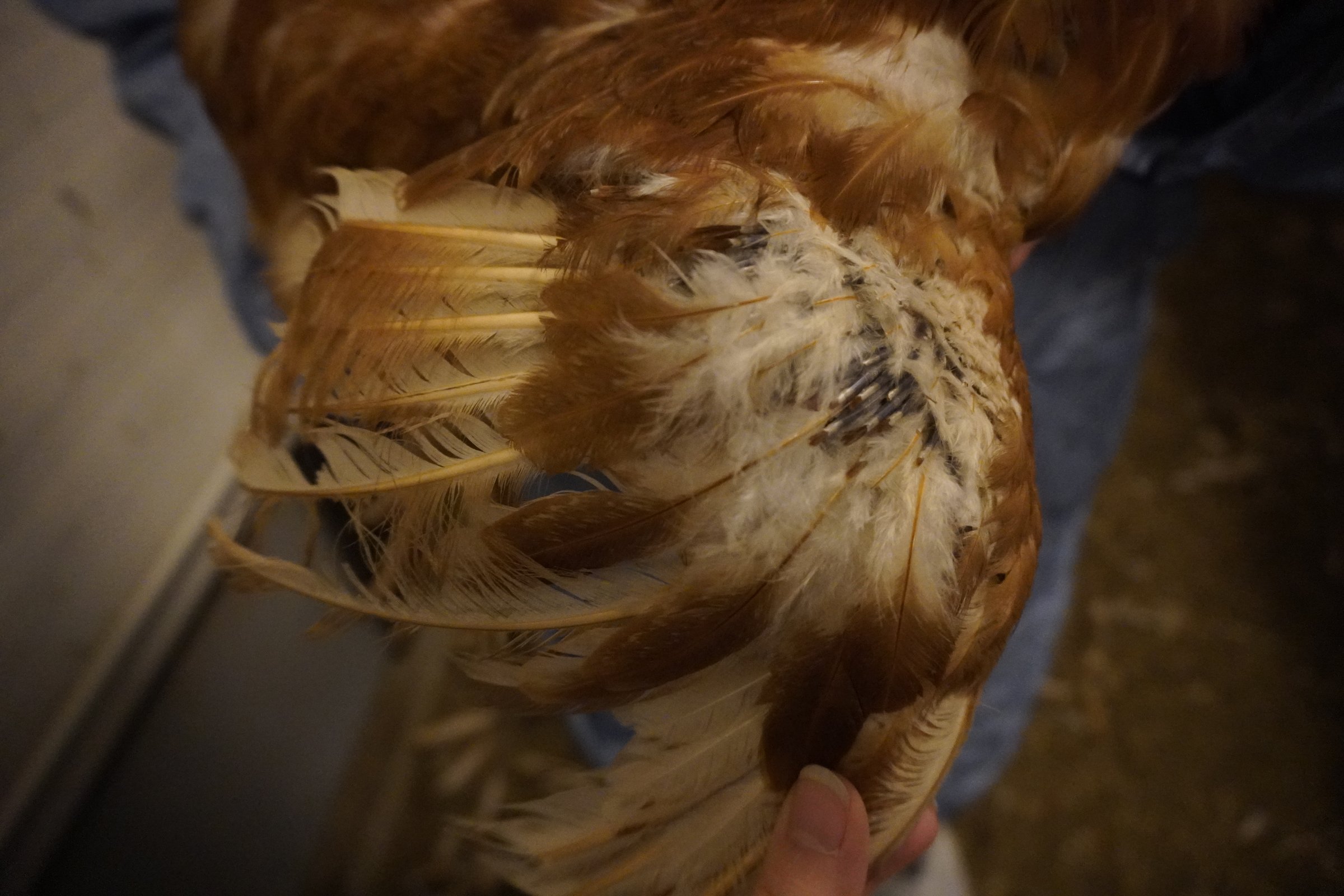
Moulting is a natural process in the life of birds and therefore also occurs in poultry. It is usually triggered by the shorter daylight hours in autumn and winter. Moulting can also occur during the breeding season in spring. In this case, the brooding hen first gathers eggs in the nest to form a viable clutch and then ceases laying whilst brooding. During this phase, the plumage is renewed, accompanied by a loss of appetite and significant weight loss in the birds. The pause in egg-laying allows the ovaries and the oviduct to recover[3, 4].
Even the laying hybrids currently common in layer farming undergo several natural moulting cycles. During rearing alone, pullets moult up to three times, though without reducing their feed intake. However, through breeding for higher laying intensity, the tendency towards brooding and seasonal moulting behaviour has largely been suppressed in modern lines. Nevertheless, moulting can still occur, particularly during prolonged rearing. This natural physiology of the birds can be utilised to induce a laying break.
Withholding or restricting feed during the laying break
Artificial moulting was already used in the last century to achieve a second, or even a third, laying period. The main aim here is to ensure that the laying break begins synchronously, as if only individual birds enter the moulting phase, this can lead to an outbreak of [12]feather-pecking and/or cannibalism. Common methods involved the complete withdrawal of feed and water – a practice contrary to animal welfare – coupled with a drastic reduction in light[4]. Section 4 of the German Animal Welfare Ordinance (TierSchNutztV) states: “Anyone keeping farm animals must […] ensure that all animals are provided daily with feed and water in sufficient quantity and quality to meet their needs.” With animal welfare as the focus, gentler and more animal-friendly methods have been developed for successfully inducing a laying break. These rely on reducing nutrient density, dimming light intensity and shortening the day length. To evaluate the new methods, it is important to consider the natural physiological[4] capacity of laying hens.
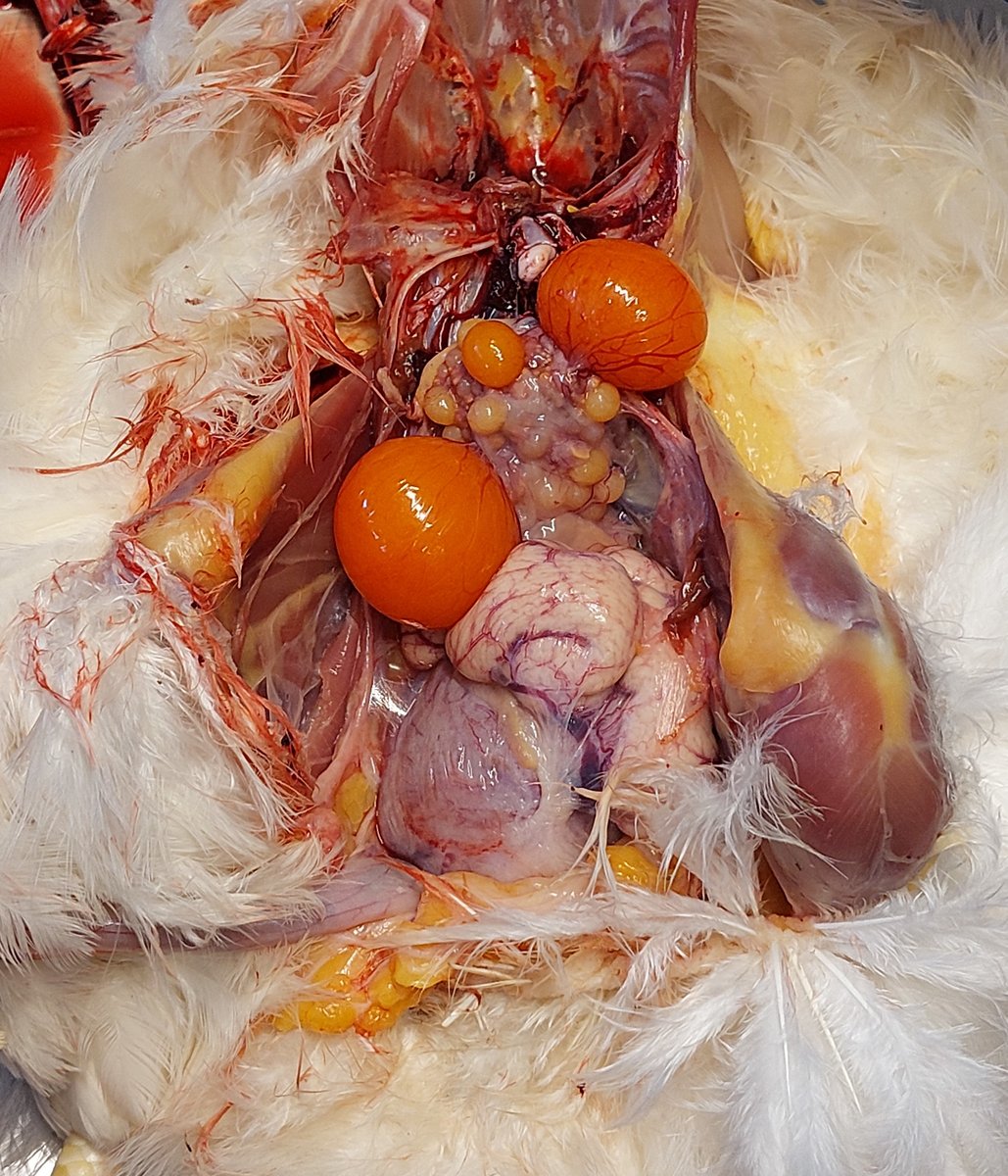
Adult laying hens naturally possess the ability to cope with prolonged periods of little or no nutrient availability. These include migration, brooding and natural moulting. The Bankiva chicken, for example, loses approximately 20% of its weight during brooding. Around half of this is attributable to the regression of the[3,4] reproductive system. In hybrid laying hens, a weight loss of over 25% during the laying break leads to complete regression of the reproductive system. This involves not only a reduction in cell size, but also cell death followed by their complete renewal[4]. However, a weight loss of over 30% of body weight should be avoided, as this prolongs the recovery period until laying resumes. General recommendations for weight loss range between 20–30% to achieve the best eggshell quality and highest performance. Studies have shown that [3, 4, 7]these periods of starvation do not cause any long-term damage to the birds. As soon as feed is available again, regressed organs, such as the reproductive system or the intestine, regenerate[3](see Table 1).
| Age or laying status | Oviduct | Ovary | |
| Weight (g) | Length (cm) | Weight (g) | |
| Day-old chick | 0 | 0.45 | 0.03 |
| Young hen, 3 months old | 0.18 | 6.6 | 0.31 |
| Young hen, 4 months old | 1.10 | 9.69 | 2.66 |
| Young hen, 5 months old | 22.0 | 32.21 | 6.55 |
| Laying hen after the first egg | 77 | 68 | 38 |
| Laying hen immediately before the end of the laying period | 74 | 65 | 34 |
| Hen during the lay break | 4 | 17 | 3 |
| Hen when resuming laying after the break | 75 | 68 | 49 |
| Mature hen in second laying period | 78 | 69 | 52 |
| Grey heron in second breeding break | 5 | 30 | 4 |
<figcaption>Table 1: Dimensions and weight of the oviduct and ovary at different ages and during different phases of egg-laying (adapted from W. Brade, G. Flachowsky, L. Schrader</figcaption>

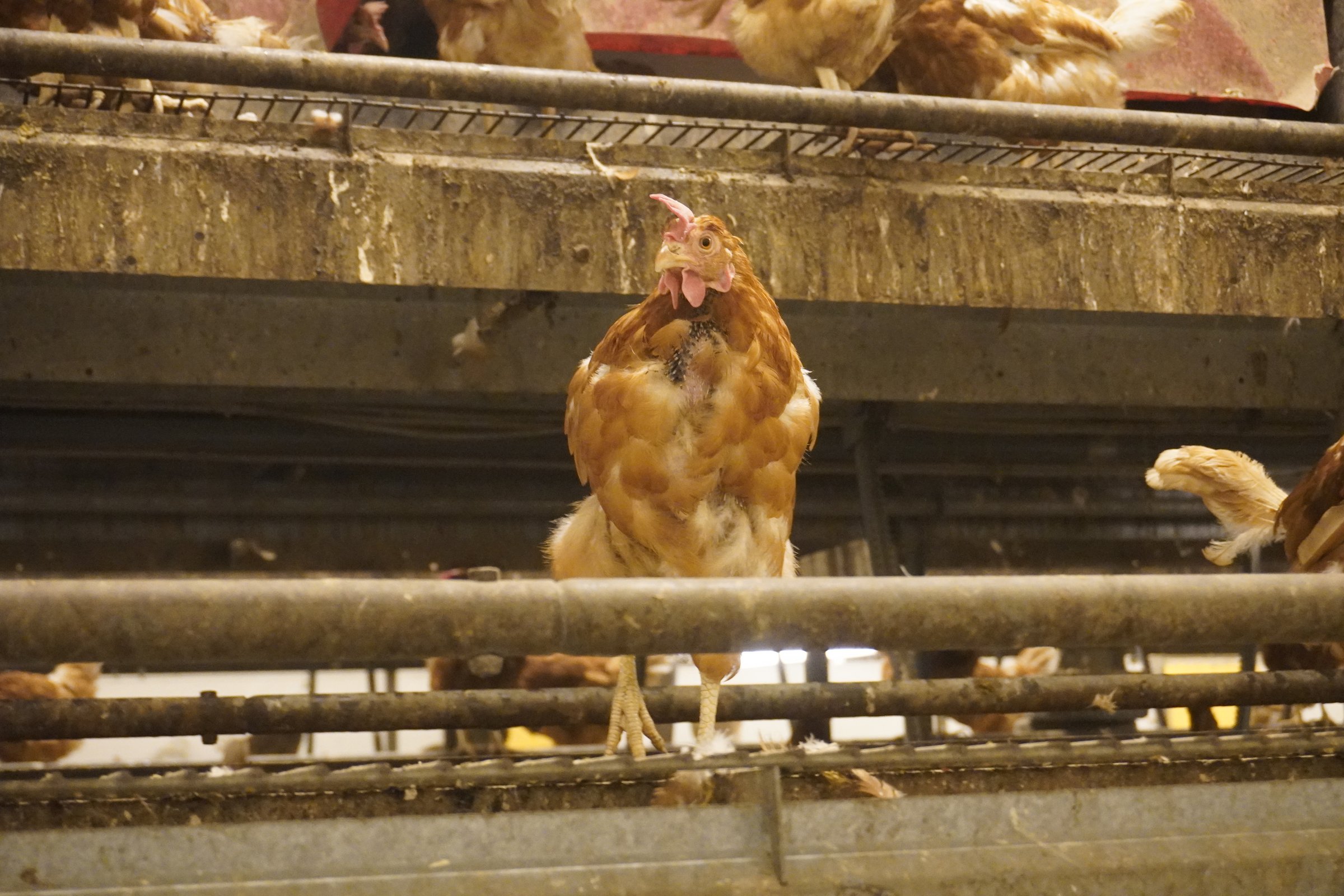
(© Alina Kathrin Lückemann, Lower Saxony Chamber of Agriculture)
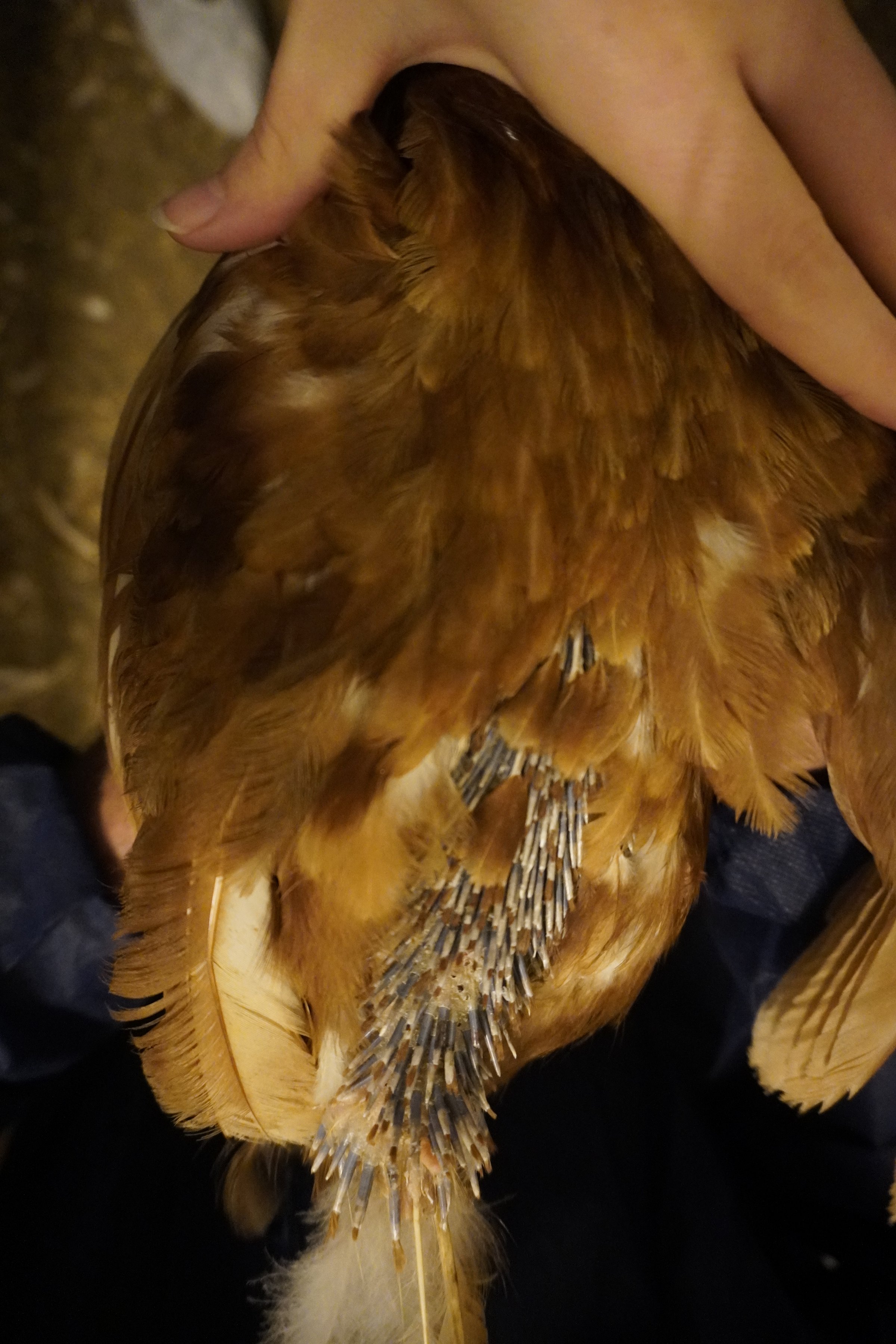
(© Lower Saxony Chamber of Agriculture)
Side effects of severe food restriction
Another factor to consider when assessing animal welfare is the stress hormone corticosterone. Various studies on birds, as well as studies conducted directly on chickens, have shown that food deprivation increases [4, 5, 6]corticosterone levels. Furthermore, hormone levels[5, 10] rose in line with the severity of the food restriction. High levels of stress are therefore to be expected, particularly in cases of complete food deprivation.
The rise in hormone levels carries several risks. Corticosterone levels are directly linked to behavioural responses. Increased aggression and more frequent pecking at objects can be observed[3, 5, 6]. Elevated stress levels also increase susceptibility to infectious diseases. One study suggests that restricted feeding, in contrast to complete food deprivation, resulted in lower Salmonella[7] colonisation. This difference may be due to factors other than stress. Restricted feeding may support the natural cleansing mechanism through active intestinal peristalsis and, consequently, regular faecal excretion. Complete food deprivation also alters the gut microbiome, which could increase susceptibility [14, 15, 17]to bacterial infections.
Finally, it was found that feed withdrawal leads to a significant drop in bone mineral content. Even when using a moulting feed containing 2% calcium, there was a reduction in bone density. In these cases, optimised feeding with regard to calcium [17, 18]content following the laying break was essential to restore bone stability. Current methods therefore recommend an ad libitum supply of[12] oyster shell lime or lime grit during the laying break to build up calcium reserves.
Inducing a laying break
Given today’s higher production levels, the laying break should be induced between the 65th and, at the latest, the 75th week of life, rather than, as was previously the case, as early as the 60th week[1, 8]. The following conditions should be met:
- Good flock health with no acute infections. Sick, weakened laying hens with depleted body reserves are unsuitable for moulting. They should therefore be treated fully and fed up before an induced laying break begins[1, 2, 19, 12].
- Flocks with a high infestation of endo- and ectoparasites should be treated before the[8, 19] laying break. If the infestation is less severe, treatment can also take place during the build-up phase. In conventional farming, several products are available with (5 days) and without a withdrawal period. On organic farms, treatment during the build-up phase is recommended if no eggs or very few eggs are being laid, in order to minimise yield losses. This is because, under the EC Organic Regulation, a double withdrawal period must be observed when using medicines, and a minimum of 48 hours for medicines without a withdrawal period. The alternative is to carry out worm treatment before the induced laying break and to market the eggs as conventional produce. Losses in revenue must be taken into account in this case.
- No behavioural abnormalities in the flock. The stress of an induced laying break can encourage feather pecking [1, 2]and cannibalism.
- The house should, where possible, have blackout facilities so that the light period can be significantly reduced. These are also beneficial in the cold-scratching area, if this is[12, 19] accessible to the birds during the laying break.
- In organic farming, access to outdoor runs is restricted to 7 weeks.
- If the cold-scratching area was used to calculate the maximum permissible stocking density, it must not be blocked off even during[1, 11, 19] the laying break.
- The implementation of a laying break on an organic farm must be agreed with the control body.
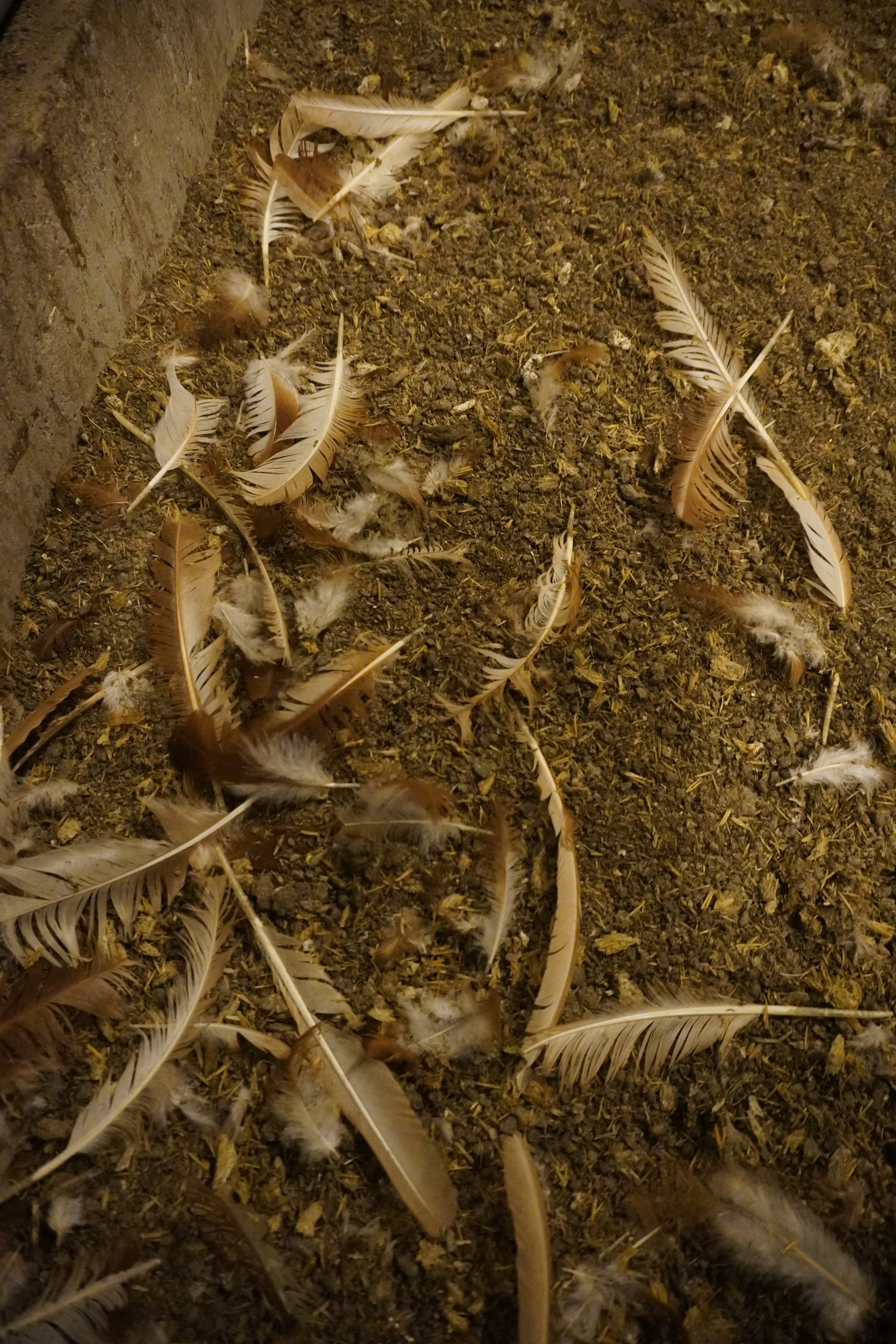
- If there are increased numbers of feathers in the litter, individual birds have already begun moulting. In such cases, a fully synchronised induced laying break across the entire flock can no longer be expected.
The laying break begins with the cessation of feeding layer feed. Instead, oats, wheat bran or crushed oats are usually used. This must be supplemented with vitamins and minerals (especially calcium) and trace elements. This reduction phase, lasting until laying ceases, takes approximately 14 days and is accompanied by a gradual reduction in lighting duration and, where necessary, brightness (in accordance with Council of Europe recommendations and the implementation guidelines of the German Animal Welfare Ordinance (TierSchNutztV), light intensity in the activity area must be at least 20 lux). This leads to weight loss, the onset of feather loss and the regression of the laying apparatus. In the subsequent build-up phase of approximately 26 days, feeding of complete layer feed, starter feed or rearing feed is resumed. At the same time, the duration of lighting is slowly increased. During this phase, any necessary vaccinations or treatments against parasites are usually carried out[1, 11, 12, 2].
The aim is to achieve a complete cessation of egg-laying, or at least a rate of less than 5%.[19]If the reduction phase is extended because laying performance has not reached the desired target, the risk of losses due to nutrient deprivation increases. During the laying break, intensive animal monitoring is important to keep a close eye not only on weight but also on behaviour. The nutrient deficit and lack of activity can lead to feather eating, feather pecking and the ingestion of litter material in an attempt to compensate for this. It is therefore strongly recommended to provide attractive enrichment materials and to remove the litter before the start of the laying break.
Pecking blocks containing essential minerals and alfalfa bales for crude fibre should continue to be provided. Additional materials should be used particularly if the hens are accustomed to free-range conditions and these are restricted. During the feathering-up phase, new keels can be an attractive target for pecking, so that monitoring of the birds can only be reduced once full [1, 19]plumage has been achieved.
Approximately six weeks after the start of the break, laying performance should already be back to 50%. 50–60 days after the start of the laying break, flocks under optimal conditions can reach their peak performance of approximately 85–88%. The second laying phase lasts up to 35–40 weeks with good egg quality. A second moult can be carried out subsequently under the same basic conditions (good flock condition, good performance and no behavioural abnormalities). To make the induced laying period economically viable, it is recommended that the birds be utilised for at least[8, 16] 7 months. With a successful moult, bird loss is less than 1[3, 8]%.
When planning the induced laying break, it is advisable to take market conditions and consumer preferences into account. Demand for eggs peaks during the Christmas season between November and December. With good planning, the laying break is started approximately 3 months before Christmas to capitalise on the increased demand. There is also high demand during the Easter season[16]. Alternatively, the ‘summer slump’, with lower demand for eggs, can be used for the laying break.
Provided that the compound feed after the laying break ensures the same nutrient supply as before, larger eggs with good shell strength will be laid after the break. This can have positive effects in direct marketing; however, when marketing via a packing station, acceptance must be guaranteed and a corresponding premium for larger eggs must be achieved. By using a compound feed with a lower nutrient concentration, the egg size distribution[11, 16, 19] can be influenced accordingly whilst simultaneously reducing costs.
Information on vaccination
The primary vaccination against Newcastle disease provides protection for approximately one laying cycle. From the 65th week of life onwards, regardless of any laying break, a booster vaccination should be administered via the drinking water every 6–8 weeks. During the establishment phase, a salmonella vaccination must also be carried out. Several vaccines with different withdrawal periods are available for Salmonella enteritidis (SE). Where there is additionally high Salmonella typhimurium (ST) pressure (e.g. due to numerous pigsties in the immediate vicinity, or multiple age groups on the farm, or large-scale operations), a combination vaccine (SE+ST) is recommended. Consultation with the farm veterinarian is advised in this[8] case.
In free-range or organic laying hen systems, protective vaccination against E. coli via the drinking water may be advisable. This also applies to barn systems with a history of E. coli. Depending on the region and farm conditions, regular booster vaccination against infectious bronchitis should also be carried out[8].
Table 2: Induced laying break following the MuD Animal Welfare Project "Layer HACCP"
| Day | Light | Laying hen feed | Comments | |
|---|---|---|---|---|
| Reduction phase | 1 - 12 | Gradually reduce from 15–16 hours to ≤ 8 hours | 1 feeding time: 30 g oats + 30 g mussel shells | |
| Build-up phase 1 | 13 | Gradually extend from ≤ 8 h to 15–16 h | 20 g oats + 20 g mussel shells + 30 g LAF | Vaccinate SE/ST |
| 14–17 | Gradually extend from ≤ 8 hours to 15–16 hours | 20 g oats + 20 g mussel shells + 30 g LAF | ||
| 18–20 | Gradually extend from ≤ 8 hours to 15–16 hours | 20 g oats + 20 g mussel shells + 30 g LAF | Vitamins A, D, E, B complex | |
| 21 | Gradually extend from ≤ 8 hours to 15–16 hours | 20 g oats + 20 g mussel shells + 30 g LAF | Flush pipes (chlorine) | |
| 22 | Gradually extend from ≤ 8 hours to 15–16 hours | 20 g oats + 20 g mussel shells + 30 g LAF | Vaccinate against IB/ND | |
| Build-up phase 2 | 23–27 | Gradually extend from ≤ 8 hours to 15–16 hours | 20 g oats + 80 g LAF | |
| 28–30 | Gradually extend from ≤ 8 hours to 15–16 hours | 100 g LAF | Vitamin B complex | |
| 31–32 | Gradually extend from ≤ 8 hours to 15–16 hours | 100 g LAF |
Method 2: Research Institute of Organic Agriculture (FiBL), Fact Sheet No. 1434
This method outlines a concept for a gentle laying break in organic poultry farming. Throughout the moulting period, oyster shell lime or lime grit is made freely available so that the hens can replenish their calcium reserves.
Table 3: Induced laying break according to FiBL Fact Sheet No. 1434
| Day |
Lighting hours |
Laying hen feed (% of daily ration) |
Bran | Outdoor area | Pasture | |
| 1 | 8 | Empty feeders | ad libitum | open | closed | |
| 2 - 14* | 8 | - | ad libitum | open | closed | |
| 15 - 16 | 9 | 50 | none | open | closed | |
| 17 | 9 | ad libitum | none | open | open | |
| 18 - 20 | 10 | ad libitum | none | open | open | |
| 21** | 11 | ad libitum | none | open | open |
Table 4: Induced laying break following the EIP project ‘Animal Welfare in Organic Laying Hen Farming’
| Day | Light | Mixed feed | Grains | Supplements | |
|---|---|---|---|---|---|
| 1 | Switch off supplementary lighting | Wheat bran approx. 120–140 g/bird/day | 10 g oats/bird/day | Vitamin C in drinking water | |
| 2 | Switch off supplementary lighting | Wheat bran approx. 120–140 g/bird/day | 11 g oats/bird/day | Switch off supplementary lighting; observe animal behaviour | |
| 3 | Switch off supplementary lighting | Wheat bran approx. 120–140 g/head/day | 12 g oats/head/day | Offer saline solution ad libitum as a supplement | |
| 4 | Wheat bran approx. 120–140 g/bird/day | 15 g oats/bird/day | Offer mineral premix ad libitum | ||
| 5 | Wheat bran approx. 120–140 g/bird/day | 15 g oats/bird/day | If possible, provide access to outdoor space; otherwise, keep them occupied! | ||
| 6 | Wheat bran approx. 120–140 g/head/day | 15 g oats/head/day | Check vaccinations | ||
| 7 | Wheat bran approx. 120–140 g/head/day | 20 g oats/head/day | Check time remaining until the next salmonella vaccination | ||
| 8 | Wheat bran approx. 120–140 g/bird/day | 20 g oats/bird/day | If no outdoor access, sanitise the area near the house | ||
| 9 | If bran has run out, replace with crushed barley | 20 g oats/bird/day | Administer first vaccination if necessary | ||
| 10–12 | If bran has run out, replace with crushed barley | 25 g oats/day | |||
| 13 | 30 g oats/day | Take a salmonella sample after the laying period ends | |||
| 14 | From 0% laying performance: Laying performance rearing feed | 30 g oats/day | |||
| 15 | Approx. 70 g/day | 30 g oats/day | Treat for worms and colibacillosis if necessary | ||
| 16 - 18 | Approx. 70 g/day | 30 g oats/day | |||
| 19 | Approx. 70 g/day | 30 g oats/day | If necessary, Change or top-up of bedding in the scratching area | ||
| 20–25 | Approx. 80 g/day | 30 g oats/day | |||
| 26 | Approx. 90 g/day | 30 g oats/day | Completion of treatments; observe withdrawal periods | ||
| 27 | Approx. 90 g/bird/day | 30 g oats/bird/day | Vitamins A, D, E in drinking water | ||
| 28 | Approx. 90 g/bird/day | 30 g oats/bird/day | |||
| 29 | Approx. 90 g/bird/day | 30 g oats/bird/day | Nest inspection; if necessary, control of bird mites | ||
| 30-34 | Approx. 100 g/day | 30 g oats/day | |||
| 35 - 37 | Switch on supplementary lighting | From 10% laying rate: layer feed | 20 g oats/day |
Method 4: Moulting programme in the mobile shed
Implementing an induced laying break proves difficult in a mobile house without any means of darkening or a lighting programme. Carrying this out in winter is a sensible option, as it makes use of the short daylight hours.
Following the scheme outlined below, hens were successfully moulted in their 56th laying cycle in the mobile house at the Hessian State Agricultural Enterprise’s Eichhof Agricultural Centre. The moulting took place in January.
Table 5: Induced laying break following the moulting programme in the mobile house
| Day | Feed | Additives / Supplements | Comments | ||
|
Reduction phase Days 0–16 |
Allow complete feed II to be eaten entirely | Shell grit and stomach stones available ad libitum throughout the moulting period | Day 0: 50 birds weighed, average 2.209 g, 80% uniformity | ||
| 1 | Crushed oats ad libitum | Switch off lights, keep conservatory accessible, no access to outdoor run | |||
| 2 | Minerals via drinking troughs | Monitor feather pecking, darken enclosure if necessary | |||
| 3 | Vitamins via drinking troughs | ||||
| 4–8 | Minerals via drinking troughs | ||||
| 9 - 16 | Whole grain oats ad libitum | Minerals via drinker |
Day 16: 26 birds weighed, average 1,853 g, 69% uniformity, approx. 350 g less body weight since the start of moulting. |
||
|
Build-up phase Days 17–40 |
17–23 | 50/50 mixture of ground oats and complete feed ad libitum | Amino acids and vitamins via drinking water | Day 17: Salmonella vaccination; animals have not lost any body weight for a week; under 20 eggs | |
| 24–40 | Complete feed ad libitum |
Day 24: Access to outdoor run Day 31: 25 birds weighed, average 2,016 g, 60% uniformity Day 38: 50 birds weighed, average 2,049 g, 59% uniformity Day 70: 40 birds weighed, average 2,168 g, 80% uniformity |
Bibliography
[1] Schättler, J., Hiller, P., Spindler, B., Riedel, A., Stiller, A., Sagkob, S., Dieckmann, L., Kemper, N. (2021): Focus on Laying Hen Management and Animal Welfare: Specific Aspects – Concise and Practice-Oriented. Lower Saxony Chamber of Agriculture, Foundation of the University of Veterinary Medicine Hannover – Institute for Animal Hygiene, Animal Welfare and Farm Animal Behaviour, Federal Ministry of Food and Agriculture
[2] Quanz, G. and Garrelfs, I. (2021): Moulting laying hens in mobile housing. Land und Forst 11/2021. www.digitalmagazin.de/marken/landforst/hauptheft/2021-11/tierhaltung/042_legehennen-im-mobilstall-mausern
[3] Webster, A. B. (2003): Physiology and Behaviour of the Hen During Induced Moulting. Poultry Science, 82, pp. 992–1002.
[4] Berry (2003): The Physiology of Induced Molting. Poultry Science, 82, pp. 971–980.
[5] Savory, C. J. and Mann, J. S. (1997): Is There a Role for Corticosterone in the Expression of Abnormal Behaviour in Restricted-Fed Fowls? Physiology & Behaviour, 62, pp. 7–13.
[6] Kitaysky, A.S., Kitaiskaia, E. V., Piatt, J. F., Wingfield, J. C. (2002): Benefits and costs of increased levels of corticosterone in seabird chicks. Hormones and Behaviour, 43, pp. 140–149.
[7] Andreatti Filho, R. L., Milbradt, E. L., Okamoto, A. S., Silca, T. M., Vellano, I. H. B., Gross, L. S., Oro, C. S., Hataka, A. (2019): Salmonella Enteritidis infection, corticosterone levels, performance and egg quality in laying hens subjected to different methods of moulting. Poultry Science, 98, pp. 4416–4425.
[8] Schulze D. (2022): Personal communication. Praxis Am Bergweg GmbH
[9] W. Brade, G. Flachowsky, L. Schrader (eds.) (2008): Layer Breeding and Egg Production: Recommendations for Practice. Agricultural Research, Special Issue 322.
[10] E. E. Onbas¸ılar and H. Erol (2007) Effects of Different Forced Molting Methods
on Post-Moult Production, Corticosterone Levels, and Immune Response to Sheep Red Blood Cells in Laying Hens
[11] Animal welfare in organic laying hens, EIP innovation project. www.eip-agrar-sh.de/eip-innovationsprojekte/1-call/tierwohl-oeko-legehennen
[12] Zeltner, E. (2020): Inducing moulting in organic hens. Research Institute of Organic Agriculture (FiBL), Fact Sheet No. 1434
[14] Golden, N. J., Marks, H. H., Coleman, M. E., Schroeder, C. M., Bauer Jr., N. E., Schlosser, W. D. (2008): Review of induced moulting by feed removal and contamination of eggs with Salmonella enterica serovar Enteritidis. Veterinary Microbiology, 131, pp. 215–228.
[15] Holt, P. S. (2003) Molting and Salmonella Enterica Serovar Enteritidis Infection: The Problem and Some Solutions. Poultry Science, 82, pp. 1008–1010.
[16] Golze (2009) Targeted laying break or induced moulting and their potential applications
[17] Park, S.Y., Kim, W. K., Birkhold, S. G., Kubena, L. F., Nisbet, D. J., Ricke, S. C. (2004): Issues surrounding molting and alternative dietary strategies for the egg industry in the United States. World's Poultry Science Association, 60, pp. 196–209
[18] Mazzuco H. and Hester, P.Y. (2005): The Effect of an Induced Moult Using a Non-fasting Programme on Bone Mineralisation of White Leghorns. Poultry Science, 84, pp. 1483–1490
[19] Laying Hen Working Group of the Lower Saxony Animal Welfare Plan [2017]: Animal welfare guidelines for the implementation of an artificially induced laying break (‘moult’) in laying hens. Lower Saxony Ministry of Food, Agriculture and Consumer Protection