The only Neuland turkey farm in the universe
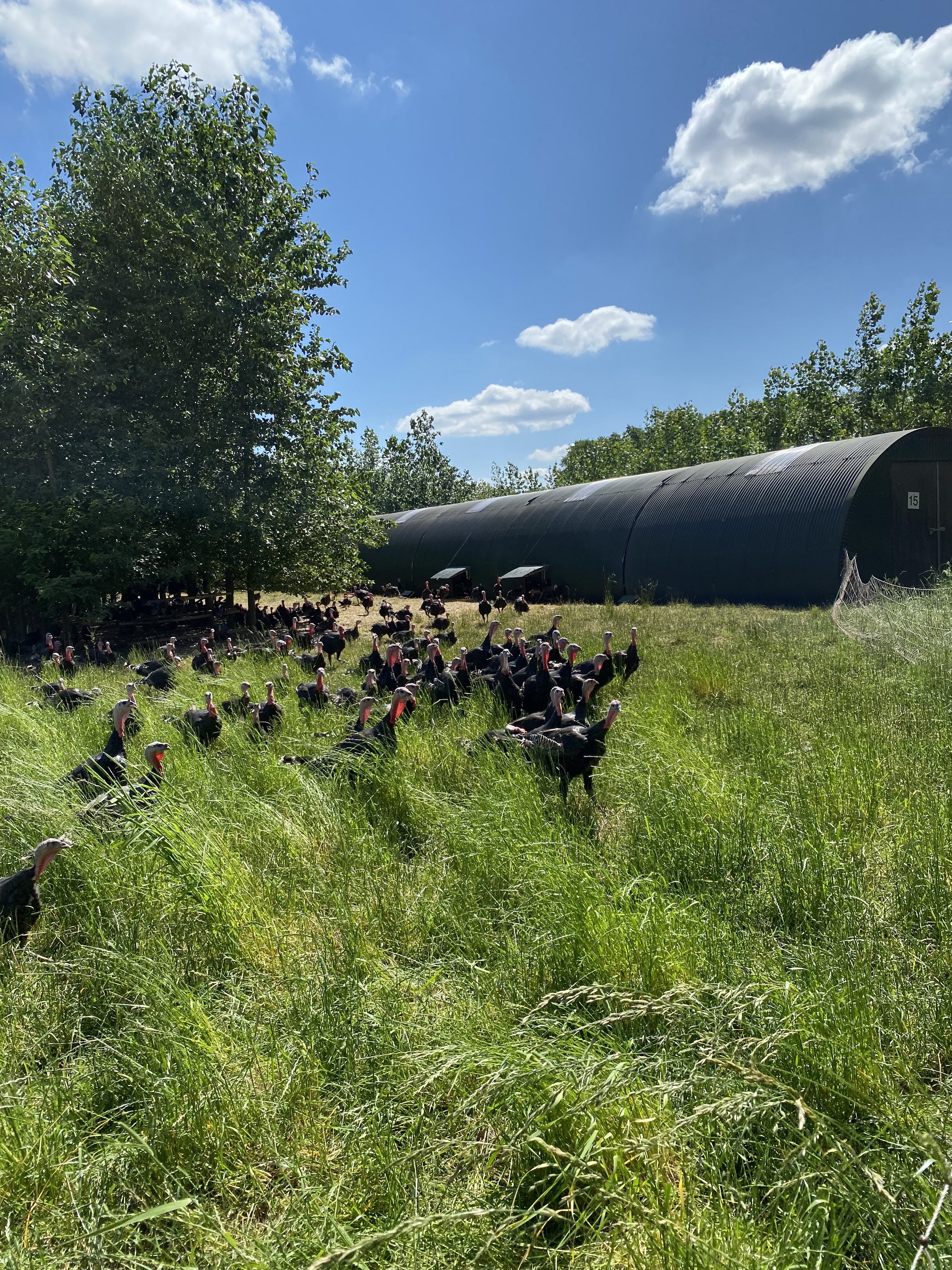
Even as you drive onto the Haver-Rassfeld family’s farm, it becomes clear that animal welfare is the top priority here. Proud and upright, just as they would be in the wild, the Haver-Rassfeld family’s black turkeys strut across the meadow and along the dense poplar plantations.
“I’ve actually been a farmer for 1,000 years,” were the opening words of farm manager Friedrich Wilhelm Haver-Rassfeld, who welcomed ten interested participants to an event organised by the “Focus on Animal Welfare” project on 14 June 2023 at the historic farmstead. First, there was a brief history of the farm, during which it was explained that the site has developed positively economically over the years. “The poorer the soil, the more resourceful the people, and that worked out,” says Haver-Rassfeld. Many well-known companies have set up shop in the Gütersloh area, which has also attracted more people to the region. This convinced him of the business idea to make the “Haver-Mast-Pute” brand, established by his father, even better known. The graduate in agricultural economics took over his mother’s farm in 1986 and decided to expand turkey farming on the premise that the animals’ welfare was paramount and that society and politicians accepted the practice.
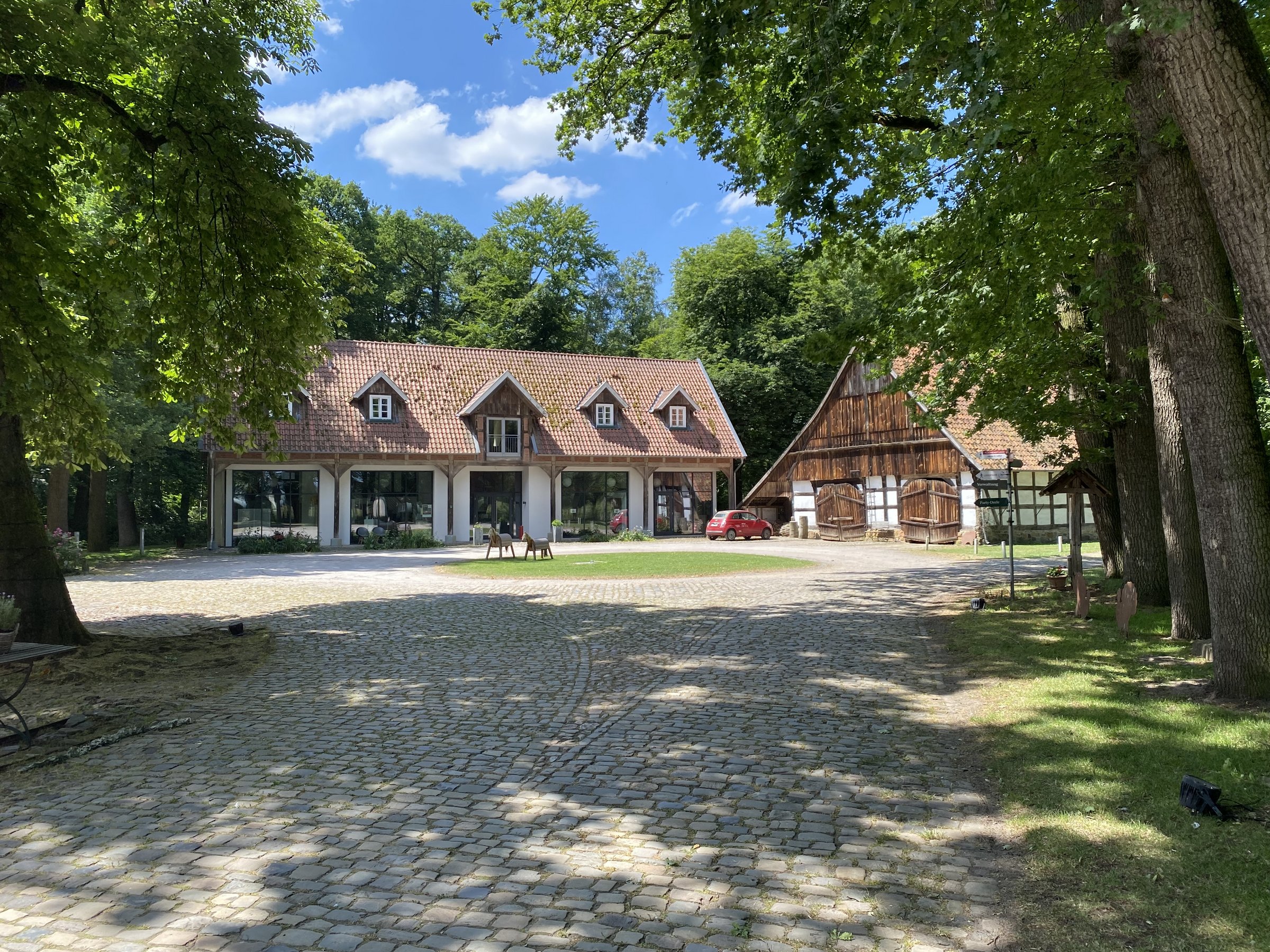
“There must be music playing under every roof.” True to this motto, the Haver Rassfeld family converted an old carriage house into a commercial and residential building, whilst other parts of the complex were adapted for catering use. The buildings used for agricultural purposes were also upgraded and supplemented with additional functional structures such as a machinery shed, rearing barn and straw store. A wood chip heating system was installed as early as 2008, which now supplies all the residential and commercial areas of the estate with thermal energy. The farm shop was then established in
1987. In 1997, Mr Haver-Rassfeld realised that he did not want to follow the conventional route with his turkeys, but instead wanted to develop a more natural approach to poultry farming. He was a pioneer in this field. “I had to create everything myself; there was nothing, no scientifically collected data, simply nothing.” And so it began: Haver-Rassfeld imported 17 ‘Kelly Bronze’ turkeys from England, a breed known for being particularly robust and hardy. “And this flock gave me so much joy that I didn’t want any other animals.” Through countless discussions and inspections, Haver-Rassfeld managed to be certified by the Neuland e.V. association in 2014 as a farm practising particularly species-appropriate and environmentally friendly animal husbandry, and today describes itself as the only Neuland turkey farm in the entire universe. The next step was the construction of the abattoir, followed by the cutting plant. Both facilities are now due to be rebuilt for organisational and capacity reasons.
Every three weeks, the farm receives between 600 and 700 day-old chicks of special breeds. Friedrich Wilhelm Haver-Rassfeld uses wood shavings for the day-old chicks until they are around five weeks old, after which he uses straw.
“A typical turkey farmer has about 60 opportunities over the course of their career to improve things slightly and gain experience with each batch; for us, it is many times more.” This is why universities, research institutes and MuD animal welfare projects such as #Pute@Praxis are very interested in Haver-Rassfeld’s work, which he supports with great dedication. “There are no beak injuries here, and rearing and fattening proceed without a hitch thanks to our expertise and the way we keep the animals.” All animals are kept with untrimmed beaks.
From day one, the turkeys have access to raised perches (A Reuter) and enrichment materials, as well as high-quality feed and drinking water in the warm rearing pen with underfloor heating. During this period, the chicks are vaccinated against Turkey Rhinotracheitis (TRT), Haemorrhagic Turkey Enteritis (HE) and Newcastle Disease (ND). From around the fifth week of life, a temporary winter garden is placed in front of the gates so that the birds have contact with the outdoor climate. At around eight to nine weeks of age (in summer), the turkeys are moved from the rearing unit to the mobile pens on the pasture. These pens have no solid floor; mucking out only takes place when the pens are moved by tractor to make way for the next batch. “After an acclimatisation period of around ten days, the gates to the outdoor run are then opened.” Here, they find a run consisting of a short-rotation coppice mixed with pasture grass.
“And now I can see whether a flock is in good condition or not,” says Friedrich Wilhelm Haver Rassfeld, as the roughly 600 turkeys in a flock emerge from beneath the poplars and greet the visitors with their calls. “What more could a turkey possibly need?” The outdoor run, with shade and places to hide, is provided, along with fresh grass, a sand bath, perches, poultry grit and access to fresh water under the trees.” Yet even the electric fence and the good hiding places do not keep natural predators at bay. Foxes and buzzards sometimes attack, causing unnecessary trouble. “From the tenth week onwards, the birds of prey no longer attack the turkeys, which is good,” explains Haver-Rassfeld. Unfortunately, turkeys have also been stolen from his farm.
Haver-Rassfeld explains that in summer, 90% of the turkeys spend the night outdoors, with the rest of the time in the shelter. If it gets too warm, the gates at the front and back are opened to create a sort of chimney effect. “That way we solve the heat problem effectively, provided there are any turkeys in the shelter at all and they aren’t preferring the shady spots outside.”
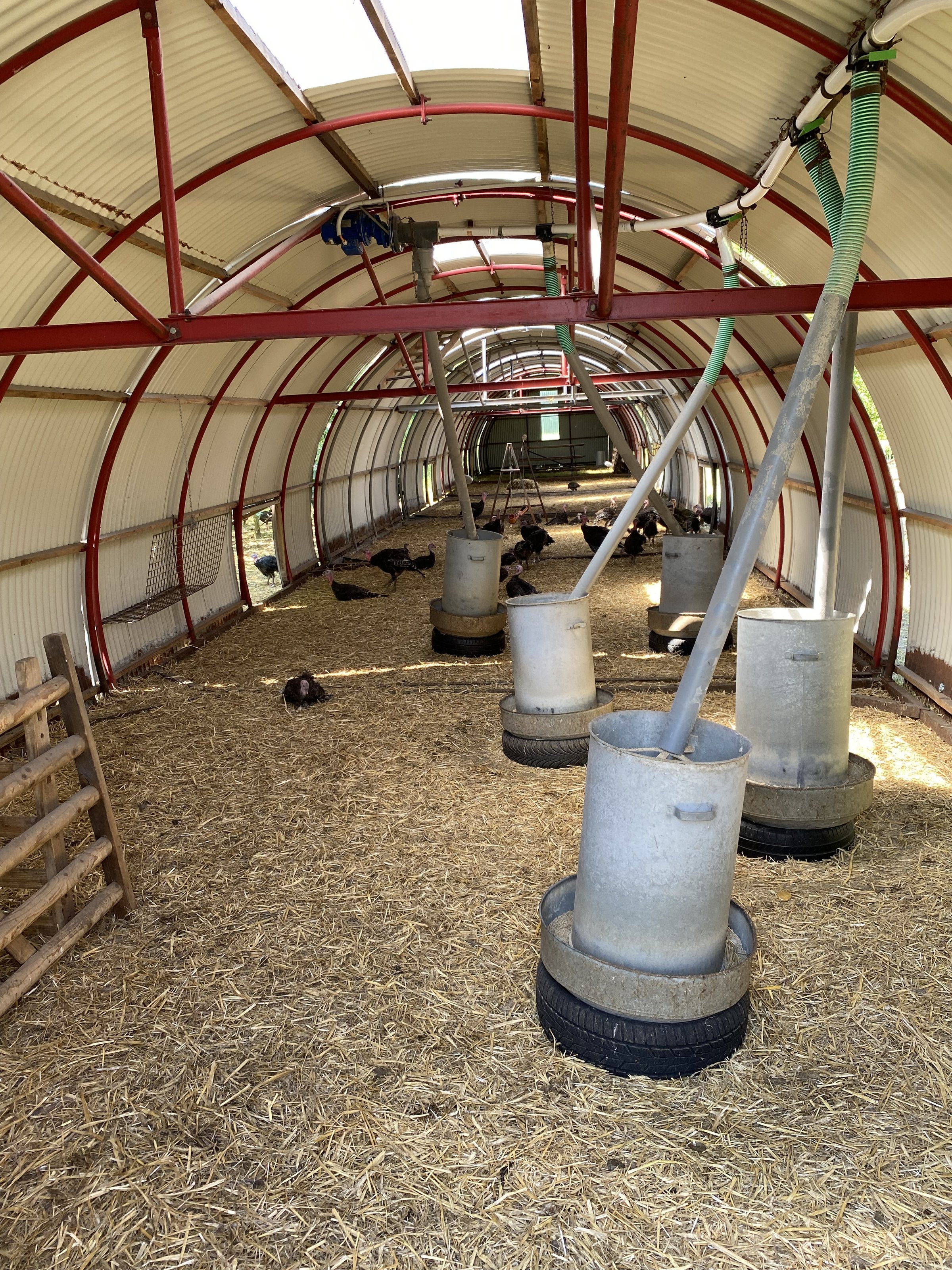
The birds are fed in the mobile units with feed specially produced for the farm. “We also conducted a trial for this, offering the animals all feed components individually in feed bowls. The feed mix was then created based on the consumption ratio and thus adapted to the animals’ needs.” A mobile feed silo and a simple screw conveyor system ensure the animals are fed in the tunnels. “A system like this requires infrastructure, which is why we have installed electricity, water and a telephone cable at the respective sites for potential monitoring functions. In summer, we position our mobile units amongst the tall poplars, which cast plenty of shade; in winter, however, we use sites without trees to harness the sun’s power and keep the dark green-painted tunnels as warm as possible.” The turkeys are reared as mixed-sex flocks and reach slaughter weight between the sixth and seventh month (hens 8.5 kg, cocks 14.5 kg). In total, the Haver-Rassfeld family has 15 hectares of agricultural land available for free-range turkey farming.
Another branch of the business is free-range chicken farming. “For this, we use the ISA-JA-757 line, which is slaughtered at an average age of around 11 weeks. The birds then have a slaughter weight of 1.6–2.5 kg. “Chickens are sexy and fit well into our production process, enriching our product range,” says Haver-Rassfeld. All produce is marketed through the farm shop, supplies to retailers and the farm’s own event catering service. Meierhof-Rassfeld’s main business is white-feathered Christmas turkeys, which are housed every summer and reach a slaughter weight of between 4.5 kg and 7 kg by Christmas. For this, Haver-Rassfeld relies on breeds from the English breeder Paul Kelly. These are reared in the insulated mobile sheds where the chickens are kept in winter. “This allows us to make optimal use of the coops’ capacity and close the loop.”
Author: Johannes Heer, North Rhine-Westphalia Chamber of Agriculture